
What Is a Challenging Hike?
Distance, climbing, weather, pack weight — and the one thing most underprepared hikers get wrong. A practical guide to how Wakahi grades trails.
Cape Brett, and a 15-Kilogram Pack
Last year I led a group on the Cape Brett Track in Northland — 32 km return, considered one of New Zealand's hardest day-walks. Several people found it harder than expected. When we debriefed afterwards, almost everyone said the same thing: the climbs were tough, but the real problem was their packs.
One woman in the group was on her first multi-day-style hike. The day before, I had asked her how heavy her pack was. "Fifteen kilos." I told her that was way too much for someone new to this kind of terrain. She said, very confidently, that she would be fine.
She wasn't fine. She finished the walk — she's tough — but she suffered for most of it, and the experience could have been very different with a 7 or 8 kg pack. Her gear was good, her fitness was reasonable, the weather was kind. The pack alone moved the day from "Challenging" into something close to "Very Challenging" for her.
That experience is the best illustration I can give of what "Challenging" actually means. It's not just a number on a page. It's the combined load — distance, climbing, weather, and what you're carrying — and how each of those factors interacts with you, today, on this particular trail.
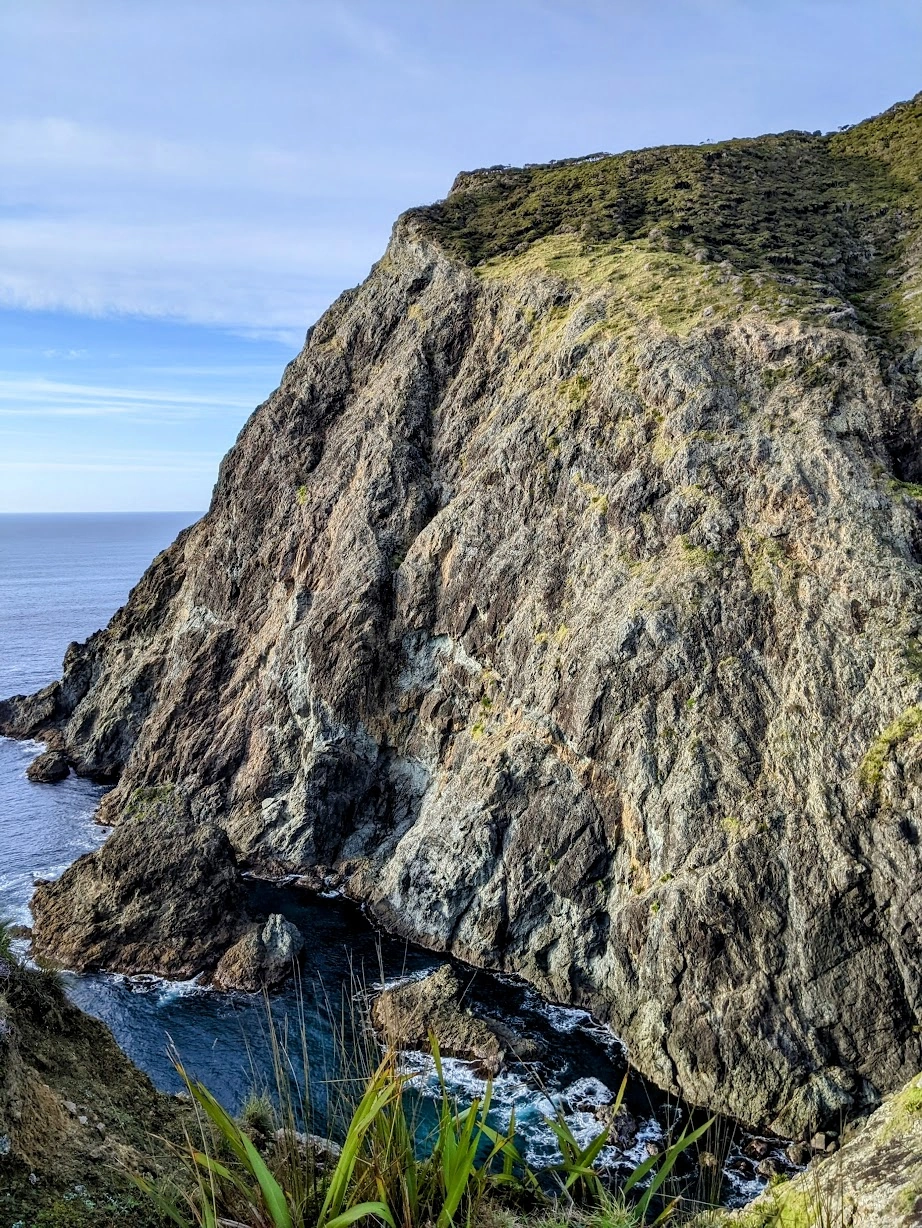
Photo: Rafick / Wakahi
Why Wakahi Grades Trails
Every hiking organisation grades trails. DOC in New Zealand uses six categories from Easiest Access to Route. The Swiss Alpine Club uses T1–T6. The Tour du Mont Blanc operators have their own scale. There's no single global standard, which is why most hikers learn to read multiple grading systems and translate between them.
At Wakahi we use four levels. Fewer categories make it easier to compare trails across countries — a "Challenging" hike in Iceland and a "Challenging" hike in New Zealand should feel like the same level of effort, even though the terrain is completely different. The four levels are:
Easy
Short, flat trails on good surfaces. Suited to families and beginners. Generally under 3–4 hours, minimal elevation gain, well-marked.
Moderate
Longer days or some climbing, but still accessible to most reasonably fit walkers. Daily stages are short and manageable; trails are well-formed; the weather is rarely extreme.
Challenging
Sustained climbs, long days, rough terrain, heavier packs, exposure to alpine or coastal weather. The kind of hike that rewards preparation and punishes assumptions.
Very Challenging
Remote, technical, sometimes unmarked. Multi-day or multi-week routes with no easy exit. Demands real self-sufficiency and the judgement to turn back.
What "Challenging" Actually Means
The Challenging category covers a wide range of hikes. A day walk like the Tongariro Alpine Crossing belongs there. So does a 10-day route like the Tour du Mont Blanc. What makes them comparable isn't distance — it's the combination of factors that all sit at the same level.
Duration. A Challenging day-walk usually runs 6–9 hours of moving time. A Challenging multi-day hike puts 6–8 hours of demanding walking together, day after day, with no rest day built in. Both require you to start fresh in the morning ready to do it again.
Elevation. Most Challenging hikes involve 800–1,500 metres of climbing per day. That's the difference between a casual day out and one where your legs really feel it by mid-afternoon. Repeated across several days, the cumulative climb is what wears people down — not any single ascent.
Trail surface. Steeper, rougher footing. Mud, scree, snow patches, exposed roots, river crossings, sections with a real consequence if you slip. Not technical climbing, but you need to watch every step on parts of the route.
Weather. Alpine or coastal exposure. Storms, wind, sudden temperature drops, sometimes snow even in summer. A Challenging hike is one where the weather can turn a manageable day into an emergency if you're not equipped.
Pack weight. Usually 12–18 kg for multi-day, with food and water for several days plus alpine layers. This is where most underprepared hikers get caught out — and the single biggest factor you can actually control.
The Pack-Weight Trap
The Cape Brett woman is not unusual. Every group I lead has at least one person carrying too much. The reasons are always similar: "I might need this." "What if it rains?" "I'd rather be safe than sorry."
The maths is brutal. A 15 kg pack on a 20 km day with 1,200 m of climb is, in physiological terms, roughly equivalent to doing the same walk with a 7 kg pack plus an extra 8 kg of body weight you're carrying upstairs all day. Your knees, hips, and lower back take all of it. Your pace drops 15–20%. Your breaks get longer and more frequent. By hour 6, every step is a fight.
"Fifteen kilos. I'll be fine."
A Cape Brett hiker, on her first multi-day packFor a Challenging hike — anywhere in the world — most experienced hikers aim for under 10 kg total for a 2–4 day trip, including food and water. The Portuguese Camino I walked with a 20L laptop bag proved to me that you can do far longer hikes than people assume with much less than you think.
Challenging Hikes in New Zealand
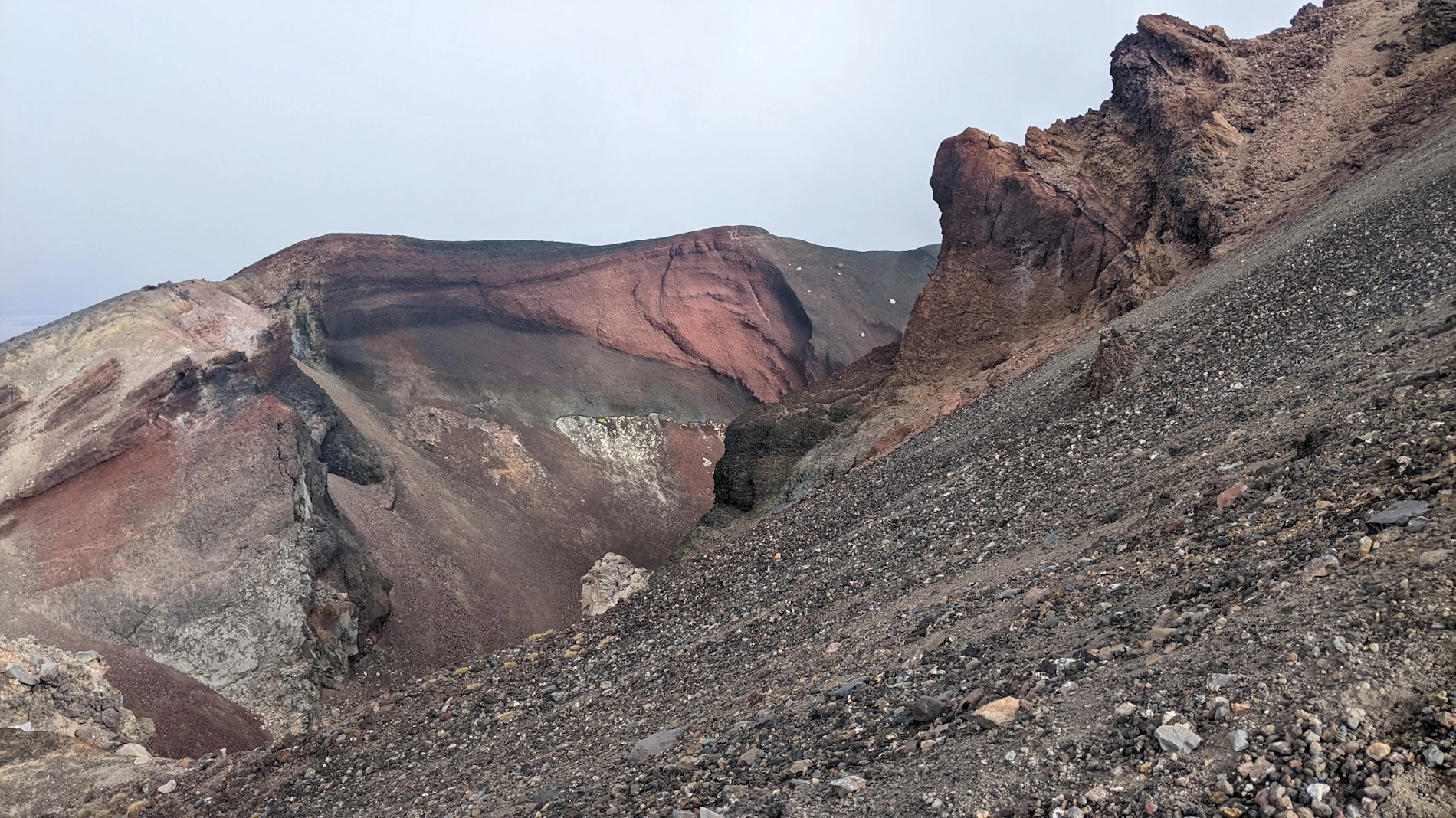
Photo: Rafick / Wakahi
New Zealand has unusually good access to Challenging-grade hikes — many of them within a day's drive of a major city. The hut system, the Great Walks programme, and DOC's network of marked tracks make it easier here than almost anywhere to step up from Moderate to Challenging without going completely remote.
Some New Zealand hikes that sit firmly in the Challenging category:
- Tongariro Alpine Crossing — 19.4 km across active volcanic terrain. Alpine exposure, sudden weather changes, and the famous Red Crater climb make this far harder than the well-marked track suggests on paper.
- Cape Brett Track — 32 km return on a narrow ridge with relentless ups and downs. Rated by many as one of the toughest day-walks in New Zealand. Pack weight is the deciding factor.
- Mt Holdsworth–Jumbo Circuit — 24 km loop in the Tararuas. Two summits over 1,400 m, ridgelines exposed to Cook Strait winds, and a hut system that requires good navigation.
- Pinnacles Track (Kauaeranga Valley) — short but steep. 7+ km of stairs and rock climbing to one of the most rewarding summit views on the North Island.
- Avalanche Peak (Arthur's Pass) — 9 km return with 1,100 m gain. Steep, exposed, alpine. Genuinely challenging despite the short distance.
- Kepler Track in winter — the same trail that's a Moderate Great Walk in summer becomes properly Challenging when there's snow on the Luxmore ridge.
Challenging Hikes Around the World
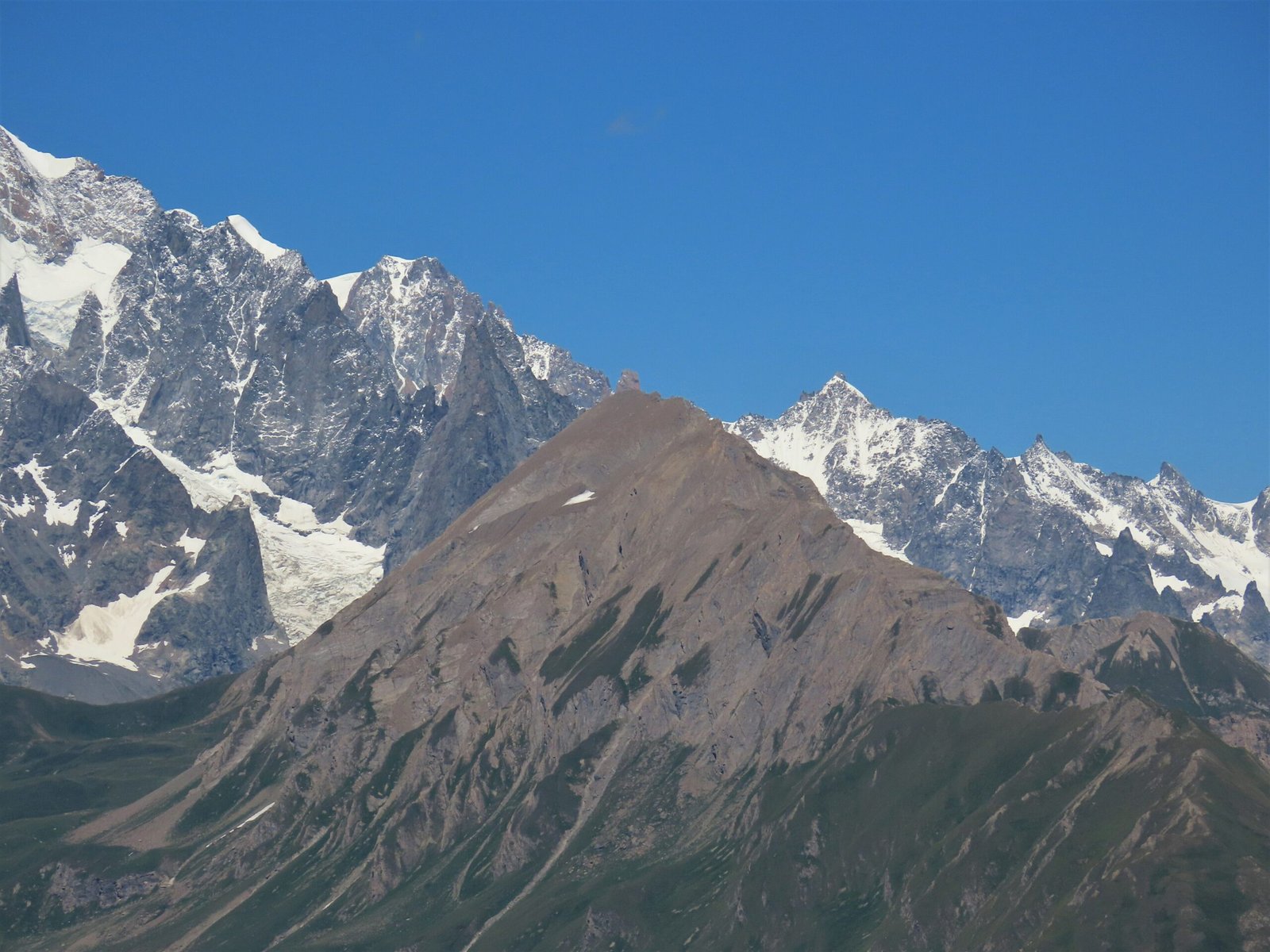
Photo: Rémih / Wikimedia Commons / CC BY-SA 4.0
The same standard applied internationally produces a fairly consistent list. These are hikes where the combination of distance, climbing, weather, and required preparation makes them harder than they look:
- Tour du Mont Blanc (France/Italy/Switzerland) — 170 km circuit, 800–1,200 m of climbing each day, sudden weather shifts. Hut-based but the daily effort is real.
- Kalalau Trail (Hawai'i) — 35 km along the Nā Pali Coast. Narrow ledges above the ocean, tropical heat, and slippery mud. People underestimate this one because it's coastal.
- Larapinta Trail (Australia) — 223 km through the West MacDonnell Ranges. Scarce water, exposed ridgelines, and serious heat. Self-sufficiency required.
- Laugavegur Trek (Iceland) — 55 km across volcanic desert with river crossings and unpredictable weather. Snow possible in any month.
- Camino Primitivo (Spain) — 310 km from Oviedo to Santiago. The mountainous, less-travelled Camino route, with steep daily climbs that surprise pilgrims coming from the easier Francés.
- Appalachian Trail sections (USA) — short stretches like the White Mountains in New Hampshire are Challenging even for fit hikers. Endless small climbs add up faster than people expect.
Beyond Challenging: When Hikes Become Very Challenging
The step up from Challenging to Very Challenging is sharp. It's not about being a little harder — it's about being categorically different. Very Challenging hikes assume self-sufficiency, route-finding, and the ability to make serious safety decisions alone.
Examples include the GR-20 in Corsica (180 km of jagged scrambling ridges), the Dusky Track in Fiordland (84 km of mud, rivers, and storms with no easy bailout), Torres del Paine's O Circuit in Patagonia (130 km in fierce, unpredictable winds), and thru-hikes like the Pacific Crest Trail (4,270 km from Mexico to Canada over five months).
If you're stepping up from Challenging to Very Challenging for the first time, the honest advice is: don't go alone, and consider a guided trip for the first one. The cost of getting it wrong is much higher.
How to Tell If You're Ready for a Challenging Hike
You should be comfortable walking 6+ hours with a 7–10 kg pack on hilly terrain, you've done at least two or three Moderate-grade hikes recently without major issue, you know how to read a weather forecast and a basic topo map, and you have proper boots and a waterproof shell that you've actually tested in rain.
If any of those are missing, you'll probably finish a Challenging hike — but you might not enjoy it.
The Real Lesson from Cape Brett
The grading system is a guide, not a verdict. A Challenging hike done with the right preparation feels exhilarating. The same hike with a 15 kg pack and the wrong shoes feels like punishment. Most hikers who say a trail "broke them" weren't beaten by the trail — they were beaten by the pack, the boots, the missing layer, or the assumption that they'd be fine.
Prepare for the conditions, pack light enough to actually walk, and respect the weather. Do that, and Challenging becomes the most rewarding category on the scale.
Which hikes do you consider most challenging? Share your experience in the Wakahi Forum.