
Thessaloniki Street Art
A City of Walls on Foot
Over 11 days and 250 km, the walls of Thessaloniki became part of the walk — murals, tags, politics, and the line between art and vandalism the city never quite resolves.
I didn’t go to Thessaloniki for the street art. I went to walk. But you can’t walk this city — and I walked about 250 km of it over 11 days — without the walls becoming part of the journey. Turn off a main avenue into a side street in the old town and there it is: a shutter painted floor to top, a five-storey mural staring down at a car park, a doorway layered so thickly in tags that the original colour is a guess.
After a while I stopped treating it as background and started photographing it. What follows isn’t an art-history lecture — I’m a walker, not a critic. It’s what I saw at street level, where it clusters, and a few honest thoughts about a question Thessaloniki keeps raising and never answers.
A city that grew its own scene
Thessaloniki’s street art didn’t arrive from nowhere. It grew in unusually fertile ground: a young, student-heavy, politically engaged city — home to Aristotle University, the largest in the Balkans — that was reshaped by Greece’s long economic crisis. Empty shopfronts, abandoned buildings, and a generation with plenty to say and few official outlets gave the walls a purpose.
Two things gave it momentum. The Street Mode Festival, running in the city since 2009, brought hundreds of Greek and international artists together and turned scattered graffiti into something closer to a recognised culture. And the 15th Biennale of Young Creators in 2011 produced several of the large murals that still anchor the city — including the much-photographed collaboration in Ladadika by DALeast and Faith47, a piece against violence towards women that remains one of Thessaloniki’s signature works.
The result is a city that reads like a palimpsest — each generation painting over the last, exactly as Thessaloniki has done since Roman times. Some of it is commissioned and permanent. Most of it is not.
Where the street art concentrates
If you want to walk it rather than chase a checklist, a few areas reward you most.
Ano Poli (the Upper Town). The old quarter above the centre, with Ottoman-era houses and cobbled lanes. The art here is smaller and quieter — tags and modest pieces tucked along unassuming walls rather than giant murals. It rewards slow walking.
Ladadika. Once rough, now one of the liveliest districts of bars and cafés — and dense with street art as a result. This is where you’ll find some of the celebrated large-scale work.
Around the Rotunda and the university. Student energy means constantly refreshed walls. Big murals and political pieces sit close to ancient Roman monuments, which is a particular kind of Thessaloniki contrast.
The pieces themselves run an enormous range — from ambitious building-sized murals to commissioned community work, pop-culture crossovers, and an ocean of pure letterforms: throw-ups, bombs, and tags covering walls of every colour.
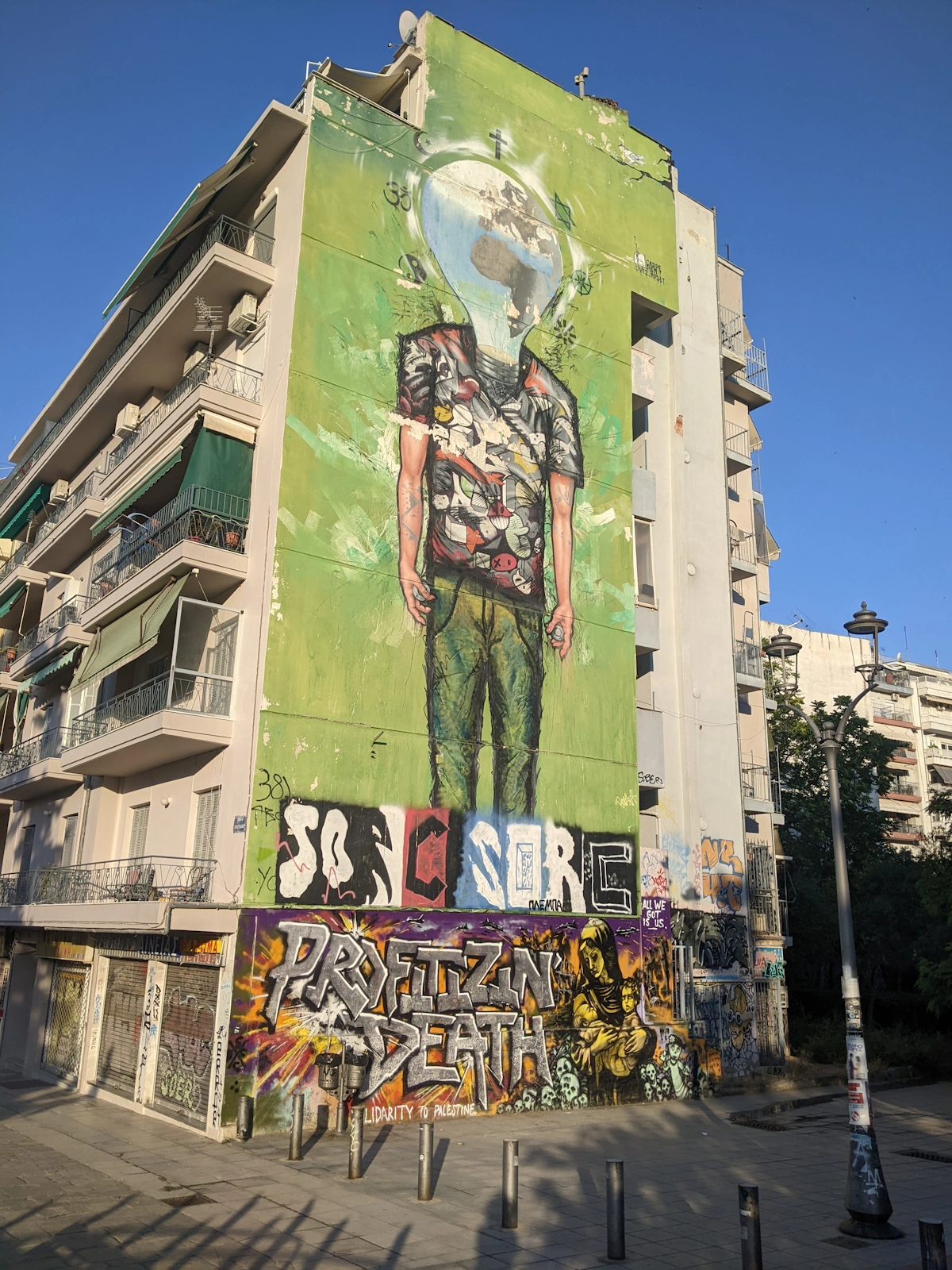
“Turn off a main avenue and there it is: a shutter painted floor to top, a five-storey mural staring down at a car park.”
Rafick, walking ThessalonikiDid Banksy influence Thessaloniki?
It’s the question everyone reaches for, so it’s worth answering honestly. The short version: not directly. Thessaloniki’s scene grew out of local Greek crews, the festival circuit, and the conditions of the crisis — not out of any one British artist.
What Banksy did do — for Thessaloniki and everywhere else — is make a certain language globally legible. He’s the reason a stencil, a piece of political wordplay on a wall, or a sharp visual joke now reads instantly as “art with a point” rather than “vandalism.” That vocabulary is everywhere in Thessaloniki. But the city speaks it in its own accent: rawer, more text-heavy, more tied to protest and local identity than to gallery-friendly irony. You feel the influence of the global movement Banksy helped popularise far more than you feel the man himself.
(I caught a Banksy exhibition in Montpellier just before flying to Greece — I’ll put that side by side with what I saw on Thessaloniki’s walls in a follow-up post.)
Art, or vandalism?
This is the question Thessaloniki never settles, and pretending otherwise would be dishonest. Walk the city and you’ll see the full spectrum: a magnificent commissioned mural on one wall, and ten metres away a historic doorway or someone’s home defaced with an angry scrawl. Some visitors come away calling it a living museum. Others call it decay, and they’re not entirely wrong.
My own view, after 250 km of looking, is that the line isn’t where people want it to be. The bins sprayed with tags, the layered alley where every surface is hit — that is part of the same culture that produces the building-side masterpieces. You don’t really get one without the other. Street art that only ever appears with permission isn’t street art anymore; it’s decoration. The mess and the magnificence come from the same root: a city where people feel free to write on the walls.
Whether that thrills you or troubles you probably says as much about you as about Thessaloniki. I found I could hold both feelings at once — wince at a tagged monument and, fifty metres on, stop dead in front of something genuinely brilliant.
The man at Fidel Castro Square
One afternoon, walking as usual, I stopped about thirty metres from an old building beside a small square. A man noticed me looking and asked if I knew what I was seeing. I admitted I’d been wondering. He spent five minutes giving me the building’s whole history — and when he learned how far I’d been walking, something shifted. “You’re the type of people we like,” he said. “Tourists come and go. But you’re different — you get to know our city, our country.”
Then he asked: “Do you know where you are?” I didn’t. “We’re standing in the unofficial Fidel Castro Square.” Behind a nearby bench, painted by hand onto the old stone wall, were the words ΠΛΑΤΕΙΑ ΦΙΝΤΕΛ ΚΑΣΤΡΟ — Fidel Castro Square. No council had named it that. The neighbourhood simply decided, and wrote it on the wall.
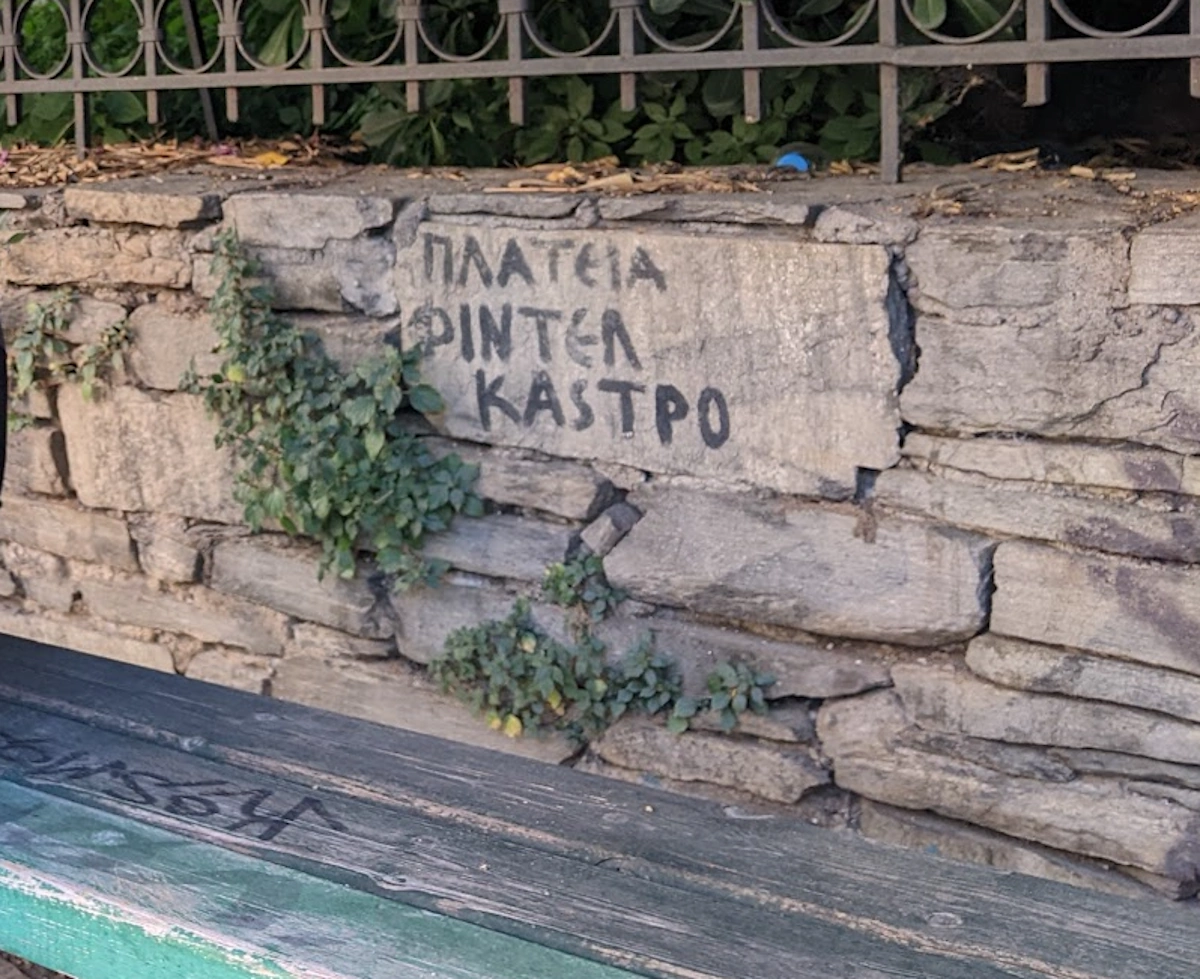
That stuck with me, because it’s the same instinct behind every mural and tag in this post. A city’s official surfaces say one thing; the people who live there write their own version on top. Whether it’s a five-storey artwork or three words on a stone, it comes from the same place — the conviction that the walls belong to everyone.
Walking it yourself
You don’t need a tour or a map. Pick the old town, Ladadika, and the streets around the university, and just walk — slowly, looking up as often as down. The best pieces aren’t signposted, and half of them will be gone or painted over by the time you read this. That impermanence is the point.
Below are some of the walls that stopped me. Tap any image to see it full size.
Tap any image to enlarge.
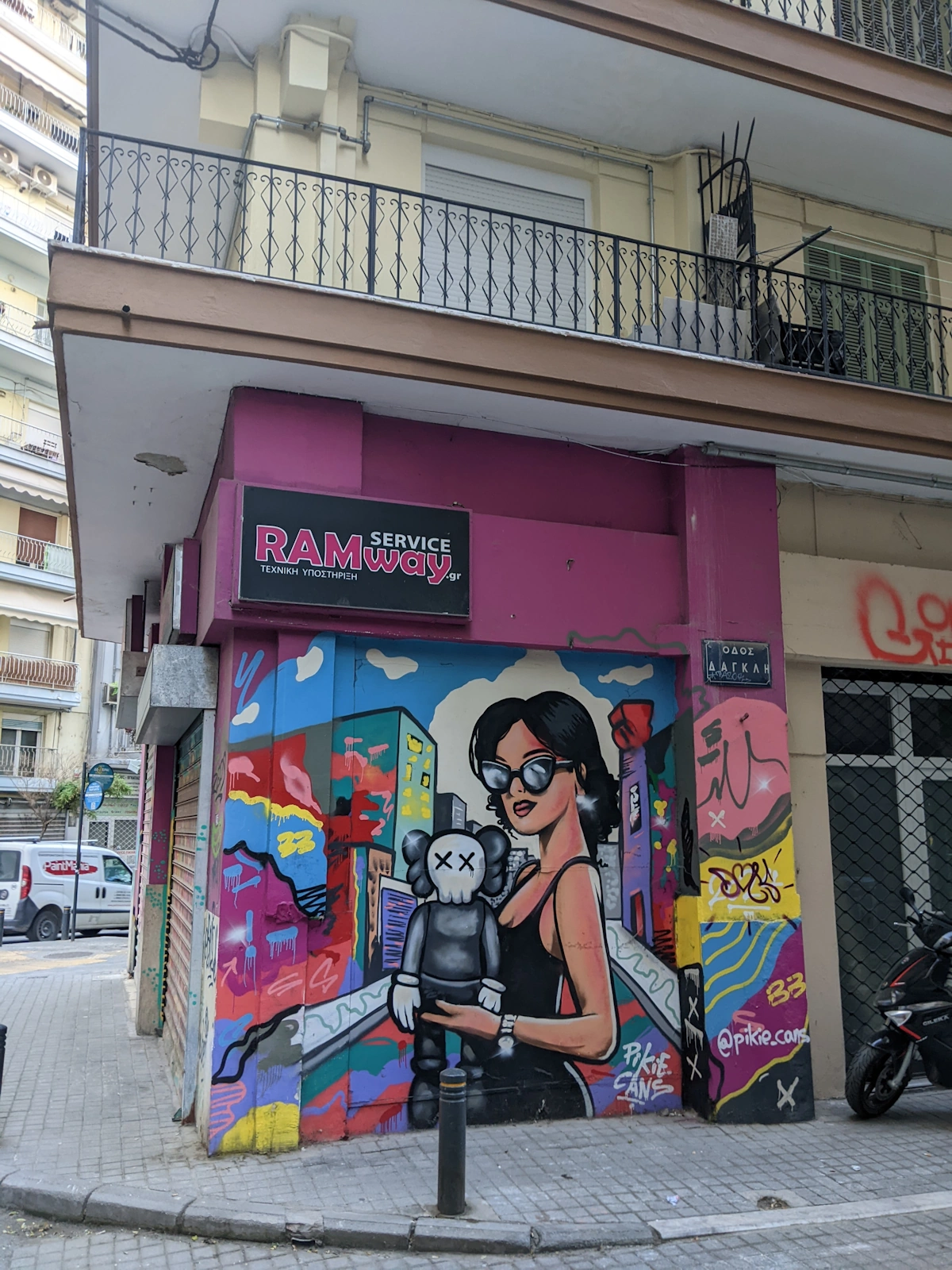
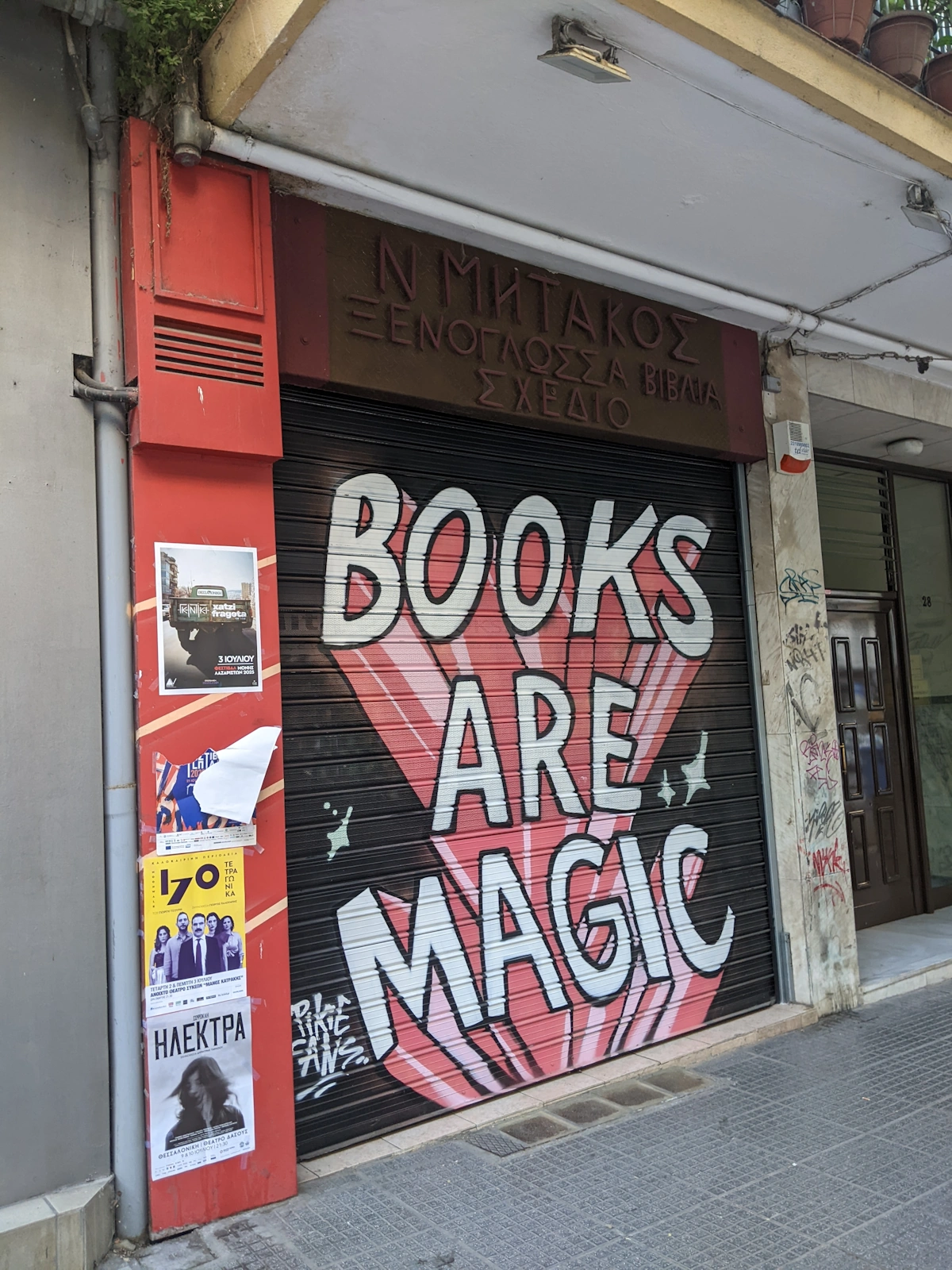
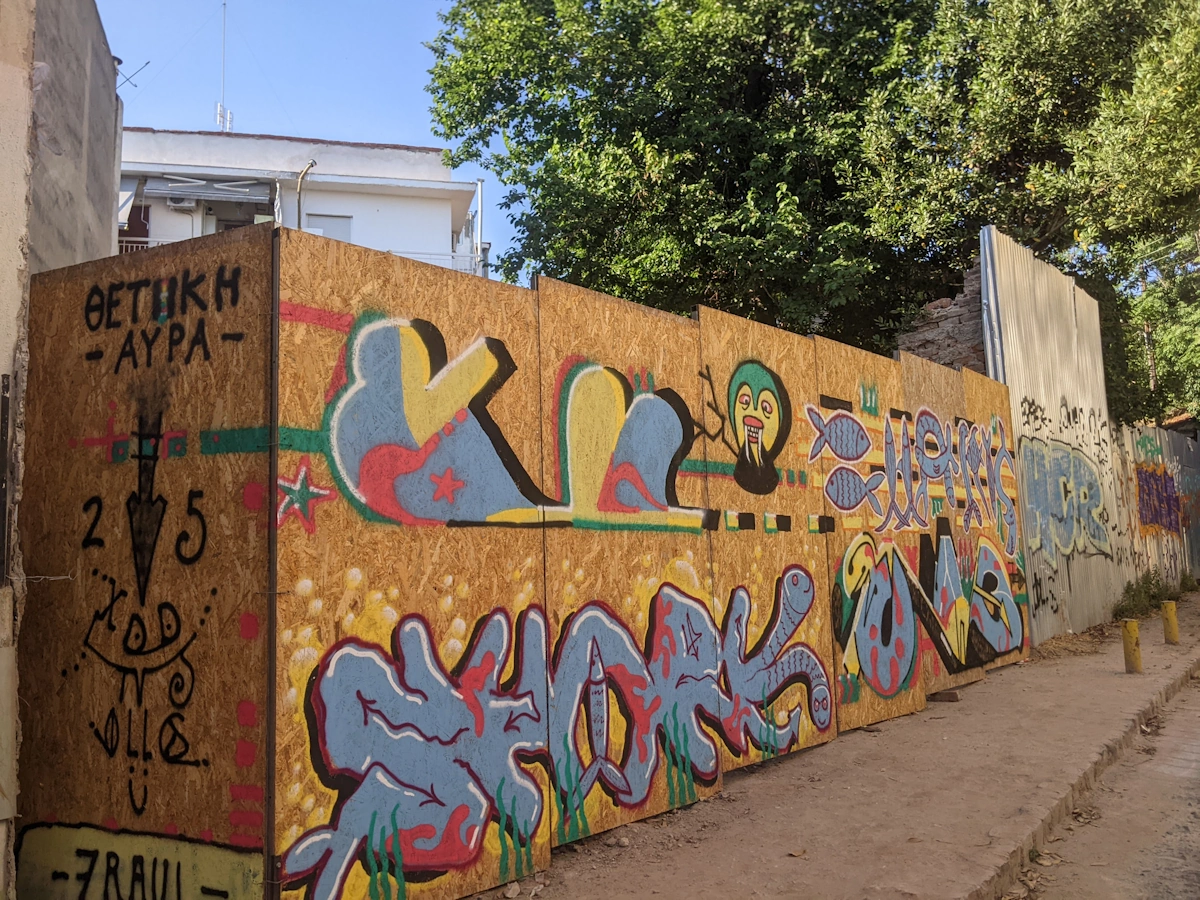
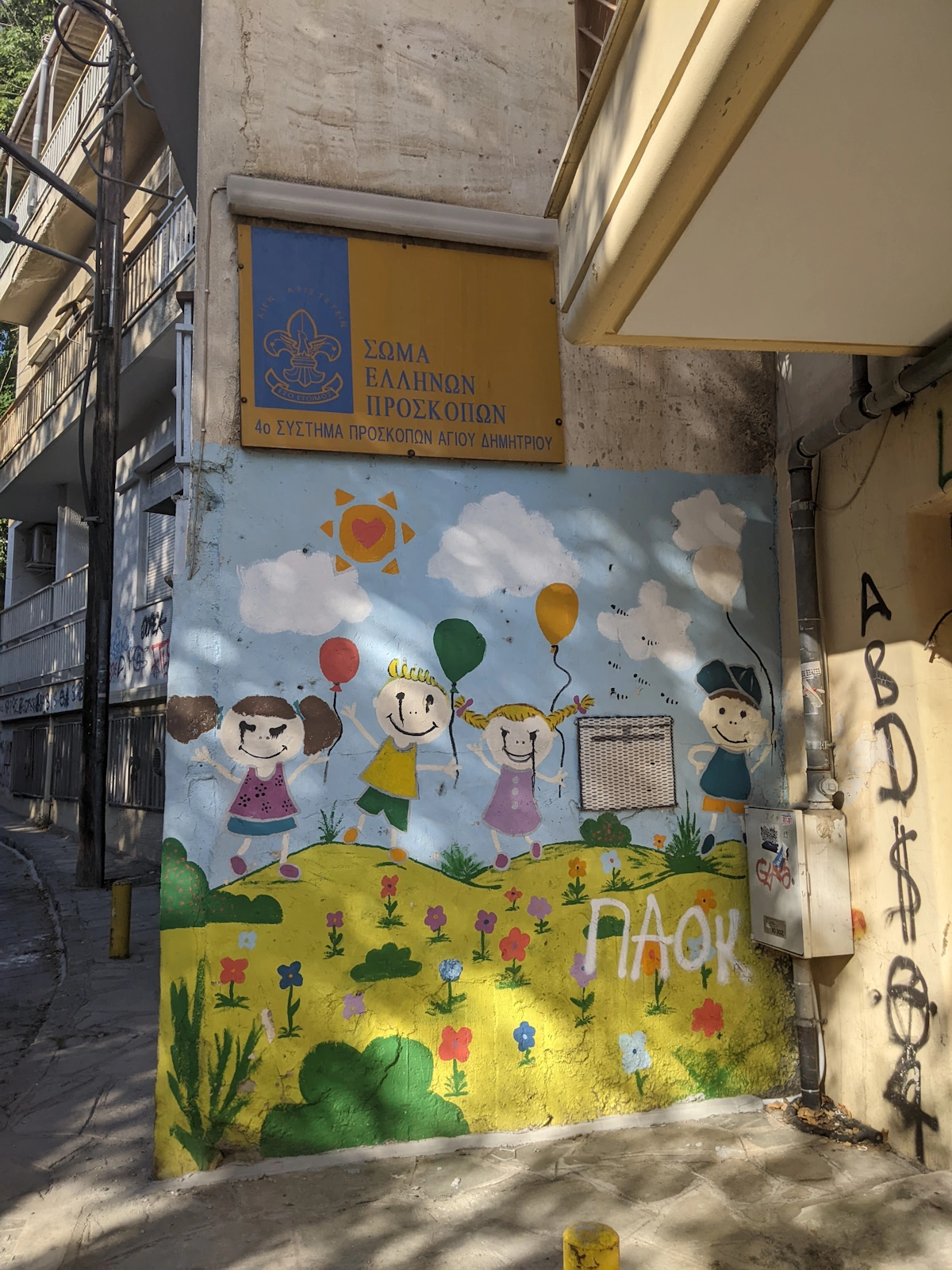
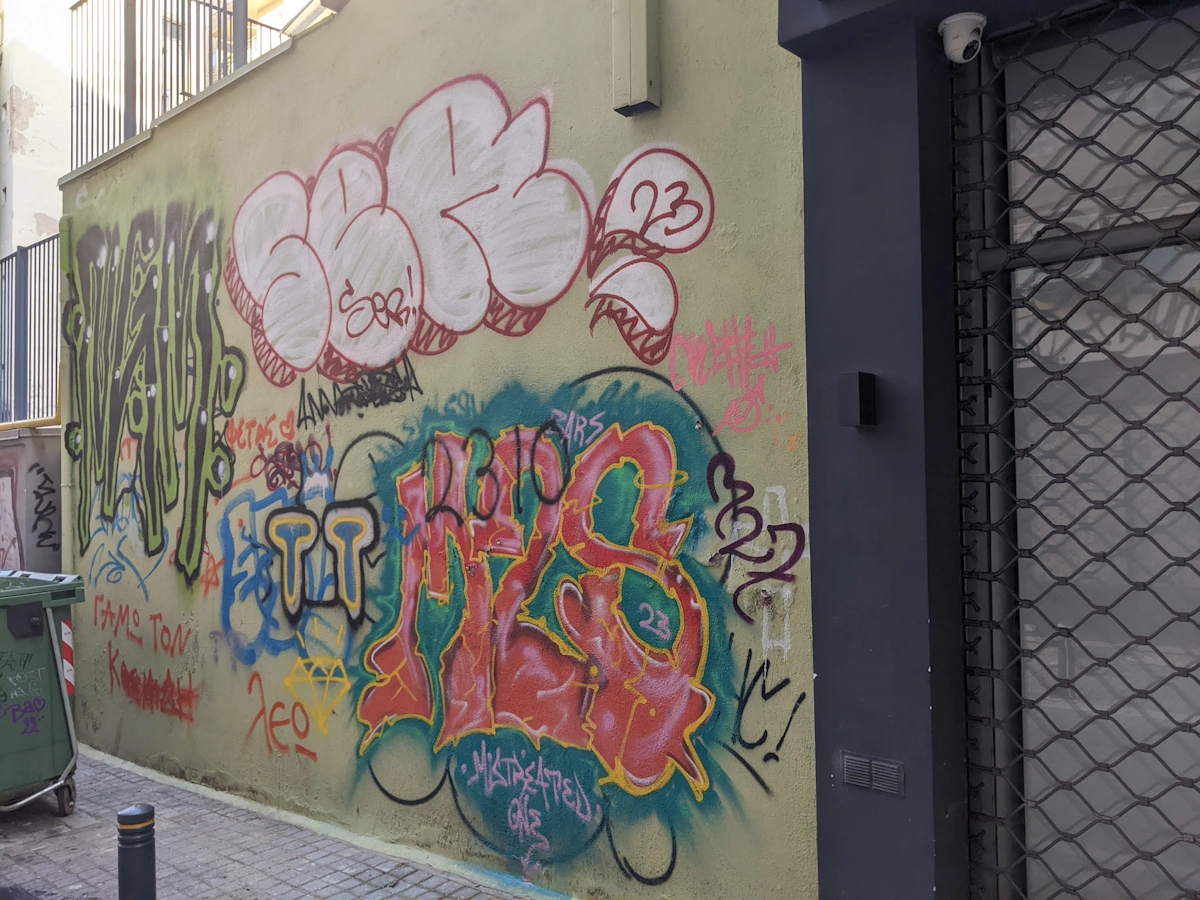
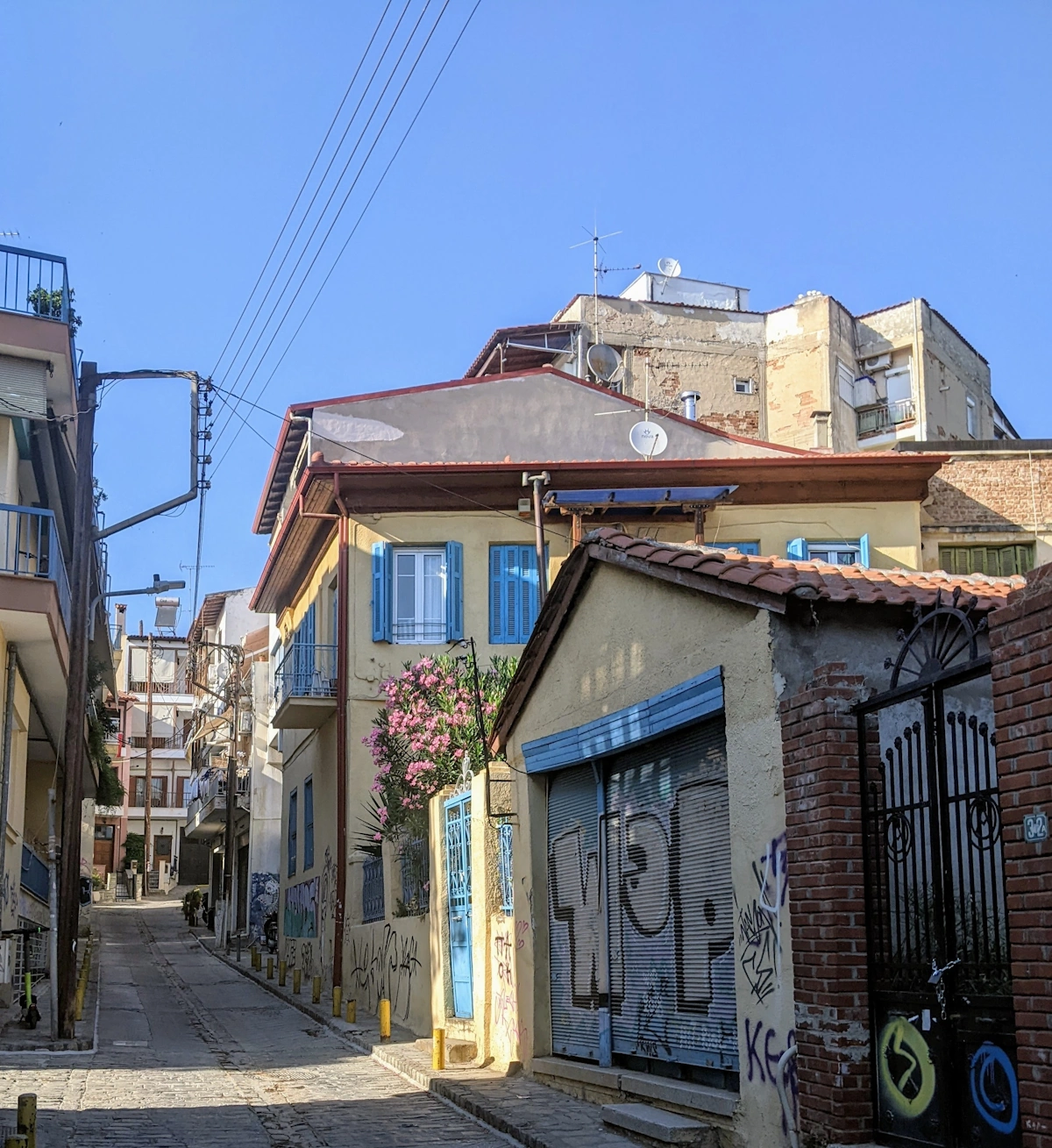
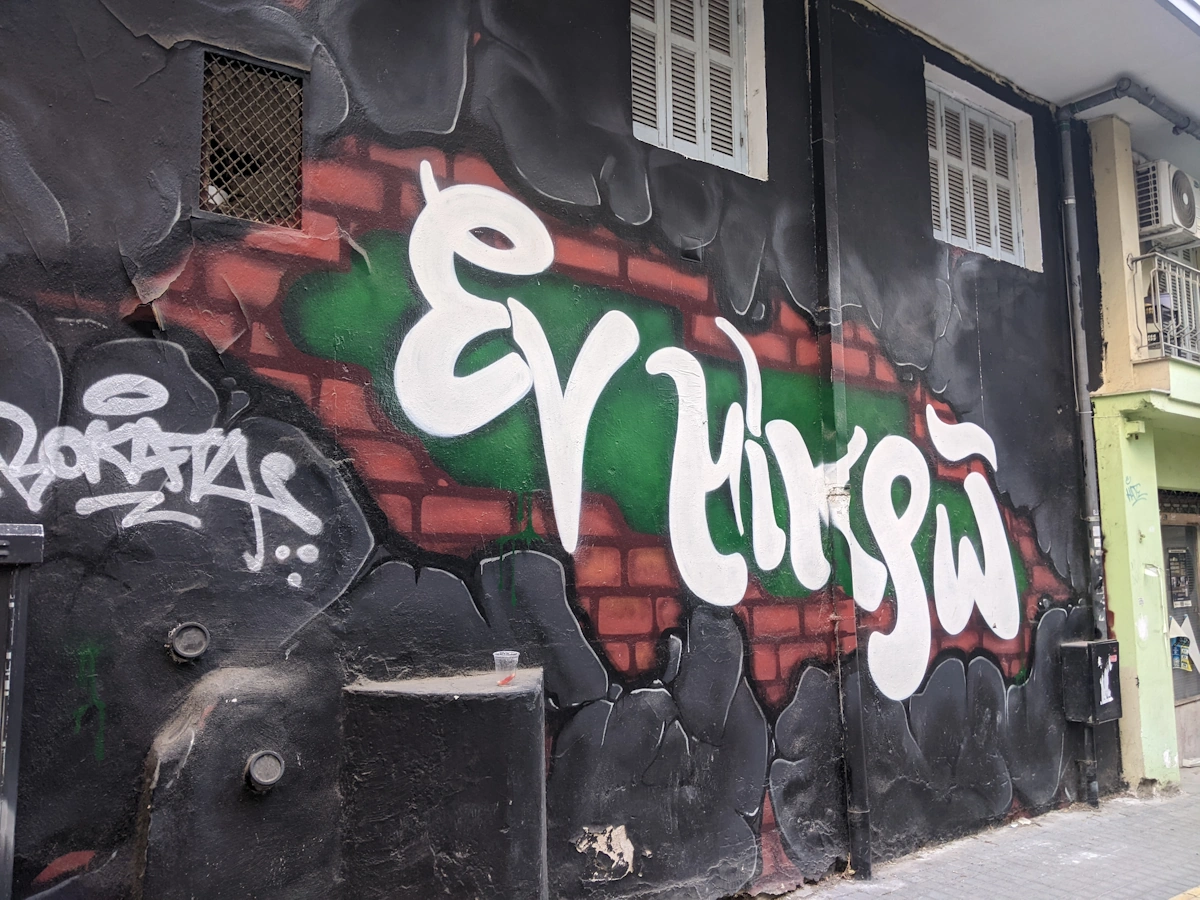
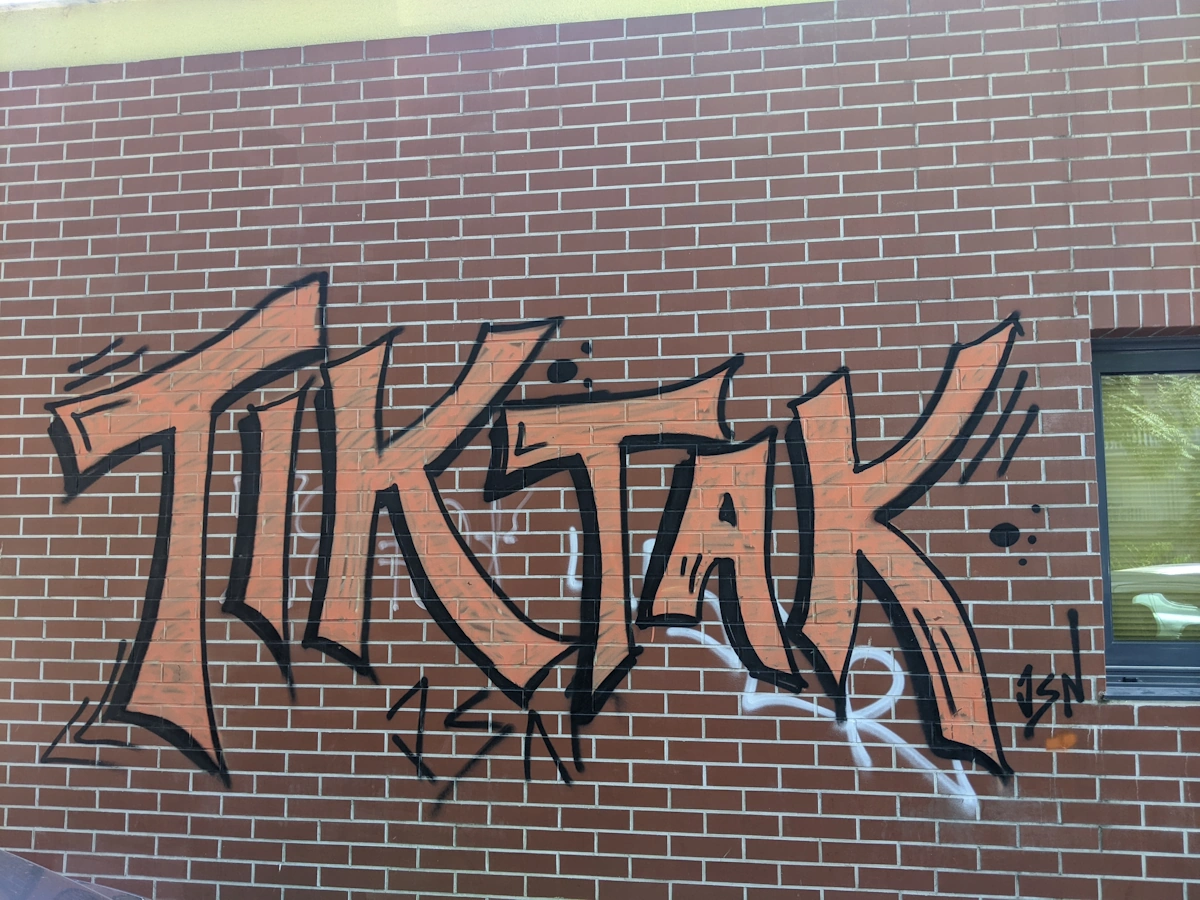
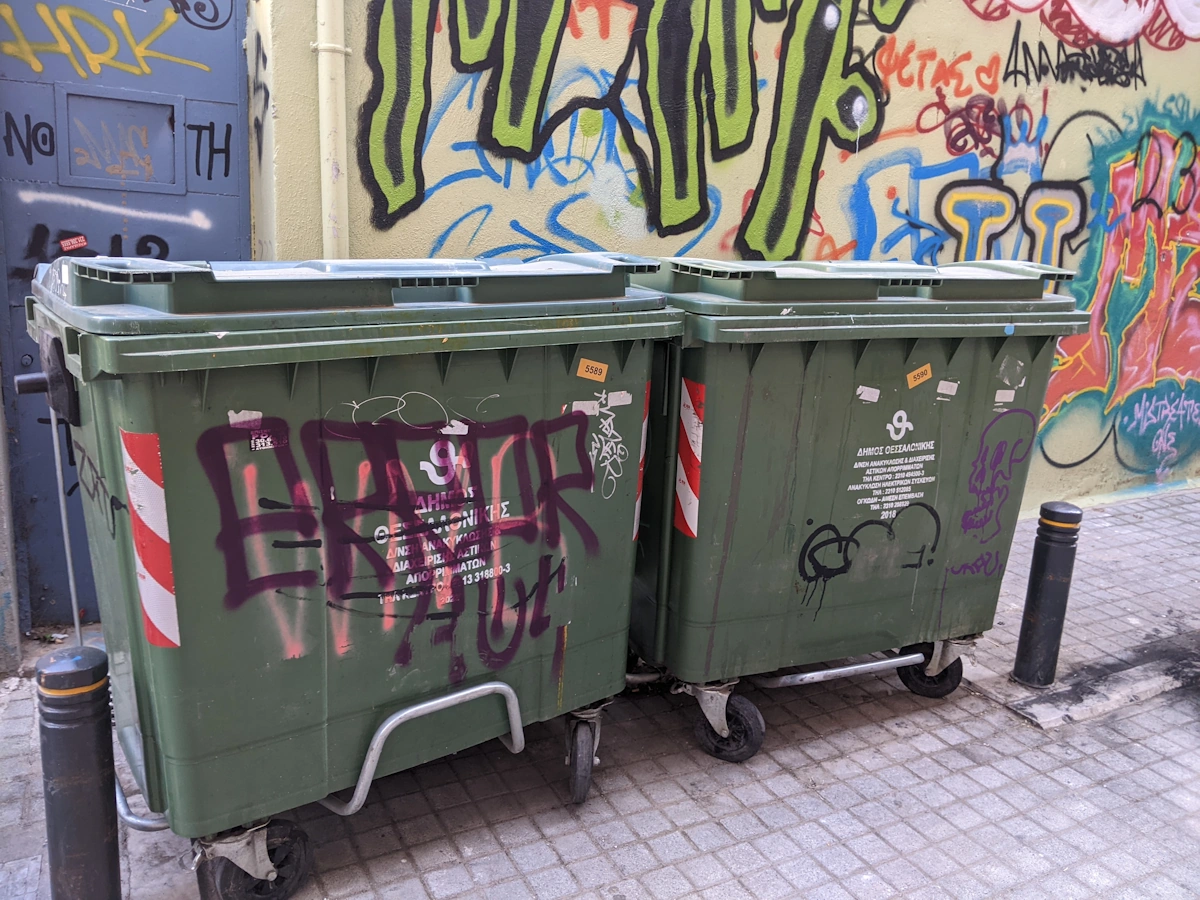
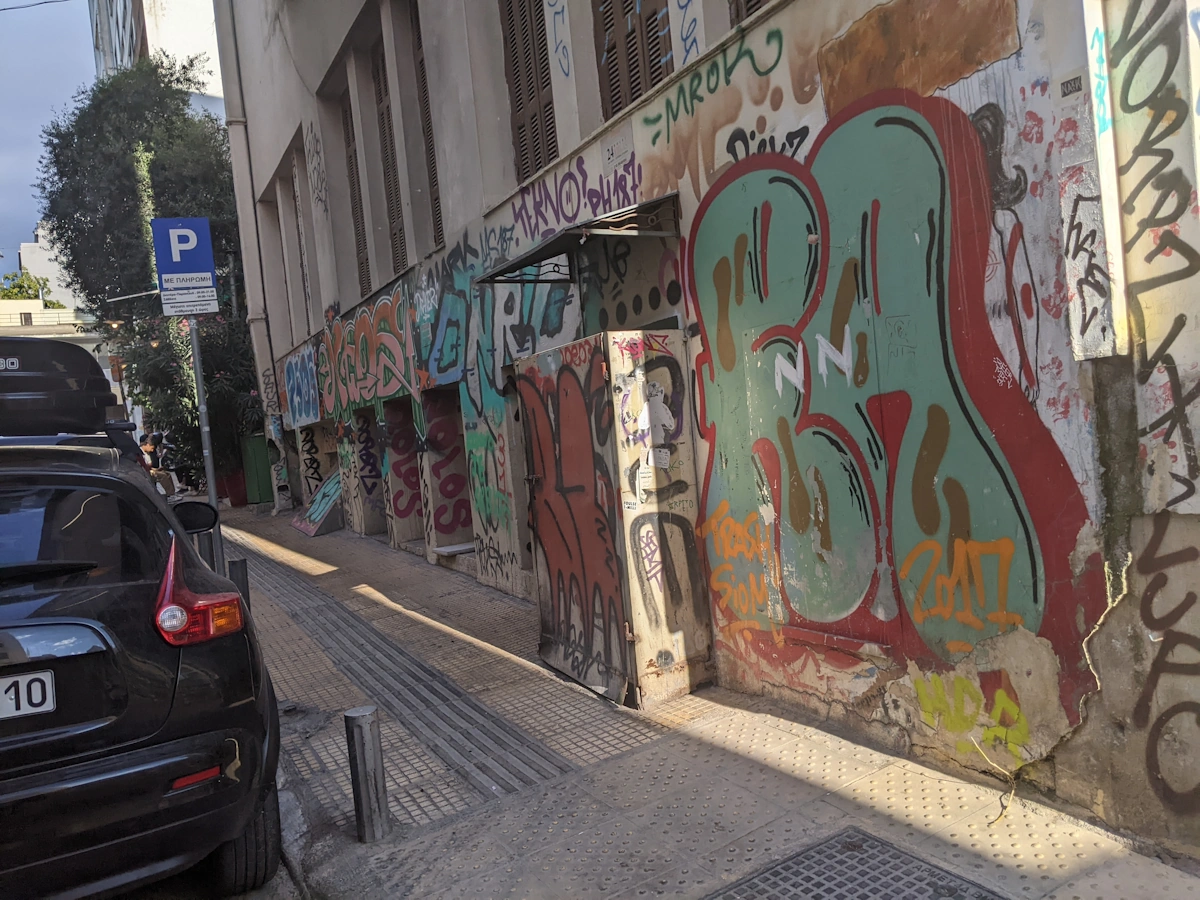
That’s ten of the walls that caught me in the gallery, plus the two that open and punctuate this post — a fraction of what’s out there. If you walk Thessaloniki, you’ll find your own.
Have you walked Thessaloniki, or photographed street art somewhere else?
Log in or sign up to share your thoughts below — we’d love to hear from you.
This post may contain affiliate links. Wakahi earns from qualifying purchases at no extra cost to you.