
Walking the Portuguese Camino
Eight Days from Porto to Santiago
A solo walk along the Atlantic coast that turned into something else — an unexpected friendship over a glass of wine, three pilgrims in the rain, and the strange feeling of arriving alone.
Walking from Porto to Santiago on the Portuguese Coastal Camino is one of the most rewarding ways to reach Santiago de Compostela on foot. The Portuguese Camino has two main variants: the inland Central Route from Lisbon, and the Coastal Route that hugs the Atlantic from Porto to Caminha and then turns inland through Tui, Pontevedra, and on to Santiago. I walked the Coastal Route over eight days in April 2025. This is what those days were.
If you’re curious about how I ended up in Porto in the first place, that story is in Before the Camino. This post starts on the morning I left.
Day 1 — Porto to Póvoa de Varzim: the Porto to Santiago walk begins
On Friday, still carried away by the Double Life of Véronique music I had heard at the cathedral the day before, I began walking at 8:00 am, heading towards the Sé Cathedral (about 1.7 km from my hostel). It was such a relief to leave that noisy, cramped place behind. The moment I stepped into Porto’s historic streets, I felt a rush of anticipation — the true beginning of my Portuguese Camino.
I was standing in front of the cathedral, looking at the sign showing the directions for the Camino, when a young man with a backpack arrived. His name was Havel, and he was from the Czech Republic. We exchanged a few words and then, as though it had been planned, we started our Camino together. It was nice to have company at the start, though I worried he might slow me down. My plan was to reach Santiago in seven days — a decision which I later regretted.
After 45 minutes, he stopped in front of a church, saying he needed to buy his Camino passport. But it was too early; the church was closed. I told him I had already purchased mine at the cathedral a couple of days ago.
He asked whether I would go back to the cathedral with him. I explained that my goal was to reach Santiago in seven days, so I had to carry on. We said goodbye, unaware that on Day 5 I would meet someone who would change the shape of the rest of the walk.
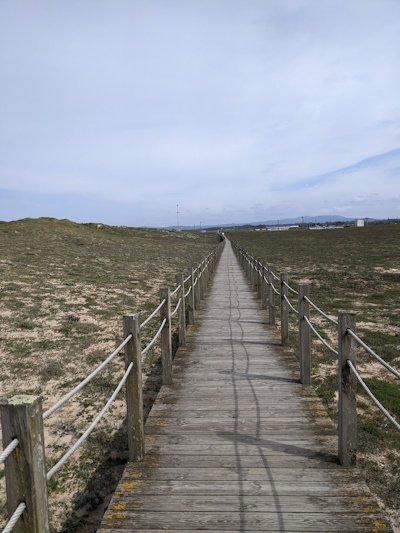
I continued north through Matosinhos and Vila do Conde, following the Atlantic coast. The path was long — about 44 km in the end — and too much of it was on the road. After a long, rewarding day, I reached Póvoa de Varzim at around 10:00 pm and checked into The ONE Grand Hotel.
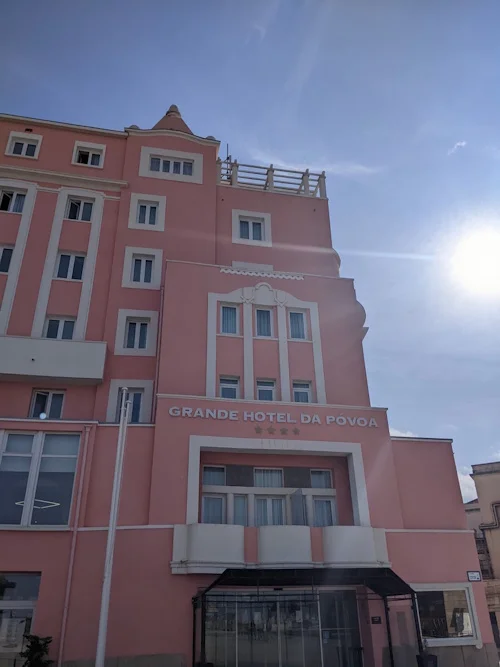
“If I had known better, I might have started from Póvoa de Varzim itself — my Camino would have been gentler, though perhaps less transformative.”
Rafick, on Day 1 in hindsightIt might have been better to start walking along the Douro and then up the coast in shorter stages. But starting where I started, walking the distance I walked, is what made it a Camino.
Day 2 — Póvoa de Varzim to Esposende
After the previous evening’s drama — arriving at Póvoa at 5:45 pm and not finding a place to stay until 10:30 pm — Day 2 was going to be short. About three hours of walking. I needed it.
I had a full buffet breakfast at The ONE Grand Hotel and set off along the beach. The Camino is supposed to teach you something about pace; Day 1 had been a lesson in what happens when you try to do too much, and Day 2 was the correction. Or so I thought.
Even after the hotel breakfast, the sea air made me crave a coffee. A small café sat right on the beachfront. I walked in, sat down, and a young waitress took my order. When she came back with the cappuccino, she asked whether I was walking the Camino. We chatted for a few minutes about my route and how many days I’d given myself. Ten minutes later I left, invigorated.
I walked fast — maybe a bit faster than usual — for over a kilometre before I realised I hadn’t paid. I turned around and walked back. When I came through the door, the waitress looked genuinely surprised that I had come all the way back for two euros.
Walking along the beach and the boardwalk was a different experience from the road. I felt as if I were flying, and I started passing pilgrim after pilgrim — a habit that would catch up with me much later, though I didn’t know it yet.
At one point I passed a couple and we exchanged a hello. About fifty metres on, I had to stop to take off my jacket — I was overheating. The couple caught up and we started talking. They were from Germany. They had begun their Camino in Póvoa de Varzim that morning, and their daughter would join them in Esposende. We walked together for a while. It slowed me down, but I didn’t mind — I knew Esposende, or thought I did.
They stopped every ten or twenty metres for photos. After one longer pause I decided to keep moving, and we said goodbye. I saw them again at the Igreja Matriz de Ápulia, where I stopped for a stamp, and once more a few hundred metres later when I had paused to check directions. After that I lost them.
I had booked Sleep & Go Esposende, but it wasn’t really in Esposende at all. It was in Fão — across the Ponte Metálica de Fão, the long iron bridge over the river. The hostel itself was fine. The location wasn’t. Fão was neither rural nor urban — a stretch of in-between where there was nothing much to see and nothing much to do.
To get to a restaurant or to roam around, I had to walk back across the long iron bridge into Esposende, which was 25 minutes away, and then cross it again on the way back. For dinner I made do with sandwiches and coffee. By evening I was bored in a way I hadn’t expected to be on a Camino. Lesson learned: check the actual location, not just the name, before booking.
Day 3 — Esposende to Carreço
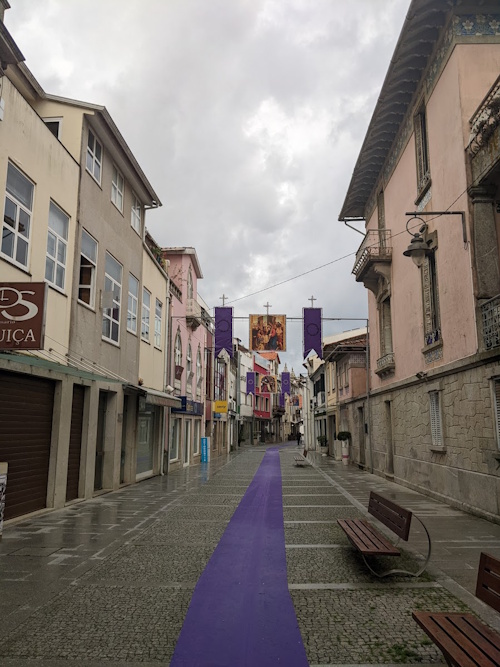
I crossed the Ponte Metálica de Fão one more time the next morning and stopped in Esposende for breakfast. Even in the rain, the town had everything Fão had not: character, narrow pedestrian streets, historical monuments, life. People were already moving through it. The bakery I stopped at served me the best breakfast I’d had since leaving Porto — a small thing, but after a night of sandwiches it felt restorative. I left town wishing I had stayed in Esposende the night before, and walked north along the coast in much better spirits than I had arrived in.
Day 3 blended sandy coastal stretches with cobbled village lanes and quiet forest tracks — the best of Portugal’s northern coast in one day. I walked alone the whole way, and the solitude was easy.
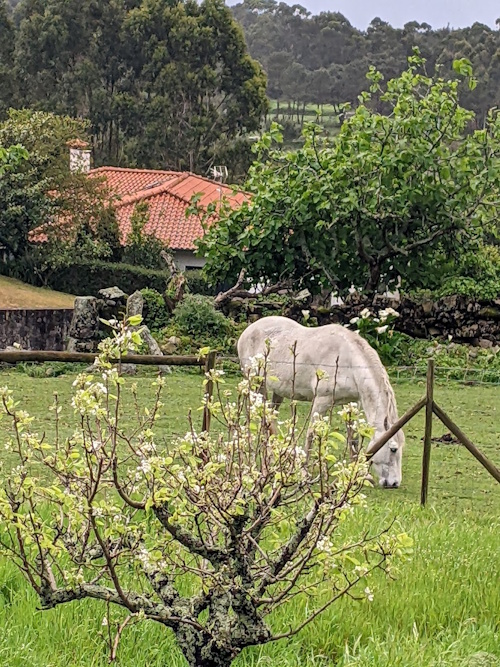
I stayed at Casa do Sardão in Carreço, a beautifully kept guesthouse overlooking the countryside. I arrived in the late afternoon, sweaty and ready for a shower. My room was on the ground floor, with a view onto a paddock where a horse stood grazing in the evening light.
That evening I met an American woman staying at the guesthouse. She wasn’t walking the Camino — she was a runner, there to train. She offered me a bowl of lentils. We talked for a while. Then I went back to my room early, ready for the next day.
Day 4 — Carreço to Valença
I left Carreço early the next morning, walking alone again. The route blended coastal stretches, forest paths, and rural lanes — small villages, old churches, countryside that hadn’t changed much in a century.
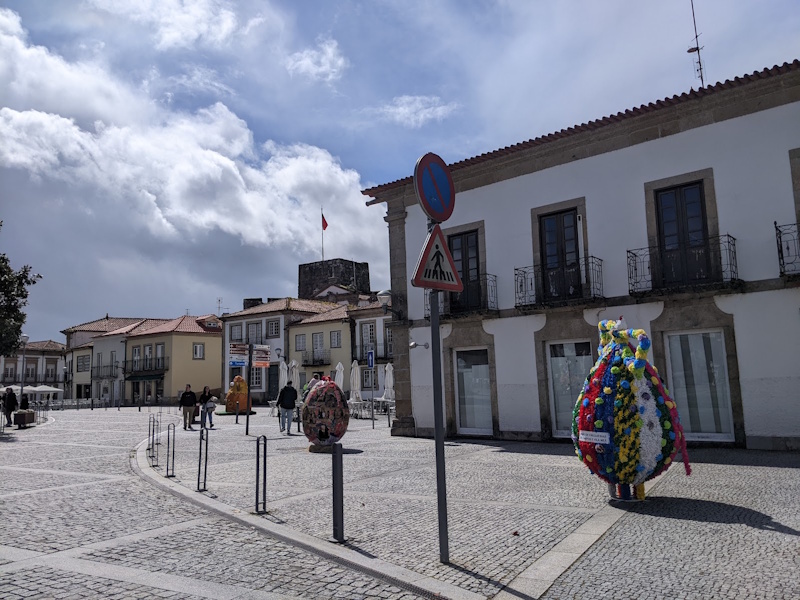
When I reached Caminha, the rain came down hard. I ran for shelter behind a building next to the Minho River, where a man — visibly a skipper — was standing with a couple in backpacks. He asked me, casually, whether I was catching the boat. I said, half-mocking, “No — Camino is walking, not boats.”
How ignorant I was. I learned later that the boat from Caminha is part of the Variante Espiritual — an officially recognised offshoot of the Portuguese Camino that follows in the footsteps of Saint James’s disciples after they brought his body back to Galicia. The route can be walked, partly sailed, or even ridden. The boat is not a shortcut. It is the path.
The Camino isn’t only what you imagine before you start. It’s broader, stranger, and older than any one person’s idea of it. There are versions of it I would only understand after I had finished my own.
From Caminha I crossed into Spain by a bridge upriver and walked on to Valença, the last Portuguese town before the border, where I checked into Hostel Bulwark, just steps from the bridge over the Minho. The rain had stopped by the time I arrived. Tomorrow I would cross into Spain properly, on foot, into Tui.
Day 5 — Valença to Redondela (crossing into Spain, meeting Andrea)
I walked across the bridge into Tui on the Spanish side. There’s something quietly significant about crossing a border on foot. No queue. No checkpoint. Just a river under your feet, and then a different country, a different language, a different rhythm of village names.
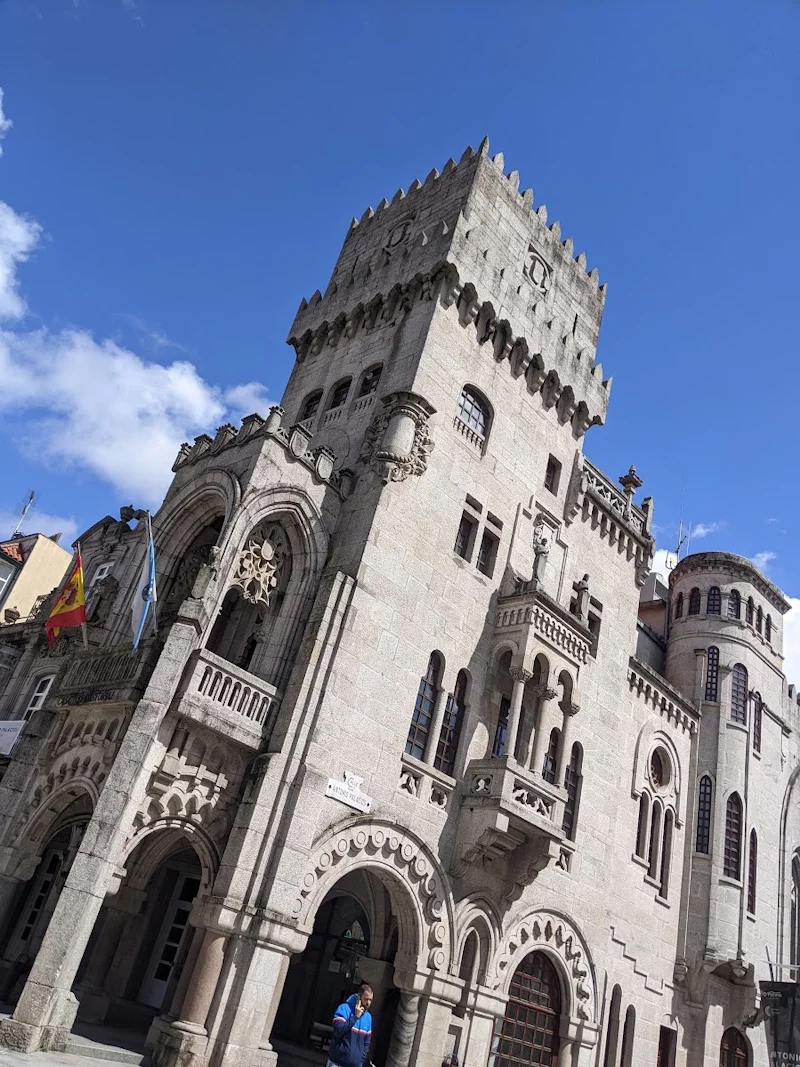
Tui itself is small but full of history. I stopped to admire the Concello de Tui — a striking neo-Gothic town hall — and the Catedral de Santa María, a Romanesque-Gothic cathedral dating from the 12th century. After Portugal’s coastal openness, Tui felt denser, older, more inward-looking.
The afternoon stretch from Tui to Redondela was long. The landscape gradually shifted from coastal plains to rolling inland hills — Galicia properly beginning. I arrived in Redondela tired and a little wistful. Valença had been so charming I’d wondered, on the way out that morning, why I’d only booked one night at Bulwark.
My hostel in Redondela was A Filla do Mar. I climbed the stairs and opened the door to the dorm.
A woman looked up from her bunk and asked, “Would you like a glass of wine?”
I smiled and said, “Sure.”
That was Andrea. We talked for a while. She was walking the Camino too, also solo, also on the Coastal Route. Tomorrow we’d be heading in the same direction. The conversation drifted in the easy way it does when two strangers realise they have nothing to prove to each other. By the end of the evening it was understood, without anyone saying it, that we’d walk Day 6 together.
The Camino does this. You walk alone for days — sometimes the whole way from Porto to Santiago — and then a stranger offers you a glass of wine, and the rest of your walk has a different shape.
Day 6 — Redondela to Pontevedra (and meeting Hani)
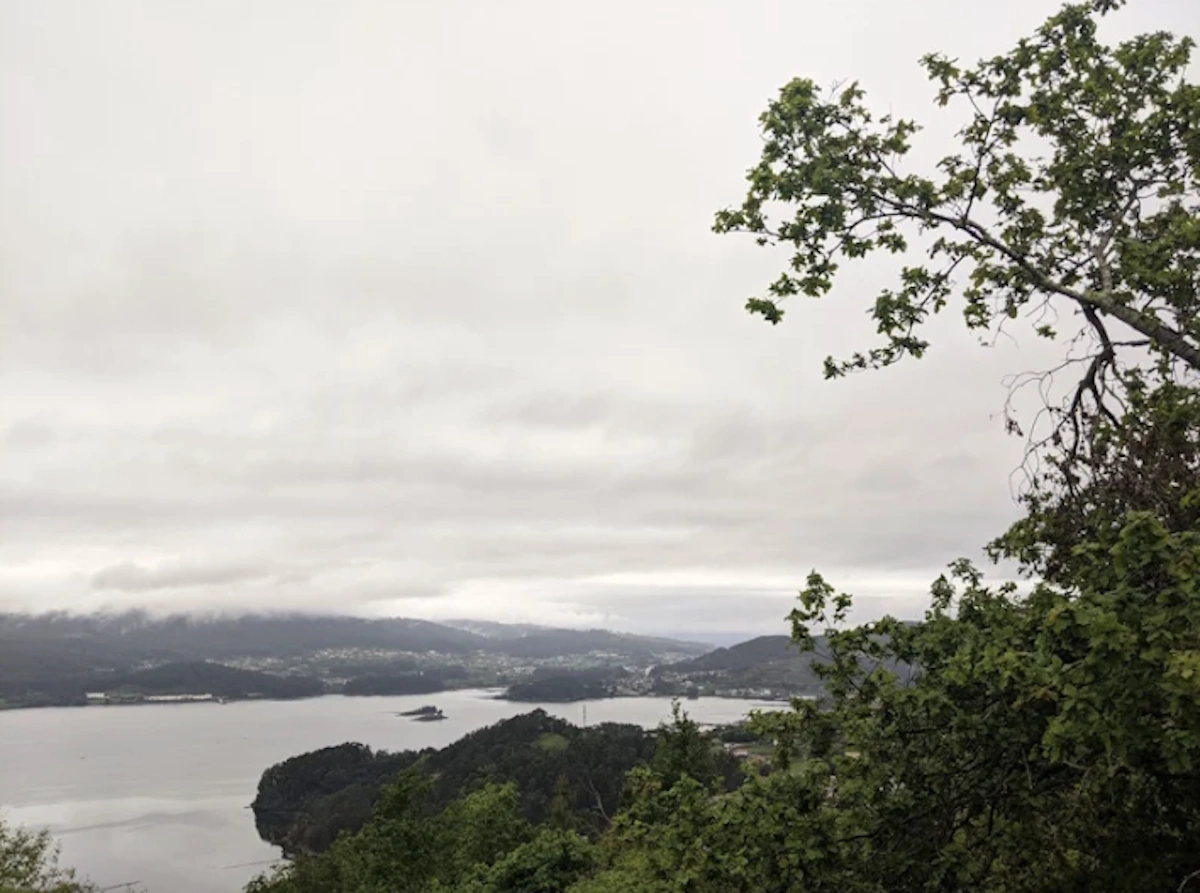
Andrea and I left Redondela together the next morning. The route moves inland through forested hills and quiet hamlets, with occasional glimpses of the Ría de Vigo — the estuary opening to the Atlantic — below.
A few hours in, we fell into step with another walker: Hani. She fitted in instantly — warm, sharp, an easy laugher. The three of us walked the rest of the day together. Conversation flowed easily for hours. Stories, laughter, the rhythm of three pairs of footsteps blending into the Galician countryside.
“If we lived in the same city,” Hani said at one point, “we’d be best friends — we’d hike and train together.”
We arrived in Pontevedra on Maundy Thursday — a public holiday in Galicia. The town was strangely quiet. Restaurants and cafés were shut, shops closed for the holiday. We wandered for a while looking for somewhere to eat, then gave up and went to a Chinese grocery and bought whatever we could find for dinner.
I stayed at Albergue Aloxa Hostel; Andrea and Hani were at a different hostel nearby. Voices in the kitchen at Aloxa carried on past midnight. I didn’t sleep well, but I woke up at 5:30 am ready for the long day ahead.
Day 7 — Pontevedra to Padrón
The forecast promised non-stop rain, and it kept its word.
We had roughly 40 km ahead — a first for both Andrea and Hani at that distance. My plan was simple: start at 7 am, split the day into two 20 km halves, take it 10 km at a time.
Hani joked, “Then we should split the 10 km further too!”
I laughed. “That would make it last forever.”
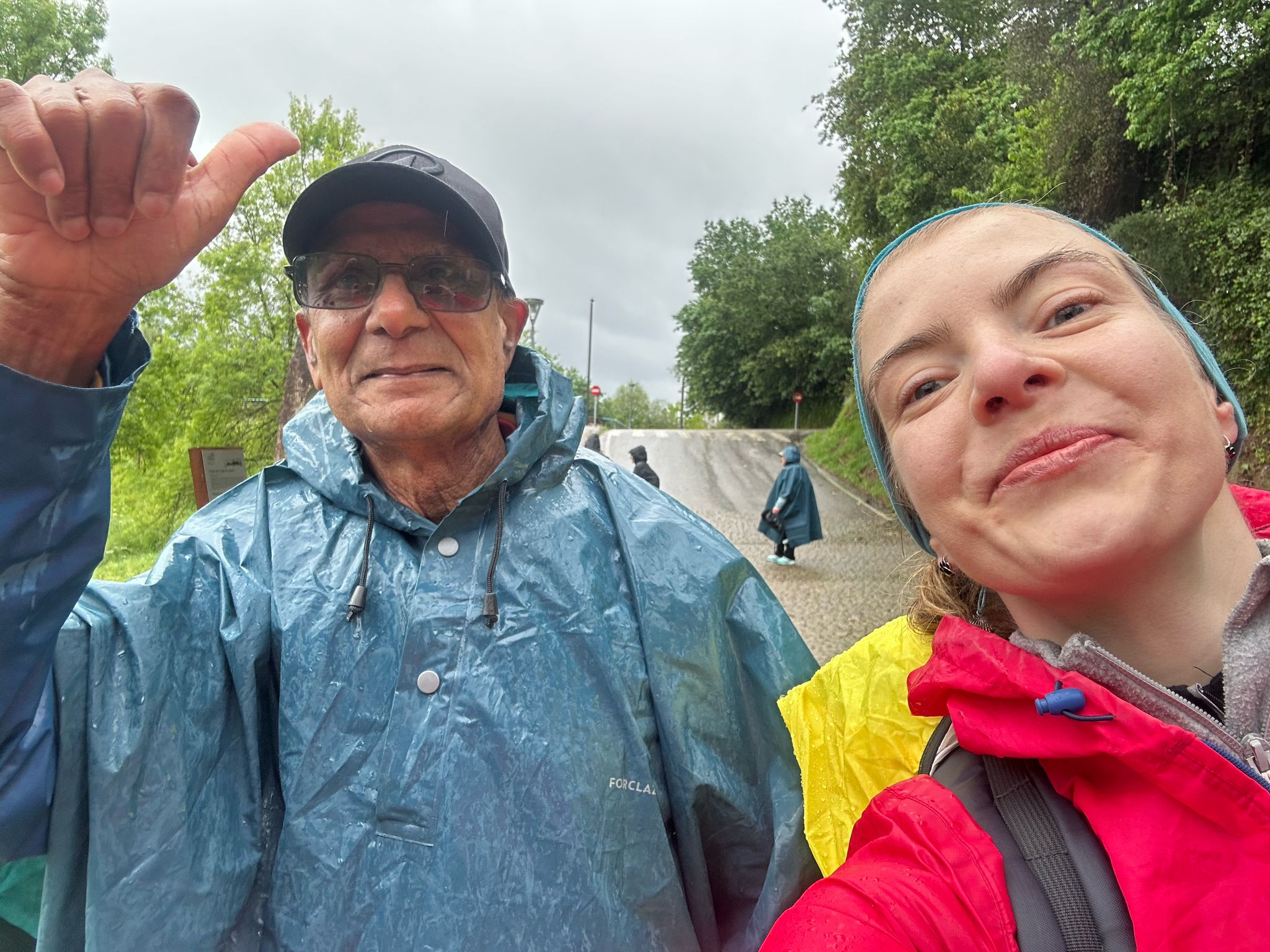
We left Pontevedra just after dawn, rain already steady. I let Andrea and Hani take the lead. Though they’d only met the day before, on the trail, their friendship already felt effortless. Every so often I’d pass them, then slow again.
“We’re holding you back,” Andrea said once. “Go ahead.”
“No,” I told her. “I need to be slowed down.”
And I meant it. By this stage I had already begun to feel what was true: I had compressed eight days of walking from Porto to Santiago into too few. The Camino would have been richer at 10 to 16 km per day. Walking slowly, in the rain, with two friends I hadn’t known a week ago, was the version of the Camino I should have planned from the start.
“We’re holding you back. Go ahead.”
“No. I need to be slowed down.”
We reached Padrón around 6:30 pm — soaked, sore, and smiling. Padrón itself was more industrial than picturesque, but it didn’t matter. Andrea and Hani had booked accommodation in town. I hadn’t — my booking, Albergue La Calabaza del Peregrino, was another two hours’ walk further, in a small place called O Faramello.
I said goodbye to Andrea and Hani in Padrón. We took a photo. There were promises to stay in touch.
Then I shouldered my pack and walked another six kilometres in the rain. By the time I reached O Faramello, it was dark, and I was very ready to be still.
Day 8 — O Faramello to Santiago (solo)
The last day rained too. Most of the walk was on busy roads, and a long stretch through the outskirts of Santiago before reaching the centre. Not the best part of the Camino.
I stopped at a café for lunch — coffee and a muffin — charged my phone, and got my final stamp. Then I walked on, still in my poncho, toward the address where I’d been told to end the Camino for my Compostela.
When I arrived, there was a crowd standing in front of a church. I climbed the steps, intending to ask one of the men there where the pilgrim office was. I opened my mouth to say “sorry” — and he lifted both hands and waved me off. Not a polite gesture. A clear, firm don’t come near me.
I went back down the steps. The devil is everywhere, I thought.
I found the pilgrim office through other means and got my Compostela. After that, the priorities were practical: food, charge phone, find my hostel. I had a coffee and a sandwich at a café that let me charge my mobile. Outside, the rain hadn’t let up, and the light was going.
My booking was a couple of hours’ walk from the centre. The thought of doing that walk, in the rain, in the dark, after eight days of walking, was unbearable. I tried to find a room in Santiago instead. Everywhere was full. I considered sitting in a hostel lounge until morning.
Eventually I found a small backpacker and went in. I started talking to a young man I thought worked there — he was actually a guest, with limited English. His girlfriend came over and her English was better. She told me my best option was to call a taxi to my hostel.
She made the call. The hostel said I needed to arrive before 9 pm. The taxi turned out to be a limousine, which made me worry about the cost — but the driver was kind, chatted all the way, and charged me 15 euros. I made it before 9 pm.
That was how the Porto to Santiago walk ended. Not at the cathedral, not with a triumphant arrival — but in the back of a limousine in the rain, getting to a bed by nine.
The reflections of what those eight days meant came the next day. That story is in Day 9: Santiago & Reflections.
Continue exploring pilgrimage trails
If the Portuguese Camino has stirred something in you, these are the other great pilgrimage walks worth considering:
- Camino de Santiago — Camino Francés: the classic route across northern Spain, from the French Pyrenees to Santiago.
- Kumano Kodo Nakahechi (Japan): the only other UNESCO-listed pilgrimage trail in the world, paired with the Camino since 1998.
- Via Francigena: the ancient pilgrim road from Canterbury to Rome, crossing England, France, Switzerland, and Italy.
- St. Olav’s Way: Norway’s pilgrimage to Trondheim — quieter, wilder, and deeply Nordic.
Have you walked the Camino or plan to?
Log in or sign up to share your thoughts below — we’d love to hear from you.
This post may contain affiliate links. Wakahi earns from qualifying purchases at no extra cost to you.