
Lake Waikaremoana: A Journey into the Heart of Te Urewera
Three days walking around one of New Zealand's most spiritually significant lakes — the climb to Panekire Bluff, the silence of native forest, and a member with an 80-litre pack full of curry ingredients.
The air hung thick with the scent of damp earth and ancient trees as I stood at the edge of Lake Waikaremoana. A silver sheen coated the still water, reflecting the towering, emerald-clad peaks of Te Urewera. I was about to embark on my third Lake Waikaremoana Great Walk — a multi-day hike around this sacred lake, a place steeped in Māori history and brimming with untamed beauty. The first two had been a success despite the continuous rain each time over the three days.
We were a small group: Orielle, one of our event organisers; Emily, who had joined the Great Walks of New Zealand Meetup Group two events prior; Alam, who had first walked with us at Cape Reinga last September; and me.
Getting to Lake Waikaremoana
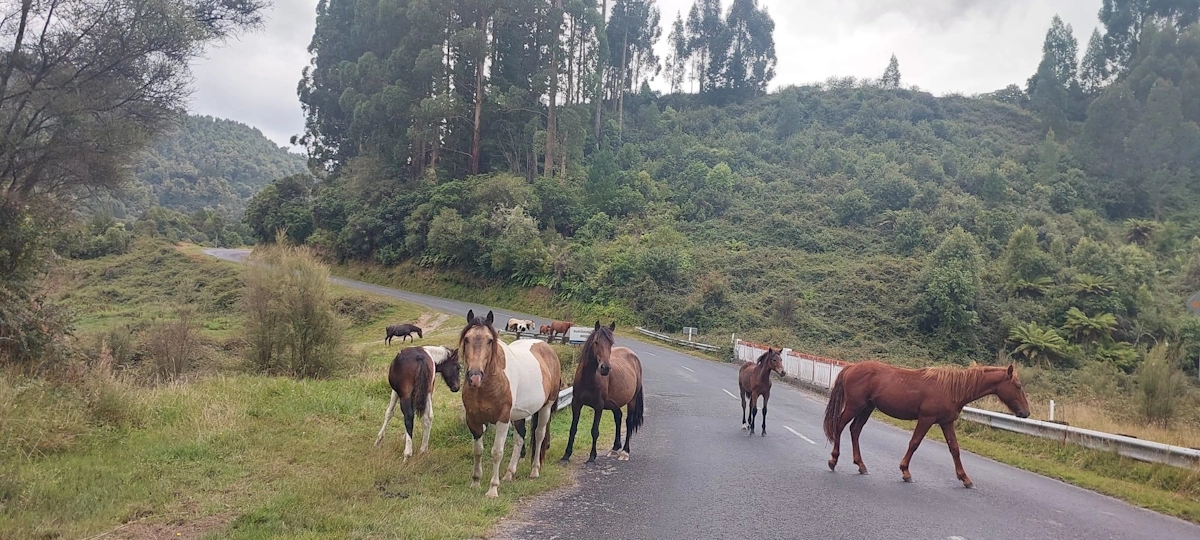
Reaching the trailhead is part of the adventure. About 80 km of the road to the Waikaremoana Holiday Park is gravel, so allow extra travel time and check your vehicle’s suitability. If you are driving an EV, plan your charging stops carefully and leave early in the day. We were five drivers in two cars; Alam picked me up near Glen Eden station, and we travelled through Tirau before reaching the Holiday Park in the late afternoon.
The journey itself eases you into Te Urewera. The road winds through landscapes that grow steadily wilder — farmland giving way to native bush, sealed roads giving way to gravel, mobile signal giving way to silence. By the time you arrive at Lake Waikaremoana, the city feels very far away.
Day 1: Onepoto to Waiopaua Hut (10.4 km)
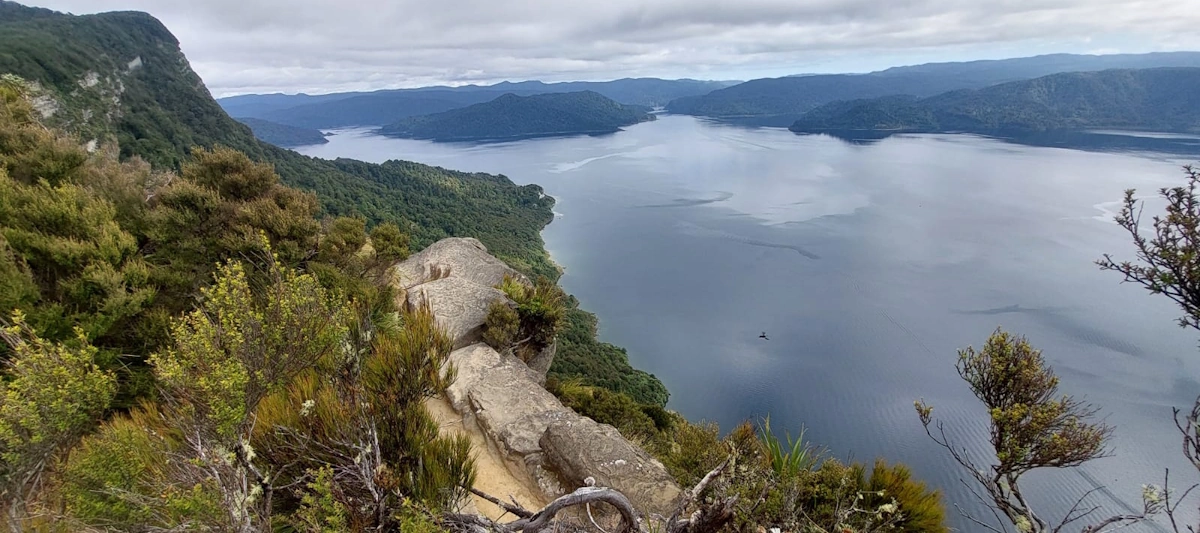
The Lake Waikaremoana track wasted no time. From the Onepoto boat landing the trail immediately began its ascent towards Panekire Bluff — a relentless climb that tested lungs and legs alike. The forest was alive with the melodic calls of tūī from time to time. As we gained altitude, glimpses of the lake emerged through the trees, each one more breathtaking than the last.
Alam was suffering. He was carrying an 80-litre pack weighing around 15 kg — mine was 9 kg. He had packed for a different kind of trip entirely: fresh potatoes, onions, rice, a kilogram of fruit, a stove, and a gas canister (he even borrowed my own stove and gas canister and, without warning, used it for 30 minutes) to make curry at the huts. When I saw his backpack the previous night, I asked him why on earth someone would carry an 80-litre backpack on a 2-day, 3-hour trail. He replied he’d be OK. He was OK until we reached Panekire Hut, but after lunch he slowed down considerably. “I am just walking at my own pace.” I have heard that phrase before. It is Alam’s smoke signal for “I am exhausted.” He soldiered on regardless, though it was clear the pack was taking its toll.
“I am just walking at my own pace.”
Alam, somewhere on the way to Waiopaua Hut — a familiar signalFinally, after what felt like an eternity, we crested the bluff. The view was simply stunning — the entire expanse of Lake Waikaremoana stretched out before us, a vast, shimmering sapphire surrounded by an unbroken sea of green. We took our time at the top before walking on to Waiopaua Hut, nestled in a secluded cove right at the lakeshore — a tranquil spot perfect for an evening swim. The water was icy cold but invigorating. As darkness fell, the stars emerged in full force, brilliant and uninterrupted, far from the light pollution of the city. Alam, having finally accepted that the curry project was not going to happen with that pack on his back, quietly distributed some of his food. He gave me a pear.
Day 2: Waiopaua Hut to Waiharuru Hut
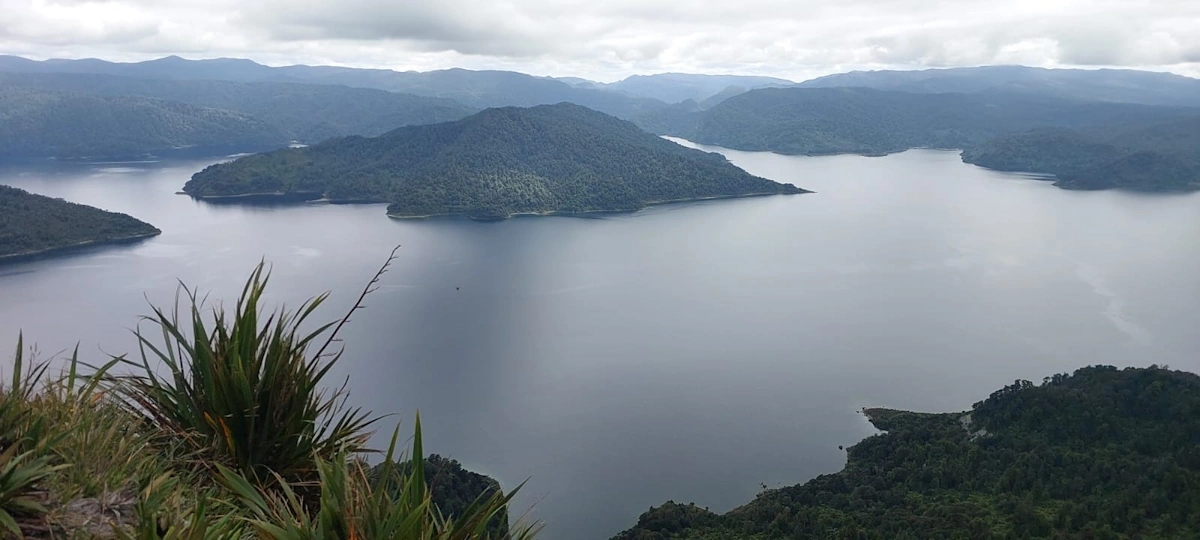
Day 2 was a gentler affair — a welcome reprieve after the climb of the previous day. The Lake Waikaremoana track followed the shoreline for much of the morning, undulating gently through native beech forest, the air thick with the scent of moss and decaying leaves. The forest floor was a tapestry of ferns and fungi. I stopped often to admire the towering trees, their gnarled branches reaching skyward like ancient guardians of this sacred landscape.
We stopped at Marauti Hut for lunch: a small, intimate shelter in a quiet bay, with the lake lapping gently just below. It is one of those places where you eat slowly because leaving feels wrong.
We reached Waiharuru Hut in the afternoon. It was a comfortable base, and the evening was peaceful — the kind of stillness that only a place like Te Urewera can produce. Alam, still carrying what remained of his provisions, had by now accepted that the curry would not happen. The pack had done its damage. “I’ll be OK,” he said, as he always does.
Day 3: Waiharuru Hut to Onepoto (14.6 km)
The final day was the longest. The track climbed steadily away from the lake before the familiar descent back towards Onepoto. The forest became denser, the air heavier with humidity. Several steep climbs and descents tested stamina and resolve. As we neared the end, the familiar sight of the carpark brought a wave of relief — and a quiet tinge of sadness that the lake, which had been our constant companion for three days, was now behind us.
The Lake Waikaremoana Track is administered by the Department of Conservation and Te Urewera, and it is unlike any other Great Walk in New Zealand. This is not just a trail through beautiful scenery. It passes through land that has profound spiritual and historical significance to Tūhoe — the people of the mist — and that weight is felt with every step.
Epilogue
- On Alam: I first met Alam at Cape Reinga last September. He had brought a castle of a tent — so enormous that everyone laughed when they saw it. He had pitched it on a mound near the water. I told him he’d be better off moving closer to the trees. “I’ll be OK,” he said. During the night the wind ripped the tent away and he slept in his car. “I’m OK,” he said when I came out of my tent in the morning. “I’ll buy another one.” He always carries far more than any sensible person would — enough fresh produce to feed a small village. He gave me a pear.
- On the track itself: The Lake Waikaremoana Track is more than a hike. It is an immersion into Te Urewera — one of the wildest, most untouched landscapes in New Zealand. It will challenge you on Day 1 and reward you on every day that follows.
- Will I do it again? Yes — gladly.
Practical Tips for the Lake Waikaremoana Great Walk
Book your Great Walks pass well in advance through the DOC website — huts fill up fast, especially in peak season. The road to the Waikaremoana Holiday Park is largely gravel (about 80 km), so allow extra travel time and check your vehicle’s suitability. If you are driving an EV, plan your charging stops carefully and leave early. Pack for all weather: Te Urewera is known for sudden changes. Wear sturdy, waterproof hiking boots. And take time to learn about the history of this land — it enriches every step.
PACK LIGHT.
BE POSITIVE.
This post may contain affiliate links. Wakahi earns from qualifying purchases at no extra cost to you.