
Before the Camino
Six Days in Porto
Why I left Lisbon, holed up in a library, and made my decision on a rainy Thursday morning.
Before the Camino, I had six quiet days in Porto. My start day was set six days after arriving in the city. I had originally intended to start walking from Lisbon — that’s why I flew from Auckland to Paris via Hong Kong, then took a cheap Flixbus the 12 hours down to Lisbon. But Lisbon was overcrowded with tourists. I stayed two nights and moved on to Porto.
It was a good decision, except that I had booked a cheap backpacker which I hadn’t realised was both nothing like its booking-app description and more than 2 km from the city. Fortunately, I liked Porto, and I roamed around every day after working on wakahi.com at a public library for four or five hours.
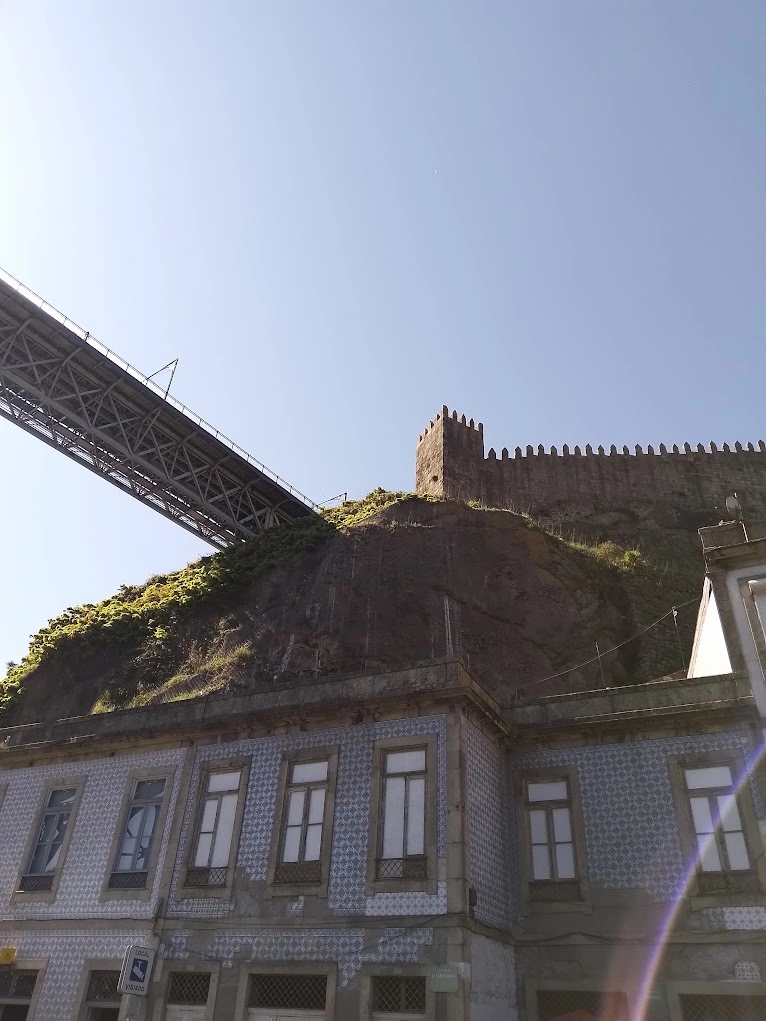
There were tourists everywhere, but they were more civilised than the picture-hunters of Lisbon. The views from the Luís I Bridge are magnificent. The old quarters — narrow cobblestone streets, small restaurants — reminded me of my wanderings in Paris, though each city has its own character. Food was easy: cheap restaurants and pastelarias everywhere. I had breakfast every morning in a pastelaria a kilometre from the hostel, on my way to the Biblioteca Municipal Almeida Garrett.
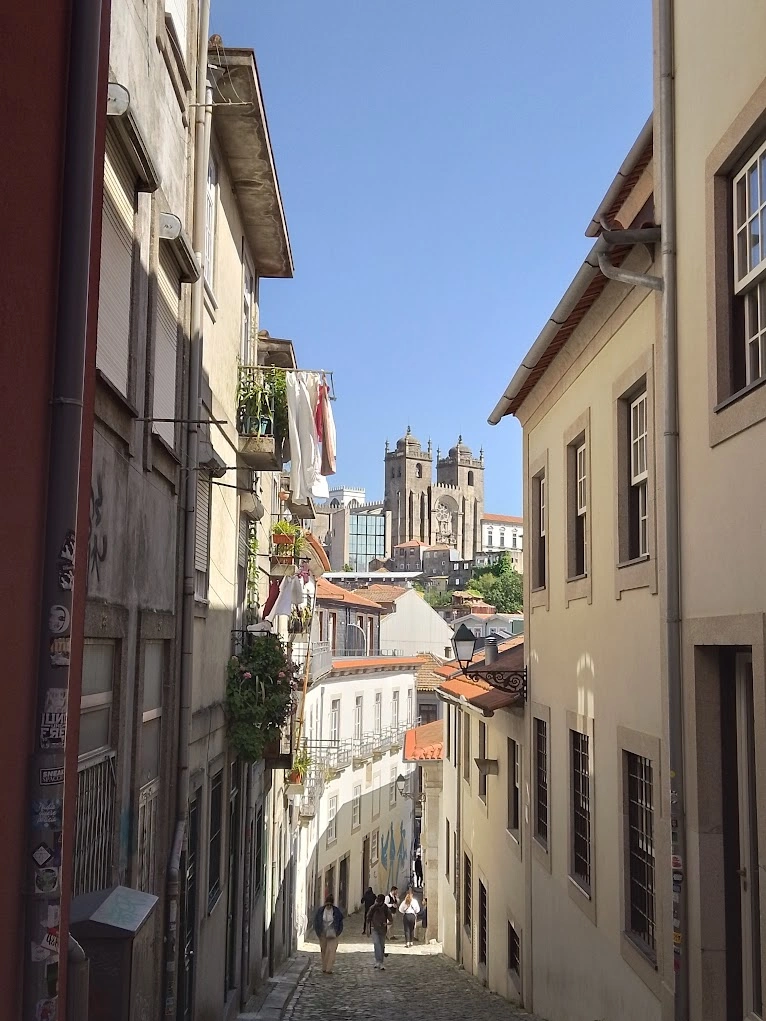
I had planned to start walking six days after arrival — a Friday. But it rained on Tuesday and Wednesday, and I began to wonder whether to push the start back by a day or two. As soon as I woke up on Thursday, the decision made itself: there was no way I would spend one more night in that hostel. I packed my laptop bag with what I was going to carry, dragged my suitcase into the city, and left it with a luggage service.
Before the Camino: the violinist at the Sé Cathedral
In the afternoon I went to the Sé Cathedral for the second time. I had visited two days earlier and bought my Camino passport. There were a lot of visitors, but what caught my attention was the music coming from a violin — Zbigniew Preisner’s score for The Double Life of Véronique, which I have watched several times.
“Preisner’s music is haunting, ethereal, and deeply spiritual; listening to it makes you feel you might suddenly fly.”
Rafick, on the violinist at the Sé CathedralThat is how I felt approaching the cathedral. Too many people surrounded the violinist, though, so I didn’t stay long. The next morning, I would be back at the same cathedral with a backpack on my shoulders — the real start of the walk to Santiago, and the end of my six days before the Camino.
Have you walked the Camino or plan to?
Log in or sign up to share your thoughts below — we’d love to hear from you.
This post may contain affiliate links. Wakahi earns from qualifying purchases at no extra cost to you.