
Yokohama
Tokyo’s Quieter Neighbour by the Sea
Half an hour south of Tokyo lies a port city with everything the capital has — a Chinatown, a harbour, lanterns and neon — and something the capital doesn’t: room to breathe.
Tokyo is a city you love and a city that wears you out. After a few days of it — the crowds, the pace, the sheer weight of thirty million people all going somewhere — I found myself wanting the same things Tokyo offers but with a little more air around them. Half an hour south by train, I found them in Yokohama.
Yokohama is Japan’s second-largest city, and for most of its life it has lived in Tokyo’s shadow. But that’s exactly what makes it worth the trip. It has a Chinatown — the largest in Japan. It has a broad harbour front where the city opens out to the sea. It has lanterns and neon and night streets. It has, in short, most of what draws you to Tokyo, delivered at a pace that lets you actually enjoy it.
All photographs in this post were taken by me on foot in Yokohama.
Chinatown after dark
The heart of a first visit to Yokohama is its Chinatown — Chukagai — and it is best walked at night, when the lanterns come on and the temples glow. The great set-piece is Kanteibyo, a Chinese temple whose facade is a riot of red columns, gold carving, and dragons chasing across the roofline. Lit up after dark, it stops you in the street. I stood in front of it for a long time, and I was not the only one.
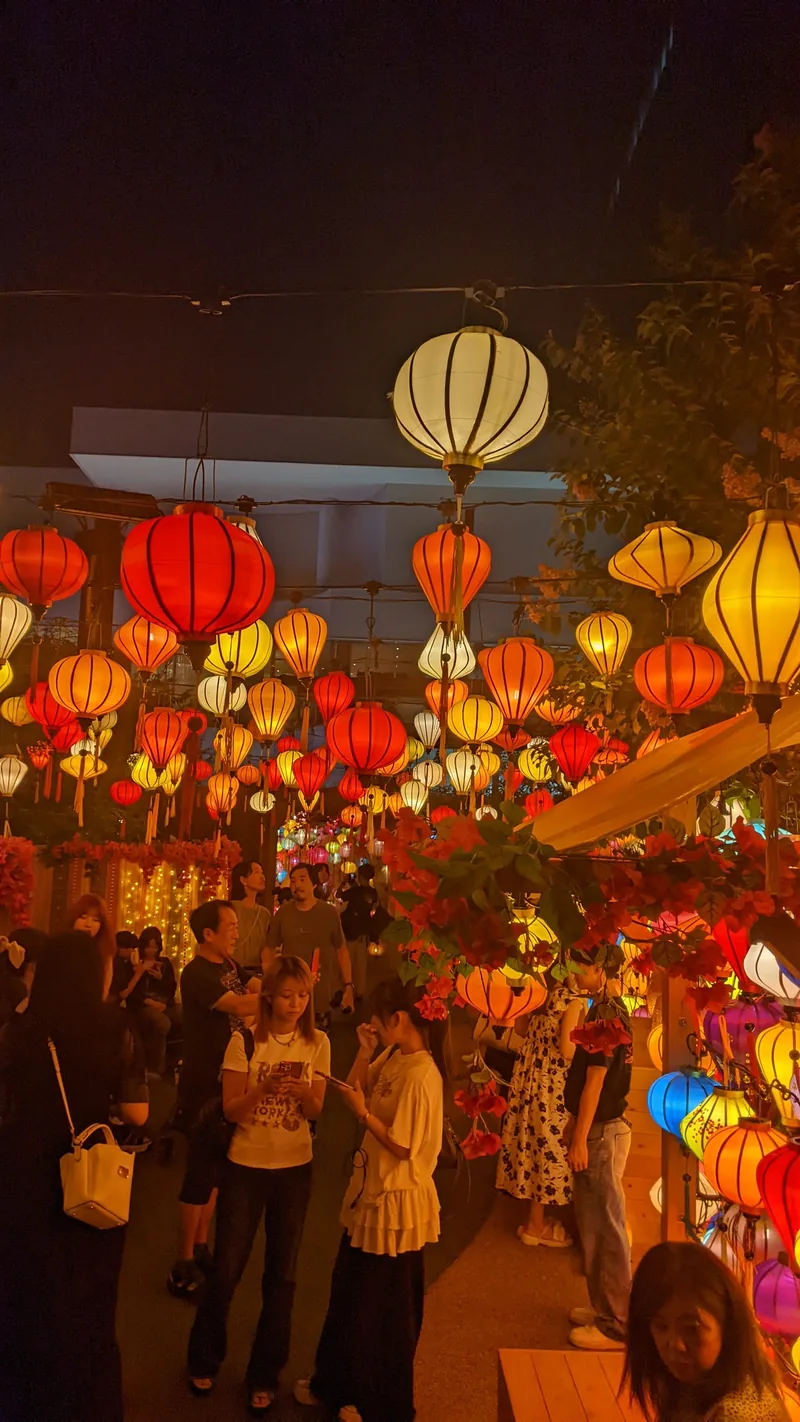
What struck me most was the contrast with Tokyo’s density. Chinatown was busy — of course it was — but it never tipped into the shoulder-to-shoulder crush of Shibuya or Asakusa. There was space to stop, to look up, to let a lantern-strung lane hold your attention without being carried along by the current of the crowd. That difference, small as it sounds, is the whole argument for Yokohama.
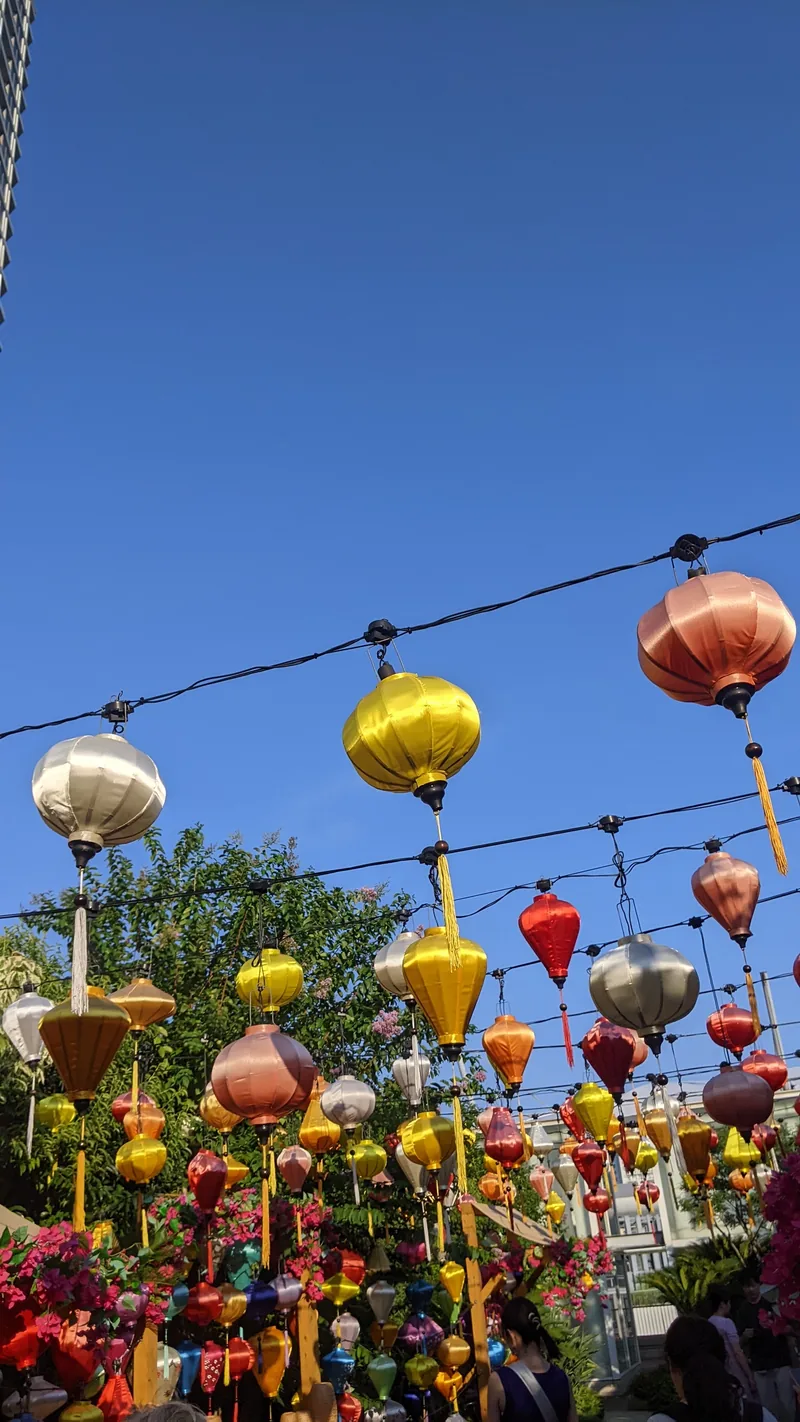
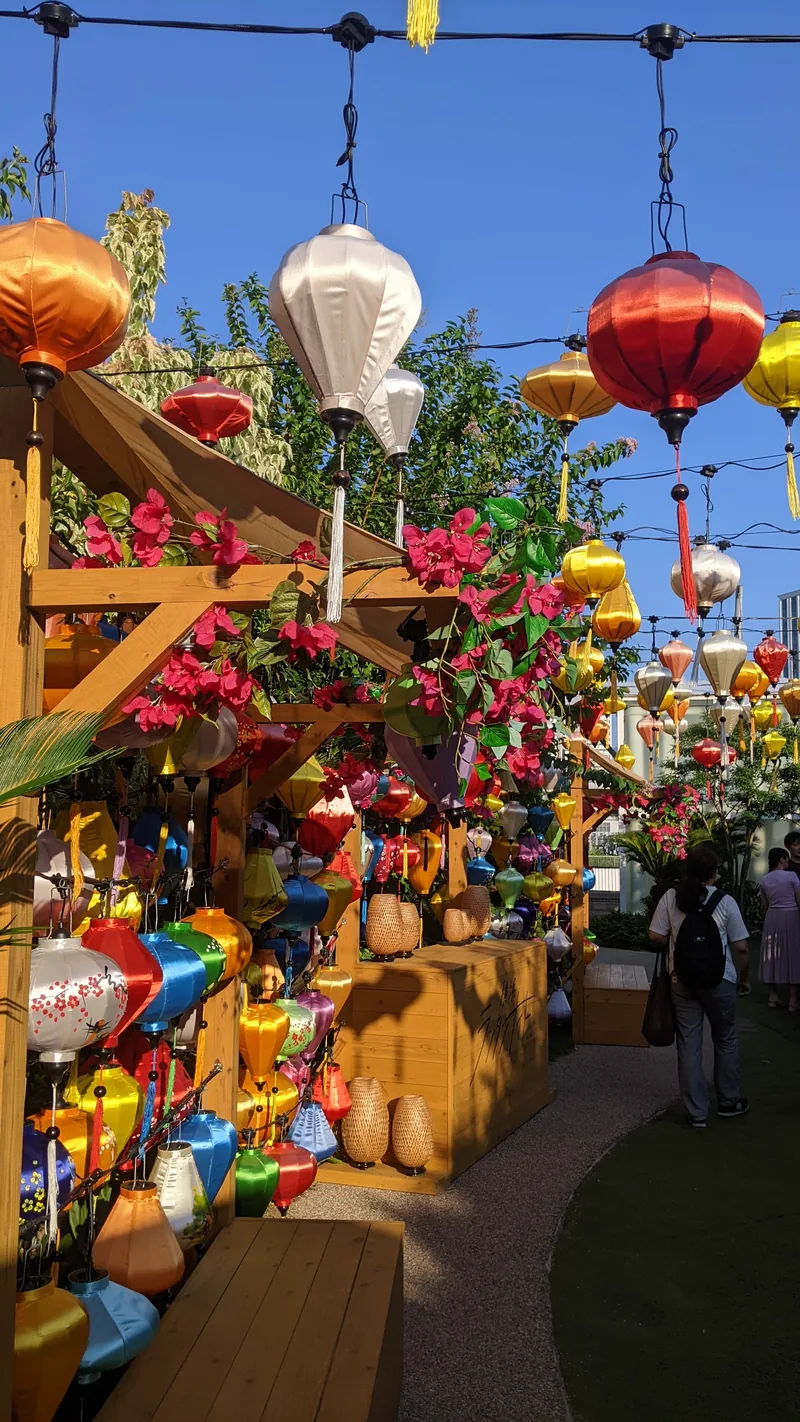
By day the same streets soften into something more like a market — stalls hung with lanterns, food counters, the everyday commerce of a neighbourhood that happens to be a landmark. It rewards a slow wander in either light.
“Yokohama has most of what draws you to Tokyo, delivered at a pace that lets you actually enjoy it.”
Rafick, walking YokohamaThe harbour opens the city up
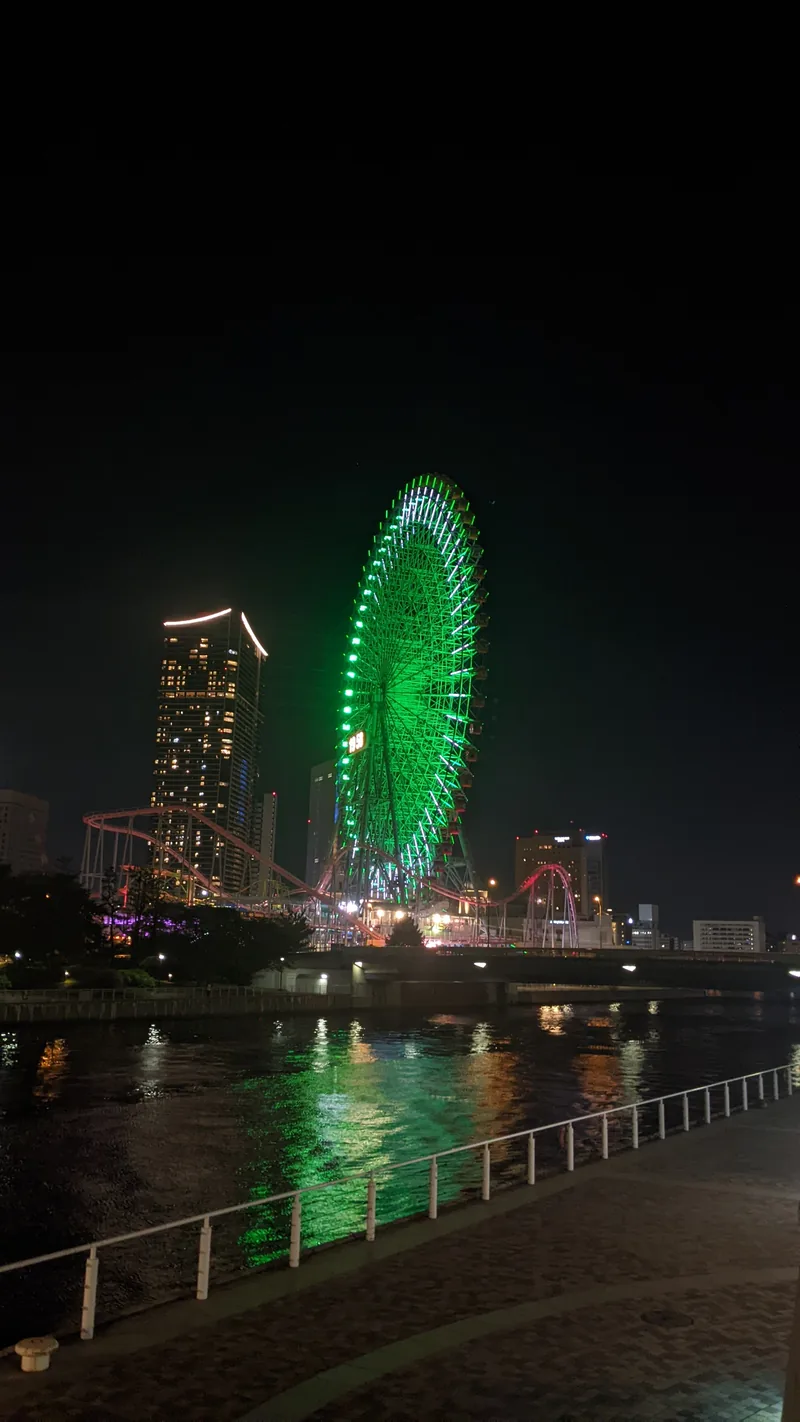
Where Tokyo turns inward — block after block of city with the water kept at arm’s length — Yokohama turns to face the sea. The Minato Mirai waterfront is the city’s great exhale: a wide harbour front of promenades, water, and open sky, anchored by the Cosmo Clock 21 ferris wheel turning slowly over the bay.
At night the wheel becomes the signature of the whole city, its rim shifting through colour, doubled in the still water below. After the enclosed intensity of Tokyo, standing at the water’s edge with the harbour spread out in front of me felt like taking a full breath for the first time in days.
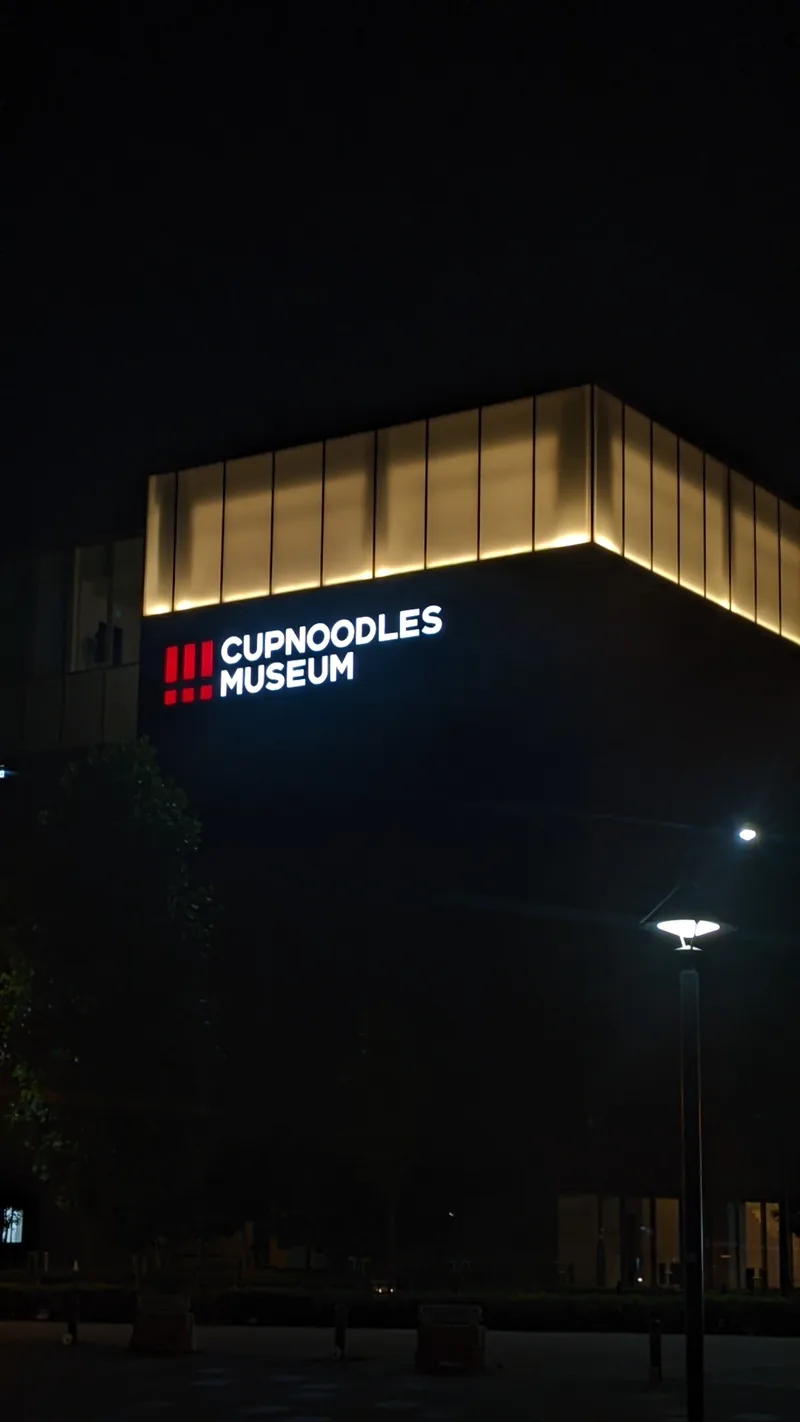
The waterfront has its share of modern attractions, too — among them the CupNoodles Museum, a sleek block on the harbour that is far more fun than it has any right to be. Lit against the night sky, it’s a reminder that Yokohama isn’t only trading on the old; it’s a working, contemporary port city that happens to be easy on the eye.
The night streets
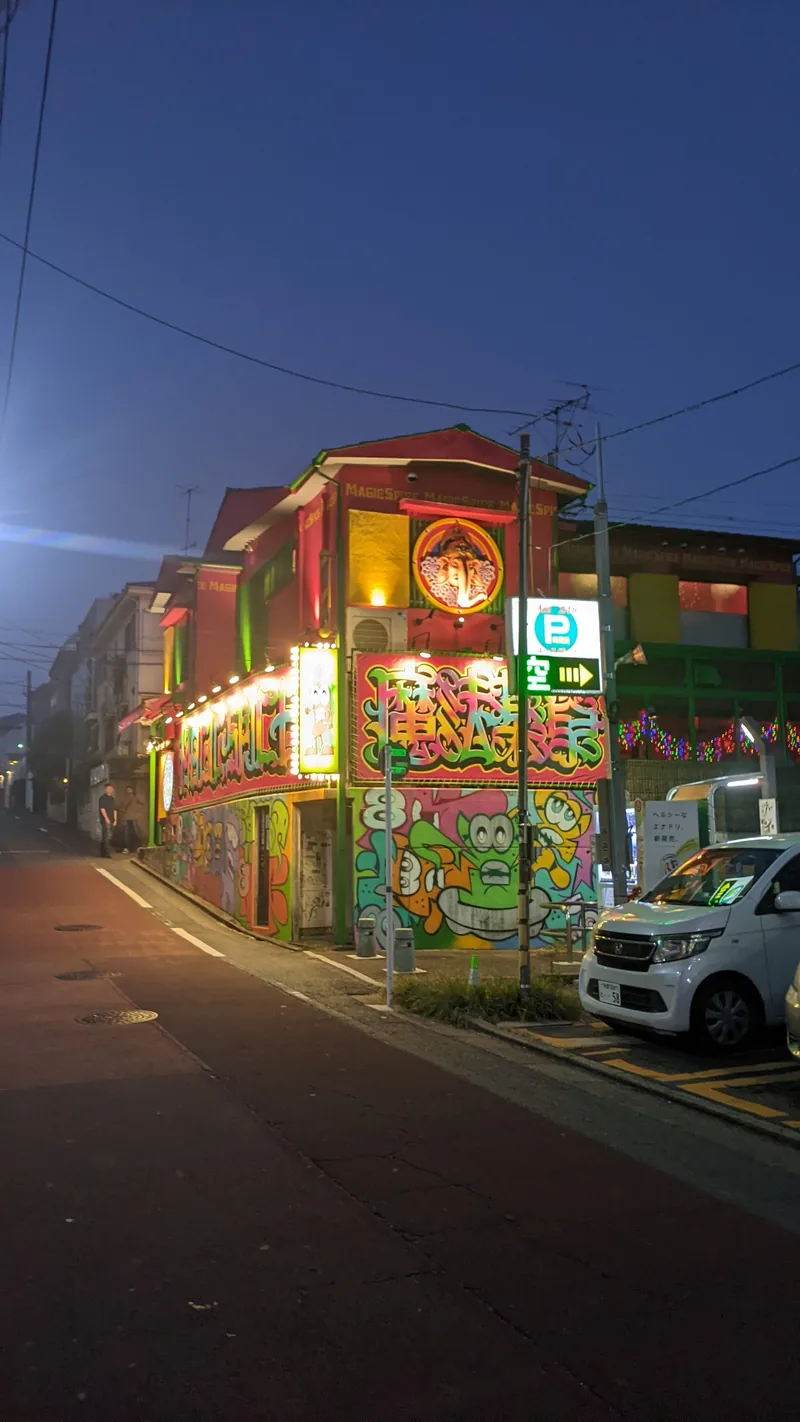
Away from the set-pieces, Yokohama at night is simply a pleasure to walk. The side streets carry the same lantern-and-neon glow as Tokyo, but you can hear yourself think in them. A brightly painted shopfront, a quiet lane lit gold, the hum of a port city winding down — this is the Yokohama that stays with you after the landmarks fade.
Why go to Yokohama at all
You could ask why bother, when Tokyo has everything. The answer is exactly that it has everything, all at once, all the time. Yokohama offers a version of the same pleasures — the food, the lanterns, the lights, the crowds — scaled to a size a person can hold. It is Tokyo with the volume turned down and a sea breeze added.
Take the train down in the late afternoon, walk Chinatown as the lanterns come on, then drift to the harbour for the ferris wheel and the water. By the time you head back to Tokyo, you’ll understand why the locals don’t think of Yokohama as a lesser city at all — just a calmer one.
Have you been to Yokohama, or found a calmer neighbour to a city you love?
Log in or sign up to share your thoughts below — we’d love to hear from you.
This post may contain affiliate links. Wakahi earns from qualifying purchases at no extra cost to you.