
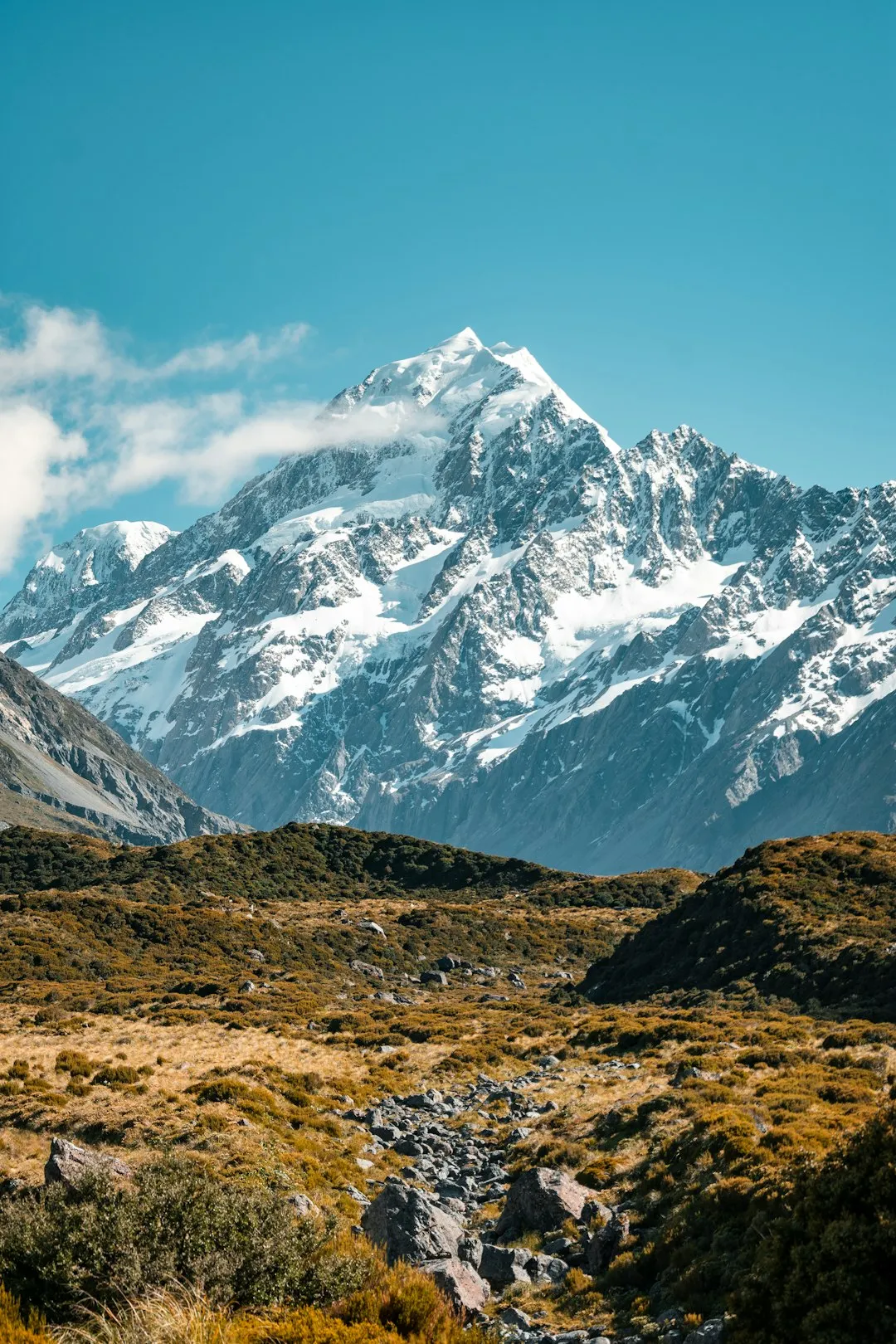
Mueller Hut Route
The Mueller Hut Route is a challenging alpine track in Aoraki/Mount Cook National Park, South Island, New Zealand. It ascends steeply from the Tasman Valley to the Mueller Hut, perched high on the Sealy Range, offering unparalleled, close-up views of Aoraki/Mount Cook, New Zealand's highest peak, and the surrounding glaciated landscape. This route is renowned for its dramatic elevation gain over a short distance, transitioning from subalpine scrub to alpine tussock and scree, culminating in a truly spectacular alpine experience. It is a popular day hike for fit individuals and an overnight stay for those wishing to immerse themselves in the alpine environment and witness sunrise or sunset over the Southern Alps.
- Distance: 10.4 km (one-way to the hut)
- Elevation Gain: 1050 m
- Duration: 6–8 hours (return day hike) or 1–2 days (overnight stay)
- Season: November to April (summer months)
- Difficulty: Challenging
- Closest City: Twizel
- Trailhead Access: Nearest airport: Christchurch (CHC). Drive to Mount Cook Village (4–5 hours). Limited bus services available. Road is sealed. Parking available at White Horse Hill Campground. No permits needed to hike but hut booking required.
- GPS Coordinates: Trailhead: -43.7167, 170.0933; Mueller Hut: -43.5833, 170.1333
Overview
The Mueller Hut Route is a quintessential alpine adventure, offering a direct and demanding ascent into the heart of the Southern Alps. From the trailhead at White Horse Hill Campground, the track immediately begins its relentless climb, a testament to the dramatic topography of Aoraki/Mount Cook National Park. The initial section winds through subalpine tussock and shrubland, providing increasingly expansive views of the Tasman Glacier and the imposing peaks that flank it, including Mount Sefton and Mount Cook itself. As the altitude increases, the vegetation thins, giving way to alpine meadows and then to rocky scree slopes. The final push to Mueller Hut is a steep, exposed climb, often involving navigating loose scree and rocky steps, demanding concentration and sure-footedness.
The reward for this strenuous effort is immense. Mueller Hut sits at an elevation of 1800 metres, offering a breathtaking, panoramic vista. Directly to the north, the majestic Aoraki/Mount Cook dominates the skyline, its snow-capped summit piercing the sky. To the east, the vast expanse of the Tasman Glacier, New Zealand's longest, stretches out, a frozen river of ice. Surrounding peaks such as Mount Dampier, Mount Cookson, and Mount Evelyn create a formidable amphitheatre of rock and ice. The hut itself is a basic but vital refuge, providing shelter and a place to rest while soaking in the unparalleled scenery. For overnight visitors, the opportunity to witness the alpenglow on Aoraki/Mount Cook at sunset and the first rays of dawn paint the mountains in hues of orange and pink is an unforgettable experience.
This route is not for the faint-hearted. The significant elevation gain and the often challenging terrain require a good level of fitness and preparedness. Weather in the alpine environment can change with extreme rapidity, with snow, high winds, and poor visibility possible at any time of year. However, for those who are well-prepared and physically capable, the Mueller Hut Route offers one of the most rewarding and visually stunning alpine experiences in New Zealand.
History and Cultural Context
The area surrounding Aoraki/Mount Cook has a deep and ancient connection to Māori, particularly the Ngāi Tahu iwi. Aoraki, the highest peak, is a significant ancestral mountain, steeped in legend and spiritual importance. The valleys and glaciers were historically traversed by Ngāi Tahu for resources and as part of their extensive network of routes across the South Island. The name "Aoraki" itself is said to derive from the Māori legend of Aoraki and his three brothers, who were sons of the sky father Rangi. When their canoe capsized, they were stranded on the mountain, and their bodies became the Southern Alps, with Aoraki's peak being the highest.
The modern history of the Mueller Hut Route is intrinsically linked to the early exploration and mountaineering efforts in the Mount Cook region. The construction of Mueller Hut itself was a significant undertaking, reflecting the growing interest in alpine exploration and tourism in the late 19th and early 20th centuries. The hut was first built in 1913 by the New Zealand Alpine Club, named after Ferdinand von Hochstetter, a geologist who explored the region in the 1860s. The original hut was a basic shelter, and it has been rebuilt and upgraded over the years to its current form, a testament to its enduring popularity and importance as a base for alpine activities.
The establishment of Aoraki/Mount Cook National Park in 1953 further cemented the area's status as a protected natural and cultural landscape. The park management, now under the Department of Conservation (DOC), aims to preserve the natural values, including the unique alpine flora and fauna, and to respect the cultural heritage of the Ngāi Tahu people. The Mueller Hut Route, while a challenging physical undertaking, also offers a journey through a landscape that has been significant for millennia, connecting modern visitors to the ancient stories and enduring power of the Southern Alps.
Seasonal Highlights and Weather Reality
The Mueller Hut Route is best experienced during the warmer months, from November to April, when the track is generally free of snow and ice, and the weather is more predictable, though still highly variable. This period is considered the "summer" season for alpine environments in New Zealand.
Summer (November to April): This is the prime season for hiking the Mueller Hut Route. The days are longer, and the subalpine and alpine flora are in bloom, adding splashes of colour to the landscape. The Tasman Glacier is more accessible, and the views of Aoraki/Mount Cook are often clearer. However, this is also the season for sandflies, which can be a significant nuisance, especially in the lower valley sections. Alpine weather remains a critical factor; even in summer, snow showers, high winds, and rapid temperature drops can occur, particularly at higher elevations. It is essential to be prepared for all conditions.
Autumn (April–May): The shoulder season can offer crisp, clear days with fewer sandflies and stunning autumn colours in the lower valleys. However, the risk of early snowfalls on the Sealy Range increases, and daylight hours shorten, requiring careful planning for overnight stays. The hut may have fewer wardens or facilities during this period.
Winter (May to October): The Mueller Hut Route is a serious alpine undertaking during winter. The track is often covered in snow and ice, requiring specialised equipment such as crampons, an ice axe, and avalanche safety gear. Navigation can be extremely difficult due to snow cover and poor visibility. The hut is still accessible but may have limited facilities, and the Department of Conservation strongly advises against attempting the route without advanced winter mountaineering skills and experience. Avalanche risk is a significant concern during this period.
Spring (October–November): While technically part of the "summer" season, early spring can still present winter conditions. Snow may linger on the upper sections of the track, and avalanche risk can persist. It is crucial to check current track conditions and weather forecasts meticulously before setting out.
Recommended Itinerary
Mueller Hut Route: Day Hike Option (6–8 hours return)
- Early Morning (approx. 8:00 AM): Start at White Horse Hill Campground car park. Begin the ascent on the well-marked track.
- Morning (approx. 8:00 AM - 11:00 AM): Ascend through subalpine tussock and shrubland. The track is steep and well-formed, with numerous switchbacks. Enjoy increasingly dramatic views of the Tasman Glacier, Mount Sefton, and the lower reaches of Aoraki/Mount Cook.
- Late Morning (approx. 11:00 AM - 1:00 PM): Reach the treeline and enter the alpine zone. The terrain becomes rockier and more exposed. Navigate scree slopes and rocky sections. The final push to Mueller Hut involves a steep climb over loose scree and rock.
- Midday (approx. 1:00 PM - 2:00 PM): Arrive at Mueller Hut (1800 m). Take time to rest, refuel, and absorb the spectacular 360-degree panoramic views of Aoraki/Mount Cook, Mount Tasman, and the surrounding glaciated peaks.
- Afternoon (approx. 2:00 PM - 5:00 PM): Begin the descent back to White Horse Hill Campground. The descent is steep and can be hard on the knees; take care on loose scree and rocky sections.
Mueller Hut Route: Overnight Stay Option (1–2 days)
Day 1: Ascent to Mueller Hut
- Morning (approx. 9:00 AM): Start at White Horse Hill Campground car park. Ascend the Mueller Hut Route.
- Midday: Reach Mueller Hut. Settle in, explore the immediate surroundings, and enjoy the afternoon views.
- Late Afternoon/Evening: Witness the sunset over the Southern Alps. The changing light on Aoraki/Mount Cook is a highlight.
- Night: Enjoy the stars from this incredible alpine location.
Day 2: Sunrise and Descent
- Early Morning: Wake up for sunrise over Aoraki/Mount Cook.
- Morning: Enjoy breakfast at the hut and take final photos.
- Late Morning: Begin the descent back to White Horse Hill Campground.
- Afternoon: Arrive back at the trailhead.
Important Notes:
- Hut bookings are essential and must be made in advance through the Department of Conservation (DOC) website.
- The track is steep and exposed in places. Good fitness and sturdy footwear are required.
- Weather can change rapidly. Always check the forecast before you go and be prepared for cold, wet, and windy conditions, even in summer.
- Carry sufficient water or a water treatment method, as water sources can be scarce or unreliable at higher elevations.
- Sandflies can be prevalent, especially in the lower sections during warmer months.
Planning and Bookings
Book Your Trip
Everything you need to plan your journey
Accommodation
Find places to stay near Twizel
Flights
Search flights to Twizel
Essential Preparation
The Mueller Hut Route is a challenging alpine trek that requires careful planning and preparation. Your journey will likely begin in Twizel, the closest town with comprehensive services, or directly from Mount Cook Village. From Christchurch International Airport (CHC), it's a scenic 4–5 hour drive to Mount Cook Village. While limited bus services operate to Mount Cook Village, self-driving offers the most flexibility. Ensure your vehicle is in good condition for the drive. Parking is available at the White Horse Hill Campground, which is also the trailhead for the Mueller Hut Route. Before you depart for the hike, it is crucial to check the Department of Conservation (DOC) website for any track alerts or closures, and to consult the MetService mountain forecast for the Aoraki/Mount Cook region. For overnight stays, booking the Mueller Hut well in advance is mandatory, as it is a very popular destination and capacity is limited.
Trail Accommodation
Mueller Hut: This is the only designated accommodation along the Mueller Hut Route. It is a serviced hut operated by the Department of Conservation (DOC).
- Booking Requirements: Mandatory booking through the DOC website is required for all stays, including day visitors who wish to use the facilities. Bookings are essential and should be made well in advance, especially during peak season (November to April).
- Facilities Provided:
- Bunk beds with mattresses (sleeping bags are essential; no bedding provided).
- Wood-burning stove for heating (firewood is provided, but users are expected to maintain the fire).
- Gas cookers for cooking (pots, pans, and utensils are not provided).
- Water supply from a nearby stream (treatment recommended).
- Composting toilets.
- Basic emergency communication equipment (satellite phone).
- A warden may be present during peak periods, but this is not guaranteed.
- What's NOT Provided: Food, cooking equipment (pots, pans, utensils), sleeping bags, pillows, personal toiletries, fuel for stoves (gas cookers are provided but you must bring your own fuel), electricity, charging facilities, or mobile phone reception.
- Seasonal Availability: The hut is generally accessible year-round, but conditions vary drastically. The "Great Walks" season (typically November to April) offers the most favourable conditions for access and use. Outside this period, winter mountaineering skills and equipment are essential.
- Costs: Hut fees are typically NZ$30 per person per night for adults. Check the DOC website for current pricing.
Day Hike: This is a challenging day hike requiring no overnight accommodation. However, visitors should be prepared for alpine conditions and carry all necessary supplies.
Required Gear
- Sturdy Hiking Boots: Waterproof, ankle-supporting boots are essential for the steep, rocky, and potentially slippery terrain. Ensure they are well broken-in to prevent blisters.
- Waterproof and Windproof Outerwear: A high-quality waterproof and breathable jacket and overtrousers are non-negotiable. Weather can change rapidly, and you can expect rain, wind, and even snow.
- Warm Layers: Multiple layers of synthetic or merino wool clothing are crucial. This includes a base layer, insulating mid-layer (fleece or down jacket), and a warm hat (beanie) and gloves.
- Sleeping Bag: If staying overnight, a 3-season sleeping bag (rated to at least 0°C comfort) is required, as the hut is unheated and can be cold.
- Backpack: A comfortable day pack (20-30 litres) for a day hike, or a larger pack (40-50 litres) if staying overnight, with a rain cover.
- Navigation Tools: A map of the area, a compass, and a GPS device or smartphone with offline maps are recommended. While the track is generally well-marked, visibility can be poor.
- Head Torch: Essential for overnight stays and for any unexpected delays, even on a day hike. Bring spare batteries.
- First-Aid Kit: Comprehensive kit including blister treatment, pain relievers, bandages, antiseptic wipes, and any personal medications.
- Sun Protection: High SPF sunscreen, sunglasses, and a wide-brimmed hat. The sun's intensity is amplified at altitude, even on cloudy days.
- Insect Repellent: Strong repellent (containing DEET) is highly recommended for sandflies, especially in the lower sections of the track during warmer months.
What to Bring
- Food: For a day hike, bring plenty of high-energy snacks and a packed lunch. For an overnight stay, pack all meals and snacks for your duration, plus extra for emergencies. Consider lightweight, high-calorie options.
- Water: Carry at least 2-3 litres of water per person for a day hike. For overnight stays, carry sufficient water or a reliable water filter/purification tablets, as the stream water at the hut should be treated.
- Cooking Equipment (for overnight stays): If planning to cook at Mueller Hut, bring your own portable stove and fuel, cooking pot, utensils, plate, bowl, and cup.
- Toiletries: Biodegradable soap, toothbrush, toothpaste, toilet paper, hand sanitiser.
- Trekking Poles: Highly recommended for both ascent and descent, especially on the steep and loose sections, to reduce strain on knees and improve stability.
- Emergency Shelter: A lightweight emergency bivy bag or space blanket is a prudent addition to your gear.
- Camera: To capture the incredible scenery.
- Cash: For any potential purchases in Mount Cook Village or Twizel.
Permits
For hiking the Mueller Hut Route as a day trip, no specific permit is required. However, access to Aoraki/Mount Cook National Park itself does not require a permit for day visitors. The primary requirement for utilising the Mueller Hut for an overnight stay is a booking made through the Department of Conservation (DOC). These bookings are essential and should be secured well in advance, particularly during the peak summer season (November to April), as the hut has limited capacity and is extremely popular.
Booking Mueller Hut:
- Where to Book: Bookings are made online via the Department of Conservation's official website.
- When to Book: Bookings open on a specific date each year for the following season. It is advisable to check the DOC website for the exact booking opening dates. Due to high demand, it is recommended to book as soon as bookings become available.
- Cost: The current fee for staying at Mueller Hut is NZ$30 per person per night for adults. Prices are subject to change, so always verify on the DOC website.
- What the Fee Covers: The fee contributes to the maintenance and upkeep of the hut and the track.
National Park Entry: Entry into Aoraki/Mount Cook National Park is free for day visitors. There are no entry fees or permits required for general hiking and sightseeing within the park boundaries, provided you are not engaging in commercial activities or requiring specific permits for activities like mountaineering expeditions.
Helicopter/Ski Plane Access: If you plan to access the area via helicopter or ski plane for scenic flights or glacier landings, these services are operated by private companies and will have their own booking procedures and costs. These are separate from DOC hut bookings.
Other Activities in the Area
Aoraki/Mount Cook National Park offers a wealth of activities beyond the Mueller Hut Route, catering to various interests and fitness levels:
- Hooker Valley Track: A relatively flat and accessible 3-hour return walk offering stunning views of Aoraki/Mount Cook, Mueller Lake, and Hooker Lake, with swing bridges and boardwalks.
- Tasman Glacier View Track: A short, steep climb to a viewpoint overlooking the Tasman Glacier and its terminal lake, often dotted with icebergs.
- Sealy Tarns Track: Another challenging ascent, often combined with the Mueller Hut Route, leading to a series of alpine tarns with excellent views.
- Mount Cook Village Exploration: Visit the Sir Edmund Hillary Alpine Centre for insights into the region's mountaineering history and natural environment. Explore the village, enjoy the visitor centre, and take in the immediate surroundings.
- Scenic Flights: Experience the grandeur of the Southern Alps from the air with helicopter or ski plane tours. These flights often include glacier landings, offering a unique perspective on the vast ice fields and towering peaks.
- Glacier Kayaking/Boating: Take a boat tour or kayak on Tasman Lake to get up close to icebergs calved from the Tasman Glacier.
- Mountaineering and Climbing: For experienced climbers, the region offers numerous challenging peaks and routes, including ascents of Aoraki/Mount Cook itself.
- Stargazing: Aoraki Mackenzie International Dark Sky Reserve surrounds the park, making it an exceptional location for stargazing. On clear nights, the Milky Way and southern constellations are spectacular.
Safety and Conditions
Weather: The most critical safety consideration for the Mueller Hut Route is the unpredictable alpine weather. Conditions can change from clear and calm to blizzard-like with high winds, heavy rain, snow, and zero visibility within minutes. Always check the MetService mountain forecast for Aoraki/Mount Cook before you depart and be prepared to turn back if conditions deteriorate. Hypothermia is a real risk, even in summer.
Terrain: The track is steep and challenging, particularly the final ascent to Mueller Hut. The upper sections involve navigating loose scree and rocky slopes, which can be unstable. Wear sturdy, broken-in hiking boots with good ankle support. Trekking poles are highly recommended to aid balance and reduce strain on your knees during the descent.
Fitness: This route requires a good level of physical fitness. The significant elevation gain over a relatively short distance can be demanding. If you are not accustomed to steep ascents, consider starting with shorter, less strenuous walks in the area.
Sandflies: Sandflies are prevalent in the lower valley sections, especially during warmer months. They are small but persistent biting insects. Carry effective insect repellent (containing DEET) and wear long sleeves and trousers when stationary to minimise bites.
Water: While water is available from streams, it is essential to treat all water before drinking to avoid gastrointestinal illnesses. Carry a water filter or purification tablets.
Navigation: Although the track is generally well-marked, visibility can be severely reduced in fog or snow. Carry a map, compass, and GPS device or smartphone with offline maps, and know how to use them. Inform someone of your plans, including your expected return time.
Emergency: Mueller Hut is equipped with a satellite phone for emergency use. Familiarise yourself with its operation before you go. For serious emergencies, contact emergency services via the satellite phone or by signalling for help if possible.
Avalanche Risk: Outside of the summer months (November to April), avalanche risk can be significant. If you are hiking during spring or autumn, or in winter, consult avalanche forecasts and be equipped with appropriate safety gear (transceiver, probe, shovel) and knowledge.
Side Trips and Points of Interest
Sealy Tarns: Located approximately 1.5 km before Mueller Hut, the Sealy Tarns offer a stunning detour. The track ascends steeply to a series of small alpine lakes that perfectly reflect the surrounding peaks, including Aoraki/Mount Cook. The views from the tarns are exceptional, providing a different perspective on the glaciated landscape. This side trip adds approximately 1–1.5 hours to your journey.
Mueller Glacier Lookout: A short, easy walk from the Mueller Hut itself leads to a viewpoint offering direct views down the Mueller Glacier. This is a fantastic spot to observe the immense scale of the glacier and the icefalls.
Aoraki/Mount Cook Summit Views: While reaching the summit of Aoraki/Mount Cook is a serious mountaineering expedition, the views of the mountain from Mueller Hut and the surrounding ridges are unparalleled. The hut provides a front-row seat to witness the changing light on its iconic peak throughout the day.
Tasman Glacier Views: From various points along the ascent and descent, and particularly from the hut, you can observe the vast expanse of the Tasman Glacier, New Zealand's longest glacier. Its scale is awe-inspiring, and the icefalls and moraines offer a glimpse into the powerful forces of glaciation.
Alpine Flora and Fauna: Keep an eye out for the unique alpine plants that survive in this harsh environment, such as alpine daisies, celmisias, and tussock grasses. If you are lucky, you might spot native birds like the kea (the world's only alpine parrot) or the rock wren.
Leave No Trace
The Mueller Hut Route traverses a fragile alpine environment within Aoraki/Mount Cook National Park, a UNESCO World Heritage Area. Adhering to Leave No Trace principles is paramount to preserving this unique landscape for future generations.
Plan Ahead and Prepare: Research the route, check weather forecasts, and be prepared for all conditions. Book your accommodation well in advance. Know your limits and choose a hike that matches your fitness level.
Travel and Camp on Durable Surfaces: Stick to the marked track at all times. The alpine vegetation is slow-growing and easily damaged. Avoid walking on mosses and lichens. If staying overnight, use the designated hut facilities and avoid camping outside of designated areas.
Dispose of Waste Properly: Pack out everything you pack in, including all food scraps, wrappers, and any other litter. Use the composting toilets provided at Mueller Hut and follow the instructions for their use. Do not bury human waste or toilet paper; pack it out.
Leave What You Find: Do not remove any natural objects, such as rocks, plants, or flowers. Take only photographs and memories.
Minimise Campfire Impacts: Campfires are not permitted on the Mueller Hut Route. Use portable stoves for cooking.
Respect Wildlife: Observe wildlife from a distance and never feed them. Feeding kea, for example, can lead to them becoming dependent on human food, which is often unhealthy for them and can lead to them damaging property.
Be Considerate of Other Visitors: Keep noise levels down, especially in the hut. Yield to uphill walkers. Share the trail and the experience respectfully.
 New Zealand