From the rice plain to the Sanctuary of Oropa
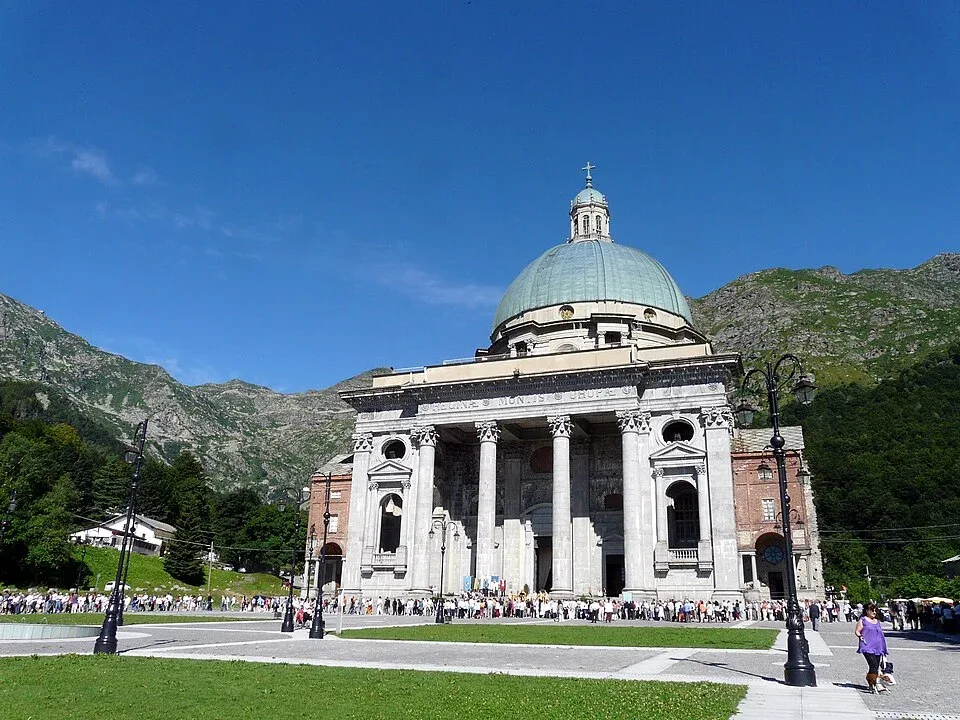
From Santhià railway station, follow farm tracks across the rice-growing plain towards Roppolo. On the fourth day the path climbs through the foothills of the Biellese Alps to the courtyards of the Sanctuary of Oropa. This is the Serra walking route via Roppolo, Sala Biellese and Graglia, about 65 km. The mountain streams on the last approach make the choice of path especially important after heavy rain.
Arriving by train and returning from Oropa
The walk starts at Santhià railway station on the Turin–Milan line. Follow the walking signs towards Roppolo and download the operator’s four-stage maps before leaving. Yellow arrows point towards Oropa. At the sanctuary, ATAP bus 360 takes you to Biella San Paolo railway station via Favaro. Check the last departure and any service notices for your walking day before leaving Graglia. You can buy a bus ticket at the sanctuary reception. The optional walk down to Biella adds another stage.

Four days on the Serra route
Total ascent is about 1,825 m, adding the operator’s published climbs for the four main stages via Sala Biellese and the D1 finish.
Day 1 · Santhià to Roppolo, 16.5 km, 200 m ascent
Follow the Via Francigena across fields and rice paddies to Cavaglià. Much of the approach is in full sun. Fill your bottle before leaving town and use the two rest-area fountains along the way when operating. Beyond Cavaglià the path enters woodland and climbs towards Roppolo, where the castle overlooks Lake Viverone.
Day 2 · Roppolo to Sala Biellese, 17.6 km, 360 m ascent
After a clearing with three old chestnut trees, the path climbs through vines and orchards to the fortified hamlet above Viverone. Look back across the lake to see the arc of the moraine that the walk is following. Continue through Zimone to the monastery at Bose, then past the Romanesque church of San Secondo towards Magnano and the wooded ridge. Stay on the Sala Biellese line for the overnight stop. Lodging in Torrazzo puts you on a different start for the next stage.
Day 3 · Sala Biellese to the Sanctuary of Graglia, 15.7 km, 510 m ascent
From the parish church turn towards the Torrazzo road and pick up the woodland path to the small lake at Cossavella. The route leaves the moraine at Donato, a place to buy lunch and refill water. The remaining hillside paths repeatedly climb and drop before reaching the sanctuary below Mombarone.
Day 4 · Graglia to Oropa, 14.8 km, 755 m ascent
A steep mule track drops to the Elvo before the path climbs through Sordevolo. Continue by the oratory of San Barnaba and the villages above the plain. Between Chiavolino and Favaro a signed junction offers the Tramvia alternative. The main D1 path climbs through several fords to Oropa. The last crossing, about a kilometre before the sanctuary, can be dangerous in high water. After heavy rain take the operator’s Tramvia variant at the earlier junction, or postpone the stage if conditions are uncertain. The operator gives 14.4 km and 690 m of climbing for the whole Graglia–Oropa day via the Tramvia. The old tram alignment avoids the D1 fords but includes about a kilometre on a paved road near Oropa, where holiday traffic can be busy.
Heat on the plain and ice in the foothills
The Serra is a year-round route. In July and August, an early start helps on the unshaded rice plain. The operator recommends a one- to two-litre bottle or reservoir, sun protection and insect repellent. On day four there are village fountains at Sordevolo and Favaro before the final climb. Ask your host which are working and fill up before leaving the villages.
In the shorter days of December to February, check the upper paths for snow and ice before setting out from Graglia. Rain overnight can raise the streams even if the weather has cleared when you reach the Tramvia junction. If the water rises or a path closes after you pass the junction, turn back while the approach is safe and discuss the alternative or a pickup with your host. Favaro is also on the 360 bus route.
Phone reception can drop along the walk. Download the maps in the official SlowBi app before leaving town so you can locate the signed junctions offline. In an emergency in Piedmont call 112. Give your coordinates or nearest village, the path you took and which side of a stream you are on.

Choosing overnight stops and arranging meals
Reserve Roppolo, Sala Biellese and Graglia before you leave Santhià, especially in the busy spring months. Ask what comes with the bed. At the pilgrim cabin in Sala Biellese, sheets and towels are an extra service. A shared bunk at the Graglia sanctuary hostel excludes sheets and towels. The hostel asks walkers to bring a sleeping bag and offers sheet rental. Confirm your choice when reserving. Accommodation on the Viverone lakeshore or in Torrazzo changes the signed route you need the following morning.
Arrange the evening meal as well as the bed. Graglia’s hostel breakfast is separate. If the sanctuary restaurant is closed, ask the foresteria about the local catering service before arriving. The operator advises that walkers can eat a cold picnic at participating lodgings but cannot count on a kitchen for cooking. Buy lunch at a village shop while it is open. Smaller restaurants can have extra closing days outside summer.
The pilgrim credential is optional. If you want to collect stamps, the operator explains where to collect it and how to arrange accommodation independently or through its booking service. Allow time at Oropa itself before taking the bus down to Biella.

Book Your Trip
Everything you need to plan your journey
Accommodation
Find places to stay near Santhià