
Keywords: Cape Brett Track difficulty, Cape Brett Hut, Northland hiking, DOC track, tramping NZ, coastal walk
Is Cape Brett Track Really Hard?
The Cape Brett Track in Northland has a reputation as one of New Zealand’s toughest coastal walks. In truth, it is a moderate two-day tramp for prepared hikers — long, steady, and demanding, but not extreme. The reason it feels “hard” to many is because they underestimate its distance, repeated climbs, exposure, and conditions. If you know what to expect, the Cape Brett Track is challenging in the best possible way and one of the country’s most rewarding coastal adventures.
The True Cape Brett Track
When trampers talk about the Cape Brett Track, they mean the official two-day DOC tramp from Ōke Bay (Rawhiti Road) to Cape Brett Hut and back:
- Start/Finish: Ōke Bay, Rawhiti Road
- End point: Cape Brett Hut (near the lighthouse)
- Distance: ~16.3 km each way (~32 km return)
- Elevation gain: ~700 m each way (~1400 m return)
- Time: DOC suggests 7–8 hrs each way. Fast trampers may do it in 6; many groups take 9+ hrs with breaks.
- Style: two full days, with an overnight at Cape Brett Hut.
Breaking Down the Route
The Cape Brett Track is not a single big climb but a series of repeated ups and downs. Here’s how the walk unfolds:
- Ōke Bay to the ridges: a steep, direct climb from sea level. Within the first hour, you gain significant height.
- Rolling ridgelines: a mix of descents and climbs that drain energy more than a single steady slope would.
- Forest stretches: beautiful native bush, but often muddy and tangled with roots after rain — slowing progress considerably.
- Exposed ridge tops: with no shade, trampers are exposed to sun, salt wind, and sweeping views across the Bay of Islands.
- The lighthouse ridge: the final approach is narrow, with drops on both sides. You see the hut long before you arrive — a psychological test that makes the last hour feel longer than it is.
Elevation and Why It Feels Tough
Each way involves around 700 m of climbing. That doesn’t sound extreme, but the effort is spread across multiple climbs and descents. By the time you reach the hut, you have walked for 7–8 hrs with no flat reprieve. The return trip doubles that, bringing the total to ~32 km and ~1400 m elevation gain. For fit trampers, this is manageable. For those without endurance training, it can feel brutal.
Weather and Track Conditions
The track is exposed to everything Northland can throw at you:
- Summer: hot and humid with little shade, making dehydration a real risk.
- After rain: slippery mud and roots slow trampers by hours.
- Wind: strong gusts hit the ridgelines and the exposed approach to the hut.
- Winter: shorter daylight means less margin for error.
Many trampers who describe Cape Brett as “hard” simply didn’t expect these conditions to combine with the distance.
Fitness and Preparation
For fit, experienced trampers, Cape Brett is a steady but moderate tramp — a long coastal walk with stunning scenery. For the unprepared, it feels much harder. Common mistakes include:
- Setting off as though it were a short coastal cruise
- Carrying heavy, overloaded packs
- Stopping too often for long breaks and photo sessions
- Failing to bring enough water (2–3 litres recommended)
- Underestimating DOC times, returning late and exhausted
This mismatch between expectation and reality is the real reason the track has a “hard” reputation.
Should You Hike Cape Brett Alone?
While DOC does not forbid solo hiking, the Cape Brett Track is best not done alone. It is long, remote, and exposed. If you suffer an injury, fatigue, or bad weather, help could be many hours away. Walking with at least one partner, or better, as part of a group, makes the trip far safer and far more enjoyable. Groups also pace each other and make the long hours less draining. For many, the shared hut experience — cooking together, sharing stories, and watching sunrise as a group — is as memorable as the tramp itself.
Cape Brett Hut
- 23 bunks with mattresses
- Basic facilities: toilets, untreated water (must be boiled or filtered)
- Bookings: essential in advance (DOC system)
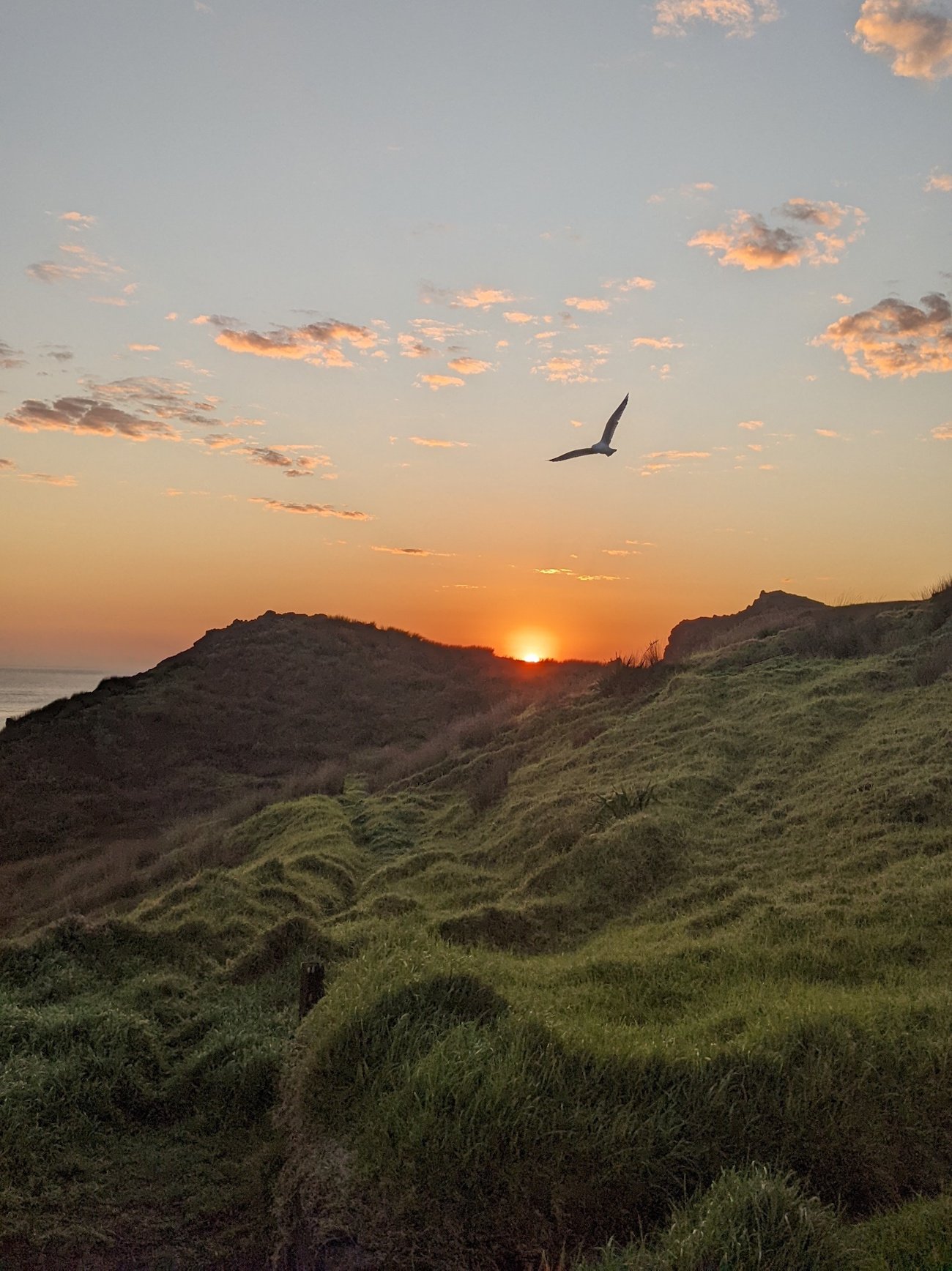
- Highlights: sunrise over the Pacific, sunset back toward the Bay of Islands, gannets soaring near the lighthouse cliffs
Waking up to the dawn light at Cape Brett is unforgettable and turns a demanding walk into a treasured memory.
Safety and Logistics
Once you’re committed to the Cape Brett Track, there are no easy exit routes. The main option is to walk back the way you came. In case of injury or exhaustion, some trampers arrange a water taxi pick-up from Deep Water Cove the next day — but this must be organised in advance and should never be relied on as a last-minute escape. Cell reception is patchy, so do not assume you can call for help. Always carry a personal locator beacon (PLB), a headlamp with spare batteries, and a good raincoat and warm clothing.
Why the Reputation?
The Cape Brett Track isn’t “hard” because of extreme alpine terrain. It is considered tough because many attempt it unfit, unprepared, or with the wrong mindset. Those who treat it as a picnic outing often stagger out exhausted. Those who respect the distance, prepare properly, and tramp it as a two-day hike with companions usually find it moderate, steady, and highly rewarding.
A Side Note on Variations
Some trampers use the Deep Water Cove water taxi to shorten the walk. While this can create day trip options, it is not the full Cape Brett Track. The true tramp remains the 2-day Ōke Bay to Cape Brett Hut return.
Quick Checklist
- Plan for two long days — 7–8 hrs each way
- Book Cape Brett Hut in advance
- Carry 2–3 litres of water daily
- Light pack: food, raincoat and warm/waterproof layers, sun protection
- Expect mud, wind, and relentless ups and downs
- Bring a PLB and tell someone your plans
- Headlamp and spare batteries — essential if delayed
- Don’t go alone — best with at least one partner, ideally a group
- Only use a water taxi as a fallback if pre-arranged — not as a guaranteed exit
Bottom line: The Cape Brett Track is not an extreme mission — it is a moderate, demanding tramp best done as a two-day return. Its “hard” reputation comes from those who underestimate it. Prepare properly, tramp with others, and you’ll find it one of the most stunning and rewarding coastal walks in Aotearoa.
Have you walked Cape Brett? Share your story in the Wakahi Forum.