
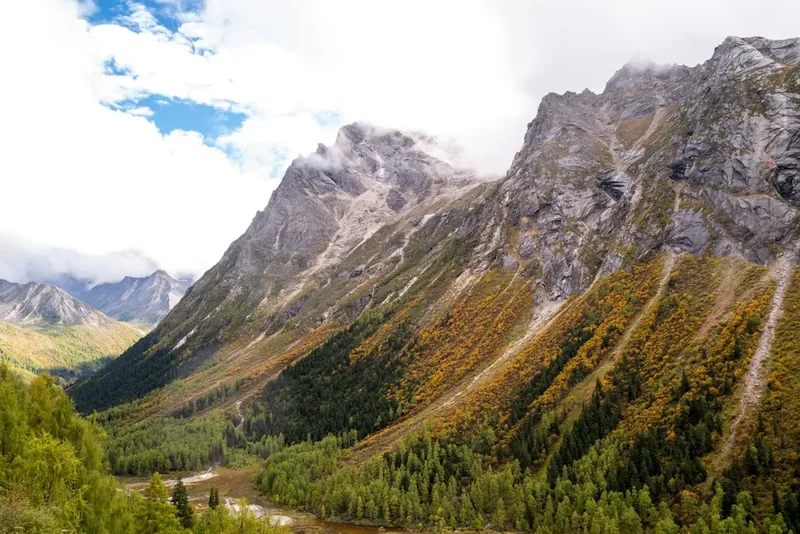
Zhangjiajie National Forest Trail - The Floating Peaks of Wulingyuan
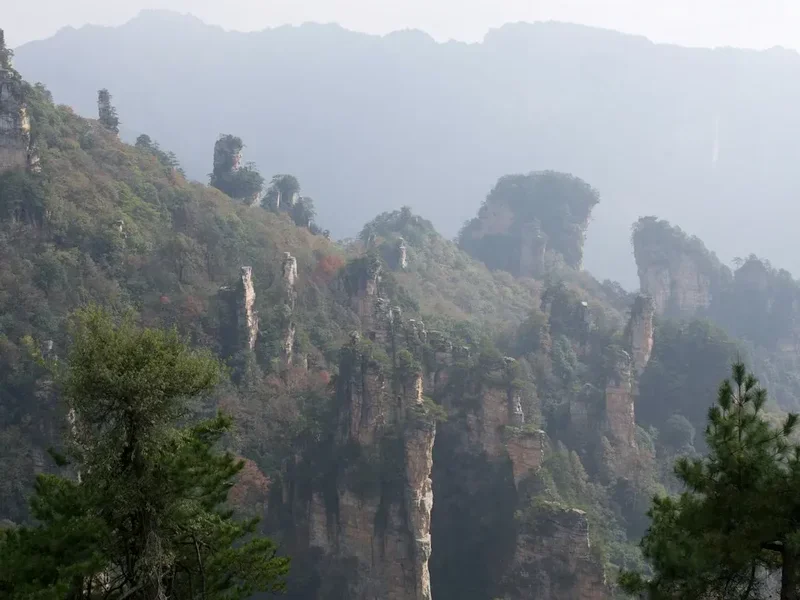
The Zhangjiajie National Forest Trail is a journey into a landscape so surreal it served as the primary inspiration for the floating Hallelujah Mountains in James Cameron’s "Avatar". Located within the Wulingyuan Scenic Area in China’s Hunan Province, this 39.7 km multi-day route traverses a labyrinth of over 3,000 quartzite-sandstone pillars, some rising over 1,000 metres into the mist. This is not a traditional wilderness trek through horizontal plains; it is a vertical odyssey through a "forest" of stone. The trail weaves through deep, subtropical canyons, climbs thousands of ancient stone steps, and skirts the edges of precipitous cliffs that offer views of a geological phenomenon found nowhere else on Earth. Walking this trail is an exercise in scale, where the sheer verticality of the landscape humbles the traveller and the ever-shifting mountain mists create a living gallery of traditional Chinese ink wash paintings.
- Distance: 39.7 km (total circuit including major spurs)
- Duration: 2–3 days
- Season: April–May and September–October (avoiding peak summer heat and winter ice)
- Accommodation: Guesthouses in nearby villages or hotels in Wulingyuan and Zhangjiajie City
- Highest point: Tianzi Mountain (1,262 m)
- Difficulty: Challenging (due to extreme elevation changes and thousands of stone steps)
- Direction: Flexible, though typically started from the Zhangjiajie Village entrance
Overview
The Zhangjiajie National Forest Trail is the crown jewel of the Wulingyuan Scenic and Historic Interest Area, a UNESCO World Heritage site since 1992. The landscape is dominated by "Zhangjiajie Landform," a unique geological structure characterised by towering sandstone columns formed by millions of years of physical erosion, water expansion, and tectonic uplift. Unlike the rounded peaks of the karst mountains in Guilin, the pillars here are sharp, angular, and often topped with resilient pine trees that seem to grow directly out of the bare rock. The trail system is a complex network of paved stone paths, staircases, and occasional dirt tracks that connect the park’s primary scenic zones: the Golden Whip Stream, Yuanjiajie, Yangjiajie, and Tianzi Mountain.
The experience of walking Zhangjiajie is defined by the contrast between the valley floor and the high plateaus. At the base, the Golden Whip Stream offers a lush, humid environment where the air is thick with the scent of damp earth and the sound of rushing water. Here, the pillars tower above you, blocking out the sun and creating a cathedral-like atmosphere. As you ascend—either by the gruelling "Southern Sky Column" steps or the modern marvel of the Bailong Elevator—the perspective shifts entirely. From the rim of the plateaus, you look down upon a sea of stone peaks. On misty days, which occur frequently due to the region’s high humidity, the bases of the pillars are obscured, making the summits appear to float in mid-air. This ethereal quality is what has drawn poets, painters, and now millions of hikers to this remote corner of Hunan.
While the park is a major international tourist destination, the full 39.7 km trail allows hikers to escape the most crowded "shuttle bus" viewpoints. By committing to the longer walking routes, particularly in the Yangjiajie and lower Golden Whip sections, you can find pockets of profound silence where the only sounds are the calls of the resident rhesus macaques and the wind whistling through the sandstone crevices. This trail is a physical test of endurance, requiring strong knees for the thousands of descending steps and a steady head for the narrow cliffside walkways, but the reward is a front-row seat to one of the most spectacular geological displays on the planet.
History and Cultural Context
For centuries, the towering pillars of Zhangjiajie remained largely unknown to the outside world, protected by the rugged terrain of the Wuling Mountains. The area was the ancestral home of the Tujia, Miao, and Bai ethnic minority groups. For these people, the mountains were not merely a scenic wonder but a spiritual sanctuary. Many of the peaks and rock formations bear names derived from local legends and folklore, such as the "Imperial Brush Peaks" or the "Fairies Scattering Flowers," reflecting a deep cultural connection to the shapes found in the stone. The Tujia people, in particular, have a rich history in the region, known for their unique architecture, vibrant brocade, and the "Crying Marriage" tradition.
The modern history of Zhangjiajie as a destination began in the late 1970s. In 1979, the renowned Chinese landscape painter Wu Guanzhong visited the area and was so captivated by its beauty that he published an essay titled "A Pearl in the Deep Forest," which sparked national interest. In 1982, Zhangjiajie was recognised as China’s first National Forest Park. The global profile of the park exploded in the 21st century, particularly after the release of the film "Avatar" in 2009. While the film was not shot on location, the production designers acknowledged that the Southern Sky Column (now officially renamed the Avatar Hallelujah Mountain) was the primary inspiration for the film's floating landscapes. This connection has transformed the trail from a regional hiking route into a global bucket-list destination.
Despite the rapid development of tourism infrastructure, including cable cars and the world’s tallest outdoor elevator, the core of the park remains a protected wilderness. The UNESCO designation in 1992 and the subsequent Global Geopark status in 2004 have ensured that the unique "Zhangjiajie Landform" is preserved. For the hiker, the history of the trail is visible in the ancient stone paths that predate the modern stairs, and in the small shrines tucked into cliffside alcoves, reminding travellers that they are walking through a landscape that has been venerated for generations.
Want more background? Read extended notes on history and cultural context → Learn more
Seasonal Highlights and Weather Reality
Zhangjiajie has a humid subtropical monsoon climate, meaning weather is a defining factor of any trek. The mountains are often shrouded in clouds, which adds to the mystery but can also obscure the very views you’ve travelled to see. Understanding the seasonal nuances is essential for a successful trip.
Spring (April to May): This is widely considered the best time for hiking. The forest is in full bloom, the streams are high from spring rains, and the temperatures are mild (15°C to 25°C). This is also the "misty season." While rain is frequent, it is the rain that creates the famous "floating mountain" effect as clouds drift between the pillars. However, avoid the first week of May (Labour Day holiday), as the trails become extremely congested.
Summer (June to August): Summer is hot, humid, and very busy. Temperatures can exceed 30°C, and the humidity makes the steep climbs feel significantly more taxing. This is also the season of sudden, heavy thunderstorms. While the shade of the canyons provides some relief, the plateaus can be punishingly hot. The advantage of summer is the vibrant green of the foliage and the clarity of the air between rain showers.
Autumn (September to October): Another peak window for hikers. The weather becomes drier and more stable, with crisp, clear days that offer the best long-distance visibility. The deciduous trees provide splashes of gold and red against the evergreen pines and grey sandstone. Temperatures are comfortable for walking (12°C to 22°C). Like spring, avoid the first week of October (National Day holiday) at all costs.
Winter (November to March): Winter is the quietest time but presents significant challenges. Temperatures can drop below freezing, and snow is common. While a snow-covered Zhangjiajie is hauntingly beautiful, the stone steps become dangerously icy and slippery. Many of the higher trail sections may be closed for safety, and the damp cold is biting. Only experienced hikers with proper traction devices should attempt the full trail in winter.
Recommended Itinerary
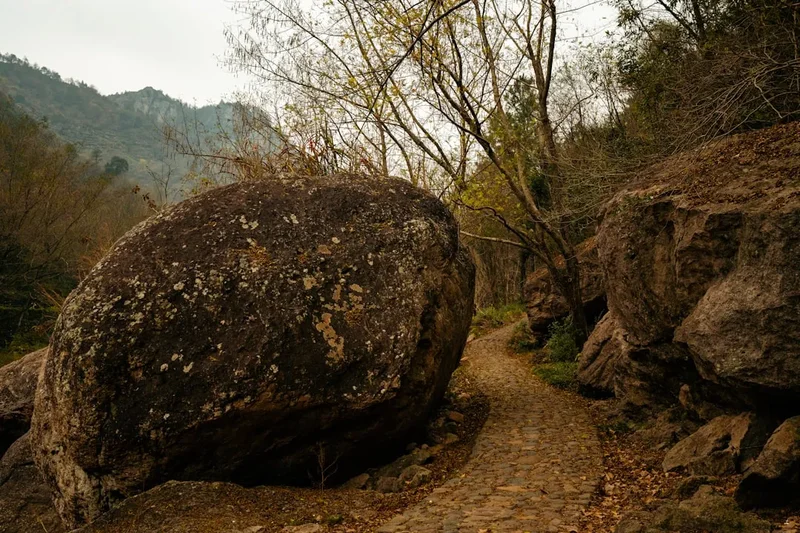
3-Day Zhangjiajie National Forest Trail Itinerary
Day 1: Zhangjiajie Village Entrance to Yuanjiajie
- Distance: 12 km
- Elevation gain: 650 m
- Time: 5–6 hours
- Start at the Zhangjiajie National Forest Park entrance (south gate)
- Walk the length of the Golden Whip Stream (Jinbian Xi), a flat 7.5 km path through a deep canyon
- Observe the "Golden Whip Rock" and "Mother and Child Peak" from the valley floor
- Begin the steep ascent via the "Luanchuan Slope" (thousands of steps) or opt for the Bailong Elevator to reach the Yuanjiajie plateau
- Explore the Yuanjiajie Scenic Area, including the "First Bridge Under Heaven" and the "Avatar Hallelujah Mountain" viewpoint
- The day begins with a gentle valley walk but ends with a significant vertical challenge, offering the first dramatic "top-down" views of the pillars
Day 2: Yuanjiajie to Tianzi Mountain via Yangjiajie
- Distance: 15 km
- Elevation gain: 450 m
- Time: 7–8 hours
- Travel from Yuanjiajie toward the Yangjiajie Scenic Area
- Hike the "One Step to Heaven" and "Wulong Village" spurs—these are the most rugged and narrow sections of the trail
- View the "Natural Great Wall," a series of connected sandstone peaks that resemble ancient fortifications
- Continue along the ridge toward Tianzi Mountain
- Visit the "Imperial Brush Peaks" and "Xihai (West Sea) Stone Forest," where hundreds of slender peaks rise from a deep basin
- This is the most physically demanding day, involving narrow cliff paths and iron ladders, but it offers the most spectacular and least crowded vistas
Day 3: Tianzi Mountain Descent to Wulingyuan Exit
- Distance: 12.7 km
- Elevation: 800 m descent
- Time: 5–6 hours
- Watch the sunrise over the West Sea Stone Forest (weather permitting)
- Begin the long descent from Tianzi Mountain via the "Ten-Mile Gallery" walking path
- Pass the "Three Sisters Peak" and the "Old Man Gathering Herbs" rock formations
- Follow the lower valley trail toward the Wulingyuan (East) entrance
- Optional: Take the small sightseeing train through the Ten-Mile Gallery if legs are fatigued
- Finish at the Wulingyuan gate for transport back to Zhangjiajie City
- The final day is dominated by a long, knee-straining descent, transitioning from the high alpine environment back to the lush valley floor
Important Notes:
- The park uses a complex system of shuttle buses; hikers should use these to jump between major trailheads to save time for the actual walking sections
- The "steps" are ubiquitous—be prepared for over 10,000 steps over the course of three days
- Monkeys are very active near the Golden Whip Stream and Yuanjiajie; keep food hidden
- Trail signage is generally good in Chinese and English, but a digital map is essential
- The park entry ticket is valid for four consecutive days and includes the shuttle bus service
Planning and Bookings
Book Your Trip
Everything you need to plan your journey
Accommodation
Find places to stay near Zhangjiajie City
Flights
Search flights to Zhangjiajie City
Essential Preparation
Planning a trek in Zhangjiajie requires more logistical coordination than a standard wilderness hike due to the park's scale and the sheer volume of visitors. Your primary base will be either Zhangjiajie City (near the airport and train station) or Wulingyuan Town (located right at the park's eastern entrance). Wulingyuan is generally preferred for hikers as it allows for an earlier start and easier access to the trails. Fitness is a major consideration; while the paths are paved, the constant ascent and descent on stone stairs are punishing on the calves and knees. Training on stairs or a stair-climber machine is highly recommended.
Booking coordination involves securing your park entry (which can be done at the gate or via Chinese apps like WeChat/Alipay), arranging transport from the airport (DYG), and booking accommodation. It is vital to carry a power bank, as you will rely heavily on translation apps and digital maps. Most signage is bilingual, but communicating with guesthouse owners or bus drivers often requires a translation tool. Ensure you have downloaded an offline map of the park, as mobile signal can be spotty in the deeper canyons.
Trail Accommodation
Accommodation options within the Zhangjiajie National Forest Park have changed significantly in recent years due to environmental regulations. Most of the older guesthouses located directly on the mountain plateaus (like those in Daguantai) have been closed or relocated to protect the watershed.
Huts and Guesthouses:
- Inside the Park: Very few official hotels remain inside the park boundaries. Those that do are often located near the Yuanjiajie or Tianzi Mountain bus terminals. These are generally basic and more expensive than options outside the park.
- Wulingyuan Town: This is the most popular base. It offers everything from luxury international hotels to boutique hostels. Staying here allows you to enter the park via the East Gate (Wulingyuan Gate) and use the internal shuttle system.
- Zhangjiajie Village: Located at the South Gate, this is a smaller, quieter cluster of guesthouses. It is the best place to stay if you want to start your hike with the Golden Whip Stream.
- Facilities: Most accommodation in Wulingyuan or Zhangjiajie Village provides hot showers, WiFi, and western-style toilets. If staying in a more remote guesthouse, facilities may be more basic (squat toilets, limited hot water).
- Costs: Budget hostels start around 100 CNY per night, while mid-range hotels range from 300 to 600 CNY.
Required Gear
- Hiking boots or shoes: Must have excellent grip. The stone steps become incredibly slick when wet. Ankle support is recommended for the uneven sections of Yangjiajie.
- Trekking poles: These are essential for saving your knees on the thousands of descending steps. Ensure they have rubber tips for use on stone.
- Rain gear: A high-quality waterproof jacket and a pack cover. Rain is frequent and can be heavy. A lightweight poncho is also useful for sudden showers.
- Daypack: A 20–30L pack is sufficient if you are basing yourself in a town and doing day loops, or a 40L pack if you are carrying gear between gates.
- Clothing: Moisture-wicking layers. Even in cool weather, the humidity and physical exertion will cause significant sweating. A lightweight fleece is needed for early mornings on the plateaus.
- First aid: Focus on blister care (moleskin, bandaids) and anti-inflammatory medication for joint pain.
What to Bring
- Water and Hydration: Bring a reusable 2L water bladder. While bottled water is sold throughout the park, it is expensive at the higher elevations. Water from streams is not safe to drink without treatment.
- Snacks and High-Energy Food: Trail mix, energy bars, and dried fruit. While there are "snack stalls" selling grilled corn, sausages, and fruit, they are spaced out and the quality varies.
- Sun Protection: Sunscreen, sunglasses, and a wide-brimmed hat. The sun can be intense on the exposed plateau sections.
- Toiletries: Hand sanitiser and small packs of tissues (most public toilets in the park do not provide toilet paper).
- Cash and Digital Payment: While Alipay and WeChat Pay are used everywhere, carry some cash (200–300 CNY) for small stalls or in case of signal failure.
- Passport: You must carry your physical passport at all times; it is required for park entry and is often checked at shuttle bus boarding points.
Permits
Access to the Zhangjiajie National Forest Park is strictly controlled via a multi-day entry ticket system. There is no "permit" in the sense of a backcountry lottery, but you must purchase an official entry card that is linked to your passport and fingerprints.
Ticket Details:
- Validity: The standard ticket is valid for four consecutive days. This allows you to enter and exit the park as many times as you wish during that window.
- Cost: Approximately 225 CNY (high season) or 115 CNY (low season). This price includes the internal shuttle bus service but does NOT include cable cars, the Bailong Elevator, or the Ten-Mile Gallery train.
- Purchase: Tickets can be bought at the main gates (Wulingyuan, Zhangjiajie Village, Tianzi Mountain, or Yangjiajie). You must present your passport. During peak seasons, it is advisable to book online via official Chinese platforms, though this can be difficult for international travellers without a local phone number.
- Fingerprinting: Upon your first entry, your fingerprints will be scanned and linked to your ticket. You will need to scan your ticket and finger at every subsequent entry.
Additional Costs (Optional):
- Bailong Elevator: ~65 CNY one way.
- Tianzi Mountain Cable Car: ~72 CNY one way.
- Yellow Stone Village Cable Car: ~65 CNY one way.
- Ten-Mile Gallery Train: ~38 CNY one way.
Logistics: The park is massive, and the shuttle buses are the only way to move between the different scenic zones (e.g., from the top of the Bailong Elevator to the Tianzi Mountain area). These buses are included in your ticket and run frequently from 7:30 AM to 6:00 PM. Always aim to be at a bus station by 5:00 PM to ensure you don't get stranded on the mountain after the last bus departs.
Other Activities in the Area
The region surrounding the National Forest Park offers several world-class attractions that complement the hiking experience:
- Tianmen Mountain: Located right next to Zhangjiajie City, this mountain features the famous "Heaven’s Gate" arch, the 99-bend road, and terrifying glass skywalks attached to vertical cliffs. It requires a separate full-day ticket.
- Zhangjiajie Grand Canyon Glass Bridge: Located about 45 minutes from Wulingyuan, this was once the world’s longest and highest glass-bottomed bridge. It offers a different perspective on the region's geology.
- Baofeng Lake: A high-altitude freshwater lake surrounded by stone peaks. Visitors can take a boat cruise to see traditional Tujia singing performances and the "Flying Waterfall."
- Yellow Dragon Cave (Huanglong Cave): One of Asia’s largest karst caves, featuring massive stalactites, stalagmites, and an underground river. It is a great "rainy day" alternative.
- Xibu Street: A vibrant night market and cultural street in Wulingyuan Town, perfect for trying local Hunan cuisine (be warned: it is very spicy) and buying Tujia handicrafts.
Safety and Conditions
Pre-Departure Checks:
- Check the local Zhangjiajie weather forecast daily; mountain weather changes rapidly.
- Ensure your footwear is in good condition; worn-out soles are a major hazard on wet stone.
- Inform your guesthouse of your intended route for the day.
- Download a translation app with an offline Chinese dictionary.
Terrain Hazards: The primary danger in Zhangjiajie is the stone steps. After rain or in high humidity, the quartzite surfaces become exceptionally slippery. Take small steps and use the handrails where provided. The "Yangjiajie" section involves very narrow passages and near-vertical iron ladders; hikers with severe vertigo should exercise caution or skip the "One Step to Heaven" spur. Cliff edges are generally fenced, but never lean over or climb over barriers for a photograph—the sandstone can be unstable.
Wildlife (Macaques): The rhesus macaques in the park are wild and can be aggressive. They have learned that hikers carry food. To stay safe: never feed the monkeys, keep all food and plastic bags inside your backpack (they associate the sound of crinkling plastic with food), do not make eye contact or show your teeth (a sign of aggression), and if a monkey approaches, stay calm and move away. They are known to snatch bags and cameras if they suspect food is inside.
Crowd Management: During peak hours (10:00 AM to 3:00 PM), the main viewpoints like the "Avatar Mountain" can become dangerously crowded. In the event of a "crush," stay to the side and wait for the flow to move. Always keep an eye on the time to ensure you reach the last shuttle bus; walking down the mountain roads in the dark is dangerous due to bus traffic and lack of lighting.
Emergency Services: There are medical stations at the major bus terminals (Yuanjiajie, Tianzi Mountain). In an emergency, contact park staff or call 110 (police) or 120 (medical). Note that evacuation from remote trail sections will likely be via sedan chair or manual carry, which can be slow.
Side Trips and Points of Interest
Yellow Stone Village (Huangshi Zhai): Often described by the local saying, "If you don't visit Yellow Stone Village, you haven't been to Zhangjiajie." This is a large, flat-topped mesa that offers a 360-degree view of the pillar forest. It is quieter than Yuanjiajie and features a 3.8 km loop trail that passes landmarks like the "Five Finger Peak" and the "Star Gathering Pavilion."
The Natural Great Wall (Yangjiajie): This is a relatively newly discovered area of the park. Unlike the isolated pillars found elsewhere, the peaks here are connected in long, thin walls of stone. The hike to "Wulong Village" (an old bandit hideout) involves squeezing through narrow rock crevices and is one of the most adventurous sections of the trail.
Imperial Brush Peaks: Located in the Tianzi Mountain area, these are perhaps the most photographed peaks in the park. A series of slender, pointed columns of varying heights resemble traditional Chinese calligraphy brushes standing in a holder. They are best viewed in the early morning when the valley below is filled with mist.
The First Bridge Under Heaven: A natural stone bridge spanning two peaks at a height of 357 metres. It is one of the highest natural bridges in the world. Walking across it is a rite of passage for many hikers, and the surrounding trees are covered in red ribbons and "love locks" left by couples seeking good fortune.
Golden Whip Stream: While most people focus on the heights, the 7.5 km walk along this crystal-clear stream is essential. It provides a "bottom-up" perspective that allows you to appreciate the true scale of the pillars. The area is rich in biodiversity, and you may spot the rare Chinese Giant Salamander in the deeper pools if you are exceptionally lucky.
Leave No Trace
Zhangjiajie is a fragile ecosystem under immense pressure from millions of annual visitors. As a hiker, your impact is magnified. The unique "Zhangjiajie Landform" is susceptible to erosion, and the local flora and fauna depend on the maintenance of clean water and air.
Your responsibility as a walker:
- Waste Management: There are rubbish bins along the main paths, but they often overflow. Carry a small bag and pack out your trash to the main gates where waste management is more efficient. Never throw anything off a cliff.
- Stay on the Path: The stone paths are designed to prevent soil erosion and protect the roots of the ancient pines. Stepping off-trail can damage rare mosses and lichens that take decades to grow on the sandstone.
- Respect the Wildlife: Do not feed or harass the macaques. Feeding them alters their natural behaviour and makes them aggressive toward humans.
- Water Protection: Do not wash in the streams or use soap near the water. The Golden Whip Stream is a vital habitat for many species.
- Noise Pollution: Zhangjiajie is a place of spiritual significance. Avoid using portable speakers and keep your voice low to allow others to enjoy the natural sounds of the forest.
- No Smoking: Fire is a massive risk in the dense forest. Smoking is strictly prohibited except in small, designated smoking areas near the bus terminals.
By following these principles, you help ensure that the "floating mountains" remain a pristine wonder for future generations of explorers.