
White Desert Trek - A Journey Through Egypt's Chalk Cathedral
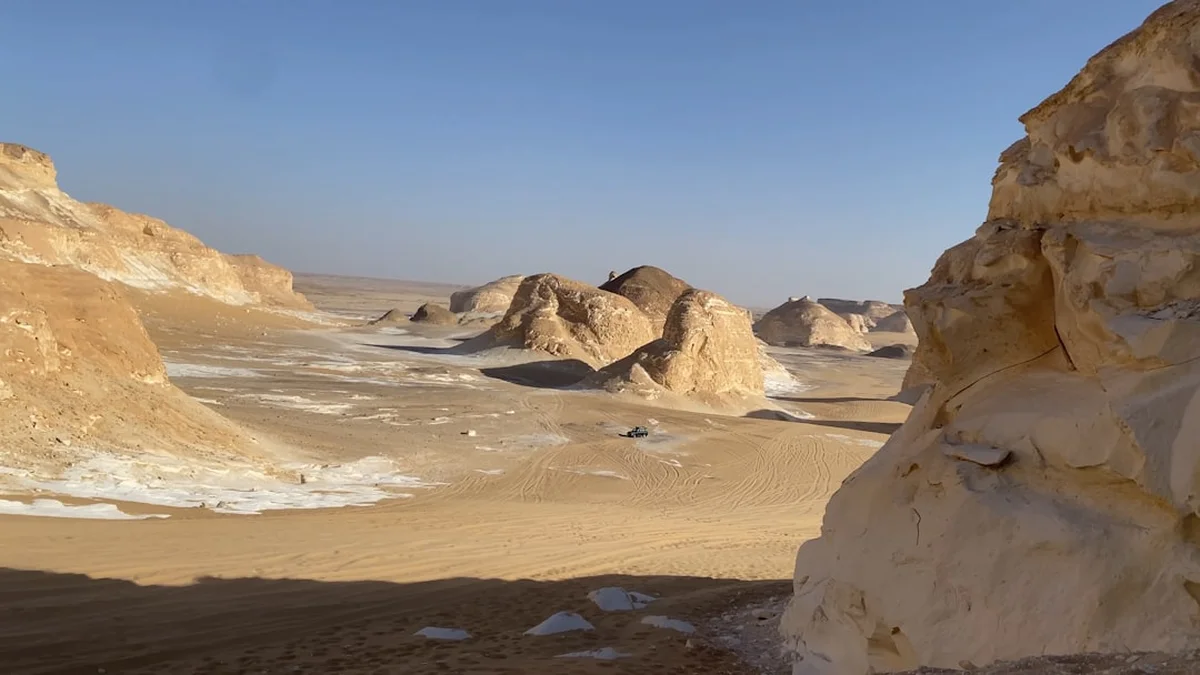
The White Desert Trek is a surreal odyssey into the heart of Egypt's Western Desert, a landscape so otherworldly it is frequently compared to the surface of the moon or a frozen arctic wasteland. Located approximately 500 kilometres southwest of Cairo, the Farafra Depression hosts the White Desert National Park (Sahara el Beyda), a 3,000-square-kilometre sanctuary of blindingly white chalk rock formations. This 40-kilometre trek is not merely a physical challenge but a deep immersion into geological time and Bedouin culture. Walking through this region, trekkers encounter massive wind-carved sculptures—monolithic mushrooms, towering sphinxes, and delicate lace-like ridges—all composed of snow-white calcium carbonate. The journey typically begins in the lush Bahariya Oasis, transitioning through the volcanic "Black Desert" before entering the pristine, silent expanse of the White Desert. It is a place where the silence is absolute, the stars are impossibly bright, and the landscape transforms with every shift of the desert sun, turning from brilliant white at noon to ethereal shades of violet, gold, and rose at twilight.
- Distance: 40.0 km (flexible route based on guide)
- Duration: 2–3 days
- Season: October–April (winter months provide safe temperatures)
- Accommodation: Bedouin-style wild camping under the stars
- Highest point: Agabat Valley ridges (approx. 350 m)
- Difficulty: Moderate (sandy terrain and remote conditions)
- Closest City: Bahariya Oasis (access via Cairo)
- Direction: Generally North to South or loop from Bahariya
Overview
The White Desert Trek offers a sensory experience unlike any other hiking trail on Earth. While most desert treks focus on the vastness of sand dunes, the White Desert is defined by its extraordinary geology. The "snow" underfoot is actually chalk, the remains of microscopic marine organisms deposited millions of years ago when this entire region lay beneath the Tethys Ocean. Over eons, the retreating sea and the relentless "Khamasin" winds have sculpted these deposits into a gallery of natural art. The trek is characterised by its low elevation gain but high atmospheric impact. You are not climbing peaks; you are navigating a labyrinth of ivory towers and chalky plateaus.
The journey is traditionally organised as a supported trek, where Bedouin guides provide the essential 4x4 logistics to transport water, food, and heavy camping gear, allowing trekkers to walk with only a daypack. This support is crucial, as there are no permanent water sources or marked trails within the National Park. The route typically winds through three distinct zones: the "Old Desert," where the formations are smaller and more weathered; the "Agabat Valley," where massive limestone cliffs provide a dramatic backdrop; and the "New Desert," home to the most iconic and pristine white sculptures. The contrast between the brilliant white ground and the deep turquoise sky creates a high-glare environment that requires constant sun protection, yet the physical exertion is manageable for anyone with a reasonable level of fitness. The true challenge lies in the environment—the fine dust, the shifting sands, and the dramatic temperature drops once the sun dips below the horizon.
Beyond the geology, the trek is a cultural bridge. Spending nights around a small fire of dried scrub, drinking "Bedouin tea" (heavily sweetened and infused with desert mint), and eating traditional meals prepared in the sand provides an insight into the nomadic heritage of the Western Desert. The lack of light pollution makes this one of the premier stargazing locations in the world; the Milky Way appears as a dense, glowing cloud, and the white rocks reflect the moonlight so intensely that a headlamp is often unnecessary during a full moon. It is a journey of profound stillness, where the only sound is the crunch of chalk beneath your boots and the occasional whisper of the wind through the "Mushroom" rocks.
History and Cultural Context
The history of the White Desert is written in its stones. Geologically, the area dates back to the Late Cretaceous period, approximately 60 to 70 million years ago. At that time, the region was a shallow sea. As the water evaporated and the land rose, it left behind thick layers of chalk and limestone. Trekkers can still find evidence of this marine past today; it is common to stumble upon fossilised sea urchins, shark teeth, and shells embedded in the white rock or lying on the desert floor. These "desert pearls"—small, round pyritic stones—are another geological curiosity unique to the area, formed by chemical reactions in the ancient seabed.
Human history in the Western Desert is equally fascinating. The nearby Bahariya Oasis has been inhabited since at least the Old Kingdom of Ancient Egypt. It served as a vital stop on the caravan routes connecting the Nile Valley to the Libyan interior. In 1996, the "Valley of the Golden Mummies" was discovered near Bahariya, revealing a massive Graeco-Roman necropolis that underscores the historical importance of these desert outposts. The Bedouin tribes who inhabit the oases today, primarily the Bahariya and Farafra Bedouins, are the descendants of nomadic groups who mastered the art of desert survival. They possess an intimate knowledge of the "wadis" (dry riverbeds) and hidden springs that allow life to persist in this arid environment.
The White Desert was officially declared a National Park by the Egyptian government in 2002. This designation was a response to the increasing popularity of desert tourism and the need to protect the fragile chalk formations from vehicle damage and vandalism. For the Bedouin guides, the park is not just a tourist destination but a sacred landscape that requires stewardship. Their stories, passed down through generations, often imbue the rock formations with spirits or legends, further enriching the experience for those who walk among them. The trek today is a delicate balance between modern conservation and ancient nomadic tradition.
Want more background? Read extended notes on history and cultural context → Learn more
Seasonal Highlights and Weather Reality
Timing is the most critical factor when planning a White Desert trek. The desert environment is one of extremes, and the window for safe, enjoyable trekking is relatively narrow. The primary season runs from October to April, coinciding with the Egyptian winter. During these months, daytime temperatures are generally pleasant, ranging from 20°C to 28°C. The sun is intense, but the air is dry, making the heat more bearable than in the humid Nile Valley. However, trekkers must be prepared for the "desert chill." As soon as the sun sets, temperatures plummet rapidly, often reaching 5°C or even near-freezing in January and February. High-quality thermal layers and a warm sleeping bag are non-negotiable.
Spring (March and April) brings the risk of the "Khamasin," a hot, sand-laden wind that can blow for days at a time. These storms can reduce visibility to a few metres and make trekking impossible. While guides are adept at finding shelter, a major sandstorm will inevitably disrupt any itinerary. Autumn (October and November) is often considered the "sweet spot," with stable weather, clear skies, and slightly warmer nights than mid-winter.
Summer (May to September) is dangerously hot. Temperatures in the White Desert frequently exceed 45°C, and the glare from the white chalk can cause severe heat exhaustion and eye damage. Most reputable trekking companies cease operations during these months. Even for experienced desert travellers, the lack of shade and the intensity of the sun make summer trekking a high-risk endeavour that is strongly discouraged. Rain is exceptionally rare, but when it does occur, it can cause flash floods in the wadis; however, for most trekkers, the primary weather concern will always be the wind and the diurnal temperature swing.
Recommended Itinerary
3-Day White Desert Trek Itinerary
Day 1: Bahariya Oasis to Agabat Valley
- Distance: 12 km
- Elevation gain: 150 m
- Time: 4–5 hours
- Morning transfer from Bahariya Oasis via the Black Desert (volcanic cones) and Crystal Mountain
- Start trekking at the entrance to the Agabat Valley, where the landscape transitions from yellow sand to limestone cliffs
- Ascend the "Twin Peaks" for a panoramic view of the valley floor
- Walk through the "Small Agabat" area, navigating between massive, flat-topped mesas
- Set up camp at the base of the Agabat cliffs
- Evening: Traditional Bedouin dinner and first night under the desert stars
- The Agabat Valley serves as the dramatic gateway to the White Desert, offering the most significant elevation changes of the trek
Day 2: Agabat Valley to the Old White Desert
- Distance: 15 km
- Elevation gain: 30 m
- Time: 5–6 hours
- Descend from the Agabat ridges into the soft sand dunes that border the White Desert
- Pass through the "Flower Stone" field, where iron pyrites have formed flower-like shapes on the ground
- Enter the "Old White Desert," characterised by larger, more weathered chalk monoliths
- Navigate through the "Valleys of the Mushrooms," where wind erosion has created top-heavy rock sculptures
- Observe the changing colours of the chalk as the sun moves across the sky
- Camp amongst a cluster of large chalk formations for wind protection
- This is the longest walking day, requiring steady pacing through sections of soft sand
Day 3: The New White Desert to Bahariya Oasis
- Distance: 13 km
- Elevation: Minimal
- Time: 4–5 hours
- Enter the "New White Desert," the most famous and pristine section of the National Park
- Visit the iconic "Mushroom and Chicken" and "The Sphinx" formations
- Walk through the "Ice Cream Cone" field, where the chalk is at its most brilliant white
- Explore the "Hidden Valley" and look for ancient marine fossils embedded in the chalk
- Final trek to the park exit point for 4x4 pickup
- Afternoon transfer back to Bahariya Oasis for a soak in the hot springs
- Return to Cairo or stay overnight in Bahariya
- The final day offers the most spectacular photography opportunities with the highest concentration of unique sculptures
Important Notes:
- Routes are often customised by guides based on wind direction and group fitness
- A 4x4 support vehicle is essential for carrying water and camp infrastructure
- There are no fixed campsites; "wild camping" is the standard practice
- Always follow your guide; the desert landscape can be disorienting with few fixed landmarks
- Ensure your daypack contains at least 3 litres of water for the day's walk
- The glare is extreme; high-quality sunglasses are mandatory
Planning and Bookings
Book Your Trip
Everything you need to plan your journey
Accommodation
Find places to stay near Bahariya Oasis
Flights
Search flights to Bahariya Oasis
Essential Preparation
The White Desert is a remote military-adjacent zone, and independent trekking without a licensed guide is neither legal nor safe. Preparation begins with choosing a reputable operator based in Bahariya Oasis or Cairo. These operators coordinate the necessary permits, provide the 4x4 support vehicles, and employ Bedouin guides who know the terrain. You should book your trek at least 2–3 weeks in advance to allow for permit processing. Most trekkers arrive in Cairo and take a private transfer or a public bus (from the Torgoman or Giza stations) to Bahariya Oasis, a journey of 4–5 hours on paved roads.
Physical fitness requirements are moderate. While the elevation gain is minimal, walking 12–15 kilometres a day in soft sand and uneven chalk can be taxing on the calves and ankles. It is recommended to do some training walks on sand or soft trails before arrival. Additionally, ensure you have a clear communication plan with your operator regarding dietary requirements, as all food is brought in from the oasis.
Trail Accommodation
There are no hotels, huts, or permanent structures within the White Desert National Park. Accommodation is exclusively "wild camping" in the Bedouin style. This is a core part of the desert experience but requires a shift in expectations regarding luxury.
Camping Facilities:
- Tents: Simple dome tents are usually provided, though many trekkers prefer sleeping on rugs under the open sky
- Bedding: Heavy blankets and thin mattresses are provided by the guides
- Toilet: There are no toilet facilities. Trekkers must follow "cat hole" procedures (burying waste) and pack out all paper
- Kitchen: A mobile kitchen set up by the guides, usually consisting of a gas burner and a fire pit
- Water: All water is carried in large plastic containers on the 4x4; it is used sparingly for washing and primarily for drinking and cooking
What is NOT Provided:
- Showers or running water (wet wipes are your best friend)
- Electricity or charging stations (bring high-capacity power banks)
- Privacy (campsites are open, though guides usually set up a windbreak/privacy screen)
- Formal waste disposal (you must carry your personal rubbish until the end of the trek)
Required Gear
- Trekking boots: Lightweight, breathable, and high-cut to keep sand out. Ensure they are well broken-in
- Sand gaiters: Highly recommended to prevent fine sand from entering your boots
- Daypack: 20–30L with a hydration bladder sleeve
- Sleeping bag: 3-season rated (comfort level 0°C to 5°C) for winter nights
- Headlamp: Essential for camp life, with spare batteries
- Sunglasses: Category 3 or 4 lenses to combat the intense white glare
- Sun hat: Wide-brimmed with a chin strap (it can be windy)
- Trekking poles: Useful for stability in soft sand and on the Agabat ridges
- Power bank: Solar chargers work well, but a large capacity battery is more reliable
What to Bring
- Water treatment: While guides provide bottled or filtered water, bring chlorine tablets or a UV filter as a backup
- Personal First Aid: Blister kits (Compeed), rehydration salts (Oresal), broad-spectrum antibiotics, and anti-diarrhoeal medication
- Toiletries: Biodegradable wet wipes, hand sanitiser, lip balm with SPF, and high-factor sunscreen (SPF 50+)
- Clothing layers: Merino wool base layers, a fleece mid-layer, and a lightweight down jacket for the evenings
- Scarf/Shemagh: A traditional cotton desert scarf is excellent for protecting the face from wind and sun
- Snacks: High-energy trail mix, dried fruit, and electrolytes (Bedouin meals are hearty but lunch is often light)
- Camera gear: Extra batteries and a dust-proof bag or wrap (desert sand is incredibly fine and invasive)
Permits
The White Desert is a protected National Park and sits within a sensitive border region. Consequently, permits are mandatory and strictly enforced by park rangers and military checkpoints. You cannot simply drive to the desert and start walking; you must be part of an organised group with a licensed guide who holds the necessary paperwork.
Permit Process:
- Your tour operator will require a copy of your passport photo page at least 48–72 hours before the trek
- The operator submits these to the Ministry of Environment and the local police in Bahariya
- A National Park fee (currently approximately 150–200 EGP for foreigners) is paid per person, per day
- You must carry your original passport with you at all times during the trek, as it will be checked at the entrance to the park and at various road checkpoints
Regulations:
- Off-road driving is restricted to specific tracks to protect the desert crust
- Camping is only permitted in designated general areas, though these are not "campsites" in the traditional sense
- Collecting fossils, crystals, or rock samples is strictly prohibited and can result in heavy fines or detention
- Photography of military installations or personnel near the oases is illegal
Other Activities in the Area
The Western Desert offers several other unique attractions that can be combined with your trek:
- The Black Desert: A landscape of volcanic hills covered in black dolerite rocks. It provides a stunning visual contrast to the White Desert and is usually visited on the drive from Bahariya.
- Crystal Mountain: A small ridge made of sparkling quartz crystals. While often called a "mountain," it is more of a geological arch, but it is a fascinating stop for photography.
- Bahariya Hot Springs: After days of trekking, soaking in the natural sulphur springs (like Bir Sigam) in Bahariya is the ultimate recovery. The water is naturally warm and believed to have healing properties.
- English House (Gebel al-Ingleez): A hilltop ruin from WWI that offers the best sunset views over the Bahariya Oasis and its surrounding date palm groves.
- Valley of the Golden Mummies: Visit the museum in Bawiti to see the remarkably preserved mummies discovered in the nearby necropolis.
- Sandboarding: The Great Sand Sea begins near the edge of the White Desert; many guides can arrange for sandboarding on the massive dunes.
Safety and Conditions
Environmental Hazards: The primary safety concern in the White Desert is the environment itself. Dehydration can occur rapidly in the dry air, even if you don't feel thirsty. Trekkers should aim to drink 4–5 litres of water per day. Heat exhaustion is a risk even in winter if you over-exert yourself during the midday sun. Hyponatremia (salt loss) is also a factor; ensure you are consuming enough salt through food or electrolyte tabs.
Navigation: The White Desert is a featureless landscape in many directions. It is incredibly easy to become disoriented if you wander away from your group or guide. Never leave the camp at night without a headlamp and a clear sense of direction. If you become separated from your group during the day, stay exactly where you are; your guide will be able to track your footprints in the sand or chalk, but if you keep moving, you make their job significantly harder.
Wildlife: While the desert appears empty, it is home to fennec foxes, sand cats, scorpions, and the occasional horned viper. Scorpions and snakes are generally hibernating during the peak winter trekking months, but it is still wise to shake out your boots every morning and avoid sticking your hands into dark rock crevices. Fennec foxes are harmless but very curious; they will often visit camps at night to scavenge for food scraps, so keep your supplies secured.
Medical Emergencies: You are several hours away from even basic medical facilities in Bahariya, and serious cases will require a 5-hour drive to Cairo. There is no helicopter rescue service in the Western Desert. It is essential to have comprehensive travel insurance that covers remote evacuation and to carry a well-stocked personal medical kit. Satellite phones are often carried by professional guides, as mobile signal is non-existent once you enter the heart of the National Park.
Side Trips and Points of Interest
The Mushroom and the Chicken: This is the most photographed formation in Egypt. A large, perfectly balanced chalk mushroom stands next to a smaller rock that bears an uncanny resemblance to a pecking chicken. It has become the unofficial symbol of the National Park and is a mandatory stop for every trekker.
The Agabat "Twin Peaks": Two prominent limestone hills that offer a challenging but rewarding scramble. From the top, you can see the entire Agabat Valley stretching out like a giant's playground, with the white sands of the desert proper visible on the horizon. It is the best place to understand the scale of the depression you are walking through.
The Magic Spring: A small, natural spring located on the edge of the White Desert. It is a rare patch of green in a world of white and ochre. While the water is not always suitable for drinking without heavy filtration, it is a vital watering hole for desert wildlife and a beautiful place for a midday rest.
The Santa Claus Rock: A massive formation in the New Desert that, from a specific angle, looks like a seated figure with a long beard and a hat. The guides take great pride in pointing out these "sculptures," which also include "The Rabbit," "The Sphinx," and "The Ice Cream Cones."
Fossil Fields: Near the transition between the Old and New Deserts, there are areas where the ground is literally carpeted with the remains of ancient sea life. Taking the time to look closely at the ground reveals a world that existed millions of years before humans; just remember that these are for looking, not for taking.
Leave No Trace
The White Desert is an incredibly fragile ecosystem. The chalk formations took millions of years to form and can be destroyed by a single thoughtless act. The "desert crust"—the top layer of sand and minerals—is also delicate; once broken by footsteps or tyres, it can take decades to reform, leading to increased erosion.
Guidelines for Responsible Trekking:
- Waste Management: Carry out every single piece of rubbish, including organic waste like orange peels or nut shells, which do not decompose in the arid environment and attract pests.
- Human Waste: Use the "cat hole" method at least 100 metres from any rock formation or camp area. All toilet paper must be placed in a sealable plastic bag and carried out.
- Protect the Chalk: Never climb on the smaller or more delicate formations. The chalk is soft and prone to crumbling. Never carve names or graffiti into the rocks; this is a permanent scar on a natural wonder.
- Firewood: Do not collect local scrub for firewood. The desert plants are slow-growing and provide essential habitat for insects and lizards. Your guides will bring sustainable firewood from the oasis.
- Respect the Silence: The desert's silence is one of its most valuable resources. Avoid loud music or shouting, which can disturb both the wildlife and the experience of other trekkers.
- No Souvenirs: It is tempting to take a piece of quartz or a fossil, but if every visitor took one, the desert would soon be stripped of its character. Leave everything exactly as you found it.