
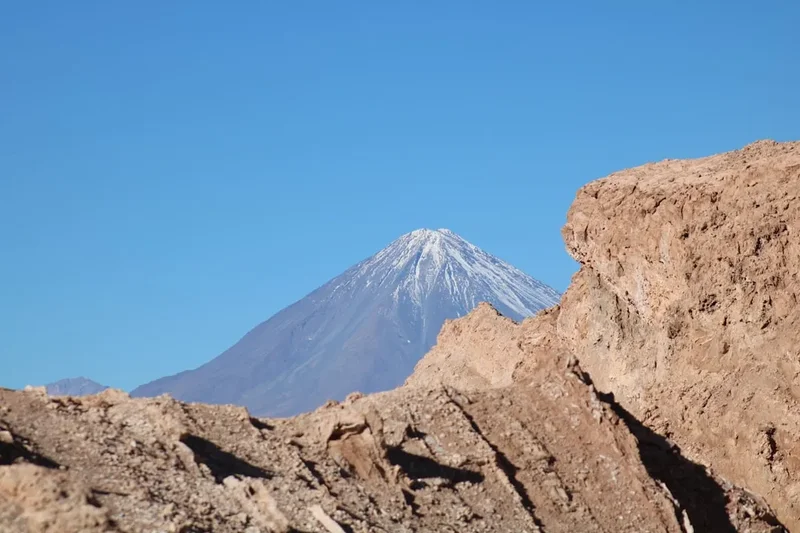
Villarrica Volcano Ascent
The Villarrica Volcano Ascent is a challenging and rewarding mountain trek in Chile's Lake District, offering an unparalleled opportunity to summit one of South America's most active and iconic stratovolcanoes. Standing at 2,847 metres, Volcán Villarrica is a formidable presence, its snow-capped peak often wreathed in steam from its active crater. This ascent is not for the faint-hearted; it demands significant physical fitness, proper acclimatisation, and a respect for the raw power of nature. The journey takes you from the lush, temperate forests at the volcano's base, through volcanic scree and ash fields, to a summit that provides breathtaking panoramic views of surrounding lakes, other volcanoes, and the vast Patagonian landscape. The experience of standing on the rim of an active volcano, peering into its fiery heart, is truly unforgettable.
- Distance: 6.0 km (one-way to summit)
- Elevation Gain: 1,400 m
- Duration: 6–8 hours (round trip)
- Season: December to March (Chilean summer)
- Closest City: Pucón
- Difficulty: Very Challenging
- Access: Guided tours from Pucón are mandatory; transport to volcano base included.
- Permit: Required, obtained in Pucón before ascent.
Overview
The Villarrica Volcano Ascent is a quintessential adventure for those seeking a high-altitude challenge in a spectacular natural setting. Located within Villarrica National Park, the volcano is one of Chile's most active, with its summit crater frequently emitting smoke and ash, a constant reminder of the geological forces at play beneath your feet. The trek is typically undertaken as a guided day trip, with tours departing from the adventure hub of Pucón.
The ascent begins at an elevation of approximately 1,400 metres, often reached by 4x4 vehicle. From here, the trail is steep and relentless, primarily composed of volcanic scree, ash, and some rocky sections. The lower slopes are often covered in snow, especially in the early summer months, requiring the use of crampons and ice axes, which are typically provided by tour operators. As you climb higher, the vegetation thins out, giving way to a stark, volcanic landscape. The air becomes thinner, and the physical exertion intensifies, demanding a steady pace and regular hydration.
The final push to the summit is often the most demanding, involving navigating steep snowfields and potentially icy patches. However, the reward for this effort is immense. Upon reaching the crater rim, typically around 2,847 metres, you are greeted with an awe-inspiring 360-degree vista. On a clear day, the views stretch across the shimmering waters of Lake Villarrica and Lake Caburgua, the neighbouring volcanoes of Quetrupillán and Lanín, and the vast expanse of the Andes mountain range. The highlight, of course, is the active crater itself. Peering into the incandescent lava lake, witnessing the incandescent glow and occasional bursts of gas and ash, is a primal and unforgettable experience. The descent, while physically easier, requires careful footing on the loose scree and snow, often involving a controlled slide or "scree run" for a faster return to the base.
Due to the volcano's active nature, conditions can change rapidly. Tour operators closely monitor volcanic activity and weather patterns, and ascents may be cancelled or rerouted at short notice for safety reasons. This dynamic environment adds an element of unpredictability and raw adventure to the Villarrica Volcano experience.
History and Cultural Context
Volcán Villarrica has a long and significant history, both geologically and culturally. As one of Chile's most active volcanoes, it has shaped the landscape and the lives of the people who have inhabited the region for millennia. Indigenous Mapuche people, who have lived in this area for centuries, hold Villarrica in deep reverence. They refer to the volcano as "Rupantú" or "Rupañan," meaning "great path" or "great road," and consider it a sacred entity, a powerful force of nature that commands respect.
Historically, the Mapuche have viewed the volcano as a dwelling place of powerful spirits and deities. Its eruptions were often interpreted as signs or messages from the spiritual world. The smoke and steam emanating from the summit were believed to be the breath of the gods, and the lava flows were seen as expressions of their anger or power. This deep spiritual connection has influenced Mapuche traditions, ceremonies, and their relationship with the land.
European colonisation in the 19th century brought new perspectives and uses to the region. The fertile volcanic soils around Villarrica proved ideal for agriculture, leading to the establishment of towns like Pucón, which grew into a significant centre for farming, logging, and later, tourism. The volcano itself, with its dramatic presence and challenging summit, began to attract adventurers and mountaineers.
In the 20th century, as mountaineering gained popularity, the Villarrica Volcano Ascent became a sought-after challenge. The development of guided tours and the establishment of Villarrica National Park in 1912 helped to formalise access and promote responsible tourism. However, the volcano's inherent activity has always dictated the terms of engagement. Major eruptions, such as those in 1948, 1963, and 1971, caused significant damage and reshaped the surrounding landscape, underscoring the volcano's potent and unpredictable nature. Today, the volcano is closely monitored by the National Seismological Centre (CSN) and the National Geology and Mining Service (SERNAGEOMIN), ensuring that ascents are undertaken with the utmost regard for safety and scientific understanding.
Seasonal Highlights and Weather Reality
The best time to attempt the Villarrica Volcano Ascent is during the Chilean summer, from December to March. This period offers the most favourable weather conditions, with longer daylight hours and generally clearer skies, increasing the chances of a successful summit bid and spectacular views.
Summer (December to March): This is the peak season for climbing Villarrica. Temperatures at the summit can still be cold, often hovering around 0°C or below, especially in the early morning. Snow cover is usually present, making crampons and ice axes essential. Days are long, allowing ample time for the ascent and descent. However, summer can also bring strong winds and sudden changes in weather, so preparedness is key. Sandflies can be present at lower elevations, particularly near water sources, so insect repellent is advisable.
Shoulder Seasons (November and April): These months can offer a good alternative, with fewer crowds than the peak summer. However, weather can be more unpredictable. Snow cover may be less consistent at lower altitudes, but the summit will likely still be snow-covered. It's crucial to check conditions and tour operator availability, as some may have limited operations outside the main summer months.
Winter (May to October): While technically possible to climb Villarrica in winter, it is significantly more challenging and dangerous. The volcano is often heavily snow-covered, and ice conditions can be severe. Avalanches are a serious risk, and extreme cold and high winds are common. Ascents during this period are generally only recommended for highly experienced mountaineers with specialised winter climbing gear and knowledge. Most tour operators do not offer standard ascents during these months due to the increased risks.
Weather Reality: Regardless of the season, weather on Villarrica can change with alarming speed. Even on a clear summer morning, clouds can roll in, bringing rain, strong winds, and significantly reduced visibility. The summit is exposed, and wind chill can make temperatures feel much colder than they are. It is imperative to always check the latest weather forecast and heed the advice of your guides, who will make the final decision on whether conditions are safe for an ascent.
Recommended Itinerary
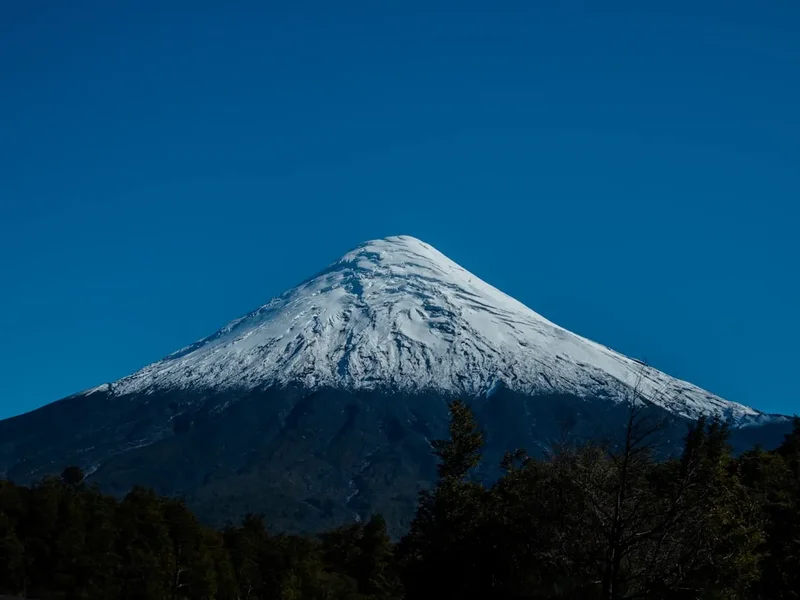
Villarrica Volcano Ascent - Day Trip Itinerary
Early Morning (e.g., 5:00 AM - 6:00 AM): Pick-up and Briefing
- Tour operators typically pick up participants from their accommodation in Pucón.
- A comprehensive briefing is provided, covering the day's plan, safety procedures, and equipment usage.
- You will be fitted with essential gear: crampons, ice axe, helmet, and often waterproof outer layers.
- Transport by 4x4 vehicle to the volcano's base (approx. 1,400 m elevation).
Morning (e.g., 7:00 AM - 11:00 AM): Ascent - Lower Slopes and Forest Transition
- Begin the trek from the vehicle drop-off point.
- The initial part of the trail may involve walking through sparse forest or scrubland.
- The terrain quickly transitions to volcanic scree and ash.
- If snow is present, crampons will be fitted and their use explained.
- Steady, consistent pace is key. Guides will monitor group progress and hydration.
- Elevation gain is significant and continuous.
Midday (e.g., 11:00 AM - 1:00 PM): Ascent - Upper Slopes and Crater Approach
- The landscape becomes increasingly barren and volcanic.
- Steep sections of snow and ash require careful use of ice axes for balance and self-arrest if necessary.
- Visibility can decrease rapidly if clouds move in.
- Regular short breaks for water and snacks.
- The summit crater becomes visible as you gain altitude.
Early Afternoon (e.g., 1:00 PM - 2:00 PM): Summit and Crater Exploration
- Reach the summit crater rim (2,847 m).
- Spend time (typically 30-60 minutes) observing the active crater, its fumaroles, and the lava lake (if visible and safe).
- Enjoy the panoramic views of the surrounding landscape.
- Guides will ensure everyone maintains a safe distance from the crater edge and is aware of any volcanic activity.
- Note: Summit time is highly dependent on volcanic activity and safety conditions. Sometimes, only the crater rim is accessible, or the ascent may be stopped at a lower point.
Afternoon (e.g., 2:00 PM - 5:00 PM): Descent and Return to Pucón
- Begin the descent. The most common method is a controlled slide down the scree and snow slopes, often referred to as a "scree run."
- This is a fast and exhilarating way down, but requires careful technique to avoid injury.
- Guides will manage the descent, ensuring safety and control.
- Once back at the vehicle, you will be transported back to Pucón.
- Return to Pucón typically by late afternoon or early evening.
Important Notes:
- This is a strenuous hike requiring excellent physical fitness.
- Ascent is subject to volcanic activity and weather conditions; cancellations are possible.
- All necessary technical gear (crampons, ice axe, helmet) is provided by reputable tour operators.
- Wear warm, layered clothing and sturdy, waterproof hiking boots.
- Bring plenty of water and high-energy snacks.
Planning and Bookings
Book Your Trip
Everything you need to plan your journey
Accommodation
Find places to stay near Pucón
Flights
Search flights to Pucón
Essential Preparation
The Villarrica Volcano Ascent is a serious undertaking that requires thorough preparation. Pucón is the primary base town for this adventure, offering a wide range of accommodation options from budget hostels to comfortable hotels, as well as numerous tour operators specializing in volcano expeditions. It is highly recommended to book your volcano tour in advance, especially during the peak summer season (December to March), as popular operators can fill up quickly. Ensure your chosen operator is reputable, experienced, and prioritizes safety. You will need to obtain a permit to climb the volcano, which is typically handled by the tour operator as part of the package. Physical fitness is paramount; the ascent involves significant elevation gain over challenging terrain, often in cold and windy conditions. Aim to be able to comfortably hike for several hours with a pack, and ideally, have experience with steep ascents. Acclimatisation is also important; spending a day or two in Pucón (elevation ~750 m) before the climb can help your body adjust to the altitude.
Trail Accommodation
This is a day hike requiring no overnight accommodation. The ascent of Villarrica Volcano is typically completed within a single day, with participants returning to Pucón in the late afternoon or early evening. Therefore, no specific trail accommodation such as huts or campsites is required or available on the volcano itself.
Required Gear
- Sturdy, waterproof hiking boots: Essential for navigating scree, ash, and snow. Ensure they are well broken-in to prevent blisters.
- Warm, layered clothing: Multiple layers are crucial for adapting to changing temperatures. Include a moisture-wicking base layer, an insulating mid-layer (fleece or down), and a windproof/waterproof outer shell.
- Waterproof overtrousers: Protect against wind and snow.
- Warm hat and gloves: The summit can be very cold and windy.
- Sunglasses: Essential for protecting your eyes from glare, especially on snow.
- Sunscreen (SPF 50+): The sun's rays are intense at altitude, even on cloudy days.
- Backpack (20-30 litres): To carry water, snacks, extra layers, and personal items.
- Head torch: For early morning starts or if the descent takes longer than expected.
- Personal first-aid kit: Including blister treatment, pain relievers, and any personal medications.
- Technical Gear (provided by most reputable tour operators):
- Helmet
- Crampons
- Ice axe
What to Bring
- Water: At least 2-3 litres per person. Hydration is critical at altitude.
- High-energy snacks: Trail mix, energy bars, nuts, dried fruit, chocolate.
- Lunch: A packed lunch to eat at the summit or during breaks.
- Lip balm with SPF: To protect against sun and wind.
- Camera: To capture the incredible views (ensure it's protected from the elements).
- Small towel: For wiping sweat or snow.
- Hand sanitiser: For hygiene.
- Identification and emergency contact details.
- Cash: For any small purchases or tips.
Permits
To ascend Volcán Villarrica, a permit is required. This permit is typically managed and included as part of the tour package offered by reputable guiding companies operating out of Pucón. These companies are well-versed in the permit acquisition process and will handle the necessary paperwork and fees on your behalf.
The permit system is in place to regulate the number of climbers on the volcano, ensure safety, and contribute to the conservation of the Villarrica National Park. It also helps to ensure that all climbers are accompanied by certified guides, which is a mandatory requirement for summiting the volcano.
When booking your tour, confirm with the operator that the permit fee is included in their price. If you were to attempt to arrange this independently (which is not recommended due to the mandatory guiding requirement), you would need to visit the CONAF (Corporación Nacional Forestal) office or an authorised permit issuing point in Pucón. However, for the vast majority of visitors, the tour operator will seamlessly integrate the permit acquisition into your booking, making the process straightforward.
Key points regarding permits:
- Mandatory for all climbers.
- Typically included in guided tour packages.
- Managed by CONAF and authorised tour operators.
- Ensures safety and park conservation.
- Fees vary but are generally modest.
Other Activities in the Area
Pucón and the surrounding region offer a wealth of activities for adventurers and nature lovers:
- Lake Villarrica Activities: Enjoy swimming, kayaking, paddleboarding, or sailing on the pristine waters of Lake Villarrica. Boat tours offer scenic perspectives of the volcano and surrounding landscape.
- Hot Springs: The region is dotted with natural hot springs, providing a perfect way to relax after a strenuous hike. Popular options include Termas Geométricas (known for its stunning architecture and natural setting) and Termas de Huife.
- Huerquehue National Park: Explore ancient Araucaria (monkey puzzle) forests, hike to beautiful lagoons, and enjoy diverse birdlife in this stunning national park, accessible via a scenic drive from Pucón.
- Ojos del Caburgua and Salto de Leon: Visit these picturesque waterfalls and natural pools, perfect for a refreshing dip or a leisurely walk.
- Rafting and Kayaking: The Trancura River offers excellent opportunities for white-water rafting and kayaking, with sections suitable for various skill levels.
- Horseback Riding: Explore the scenic countryside around Pucón on horseback, with trails offering views of lakes, forests, and volcanoes.
- Pucón Town: Wander through the charming town, browse local artisan shops, enjoy delicious Chilean cuisine at its many restaurants, and soak in the vibrant atmosphere.
- Other Volcano Ascents: For experienced mountaineers, nearby volcanoes like Lanín (on the border with Argentina) offer further challenging climbs.
Safety and Conditions
Volcanic Activity Monitoring: Volcán Villarrica is one of Chile's most active volcanoes and is under constant surveillance by SERNAGEOMIN and the CSN. They monitor seismic activity, gas emissions, and ground deformation. Ascents are only permitted when volcanic activity is at a safe level. Tour operators have direct access to this information and will cancel or alter plans if there is any perceived risk.
Weather Changes: The most significant safety concern after volcanic activity is the unpredictable mountain weather. Conditions can deteriorate rapidly, leading to reduced visibility, strong winds, and extreme cold. Hypothermia is a real risk, even in summer. Always follow your guide's instructions regarding clothing, pace, and breaks.
Terrain Hazards: The ascent involves steep slopes of loose volcanic scree, ash, and snow. Falls are possible, especially during the descent. The use of crampons and ice axes is mandatory for safety on snow and ice. Guides will provide instruction on their proper use.
Altitude Sickness: While the ascent to 2,847 metres is not extremely high, some individuals may experience symptoms of altitude sickness (headache, nausea, dizziness). It is crucial to stay hydrated, move at a steady pace, and inform your guide immediately if you feel unwell. Acclimatisation in Pucón for a day or two prior to the climb is highly recommended.
Physical Fitness: This is a very demanding hike. Participants must be in excellent physical condition, capable of sustained uphill trekking for several hours. Those with pre-existing heart or respiratory conditions should consult their doctor before attempting the climb.
Mandatory Guiding: Climbing Villarrica without a certified guide is prohibited and extremely dangerous. Guides are trained in mountaineering, first aid, and volcanic safety protocols. They are responsible for the group's well-being and will make critical decisions regarding the ascent's feasibility.
Emergency Procedures: Reputable tour operators will have established emergency procedures in place, including communication devices and evacuation plans. Ensure you are familiar with your guide's emergency protocols.
Side Trips and Points of Interest
The Crater Rim: The primary point of interest is the summit crater itself. Standing on the edge of an active volcano and peering into its incandescent core is an experience unlike any other. The sight of molten lava, fumaroles emitting sulphurous gases, and the sheer power of the earth is awe-inspiring. The exact view and accessibility depend on the volcano's current activity level, which is closely monitored by guides.
Panoramic Views: On a clear day, the summit offers breathtaking 360-degree views. To the north, you can see the vast expanse of Lake Caburgua and the smaller volcano Quetrupillán. To the south, the shimmering waters of Lake Villarrica stretch out, with the city of Villarrica visible on its shores. Further afield, the Andes mountain range forms a dramatic backdrop, often with other snow-capped peaks like Lanín visible on the horizon.
Volcanic Landscape: The entire ascent is a journey through a unique volcanic environment. You'll traverse fields of black volcanic scree and ash, witness the stark beauty of a landscape shaped by fire and ice, and observe the hardy vegetation that manages to survive at these altitudes. The textures and colours of the volcanic rock are fascinating, from fine ash to larger, jagged fragments.
Snow and Ice Formations: Depending on the season and recent weather, you may encounter impressive snow and ice formations on the upper slopes. The use of crampons and ice axes adds to the mountaineering feel of the ascent, and the glint of sunlight on snowfields can be spectacular.
Fumaroles and Sulphur Deposits: Around the crater rim, you may see active fumaroles releasing steam and gases. These areas can sometimes be marked by vibrant yellow sulphur deposits, adding a splash of colour to the otherwise monochromatic volcanic terrain.
Leave No Trace
The Villarrica Volcano and its surrounding National Park are precious natural environments that must be treated with the utmost respect. Adhering to Leave No Trace principles is crucial to preserving this unique ecosystem for future generations and ensuring the safety of all visitors.
Plan Ahead and Prepare: Understand the conditions, book with reputable guides, and pack appropriately. Know the regulations of Villarrica National Park.
Travel and Camp on Durable Surfaces: Stick to the marked trails and designated routes. The volcanic scree and ash are fragile surfaces; straying from the path can cause erosion and damage delicate plant life at lower elevations.
Dispose of Waste Properly: Pack out everything you pack in. This includes all food scraps, wrappers, and any other litter. Do not bury waste; carry it back to Pucón for proper disposal. Use designated toilet facilities where available, or if nature calls on the trail, dig a cathole at least 70 metres away from water sources, trails, and campsites, and bury your waste.
Leave What You Find: Do not take rocks, plants, or any natural or cultural artifacts from the park. The volcano's geological features are part of its natural heritage.
Minimise Campfire Impacts: Campfires are generally not permitted on the volcano ascent due to safety and environmental concerns. If permitted in designated areas at lower elevations, use existing fire rings and ensure fires are completely extinguished.
Respect Wildlife: Observe wildlife from a distance and never feed animals. While large wildlife is less common at higher altitudes, smaller creatures and birds inhabit the lower slopes. Their behaviour can be disrupted by human presence and feeding.
Be Considerate of Other Visitors: Keep noise levels down, especially during early morning starts. Yield to other hikers on narrow sections of the trail. Respect the guides' instructions and the decisions made for group safety.
By following these principles, you contribute to the preservation of Volcán Villarrica's natural beauty and ensure a positive experience for everyone.
 Chile
Chile