
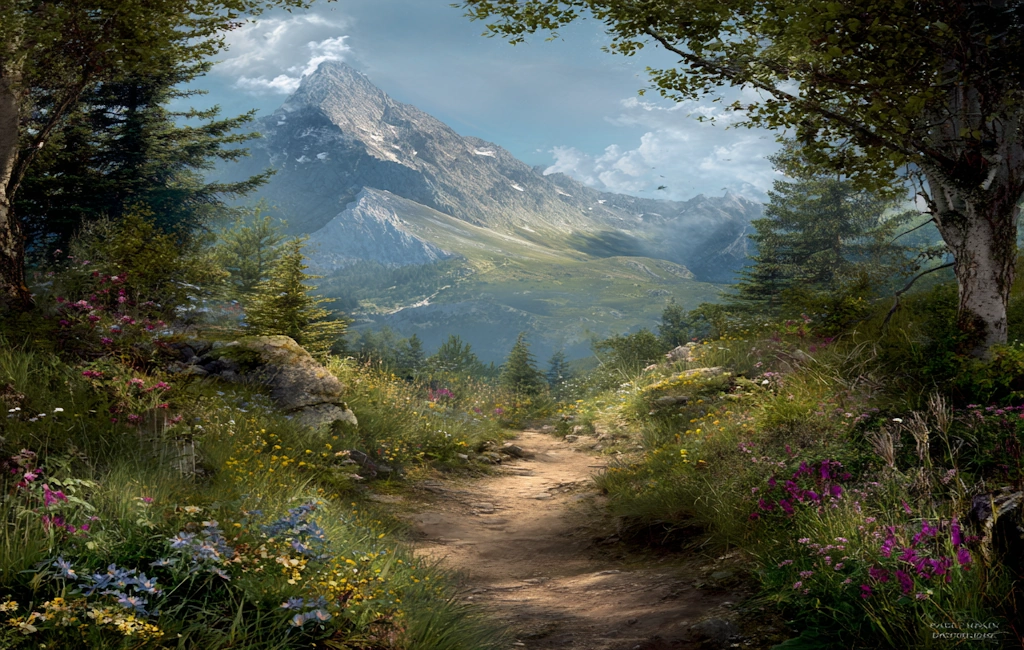
Via Dinarica (White Trail) - The Spine of the Western Balkans
The Via Dinarica White Trail is one of Europe's most ambitious and spectacular long-distance trekking routes, stretching approximately 1,260 kilometres across the Dinaric Alps and Shar Mountains. This "mega-trail" traverses eight countries: Slovenia, Croatia, Bosnia and Herzegovina, Montenegro, Albania, Kosovo, North Macedonia, and Serbia. It is a journey through the last truly wild corners of the European continent, connecting ancient highland cultures, limestone karst landscapes, and some of the most rugged peaks south of the Alps. Unlike the more manicured trails of Western Europe, the Via Dinarica offers a raw, authentic experience where the path often follows traditional shepherd routes, forgotten military tracks, and pristine ridgelines that have remained unchanged for centuries.
- Distance: 1,260.0 km (approximate, depending on variants)
- Elevation Gain: 49,579 m
- Duration: 60–90 days for a full thru-hike
- Difficulty: Challenging (requires high fitness, navigation skills, and self-sufficiency)
- Best Time: June to September (high passes are snow-free)
- Highest Point: Maja Jezercë, Albania (2,694 m)
- Countries: Slovenia, Croatia, Bosnia and Herzegovina, Montenegro, Albania, Kosovo, North Macedonia, Serbia
- Direction: Typically walked North to South (Slovenia to Albania/Macedonia)
Overview
The Via Dinarica is more than just a hiking trail; it is a cultural corridor designed to promote sustainable tourism and preserve the unique heritage of the Western Balkans. The White Trail is the highest and most mountainous of the three primary Via Dinarica routes (the others being the Blue Trail along the coast and the Green Trail through the inland forests). It follows the main ridgeline of the Dinaric Alps, leading hikers through a succession of national parks, UNESCO World Heritage sites, and remote mountain villages where life continues at a pace dictated by the seasons.
The landscape is dominated by "karst"—a geological phenomenon of soluble rocks like limestone and dolomite. This creates a dramatic, almost lunar terrain of deep sinkholes (dolines), vast underground cave systems, and jagged white peaks that contrast sharply with the deep blue of the Adriatic Sea, which is often visible from the Croatian and Montenegrin sections. Because of the porous nature of karst, water is a precious commodity on the White Trail; rivers often disappear underground only to re-emerge kilometres away as powerful springs. This geological reality dictates much of the trekking strategy, requiring careful planning for water resupply.
Walking the full length of the White Trail is a monumental undertaking. It requires traversing the high plateaus of Slovenia, the coastal massifs of Velebit and Biokovo in Croatia, the formidable "Heart of the Dinarides" in Bosnia and Herzegovina, the dramatic canyons of Montenegro, and the jagged, "Accursed Mountains" (Prokletije) of Albania and Kosovo. The trail concludes in the Shar Mountains of North Macedonia and Serbia. For those who cannot commit to three months of continuous walking, the trail is easily broken into week-long sections, with Sarajevo serving as the central logistical hub for the entire network.
The experience is defined by Balkan hospitality. In the remote highlands, hikers are frequently invited into "katuns" (seasonal shepherd huts) for coffee, rakija (fruit brandy), and homemade cheese. This human element, combined with the physical challenge of nearly 50,000 metres of elevation gain, makes the Via Dinarica one of the most rewarding trekking experiences on Earth. It is a trail for those who seek solitude, cultural depth, and the thrill of navigating a landscape that feels genuinely undiscovered.
History and Cultural Context
The concept of the Via Dinarica was born in the early 2010s as a collaborative effort between outdoor enthusiasts, NGOs, and local governments across the Balkan Peninsula. Its primary goal was to create a unified tourism product that would transcend national borders and help heal the scars of the conflicts that followed the breakup of Yugoslavia in the 1990s. By linking existing hiking paths and creating new connections, the project aimed to revitalise rural economies and provide a sustainable alternative to coastal mass tourism.
Historically, the paths that make up the Via Dinarica have been used for millennia. Many sections follow ancient Illyrian and Roman roads, while others were carved out by transhumant shepherds moving livestock between summer and winter pastures. During the 20th century, many of these mountains became strategic military zones. In the First World War, the Isonzo Front in Slovenia saw some of the most brutal mountain warfare in history. During the Second World War, the rugged terrain of Bosnia and Montenegro provided cover for Partisan resistance movements. Hikers will frequently encounter monuments (spomeniks), bunkers, and ruins that tell the story of the region's turbulent past.
In 2014, National Geographic named the Via Dinarica one of the "Best of the World" destinations, propelling the trail into the international spotlight. Since then, significant work has been done to improve marking, renovate mountain huts, and establish a formal border-crossing protocol for hikers. Despite this modernisation, the trail remains deeply rooted in the traditional cultures of the Dinaric Alps. The "Highland Code" of hospitality remains strong, and the trail serves as a vital link for communities that were once isolated by geography and politics. The land is a mosaic of religions and ethnicities—Catholic, Orthodox, and Muslim—all sharing a common mountain heritage that the Via Dinarica celebrates and protects.
Want more background? Read extended notes on history and cultural context → Learn more
Seasonal Highlights and Weather Reality
The window for a full thru-hike of the Via Dinarica White Trail is relatively narrow due to the high altitudes and the Mediterranean-Continental climate interface. The primary season runs from June to September, though experienced hikers can extend this from late May to October depending on snow conditions.
Spring (May to June): Late May and early June are beautiful as the alpine meadows erupt in wildflowers. However, snow often lingers in the high passes of the Prokletije (Albania/Montenegro) and Prenj (Bosnia) until mid-June. Hikers in early June should be prepared for snow crossings and potentially high water levels in rivers. Many mountain huts do not fully open until mid-June.
Summer (July to August): This is the peak season. The weather is generally stable, though afternoon thunderstorms are common and can be violent. In the lower sections, particularly in Croatia and Herzegovina, temperatures can soar above 35°C. The heat, combined with the lack of water in the karst terrain, makes these months physically demanding. High-altitude sections provide a welcome escape from the heat, with daytime temperatures usually ranging from 15°C to 25°C.
Autumn (September to October): September is arguably the best month for trekking. The heat of summer has dissipated, the air is crisp and clear (offering the best views of the Adriatic), and the autumn colours begin to transform the beech and oak forests. By mid-October, the risk of early snowfall increases significantly, and many seasonal shepherd settlements are abandoned for the winter.
Winter (November to April): The White Trail becomes a serious mountaineering and ski-touring undertaking. Heavy snowfall is guaranteed, and avalanche risk is high in many sections. Most mountain huts are closed or operate only as basic winter shelters. Only those with advanced winter survival skills and specialised equipment should attempt the trail during these months.
Recommended Itinerary
Via Dinarica White Trail: Regional Stages
Stage 1: Slovenia - The Karst Plateaus
- Distance: 150 km
- Key Waypoints: Postojna, Snežnik Mountain, Mašun
- Highlights: Exploring the world-famous Postojna Caves and climbing Mount Snežnik (1,796 m) for views of the Alps and the Adriatic.
- Terrain: Rolling hills, deep forests, and classic karst plateaus.
- Duration: 7–9 days
Stage 2: Croatia (North) - Gorski Kotar and Northern Velebit
- Distance: 180 km
- Key Waypoints: Risnjak National Park, Vratnik Pass, Zavižan
- Highlights: The rugged limestone towers of Bijele and Samarske Stijene; the Premužić Trail in Northern Velebit, a masterpiece of dry-stone path construction.
- Terrain: Dense beech forests transitioning into dramatic coastal limestone ridges.
- Duration: 10–12 days
Stage 3: Croatia (South) - Central and Southern Velebit to Dinara
- Distance: 220 km
- Key Waypoints: Paklenica National Park, Knin, Mount Dinara
- Highlights: The deep canyons of Paklenica and standing on the summit of Mount Dinara (1,831 m), the highest point in Croatia.
- Terrain: Exposed, rocky ridges with constant views of the sea; very limited water.
- Duration: 12–14 days
Stage 4: Bosnia and Herzegovina (West) - The High Plateaus
- Distance: 160 km
- Key Waypoints: Buško Lake, Blidinje Nature Park, Čvrsnica Mountain
- Highlights: The natural stone arch of Hajdučka Vrata and the remote, high-altitude plateau of Blidinje.
- Terrain: Vast open spaces, high alpine meadows, and dramatic cliffs.
- Duration: 8–10 days
Stage 5: Bosnia and Herzegovina (East) - The Heart of the Dinarides
- Distance: 140 km
- Key Waypoints: Prenj Mountain, Sarajevo, Zelengora Mountain
- Highlights: Prenj, often called the "Bosnian Himalayas"; the glacial lakes of Zelengora; and a cultural stop in the capital, Sarajevo.
- Terrain: Extremely rugged alpine peaks and deep glacial valleys.
- Duration: 8–10 days
Stage 6: Montenegro - Canyons and High Peaks
- Distance: 180 km
- Key Waypoints: Maglić (highest in BiH), Durmitor National Park, Tara Canyon
- Highlights: Climbing Maglić (2,386 m), the black pines of Biogradska Gora, and the jagged peaks of Durmitor.
- Terrain: High alpine, deep canyons, and pristine mountain lakes (gorske oči).
- Duration: 10–12 days
Stage 7: Albania, Kosovo, and North Macedonia - The Accursed Mountains
- Distance: 230 km
- Key Waypoints: Prokletije (Valbona/Theth), Mount Korab, Shar Mountains
- Highlights: The wild, vertical landscapes of the Accursed Mountains; climbing Mount Korab (2,764 m), the highest point in both Albania and North Macedonia.
- Terrain: The most vertical and remote section of the entire trail; steep ascents and descents.
- Duration: 12–15 days
Important Notes:
- The itinerary is highly flexible; many hikers choose to skip certain road sections or focus on specific national parks.
- Resupply points are often 3–5 days apart; careful food planning is essential.
- Border crossings in the Prokletije region require specific permits (see Permits section).
- Water management is the single most important daily task, especially in Croatia and Bosnia.
Planning and Bookings
Book Your Trip
Everything you need to plan your journey
Accommodation
Find places to stay near Sarajevo
Flights
Search flights to Sarajevo
Essential Preparation
Preparation for the Via Dinarica White Trail is significantly more complex than for most European thru-hikes. Because the trail crosses eight borders and traverses remote areas with limited infrastructure, logistics must be organised well in advance. Fitness is paramount; the trail involves nearly 50,000 metres of ascent, often on loose karst scree or steep, unmaintained paths. Hikers should be comfortable with 20–30 km days carrying a full pack (15–20 kg).
Sarajevo is the logical base for planning. It sits roughly in the middle of the trail and offers the best access to gear shops, maps, and transport. Most hikers arrive via Sarajevo International Airport (SJJ) or via bus from Zagreb or Belgrade. Before starting, ensure you have downloaded offline GPS tracks (GPX files), as trail markings can be inconsistent, particularly in Bosnia, Montenegro, and Albania. Language can be a barrier in remote villages; learning basic phrases in Serbo-Croatian (which covers Slovenia to Montenegro) and Albanian is highly recommended.
Trail Accommodation
Accommodation on the White Trail is a mix of mountain huts, basic shelters, guesthouses, and wild camping. The availability varies significantly by country.
Mountain Huts (Planinarski dom): Found mostly in Slovenia, Croatia, and Bosnia. These are usually staffed on weekends and daily during July and August. They provide bunk beds and often simple meals (beans, stew). Costs range from €15 to €30 per night. In Slovenia and Croatia, many huts belong to national mountaineering associations; membership (e.g., UIAA) can provide discounts.
Unstaffed Shelters (Sklonište): Common in the Velebit mountains of Croatia. These are basic, free-to-use huts with wooden platforms for sleeping. They are essential for safety but can be crowded in peak season. You must carry your own sleeping mat and bag.
Guesthouses and Homestays: In the villages of Montenegro and Albania, "katuns" and village guesthouses are the norm. These offer a bed and incredible home-cooked meals for €25–€40. This is often the highlight of the trip.
Wild Camping: Generally permitted or tolerated in most areas outside of strict National Park zones. In Croatia, wild camping is technically illegal but often necessary on long stretches between huts; hikers should be discreet and follow Leave No Trace principles. In Bosnia and Montenegro, wild camping is widely accepted. CRITICAL: In Bosnia and parts of Croatia, you must only camp in areas known to be free of landmines (stay on established paths and used campsites).
Required Gear
- Footwear: Sturdy, high-cut trekking boots with a stiff sole. The karst limestone is incredibly sharp and will shred lightweight trail runners. Ensure boots are well broken-in.
- Navigation: A dedicated GPS device (Garmin or similar) and a smartphone with offline maps (Gaia GPS or Mapy.cz). Paper maps are available for some sections but are hard to find for the entire route.
- Backpack: 55–70L capacity with a high-quality suspension system to handle heavy water loads.
- Shelter: A lightweight, wind-resistant tent (3-season). Even if planning to stay in huts, a tent is a mandatory safety item for remote sections.
- Sleeping System: A sleeping bag rated to 0°C (even in summer, alpine nights are cold) and a high-R-value sleeping mat.
- Clothing: Layering system including merino base layers, a fleece or down mid-layer, and a high-quality Gore-Tex shell. A wide-brimmed hat and sunglasses are essential for the exposed karst ridges.
- Safety: A Personal Locator Beacon (PLB) like an InReach or Spot is strongly recommended due to the lack of mobile signal in deep canyons.
What to Bring
- Water Treatment: A high-capacity filter (Sawyer Squeeze or Katadyn BeFree) and purification tablets as a backup. You may need to carry 4–6 litres of water in dry sections.
- Food: Lightweight, calorie-dense meals. While you can buy supplies in towns, mountain villages often only have basic shops (bread, cheese, tinned fish). Carry at least 3–4 days of food at all times.
- Cooking: A multi-fuel or canister stove. Gas canisters (screw-top) are available in major cities like Ljubljana, Zagreb, Sarajevo, and Podgorica, but can be hard to find elsewhere.
- Power: A large capacity power bank (20,000 mAh) to keep navigation devices charged during 5-day stretches between electricity.
- First Aid: Comprehensive kit including blister care (Compeed), antiseptic, rehydration salts, and any personal medications.
- Cash: Essential. Most mountain huts and village guesthouses do not accept cards. Carry Euros (accepted in Slovenia, Montenegro, and Kosovo) and local currency for Croatia (Euro), Bosnia (KM), and Albania (Lek).
Permits
For most of the Via Dinarica, no specific trekking permits are required beyond standard tourist visas (the region is generally visa-free for EU, US, UK, and Commonwealth citizens). However, the "Accursed Mountains" (Prokletije) section, where the trail weaves between Montenegro, Albania, and Kosovo, requires specific cross-border permits.
Cross-Border Permits: If you intend to cross borders at non-official checkpoints (i.e., on mountain paths), you must apply for a permit at least 10–14 days in advance. This involves submitting your passport details and planned route to the border police of the respective countries. Several local agencies in Montenegro and Albania can facilitate this for a small fee (approx. €20–€40). Failure to have these permits can result in fines or deportation if stopped by border patrols.
National Park Fees: Most National Parks along the route (e.g., Triglav, Risnjak, Paklenica, Durmitor, Valbona) charge a small daily entrance fee, usually between €2 and €7. These are typically paid at park entrances or to rangers on the trail. Keep your receipts, as they are often checked.
Registration: In some countries, like Montenegro and Bosnia, foreigners are technically required to register with the local police within 24 hours of arrival in a new municipality. If staying in hotels or registered guesthouses, they will do this for you. If wild camping, this is rarely enforced for hikers, but it is worth being aware of the regulation.
Other Activities in the Area
The Western Balkans offer a wealth of experiences beyond the trail. Consider these additions to your journey:
- White Water Rafting: The Tara River Canyon in Montenegro is the deepest in Europe and offers world-class rafting, particularly in June when water levels are high.
- Caving: The karst landscape is home to thousands of caves. Beyond Postojna in Slovenia, consider Vjetrenica in Bosnia or the caves of the Velebit in Croatia.
- Cultural Exploration in Sarajevo: Spend a few days in the "Jerusalem of Europe," exploring the Baščaršija (old bazaar), learning about the 1990s siege, and enjoying the world-class coffee culture.
- Adriatic Coast: The White Trail often runs parallel to the sea. It is easy to drop down to the Croatian coast for a few days of swimming and seafood in Zadar, Split, or Dubrovnik.
- Via Ferrata: Several sections of the trail, particularly in the Prenj and Durmitor mountains, have nearby via ferrata routes for those seeking more technical vertical challenges.
- Wine Tasting: The Herzegovina region of Bosnia and the coastal hills of Croatia produce exceptional wines (Vranac and Žilavka). Many vineyards offer tours and tastings.
Safety and Conditions
Landmines: This is the most critical safety consideration for the Via Dinarica, specifically in Bosnia and Herzegovina and certain border areas of Croatia. While the trail itself is cleared and safe, you must never leave the marked path in areas identified as high-risk. Use the "Mine Free BH" mobile app to check your location against known minefields. Never enter abandoned buildings or trenches from the war era.
Water Scarcity: The karst terrain is "thirsty." Surface water is rare. Hikers have died of dehydration in the Velebit and Biokovo mountains. Always carry more water than you think you need, and verify water sources with locals or recent trail reports (the "Via Dinarica" Facebook group is an excellent resource).
Wildlife: The Dinaric Alps are home to one of Europe's largest populations of brown bears, as well as wolves and lynx. While encounters are rare, hikers should practice bear-safe camping (hang food) and make noise when walking through dense brush. The horned viper (poskok) is the region's only dangerously venomous snake; watch your step on sunny rocks and wear gaiters.
Weather: Mountain weather can change in minutes. "Bura" winds on the Croatian coast can reach hurricane force, making ridgeline walking impossible. Lightning is a significant threat on the exposed plateaus of Bosnia and Montenegro. If a storm approaches, descend from the ridges immediately.
Mountain Rescue: Rescue services (GSS) are professional but may take a long time to reach remote areas. In Slovenia and Croatia, they are highly organised. In Albania and Kosovo, rescue infrastructure is more limited. A PLB is your best chance of summoning help in an emergency.
Side Trips and Points of Interest
Lukomir Village (Bosnia): A short detour from the main trail leads to the highest and most isolated permanent settlement in Bosnia and Herzegovina. Perched on the edge of the Rakitnica Canyon, Lukomir offers a glimpse into a medieval way of life, with stone houses topped with cherry-wood shingles and traditional "stećci" (medieval tombstones) nearby.
The Premužić Trail (Croatia): While part of the main White Trail, this 57 km section in Northern and Central Velebit deserves special mention. Built in the 1930s, the path is engineered so perfectly that the gradient never exceeds 10%, even as it winds through the most chaotic limestone "labyrinth" imaginable. It is a masterpiece of trail building.
Hajdučka Vrata (Bosnia): A natural stone ring on Čvrsnica Mountain, formed by centuries of wind erosion. It is one of the most photographed spots on the trail and offers a dizzying view down into the Diva Grabovica valley, 1,500 metres below.
The Blue Eye of Theth (Albania): A stunning karst spring near the village of Theth. The water is an unbelievable iridescent blue and remains a constant 10°C year-round. It is a perfect, if chilly, place to soak tired feet after crossing the Valbona Pass.
Ostroški Manastir (Montenegro): While not directly on the White Trail, this monastery built into a vertical cliff face is a major pilgrimage site and can be reached via a two-day detour. It is one of the most spiritually significant sites in the Balkans.
Leave No Trace
The Via Dinarica passes through some of Europe's last wilderness areas. These ecosystems are fragile and under increasing pressure from climate change and unregulated development. As a hiker, you are an ambassador for sustainable tourism.
Specific LNT Guidelines for the Balkans:
- Waste Management: There is no rubbish collection in the mountains. Pack out everything, including toilet paper and organic waste (which decomposes slowly in the dry karst environment).
- Fire Safety: Wildfires are a massive risk in the summer. Use a stove for cooking and avoid campfires entirely, especially in the dry forests of Croatia and Montenegro.
- Water Protection: Karst springs are often the only water source for entire villages. Never wash yourself or your dishes directly in a spring or glacial lake. Carry water at least 30 metres away and use biodegradable soap.
- Respecting Heritage: Do not disturb "stećci" (medieval tombstones) or military ruins. These are part of the region's cultural fabric.
- Supporting Local: The best way to protect the trail is to make it economically viable for locals. Stay in village guesthouses, buy cheese from shepherds, and hire local guides for technical sections.
 Spain
Spain