
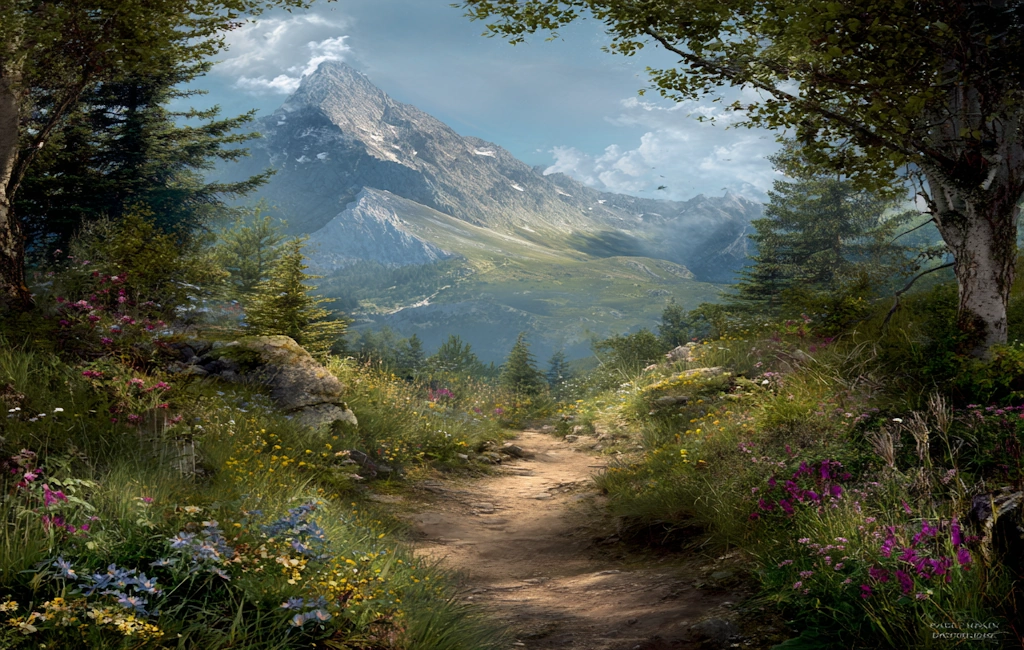
Via Alpina (Red Trail) - The Ultimate Alpine Odyssey
The Via Alpina Red Trail is the definitive cross-border trekking experience, spanning the entire length of the European Alps. This monumental journey covers 2,650 kilometres, traversing eight countries: Slovenia, Italy, Austria, Germany, Liechtenstein, Switzerland, France, and Monaco. It is not merely a hike but a profound cultural and geographical exploration of the world's most famous mountain range. Starting at the Adriatic coast in Trieste and concluding at the Mediterranean shores of Monaco, the Red Trail crosses the main Alpine ridge 44 times, leading walkers through a staggering diversity of landscapes, from the limestone peaks of the Julian Alps to the glaciated giants of the Bernese Oberland and the lavender-scented foothills of the Maritime Alps.
- Distance: 2,650.0 km
- Total Elevation Gain: 135,300 m
- Duration: 140–160 days (full thru-hike)
- Difficulty: Challenging (requires high fitness and alpine experience)
- Best Time: July to September (high passes are snow-free)
- Highest Point: Gebroulaz Pass, France (3,000 m)
- Countries: Slovenia, Italy, Austria, Germany, Liechtenstein, Switzerland, France, Monaco
- Direction: Typically walked East to West (Trieste to Monaco)
Overview
The Via Alpina Red Trail is the longest and most diverse of the five Via Alpina routes, offering a comprehensive tapestry of the Alpine arc. It is a journey of extremes, where one day you might be navigating high-altitude scree slopes and the next strolling through ancient, sun-drenched vineyards or medieval mountain villages. The trail was designed to showcase not only the natural splendour of the Alps but also the rich cultural heritage of the communities that have inhabited these valleys for millennia. Unlike many wilderness-focused thru-hikes, the Via Alpina is deeply connected to human history, passing through remote hamlets where traditional farming practices endure and crossing historical trade routes that have linked Northern and Southern Europe for centuries.
The sheer scale of the Red Trail is difficult to comprehend until you are on it. With over 135,000 metres of ascent—the equivalent of climbing Mount Everest from sea level fifteen times—it demands exceptional physical preparation and mental resilience. The terrain varies from well-maintained forest tracks and pastoral meadows to rugged, technical alpine paths that require a steady head for heights. While the trail does not involve technical climbing or glacier crossings (on the standard route), it frequently reaches altitudes where weather can turn ferocious in minutes, and snow can linger on north-facing passes well into August.
Walking the Red Trail provides an unparalleled perspective on the ecological diversity of the Alps. You will traverse the Triglav National Park in Slovenia, the Dolomites UNESCO World Heritage site in Italy, the Swiss National Park, and the Vanoise and Mercantour National Parks in France. Each region brings its own distinct character: the sharp, pale limestone of the eastern ranges, the lush green valleys of the Bavarian Alps, the dramatic granite spires of the central massif, and the increasingly Mediterranean flora as you approach the finish line in Monaco. For the thru-hiker, the Red Trail is a masterclass in endurance and a rare opportunity to witness the slow, beautiful transition of a continent's most iconic landscape.
History and Cultural Context
The Via Alpina project was officially launched in 1999 and completed in 2002, the result of an international collaboration between Alpine associations, local governments, and environmental organisations across the eight Alpine nations. The primary goal was to promote sustainable tourism and to foster a sense of shared Alpine identity that transcends national borders. By linking existing paths into a continuous network, the creators sought to revitalise remote mountain economies while encouraging walkers to appreciate the fragile beauty of the Alpine environment.
Culturally, the Red Trail is a journey through the "Alpine Convention" area—a territory protected by an international treaty dedicated to the sustainable development of the Alps. As you walk, you will encounter a fascinating array of languages and dialects, from Slovene and Italian to German, Romansh, French, and Occitan. The trail passes through regions with complex histories, such as the South Tyrol, where Germanic and Mediterranean cultures blend, and the high valleys of Switzerland, where the Romansh language still thrives. You will see the architectural evolution of the Alps, from the stone-roofed "baite" of Italy to the ornate wooden chalets of the Bernese Oberland.
The land itself is steeped in history. In the Julian Alps, you will walk past remnants of the Isonzo Front from World War I, where soldiers endured unimaginable conditions in high-altitude trenches. In the French Alps, you follow sections of the "Route des Grandes Alpes," a historic road network designed to connect the Mediterranean to Lake Geneva. The Red Trail honours this history by following the paths of shepherds, salt traders, and pilgrims, ensuring that the stories of the mountains are not forgotten by those who traverse them today.
Want more background? Read extended notes on history and cultural context → Learn more
Seasonal Highlights and Weather Reality
The window for a successful thru-hike of the Via Alpina Red Trail is dictated entirely by snow. Most high passes (above 2,000 metres) are only reliably clear of snow from early July until late September. Attempting the trail outside this window requires advanced winter mountaineering skills, including the use of ice axes and crampons, and carries a significant risk of avalanches.
Early Season (June): While lower valleys are lush and filled with wildflowers, many high-altitude sections remain impassable without technical gear. Mountain huts (refuges/hütten) typically begin opening in mid-to-late June, but some higher ones may wait until July. This is a beautiful time for lower-elevation sections, but thru-hikers must be prepared for significant snow detours.
Peak Season (July and August): This is the prime time for the Red Trail. The weather is generally stable, though afternoon thunderstorms are a frequent and serious hazard. The flora is at its peak, with alpine meadows carpeted in gentians, edelweiss, and rhododendrons. However, this is also the busiest time for the mountain huts, and booking accommodation in advance is essential, especially in popular regions like the Dolomites or the Swiss Alps.
Late Season (September): Many experienced hikers consider September the best month in the Alps. The air is crisper and clearer, providing exceptional visibility, and the summer crowds have thinned. The first dustings of autumn snow may appear on the highest peaks, and the larch forests begin to turn a brilliant gold. Be aware that many huts close in mid-to-late September, so careful planning is required for those finishing their journey late in the season.
Weather Reality: The Alps create their own weather. Even in mid-summer, temperatures can drop below freezing at night, and snow can fall at any time above 2,500 metres. Rain is common, and "Föhn" winds can bring sudden, dramatic temperature changes. Hikers must be prepared for all conditions, often within the same day.
Recommended Itinerary
The 161-Stage Red Trail Breakdown
Given the 2,650 km length, the Red Trail is best understood in regional sections. A full thru-hike typically takes 5 to 6 months.
Region 1: The Julian Alps and Karavanke (Slovenia/Italy)
- Stages: R1 to R12
- Distance: ~200 km
- Key Waypoints: Trieste, Lipica, Triglav National Park, Trenta, Vršič Pass
- Description: Starting at the Adriatic Sea, the trail climbs rapidly into the limestone heart of Slovenia. The ascent of the Julian Alps is steep and rugged, offering some of the most dramatic scenery of the entire trip.
- Highlights: The emerald waters of the Soča River and the jagged peaks surrounding Mount Triglav.
Region 2: The Carnic Alps and the Dolomites (Italy/Austria)
- Stages: R13 to R50
- Distance: ~550 km
- Key Waypoints: Sillian, Drei Zinnen (Tre Cime), Cortina d'Ampezzo, Bolzano
- Description: This section follows the border between Italy and Austria, traversing the Carnic Ridge before entering the world-famous Dolomites. The terrain is characterised by vertical pale-rock walls and high alpine plateaus.
- Highlights: The iconic Tre Cime di Lavaredo and the unique Ladin culture of the mountain valleys.
Region 3: The Bavarian and Tyrolean Alps (Germany/Austria)
- Stages: R51 to R65
- Distance: ~250 km
- Key Waypoints: Oberstdorf, Zugspitze region, Lechtal Alps
- Description: The trail moves into the Northern Limestone Alps. Expect lush green pastures, traditional dairy farms, and well-maintained paths. The elevation is slightly lower here, but the ridges are sharp and the views into the German plains are vast.
- Highlights: The pristine Allgäu region and the dramatic crossing of the Lechtal Alps.
Region 4: The Swiss Alps and Liechtenstein
- Stages: R66 to R100
- Distance: ~600 km
- Key Waypoints: Vaduz, Sargans, Glarus Alps, Bernese Oberland (Grindelwald, Lauterbrunnen), Adelboden
- Description: Perhaps the most iconic section of the trail. You will walk beneath the "Big Three"—the Eiger, Mönch, and Jungfrau. The infrastructure is excellent, but the passes are high and the descents are long.
- Highlights: The Lauterbrunnen Valley with its 72 waterfalls and the high-altitude crossing of the Hohtürli Pass.
Region 5: The French Alps and the Maritime Finish (France/Italy/Monaco)
- Stages: R101 to R161
- Distance: ~1,050 km
- Key Waypoints: Mont Blanc Massif, Vanoise National Park, Briançon, Mercantour National Park, Monaco
- Description: The final long stretch through the Western Alps. The mountains here are the highest on the trail, with the route skirting the glaciers of the Vanoise. As you move south, the landscape becomes drier and more Mediterranean.
- Highlights: The wild beauty of the Mercantour and the emotional final descent into the Principality of Monaco.
Important Notes:
- The Red Trail is not a loop; logistics for returning to the start must be planned.
- Resupply points are frequent (every 2–4 days), but some remote sections in the French Alps require more self-sufficiency.
- The trail is marked with the red Via Alpina logo, but navigation skills are essential as markings vary by country.
Planning and Bookings
Book Your Trip
Everything you need to plan your journey
Accommodation
Find places to stay near Geneva
Flights
Search flights to Geneva
Essential Preparation
Planning a thru-hike of the Via Alpina Red Trail is a massive undertaking that should begin at least six to twelve months in advance. Physical fitness is the most critical factor; you should be comfortable walking 20–25 kilometres a day with 1,000+ metres of elevation gain, day after day. Training should include weighted hikes and stair climbing to prepare your knees for the relentless descents.
Logistically, you must coordinate your start date with the snowmelt. Starting in Trieste in mid-May or early June allows you to reach the high Slovenian and Italian peaks just as they become accessible. You will also need to manage your finances; the Alps are expensive, and a 5-month journey can cost between €8,000 and €12,000 depending on your reliance on mountain huts versus camping.
Base cities for logistics include Trieste (start), Ljubljana (near the Slovenian section), Innsbruck (central), Interlaken (Switzerland), and Nice/Monaco (finish). These cities offer international transport links and major outdoor retailers for gear replacements.
Trail Accommodation
The Red Trail relies heavily on the extensive network of Alpine mountain huts (Refuges in France, Hütten in Germany/Austria, Rifugi in Italy, and Cabanes in Switzerland). These huts are the heartbeat of the Alpine trekking culture.
Hut Facilities:
- Dormitory-style sleeping (Matratzenlager) with blankets provided (silk liner required).
- Half-pension options (dinner and breakfast) are standard and highly recommended.
- Most huts have drying rooms for wet gear.
- Showers are often available but usually cost extra (€2–€5 for 3 minutes).
- Charging stations for electronics are common but can be crowded.
Booking Requirements:
- During July and August, huts MUST be booked in advance. Many can be booked online via the "SAC" or "CAI" portals, but some still require a phone call.
- Membership in an Alpine Club (e.g., DAV, ÖAV, SAC, CAF) is highly recommended as it provides significant discounts (up to 50%) on overnight stays and includes mountain rescue insurance.
- Costs: Expect to pay €50–€80 per night for half-pension (with Alpine Club discount).
Camping: Wild camping is strictly regulated and often prohibited in National Parks and above the treeline in many regions (especially Switzerland and Austria). In France, "bivouacking" (setting up at sunset, leaving at sunrise) is generally tolerated in many areas. Always check local regulations to avoid heavy fines.
Required Gear
- Footwear: High-quality trekking boots with Vibram soles and ankle support. They must be well broken-in. Some experienced hikers use trail runners, but the rocky terrain of the Dolomites and Julian Alps often demands more protection.
- Rain Gear: A high-end Gore-Tex jacket and overtrousers. Alpine storms are intense.
- Backpack: A 40–50 litre pack is sufficient if staying in huts. If carrying camping gear, 60+ litres. Ensure it has a high-quality harness system.
- Navigation: A GPS device or smartphone with offline maps (Outdooractive or Komoot are excellent for the Alps). Always carry paper maps for the current section as a backup.
- Safety: A basic first aid kit, an emergency bivvy bag, and a whistle.
- Sleeping: A silk or cotton sleeping bag liner (mandatory in huts).
What to Bring
- Clothing: A layering system is essential. Merino wool base layers, a fleece or down mid-layer, and quick-dry trekking trousers. Don't forget a warm hat and gloves, even in summer.
- Water: A 2-litre capacity (bladder or bottles). Water is generally plentiful in the Alps, but some limestone regions (Dolomites/Slovenia) can be dry. Carry purification tablets just in case.
- Sun Protection: High-factor sunscreen, lip balm with SPF, and Category 3 or 4 sunglasses. The alpine sun is exceptionally strong.
- Toiletries: Biodegradable soap, a travel towel, and earplugs (essential for noisy dormitories).
- Power: A high-capacity power bank (10,000–20,000 mAh) to keep your navigation devices charged.
- Cash: Many remote huts do not accept credit cards. Carry enough Euros (and Swiss Francs for the Swiss section) to cover several days of food and lodging.
Permits
One of the great joys of the Via Alpina Red Trail is that there is no single "thru-hiking permit" required to walk the route. Because it follows existing public rights of way across eight countries, you are free to walk as much or as little as you like. However, there are specific regulations you must adhere to within certain jurisdictions.
National Park Regulations: When passing through National Parks such as Triglav (Slovenia), Berchtesgaden (Germany), Swiss National Park (Switzerland), or Vanoise and Mercantour (France), you must stay on marked trails. Wild camping is strictly forbidden in these areas, and offenders face significant fines. In the Swiss National Park, you are not even allowed to leave the path to sit on the grass.
Visas: For non-EU citizens, the Red Trail presents a challenge regarding the Schengen Area. A full thru-hike typically takes 5 months, but the standard Schengen tourist visa only allows for 90 days within a 180-day period. You will need to apply for a Long Stay Visa (Type D) from one of the primary countries (usually France or Italy) to legally complete the entire trail in one season.
Alpine Club Membership: While not a permit, membership in an Alpine Club is effectively a "passport" to the mountains. It provides the insurance necessary for helicopter evacuation, which can otherwise cost thousands of Euros.
Other Activities in the Area
The Red Trail passes through some of the world's most famous outdoor recreation hubs. Consider taking a "zero day" to experience these activities:
- Via Ferrata in the Dolomites: Use your rest days in Cortina d'Ampezzo to tackle some of the historic "iron paths"—climbing routes equipped with fixed cables and ladders.
- Canyoning in Slovenia: The Bovec region near the Soča River offers world-class canyoning and white-water rafting in crystal-clear glacial water.
- Paragliding in Interlaken: See the Bernese Oberland from the air. Interlaken is the paragliding capital of Europe and offers tandem flights with views of the Eiger.
- Thermal Baths: Many Alpine towns, such as Bad Gastein in Austria or Bormio in Italy, feature historic thermal spas—perfect for recovering sore muscles.
- Mountaineering: If you have the skills, you can detour from the trail to summit iconic peaks like the Zugspitze (Germany) or Triglav (Slovenia).
- Wine Tasting: As you approach the Mediterranean in the final stages, take time to visit the vineyards of the Provence-Alpes-Côte d'Azur region.
Safety and Conditions
The Alps are a high-mountain environment, and safety should be your primary concern. Every year, the mountains claim lives, often due to poor preparation or underestimating the weather.
Alpine Weather: The most common danger is the afternoon thunderstorm. These usually build up after 2:00 PM. The rule of thumb is to be off high ridges and passes by midday. If caught in a storm, move away from peaks, ridges, and isolated trees. Put your metal trekking poles away and find a low spot to crouch.
Navigation: While the Red Trail is generally well-marked, fog and low cloud can reduce visibility to a few metres. You must be proficient in using a compass and map or a GPS device. Do not rely solely on your phone, as batteries drain quickly in the cold.
Terrain: Some sections involve "T3" or "T4" difficulty on the Swiss Alpine Scale. This means steep slopes, narrow ridges, and sections where you may need to use your hands for balance. If you suffer from severe vertigo, some stages may be very challenging.
Emergency Services: The international emergency number is 112. In Switzerland, REGA (1414) is the dedicated mountain rescue service. Ensure your insurance covers "search and rescue" and "repatriation." If you need to signal a rescue helicopter, stand with both arms raised in a "Y" shape (for "Yes").
Wildlife: While generally safe, be aware of livestock. Alpine pastures are home to cows and sheep, often protected by large guard dogs (Patous). Give them a wide berth and do not get between a mother and her calf.
Side Trips and Points of Interest
The Red Trail is surrounded by legendary landmarks. Here are a few worth the extra effort:
Mount Triglav Summit (Slovenia): The Red Trail passes near the base of Slovenia's highest peak. A detour to the summit (2,864 m) is a rite of passage for many hikers, though it involves a technical via ferrata section.
The Messner Mountain Museums (Italy): Founded by legendary climber Reinhold Messner, several of these museums are located near the trail in the South Tyrol, offering deep insights into mountain culture and history.
The Aletsch Glacier (Switzerland): A short detour from the trail in the Valais region allows you to see the largest glacier in the Alps, a stunning 23-kilometre-long river of ice.
Briançon (France): This UNESCO-listed city is the highest city in the European Union. Its massive fortifications, designed by Vauban, are a spectacular sight as you walk through the French section.
The Vallée des Merveilles (France): Located in the Mercantour National Park, this valley contains thousands of Bronze Age rock engravings. It is one of the most significant archaeological sites in the Alps.
Leave No Trace
The Alps are under immense environmental pressure from climate change and over-tourism. As a Via Alpina hiker, you have a responsibility to minimise your impact on this fragile ecosystem.
Respect the Flora and Fauna: Alpine plants have a very short growing season and are easily damaged. Stay on the path. Do not pick wildflowers, many of which (like the Edelweiss) are protected by law. Observe marmots, chamois, and ibex from a distance; do not feed them.
Waste Management: Pack out everything. This includes organic waste like banana peels or apple cores, which decompose very slowly at high altitudes and can be harmful to local wildlife. For human waste, use the toilets in the huts. If you must go on the trail, bury it at least 20 cm deep and 50 metres from water sources, and pack out your toilet paper.
Water Protection: Do not use soap (even biodegradable) directly in alpine lakes or streams. Carry water 50 metres away from the source for washing.
Noise Pollution: The mountains are a place of peace. Avoid loud music or shouting, which can disturb both wildlife and other hikers seeking solitude.
 New Zealand