
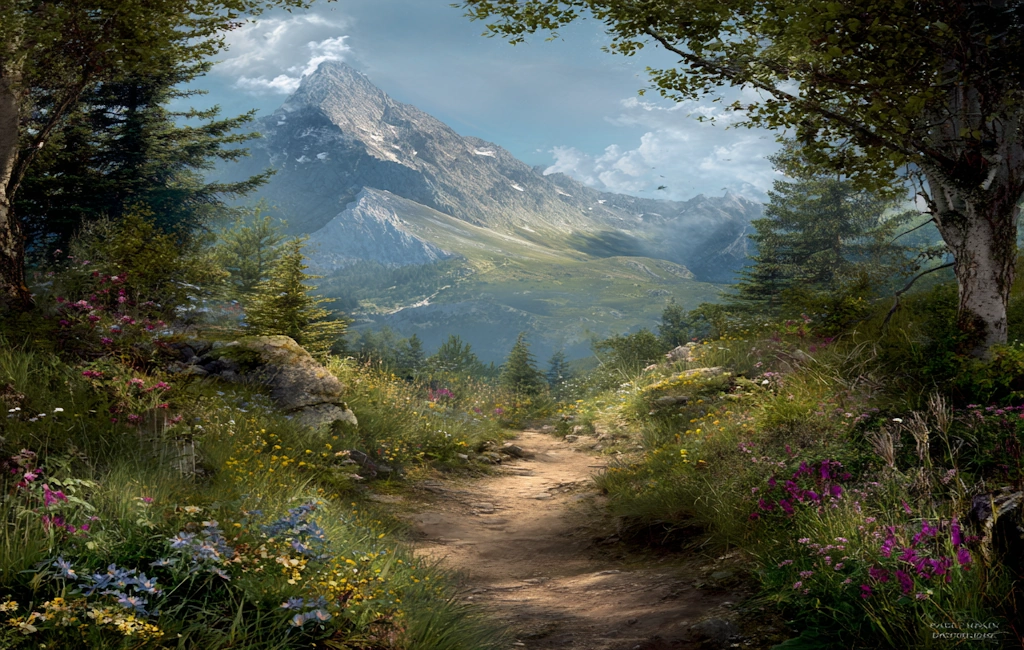
Valley of Flowers Trek - India's Alpine Floral Paradise
The Valley of Flowers Trek is a world-renowned high-altitude Himalayan odyssey located in the Chamoli district of Uttarakhand, India. Nestled within the Nanda Devi Biosphere Reserve, this UNESCO World Heritage site is a vibrant tapestry of botanical diversity, spanning an area of approximately 87.5 square kilometres. The trek is celebrated for its meadows of endemic alpine flowers and the staggering beauty of its surrounding peaks. Unlike many Himalayan treks that focus on barren ridges and icy summits, the Valley of Flowers offers a lush, emerald-green sanctuary that comes alive during the monsoon months. It is a journey that transitions from the roaring Alaknanda and Pushpawati rivers to serene, mist-covered meadows where over 500 species of wildflowers, including the rare Blue Poppy and the sacred Brahma Kamal, bloom in a riot of colour. This trek is not merely a physical challenge but a sensory immersion into one of the most fragile and beautiful ecosystems on the planet.
- Distance: 38.0 km (total return journey)
- Duration: 5–6 days
- Season: June to October (Peak bloom: mid-July to mid-August)
- Accommodation: Guesthouses and lodges in Ghangaria (No camping allowed in the Valley)
- Highest point: 4,389 m (at Hemkund Sahib) / 3,600 m (in the Valley)
- Difficulty: Moderate (requires good cardiovascular fitness)
- Direction: Out-and-back from Govindghat/Pulna
Overview
The Valley of Flowers is often described as the "Jewel of the Garhwal Himalayas," and for good reason. Situated at the transition point between the Zanskar Range and the Great Himalayas, the valley is protected by towering snow-capped peaks, including Gauri Parvat (6,708 m) and Rataban (6,166 m). The landscape is defined by the Pushpawati River, which bisects the valley, fed by glaciers and waterfalls that cascade down sheer granite cliffs. The trek is unique because it is one of the few high-altitude routes in India that is best experienced during the height of the monsoon. While other trails become impassable due to rain, the Valley of Flowers thrives, with the moisture triggering a massive floral explosion that transforms the valley floor into a natural botanical garden.
The experience is divided into two distinct phases. The first is the approach from the riverside town of Govindghat to the base camp at Ghangaria. This section follows a well-defined stone path through dense forests of oak, rhododendron, and Himalayan cedar. The second phase involves day trips from Ghangaria into the Valley of Flowers itself and the steep ascent to the holy lake of Hemkund Sahib. The contrast between the two is stark: the valley is a gentle, undulating meadow of soft colours and delicate scents, while the climb to Hemkund Sahib is a rigorous test of endurance leading to a stark, high-alpine environment of rock and ice.
Because the valley is a National Park and a UNESCO site, human impact is strictly controlled. There is no overnight stay permitted within the valley limits, ensuring that the ecosystem remains undisturbed by permanent settlements or campsites. This regulation preserves the profound sense of isolation and purity that walkers feel as they step past the forest department check-post. Whether you are a botanist, a photographer, or a trekker seeking spiritual solace, the Valley of Flowers provides a landscape that feels both prehistoric and ephemeral, changing its floral character almost weekly as different species take their turn to bloom.
History and Cultural Context
The Valley of Flowers remained largely unknown to the outside world until the early 20th century, though it was well-known to local shepherds and inhabitants of the Bhyundar Valley. Local folklore suggested the valley was inhabited by fairies (Apsaras) who would spirit away anyone who wandered too deep into the meadows. This sense of mystery kept the valley pristine for centuries. The modern history of the trek began in 1931 when Frank S. Smythe, a British mountaineer, accidentally stumbled upon the valley while returning from a successful expedition to Mount Kamet. Overwhelmed by the beauty of the meadows, Smythe named it the "Valley of Flowers" and later published a book of the same name, which introduced this hidden Himalayan gem to the international community.
In 1939, Joan Margaret Legge, a botanist from the Royal Botanic Gardens, Kew, arrived in the valley to study its flora. Tragically, she lost her life after a fall while collecting samples on a rocky slope. Her sister later visited the valley and erected a memorial stone that still stands today, inscribed with the words: "I will lift up mine eyes unto the hills from whence cometh my help." Her work was instrumental in documenting the vast array of species found here. In 1982, the Indian government declared the area a National Park, and in 2005, it was expanded and renamed the Nanda Devi and Valley of Flowers National Parks UNESCO World Heritage Site.
Beyond its botanical significance, the region holds immense spiritual importance. The nearby Hemkund Sahib is one of the most revered pilgrimage sites for the Sikh community. It is believed that Guru Gobind Singh, the tenth Sikh Guru, meditated on the banks of the glacial lake here in a previous incarnation. The trek to the valley is therefore shared with thousands of pilgrims, creating a unique cultural atmosphere where the rigours of the trail are met with chants of "Jo Bole So Nihal." This blend of natural wonder and deep-seated faith makes the Valley of Flowers trek a culturally rich experience unlike any other in the Himalayas.
Want more background? Read extended notes on history and cultural context → Learn more
Seasonal Highlights and Weather Reality
The Valley of Flowers is only accessible from June to October. For the remainder of the year, the valley is buried under several metres of snow, and the trekking paths are completely obscured. Each month within the trekking season offers a different perspective on the landscape.
June: This is the month of transition. As the snow melts, the first signs of green appear. While the floral density is lower than in later months, June offers the chance to see massive snow bridges over the rivers and the valley in its "waking up" phase. It is also the best time for those who want to see the frozen lake at Hemkund Sahib before it completely thaws.
July and August: This is the peak season. The monsoon is in full swing, and while the rain can be persistent, it is the catalyst for the floral bloom. By mid-July, the valley is a carpet of pink, purple, and yellow. This is the only time to see the famous Blue Poppy and the Brahma Kamal in their natural habitat. Expect wet conditions, misty views, and slippery trails, but the reward is the valley at its most spectacular.
September: As the rains begin to recede, the valley changes its hue to gold and ochre. The flowers begin to go to seed, and the air becomes much clearer, offering better views of the surrounding peaks. This is an excellent time for photographers who want to capture the mountains without the heavy monsoon clouds. The weather is cooler, and the trekking conditions are generally more stable.
October: The final month before the park closes. The first frosts begin to settle, and the vegetation turns brown. While the flowers are gone, the crisp autumn air and the deep blue Himalayan skies make for a beautiful, albeit chilly, trekking experience. By the end of October, the valley prepares for its long winter sleep, and the gates are officially closed to visitors.
Recommended Itinerary
6-Day Valley of Flowers Itinerary
Day 1: Haridwar/Dehradun to Govindghat
- Distance: 290 km (Drive)
- Elevation gain: 1,500 m
- Time: 10–11 hours
- Long drive along the Ganges and Alaknanda rivers
- Pass through the holy confluences (Prayags): Devprayag, Rudraprayag, and Karnaprayag
- Arrive at Govindghat (1,828 m), a bustling town on the banks of the Alaknanda
- Overnight in a hotel or guesthouse to prepare for the trek
Day 2: Govindghat to Ghangaria via Pulna
- Distance: 4 km drive to Pulna, then 9 km trek
- Elevation gain: 1,200 m
- Time: 5–6 hours
- The trek begins at Pulna on a well-paved stone path
- Gradual but steady ascent through forests of oak and pine
- Follow the Lakshman Ganga river for most of the route
- Pass several small dhabas (eateries) serving tea and snacks
- Arrive at Ghangaria (3,049 m), the base camp for the valley and Hemkund Sahib
- Ghangaria is a small village that exists only during the trekking season
Day 3: Ghangaria to Valley of Flowers and back
- Distance: 8–10 km (return)
- Elevation gain: 550 m
- Time: 6–7 hours
- Early start to reach the forest check-post by 7:00 AM
- Cross the bridge over the Pushpawati River to enter the valley
- The path is narrow and winds through dense vegetation before opening into the meadows
- Explore the valley up to the Joan Margaret Legge memorial or further towards the glacier
- Spend several hours admiring the flowers and the surrounding peaks
- Must exit the valley by 5:00 PM as per National Park regulations
- Return to Ghangaria for the night
Day 4: Ghangaria to Hemkund Sahib and back
- Distance: 12 km (return)
- Elevation gain: 1,340 m
- Time: 7–9 hours
- A steep, challenging ascent on a stone-paved path with numerous switchbacks
- The air thins significantly as you approach 4,300 m
- Reach the holy Hemkund Sahib lake and the Gurudwara
- Visit the Lakshman Temple located next to the lake
- Observe pilgrims taking a dip in the freezing glacial waters
- Enjoy hot khichdi and tea served at the Gurudwara langar
- Descend back to Ghangaria; the descent is hard on the knees
Day 5: Ghangaria to Govindghat and drive to Joshimath
- Distance: 9 km trek, 20 km drive
- Elevation loss: 1,200 m
- Time: 4–5 hours trek, 1 hour drive
- Easy downhill trek back to Pulna
- Take a shared taxi from Pulna to Govindghat
- Continue the drive to Joshimath (1,875 m)
- Joshimath is a larger town with better facilities and a chance to visit the Narasimha Temple
- Evening at leisure to celebrate the completion of the trek
Day 6: Joshimath to Haridwar/Dehradun
- Distance: 270 km (Drive)
- Elevation loss: 1,500 m
- Time: 9–10 hours
- Return drive along the same scenic route
- Final views of the Himalayan peaks and the river confluences
- Arrive in Haridwar or Dehradun by evening for onward travel
Important Notes:
- The trek to Hemkund Sahib is significantly more difficult than the Valley of Flowers due to the altitude and gradient.
- Mules and porters are available for the Govindghat to Ghangaria and Ghangaria to Hemkund Sahib sections, but they are NOT allowed inside the Valley of Flowers.
- Helicopter services are often available between Govindghat and Ghangaria, weather permitting.
- Always carry a poncho or raincoat, even if the morning starts clear.
Planning and Bookings
Book Your Trip
Everything you need to plan your journey
Accommodation
Find places to stay near Joshimath
Flights
Search flights to Joshimath
Essential Preparation
The Valley of Flowers trek requires a moderate level of physical fitness. While the paths are well-maintained, the elevation gain is significant, and the thin air at Hemkund Sahib can be taxing. It is recommended to start a cardiovascular training regime (running, cycling, or swimming) at least 4–6 weeks before the trek. Strengthening your quadriceps and calves will also help with the steep descents.
Logistically, Joshimath and Govindghat serve as the primary gateways. Most trekkers arrive via Haridwar or Dehradun, which are well-connected by rail and air to major Indian cities. It is essential to coordinate your transport in advance, especially during the peak monsoon season when road blockages due to landslides can occur. Building a "buffer day" into your itinerary is highly recommended to account for potential travel delays.
Trail Accommodation
Accommodation on this trek is concentrated in Ghangaria. Because the Valley of Flowers is a National Park, camping is strictly prohibited within its boundaries. All trekkers must stay in Ghangaria and make day trips to the valley.
Ghangaria Facilities:
- Guesthouses and Hotels: Range from basic budget rooms to slightly more comfortable "deluxe" options. Most have attached bathrooms with hot water available in buckets (usually for an extra fee).
- GMVN (Garhwal Mandal Vikas Nigam) Lodge: A government-run facility offering dormitories and private rooms. It is often the most reliable option but requires early booking.
- Electricity: Available but can be erratic, especially during heavy rain. Most guesthouses have charging points in the rooms or at the reception.
- Food: Numerous small restaurants and dhabas serve a variety of Indian, Chinese, and basic continental food.
What is NOT provided:
- Luxury amenities: This is a remote mountain village; do not expect high-end hotel services.
- Consistent WiFi: Signal is very weak or non-existent. BSNL is the most reliable network, but even that is spotty.
- Heating: Most rooms do not have heaters; you will rely on heavy blankets provided by the guesthouse.
Required Gear
- Trekking Boots: Waterproof with good ankle support and a high-grip sole (Vibram or equivalent). The paths can be very slippery when wet.
- Rain Gear: A high-quality poncho is often better than a rain jacket in the monsoon, as it covers your backpack as well. Waterproof trousers are also essential.
- Backpack: 30–40L for day trips from Ghangaria, and a larger 50–60L pack if you are carrying all your gear from Govindghat (though many use porters/mules for the main bag).
- Clothing Layers: Moisture-wicking base layers, a fleece mid-layer, and a lightweight down jacket for the cold evenings in Ghangaria and the summit of Hemkund Sahib.
- Trekking Poles: Highly recommended to reduce the impact on your knees during the steep descent from Hemkund Sahib.
- Headlamp: Essential for early morning starts and navigating Ghangaria during power cuts.
What to Bring
- Water Purification: Chlorine tablets or a portable filter (like a Sawyer Squeeze). While mountain water is generally clean, the high volume of pilgrims makes treatment a safety necessity.
- High-Energy Snacks: Trail mix, energy bars, chocolate, and electrolyte powder (ORS) to maintain energy levels during the long climbs.
- Personal Medical Kit: Include Diamox (for altitude), painkillers, anti-diarrhoeal medication, band-aids, blister pads, and any personal prescriptions.
- Sun Protection: High SPF sunscreen, lip balm with SPF, and a wide-brimmed hat. The Himalayan sun is intense, even through cloud cover.
- Toiletries: Biodegradable soap, toothbrush, toothpaste, and a quick-dry travel towel.
- Cash: Carry sufficient Indian Rupees (INR). There are no ATMs in Ghangaria, and card machines are non-existent or unreliable due to poor connectivity.
Permits
Entry to the Valley of Flowers National Park requires a permit issued by the Uttarakhand Forest Department. Unlike some restricted treks in India, these permits do not need to be applied for weeks in advance and can be obtained on the spot at the forest check-post located at the entrance to the valley, just outside Ghangaria.
Permit Details and Costs:
- Indian Nationals: Approximately ₹150 per person for a 3-day pass. Each additional day costs around ₹50.
- Foreign Nationals: Approximately ₹600 per person for a 3-day pass. Each additional day costs around ₹250.
- Photography: Still cameras are usually included in the entry fee, but professional video cameras and drones require separate, much more expensive permits and prior permission from the Chief Wildlife Warden.
- Identification: You must carry a valid government-issued photo ID (Aadhar Card, PAN Card, or Passport for Indians; Passport and valid Visa for foreigners). It is wise to have 2–3 photocopies of your ID and several passport-sized photographs.
Operating Hours: The check-post opens at 7:00 AM and the last entry is permitted at 2:00 PM. All visitors must exit the valley and return to the check-post by 5:00 PM. These timings are strictly enforced to ensure visitor safety and to prevent any overnight stays within the protected area.
Hemkund Sahib: No formal permit is required to visit Hemkund Sahib, as it is a religious site. However, you may be asked to register your details at the police outpost in Ghangaria or Govindghat for safety monitoring.
Other Activities in the Area
The region surrounding the Valley of Flowers is rich in spiritual and natural attractions. Consider adding these to your itinerary:
- Badrinath Temple: Located just 25 km from Govindghat, this is one of the four "Char Dham" pilgrimage sites. Dedicated to Lord Vishnu, the temple's colourful facade and the backdrop of the Neelkanth peak make it a must-visit.
- Mana Village: Known as the "Last Indian Village" before the Tibetan border, Mana is 3 km beyond Badrinath. You can visit the Vyas Gufa (where the Mahabharata was reportedly composed) and the Bhim Pul, a massive natural stone bridge over the Saraswati River.
- Auli: A premier ski resort in winter, Auli offers spectacular panoramic views of Nanda Devi, Kamet, and Mana Parvat in the summer. You can take one of Asia's longest cable cars from Joshimath to Auli.
- Vasudhara Falls: A 6 km trek from Mana Village leads to this 122-metre waterfall. Legend says the water of the falls will not touch anyone who is not pure of heart.
- Narasimha Temple, Joshimath: An ancient temple where the idol of Badrinath is brought down and worshipped during the winter months when the main temple is snowbound.
Safety and Conditions
Acute Mountain Sickness (AMS): This is the most significant risk on the trek. Ghangaria is at 3,049 m, and Hemkund Sahib reaches nearly 4,400 m. Symptoms include headache, nausea, dizziness, and fatigue. To prevent AMS, stay hydrated, avoid alcohol, and ascend gradually. If symptoms persist or worsen, the only cure is to descend immediately to a lower altitude.
Monsoon Hazards: Since the best time to visit is during the monsoon, you must be prepared for rain-related risks. The trail can become extremely slippery; walk slowly and use trekking poles. Landslides are common on the road between Rishikesh and Govindghat. Always check the weather forecast and local news before starting your journey. If the forest department closes the valley due to heavy rain or flood risk, respect their decision.
River Safety: The Pushpawati and Lakshman Ganga rivers are fast-flowing and glacial. Never attempt to cross them at unofficial points or swim in them. During heavy rain, these rivers can swell rapidly.
Wildlife: The park is home to Asiatic black bears, snow leopards, and musk deer. While sightings are rare on the main trekking path, it is important to stay on the marked trail and avoid wandering into dense undergrowth. Do not trek alone; stay with your group or near other trekkers.
Medical Facilities: There is a basic dispensary in Ghangaria and a small medical room at the Hemkund Sahib Gurudwara. However, for any serious injury or illness, the nearest hospital is in Joshimath or Srinagar (Uttarakhand). Helicopter evacuation is possible from Ghangaria but is highly dependent on clear weather.
Side Trips and Points of Interest
The Brahma Kamal: This "Lotus of Brahma" is the state flower of Uttarakhand and is found at altitudes between 3,000 and 4,800 metres. It is most commonly seen on the steep slopes leading to Hemkund Sahib. The flower is unique because the actual blooms are protected by papery, translucent bracts that create a greenhouse effect, allowing the flower to survive the freezing alpine temperatures. It is considered highly sacred and is often offered at the Hemkund Sahib Gurudwara.
The Blue Poppy (Meconopsis aculeata): Often called the "Queen of Himalayan Flowers," the Blue Poppy is one of the most sought-after sights in the valley. It blooms in late July and August, usually tucked away in rocky crevices or near glacial streams. Its striking sky-blue colour and delicate petals make it a favourite for photographers.
Joan Margaret Legge Memorial: A simple stone memorial located about 4 km into the valley. It serves as a poignant reminder of the botanist who dedicated her life to documenting the valley's flora. The spot offers a beautiful view of the surrounding meadows and is a common turnaround point for those not wishing to trek all the way to the glacier.
Hemkund Lake: A crystal-clear glacial lake surrounded by seven snow-capped peaks, known as the Sapt Rishi Peaks. The reflection of the peaks in the still water of the lake is a sight of immense beauty. Even in the height of summer, small icebergs can sometimes be seen floating in the water.
Gorson Bugyal: If you have an extra day in Joshimath, a short trek from Auli leads to Gorson Bugyal, a vast alpine meadow offering some of the best views of Nanda Devi (7,816 m), India's second-highest peak.
Leave No Trace
The Valley of Flowers is an exceptionally fragile ecosystem. The high volume of visitors, combined with the short growing season, means that human impact can be devastating. As a UNESCO World Heritage site, there are strict rules in place, but the ultimate responsibility lies with the trekker.
Guidelines for Responsible Trekking:
- Zero Plastic Zone: Ghangaria and the Valley of Flowers have a strict ban on plastic. Do not carry single-use plastic bottles; use refillable ones. Ensure you pack out every piece of plastic waste, including chocolate wrappers and wet wipes.
- Stay on the Path: The meadows are filled with delicate seedlings and rare plants. Stepping off the path to take a photo can crush plants that take years to mature. Always stay on the designated stone or dirt tracks.
- No Plucking: It is illegal to pluck flowers or collect seeds/plants from the National Park. Leave the flowers for others to enjoy and for the ecosystem to regenerate.
- Respect the Silence: Avoid playing loud music or shouting. The valley is a sanctuary for wildlife; loud noises can disturb nesting birds and other animals.
- Waste Management: Use the toilets provided in Ghangaria. If you must go while on the trail, ensure you are at least 50 metres from any water source and bury your waste deep in a "cat hole." Pack out your used toilet paper in a sealed bag.
- Do Not Feed Wildlife: Feeding birds or animals disrupts their natural foraging habits and can make them dependent on human food, which is often harmful to their health.