
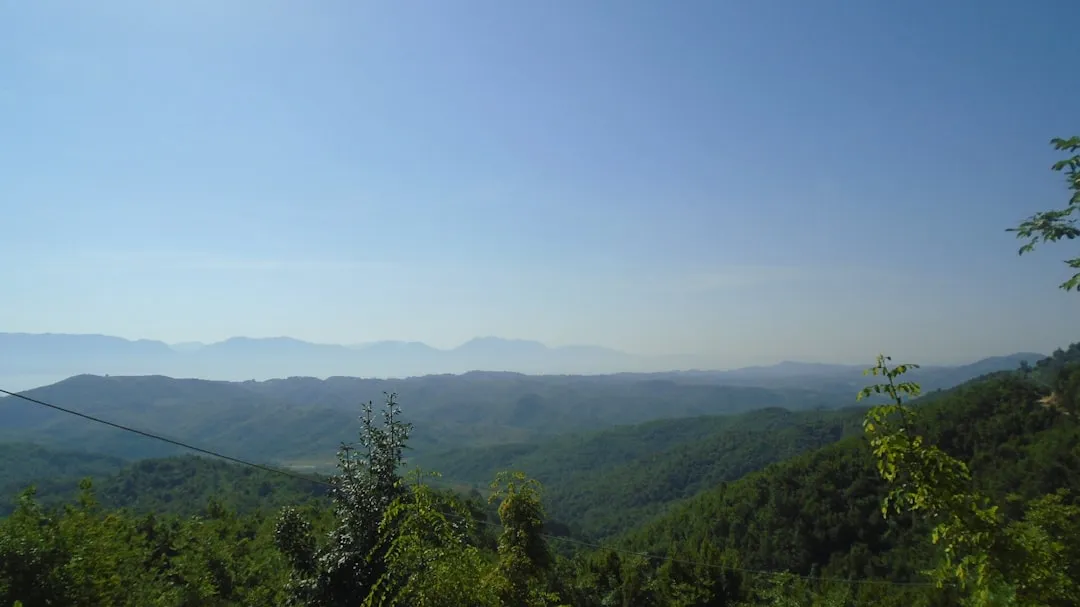
Valbona to Theth - The Heart of the Accursed Mountains
The hike from Valbona to Theth is the undisputed crown jewel of trekking in the Albanian Alps. This 19.8-kilometre mountain pass traverse connects two of the most iconic glacial valleys in Northern Albania, crossing the rugged spine of the Prokletije range—famously known as the "Accursed Mountains". This journey is far more than a simple walk between two villages; it is a profound immersion into a landscape that remained largely isolated from the outside world for centuries. Here, ancient traditions of hospitality, known as Besa, still thrive alongside jagged limestone peaks that rival the Dolomites in their sheer verticality and dramatic beauty. The route takes hikers from the wide, stony riverbeds of Valbona, through ancient beech forests and wildflower-strewn alpine meadows, to the breathtaking Valbona Pass at 1,759 metres, before descending into the lush, emerald-green basin of Theth.
While the distance may seem modest at just under 20 kilometres, the 1,100 metres of elevation gain and the technical nature of the descent require a respectable level of fitness and preparation. This is a landscape defined by its karst geology—white limestone towers, deep sinkholes, and hidden springs. It is a place where the weather can shift from Mediterranean sun to alpine storm in a matter of minutes. For those who make the journey, the reward is a perspective on Europe that feels increasingly rare: a wilderness that is still raw, a culture that is deeply authentic, and a trail that offers some of the most spectacular panoramic views in the Balkan Peninsula. Whether you are a seasoned trekker or a motivated adventurer, the Valbona to Theth hike is an essential experience for anyone seeking to understand the wild heart of High Albania.
- Distance: 19.8 km point-to-point
- Duration: 6–8 hours (depending on fitness and photo stops)
- Season: Late May to October (pass is snow-bound in winter)
- Highest Point: Valbona Pass (Qafa e Valbonës) at 1,759 metres
- Elevation Gain: 1,100 metres
- Elevation Loss: 1,150 metres
- Difficulty: Moderate to Strenuous (steep ascent and long, loose descent)
- Trailhead: Valbona (Rrogam)
- Finish: Theth Village
Overview
The Valbona to Theth trail is the most popular segment of the larger "Peaks of the Balkans" mega-trail, a cross-border route that winds through Albania, Kosovo, and Montenegro. However, this specific section stands alone as a world-class day hike. The "Accursed Mountains" name is said to have been given by Slavic invaders who found the terrain impossible to traverse, or perhaps by local legends of a mother cursing the mountains while searching for her lost children. Regardless of the origin, the name perfectly captures the formidable, jagged, and uncompromising nature of the landscape. The peaks here are part of the Dinaric Alps, characterised by their pale, weathered limestone that glows brilliantly under the Adriatic sun.
The hike typically begins in the village of Valbona, or more specifically, the hamlet of Rrogam at the end of the valley road. The first half of the day is a steady, relentless climb. You leave behind the wide, braided river of the Valbona Valley and enter a world of dense forest. The shade of the ancient beech trees is a welcome relief in the morning heat, but as the treeline thins, the true scale of the mountains reveals itself. The final push to the Valbona Pass is a series of steep switchbacks across scree slopes, where the air thins and the views expand to include Maja e Jezercës, the highest peak in the range at 2,694 metres.
Reaching the pass is a transformative moment. To the east, the Valbona Valley stretches out like a long, white ribbon of stone. To the west, the Theth Valley appears as a deep, green sanctuary, surrounded by a horseshoe of vertical grey walls. The descent into Theth is notoriously steep and can be taxing on the knees, but it passes through some of the most beautiful alpine meadows in the region. Small mountain cafes, often nothing more than a wooden shack with a cooler of drinks chilled by a mountain spring, provide essential resting points. The final stretch brings you into the heart of Theth, a village of stone houses with wooden shingle roofs, dominated by the iconic "Lock-in Tower" and the village church. This is a journey through a living museum of highland life, where the pace of the mountains dictates the rhythm of the day.
History and Cultural Context
The history of the Albanian Alps is inextricably linked to the concept of isolation and resistance. For centuries, the highlanders (Malësorët) of these valleys lived under a traditional code of conduct known as the Kanun of Lekë Dukagjini. This complex set of oral laws governed everything from property rights and marriage to the famous "Besa" (the word of honour and the duty of hospitality) and the more tragic "Gjakmarrja" (blood feuds). The rugged terrain of Valbona and Theth acted as a natural fortress, allowing the local tribes to maintain their Catholic and traditional identities even during the five centuries of Ottoman occupation that transformed much of the rest of the Balkans.
In the early 20th century, the British traveller and writer Edith Durham, often called the "Queen of the High Highlands," journeyed through these mountains and documented a way of life that she felt was a window into the medieval past. Her book, High Albania, remains the definitive English-language account of the region's history and culture. She described a people who were fiercely independent, deeply religious, and bound by a code of hospitality that dictated a guest must be treated as a god. Even today, hikers will find that the "Besa" remains a core part of the local identity; it is not uncommon for a local family to invite a passing trekker for coffee or "Raki" (the potent local plum brandy) without expecting anything in return.
During the communist era under Enver Hoxha, the region was heavily militarised due to its proximity to the Yugoslav border. You can still see the remains of small concrete bunkers (lapidars) scattered across the hillsides, a stark reminder of Albania's 20th-century paranoia. After the fall of communism in the 1990s, many locals left the valleys for cities or abroad, but the rise of mountain tourism in the last fifteen years has sparked a remarkable revival. Old stone houses have been lovingly restored into guesthouses, and the ancient trails used by shepherds and traders for millennia have become the lifeblood of a new, sustainable economy. Walking from Valbona to Theth is not just a physical challenge; it is a walk through the resilience of the Albanian spirit.
Want more background? Read extended notes on history and cultural context → Learn more
Seasonal Highlights and Weather Reality
The window for hiking from Valbona to Theth is relatively short due to the high altitude of the pass. While the valleys may feel warm in the spring, the Valbona Pass (1,759 m) remains choked with snow well into May and sometimes early June. Attempting the pass without proper alpine equipment before the snow has melted is dangerous, as the steep scree slopes become lethal slide risks when covered in ice or soft, unstable snow.
Late May to June: This is the season of wildflowers. The meadows on the Theth side of the pass are carpeted in orchids, lilies, and alpine violets. The waterfalls are at their most powerful as the snowmelt surges through the karst systems. However, hikers should be prepared for lingering snow patches on the north-facing slopes and potentially muddy trails in the forest sections. Daytime temperatures are pleasant, usually between 15°C and 22°C, but nights remain chilly.
July to August: This is the peak trekking season. The trail is completely clear of snow, and the weather is generally stable. However, the heat can be intense, especially during the exposed climb out of Valbona. Temperatures in the valley can exceed 30°C, making an early start (before 7:00 AM) essential. This is also the busiest time on the trail; you will share the path with many other hikers and the occasional mule train carrying supplies between the villages.
September to October: Many seasoned hikers consider this the best time to visit. The summer heat has dissipated, the air is crisp and clear, and the beech forests begin to turn a brilliant copper and gold. The light in autumn is particularly beautiful for photography. By mid-October, the first dustings of snow usually appear on the high peaks, and by late October, the guesthouses begin to close for the winter as the pass becomes impassable for the season.
Winter (November to April): The trail is effectively closed to recreational hikers. The Valbona Pass is a high-risk avalanche zone, and the villages of Theth and Valbona are often cut off by heavy snowfall. Only experienced mountaineers with full winter gear and local knowledge should contemplate the region during these months.
Recommended Itinerary
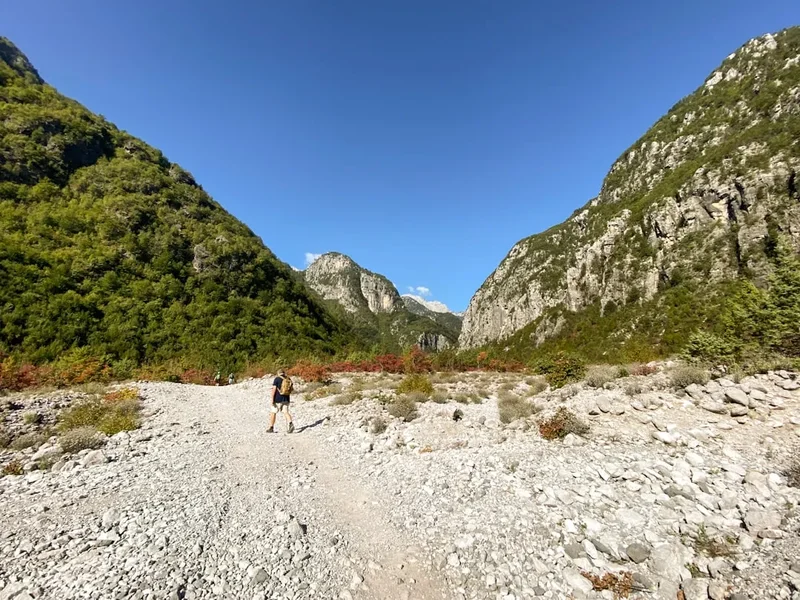
Valbona to Theth Day Hike Route
Phase 1: The Valley Floor (Valbona/Rrogam to the Forest Edge)
- Distance: 3–4 km (depending on starting point)
- Elevation Gain: 100 m
- Time: 45 minutes – 1 hour
- Most hikers start from their guesthouse in Valbona. If staying in the centre, it is highly recommended to take a 4x4 taxi to the end of the asphalt road in Rrogam to save time and energy.
- The trail begins by following the wide, dry riverbed of the Valbona River. The path is marked with red and white painted stripes on rocks.
- This section is flat and exposed. Use this time to warm up your legs and ensure your pack is adjusted correctly.
- Pass the last few houses of Rrogam, where you might see locals tending to small plots of maize or hay.
Phase 2: The Forest Ascent
- Distance: 3 km
- Elevation Gain: 500 m
- Time: 1.5 – 2 hours
- The trail leaves the riverbed and enters a dense forest of ancient beech and pine trees.
- The gradient increases significantly here. The path is well-worn but can be slippery if there has been recent rain.
- About halfway through the forest, you will reach "Simoni Cafe"—a famous stopping point. It is a simple wooden hut where you can buy cold drinks, mountain tea (Çaj Mali), and sometimes simple snacks. The water here comes directly from a cold mountain spring.
- This is the best place for a mid-morning break before the final push to the pass.
Phase 3: The Alpine Meadows and Valbona Pass
- Distance: 2 km
- Elevation Gain: 500 m
- Time: 1.5 hours
- As you emerge from the treeline, the landscape transforms into dramatic alpine tundra. The peaks of the Accursed Mountains tower above you in a jagged semi-circle.
- The trail becomes a series of steep, rocky switchbacks. The terrain is loose limestone scree, so trekking poles are highly beneficial here.
- The final 200 metres of ascent are the most demanding but offer the most spectacular views back down the Valbona Valley.
- Arrival at Valbona Pass (Qafa e Valbonës): Take time here to rest. There is a small ridge to the right of the pass that offers a 360-degree panorama of both valleys and the highest peaks of the Dinaric Alps.
Phase 4: The Descent to Theth
- Distance: 5 km
- Elevation Loss: 800 m
- Time: 2 hours
- The descent into the Theth Valley is steeper than the ascent from Valbona. The initial section involves tight switchbacks on loose rock.
- As the elevation drops, you enter beautiful alpine meadows. You will pass another small mountain cafe (Bar Guri i Denit) which offers a stunning view of the Theth "horseshoe" of mountains.
- The trail eventually re-enters the forest, providing shade for the final kilometres. The path here is wide but can be hard on the knees due to the constant downward gradient.
Phase 5: Arrival in Theth Village
- Distance: 2 km
- Elevation Loss: 350 m
- Time: 1 hour
- The trail levels out as you reach the outskirts of Theth. You will cross several small streams and pass traditional stone walls.
- The first landmark is often the school or the local cemetery. Continue following the path toward the centre of the village.
- The hike concludes at the iconic Theth Church or the Lock-in Tower (Kulla). Most guesthouses are located within a 10–15 minute walk from this central area.
- Celebrate your crossing with a cold beer or a traditional Albanian dinner at your guesthouse.
Important Notes:
- The trail is well-marked with red and white horizontal stripes, but always carry a GPS map (like Maps.me or Gaia GPS) as fog can obscure markings at the pass.
- There are no ATMs in Valbona or Theth; you must carry enough cash (Albanian Lek) for your entire stay.
- Mules can be hired in Valbona to carry heavy luggage to Theth (approx. €50 per mule). This must be organised the night before through your guesthouse.
- Water is available at the cafes, but carry at least 2 litres for the ascent.
Planning and Bookings
Book Your Trip
Everything you need to plan your journey
Accommodation
Find places to stay near Bajram Curri
Flights
Search flights to Bajram Curri
Essential Preparation
The logistics of the Valbona to Theth hike are unique and require careful coordination. Most hikers follow the "Shkoder Loop," which begins and ends in the city of Shkoder. This involves a multi-modal journey: a 6:30 AM minibus from Shkoder to Koman, a 2.5-hour ferry ride across the spectacular Koman Lake to Fierza, and another minibus from Fierza to Valbona. This transport chain is highly organised by local guesthouses in Shkoder (such as Wanderer's Hostel or Mi Casa es Tu Casa), who can book the entire sequence for you for approximately €20–€25.
Fitness requirements are moderate. While you don't need mountaineering skills, you should be comfortable walking 7–8 hours with a significant pack. If you are not used to steep descents, your quadriceps and knees will feel the strain. It is highly recommended to spend at least one full day in Valbona before the hike to acclimatise and explore the valley, and at least two days in Theth afterwards to see the Blue Eye and Grunas Waterfall.
Trail Accommodation
There are no huts or shelters on the pass itself; accommodation is entirely based in the villages of Valbona and Theth. The standard form of accommodation is the "Bujtina" (Guesthouse). These are typically family-run establishments that offer a bed and half-board (breakfast and dinner).
Guesthouse Facilities:
- Private or shared rooms with basic wooden furniture.
- Shared bathrooms are common, though many newer guesthouses offer en-suite options.
- Hot water is generally available, though it may be limited by solar heater capacity.
- Electricity is standard, but power cuts can occur during storms.
- Traditional meals: Expect hearty mountain food—fresh bread, honey, mountain cheese, "Flija" (layered pancake), and slow-roasted meat.
Booking Requirements:
- During July and August, pre-booking is essential as the best guesthouses fill up weeks in advance. Use platforms like Booking.com or contact guesthouses directly via WhatsApp.
- Costs: Expect to pay between €30 and €50 per person per night for half-board.
- Camping: Many guesthouses allow you to pitch a tent in their garden for a small fee (€5–€10), giving you access to their showers and toilets. Wild camping is technically allowed but discouraged near the villages to support the local economy and manage waste.
Required Gear
- Footwear: Sturdy hiking boots with good ankle support are essential. The limestone scree is sharp and unstable; trail runners are only recommended for experienced hikers with strong ankles.
- Trekking Poles: Highly recommended. They are invaluable for stability on the loose ascent and for saving your knees on the 1,150-metre descent into Theth.
- Clothing: Use a layering system. Even in summer, the pass can be windy and cold. Bring a moisture-wicking base layer, a fleece or light down jacket, and a high-quality waterproof shell.
- Backpack: A 30–40L pack is sufficient if you are sending your main luggage by mule. If carrying everything, a 50–60L pack is required. Ensure it has a rain cover.
- Navigation: Download offline maps (Maps.me is excellent for this region). A physical map is a good backup, though they can be hard to find locally.
What to Bring
- Cash: This is the most important item. There are no ATMs in the mountains. Bring enough Lek to cover transport, accommodation, meals, and emergency mules.
- Water Treatment: While there are springs, a LifeStraw or purification tablets are wise backups. Aim to carry 2–3 litres of capacity.
- Sun Protection: The Albanian sun is fierce at altitude. Bring SPF 50 sunscreen, a wide-brimmed hat, and high-quality sunglasses.
- First Aid: Blister plasters (Compeed), ibuprofen, rehydration salts, and any personal medications.
- Snacks: While guesthouses provide packed lunches (usually a sandwich, fruit, and a boiled egg), bring high-energy snacks like nuts, dried fruit, or chocolate for the climb.
- Toiletries: Biodegradable soap, a quick-dry towel, and toilet paper (not all cafes will have it).
Permits
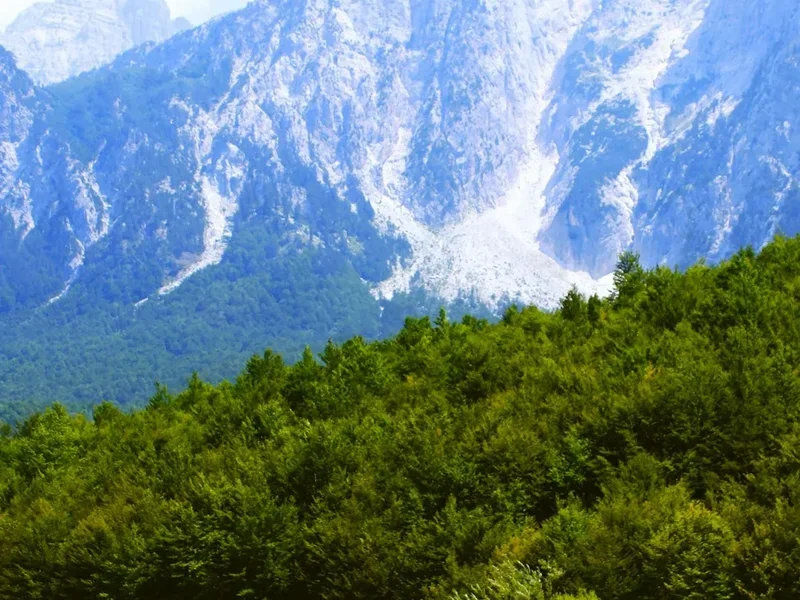
For the standard Valbona to Theth day hike, no formal permits are required for individual hikers. Unlike many national parks in North America or New Zealand, there is currently no entry fee or permit system for the Valbona Valley National Park or the Theth National Park. You are free to walk the trail at your own pace.
Border Crossing Considerations:
- If you are only walking from Valbona to Theth, you are staying entirely within Albanian territory. No border permits are needed.
- However, if you plan to extend your hike into Montenegro (e.g., walking from Theth to Vusanje) or Kosovo as part of the Peaks of the Balkans trail, you must obtain a cross-border permit at least 10 days in advance. This can be done through local agencies in Shkoder or online via the Albanian State Police website.
- Always carry your passport or national ID card. While there are no checkpoints on the trail, you will need it for guesthouse registration and in the unlikely event of a police check in the border region.
Local Regulations:
- While no permit is needed, hikers are encouraged to register their plans with their guesthouse in Valbona before departing. This ensures that someone knows you are on the mountain and when you are expected to arrive in Theth.
- If you are hiring a guide (recommended for solo hikers or those unfamiliar with alpine terrain), ensure they are certified by the Albanian Mountain Guide Association.
Other Activities in the Area
The Albanian Alps offer much more than just the pass crossing. Consider adding these experiences to your itinerary:
- The Blue Eye of Theth (Syri i Kaltër): A stunning karst spring located near the village of Kapre, about 3 hours' walk from Theth. The water is a vibrant, icy blue and stays at a constant 7°C year-round. It is a perfect spot for a (very) cold swim.
- Grunas Waterfall: A 30-metre-high veil of water just a 45-minute walk from the centre of Theth. The mist from the falls is incredibly refreshing on a hot afternoon.
- The Lock-in Tower (Kulla e Ngujimit): Visit this historic stone tower in Theth to learn about the history of the blood feuds and how the tower served as a place of refuge for those caught in a "Gjakmarrja."
- Koman Lake Ferry: Often described as one of the most beautiful boat trips in the world, this 2.5-hour ferry ride is the standard way to reach Valbona. The boat winds through narrow canyons with vertical walls rising hundreds of metres from the water.
- Maja e Rosnit: For those with an extra day in Valbona, this peak offers perhaps the best view in the entire range, looking directly down into both Valbona and the Montenegrin valleys.
- Shkoder City: Spend a day in this ancient city before or after your hike. Visit Rozafa Castle for sunset views over Lake Shkoder and explore the vibrant "Pjaca" pedestrian district.
Safety and Conditions
Weather Awareness: The Accursed Mountains are notorious for sudden afternoon thunderstorms. These can bring heavy rain, hail, and dangerous lightning, especially on the exposed Valbona Pass. Always check the forecast (Meteoblue is generally the most accurate for this region) and aim to be over the pass and descending by 1:00 PM.
Terrain Hazards: The limestone rock in this region is extremely sharp and can become very slippery when wet. The descent into Theth is particularly prone to causing twisted ankles. Take your time, use your poles, and stay on the marked trail. Avoid taking "shortcuts" down scree slopes, as these often lead to cliff edges or unstable ground.
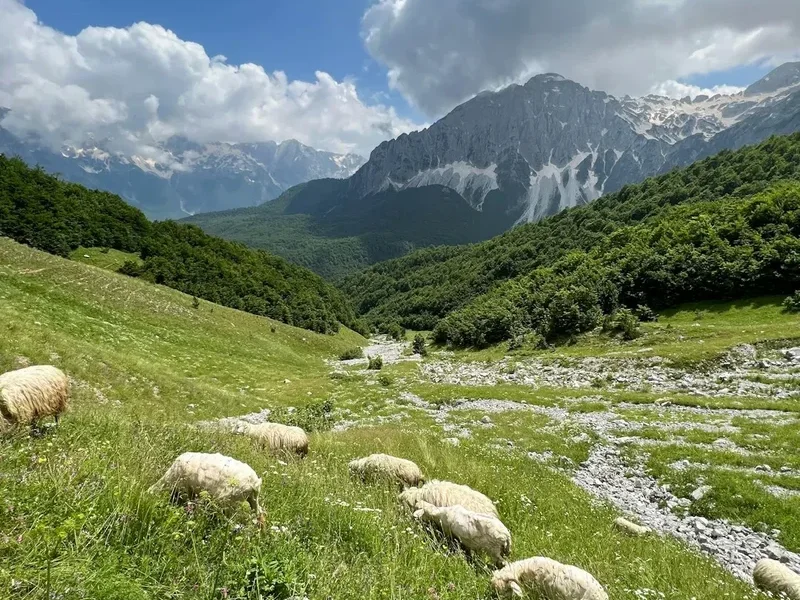
Shepherd Dogs: You may encounter large livestock guardian dogs (Sharplaninatz) protecting sheep or goats. These dogs are not pets; they are working animals and can be very aggressive if they feel their flock is threatened. If you encounter a flock, give it a wide berth. If a dog approaches you barking, stop, stay calm, do not run, and wait for the shepherd to intervene. Usually, shouting "Hajde" (Go) or pretending to pick up a stone will keep them at a distance.
Water and Hydration: While there are springs and cafes, the karst landscape means that water can disappear underground quickly. Never rely on a map showing a stream; it may be dry in August. Always fill your bottles at the guesthouse and top up at Simoni Cafe.
Emergency Contacts: Albania does not have a formal mountain rescue service like the Alpine clubs of Western Europe. In an emergency, call 129 (Police) or 127 (Ambulance). Your best resource is often the local guesthouse owners, who have an informal network and can organise local men and mules for a rescue if needed. Carrying a satellite communicator (like a Garmin inReach) is highly recommended as mobile signal is non-existent on much of the trail.
Side Trips and Points of Interest
The Old Mill of Valbona: Located near the start of the trail in Rrogam, this traditional water-powered mill is still used by locals to grind corn. It is a beautiful example of the functional architecture that has sustained these communities for centuries.
The "Bus Stop" Rock: Near the treeline on the Valbona side, there is a massive, flat-topped boulder that has become a traditional resting spot for hikers. It offers the first clear view of the "Cathedral" peaks of Valbona and is a great place for a group photo.
Theth Church: This small, grey stone church with its wooden shingle roof is the most photographed building in the Albanian Alps. Built in 1892, it was used as a health centre and school during the communist era before being restored to its original purpose. The backdrop of the vertical mountain walls makes it an unforgettable sight.
Maja e Jezercës (The Highest Peak): While not a side trip for the average hiker, the view of Jezercës from the Valbona Pass is awe-inspiring. It is the highest peak in the Dinaric Alps and remains snow-capped for most of the year. For experienced mountaineers, a summit attempt requires an extra 2–3 days and technical scrambling skills.
The Stone Walls of Theth: As you descend into the valley, notice the intricate dry-stone walls that criss-cross the landscape. These are not just property markers; they are part of an ancient system of land management designed to prevent erosion and manage livestock in the narrow valley floor.
Leave No Trace
The rapid increase in tourism in the Albanian Alps has put significant pressure on the local environment. Waste management is a major challenge in these remote valleys, as there is no municipal rubbish collection. Everything that is not composted must be trucked out to Shkoder at great expense.
How to protect the Accursed Mountains:
- Pack it out: This is the most critical rule. Do not leave any rubbish on the trail, including "biodegradable" items like orange peels or banana skins, which take years to decompose in the thin alpine air. Carry a small bag for your trash and take it back to Shkoder if possible.
- Respect the Water: Do not use soap or detergents in the mountain springs or rivers. The water in the valleys is used for drinking by both humans and livestock downstream.
- Stay on the Path: The alpine meadows are home to rare endemic plants. Trampling creates new paths that lead to soil erosion during the heavy spring rains.
- No Fire: Wildfires are a genuine threat in the dry summer months. Never light a fire outside of designated areas in the guesthouses.
- Support Local: Buy your snacks and drinks from the mountain cafes. This provides a direct income to the families who maintain the trails and keep the mountain culture alive.
 Australia
 Norway