
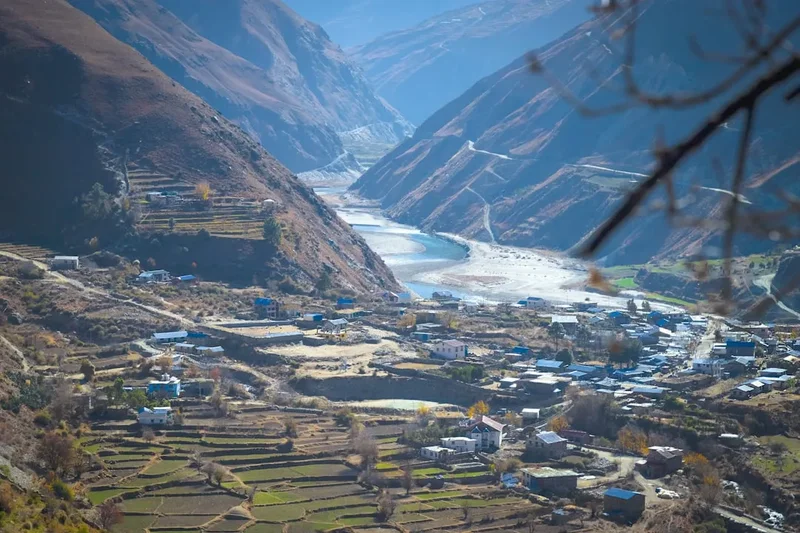
Tsum Valley Trek - A Sacred Himalayan Journey
The Tsum Valley Trek is a profound pilgrimage into one of Nepal's most sacred and culturally preserved regions, nestled deep within the Manaslu Conservation Area. This challenging multi-day walk, typically spanning 8 to 12 days, offers an unparalleled immersion into Tibetan Buddhist culture, ancient monasteries, and breathtaking Himalayan vistas. Unlike many popular trekking routes, Tsum Valley remains relatively untouched by mass tourism, providing an authentic experience of rural Nepali life and spiritual devotion. The journey begins with a rugged road access to Soti Khola, gradually ascending through diverse landscapes from subtropical forests to alpine meadows, culminating in the spiritual heart of the valley. This trek is not merely a physical challenge but a spiritual sojourn, offering a unique glimpse into a way of life that has remained largely unchanged for centuries.
- Distance: Approximately 48.0 km (main valley route)
- Duration: 8–12 days
- Season: October–November (autumn) or April–May (spring)
- Difficulty: Challenging
- Highest point: Mu Gompa (approx. 3,700 m)
- Permits required: Restricted Area Permit (RAP) for Manaslu, Annapurna Conservation Area Permit (ACAP) if entering from that side, and Trekkers' Information Management System (TIMS) card
- Closest city: Kathmandu
- Trailhead access: Soti Khola (approx. 7-8 hours from Kathmandu by local bus or jeep)
Overview
The Tsum Valley, meaning "Vivid Land" in Tibetan, is a remote and sacred region situated in the northern part of the Gorkha district of Nepal. Historically, it was a separate entity, a kingdom that maintained its distinct cultural identity for centuries. The trek into Tsum Valley is an exploration of this unique heritage, a journey that takes you through landscapes dotted with ancient monasteries, chortens, and mani walls, all set against the dramatic backdrop of the Ganesh Himal and Sringi Himal ranges. The valley's isolation has preserved its traditional way of life, where Tibetan Buddhism is not just a religion but the very fabric of society.
The trek begins with a challenging but rewarding journey from Soti Khola, a small settlement accessible by a rough road. The initial days involve navigating through dense forests, crossing suspension bridges over roaring rivers, and passing through small Gurung and Magar villages. As you ascend, the vegetation changes, and the air becomes crisper. The true magic of Tsum Valley unfolds as you enter the restricted area, where the landscape opens up to reveal stunning mountain panoramas. Key highlights include the ancient monasteries of Mu Gompa and Rachen Gompa, the sacred Lake of Gumba, and the opportunity to interact with the warm and hospitable Tsumba people.
The challenging nature of the trek is due to the rugged terrain, significant elevation gains, and the remoteness of the region. However, the rewards are immense: a deep cultural immersion, spiritual encounters, and some of the most spectacular, unspoiled mountain scenery in Nepal. The valley's spiritual significance is amplified by its history as a place where Guru Rinpoche (Padmasambhava) meditated, and it is considered a Beyul, or sacred hidden valley. This trek is ideal for those seeking an off-the-beaten-path adventure that combines physical exertion with profound cultural and spiritual discovery.
History and Cultural Context
The Tsum Valley has a rich and complex history, deeply intertwined with Tibetan Buddhism and its spiritual leaders. For centuries, it was a semi-autonomous region, often referred to as Tsum Kingdom, with its own distinct social and political structures. The valley's isolation, protected by high mountain passes, allowed its unique culture and traditions to flourish, largely untouched by external influences until relatively recently.
The spiritual heart of Tsum Valley lies in its numerous monasteries and sacred sites. The most significant of these are Mu Gompa and Rachen Gompa. Mu Gompa, perched at a high altitude, is one of the oldest and most important monasteries in the region, housing ancient scriptures and religious artifacts. Rachen Gompa, a nunnery, is a vital centre for female practitioners and plays a crucial role in preserving Buddhist teachings. The valley is also believed to be a sacred Beyul, a hidden paradise blessed by Guru Rinpoche, where pilgrims can find spiritual solace and enlightenment. This belief has drawn ascetics and devoted Buddhists to the valley for centuries, contributing to its deeply spiritual atmosphere.
The Tsumba people, who inhabit the valley, are of Tibetan origin and maintain strong cultural ties with Tibet. Their language, customs, and religious practices are distinctly Tibetan. Historically, the valley was a vital trade route connecting Tibet with lower Nepal. However, with the political changes in Tibet and the increasing accessibility of other regions, Tsum Valley gradually became more isolated. It was only opened to regulated tourism in 2008, making it one of Nepal's newer trekking destinations. This recent opening has allowed for controlled development, ensuring that the valley's cultural integrity and pristine environment are preserved while offering intrepid travellers a unique glimpse into its ancient world.
Seasonal Highlights and Weather Reality
The Tsum Valley Trek is best undertaken during two distinct seasons, each offering a unique experience of the region's beauty and climate.
Autumn (October–November): This is widely considered the prime trekking season for Tsum Valley. The monsoon rains have subsided, leaving the skies clear and offering excellent visibility of the surrounding Himalayan peaks, including Ganesh Himal and Sringi Himal. The weather is generally stable, with pleasant daytime temperatures and cool to cold nights. The air is crisp, and the landscapes are vibrant. This season is ideal for photography and enjoying panoramic mountain views. The autumn harvest is often underway, providing opportunities to witness local agricultural practices.
Spring (April–May): Spring is another excellent time to trek in Tsum Valley. The snow melts, and the valley floor comes alive with blooming rhododendrons and other wildflowers, painting the landscape in vibrant colours. Daytime temperatures are mild and pleasant, though nights can still be cold. The skies are generally clear, offering good mountain views, although there can be occasional afternoon showers. This season is also good for observing local festivals and cultural events.
Monsoon (June–September): The monsoon season brings heavy rainfall to the region, making trekking difficult and potentially dangerous. Trails can become muddy and slippery, and landslides are a risk. Visibility is often poor due to cloud cover, obscuring the mountain views. While some trekkers might brave this season for fewer crowds and lush green landscapes, it is generally not recommended for the Tsum Valley Trek due to the challenging conditions and limited visibility.
Winter (December–March): Winter in Tsum Valley is cold, with temperatures often dropping well below freezing, especially at higher altitudes. Snowfall can block higher passes, including those leading to Mu Gompa and Rachen Gompa, making access difficult or impossible. While the lower parts of the valley might be accessible, the overall experience can be significantly hampered by the extreme cold and potential snow. This season is generally not recommended for this trek.
Recommended Itinerary
8-Day Tsum Valley Trek Itinerary (Sample)
Day 1: Arrival in Kathmandu and Preparation
- Arrive at Tribhuvan International Airport (KTM), Kathmandu.
- Transfer to your hotel.
- Obtain necessary permits (TIMS card, Restricted Area Permit for Manaslu).
- Final gear check and preparation.
- Briefing with your trekking agency.
Day 2: Kathmandu to Soti Khola (approx. 7-8 hours drive)
- Early morning drive from Kathmandu to Soti Khola.
- The journey involves navigating rough roads, especially after monsoon.
- Pass through diverse landscapes, from terraced fields to subtropical forests.
- Soti Khola is the starting point of the trek, a small village with basic teahouses.
- Overnight stay in a teahouse at Soti Khola.
Day 3: Soti Khola to Machha Khola (approx. 6-7 hours trek)
- Begin the trek by crossing a suspension bridge over the Budhi Gandaki River.
- The trail follows the river, passing through lush forests and small villages.
- Experience the first taste of the rugged terrain and suspension bridges.
- Arrive at Machha Khola, a small settlement with teahouse accommodation.
Day 4: Machha Khola to Jagat (approx. 6-7 hours trek)
- Continue trekking along the Budhi Gandaki River.
- The trail becomes more challenging with steep ascents and descents.
- Pass through the village of Tatopani, known for its hot springs.
- Reach Jagat, a beautiful village with stone houses, marking the entrance to the Manaslu Conservation Area.
- Obtain your ACAP permit here if not already done.
Day 5: Jagat to Deng (approx. 6-7 hours trek)
- The trail ascends through pine forests and crosses the Budhi Gandaki River multiple times.
- Pass through villages like Philim, a larger Gurung settlement.
- The landscape starts to open up, offering glimpses of higher mountains.
- Arrive at Deng, a small village with teahouse facilities.
Day 6: Deng to Namrung (approx. 5-6 hours trek)
- Today's trek involves a steady ascent through rhododendron and pine forests.
- Cross the Budhi Gandaki River and enter the Tsum Valley region.
- The culture and architecture begin to show more Tibetan influence.
- Reach Namrung, a significant village with monasteries and good teahouse options.
Day 7: Namrung to Samagaon (approx. 6-7 hours trek)
- Continue ascending towards the heart of the Tsum Valley.
- Pass through picturesque villages like Lihi and Sho.
- Enjoy increasingly spectacular views of Ganesh Himal and Sringi Himal.
- Arrive at Samagaon, a large village with a beautiful monastery and stunning mountain backdrop.
- Optional visit to Birendra Tal (lake) near Samagaon.
Day 8: Samagaon to Mu Gompa (approx. 5-6 hours trek)
- Today's trek takes you to the highest point of the Tsum Valley trek.
- The trail ascends gradually towards Mu Gompa, a remote monastery.
- Experience the profound spiritual atmosphere of this ancient site.
- Enjoy breathtaking panoramic views of the surrounding peaks.
- Overnight stay at Mu Gompa or a nearby teahouse.
Day 9: Exploration of Mu Gompa and Rachen Gompa
- Explore Mu Gompa and its surroundings.
- Descend to Rachen Gompa (also known as Nunnery Gompa), a significant nunnery.
- Interact with the monks and nuns, and learn about their way of life.
- Return to Samagaon for the night, or stay at a teahouse closer to Rachen Gompa.
Day 10: Samagaon to Deng (approx. 7-8 hours trek)
- Begin the descent back down the valley.
- Retrace your steps through familiar villages.
- Enjoy the changing perspectives of the landscape.
- Overnight stay at Deng.
Day 11: Deng to Jagat (approx. 6-7 hours trek)
- Continue descending towards Jagat.
- The trail may feel easier on the way down, but still requires careful footing.
- Reflect on the journey through the Tsum Valley.
- Overnight stay at Jagat.
Day 12: Jagat to Kathmandu (approx. 8-9 hours drive)
- Drive back to Kathmandu from Jagat.
- The journey will be long and bumpy, but offers a chance to see the countryside again.
- Arrive in Kathmandu in the evening.
- Farewell dinner and celebration.
Note: This is a sample itinerary and can be extended or modified based on individual preferences and time constraints. For instance, a longer itinerary might include more time for exploration in Samagaon, a visit to the sacred Lake Gumba, or a trek to the Tibetan border.
Planning and Bookings
Book Your Trip
Everything you need to plan your journey
Accommodation
Find places to stay near Kathmandu
Flights
Search flights to Kathmandu
Essential Preparation
The Tsum Valley Trek requires careful planning due to its remote location and restricted access. The closest major city and international gateway is Kathmandu. Upon arrival in Kathmandu, you will need to arrange for your permits: a Restricted Area Permit (RAP) for the Manaslu region (which includes Tsum Valley), and a Trekkers' Information Management System (TIMS) card. If your route enters or exits via the Annapurna region, an Annapurna Conservation Area Permit (ACAP) may also be required. It is highly recommended to arrange these permits through a registered trekking agency, as they often require a local guide and a minimum group size for entry into the restricted area.
Fitness is paramount for this challenging trek. You should be comfortable with long days of walking (6-8 hours) over varied and often steep terrain, with significant elevation gains and losses. Prior trekking experience, especially in mountainous regions, is beneficial. Cardiovascular fitness, leg strength, and endurance are key. Begin a training regimen at least 2-3 months before your trek, focusing on hiking with a weighted backpack, stair climbing, and aerobic exercises.
Accommodation along the Tsum Valley Trek is primarily in local teahouses or lodges. These are basic but offer a warm place to sleep and meals. It is advisable to book your accommodation in advance, especially during peak seasons, through your trekking agency. The nearest airport to the trailhead is Kathmandu (KTM). From Kathmandu, you will typically take a local bus or hire a jeep to reach Soti Khola, the starting point of the trek. This drive can be long and arduous, often taking 7-8 hours over rough, unpaved roads, particularly after the monsoon season.
Trail Accommodation
Accommodation along the Tsum Valley Trek consists of basic teahouses and lodges. These establishments are run by local families and offer simple but clean rooms and communal dining areas. They are the primary form of lodging for trekkers in this remote region.
- Rooms: Typically feature twin beds with mattresses and blankets. You will need to provide your own sleeping bag for warmth and hygiene. Rooms are generally small and functional.
- Dining Area: A communal space where trekkers eat, socialise, and warm up. Meals are ordered from a menu.
- Toilets: Usually squat toilets, often located outside the main lodge. Some lodges at higher altitudes may have basic western-style toilets.
- Showers: Hot showers are often available, but may come at an extra cost and are usually solar-heated, so availability can depend on sunlight.
- Electricity: Charging electronic devices is usually possible in the dining area for a small fee.
Booking Requirements: While not always strictly mandatory, it is highly recommended to book your accommodation in advance, especially during peak trekking seasons (October-November and April-May). This can be done through your trekking agency, who will coordinate with the teahouses along the route. This ensures you have a place to stay and helps the local economy.
Facilities Provided: Basic shelter, beds with mattresses and blankets, communal dining area, and usually access to hot water for washing (sometimes for an extra charge). Most teahouses offer a menu with a variety of Nepali, Tibetan, and sometimes Western dishes.
What's NOT Provided: Sleeping bags, toiletries, personal medications, cooking equipment, food (though it is available for purchase at the teahouses), heating in rooms (rooms are unheated, relying on body heat and sleeping bags), and reliable Wi-Fi or mobile signal.
Seasonal Availability: Teahouses are generally open year-round, but accessibility and comfort can be significantly impacted by weather conditions during the monsoon and winter months. The peak seasons (autumn and spring) offer the most reliable and comfortable experience.
Costs: Accommodation costs vary depending on the altitude and location, typically ranging from US$5 to US$15 per night for a double room. Meals are additional and can range from US$3 to US$10 per meal.
Required Gear
- Sturdy Trekking Boots: Waterproof, ankle-supporting, and well broken-in to prevent blisters.
- Waterproof Jacket and Trousers: Essential for protection against rain and wind, especially at higher altitudes. Gore-Tex or similar breathable, waterproof material is recommended.
- Warm Layers: A good quality down or synthetic insulated jacket is crucial for cold evenings and mornings. Fleece jackets or sweaters are also recommended.
- Base Layers: Thermal tops and bottoms made of merino wool or synthetic materials to wick away moisture and provide insulation.
- Trekking Trousers: Comfortable, quick-drying trousers. Avoid jeans.
- Trekking Shirts: Moisture-wicking shirts (long and short-sleeved).
- Warm Hat and Gloves: Essential for cold temperatures, especially at higher altitudes.
- Sun Hat: A wide-brimmed hat for protection against the strong sun at altitude.
- Sleeping Bag: A 3-season or 4-season sleeping bag (rated to at least -10°C or lower) is essential as teahouse blankets are often insufficient.
- Backpack: A comfortable trekking backpack (45-65 litres) with a rain cover.
- Daypack: A smaller backpack (20-30 litres) for essentials during daily treks.
- Head Torch: With spare batteries, for navigating in the dark and in teahouses where electricity may be limited.
- Sunglasses: High-quality sunglasses with UV protection.
- Trekking Poles: Highly recommended for stability on steep ascents and descents, and to reduce strain on knees.
- First-Aid Kit: Comprehensive kit including personal medications, blister treatment, pain relievers, antiseptic wipes, bandages, and any specific items recommended by your doctor.
What to Bring
- Food and Snacks: While meals are available at teahouses, carrying high-energy snacks like energy bars, nuts, dried fruit, and chocolate is advisable for sustained energy during treks.
- Water Bottles or Hydration Reservoir: At least 2 litres capacity.
- Water Purification: Water purification tablets or a filter are essential as tap water is not safe to drink.
- Toiletries: Biodegradable soap, toothbrush, toothpaste, toilet paper (carry your own), hand sanitiser, and any personal hygiene items.
- Sunscreen: High SPF (30-50+) sunscreen to protect against strong UV radiation at altitude.
- Lip Balm with SPF: To protect lips from sun and wind.
- Camera and Spare Batteries/Power Bank: To capture the stunning scenery.
- Personal Documents: Passport, visa, permits, insurance details, and copies of all.
- Cash: Nepali Rupees (NPR) are essential for teahouse meals, drinks, tips, and any personal expenses. ATMs are not available on the trek.
- Small Towel: Quick-drying travel towel.
- Book or Journal: For downtime in the evenings.
- Duct Tape: Useful for repairs to gear.
- Ziploc Bags: For organising and waterproofing small items.
Permits
To trek in the Tsum Valley, several permits are mandatory. These are crucial for legal entry into the region and for the safety and management of the trekking routes. It is strongly advised to obtain these permits in Kathmandu through a registered trekking agency. Attempting to obtain them independently can be complex and time-consuming.
1. Restricted Area Permit (RAP) for Manaslu: The Tsum Valley is part of the Manaslu Conservation Area, which is a restricted region. This permit is essential for all trekkers entering the Manaslu region. The cost and regulations for this permit can change, but typically it requires trekking with a registered guide and a minimum group size (often two people). The permit is usually issued for a specific duration.
2. Annapurna Conservation Area Permit (ACAP): If your trek route enters or exits the Annapurna region (which is common for some variations of the Tsum Valley trek, or if combining with other treks), you will need an ACAP permit. This permit helps fund conservation efforts within the Annapurna region.
3. Trekkers' Information Management System (TIMS) Card: This card is a general permit for all trekkers in Nepal, designed to enhance safety and provide trekkers with assistance in case of emergencies. There are two types of TIMS cards: green for independent trekkers and blue for trekkers organised through an agency. For the Tsum Valley Trek, which requires a guide and is in a restricted area, the blue TIMS card is typically issued.
Permit Costs (Approximate and subject to change):
- Manaslu RAP: US$50 per person for the first 7 days, and US$10 per person per additional day.
- ACAP: Approximately US$30 per person.
- TIMS Card: Approximately US$20 per person.
Important Notes:
- Permits are checked at various checkpoints along the trekking route.
- Always carry your permits with you and keep them safe.
- Your trekking agency will handle the application process for these permits, but you will need to provide passport-sized photographs and copies of your passport.
- Ensure your trekking agency is reputable and registered with the Nepal Tourism Board.
Other Activities in the Area
While the Tsum Valley Trek is primarily focused on hiking and cultural immersion, there are several other activities and points of interest that can enhance your experience:
- Monastery Visits: Beyond Mu Gompa and Rachen Gompa, smaller monasteries and hermitages are scattered throughout the valley. Visiting these offers deeper insights into the local Buddhist practices and art.
- Meditation and Spiritual Retreats: The valley's serene atmosphere and spiritual significance make it an ideal location for short meditation retreats. Some monasteries may offer opportunities for this.
- Cultural Immersion: Spend time interacting with the local Tsumba people. Learn about their traditional way of life, farming practices, and unique customs. Participating in local festivals, if your timing aligns, can be a highlight.
- Photography: The Tsum Valley is a photographer's paradise, offering stunning landscapes, unique architecture, and vibrant cultural scenes. Capture the majestic Ganesh Himal range, the ancient monasteries, and the daily lives of the villagers.
- Stargazing: Due to its remote location and minimal light pollution, the Tsum Valley offers exceptional opportunities for stargazing. On clear nights, the sky is a breathtaking spectacle of stars.
- Exploring Sacred Sites: Besides monasteries, the valley has numerous sacred caves, chortens, and mani walls. These sites hold deep religious significance and are often places of quiet contemplation.
- Local Cuisine: Sample traditional Tsumba and Nepali dishes. Try Tsampa (roasted barley flour), butter tea, and local vegetables.
Safety and Conditions
The Tsum Valley Trek, while incredibly rewarding, presents several safety considerations due to its remote nature and challenging terrain. Prior preparation and awareness are key to a safe and enjoyable journey.
Altitude Sickness (Acute Mountain Sickness - AMS): This is a significant risk on any trek involving high altitudes. The Tsum Valley reaches elevations of up to 3,700 metres. Symptoms include headache, nausea, dizziness, fatigue, and shortness of breath. To mitigate the risk:
- Ascend Gradually: Follow a well-paced itinerary that allows for acclimatisation.
- Stay Hydrated: Drink plenty of water (3-4 litres per day).
- Avoid Alcohol and Smoking: These can exacerbate AMS symptoms.
- Listen to Your Body: If you experience symptoms, do not ascend further. Rest, hydrate, and if symptoms worsen, descend immediately.
- Consult Your Doctor: Discuss preventative medications like Diamox with your physician before your trip.
Trail Conditions: The trails can be steep, rocky, and uneven. Suspension bridges are common and can be narrow and swaying. Landslides can occur, especially during and after the monsoon season. Always wear sturdy, broken-in trekking boots and use trekking poles for stability. Pay close attention to your footing, especially on descents.
Weather: Weather in the Himalayas can change rapidly. Be prepared for a range of conditions, from warm sunshine to cold winds, rain, or even snow, particularly at higher altitudes. Always carry appropriate layers of clothing and waterproof gear.
Remoteness and Communication: The Tsum Valley is remote, and medical facilities are basic or non-existent. Mobile phone reception is sporadic and often unavailable. It is crucial to have comprehensive travel insurance that covers emergency medical evacuation (including helicopter rescue). Carrying a satellite phone or personal locator beacon (PLB) is highly recommended for emergencies.
Guides and Porters: Trekking with a registered local guide is mandatory for restricted areas like Tsum Valley. Guides are experienced in navigation, altitude sickness, and local conditions. Porters can carry your main backpack, reducing your physical strain and allowing you to focus on the scenery and your safety.
Food and Water Safety: Drink only purified or boiled water. Be cautious with uncooked food and ensure all meals are thoroughly cooked. Stick to reputable teahouses recommended by your guide.
Cultural Sensitivity: Respect local customs and traditions. Dress modestly when visiting monasteries and villages. Always ask permission before taking photographs of people.
Side Trips and Points of Interest
Mu Gompa: Perched at an altitude of approximately 3,700 metres, Mu Gompa is one of the highest and most significant monasteries in the Tsum Valley. It offers a profound spiritual experience and breathtaking panoramic views of the surrounding snow-capped peaks, including Ganesh Himal. The journey to Mu Gompa itself is a rewarding trek, passing through rugged terrain and offering a glimpse into the austere lifestyle of the monks and nuns who reside there.
Rachen Gompa (Nunnery Gompa): Located in the valley floor, Rachen Gompa is a prominent nunnery and a vital centre for female Buddhist practitioners. It is known for its peaceful atmosphere and the opportunity to interact with the nuns, learn about their daily lives, and witness their religious practices. The nunnery is also a place of significant cultural importance, preserving ancient Buddhist texts and traditions.
Birendra Tal (Lake): Situated near Samagaon, Birendra Tal is a beautiful glacial lake surrounded by towering mountains. It is a serene spot, perfect for a short excursion from Samagaon. The lake's clear, icy waters reflect the majestic peaks, creating a picturesque scene. A walk to the lake offers a chance for quiet contemplation and photography.
Sacred Caves: The Tsum Valley is dotted with numerous sacred caves, believed to have been meditation sites for ancient Buddhist masters like Guru Rinpoche. Exploring these caves, such as Piren Phu (Pigeon Cave), offers a unique spiritual dimension to the trek. These caves are often adorned with prayer flags and offer a sense of peace and solitude.
Gumba Lungdang Monastery: For those with extra time and a desire for a more challenging trek, a side trip to Gumba Lungdang Monastery is highly recommended. This monastery is located on a ridge overlooking the valley and offers spectacular views. The trek to Gumba Lungdang is strenuous but incredibly rewarding, providing a deeper immersion into the spiritual heart of the region.
Local Villages: Beyond the main settlements, exploring smaller hamlets and villages like Philim, Lihi, and Sho provides an intimate look at the Tsumba people's daily lives. Witness their traditional farming methods, unique architecture, and warm hospitality.
Leave No Trace
The Tsum Valley is a pristine and culturally sensitive region. Adhering to Leave No Trace principles is paramount to preserving its natural beauty and cultural heritage for future generations. As a visitor, you play a crucial role in minimising your impact.
Plan Ahead and Prepare: Understand the regulations and cultural norms of the Tsum Valley. Travel with a registered guide and agency who can assist in responsible trekking practices. Pack appropriately to avoid unnecessary waste.
Travel and Camp on Durable Surfaces: Stick to the established trails. Avoid cutting across switchbacks, as this causes erosion. When resting, do so on rocks or established paths. If camping is permitted (though generally not on this trek, as accommodation is in teahouses), choose established campsites away from water sources.
Dispose of Waste Properly: Pack out everything you pack in, including all food scraps, wrappers, and toilet paper. Do not bury waste, as it can be dug up by animals or washed away. Use designated toilets at teahouses. If no toilet is available, dig a cathole at least 60 metres away from water, trails, and campsites.
Leave What You Find: Do not take any natural objects (rocks, plants, flowers) or cultural artefacts. Respect the environment and the local culture. Do not disturb wildlife.
Minimise Campfire Impacts: Campfires are generally not permitted on this trek due to the risk of wildfire and the scarcity of firewood. Use a portable stove for cooking.
Respect Wildlife: Observe wildlife from a distance. Never feed animals, as it disrupts their natural behaviour and diet. This is particularly important for yaks and other domestic animals, as well as any wild species you might encounter.
Be Considerate of Other Visitors: Keep noise levels down, especially in villages and monasteries. Respect the peace and tranquility of the valley. Allow faster hikers to pass. Be mindful of local customs and dress modestly when visiting religious sites.
 Nepal
Nepal