
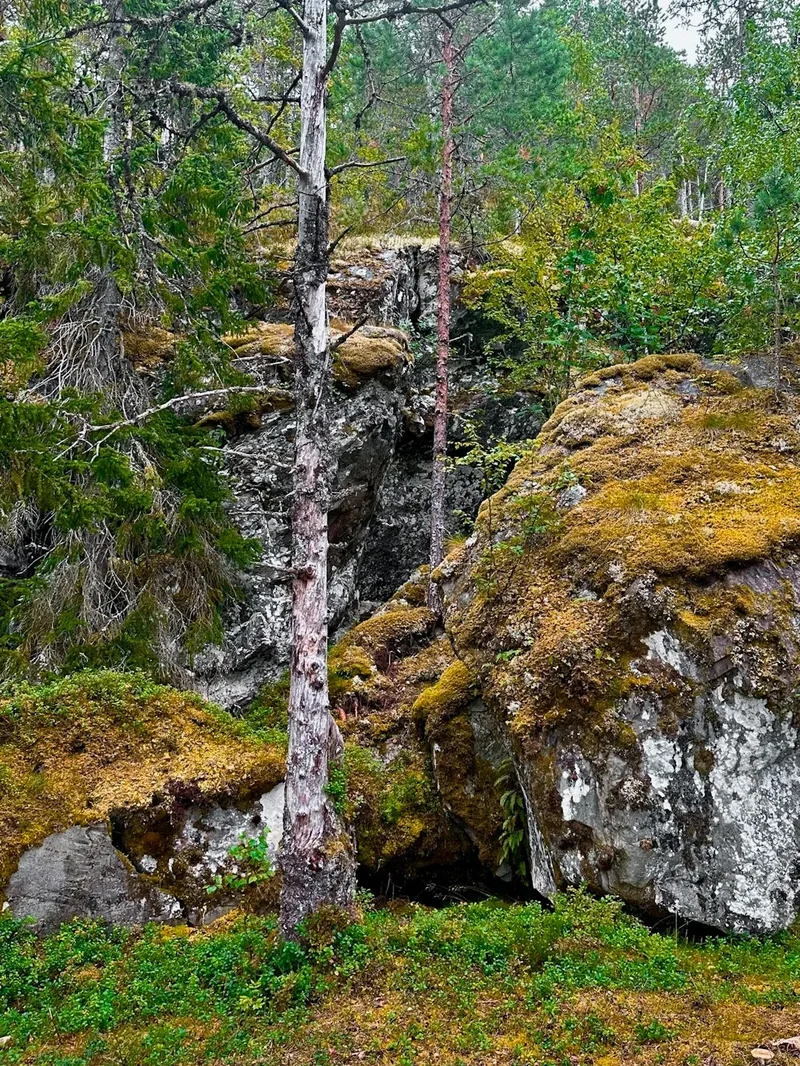
Trollkirka Cave and Falls - The Marble Cathedral of the North
Trollkirka, or "The Troll's Church," is not a building, but a geological marvel hidden within the rugged mountains of Møre og Romsdal, Norway. Located just a short drive from the coastal city of Molde, this trail leads hikers to a series of three spectacular marble and limestone caves, each carved over millennia by the relentless force of subterranean rivers. The highlight of the journey is a 14-metre high waterfall that plunges into a white marble pool deep inside the mountain, illuminated by a natural skylight where the cave roof has collapsed. This is a journey that transitions from the lush, fern-heavy forests of the Norwegian coast to a dark, ethereal underworld that feels like the setting of a Norse legend. Unlike many of Norway's high-altitude plateau hikes, Trollkirka offers a tactile, intimate experience with the earth's interior, making it one of the most unique day walks in the Scandinavian region.
- Distance: 4.5 km return
- Duration: 3–4 hours
- Season: May to September (accessible in winter only with specialist equipment and cave experience)
- Elevation Gain: 350 m
- Difficulty: Moderate (steep forest trail and slippery cave interiors)
- Highest Point: Approximately 480 m above sea level
- Closest City: Molde (30-minute drive)
- Trail Type: Out-and-back
Overview
The Trollkirka trail is a masterclass in Norwegian coastal geography, offering a condensed version of the region's dramatic transitions. The walk begins at a well-marked parking area along RV64, quickly entering a dense forest of birch, rowan, and spruce. The initial ascent is steady and purposeful, following a well-worn path that has been reinforced in sections with stone steps to prevent erosion. As you climb, the canopy occasionally thins, offering glimpses of the surrounding peaks and the distant Atlantic coastline. The air here is often damp, carrying the scent of pine and wet earth, a precursor to the subterranean environment ahead.
What sets Trollkirka apart from other Norwegian hikes is the destination itself. The "church" consists of three separate caves. The lowest cave is the most famous, featuring a long, dark passage that opens into a magnificent chamber where a waterfall thunders down from a hole in the ceiling. The white marble walls of the cave reflect the limited light, creating an otherworldly glow that justifies the site's mythological name. The middle cave is smaller but equally intricate, while the uppermost cave requires a bit more effort to reach and explore, often rewarding the persistent hiker with a sense of true solitude.
This is a landscape defined by the slow, patient work of water on soluble rock. While Norway is famous for its hard granite and gneiss, the presence of marble and limestone here has allowed the water to act as an architect, hollowing out chambers and polishing surfaces until they are smooth to the touch. The contrast between the dark, jagged exterior of the mountains and the smooth, white interior of the caves is a visual shock that remains the defining memory for most visitors. Whether you are an amateur geologist, a photography enthusiast, or simply a hiker looking for something beyond the standard mountain vista, Trollkirka provides a sensory experience that is difficult to replicate elsewhere in Northern Europe.
History and Cultural Context
The geological history of Trollkirka stretches back hundreds of millions of years. The marble found here was originally deposited as limestone on an ancient seabed. During the Caledonian orogeny—a massive mountain-building event—this limestone was subjected to intense heat and pressure, metamorphosing into the hard, crystalline marble we see today. Over the last several thousand years, since the end of the last ice age, slightly acidic rainwater and snowmelt have seeped into cracks in the rock, slowly dissolving the marble and creating the cave system. The waterfalls inside are the modern-day continuation of this process, still carving and shaping the mountain from the inside out.
In Norwegian folklore, caves were often seen as the dwellings of trolls and other supernatural beings. The name "Trollkirka" suggests that early locals viewed these grand, vaulted chambers as the places where trolls would gather for their own dark "church" services. While there are no formal records of the caves being used for religious purposes by humans, the sense of awe they inspire is universal. In the 19th and early 20th centuries, as Norway began to develop its tradition of "friluftsliv" (open-air life), Trollkirka became a popular destination for local explorers and early tourists from Molde. Unlike the more famous fjords which were viewed from the decks of steamships, Trollkirka required physical effort and a sense of adventure to reach, cementing its status as a local treasure.
Today, the trail is maintained by local authorities and volunteer groups who ensure the path remains accessible despite the heavy rainfall the region receives. The caves themselves are left in a natural state—there are no electric lights, paved walkways, or railings inside. This lack of commercialisation preserves the historical feeling of discovery, allowing every hiker to feel, for a moment, like the first person to stumble upon this hidden cathedral in the woods.
Want more background? Read extended notes on history and cultural context → Learn more
Seasonal Highlights and Weather Reality
The primary hiking season for Trollkirka runs from late May to September. During this window, the trail is generally clear of snow, and the waterfalls inside the caves are at their most powerful due to the spring melt and summer rains. June and July are particularly beautiful, as the Norwegian "midnight sun" provides long hours of daylight, allowing for late evening hikes when the trail is much quieter.
Autumn (September to October) brings a spectacular change in colour to the forest, with the birch trees turning a brilliant gold. However, this is also the wettest time of year in Møre og Romsdal. Increased rainfall makes the trail muddier and the rocks inside the caves significantly more slippery. Hikers during this period must be extra cautious and ensure they have high-quality waterproof footwear with excellent grip.
Winter (November to April) transforms Trollkirka into a challenging and potentially dangerous environment. The trail becomes covered in deep snow and ice, often requiring snowshoes or crampons for the ascent. Inside the caves, the waterfalls can freeze into massive ice sculptures, a sight of incredible beauty but one that should only be sought by those with experience in winter caving and ice climbing. The risk of falling ice and the difficulty of navigating the dark, frozen passages mean that winter visits are not recommended for the average hiker.
Regardless of the season, weather in coastal Norway is notoriously fickle. A clear, sunny morning in Molde can quickly turn into a grey, rainy afternoon at the trailhead. The temperature inside the caves remains constant and cool (around 4–8 degrees Celsius) year-round, so even on a warm summer day, an insulating layer is essential for the time spent underground.
Recommended Itinerary
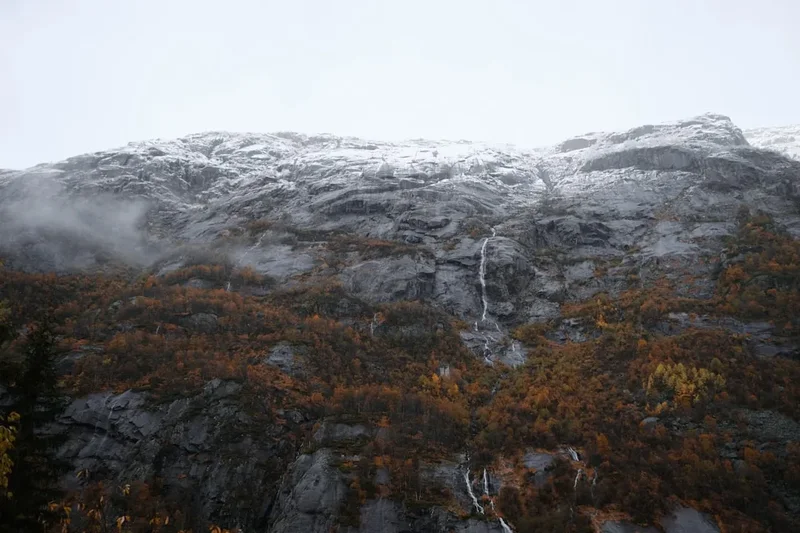
Trollkirka Day Hike Progression
Early Morning: Arrival and Ascent
- 09:00 – Arrive at the Trollkirka parking area on RV64, approximately 30 kilometres north of Molde.
- 09:15 – Begin the hike on the well-marked forest path. The trail starts with a gentle incline through a mix of deciduous and coniferous trees.
- 09:45 – Reach the halfway point where the gradient increases. The path becomes rockier, and stone steps help navigate the steeper sections.
- 10:15 – The forest begins to thin, and the sound of rushing water becomes more prominent as you approach the cave entrance area.
- 10:30 – Arrive at the entrance to the first (lowest) cave. This is a good spot to take a short break, put on your headlamp, and add a warm layer.
Mid-Morning: Exploring the Subterranean World
- 10:45 – Enter the first cave. The passage is narrow at first but soon opens into a larger chamber.
- 11:00 – Reach the main waterfall chamber. Spend time admiring the 14-metre falls and the white marble walls. If the sun is out, look for the light beam entering from the roof.
- 11:30 – Exit the first cave and follow the path up to the second cave entrance, located just a short distance higher up the hillside.
- 11:45 – Explore the second cave, which features more intricate marble formations and a smaller, more intimate atmosphere.
- 12:15 – (Optional) Continue further up the trail to the third cave or the nearby mountain lake, Trollvatnet, for a scenic lunch spot.
Midday: Descent and Return
- 12:45 – Begin the descent back down the same trail. Take extra care on the steep sections, as the damp rocks can be slippery.
- 13:30 – Re-enter the denser forest section, enjoying the views of the fjords in the distance.
- 14:00 – Arrive back at the parking area.
- 14:30 – Return to Molde or continue north towards the Atlantic Road.
Important Notes:
- A powerful headlamp or torch is mandatory; phone lights are insufficient for safe navigation.
- The caves are wet and dripping; waterproof clothing is highly recommended.
- There are no facilities (toilets or water) at the trailhead or on the trail.
- The total time can vary significantly based on how long you spend exploring the caves.
Planning and Bookings
Book Your Trip
Everything you need to plan your journey
Accommodation
Find places to stay near Molde
Flights
Search flights to Molde
Essential Preparation
Trollkirka is a relatively accessible hike, but it requires specific preparation due to its subterranean nature. Fitness requirements are moderate; anyone capable of walking uphill for an hour should be able to reach the caves. However, the terrain inside the caves is uneven and slippery, requiring good balance and a lack of claustrophobia. There is no need to book a guide, as the trail is self-explanatory, but first-time cavers may feel more comfortable in a group.
Molde is the most convenient base for this hike. It is a well-equipped city with numerous hotels, hostels, and supermarkets. If you are travelling from further afield, ensure your transport is organised, as public bus service to the trailhead is infrequent. Most visitors choose to rent a car in Molde or Åndalsnes. Before leaving your base, check the local weather forecast specifically for the Eide/Fræna area, as coastal conditions can differ from the city centre.
Trail Accommodation
This is a day hike requiring no overnight accommodation on the trail itself. Camping is permitted in the surrounding mountains under Norway's "Allemannsretten" (Right to Roam) laws, provided you stay at least 150 metres from inhabited houses and leave no trace. However, the terrain immediately around the caves is rocky and often damp, making it less than ideal for pitching a tent.
Nearby Options:
- Molde: A wide range of hotels (e.g., Scandic Seilet) and budget hostels.
- Bud and Elnesvågen: Smaller coastal villages with charming guesthouses and campsites.
- Campsites: Several well-maintained campsites are located along the RV64 and near the Atlantic Road, offering spots for tents, caravans, and small cabins (hytter). These usually provide kitchens, showers, and WiFi for a fee.
Required Gear
- Headlamp: This is the most critical piece of gear. Bring a high-lumen LED headlamp with spare batteries. Handheld torches are acceptable but headlamps keep your hands free for balance.
- Hiking Boots: Sturdy, waterproof boots with a deep tread pattern (Vibram or similar). The marble inside the caves is exceptionally slick when wet.
- Waterproof Shell: A breathable waterproof jacket and trousers. The caves are damp, and the trail is often subject to sudden rain.
- Insulating Layer: A fleece or lightweight down jacket. The cave temperature is significantly lower than the outside air in summer.
- Small Backpack: 15–25L to carry your gear, food, and water.
- First Aid Kit: Basic supplies for cuts, scrapes, and ankle sprains.
What to Bring
- Water: At least 1.5 litres per person. While there are streams, it is safer to carry treated or bottled water.
- Food: High-energy snacks (nuts, chocolate, dried fruit) and a substantial lunch. The Norwegian classic "Kvikk Lunsj" chocolate bar is a local tradition.
- Spare Batteries: For your headlamp and camera. Cold cave temperatures can drain batteries faster than expected.
- Dry Bag: To protect your electronics and spare clothes from the dripping water inside the caves.
- Whistle: For emergency signalling inside the cave system where sound carries differently.
- Camera: With low-light capabilities or a tripod if you wish to capture the waterfall inside the cave.
Permits
No permits are required to hike to Trollkirka or to enter the caves. Access is free and open to the public year-round, governed by the Norwegian principle of "Friluftsliv" and the Right to Roam. This allows everyone the right to experience nature, provided they do so responsibly.
Parking and Fees:
- There is a dedicated parking area at the trailhead. While the trail itself is free, there may be a small fee for parking (often paid via a mobile app like EasyPark or a self-service box). Ensure you have the app downloaded or some small change in Norwegian Krone (NOK).
- The parking area can fill up quickly on sunny weekends and during the peak holiday month of July. Arriving before 10:00 AM is recommended to secure a spot.
Regulations:
- Commercial groups or large organised tours should check with the local municipality (Hustadvika kommune) to ensure they are following local guidelines for group sizes.
- Drones are generally permitted but must be operated according to Norwegian Civil Aviation Authority rules, keeping a safe distance from other hikers and avoiding disturbance to wildlife.
Other Activities in the Area
The region surrounding Molde and Trollkirka is packed with world-class attractions. Consider these additions to your itinerary:
- The Atlantic Road (Atlanterhavsveien): Only a 30-minute drive from the Trollkirka trailhead, this 8.3-kilometre stretch of road hops across islands and reefs via eight bridges. It is often cited as one of the most beautiful drives in the world.
- Molde Panorama: Visit the Varden viewpoint in Molde for a breathtaking view of the city, the fjord, and the 222 partially snow-capped peaks of the Molde Panorama.
- Romsdalseggen Ridge: For those seeking a more strenuous challenge, the nearby town of Åndalsnes is the starting point for this world-famous ridge hike, offering views of the Troll Wall (Trollveggen).
- The Trollstigen Road: A dramatic mountain road with 11 hairpin bends that climbs up the side of a steep valley. It is a masterpiece of engineering and offers incredible views of the Stigfossen waterfall.
- Fishing and Kayaking: The coastal waters around Hustadvika are excellent for deep-sea fishing and sea kayaking, with many local operators offering equipment rental and guided tours.
Safety and Conditions
Cave Safety: The caves at Trollkirka are natural environments and contain inherent risks. The most common danger is slipping on the wet marble or limestone. Move slowly and always maintain three points of contact when navigating difficult sections. Be aware of your head; the cave ceiling varies in height, and it is easy to bump your head in the dark. A climbing helmet is not required but is a sensible precaution for those who have one. Never enter the caves alone if possible, and always tell someone your expected return time.
Water Levels: After heavy rain, the volume of water in the subterranean river can increase rapidly. If the water inside the cave appears to be rising or if the current is too strong to cross safely, do not attempt to reach the inner chambers. The waterfall is spectacular but generates a lot of spray, which can make the surrounding rocks even more treacherous.
Hypothermia: Even in summer, the temperature difference between the sun-warmed trail and the damp, cold cave can be 15 degrees or more. If you spend a long time inside taking photos, you will cool down quickly. Bring an extra layer and stay dry where possible.
Emergency Contacts: In Norway, the emergency number for police is 112, for medical emergencies 113, and for fire 110. Mobile phone reception is generally good at the trailhead and on the upper parts of the trail, but it will be completely lost once you enter the caves. In the event of an accident inside, one person should stay with the injured party while another goes to the cave entrance to call for help.
Side Trips and Points of Interest
The Third Cave: Most visitors stop after the first two caves, but there is a third cave located slightly higher up. It is less visited and offers a more "wild" feel. The entrance is smaller and requires a bit of searching, but it provides a great sense of exploration for those with the time and energy.
Trollvatnet Lake: If you continue past the cave entrances for another 15–20 minutes, the trail leads to a beautiful alpine lake called Trollvatnet. Surrounded by rugged peaks, this is a serene spot for a picnic and offers a different perspective of the mountain landscape. In late summer, the water may be warm enough for a very quick, bracing dip for the brave.
The Marble Formations: Take the time to look closely at the walls inside the caves. In some sections, the marble is pure white, while in others, it is streaked with grey and green minerals. The way the water has polished these surfaces over thousands of years is a testament to the power of erosion. Look for "potholes" in the rock—circular depressions carved by stones swirling in the river current.
Flora and Fauna: The forest section of the trail is home to a variety of Norwegian wildlife. Keep an eye out for the black woodpecker, and in the late summer, the forest floor is often covered in blueberries and lingonberries, which are free to pick and eat. The damp environment around the cave entrances supports rare mosses and ferns that thrive in the constant mist.
Leave No Trace
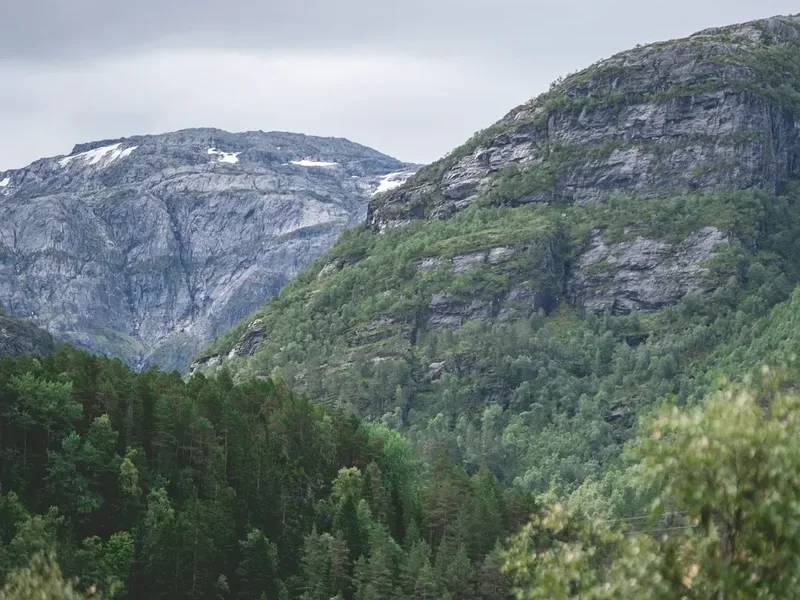
The Trollkirka caves are a fragile geological environment. Unlike the surrounding granite mountains, marble and limestone are relatively soft and easily damaged. As a visitor, you have a responsibility to ensure this site remains pristine for future generations. Norway's nature is a shared heritage, and its protection depends on the individual actions of every hiker.
Your responsibility as a walker:
- No Graffiti: Never scratch your name or any symbols into the marble walls. This is permanent damage that ruins the experience for everyone else and is considered an act of vandalism.
- Pack Out Trash: There are no bins on the trail. Take all your rubbish back to Molde, including organic waste like banana peels or orange skins, which decompose very slowly in the cold Norwegian climate.
- Protect the Water: Do not use soap or detergents in the cave rivers or the mountain lake. The subterranean ecosystem is sensitive to chemical changes.
- Stay on the Path: Use the established trail to reach the caves. Creating "social trails" destroys the delicate moss and ground cover, leading to soil erosion.
- Respect the Silence: The acoustics inside the caves are incredible. Avoid shouting or playing loud music, allowing others to enjoy the natural sound of the waterfall.
- Do Not Remove Rocks: Leave all stones and mineral samples where you find them. Taking "souvenirs" from the cave system is prohibited.
 Norway