
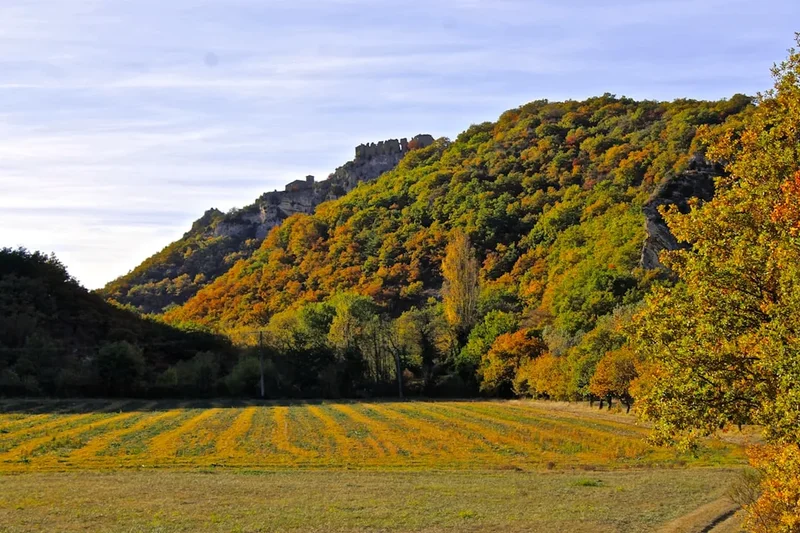
Tour of Mont Thabor - A High Alpine Odyssey
The Tour of Mont Thabor (TMT) is one of the most spectacular and geologically diverse multi-day treks in the French Alps. Spanning approximately 55 kilometres and circumnavigating the majestic 3,178-metre summit of Mont Thabor, this journey takes hikers through a landscape where the rugged, crystalline peaks of the northern Alps meet the sun-drenched, limestone massifs of the south. Situated on the border between the Savoie and Hautes-Alpes departments, and brushing against the Italian frontier, the trail offers a profound sense of isolation and high-altitude grandeur. Unlike the more crowded Tour du Mont Blanc, the Tour of Mont Thabor provides a more intimate connection with the wilderness, traversing vast alpine meadows, crossing high mountain passes (cols), and skirting dozens of turquoise glacial lakes. It is a challenging trek that demands physical stamina and a respect for the unpredictable mountain environment, but the reward is a panoramic view that stretches from the Ecrins Massif to the south all the way to the shimmering white dome of Mont Blanc to the north.
- Distance: 55.0 km loop
- Duration: 4–5 days
- Elevation Gain: 3,700 m
- Highest Point: Mont Thabor Summit (3,178 m) or Col des Muandes (2,828 m) on the main loop
- Difficulty: Challenging (High alpine terrain, significant elevation changes)
- Best Time: July to September (snow-free window)
- Closest City: Modane, France
- Accommodation: High-altitude mountain refuges (Gîtes d'étape and Refuges)
Overview
The Tour of Mont Thabor is a masterclass in alpine transition. The route is traditionally completed as a loop starting and ending in the town of Modane, located in the Maurienne Valley. What makes this trek unique is the "double personality" of the landscape. To the north, the terrain is dominated by the dark, jagged schist and granite of the Vanoise and Thabor massifs. As you move south towards the Vallée Étroite and the Cerces Massif, the geology shifts dramatically to brilliant white limestone and dolomite, reminiscent of the Italian Dolomites. This transition creates a visual spectacle where the colours of the rock change from deep greys and blacks to ochre, cream, and brilliant white within a single day's walk.
The trek is physically demanding, with daily elevation gains often exceeding 800 to 1,000 metres. The paths are generally well-marked as part of the GR5 and GR57 networks, but they involve steep ascents over rocky passes and long descents through scree slopes and larch forests. The highlight for most trekkers is the optional but highly recommended ascent to the summit of Mont Thabor itself. Standing at 3,178 metres, the summit is a lunar landscape of red and grey rock, crowned by a historic chapel that has served as a site of pilgrimage for centuries. From this vantage point, the entire arc of the Western Alps is visible.
The infrastructure along the route is excellent, featuring a network of well-maintained mountain refuges. These huts provide a warm bed, hearty communal meals, and a chance to connect with fellow hikers from around the world. However, the remote nature of the trail means that once you leave the valley floor at Modane, you are fully immersed in the high-altitude environment. There are no shops or villages along the way, only the refuges and the occasional shepherd's hut. This isolation is a core part of the TMT's appeal, offering a sanctuary of silence and natural beauty in an increasingly busy world.
History and Cultural Context
The history of the Mont Thabor region is as layered as its geology. For centuries, these high passes were the domain of shepherds moving their flocks between the Maurienne and Briançonnais valleys. The summit of Mont Thabor has been a sacred site since at least the 15th century. The Chapelle du Mont Thabor (also known as Notre-Dame des Sept Douleurs), located just below the summit at 3,164 metres, is one of the highest places of worship in Europe. Every summer, pilgrims from both the French and Italian sides of the mountain ascend the peak to celebrate mass, a tradition that highlights the mountain's role as a bridge between cultures rather than just a barrier.
The region also bears the scars and stories of more recent history. The Vallée Étroite (Narrow Valley), through which the trail passes, has a particularly fascinating political history. Originally part of Italy, the valley was ceded to France in 1947 as part of the Treaty of Paris following World War II. Despite being administratively French, the valley retains a distinctly Italian character. The refuges here (I Re Magi and III Alpini) are run by Italians, the food is unapologetically Italian (polenta and espresso are staples), and the primary language spoken by many visitors is Italian. This cultural "enclave" provides a delightful mid-trek surprise for hikers.
Furthermore, the area was part of the Alpine Line (the southern extension of the Maginot Line). Hikers will occasionally spot the remains of bunkers and military fortifications built in the 1930s to defend the passes against potential invasion. These concrete ruins, now weathered by decades of alpine winters, serve as silent reminders of the strategic importance of these high-altitude corridors. Today, the only "invasions" are those of hikers and mountain bikers, and the region is protected as part of the Natura 2000 network, ensuring that its biodiversity and historical sites are preserved for the future.
Want more background? Read extended notes on history and cultural context → Learn more
Seasonal Highlights and Weather Reality
The window for completing the Tour of Mont Thabor is relatively short due to its high elevation. Most of the trail sits above 2,000 metres, meaning snow can linger well into the summer and return early in the autumn.
Summer (July to August): This is the peak season. The snow has usually melted from the high passes (though some patches may remain on north-facing slopes), and the refuges are fully operational. The alpine meadows are in full bloom during July, with carpets of rhododendrons, gentians, and the rare edelweiss. Daytime temperatures are pleasant for hiking, ranging from 15°C to 25°C in the valleys, though it can still drop to near freezing at night in the higher refuges. Afternoon thunderstorms are a common occurrence in the Alps during August; hikers should aim to cross high passes before midday to avoid being caught in exposed areas during a storm.
Autumn (September): Many experienced hikers consider September the best time for the TMT. The crowds of the summer holidays have dispersed, the air is crisp and clear, and the larch forests begin to turn a brilliant golden hue. The weather is generally more stable than in August, though the days are shorter and the nights significantly colder. Most refuges remain open until the third or fourth week of September, but it is essential to check closing dates in advance.
Winter and Spring (October to June): During this period, the Tour of Mont Thabor becomes a serious mountaineering or ski touring undertaking. The trail is buried under several metres of snow, and the risk of avalanches is high. The refuges are either closed or only offer a basic winter shelter (unstaffed, no heat or food). Attempting the route during these months requires advanced winter navigation skills, crampons, ice axes, and avalanche safety equipment. For the average trekker, the route is impassable until at least late June.
Recommended Itinerary
5-Day Tour of Mont Thabor Itinerary
Day 1: Modane to Refuge de la Vallée Étroite
- Distance: 12 km
- Elevation gain: 1,350 m
- Time: 5–6 hours
- Start at Modane train station (1,060 m)
- Steep ascent through pine and larch forests towards the Charmaix valley
- Pass through the ski resort of Valfréjus
- Cross the Col de la Vallée Étroite (2,434 m), the gateway to the "Italian" valley
- Descend into the stunning Vallée Étroite, surrounded by limestone cliffs
- Arrive at Refuge I Re Magi or Refuge III Alpini (1,765 m)
- Enjoy a traditional Italian dinner in a French territory
Day 2: Vallée Étroite to Refuge des Drayères
- Distance: 10 km
- Elevation gain: 1,050 m
- Time: 4–5 hours
- Ascend from the valley floor towards the Thabor massif
- Pass the beautiful Lac de la Clarée
- Cross the Col des Muandes (2,828 m), offering spectacular views of the Cerces peaks
- The terrain becomes more rugged and mineral-heavy
- Descend into the upper Clarée Valley
- Arrive at Refuge des Drayères (2,180 m), a classic stone hut located at the head of the valley
- This section showcases the dramatic shift from limestone to crystalline rock
Day 3: Refuge des Drayères to Refuge du Mont Thabor
- Distance: 11 km
- Elevation gain: 850 m
- Time: 5 hours
- Follow the Clarée River upstream before turning towards the Col de la Plagnette
- Pass through the high-altitude pastures of the Rochilles
- View the three lakes: Lac de la Clarée, Lac Rond, and Lac Grand Ban
- Cross the Col des Thures or the Col de la Vallée Étroite (depending on the specific variant chosen)
- Traverse high alpine plateaus where marmots are frequently spotted
- Arrive at Refuge du Mont Thabor (2,502 m), perched on a rocky promontory
- The refuge offers one of the best sunset views in the region
Day 4: Summit of Mont Thabor and return to Refuge
- Distance: 8 km (return)
- Elevation gain: 700 m
- Time: 4–5 hours
- A dedicated day for the summit attempt (weather permitting)
- Ascend through the "Col des Chapelles" and across the lunar-like Thabor plateau
- Final steep climb over red scree to the summit of Mont Thabor (3,178 m)
- Visit the historic Chapelle du Mont Thabor just below the peak
- 360-degree views of the Meije, Barre des Écrins, and Mont Blanc
- Descend back to Refuge du Mont Thabor for a second night or continue towards Valmeinier
- This is the highest point of the trek and requires steady footing on loose rock
Day 5: Refuge du Mont Thabor to Modane
- Distance: 14 km
- Elevation loss: 1,450 m
- Time: 5–6 hours
- Begin the long descent back to the Maurienne Valley
- Option to pass via the Col de la Roue (2,562 m) for a different perspective
- Descend through alpine meadows and eventually back into the larch forests
- Pass through the hamlet of Le Lavoir
- Final stretch back into Modane
- Celebrate the completion of the loop with a meal in town before catching the train
Important Notes:
- The itinerary can be shortened to 4 days by combining the summit day with the final descent, but this requires very high fitness.
- Refuges must be booked months in advance, especially for July and August.
- Water is available at refuges, but mountain streams should be treated before drinking.
- The route is marked with the red and white blazes of the GR (Grande Randonnée) or the yellow/red blazes of the GRP (Grande Randonnée de Pays).
Planning and Bookings
Book Your Trip
Everything you need to plan your journey
Accommodation
Find places to stay near Modane
Flights
Search flights to Modane
Essential Preparation
The Tour of Mont Thabor is a high-altitude trek that requires a solid level of physical fitness. You should be comfortable walking 5–7 hours a day for several consecutive days, often with a pack weighing 8–12 kilograms. Training should include hill walking and cardiovascular exercises in the months leading up to the trip. Logistics are relatively straightforward as the trail starts and ends in Modane, which is well-connected by the TGV (high-speed train) from Paris, Lyon, and Turin. If you are flying in, Lyon (LYS) or Turin (TRN) are the most convenient airports. From Modane, you can walk directly to the trailhead or take a short taxi/bus to Valfréjus to skip the first few hundred metres of forest ascent.
Booking coordination is the most critical part of planning. You must map out your daily distances and ensure that your chosen refuges have availability for your specific dates. It is highly recommended to have a "Plan B" in case of bad weather, which might involve staying an extra night in a refuge or taking a lower-level variant of the trail.
Trail Accommodation
The accommodation on the Tour of Mont Thabor consists of mountain refuges (huts) and gîtes d'étape. These are generally staffed from mid-June to late September.
Key Refuges:
- Refuge I Re Magi & Refuge III Alpini: Located in the Vallée Étroite. These offer a mix of small dormitories and private rooms. Known for exceptional Italian cuisine.
- Refuge des Drayères: A traditional stone refuge at the end of the Clarée Valley. It has large dormitories and a very welcoming atmosphere.
- Refuge du Mont Thabor: Situated at 2,502 metres, this is a true high-mountain hut. It is basic but clean, with incredible views.
- Gîtes in Valfréjus: If you prefer to start or end with more comfort, the ski resort of Valfréjus offers various apartments and hotels.
Facilities Provided: Most refuges provide a "half-board" (demi-pension) option, which includes dinner, breakfast, and a dormitory bed. Blankets or duvets are provided, but you MUST bring your own silk or cotton sleeping bag liner (sac à viande) for hygiene. Showers are usually available but may be metered (e.g., €2 for 3 minutes of hot water) due to the difficulty of transporting water and energy to these heights.
What is NOT Provided: Towels, toiletries, and charging points for electronics are often limited or non-existent. There is no WiFi in the high-altitude huts, and mobile signal is patchy at best. Costs typically range from €55 to €75 per person per night for half-board.
Required Gear
- Hiking Boots: High-quality, waterproof boots with good ankle support are essential for the rocky and sometimes loose terrain.
- Backpack: A 35–45 litre pack is usually sufficient for a hut-to-hut trek. Ensure it has a rain cover.
- Clothing Layers: The "three-layer system" is vital. A moisture-wicking base layer (merino wool is best), an insulating mid-layer (fleece or down jacket), and a waterproof/breathable outer shell (Gore-Tex).
- Navigation: IGN Map 3535 OT (Nevache/Mont Thabor) is the gold standard. A compass and a GPS device (or a reliable smartphone app like Topo GPS or Gaia) are also necessary.
- Sun Protection: High-altitude sun is intense. Bring SPF 50+ sunscreen, a wide-brimmed hat, and Category 3 or 4 sunglasses.
- First Aid: A basic kit including blister plasters (Compeed), antiseptic wipes, painkillers, and any personal medication.
What to Bring
- Water Treatment: While water is available at huts, you may need to refill from streams. Use a filter (like a Sawyer Squeeze) or purification tablets (Micropur).
- Snacks: High-energy foods like nuts, dried fruit, energy bars, and chocolate. You can usually buy a packed lunch (pique-nique) from the refuges if you order it the night before.
- Sleeping Bag Liner: Mandatory for hygiene in all French mountain refuges.
- Headlamp: Essential for navigating the dormitory at night or if you start a summit push before dawn.
- Personal Hygiene: Biodegradable soap, a small travel towel, and hand sanitiser.
- Cash: Many refuges do not accept credit cards due to the lack of a reliable internet connection. Bring enough Euros to cover your stay and any extra drinks or snacks.
- Trekking Poles: Highly recommended to save your knees during the long descents (over 1,400 m on the final day).
Permits
One of the great advantages of the Tour of Mont Thabor is that no official permits are required to hike the trail or to enter the various valleys it traverses. Access to the mountains is free and open to the public. However, this does not mean you can simply show up and expect a bed. The "permit" in this context is your refuge reservation.
Refuge Reservations: During the peak months of July and August, the refuges along the TMT operate at 100% capacity. You must book your beds well in advance. Most refuges can now be booked through a centralised online system (such as the FFCAM website or specific regional booking portals), but some smaller, private gîtes may still require an email or phone call. If you arrive at a refuge without a booking and it is full, the warden is legally allowed to turn you away unless it is an emergency situation.
Wild Camping (Bivouacking): If you prefer to carry a tent, the rules for "bivouacking" (setting up a tent at sunset and taking it down at sunrise) are generally permitted along most of the route, provided you are more than an hour's walk from the nearest road or refuge. However, there are specific local decrees in certain areas (like the Clarée Valley) that restrict camping to protect the environment. Always check for local signage. In the Vanoise National Park (which borders the TMT), bivouacking is strictly regulated and only allowed in designated areas near certain refuges for a small fee.
Group Sizes: If you are organising a trek for a large group (more than 8 people), you should contact the refuges even earlier, as dormitory space for large groups is limited. There are no fees for crossing the border into the Italian side of the Vallée Étroite, as both France and Italy are part of the Schengen Area.
Other Activities in the Area
The Maurienne and Clarée valleys offer a wealth of activities for those who want to extend their stay before or after the trek:
- Via Ferrata in Modane: The "Via Ferrata du Diable" is one of the most impressive in France, featuring several sections that traverse the deep gorges near the Forts de l'Esseillon.
- Forts de l'Esseillon: Explore this massive complex of five 19th-century Sardinian forts built to protect against French invasion. They are a short bus or car ride from Modane.
- Mountain Biking in Valfréjus: The resort offers numerous lift-accessed trails for all levels, from gentle forest paths to technical downhill runs.
- Exploring Briançon: A 45-minute drive from the Névache end of the trail, Briançon is the highest city in the European Union and a UNESCO World Heritage site, famous for its Vauban fortifications.
- Rock Climbing in the Cerces: The limestone towers of the Cerces Massif offer world-class multi-pitch climbing routes on exceptional rock.
- Thermal Baths: After 5 days of hiking, visit the "Grands Bains du Monêtier" in the nearby Serre Chevalier valley for a soak in natural hot springs.
Safety and Conditions
Mountain Weather: The weather in the Alps can change with terrifying speed. A clear blue sky in the morning is no guarantee of a dry afternoon. Thunderstorms are the primary summer hazard. If you see dark, towering cumulus clouds forming, try to get off high ridges and passes as quickly as possible. Snow is possible even in August if a cold front moves through.
Terrain Hazards: The ascent to the summit of Mont Thabor involves crossing steep scree slopes. The rock can be loose, and the path is not always clearly defined. Good balance and the use of trekking poles are highly recommended. In early summer (June/July), some of the high passes may still be covered in hard-packed snow. If you are trekking during this time, carrying lightweight traction cleats (micro-spikes) is a wise precaution.
Altitude: While 3,178 metres is not high enough to cause severe altitude sickness for most people, you may still feel the effects of the thinner air—shortness of breath and a faster heart rate are normal. Stay hydrated and maintain a steady, sustainable pace. If you experience a persistent headache or nausea, descend to a lower elevation.
Emergency Contacts: The universal European emergency number is 112. Be aware that mobile phone coverage is non-existent in many of the deep valleys and high plateaus. If an accident occurs, you may need to send someone to the nearest refuge to use their radio or satellite phone. It is highly recommended to have mountain rescue insurance (such as that provided by the Austrian Alpine Club or specific travel insurance policies).
Livestock and Guard Dogs: You will encounter large flocks of sheep protected by "Patou" dogs (Great Pyrenees). These dogs are not pets; they are working animals trained to protect the flock from wolves. If you encounter a flock, stay on the path, keep a wide berth, and do not try to pet the dogs or the sheep. If a dog approaches you barking, stop, stay calm, and speak in a low voice until the dog realises you are not a threat, then move away slowly.
Side Trips and Points of Interest
The Summit Chapel: The Chapelle Notre-Dame des Sept Douleurs is a must-visit. Even if you don't make it to the very top of the peak, the chapel itself is a place of immense peace and history. The interior is simple, often filled with small tokens and notes left by pilgrims and hikers.
Lac Blanc: Located near the Refuge du Mont Thabor, this lake often remains partially frozen well into July. Its milky-white colour (caused by glacial flour) contrasts beautifully with the surrounding dark rocks. It is a perfect spot for a lunch break or a very brave (and very cold) alpine dip.
The "Demoiselles Coiffées": Near the descent into the Vallée Étroite, you can see these strange geological formations, also known as "fairy chimneys." They are tall columns of eroded earth topped by a harder rock that protects the column from rain, creating a surreal, mushroom-like appearance.
The Clarée River Source: Near the Refuge des Drayères, you can walk to the official source of the Clarée River. It is a humble beginning for a river that defines one of the most beautiful valleys in France. The area is a labyrinth of small streams and mossy banks, perfect for photography.
Leave No Trace
The Tour of Mont Thabor passes through fragile alpine ecosystems that are under increasing pressure from climate change and tourism. It is our collective responsibility to ensure these landscapes remain pristine.
Core Principles for the TMT:
- Pack it in, pack it out: There are no rubbish bins in the mountains. Every piece of litter, including fruit peels and tissues, must be carried back to the valley.
- Respect the water: Do not use soap (even biodegradable soap) directly in alpine lakes or streams. Carry water 30 metres away from the source for washing.
- Stay on the path: Cutting switchbacks causes severe erosion and destroys the delicate alpine flora that takes years to grow in the short summer season.
- No fires: Wood is scarce at high altitudes, and the risk of wildfire is significant. Use a lightweight camping stove if you are bivouacking.
- Wildlife: Observe marmots, chamois, and ibex from a distance. Never feed them, as this disrupts their natural foraging habits and can make them dependent on humans.
- Human Waste: Use the toilets at the refuges whenever possible. If you must go on the trail, dig a "cathole" at least 15 cm deep and at least 60 metres from water sources. Pack out your toilet paper in a sealed bag.
 France