
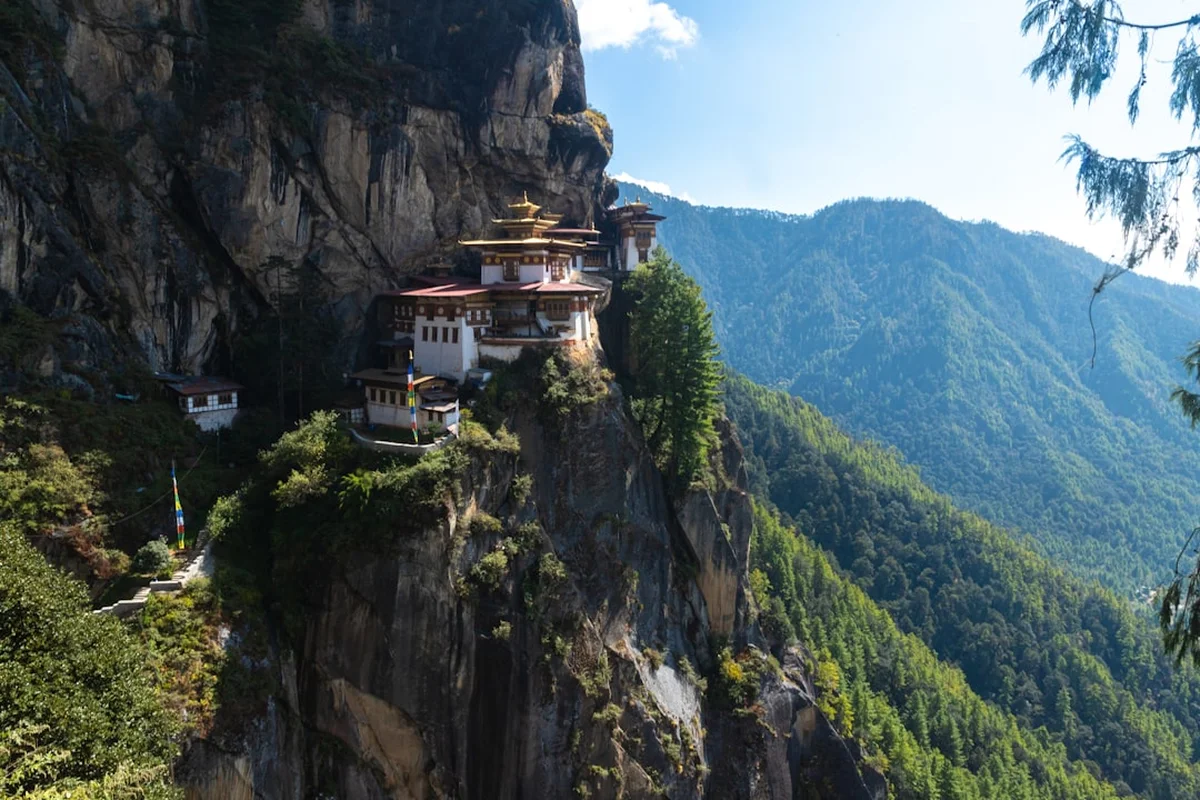
Tiger's Nest (Paro Taktsang) - The Sacred Jewel of the Himalayas
Perched precariously on a sheer granite cliff 900 metres above the floor of the Paro Valley, Tiger’s Nest, or Paro Taktsang, is more than just a hiking destination; it is the spiritual heart of Bhutan. This iconic monastery complex, consisting of four main temples and several residential shelters, appears to cling to the rock face by sheer divine will. For the Bhutanese people, a pilgrimage to Taktsang is a life-defining act of devotion. For international travellers, the 10.4-kilometre return journey offers a profound immersion into the kingdom’s unique blend of Vajrayana Buddhism, pristine Himalayan ecology, and architectural wonder. The trail winds through ancient forests of blue pine and oak, draped in Spanish moss and punctuated by the fluttering primary colours of prayer flags, before culminating in a dramatic series of stone staircases that lead into the sanctuary itself. This is a walk that demands physical exertion and rewards it with a sense of peace and perspective that few other places on Earth can provide.
- Distance: 10.4 km return
- Duration: 5–7 hours
- Elevation Gain: 900 m
- Highest Point: 3,120 m
- Difficulty: Moderate (steep gradients and high altitude)
- Location: Paro District, Bhutan
- Access: Trailhead at Ramthangkha, 20 minutes from Paro town
Overview
The journey to Paro Taktsang is a sensory odyssey that begins long before you reach the monastery gates. The trail starts at an elevation of approximately 2,100 metres and climbs steadily to the monastery at 3,120 metres. This significant elevation gain over a relatively short distance makes the hike a challenging endeavour for those not acclimatised to the thin Himalayan air. The path is well-trodden, wide in most sections, and shared with mules that carry pilgrims and supplies up the lower half of the mountain. As you ascend, the air cools, and the scent of pine needles and burning incense from distant shrines fills the breeze. The landscape is a living tapestry of biodiversity; in the spring, the forest floor is carpeted with wildflowers, while the autumn months offer crystal-clear views of the snow-capped peaks of the Jomolhari range in the distance.
The hike is traditionally divided into three distinct phases. The first phase is a steady, zig-zagging climb through thick forest to the Taktsang Cafeteria, a popular resting point that offers the first clear, eye-level view of the monastery. The second phase continues the ascent to a high ridge marked by a large chorten (stupa) and hundreds of prayer flags. From here, the trail transforms into the third and most dramatic phase: a descent down a steep stone staircase into a deep gorge, passing a spectacular 60-metre waterfall, followed by a final climb up to the monastery entrance. This final approach is visually stunning, as the monastery seems to grow larger and more improbable with every step. The architectural feat of constructing these buildings in the 17th century—and rebuilding them after a devastating fire in 1998—is a testament to the ingenuity and faith of the Bhutanese people. Every stone and timber was carried up this very path, a labour of love that continues to inspire every visitor who makes the trek today.
History and Cultural Context
The history of Paro Taktsang is inextricably linked to Guru Padmasambhava, the "Precious Master" known in Bhutan as Guru Rinpoche, who is credited with introducing Tantric Buddhism to the Himalayas in the 8th century. According to legend, Guru Rinpoche flew to this site from Tibet on the back of a tigress—a manifestation of his consort, Yeshe Tsogyal—to subdue a local demon that was obstructing the spread of Buddhism. The Guru is said to have meditated in a cave on the cliffside for three years, three months, three weeks, and three days. This cave, known as the Pelphug Lhakhang, remains the most sacred site within the complex. The name "Taktsang" literally translates to "Tiger’s Lair," a direct reference to this foundational myth.
While the site has been a place of meditation for centuries, the first formal monastery buildings were not constructed until 1692 under the direction of Gyalse Tenzin Rabgye, the fourth secular ruler (Desi) of Bhutan. He is believed to have been the reincarnation of Guru Rinpoche, and his construction of the monastery solidified Taktsang as a national symbol of spiritual protection. The complex was built around the original meditation caves, incorporating the natural rock walls into the architecture of the temples. Over the centuries, the monastery has survived several fires, the most recent and catastrophic occurring in April 1998. The fire destroyed the main building and many priceless artefacts, but the Bhutanese government, led by the Fourth King, Jigme Singye Wangchuck, initiated an immediate and meticulous restoration. Using traditional techniques and materials, the monastery was restored to its former glory and officially reconsecrated in 2005.
Today, Taktsang is not merely a tourist attraction but a functioning monastery where monks live, pray, and meditate. It is one of the most sacred sites in the Himalayan world, drawing pilgrims from across Bhutan, Tibet, and India. The presence of the "Eight Manifestations of Guru Rinpoche" is celebrated in the various temples, and the energy of the site is palpable. Visitors are expected to maintain a quiet, respectful demeanour, as the monastery remains a place of profound religious practice. The cultural significance of the site is protected by strict regulations, ensuring that the spiritual integrity of the "Tiger’s Lair" remains uncompromised by the modern world.
Want more background? Read extended notes on history and cultural context → Learn more
Seasonal Highlights and Weather Reality
The experience of hiking to Tiger’s Nest varies significantly with the seasons, each offering a unique perspective on the landscape and the monastery. Bhutan’s climate is influenced by the Indian monsoon, making timing a crucial factor for a successful and enjoyable trek.
Autumn (October to December): This is widely considered the best time to visit. Following the monsoon rains, the air is exceptionally clear, providing the sharpest views of the monastery against the deep blue Himalayan sky. The temperatures are cool and pleasant for hiking, though it can be quite cold in the early mornings. This is also the peak festival season in Bhutan, adding a layer of cultural richness to your journey.
Spring (March to May): Another prime window for the trek. The highlight of spring is the blooming of the rhododendrons and wild azaleas, which splash the forest in shades of crimson, pink, and white. The temperatures are warmer than in autumn, and the valley is lush and green. However, occasional afternoon showers are common, so waterproof gear is recommended.
Winter (January to February): For those who don't mind the cold, winter offers a serene and quiet experience. The trail is much less crowded, and if you are lucky, you might see the monastery dusted in snow—a truly magical sight. However, the stone steps in the final section can become icy and treacherous, requiring extra caution and sturdy footwear. Many of the higher mountain passes in Bhutan may be closed, but the Paro Valley remains accessible.
Summer (June to August): This is the monsoon season. While the forest is at its most vibrant and green, the trail can be muddy and slippery. Clouds often shroud the monastery, which can be atmospheric but may obscure the iconic views you’ve travelled so far to see. Leeches can also be a minor nuisance in the forested sections during the wet months. If hiking in summer, start as early as possible to avoid the heaviest afternoon rains.
Recommended Itinerary
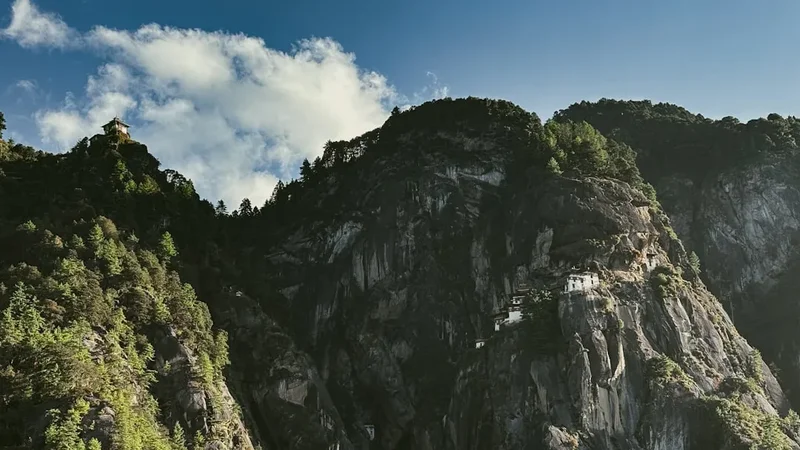
Tiger's Nest Day Hike Route Progression
Phase 1: The Forest Ascent (Trailhead to Cafeteria)
- Distance: 2.5 km
- Elevation gain: 450 m
- Time: 1.5–2 hours
- Start at the Ramthangkha trailhead (2,100 m) where you can hire walking poles or a mule for the first half.
- The trail begins with a gentle incline through a meadow before entering a dense forest of blue pine and oak.
- The path is wide but can be dusty or muddy depending on the season.
- Pass several small prayer wheel stations where the sound of bells provides a rhythmic backdrop to your climb.
- Arrive at the Taktsang Cafeteria (2,550 m). This is the halfway point and the only place to purchase food or use a formal restroom.
- Take a 20-minute break here to hydrate and enjoy the first spectacular view of the monastery perched on the cliff above.
Phase 2: The Ridge and the Viewpoint
- Distance: 1.5 km
- Elevation gain: 350 m
- Time: 1 hour
- The trail narrows and becomes steeper as it leaves the cafeteria.
- Mules are not permitted beyond this point; all visitors must proceed on foot.
- The forest thins out, replaced by shrubs and more frequent clusters of prayer flags.
- Reach the "Upper Viewpoint" (approx. 2,900 m), marked by a large chorten. This is the classic photography spot where the monastery appears level with your eyes across the gorge.
- The path levels out briefly along the ridge, offering panoramic views of the Paro Valley below.
Phase 3: The Gorge and the Final Approach
- Distance: 1.2 km (including stairs)
- Elevation: 100 m descent, 100 m ascent
- Time: 45 minutes–1 hour
- This is the most physically demanding and visually stunning section.
- Descend approximately 700 stone steps into the deep gorge separating the ridge from the monastery cliff.
- Cross a bridge over a 60-metre waterfall that plunges into a sacred pool. The mist from the falls is refreshing on a warm day.
- Ascend the final 200–300 steps up to the monastery entrance (3,120 m).
- Check in at the security post, where you must leave all bags, cameras, and shoes before entering the temple complex.
Phase 4: Exploring the Monastery Complex
- Time: 1–1.5 hours
- Visit the various Lhakhangs (temples), including the Guru Lhakhang and the Pelphug Lhakhang (the meditation cave).
- Observe the intricate wall paintings, golden statues, and the butter lamps that flicker in the dim interiors.
- Spend time in quiet reflection or meditation in the designated areas.
- The views from the monastery balconies back toward the valley are breathtaking.
Phase 5: The Return Descent
- Distance: 5.2 km
- Time: 2–2.5 hours
- Retrace your steps back through the gorge and up the stairs to the ridge.
- The climb back up the stairs from the waterfall is often cited as the hardest part of the day.
- Once back on the main trail, the descent is steady and much faster than the ascent.
- Stop at the cafeteria for a late lunch or tea if needed.
- Finish back at the Ramthangkha trailhead.
Important Notes:
- Start early (between 7:00 AM and 8:00 AM) to avoid the midday heat and the largest crowds.
- The monastery closes for lunch between 1:00 PM and 2:00 PM; plan your arrival accordingly.
- Respect the "no photography" rule inside the temples; it is strictly enforced.
- Dress modestly (shoulders and knees covered) as this is a sacred religious site.
- Carry plenty of water; there are no refill stations between the cafeteria and the monastery.
Planning and Bookings
Book Your Trip
Everything you need to plan your journey
Accommodation
Find places to stay near Paro
Flights
Search flights to Paro
Essential Preparation
Planning a trip to Tiger’s Nest requires more than just packing a bag; it involves navigating Bhutan’s unique tourism regulations. All international visitors (except those from India, Bangladesh, and the Maldives) must travel on a pre-arranged tour through a licensed Bhutanese operator. Your tour operator will handle your visa, the Sustainable Development Fee (SDF), and the specific permits required to enter the Paro Taktsang complex. It is essential to coordinate your hike with your guide, who will provide transport to the trailhead and accompany you on the walk.
Physical preparation is also key. While the trail is not technically difficult, the altitude is a significant factor. It is highly recommended to spend at least two days in Paro (2,200 m) or Thimphu (2,300 m) to acclimatise before attempting the hike. Ensure you are in good cardiovascular health, as the 900-metre climb is sustained and steep. If you have concerns about your fitness, discuss the option of hiring a mule for the first half of the ascent with your guide in advance.
Trail Accommodation
This is a day hike requiring no overnight accommodation on the trail itself. Camping is strictly prohibited on the mountain to preserve the sanctity and cleanliness of the site. Most hikers base themselves in Paro town, which offers a wide range of accommodation options to suit various budgets and preferences.
Accommodation Options in Paro:
- Luxury Resorts: Several high-end properties offer traditional Bhutanese architecture combined with modern amenities, including spas and fine dining—perfect for post-hike recovery.
- Standard Hotels: Most tour packages include 3-star hotels that are clean, comfortable, and provide traditional Bhutanese meals.
- Farmstays: For a more authentic experience, you can stay with a local family in a traditional farmhouse, offering a deep dive into Bhutanese culture and home-cooked food.
- The Taktsang Cafeteria: While not an overnight lodge, the cafeteria provides a vital rest point with seating, basic food (usually a vegetarian buffet), and tea/coffee. It is the only facility of its kind on the mountain.
Required Gear
- Hiking Boots: Sturdy, waterproof boots with good ankle support are essential. The trail can be rocky, dusty, or slippery.
- Walking Poles: Highly recommended for the steep descent and the hundreds of stone steps. They can be rented at the trailhead for a small fee.
- Layered Clothing: The temperature fluctuates significantly. Bring a moisture-wicking base layer, an insulating mid-layer (fleece), and a windproof/waterproof outer shell.
- Daypack: A 20–30L pack to carry your water, snacks, and extra layers.
- Sun Protection: High-altitude sun is intense. Bring a wide-brimmed hat, sunglasses with UV protection, and SPF 50+ sunscreen.
- Modest Attire: To enter the monastery, you must wear long trousers or a long skirt and a shirt with sleeves. A lightweight scarf can be useful for covering up.
What to Bring
- Water: At least 2 litres per person. Dehydration significantly increases the risk of altitude sickness.
- Snacks: Energy bars, nuts, or dried fruit to maintain blood sugar levels during the climb.
- Personal First Aid: Include blister plasters, ibuprofen/paracetamol, and any personal medications.
- Cash: Small denominations of Ngultrum (BTN) for the cafeteria, renting poles, or making small offerings at the temples.
- Permit/ID: Your guide will usually carry the main permits, but it is good practice to have a copy of your visa and passport.
- Hand Sanitiser and Tissues: Facilities at the cafeteria and monastery are basic.
- Camera: For the trail and viewpoints (remember, no cameras inside the temples).
Permits
Access to Tiger’s Nest is regulated through Bhutan’s national tourism policy. Unlike many international trails, you cannot simply show up and hike; your visit must be part of an authorised itinerary. The primary "permit" is your Bhutanese Visa and the payment of the Sustainable Development Fee (SDF), which is currently US$100 per night for most international visitors (with reduced rates for Indian nationals).
Specific Monastery Entry:
- An additional entry fee of 2,000 BTN (approximately US$25) is required specifically for the Paro Taktsang monastery complex. This is usually paid at the security checkpoint near the monastery entrance.
- Your guide will facilitate this payment and ensure you have the necessary paperwork.
- The monastery is open daily, typically from 8:00 AM to 1:00 PM and 2:00 PM to 6:00 PM (closing earlier in winter).
Logistics and Transport:
- Guide Requirement: It is mandatory for all international tourists (except those from India, Bangladesh, and the Maldives) to be accompanied by a licensed guide. Your guide is not just a navigator but a cultural interpreter who will explain the complex history and etiquette of the site.
- Trailhead Access: The trailhead at Ramthangkha is easily reached by car or taxi from Paro (approx. 20 minutes). Most tour operators provide private transport as part of the package.
- Mule Hire: If you choose to hire a mule for the first half of the ascent, this is arranged at the trailhead. The cost is approximately 600–800 BTN. Note that mules only go as far as the cafeteria and are for the ascent only; you must walk back down.
Other Activities in the Area
The Paro Valley is rich with cultural and natural attractions that complement the Tiger’s Nest experience:
- Paro Dzong (Rinpung Dzong): A stunning example of Bhutanese fortress architecture, overlooking the Paro Chhu river. It serves as both a monastery and the district's administrative centre.
- National Museum of Bhutan (Ta Dzong): Located in a circular watchtower above the Dzong, this museum houses an impressive collection of thangkas, festival masks, and natural history exhibits.
- Kyichu Lhakhang: One of the oldest and most sacred temples in Bhutan, built in the 7th century by the Tibetan King Songtsen Gampo. It is a place of incredible serenity.
- Chele La Pass: A two-hour drive from Paro, this is the highest motorable pass in Bhutan (3,988 m), offering spectacular views of Mt. Jomolhari and the Haa Valley.
- Traditional Hot Stone Bath: After the rigours of the Taktsang hike, there is no better reward than a traditional bath where river stones are heated in a fire and dropped into a wooden tub filled with medicinal herbs.
- Drukgyel Dzong: The ruins of a 17th-century fortress built to commemorate a victory over Tibetan invaders, currently undergoing extensive restoration.
Safety and Conditions
Altitude Awareness: The most significant safety concern is Acute Mountain Sickness (AMS). The monastery sits at 3,120 metres, an elevation where oxygen levels are noticeably lower. Symptoms include headache, nausea, dizziness, and shortness of breath. To mitigate risk: acclimatise in Paro for 48 hours, walk at a slow and steady pace ("Himalayan pace"), and drink at least 3 litres of water throughout the day. If symptoms become severe, descend immediately.
Trail Conditions: The path is generally well-maintained but can be treacherous in specific conditions. After rain, the clay-heavy soil becomes extremely slippery. In winter, the stone steps in the gorge can hold ice. Always wear footwear with aggressive tread and use walking poles for stability. Be mindful of the mules; when you hear their bells, move to the "mountain side" of the trail (away from the cliff edge) to let them pass.
Physical Exertion: The final section involves over 700 steps down and then back up. This is taxing on the knees and cardiovascular system. Take frequent breaks, especially on the return climb from the waterfall. If you have pre-existing heart or knee conditions, consult a doctor before attempting the full hike.
Weather Changes: Himalayan weather is notoriously unpredictable. A clear morning can quickly turn into a cold, rainy afternoon. Always carry a waterproof jacket and an extra warm layer, even if the sky is blue when you start. Hypothermia is a risk if you get wet and the temperature drops at higher elevations.
Emergency Services: There are no medical facilities on the mountain. In the event of an injury, evacuation is typically done by mule or, in extreme cases, by a coordinated rescue involving local authorities. Ensure your travel insurance specifically covers high-altitude trekking and emergency evacuation in Bhutan.
Side Trips and Points of Interest
The Taktsang Cafeteria: More than just a place to eat, the cafeteria is a social hub where hikers from around the world share stories. The outdoor terrace provides one of the best "mid-range" views of the monastery, making it a great spot for those who choose not to complete the final, more difficult section of the trail.
The Waterfall and Bridge: Located in the deep gorge just before the final ascent to the monastery, this 60-metre waterfall is considered sacred. The bridge is draped in thousands of prayer flags, and the sound of the water crashing against the rocks creates a powerful, natural amphitheatre. It is a place of immense "Lungta" (wind horse) energy.
Machig-phu Lhakhang: A smaller temple located near the main complex where pilgrims often go to pray for the well-being of children. It is less visited than the main temples and offers a quieter, more intimate spiritual experience.
The Butter Lamp Offerings: Inside the temples, you can witness (and participate in) the lighting of butter lamps. These lamps, fuelled by clarified yak butter, represent the light of wisdom dispelling the darkness of ignorance. Making a small donation to light a lamp is a traditional way to earn merit and show respect.
The View from the Top: If you continue slightly past the main monastery entrance (with your guide's permission), there are several higher meditation hermitages. While these are often closed to the public, the views from the higher ridges offer a perspective of the monastery looking down, revealing the incredible engineering required to anchor the buildings to the cliff.
Leave No Trace
Paro Taktsang is not only a natural wonder but a sacred sanctuary. The Bhutanese philosophy of "Gross National Happiness" includes environmental conservation as a core pillar. As a visitor, you are expected to uphold these values and ensure that your presence does not degrade the site for future pilgrims and hikers.
Your responsibility as a walker:
- Carry Out All Trash: There is no waste collection on the mountain. Every plastic bottle, wrapper, and fruit peel must be carried back down to Paro.
- Respect the Prayer Flags: These are sacred religious items. Do not touch, move, or step over them. If you see flags that have fallen, leave them be; they are meant to return to the earth naturally.
- Stay on the Path: Short-cutting switchbacks causes significant soil erosion and damages the delicate root systems of the pine trees.
- Water Protection: Do not use soaps or detergents in the streams or near the waterfall. The water is considered holy and is used for ritual purposes.
- Noise Control: Maintain a quiet volume. Many people are on the mountain for meditation and prayer. Avoid loud music or shouting.
- Wildlife: Do not feed the monkeys or birds. This alters their natural behaviour and can make them aggressive toward other hikers.
- Cultural Sensitivity: Always walk to the left of chortens and prayer wheels (clockwise). This is the traditional sign of respect in Buddhist culture.
By following these principles, you contribute to the preservation of Bhutan’s "High Value, Low Volume" tourism model, ensuring that Tiger’s Nest remains a pristine and powerful site for generations to come.