Bhutan — Paro
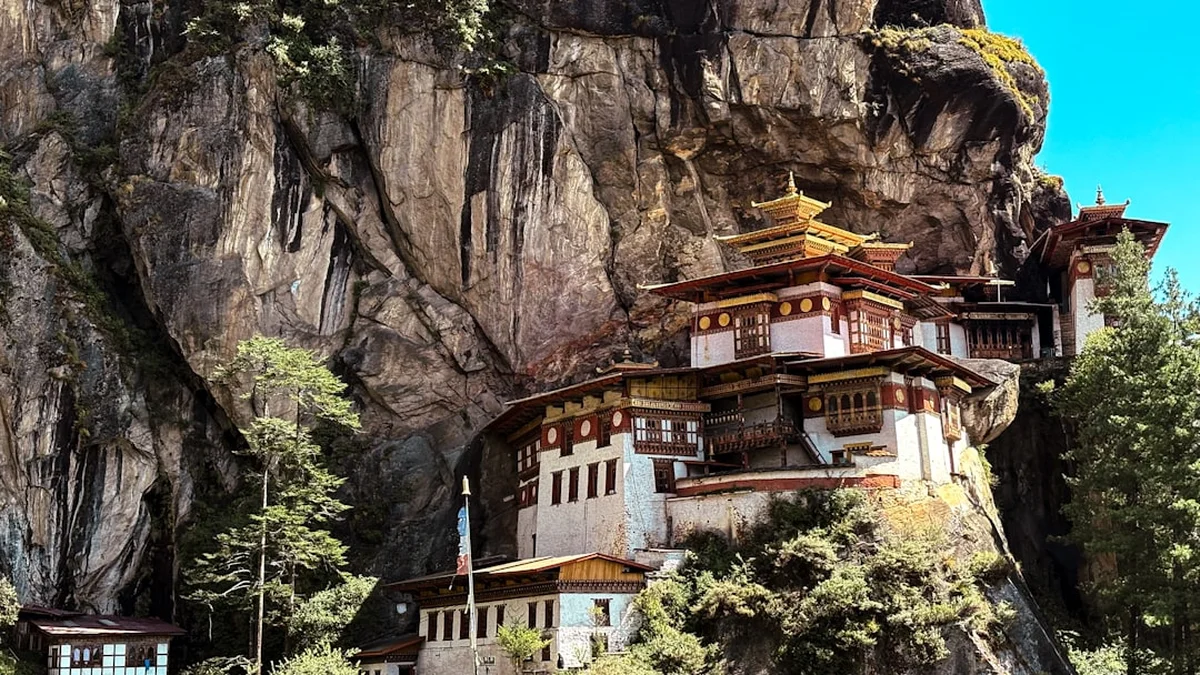
Ascend to Bhutan's spiritual heart on the Tiger's Nest Monastery Trek, a moderate 10.4 km pilgrimage to Paro Taktsang. This 5-7 hour walk winds through ancient blue pine and oak forests, leading to a breathtaking monastery clinging to a sheer granite cliff 900 metres above the Paro Valley. Witness unparalleled panoramas from this sacred site, perched at 3,120 metres.
Distance: 10.4 km
Elevation Gain: 900 m
Difficulty: Moderate
Duration: 5-7 hours
The Tiger’s Nest Monastery Trek, known locally as Paro Taktsang, is more than a mere hiking trail; it is a profound pilgrimage into the spiritual heart of the Kingdom of Bhutan. Perched precariously on a sheer granite cliff 900 metres above the Paro Valley floor, the monastery complex appears to defy the laws of physics, clinging to the rock face at an altitude of 3,120 metres above sea level. This 10.4-kilometre return journey takes walkers through ancient forests of blue pine and oak, draped in Spanish moss, and past fluttering prayer flags that carry mantras across the Himalayan breeze. For the Bhutanese people, this is their most sacred site, the place where Guru Padmasambhava (Guru Rinpoche) is said to have flown on the back of a tigress in the 8th century to meditate in a cave for three years, three months, three weeks, and three days. Today, the trek serves as the quintessential Bhutanese experience, combining rigorous physical exertion with deep cultural immersion and unparalleled Himalayan vistas.
The Tiger’s Nest Monastery Trek is the crown jewel of Bhutanese tourism and spirituality. While the distance of 10.4 kilometres might seem modest to seasoned trekkers, the challenge lies in the relentless verticality of the path and the thinning air of the high Himalayas. The trail begins at an elevation of approximately 2,200 metres and climbs steadily to the monastery at 3,120 metres. This 900-metre ascent is a test of cardiovascular endurance, yet the path is well-trodden and wide enough to accommodate the many pilgrims and travellers who make the journey daily. The landscape transitions from the lush, agricultural flats of the Paro Valley into a dense temperate forest where the air grows cooler and the scent of pine needles becomes pervasive.
The trek is traditionally divided into three distinct phases. The first phase is a steady climb through the forest to a wooden cafeteria that serves as a halfway point and a primary viewpoint. The second phase continues the ascent to a spectacular lookout point directly opposite the monastery, separated only by a deep chasm. The final phase involves descending a series of stone steps into the gorge, passing a thundering waterfall, and then ascending the final set of stairs to the monastery gates. This architectural marvel, consisting of four main temples and several residential buildings, is a masterclass in traditional Bhutanese design, featuring white-washed walls, golden roofs, and intricate woodwork, all constructed without the use of a single nail.
Walking this trail is an exercise in sensory immersion. You will hear the rhythmic chanting of monks, the tinkling of prayer wheels turned by mountain streams, and the distant echo of ritual horns. The visual landscape is dominated by the "Tiger’s Nest" itself, which remains visible for much of the hike, appearing first as a tiny white speck against the grey cliff and gradually revealing its staggering scale and complexity. For many, the physical effort of the climb serves as a meditative preparation for the spiritual atmosphere of the monastery, making the arrival at the summit a deeply emotional and rewarding experience.
The history of Paro Taktsang is inextricably linked to the arrival of Buddhism in Bhutan. The site first gained its sacred status in the 8th century when Guru Padmasambhava, the "Second Buddha" who brought Vajrayana Buddhism to the Himalayas, chose this remote cliffside cave for meditation. Legend states that he flew to this location from Tibet on the back of a tigress—a manifestation of his consort, Yeshe Tsogyal—to subdue a local demon named Singye Samdrup. After his prolonged meditation, the site became a "terma" or hidden treasure of spiritual energy, drawing great saints and masters over the subsequent centuries, including Milarepa and Thangtong Gyalpo.
The actual monastery complex seen today was not constructed until 1692, under the direction of Gyalse Tenzin Rabgye, the fourth secular ruler (Druk Desi) of Bhutan. Building such a massive structure on a vertical cliff face was a feat of extraordinary engineering and devotion. It is said that the local deities assisted in the construction, and the hair of the celestial beings was used to anchor the foundations to the rock. Over the centuries, the monastery has survived several fires, most notably in 1998, when a devastating blaze destroyed the main building and many priceless artefacts. The subsequent restoration, completed in 2005 under the patronage of the Fourth King, Jigme Singye Wangchuck, was a national effort that meticulously recreated the original structures using traditional methods and materials, ensuring that the spiritual integrity of the site remained untarnished.
Culturally, Taktsang is one of the thirteen "Tiger’s Lairs" (Taktsang) across the Himalayan region, but it is undoubtedly the most significant. It represents the triumph of Buddhism over ancient shamanistic traditions and serves as a symbol of Bhutan’s national identity and resilience. Every Bhutanese citizen aims to visit the site at least once in their lifetime to earn spiritual merit. The monastery is not a museum; it is a living, breathing religious centre where monks live, pray, and meditate in the same caves used by the Guru over a millennium ago. Visitors are expected to treat the site with the utmost reverence, acknowledging that they are guests in a place of profound sanctity.
Want more background? Read extended notes on history and cultural context → Learn more
The experience of the Tiger’s Nest trek is heavily influenced by the Himalayan seasons. Choosing the right time to visit is crucial for both the quality of the views and the comfort of the climb.
Autumn (October to December): This is widely considered the premier season for the trek. Following the monsoon, the atmosphere is washed clean, resulting in exceptionally clear skies and sharp, high-contrast views of the monastery against the deep blue Himalayan sky. The temperatures are cool and pleasant for hiking, though it can be quite cold in the early mornings. This is also the peak tourist season, so expect the trail to be busier.
Spring (March to May): This is the second peak season and is particularly beautiful for nature lovers. The forests come alive with blooming rhododendrons in shades of red, pink, and white, and the Paro Valley below is a vibrant green with newly planted rice. The temperatures are slightly warmer than in autumn, though there is a higher chance of afternoon clouds obscuring the distant peaks.
Summer/Monsoon (June to August): Hiking during the monsoon presents significant challenges. The trail can become extremely muddy and slippery, and the monastery is frequently shrouded in thick mist and clouds. While the mist adds a mystical, ethereal quality to the site, the lack of panoramic views and the high humidity make the climb more strenuous. Leeches can also be a nuisance in the forested sections during this time.
Winter (January to February): Winter offers the quietest experience on the trail. The days are typically sunny and crisp, but temperatures can drop well below freezing, especially in the shade of the cliffs. Snow is possible, which can make the stone steps near the monastery treacherous. However, seeing the Tiger’s Nest dusted in white snow is a rare and spectacular sight for those prepared for the cold.
Early Morning: The Ascent Begins
Mid-Morning: The Halfway Point
Midday: The Viewpoint and the Gorge
Afternoon: The Descent
Important Notes:
Planning a trek to the Tiger’s Nest requires more than just showing up at the trailhead. Because Bhutan operates under a "High Value, Low Volume" tourism policy, almost all visitors (except those from India, Bangladesh, and the Maldives) must be on an organised tour with a licensed Bhutanese guide. Your tour operator will handle the majority of the logistics, including your visa, transport, and the mandatory Sustainable Development Fee (SDF).
Physical preparation is highly recommended. While the trek is manageable for anyone with a moderate level of fitness, the altitude can be a significant factor. It is best to schedule the Tiger’s Nest trek for the end of your Bhutan trip, allowing your body several days to acclimatise in Thimphu or Paro. Ensure you have coordinated your start time with your guide; arriving at the trailhead by 7:30 AM or 8:00 AM is the gold standard for a comfortable experience.
Paro serves as the base for this trek. The town offers a range of accommodation from luxury resorts to traditional farmstays. Most trekkers stay in Paro the night before and the night after the hike. The town has several pharmacies and outdoor shops where you can buy basic supplies like sunblock, walking poles, or snacks.
This is a day hike requiring no overnight accommodation on the trail itself. The monastery is a religious site and does not provide lodging for tourists. All visitors must return to the valley floor by evening.
For those wishing to stay as close as possible to the trailhead, there are several high-end resorts and mid-range hotels located within a 10-minute drive of the Ramthangkha base. Staying in these locations allows for an even earlier start. Traditional farmstays in the Paro Valley are also a popular option, providing a cultural experience that complements the spiritual nature of the trek. These farmstays typically provide basic but clean rooms, home-cooked Bhutanese meals, and the opportunity to try a traditional hot stone bath, which is highly recommended after the hike.
Accessing the Tiger’s Nest Monastery involves several layers of administrative requirements, most of which are managed by your tour operator as part of your overall Bhutanese travel permit. However, it is important to understand the costs and documents involved.
Sustainable Development Fee (SDF): All international tourists (excluding those from India, Bangladesh, and the Maldives) must pay a daily SDF of US$100 per person, per night. This fee is collected by the government to fund free education, healthcare, and environmental conservation. Your visa will not be issued until this fee is paid for the duration of your stay.
Monastery Entry Fee: As of recent regulations, there is a specific entry fee for the Taktsang Monastery complex, which is currently 1,000 BTN (approximately US$12). This is often not included in the standard tour package and may need to be paid in cash at the entrance or arranged by your guide in Paro. Ensure you clarify this with your operator before the day of the trek.
Visa and Route Permit: Your Bhutanese visa acts as your primary permit. However, your guide must also carry a "Route Permit" that lists Paro Taktsang as an approved destination. You will need to present your visa/permit at the security checkpoint at the base of the trail and again at the entrance to the monastery itself. You should also carry a copy of your passport.
Opening Hours: The monastery is generally open to visitors from 8:00 AM to 1:00 PM and from 2:00 PM to 6:00 PM daily. It may occasionally be closed for religious festivals or special ceremonies, so your guide should verify the status a day in advance.

Detailed route notes, maps, logistics & tips for the Tiger Nest Monastery Trek (PDF).

Precisely traced GPX for the Tiger Nest Monastery Trek, ready for your GPS or favourite mapping app.
The Paro Valley is rich with cultural and natural attractions that can be explored before or after your trek:
Altitude Awareness: The most significant safety concern is Acute Mountain Sickness (AMS). The monastery sits at 3,120 metres, which is high enough to cause symptoms in some individuals. If you experience a persistent headache, nausea, dizziness, or extreme fatigue, inform your guide immediately. The best prevention is to acclimatise for at least two days at lower altitudes (like Thimphu at 2,300 m) before attempting the trek and to stay well-hydrated throughout the day.
Trail Conditions: The path is generally well-maintained but can be dusty and slippery in the dry season and muddy during the monsoon. The section involving the stone steps into the gorge is particularly steep and lacks handrails in some places. Take your time, watch your footing, and use walking poles. During the winter, these steps can be icy; your guide may provide crampons or suggest avoiding the final section if conditions are too dangerous.
Dehydration and Sun: The combination of physical exertion and high-altitude sun can lead to rapid dehydration and heat exhaustion. Drink water frequently, even if you do not feel thirsty. Wear a hat and apply sunscreen every two hours.
Wildlife: You may encounter mules and horses carrying supplies or tourists. Always stand on the "mountain side" of the trail (away from the cliff edge) when animals are passing to avoid being accidentally bumped off the path. While rare, Himalayan black bears and leopards inhabit the wider region, though they stay far away from the busy Taktsang trail.
Emergency Services: Bhutan has a reliable helicopter evacuation system for serious medical emergencies, though this is expensive and requires comprehensive travel insurance. Your guide will carry a mobile phone, but signal can be spotty in the gorge. Paro has a well-equipped hospital for non-emergency medical needs.
The Taktsang Cafeteria: More than just a place to eat, the cafeteria is a vital social hub on the trail. It offers the first unobstructed view of the monastery and is a great place to observe the diversity of pilgrims making the journey. The vegetarian buffet lunch served here is simple but hearty, featuring local red rice, ema datshi (chilli and cheese), and seasonal vegetables.
The Butter Lamp Room: Located near the entrance of the monastery, this is a dedicated space where hundreds of small oil lamps are lit by pilgrims. The flickering light and the scent of burning clarified butter create a powerful atmosphere. You can pay a small fee to have a lamp lit in your name or for a loved one.
Machig-phu Lhakhang: This is a smaller temple located slightly above the main trail before you reach the viewpoint. It is often overlooked by tourists but is a significant site where many pilgrims stop to pray for the well-being of their children. It offers a quieter, more intimate experience than the main complex.
The Lion Cave (Senge Phug): Within the monastery complex, this cave is where Guru Rinpoche is said to have meditated. It is a dark, cramped space filled with the energy of centuries of prayer. Standing in this spot, one can truly appreciate the isolation and dedication required of the ancient masters who sought enlightenment on these cliffs.
The Waterfall: The 60-metre waterfall in the gorge is considered sacred. The water is said to be blessed by the Guru, and many pilgrims will splash their faces or drink a small amount for purification. The mist from the fall provides a refreshing cool-down before the final ascent to the monastery gates.
Bhutan is a world leader in environmental conservation, being the only carbon-negative country on Earth. As a visitor to its most sacred site, you have a responsibility to uphold these high standards and respect the spiritual purity of the landscape.
Environmental Responsibility:
Cultural Respect:
