
The Abraham Path - A Journey Through the Cradle of Civilisation
The Abraham Path is a long-distance cultural route that retraces the legendary journey of the patriarch Abraham across the Middle East. Spanning approximately 650 kilometres of walking trails, this thru-hike is not merely a physical challenge but a profound immersion into the landscapes, histories, and hospitality of Turkey, Jordan, and Palestine. Unlike traditional wilderness treks, the Abraham Path is designed as a "cultural route," where the primary objective is to foster connection between travellers and local communities. It weaves through ancient olive groves, dramatic desert canyons, Neolithic archaeological sites, and bustling historic souqs, offering a perspective on the region that transcends modern headlines. This is a journey of 30 to 40 days that demands physical stamina, cultural sensitivity, and an open heart, rewarding the walker with a depth of human connection rarely found on more commercialised trails.
- Distance: 650.0 km (total network across multiple regions)
- Duration: 30–40 days for a full thru-hike
- Difficulty: Moderate (long distances and heat management are the primary challenges)
- Elevation Gain: Approximately 10,000 m total cumulative gain
- Best Time: Spring (March–May) or Autumn (September–November)
- Key Regions: Sanliurfa (Turkey), Northern Highlands and Jordan Valley (Jordan), West Bank (Palestine)
- Accommodation: Homestays, local guesthouses, and occasional wild camping
Overview
The Abraham Path is a visionary project that began at the Harvard Negotiation Project as a way to promote peace and economic development through sustainable tourism. It follows the footsteps of Abraham, a figure revered by over half the world’s population, whose journey from Ur of the Chaldeans to the land of Canaan serves as the narrative thread for the trail. The path is not a single, continuous line in the traditional sense but a series of interconnected regional trails that, when combined, form a massive cross-border odyssey. The landscape is a living museum; walkers traverse the very ground where the first agricultural revolutions occurred and where the world's major monotheistic faiths found their footing.
The journey is defined by its diversity. In Turkey, the path explores the high Mesopotamian plains and the ancient city of Sanliurfa, believed to be the birthplace of Abraham. In Jordan, the trail plunges into the dramatic Dana Biosphere Reserve, where red sandstone cliffs give way to the arid beauty of the Wadi Araba. In Palestine, the route meanders through the rolling hills of the West Bank, passing through ancient villages like Sebastia and the historic city of Hebron. The terrain varies from rugged mountain passes and deep wadis to gentle agricultural terraces and urban historic centres. While the physical beauty of the Middle Eastern landscape is undeniable, the true "overview" of the Abraham Path is its people. The tradition of hospitality is deeply ingrained in the local culture; it is common for walkers to be invited for tea, a meal, or even a bed by families who have lived in these valleys for generations.
Walking the Abraham Path requires a different mindset than hiking in the Alps or the Rockies. It is a slow-travel experience where the pace is dictated by the heat of the sun and the length of a conversation over a cup of sage tea. Navigation can be complex, as waymarking varies significantly between regions, and the political landscape requires walkers to be well-informed and flexible. However, for those seeking a journey that combines physical exertion with deep historical and cultural education, the Abraham Path stands as one of the most significant and rewarding long-distance routes in the world today.
History and Cultural Context
The history of the Abraham Path is twofold: the ancient narrative of the patriarch himself and the modern initiative to create a trail in his name. According to biblical and Quranic traditions, Abraham (Ibrahim) travelled from Ur to Harran, and then southwards through the Levant. This journey is seen as a foundational story of faith, migration, and hospitality. The path seeks to reclaim this shared heritage, using the figure of Abraham as a symbol of unity in a region often defined by its divisions. The cultural context is one of profound depth; walkers pass through sites that date back to the dawn of human civilisation, including Göbekli Tepe in Turkey, the world's oldest known temple, and the ancient city of Jericho, one of the oldest continuously inhabited cities on Earth.
The modern trail was established in 2007, spearheaded by William Ury and a team of researchers who sought to create a "path of the heart." The goal was to stimulate local economies in rural areas that are often bypassed by mainstream tourism. By staying in homestays, walkers provide direct income to families, particularly women, who manage the guesthouses and prepare traditional meals. This economic empowerment is a crucial part of the path's mission. Culturally, the path encourages a "dual-narrative" approach, where walkers are encouraged to listen to the stories of the people they meet, gaining a nuanced understanding of the complex social and political realities of the Middle East.
In Palestine, the path is often referred to as Masar Ibrahim al-Khalil. It has become a source of national pride and a way for Palestinians to showcase their heritage and landscape to the world. In Jordan, the path integrates with the northern sections of the Jordan Trail, highlighting the country's incredible geological diversity. In Turkey, the path focuses on the Sanliurfa region, connecting the spiritual heart of the city with the surrounding rural villages. Throughout the journey, the concept of "Karam" (generosity) is the guiding principle, ensuring that every walker feels like a guest rather than a mere tourist.
Want more background? Read extended notes on history and cultural context → Learn more
Seasonal Highlights and Weather Reality
Timing is the most critical factor when planning a thru-hike of the Abraham Path. The Middle Eastern climate is one of extremes, and walking during the wrong season can be both miserable and dangerous. The primary windows for trekking are Spring and Autumn, each offering a distinct experience of the landscape.
Spring (March to May): This is widely considered the "golden window" for the Abraham Path. In Palestine and Jordan, the hills are transformed into a vibrant carpet of wildflowers, including the rare black iris. The temperatures are mild, typically ranging from 15°C to 25°C, making for comfortable walking conditions. The landscape is at its greenest, and the ancient cisterns are full of water. However, walkers should be aware of the "Khamsin"—a hot, dusty wind that can blow in from the desert for several days at a time, significantly reducing visibility and increasing temperatures.
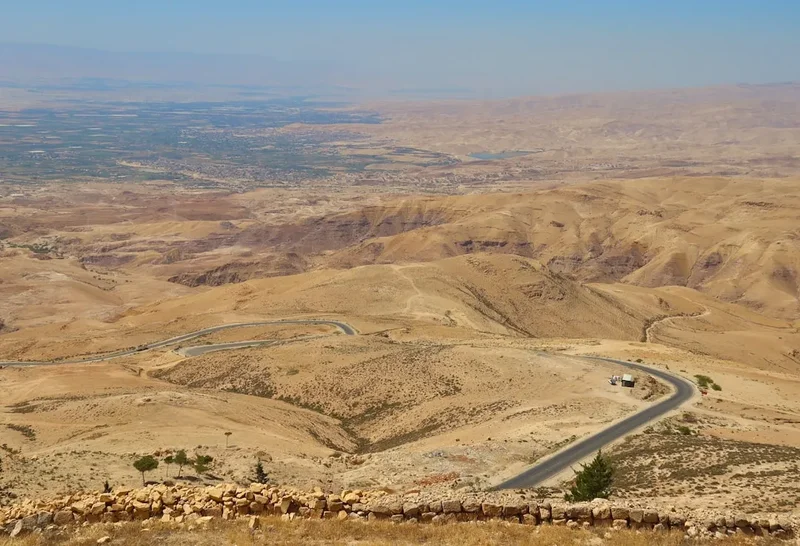
Autumn (September to November): As the summer heat fades, the landscape takes on a golden, parched beauty. This is the season of the olive harvest in Palestine, a culturally significant time when entire families head to the groves. Walkers may be invited to help with the harvest or watch the pressing of the season's first oil. Temperatures are similar to spring, though the days are shorter. The air is often clearer in autumn, providing spectacular views across the Jordan Valley and the Mesopotamian plains.
Winter (December to February): While walking is possible, it is not recommended for a full thru-hike. The region can experience surprisingly cold temperatures, heavy rain, and even snow in the higher elevations of the Judean Hills or the Jordanian highlands. Many homestays are not equipped with central heating, and the mud in agricultural areas can make trekking difficult. However, the desert sections in Jordan can be pleasant during the day, provided you are prepared for freezing temperatures at night.
Summer (June to August): Thru-hiking in summer is strongly discouraged. Temperatures regularly exceed 40°C, and the risk of heatstroke and severe dehydration is high. There is very little shade on many sections of the path, and the physical exertion of carrying a pack in such heat is extreme. Most local trekking organisations suspend their guided walks during these months.
Recommended Itinerary
35-Day Abraham Path Thru-Hike Itinerary
Stage 1: The Turkish Heartland (Sanliurfa to Harran) - 5 Days
- Day 1: Arrival in Sanliurfa. Explore the Balikligöl (Pool of Abraham) and the historic bazaar.
- Day 2: Sanliurfa to Göbekli Tepe. Visit the 12,000-year-old temple complex. 18 km.
- Day 3: Göbekli Tepe to rural villages. Walk through the limestone hills of Upper Mesopotamia. 22 km.
- Day 4: Village to Harran. Approach the ancient city with its iconic beehive houses. 20 km.
- Day 5: Explore Harran and the ruins of the world's first university. Transfer to Amman, Jordan.
Stage 2: The Jordanian Highlands (Dana to Petra) - 9 Days
- Day 6: Dana Village to Feynan. A dramatic 1,000 m descent through the Dana Biosphere Reserve. 14 km.
- Day 7: Feynan to Wadi Barwas. Walk along the edge of the Wadi Araba desert. 18 km.
- Day 8: Wadi Barwas to Ras al-Feid. A steep climb into the rugged mountains. 17 km.
- Day 9: Ras al-Feid to Little Petra. Traverse high ridges with views of the desert below. 23 km.
- Day 10: Little Petra to Petra (The "Back Door" entry). Arrive at the Monastery (Ad Deir). 12 km.
- Day 11: Rest day in Petra. Explore the Treasury, Royal Tombs, and High Place of Sacrifice.
- Day 12: Petra to Rajif. Climb out of the Petra basin into the southern highlands. 18 km.
- Day 13: Rajif to Dilagha. Remote trekking through Bedouin territory. 21 km.
- Day 14: Dilagha to Humeima. Transition into the desert landscapes of Wadi Rum. 25 km.
Stage 3: The Palestinian Masar (Northern West Bank) - 10 Days
- Day 15: Transfer to Jenin. Walk from Rummana to Burqin. Visit the Church of the Ten Lepers. 12 km.
- Day 16: Burqin to Arraba. Walk through olive groves and historic palaces. 15 km.
- Day 17: Arraba to Sanur. Cross the fertile Sanur valley. 14 km.
- Day 18: Sanur to Sebastia. Arrive at the spectacular Roman ruins of Samaria. 15.5 km.
- Day 19: Sebastia to Nablus. Walk into the bustling historic centre of Nablus. 12 km.
- Day 20: Rest day in Nablus. Visit the Turkish baths and taste the famous Knafeh.
- Day 21: Nablus to Awarta. Climb Mount Gerizim, sacred to the Samaritans. 16 km.
- Day 22: Awarta to Duma. Walk through the high ridges of the central highlands. 18.5 km.
- Day 23: Duma to Kufr Malek. Descend into deep valleys and climb back to hilltop villages. 15 km.
- Day 24: Kufr Malek to Taybeh. Arrive at the only Christian village in the West Bank. 14 km.
Stage 4: The Judean Wilderness and Hebron - 11 Days
- Day 25: Taybeh to Jericho. A long descent from the mountains to the lowest city on Earth. 22 km.
- Day 26: Jericho to Nabi Musa. Walk through the arid Judean desert to the shrine of Moses. 16 km.
- Day 27: Nabi Musa to Mar Saba. Trek to the ancient Greek Orthodox monastery clinging to the cliffs. 14 km.
- Day 28: Mar Saba to Bethlehem. Walk through the desert towards the Shepherd's Fields. 12 km.
- Day 29: Rest day in Bethlehem. Visit the Church of the Nativity and the Separation Wall.
- Day 30: Bethlehem to Artas. Walk to the Solomon's Pools and the lush Artas valley. 8 km.
- Day 31: Artas to Tuqu'. Follow the ancient aqueducts through the desert fringe. 12 km.
- Day 32: Tuqu' to Reshayda. Deep desert trekking with Bedouin guides. 18 km.
- Day 33: Reshayda to Bani Na'im. Climb back into the Hebron hills. 22 km.
- Day 34: Bani Na'im to Hebron. Arrive at the Ibrahimi Mosque (Tomb of the Patriarchs). 10 km.
- Day 35: Final day in Hebron. Explore the Old City and reflect on the journey's end.
Planning and Bookings
Book Your Trip
Everything you need to plan your journey
Accommodation
Find places to stay near Hebron
Flights
Search flights to Hebron
Essential Preparation
Planning a thru-hike of the Abraham Path is a significant undertaking that requires more than just physical fitness. Because the path crosses international borders and sensitive political zones, logistical coordination is paramount. Walkers must be comfortable with a degree of ambiguity, as trail conditions and political stability can change. It is highly recommended to coordinate with the Abraham Path Initiative or local partners like the Masar Ibrahim al-Khalil in Palestine and the Jordan Trail Association.
Fitness requirements are moderate to high. While the path does not involve technical climbing, the cumulative elevation gain and the daily distances (averaging 15–25 km) require good cardiovascular health and leg strength. Training should include long walks with a weighted pack. Base cities for the trek include Amman (Jordan), Jerusalem or Ramallah (Palestine), and Sanliurfa (Turkey). These cities offer the best resources for gear, maps, and local advice.
Trail Accommodation
The Abraham Path is unique in its reliance on community-based tourism. Unlike the hut systems of Europe or New Zealand, accommodation here is a mix of homestays, small guesthouses, and Bedouin camps.
Homestays: This is the heart of the Abraham Path experience. You will stay in the spare rooms of local families. Facilities are usually basic but clean. You will be provided with a mattress on the floor or a simple bed, shared bathroom facilities (often "squat" toilets in rural areas), and incredible home-cooked meals. Expect to pay between US$30 and US$50 per night, which usually includes dinner and breakfast.
Guesthouses and Hotels: In larger towns like Nablus, Bethlehem, or Sanliurfa, you will find standard hotels and boutique guesthouses. These offer more privacy and modern amenities like WiFi and hot showers.
Bedouin Camps: In the desert sections of Jordan and the Judean Wilderness, you may stay in traditional goat-hair tents. These are communal sleeping arrangements. Facilities are minimal, but the experience of sleeping under the desert stars is unparalleled.
Wild Camping: While possible in the more remote sections of Jordan, wild camping is generally discouraged in Palestine due to land ownership complexities and security concerns. Always seek local advice before pitching a tent.
Required Gear
- Footwear: Sturdy, well-broken-in hiking boots with good ankle support. The terrain is often rocky and uneven.
- Clothing: Modest clothing is essential. For men, this means long trousers (no shorts in villages). For women, loose-fitting trousers or long skirts and tops that cover the shoulders and chest. Lightweight, breathable fabrics are best.
- Navigation: A GPS device or a smartphone with offline maps (like Gaia GPS or Wikiloc). Physical maps are often difficult to find locally.
- Sun Protection: A wide-brimmed hat, high-SPF sunscreen, and quality sunglasses. The Middle Eastern sun is intense even on cloudy days.
- Backpack: A 50–65L pack with a rain cover. Even in the desert, sudden downpours can occur.
- First Aid: A comprehensive kit including blister treatment, rehydration salts, and any personal medications.
What to Bring
- Water Treatment: A portable filter (like a Sawyer Squeeze) or purification tablets. While bottled water is available in villages, reducing plastic waste is crucial.
- Power Bank: To keep your navigation devices charged, especially during multi-day desert sections.
- Local Currency: Turkish Lira, Jordanian Dinars, and Israeli Shekels (used in Palestine). Small denominations are best for rural villages.
- Gifts: Small, lightweight tokens from your home country (postcards, stickers) are a nice way to thank your hosts.
- Toiletries: Biodegradable soap, wet wipes, and hand sanitiser. Toilet paper is not always provided in rural homestays.
- Sleeping Sheet: A lightweight silk or cotton liner for use in homestays and Bedouin camps.
Permits
The Abraham Path does not require a single "trail permit," but the cross-border nature of the hike means you must navigate the visa requirements of three different jurisdictions. It is important to note that while the path is a conceptual unity, the borders between Turkey, Jordan, and Palestine/Israel are strictly controlled.
Turkey: Most nationalities require an e-Visa to enter Turkey, which can be easily obtained online. Ensure your passport is valid for at least six months beyond your stay. There are no specific permits required to walk the path in the Sanliurfa region.
Jordan: Visas are required for most visitors. You can obtain a visa on arrival at Queen Alia International Airport in Amman, or better yet, purchase the "Jordan Pass" before arrival. The Jordan Pass waives the visa fee and includes entry to over 40 sites, including Petra and the Dana Biosphere Reserve. If you are walking through Dana, you will need to pay the park entry fee (included in the Jordan Pass).
Palestine (West Bank): There is no separate Palestinian visa. Entry to the West Bank is controlled by Israeli immigration. You will receive an Israeli entry permit (usually a blue slip) upon arrival at Ben Gurion Airport or the Allenby/King Hussein Bridge crossing from Jordan. Note that having an Israeli stamp (or even the entry slip) can make entry into some other Middle Eastern countries difficult, though Jordan and Turkey are fine. Walking in the West Bank does not require specific permits, but you will pass through various "Areas" (A, B, and C) with different security controls. Always carry your passport and entry slip.
Border Crossings: The most common way to connect the Jordan and Palestine sections is via the Allenby/King Hussein Bridge. This crossing can be time-consuming and requires careful planning regarding opening hours and transport. Note that you cannot get an Israeli visa on arrival at this bridge; you must already have a multi-entry visa or be from a visa-exempt country.
Other Activities in the Area
The Abraham Path passes through some of the most historically significant areas on the planet. Consider adding these experiences to your journey:
- Dead Sea Floating: After the dusty trails of Jordan or Palestine, a soak in the hyper-saline waters of the Dead Sea is the ultimate muscle recovery. Visit the Jordanian side for luxury resorts or the Palestinian side near Jericho.
- Wadi Rum Jeep Tour: If your trek ends near the southern Jordanian border, take a day or two to explore the "Valley of the Moon" by 4x4 or camel.
- Jerusalem Old City: No journey in the footsteps of Abraham is complete without visiting Jerusalem. Spend several days exploring the Western Wall, the Church of the Holy Sepulchre, and the Dome of the Rock.
- Nablus Soap Factories: Visit the traditional olive oil soap factories in the Old City of Nablus, where the process has remained unchanged for centuries.
- Cooking Classes: Many homestays in Palestine and Jordan offer informal cooking lessons. Learn to make Maqluba (upside-down rice) or traditional Bedouin bread.
- Mount Nemrut (Turkey): If you are in the Sanliurfa region, a side trip to the giant stone heads of Mount Nemrut at sunrise is a world-class experience.
Safety and Conditions
Political Climate: The most significant safety consideration on the Abraham Path is the regional political situation. While the trail is generally safe for tourists, tensions can flare up quickly, particularly in the West Bank. It is essential to monitor local news, register with your embassy, and stay in close contact with local trail organisations. They have the best "on-the-ground" information regarding which sections are safe to walk on any given day.
Hydration and Heat: Dehydration is a constant risk. In the desert sections, you may need to carry 4–6 litres of water per day. Never rely on finding water sources between villages unless you have confirmed their existence with a local guide. Heat exhaustion can set in rapidly; learn to recognise the early signs (headache, dizziness, nausea) and stop in the shade immediately.
Navigation and Terrain: Waymarking is inconsistent. In Palestine, the Masar Ibrahim is generally well-marked with painted flags, but in Jordan and Turkey, you will often rely on GPS and local knowledge. The terrain can be very rocky, leading to ankle injuries. Always wear supportive boots and consider using trekking poles to reduce the strain on your joints during steep descents.
Wildlife: While not a major threat, walkers should be aware of scorpions and snakes in the desert areas. Always check your boots before putting them on in the morning. In some rural areas, stray dogs can be aggressive; carrying trekking poles or a few stones to toss (not at the dogs, but near them) is usually enough to keep them at a distance.
Cultural Etiquette: Safety also involves respecting local norms. Inappropriate dress or behaviour can lead to uncomfortable situations. Always ask permission before taking photos of people, especially women and children. Avoid discussing sensitive political or religious topics unless your hosts initiate the conversation.
Side Trips and Points of Interest
The Monastery of Mar Saba: Located in the Judean Wilderness between Bethlehem and the Dead Sea, this Greek Orthodox monastery is one of the oldest continuously inhabited monasteries in the world. Clinging to the walls of the Kidron Valley, it is a sight of staggering beauty. Note that women are not permitted inside the main complex but can view it from the "Women's Tower" nearby.
The Beehive Houses of Harran: In the Turkish section, the village of Harran is famous for its unique adobe houses with conical roofs. These structures are designed to stay cool in the intense Mesopotamian heat. Exploring the ruins of the ancient city, which was once a major centre of learning and the home of the Sabian star-worshippers, is a highlight of the northern path.
The Ibrahimi Mosque / Cave of the Patriarchs: The emotional and spiritual climax for many walkers is the city of Hebron. The mosque (and synagogue) built over the cave where Abraham, Isaac, Jacob, and their wives are believed to be buried is a site of immense power and complexity. Navigating the divided city of Hebron provides a sobering look at the modern challenges of the region.
The Roman City of Sebastia: Located in the northern West Bank, Sebastia boasts an incredible array of ruins, including a Roman forum, a theatre, and a colonnaded street. The village itself is charming, with several excellent guesthouses and a community that is deeply involved in the trail.
Leave No Trace
The Abraham Path passes through fragile ecosystems and ancient heritage sites. Practising Leave No Trace principles is essential to ensure the trail remains a positive force for the region.
Respect the Land: Stay on existing paths to avoid damaging agricultural terraces or fragile desert crusts. In Palestine, many trails pass through private olive groves; respect the trees and do not pick fruit without permission.
Waste Management: There is a significant litter problem in many parts of the Middle East. Do not add to it. Pack out all your trash, including organic waste like orange peels, which decompose slowly in arid environments. Consider picking up a few pieces of "legacy" litter each day to leave the trail cleaner than you found it.
Water Conservation: Water is a precious and scarce resource in this region. Be mindful of your water usage in homestays. Short showers (or bucket baths) are the norm. Never contaminate local springs or cisterns with soap or waste.
Cultural Preservation: Do not remove any archaeological fragments, even small pieces of pottery or mosaic tiles, which are common on the trail. These belong to the heritage of the local people and should remain in situ.
 Australia