
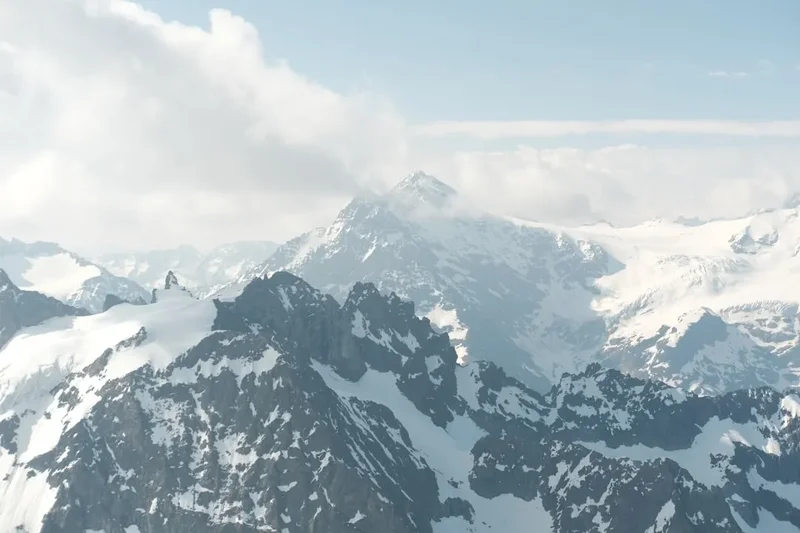
Tête Blanche Glacier Approach
The Tête Blanche Glacier Approach is a challenging, high-alpine route in the Swiss Alps, offering a spectacular journey towards one of the region's most iconic peaks. This demanding trek is not for the faint-hearted, requiring excellent physical condition, acclimatisation, and a good head for heights. It leads walkers through a dramatic landscape of rugged rock, vast glaciers, and breathtaking panoramic views, culminating in a position from which the summit of Tête Blanche is within reach for experienced mountaineers. The route is a true test of endurance and skill, rewarding those who undertake it with an unforgettable alpine experience.
- Distance: 15.0 km one-way
- Elevation gain: 1200 m
- Duration: 6-8 hours
- Difficulty: Challenging
- Best Time: July to September (snow-free conditions)
- Closest City: Zermatt
- Trailhead Access: Nearest airport: Zurich (ZRH). Take train to Zermatt (approx. 3.5 hrs). Zermatt is car-free; park in Täsch & take shuttle train. From Zermatt, hike towards Schönbielhütte. No registration required at trailhead.
- Coordinates: 46.0300, 7.6480
Overview
The Tête Blanche Glacier Approach is a demanding mountain track that ascends from the vicinity of Zermatt, Switzerland, into the heart of the high Alps. This route is renowned for its rugged beauty and the sheer scale of the surrounding peaks, including the majestic Matterhorn. The journey is characterised by steep ascents, rocky terrain, and eventually, the crossing of glacial moraines and ice. It is a route that demands respect for the alpine environment and a high level of fitness and preparedness.
The trail begins with a significant climb from the lower valleys, gradually gaining altitude and offering increasingly spectacular vistas. As you ascend, the vegetation thins, giving way to scree slopes and then to the stark, majestic beauty of the high alpine zone. The approach to the Tête Blanche glacier itself involves navigating moraines—piles of rock and debris left by retreating glaciers—which can be loose and challenging underfoot. The final stages often involve walking on the glacier, which requires appropriate equipment and knowledge of glacier travel, or at least careful navigation around its edges.
This track is not a simple hike; it is an expedition into a world of ice and rock. The air becomes thinner, the temperatures drop, and the weather can change with alarming speed. However, for those who are well-prepared, the rewards are immense. The panoramic views from the higher reaches are simply breathtaking, offering a 360-degree spectacle of snow-capped peaks, deep valleys, and vast ice fields. The sense of accomplishment upon reaching the glacier's edge, knowing you have traversed such a formidable landscape, is profound. This is a route that truly immerses you in the raw power and beauty of the Swiss Alps.
History and Cultural Context
The region surrounding Zermatt, and by extension the Tête Blanche Glacier Approach, has a rich history intertwined with mountaineering, exploration, and the development of alpine tourism. For centuries, these high peaks were considered impassable, home to legends and feared by local communities. The first ascents of many of the surrounding summits in the mid-19th century marked the beginning of the Golden Age of Alpinism, transforming these formidable mountains into objects of desire for adventurers and climbers.
The Tête Blanche itself, while not as famous as its neighbour, the Matterhorn, has been a significant objective for mountaineers seeking to explore the high alpine terrain. The approach route, while not a formally designated "trail" in the same way as a valley path, has been trodden by generations of climbers and guides. These individuals, often local Zermatt residents, developed the knowledge and techniques necessary to navigate the treacherous glaciers and steep slopes, paving the way for modern alpine exploration.
The development of infrastructure in Zermatt, including railways and cable cars, has made access to the lower reaches of these mountains more accessible, but the Tête Blanche Glacier Approach remains a challenging undertaking. It harks back to an era of pioneering spirit, where human endeavour pushed the boundaries of what was thought possible. The cultural context is one of respect for nature's power, the development of specialised skills, and the enduring allure of the high mountains that has captivated people for generations.
Seasonal Highlights and Weather Reality
The Tête Blanche Glacier Approach is a route that is highly dependent on seasonal conditions. The primary window for attempting this trek is during the summer months, typically from July to September. During this period, the snow cover at lower and mid-altitudes generally recedes, revealing the rocky terrain and moraines that form much of the approach. The glaciers, while still present, are often at their most stable and accessible, with less risk of deep snow obscuring crevasses.
Summer (July to September): This is the optimal season. Days are longer, offering more daylight hours for the trek. Temperatures are generally milder, though still cool at higher elevations. The key advantage is the reduced snow cover, making the rocky sections more navigable and the glacier crossings more predictable. However, even in summer, alpine weather is notoriously fickle. Sudden storms, including snow and high winds, can occur at any time, drastically altering conditions and posing significant risks. It is crucial to be prepared for all eventualities.
Late Spring (June): While some early summer attempts might be possible in late June, especially in drier years, it is generally too early for this route. Significant snow cover will likely persist, making navigation difficult and glacier travel potentially hazardous due to hidden crevasses. This period is best avoided unless you are an experienced winter mountaineer with appropriate equipment and knowledge.
Autumn (October onwards): As autumn progresses, temperatures drop significantly, and snowfall becomes more frequent and heavier. The glaciers will begin to accumulate snow, increasing the risk of hidden crevasses and making glacier travel more challenging and dangerous. The days also become shorter, reducing the available daylight for hiking. This season is generally not recommended for this approach due to the increased risks and deteriorating conditions.
Weather Reality: Regardless of the season, the weather in the high Alps is unpredictable. The Tête Blanche Glacier Approach is exposed to the elements, and conditions can change from clear and sunny to stormy and hazardous within minutes. Wind, rain, snow, and fog are all common occurrences. It is imperative to check the mountain forecast meticulously before and during your trek and to be prepared to turn back if conditions deteriorate.
Recommended Itinerary
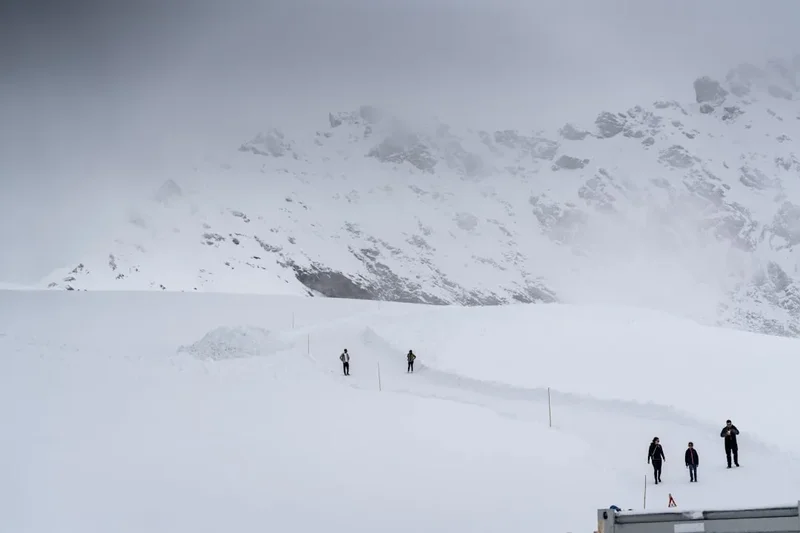
Tête Blanche Glacier Approach - Day Hike Itinerary
Early Morning: Departure from Zermatt
- Distance: Varies depending on starting point in Zermatt
- Elevation gain: Minimal initially
- Time: Approx. 1-2 hours
- Begin your journey from Zermatt. The most common starting point involves taking a cable car or cogwheel train part of the way up the mountain to reduce the initial ascent, for example, to Schwarzsee or further up towards the Matterhorn Glacier Paradise. Alternatively, a strenuous hike from Zermatt village is possible but significantly extends the day.
- The goal is to reach a higher starting point to maximise daylight for the challenging approach.
- Ensure you have had a substantial breakfast and are well-hydrated.
Morning: Ascent to the High Alpine Zone
- Distance: 5-7 km
- Elevation gain: 600-800 m
- Time: 3-4 hours
- From your cable car/train drop-off point or the higher reaches of Zermatt, the trail begins its serious ascent.
- The terrain will transition from alpine meadows to rocky paths, scree slopes, and potentially snowfields depending on the exact conditions.
- You will be gaining significant altitude, so pace yourself and take regular breaks.
- The views of the Matterhorn and surrounding peaks will become increasingly dramatic.
- Navigate towards the general direction of the Schönbielhütte area, which serves as a reference point before the true glacier approach begins.
Midday: Navigating Moraines and Glacier Edges
- Distance: 3-4 km
- Elevation gain: 300-400 m
- Time: 2-3 hours
- This is the most challenging part of the approach. You will be traversing glacial moraines – loose, uneven piles of rock and debris.
- Careful foot placement is essential to avoid slips and falls.
- As you get closer to Tête Blanche, you will encounter the edge of the glacier.
- Depending on conditions and your expertise, you may need to use crampons and an ice axe to safely navigate the initial glacier ice or hard-packed snow.
- If you are not experienced in glacier travel, it is strongly advised to stay on the moraine edges or turn back.
- The objective is to reach a point on the glacier from which the Tête Blanche summit is visible and accessible for experienced mountaineers.
Afternoon: Return Journey
- Distance: 15.0 km (return)
- Elevation loss: 1200 m
- Time: 3-4 hours
- Begin your descent. The return journey can be as challenging as the ascent, especially on tired legs.
- Take care on the moraine and scree slopes.
- Descend back towards your cable car/train station or Zermatt village.
- Ensure you have ample daylight remaining for the descent.
- The descent offers a different perspective on the landscape you have traversed.
Important Notes:
- This is a strenuous, high-alpine route. Fitness and acclimatisation are paramount.
- Glacier travel experience and appropriate equipment (crampons, ice axe, harness, rope) are essential if you intend to step onto the glacier. Consider hiring a mountain guide.
- Weather can change rapidly. Always check the forecast and be prepared to turn back.
- Carry sufficient food and water for the entire day.
- Inform someone of your plans and expected return time.
- Mobile phone reception may be intermittent.
Planning and Bookings
Book Your Trip
Everything you need to plan your journey
Accommodation
Find places to stay near Zermatt
Flights
Search flights to Zermatt
Essential Preparation
The Tête Blanche Glacier Approach is a serious undertaking that requires meticulous planning. Given its challenging nature and high-alpine environment, preparation is key to a safe and successful excursion. This includes assessing your physical fitness, ensuring you have the correct gear, and understanding the logistical requirements for reaching the trailhead and returning. Zermatt is the primary base town, a world-renowned alpine resort with excellent amenities. It is car-free, meaning you must park in the nearby town of Täsch and take a shuttle train to Zermatt. This journey from Zurich Airport (ZRH) to Zermatt typically takes around 3.5 hours by train, including the transfer from Täsch. It is advisable to spend at least one night in Zermatt to acclimatise to the altitude and make any last-minute gear checks or purchases. The trailhead itself is not a formal registration point; access is generally via the mountain transport system (cable cars and cogwheel trains) that ascend from Zermatt, or by a strenuous hike from the village itself. Understanding the operating times of these transport systems is crucial for planning your day hike effectively.
Trail Accommodation
This is a day hike requiring no overnight accommodation.
Required Gear
- Sturdy Hiking Boots: Waterproof, broken-in, with good ankle support. Essential for navigating rocky and uneven terrain.
- Waterproof and Windproof Outerwear: A high-quality jacket and trousers are non-negotiable. The weather in the Alps can change rapidly, and you will be exposed to the elements.
- Warm Layers: Multiple insulating layers (e.g., fleece, down jacket) are necessary, as temperatures at higher altitudes can be significantly colder than in Zermatt.
- Headwear: A warm hat or beanie to protect against wind and cold.
- Gloves: Warm, waterproof gloves are essential.
- Sunglasses: High UV protection is crucial due to the intensity of the sun at altitude, especially when reflected off snow and ice.
- Sunscreen: High SPF sunscreen to protect exposed skin.
- Navigation Tools: A detailed topographic map of the area, a compass, and a GPS device or smartphone with offline maps are vital. Familiarity with their use is paramount.
- Head Torch: With spare batteries. Essential in case of unexpected delays or early starts/late finishes.
- First-Aid Kit: Comprehensive kit including blister treatment, pain relievers, bandages, antiseptic wipes, and any personal medications.
- Emergency Shelter: A lightweight emergency bivvy bag or space blanket.
- Trekking Poles: Highly recommended for stability on ascents and descents, and for reducing strain on knees.
- For Glacier Travel (if applicable and experienced): Crampons, ice axe, helmet, harness, and appropriate rope. If you are not experienced in glacier travel, hiring a certified mountain guide is strongly advised.
What to Bring
- Sufficient Food: High-energy snacks and packed lunches. Aim for more than you think you will need, as the exertion will be significant.
- Water: At least 2-3 litres of water per person. Water sources may be scarce or contaminated at higher altitudes. Consider a water filter or purification tablets as a backup.
- Toiletries: Small, travel-sized items. Include hand sanitiser.
- Personal Items: Mobile phone (fully charged), power bank, camera.
- Identification and Money: Passport or ID, and sufficient Swiss Francs for transport, food, or emergencies. Credit cards are widely accepted in Zermatt but may not be useful on the mountain.
- Small Backpack: A comfortable daypack (30-40 litres) to carry all your gear.
Permits
For the Tête Blanche Glacier Approach, no specific permits are required for day hikers or experienced mountaineers accessing the general area. The route is part of the natural alpine landscape and does not fall under the same regulated booking system as some national park trails. However, it is crucial to understand that while no permit is needed, the mountain environment demands a high level of personal responsibility and preparedness. If you plan to use mountain huts for overnight stays (which is not part of this specific day hike itinerary but relevant for longer expeditions in the area), booking in advance is essential. For this particular approach, the primary "requirement" is your own competence and equipment. If you are not an experienced mountaineer comfortable with glacier travel, hiring a certified mountain guide is the most responsible and safest approach. Guides will ensure you have the necessary permits for any specific areas they might access, though for general glacier approaches, this is usually not an issue.
Other Activities in the Area
Zermatt and its surrounding valleys offer a wealth of activities for all levels of adventurers, complementing the challenging Tête Blanche Glacier Approach:
- Matterhorn Glacier Paradise: Take the highest cable car in Europe to the summit station, offering unparalleled 360-degree views of over 38 peaks over 4,000 metres. Includes an ice palace and viewing platform.
- Gornergrat Railway: A scenic cogwheel train journey offering iconic views of the Matterhorn and the Gorner Glacier. Numerous hiking trails branch off from various stations along the route.
- Hiking and Trekking: Zermatt boasts an extensive network of well-maintained hiking trails, ranging from gentle valley walks to challenging high-altitude routes. Popular options include the Five Lakes Walk, the Hörnli Hut trail (base camp for Matterhorn ascents), and various routes around Schwarzsee.
- Mountain Biking: Several trails are designated for mountain biking, offering thrilling descents and scenic rides through alpine meadows.
- Via Ferrata: For those seeking a more adventurous experience, Zermatt offers via ferrata routes, allowing climbers to ascend steep rock faces using fixed cables, ladders, and bridges.
- Zermatt Village Exploration: Wander through the charming streets of Zermatt, visit the Matterhorn Museum, enjoy local cuisine at one of the many restaurants, or simply soak in the alpine atmosphere.
- Skiing and Snowboarding: Zermatt is a world-class ski resort, offering year-round skiing on the glaciers, with extensive pistes for all abilities.
Safety and Conditions
Pre-Trip Planning:
- Weather Forecast: Always check the most up-to-date mountain weather forecast for the Zermatt region from reliable sources like MeteoSwiss or local Zermatt weather services. Pay close attention to wind speed, precipitation, and temperature at altitude.
- Route Assessment: Understand the terrain and potential hazards. The Tête Blanche Glacier Approach involves steep ascents, scree, moraines, and potentially glacier ice.
- Acclimatisation: Spend at least one night in Zermatt (1,620 m) before undertaking this high-altitude trek to help your body adjust.
- Inform Someone: Let a trusted person know your detailed itinerary, expected return time, and the route you plan to take.
On the Trail:
- Altitude Sickness: Be aware of the symptoms of altitude sickness (headache, nausea, dizziness, fatigue). If symptoms appear, descend immediately. Do not ascend further.
- Terrain Hazards: Moraines can be unstable and prone to rockfall. Move carefully and be aware of your surroundings.
- Glacier Travel: If you intend to cross the glacier, you MUST have experience in glacier travel, including crevasse rescue techniques, and possess the appropriate equipment (crampons, ice axe, harness, rope). If in doubt, hire a certified mountain guide. Do not attempt glacier crossings without proper training and equipment.
- Weather Changes: Alpine weather can change with extreme rapidity. Be prepared for sudden storms, including snow, high winds, and reduced visibility. If conditions deteriorate significantly, turn back. Your safety is paramount.
- Navigation: Carry and know how to use a map, compass, and GPS device. Do not rely solely on mobile phone navigation, as signal can be unreliable at altitude.
- Hydration and Nutrition: Drink plenty of water and eat regularly to maintain energy levels.
- Emergency Contact: Mobile phone reception can be intermittent. Consider carrying a personal locator beacon (PLB) or satellite messenger for emergencies in remote areas. The emergency number in Switzerland is 144 for medical emergencies and 112 for general emergencies.
Equipment Check: Ensure all your gear is in good working order before you set out. This includes checking batteries in head torches and GPS devices.
Side Trips and Points of Interest
Schönbielhütte: While not a direct part of the Tête Blanche Glacier Approach itself, the Schönbielhütte (2,694 m) is a significant landmark and potential reference point for those undertaking this route. It is a mountain hut that offers a place of rest and sustenance for hikers and climbers in the area. The views from the vicinity of the Schönbielhütte towards the Matterhorn and the surrounding glaciers are spectacular, offering a preview of the grandeur that awaits on the higher approach.
Matterhorn Views: The entire approach to Tête Blanche offers increasingly dramatic and intimate views of the iconic Matterhorn. As you gain altitude, the perspective shifts, revealing different facets of this legendary peak. The changing light throughout the day can transform its appearance, making it a constant and awe-inspiring companion on your journey.
Glacial Landscapes: The route takes you through areas shaped by glaciers. You will traverse moraines, witness the power of glacial erosion, and, if conditions permit and you are equipped, walk on the ice itself. The stark beauty of these glacial environments, with their vast expanses of rock, ice, and snow, is a significant point of interest.
High Alpine Flora and Fauna: While the higher reaches are largely barren, keep an eye out for hardy alpine flowers that bloom in the short summer season. You might also spot chamois or ibex navigating the steep slopes, and various alpine birds. The resilience of life in such an extreme environment is a point of fascination.
Leave No Trace
The Tête Blanche Glacier Approach traverses a pristine and fragile alpine environment. Adhering to Leave No Trace principles is paramount to preserving its natural beauty and ecological integrity for future generations. As you undertake this challenging trek, remember that you are a visitor in a wild and sensitive landscape.
Plan Ahead and Prepare: Understand the route, weather, and potential hazards. Pack appropriately and be prepared for all conditions. This includes carrying sufficient food and water to avoid relying on natural resources. Inform someone of your plans.
Travel and Camp on Durable Surfaces: While this is primarily a day hike, the principle applies to any resting spots. Stick to established paths and avoid trampling fragile vegetation. If overnighting in the vicinity (not recommended for this specific route without proper planning and huts), camp on established sites or durable surfaces like rock and gravel.
Dispose of Waste Properly: Pack out everything you pack in. This includes all food scraps, wrappers, and any other litter. Do not bury waste; carry it back to Zermatt for proper disposal. Use designated toilet facilities where available, or if in a remote area, dig a cathole at least 60 metres away from water sources, trails, and campsites.
Leave What You Find: Resist the temptation to take souvenirs such as rocks, plants, or historical artefacts. Leave the natural and cultural heritage of the area as you found it.
Minimise Campfire Impacts: Campfires are generally not permitted in the high alpine environment and are not relevant for this day hike. If you were to camp, use a lightweight stove for cooking.
Respect Wildlife: Observe wildlife from a distance. Do not feed animals, as this can disrupt their natural behaviours and diets, and can be harmful to their health. Store food securely to prevent attracting animals.
Be Considerate of Other Visitors: Keep noise levels down and yield to other hikers. Respect the solitude and natural quiet of the alpine environment. The Tête Blanche Glacier Approach is a challenging route; ensure your presence does not detract from others' experience.
 Switzerland