
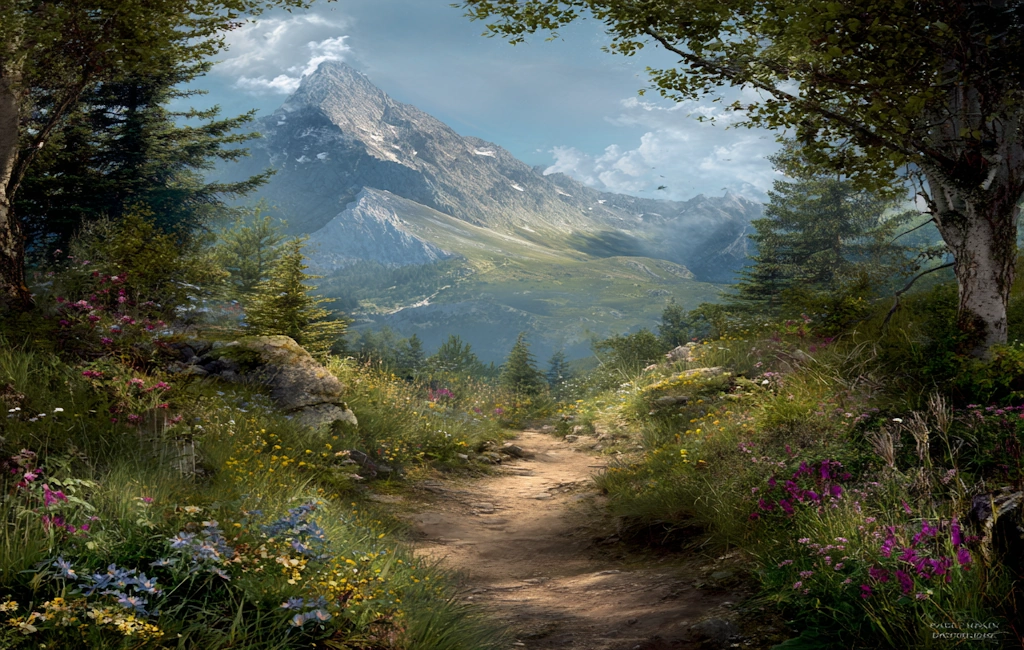
Tatra Mountains Five Lakes Valley - The Heart of the High Tatras
The Five Lakes Valley, known in Polish as Dolina Pięciu Stawów Polskich, is widely considered the most spectacular alpine destination in the Polish High Tatras. Situated at an elevation of approximately 1,625 to 1,900 metres above sea level, this high-altitude post-glacial valley is a masterpiece of raw granite peaks, crystal-clear mountain lakes, and the thundering Wielka Siklawa—Poland's highest waterfall. Unlike the more famous Morskie Oko, which is accessible via a paved road, the Five Lakes Valley remains a true hiker's sanctuary, requiring a dedicated ascent through the Roztoka Valley. This physical barrier preserves a sense of rugged isolation and alpine purity that defines the High Tatra experience. The valley serves as a central hub for advanced mountaineers aiming for the infamous Orla Perć (Eagle's Path) and for recreational hikers seeking the quintessential Polish mountain panorama.
- Distance: 8.5 km (one-way to the hut via the Green Trail)
- Elevation Gain: 700 m
- Duration: 2.5–3.5 hours (ascent only)
- Difficulty: Moderate (requires good physical fitness and sturdy footwear)
- Highest Point: 1,671 m (at the mountain hut)
- Best Time: June to September (for snow-free trails)
- Trailhead: Palenica Białczańska (accessible by bus from Zakopane)
- Key Landmark: Wielka Siklawa Waterfall (70 m drop)
Overview
The Five Lakes Valley is a classic example of a glaciated hanging valley, carved into the hard granite of the High Tatras during the last ice age. It is surrounded by some of the most formidable peaks in the range, including Miedziane, Świnica, and the jagged ridges of the Orla Perć. The valley's name is slightly misleading, as there are actually six lakes if one counts the small, seasonal Wole Oko, but the five permanent glacial "ponds" (stawy) give the area its legendary status. These lakes—Przedni Staw, Mały Staw, Wielki Staw, Czarny Staw, and Zadni Staw—vary in depth and colour, ranging from deep sapphire to emerald green, depending on the light and the depth of the water. Wielki Staw Polski is the largest and deepest lake in the Tatras, reaching a depth of 79.3 metres, making it a significant geological feature of the Carpathian Mountains.
The journey to the valley is as much a part of the experience as the destination itself. Starting from the bustling trailhead at Palenica Białczańska, hikers initially follow the paved road toward Morskie Oko before branching off into the Roztoka Valley. Here, the landscape transforms from managed forest into a wild, boulder-strewn canyon where the Roztoka Stream crashes over granite steps. The final ascent offers a choice: a direct stone-step climb alongside the magnificent Wielka Siklawa waterfall or a slightly more sheltered route through the dwarf mountain pine (Pinus mugo) zones. Reaching the lip of the valley reveals a sudden, breathtaking expansion of the horizon, where the enclosed forest gives way to a vast, open amphitheatre of rock and water.
The atmosphere in the Five Lakes Valley is distinctly different from the lower valleys of the Tatras. The air is thinner, the vegetation is limited to hardy alpine grasses and mosses, and the weather can shift from brilliant sunshine to a piercing mountain storm in minutes. It is a place where the scale of the mountains becomes humbling. The Schronisko w Dolinie Pięciu Stawów Polskich, the highest mountain hut in Poland, sits perched on the edge of Przedni Staw, offering a legendary hospitality that has welcomed generations of Polish "taternicy" (mountaineers). Whether used as a base for technical climbs or as the turnaround point for a challenging day hike, the valley represents the pinnacle of Polish alpine beauty.
History and Cultural Context
The history of the Five Lakes Valley is inextricably linked to the birth of Polish mountaineering and the development of the Tatra Volunteer Search and Rescue (TOPR). In the 19th century, the valley was primarily the domain of high-altitude shepherds and "zbójnicy" (highland brigands) who used the remote passes to move between the northern and southern sides of the range. It wasn't until the mid-1800s that scientists and explorers, such as Stanisław Staszic and later Tytus Chałubiński, began to document the valley's unique geology and flora. Chałubiński, often called the "King of the Tatras," was instrumental in popularising the region among the Polish intelligentsia, leading large expeditions accompanied by highlander guides and musicians.
The first mountain hut in the valley was a primitive stone shelter built in 1876 by the Polish Tatra Society (Towarzystwo Tatrzańskie). Over the decades, several iterations of the hut were constructed, each facing the brutal reality of the alpine climate. The current hut, a beautiful example of Zakopane-style architecture adapted for high-altitude conditions, was built between 1947 and 1953. It was a feat of engineering and human endurance, as all building materials had to be transported up the steep Roztoka Valley by hand or on horseback. Today, the hut remains a symbol of Polish mountain culture, famous for its "szarlotka" (apple pie) and its role as a safe haven during the fierce "Halny" winds that frequently batter the peaks.
Culturally, the Tatras hold a sacred place in the Polish national identity. During the partitions of Poland, the mountains were seen as a symbol of freedom and a repository of "pure" Polish culture. The highlanders (Górale) of the Podhale region, with their unique dialect, music, and dress, are the traditional custodians of these lands. Their folklore is filled with tales of the Five Lakes, often depicting them as bottomless mirrors reflecting the souls of the mountains. Today, the valley is protected within the Tatra National Park (Tatrzański Park Narodowy), a UNESCO Biosphere Reserve, ensuring that the balance between human visitation and ecological preservation is maintained for future generations.
Want more background? Read extended notes on history and cultural context → Learn more
Seasonal Highlights and Weather Reality
The Five Lakes Valley experiences a true alpine climate, which means seasons are compressed and weather is notoriously unpredictable. Understanding the seasonal nuances is critical for a safe and enjoyable trek.
Summer (July to August): This is the peak season for hikers. The trails are generally clear of snow, and the alpine meadows are in full bloom with rare species like the Tatra edelweiss and various gentians. Temperatures in the valley can reach 15–20°C during the day but can drop toward zero at night. This is also the season of afternoon thunderstorms; lightning is a severe risk on the exposed granite ridges surrounding the valley. Hikers should aim to be off the high passes by early afternoon.
Autumn (September to October): Many locals consider this the best time to visit. The summer crowds dissipate, and the air becomes exceptionally clear, offering the best visibility for photography. The dwarf mountain pines turn a deep, rich green against the golden hues of the alpine grasses. However, the first dustings of snow can occur as early as mid-September, and the days shorten significantly. Temperatures are crisp, often requiring thermal layers even during the day.
Winter (November to May): During the winter months, the Five Lakes Valley transforms into a high-stakes alpine environment. The trail through the Roztoka Valley is prone to significant avalanche risk, particularly the slopes of Miedziane. The "winter variant" of the trail must be used, which avoids the Siklawa waterfall area. Crampons, an ice axe, and avalanche safety gear (beacon, probe, shovel) are mandatory for anyone entering the valley. The lakes freeze solid, often covered by several metres of snow, creating a surreal, white plateau. Only experienced winter mountaineers should attempt this route in winter.
Spring (June): This is the "shoulder" season where snow lingers in the gullies and on the higher passes like Zawrat or Krzyżne. The lakes begin to thaw, creating stunning turquoise rings around the remaining ice. However, the trails can be extremely muddy and slippery from meltwater. Hikers should be prepared for "rotten" snow that can collapse underfoot (post-holing).
Recommended Itinerary
Five Lakes Valley Day Hike Itinerary
Early Morning: The Approach (Palenica Białczańska to Wodogrzmoty Mickiewicza)
- Distance: 2.5 km
- Elevation gain: 120 m
- Time: 45–60 minutes
- Start at the Palenica Białczańska car park (arrive by 7:00 AM to secure parking or take the local bus from Zakopane).
- Follow the wide, paved road (Red Trail) towards Morskie Oko.
- This section is an easy warm-up through dense spruce forest.
- Reach the Wodogrzmoty Mickiewicza waterfalls—a series of powerful cascades where the Roztoka Stream meets the Białka River.
- Pause at the bridge to admire the falls before turning right onto the Green Trail, leaving the paved road behind.
Morning: The Roztoka Valley Ascent
- Distance: 4 km
- Elevation gain: 400 m
- Time: 1.5–2 hours
- The Green Trail enters the Roztoka Valley, following the northern bank of the stream.
- The terrain becomes more rugged, with the path consisting of large, uneven granite stones.
- Pass through the "Nowa Roztoka" clearing, offering the first glimpses of the high peaks ahead.
- The forest gradually thins, replaced by thickets of dwarf mountain pine.
- The sound of rushing water intensifies as you approach the head of the valley.
- At the trail junction near the end of the valley, you face a choice: continue on the Green Trail (past the waterfall) or take the Black Trail (a steeper, more direct route to the hut).
Midday: The Great Waterfall and the Valley Entrance
- Distance: 1 km
- Elevation gain: 180 m
- Time: 45 minutes
- Follow the Green Trail to stand at the base of Wielka Siklawa. At 70 metres, it is a thunderous display of glacial meltwater.
- The trail climbs steeply alongside the waterfall on smooth granite slabs. Caution: these rocks are extremely slippery when wet or misty.
- As you crest the final rise, the Five Lakes Valley opens up before you.
- Walk along the shore of Wielki Staw Polski, the largest lake in the valley.
- Continue to the Schronisko (Mountain Hut) situated by Przedni Staw.
- Enjoy a traditional Polish mountain lunch (Bigos or Szarlotka) at the hut while taking in the views of the surrounding peaks.
Afternoon: Exploring the Lakes and Descent
- Distance: 1–3 km (optional exploration)
- Time: 1 hour
- Walk the path between Wielki Staw and Czarny Staw to see the different shades of blue in the water.
- Observe the "Ox Eye" (Wole Oko), the smallest and most elusive of the ponds.
- Begin the descent. For variety, take the Blue Trail towards Morskie Oko via the Świstówka Roztocka ridge (adds 2 hours and 200 m elevation gain, but offers the best views in the Tatras).
- Alternatively, retrace your steps down the Roztoka Valley to Palenica Białczańska.
- Aim to reach the trailhead by 5:00 PM to catch the return buses to Zakopane.
Important Notes:
- The trail is well-marked with painted stripes on rocks and trees (Green, Black, and Blue).
- The stone steps can be hard on the knees during descent; trekking poles are highly recommended.
- There is no mobile reception in large parts of the Roztoka Valley.
- The hut can be extremely crowded on summer weekends; patience is required for food service.
- Always check the TOPR avalanche and weather report before starting.
Planning and Bookings
Book Your Trip
Everything you need to plan your journey
Accommodation
Find places to stay near Zakopane
Flights
Search flights to Zakopane
Essential Preparation
Planning a trip to the Five Lakes Valley requires more than just showing up at the trailhead. The High Tatras are serious mountains, and even a "moderate" day hike demands respect. Your primary base will be Zakopane, the mountain capital of Poland. From here, you must coordinate transport to Palenica Białczańska, which is roughly 25 kilometres from the town centre. During the summer months, traffic on the road to the trailhead can be gridlocked; it is essential to leave Zakopane no later than 6:30 AM.
Fitness is a key consideration. While the trail is technically straightforward (no vertical climbing required), the 700-metre elevation gain over uneven stone steps is physically taxing. Hikers should be comfortable walking for 6–7 hours in a single day. If you plan to extend the hike to Morskie Oko or tackle the passes, your fitness level must be high. Additionally, ensure you have downloaded the "Na Ratunek" app, which is the official emergency app for Polish mountain rescue (TOPR).
Trail Accommodation
The primary accommodation within the valley is the Schronisko w Dolinie Pięciu Stawów Polskich. This is the only place to stay overnight in the valley, as wild camping is strictly prohibited and heavily fined by National Park rangers.
Hut Facilities:
- Bunk rooms: Capacity for 67 people in rooms of various sizes (2, 4, 7, 8, and 10-person rooms).
- "Floor" sleeping: In the tradition of Polish mountain huts, if the beds are full, no one is turned away in an emergency. You may be allowed to sleep on the floor in the common area for a reduced fee (requires your own mat and sleeping bag).
- Dining room: Serving hot meals from 8:00 AM to 8:00 PM.
- Kitchen for hikers: A small area with boiling water available for those bringing their own dehydrated food.
- Bathrooms: Shared toilets and showers (hot water is often limited and may require a coin-operated metre).
- Drying room: For wet gear and boots.
Booking Requirements:
- Bookings must be made months in advance for the summer season (July–August) and winter weekends.
- Reservations are typically handled via the hut's official website or email.
- Costs: Approximately 90–130 PLN per night for a bed, depending on the room size and season.
- Note: The hut does not provide towels or toiletries. Bed linen is usually provided for an extra fee, but most hikers bring a lightweight silk liner or sleeping bag.
Required Gear
- Footwear: Sturdy trekking boots with ankle support and a high-grip sole (Vibram or similar). The granite stones can be incredibly slick when wet.
- Clothing: A layering system is essential. Include a moisture-wicking base layer (merino wool or synthetic), an insulating mid-layer (fleece or light down), and a high-quality waterproof shell jacket.
- Navigation: A physical map of the Tatra Mountains (1:25,000 scale) and a compass. While trails are marked, fog can make finding the next marker difficult.
- Backpack: A 20–30L daypack with a rain cover.
- Safety Gear: A fully charged mobile phone, a power bank, and a basic first aid kit (including blister plasters and an emergency foil blanket).
- Trekking Poles: Highly recommended for the steep descent to protect your joints.
What to Bring
- Water: At least 2 litres per person. While there are streams, they can carry bacteria from wildlife; use a filter or purification tablets if refilling.
- Food: High-energy snacks (nuts, chocolate, energy bars) and a packed lunch. While the hut serves food, having your own supplies is vital if you are delayed.
- Sun Protection: High-factor sunscreen (SPF 50), sunglasses with UV protection, and a hat. The alpine sun is significantly stronger at 1,600 metres.
- Cash: Polish Złoty (PLN). While the hut and entry gates increasingly accept cards, signal failures are common, and cash is the only guaranteed way to pay for transport or emergency supplies.
- Head Torch: Even if you plan to be back by daylight, a head torch is a mandatory safety item in case of delays.
Permits
Access to the Five Lakes Valley is governed by the Tatra National Park (TPN). Unlike some international parks, there is no "permit" system that limits the number of daily hikers, but every visitor must purchase an entry ticket. This revenue is used for trail maintenance, nature conservation, and the operation of the mountain rescue service.
Entry Fees (2024/2025 Rates):
- Standard Ticket: 10.00 PLN per day.
- Reduced Ticket: 5.00 PLN per day (for students, seniors, and people with disabilities).
- 7-Day Pass: 50.00 PLN (ideal if you plan on doing multiple hikes during your stay).
- Tickets can be purchased at the entry booths at Palenica Białczańska or online via the TPN website or the "SkyCash" app to avoid morning queues.
Parking and Transport Logistics:
- Parking: If you are driving to Palenica Białczańska, you MUST book your parking spot online in advance via the TPN website. There is no option to pay on arrival if the lot is full, and it sells out days in advance during summer. The cost is approximately 35–55 PLN per day.
- Buses: The most efficient way to reach the trailhead is by the private "BUS" minivans that depart from the Zakopane main station (Dworzec). They run every few minutes from 6:00 AM and cost roughly 15 PLN each way.
- Horse-drawn Carriages: Note that the horse carriages only travel the paved road to Morskie Oko. They do NOT go to the Five Lakes Valley. You must walk the entire Roztoka Valley section.
Other Activities in the Area
The region surrounding the Five Lakes Valley offers a wealth of activities for those looking to extend their stay in the Tatras:
- Morskie Oko: Visit Poland's most famous lake. You can hike there from the Five Lakes Valley via the Blue Trail over the Świstówka ridge or the more challenging Szpiglasowa Przełęcz.
- Rysy Ascent: For the very fit, the climb to the summit of Rysy (2,499 m), the highest point in Poland, is a bucket-list experience. It requires a full day and significant stamina.
- Zakopane Town: Explore Krupówki Street for traditional highlander crafts, visit the Tatra Museum, or enjoy the thermal baths (Termy Chochołowskie) to soothe sore muscles after your hike.
- Gubałówka Hill: Take the funicular for a panoramic view of the entire Tatra range without the strenuous climb.
- Rafting on the Dunajec River: A traditional wooden raft trip through the Pieniny Gorge, located about an hour's drive from Zakopane.
- Kasprowy Wierch Cable Car: Ride to the summit of Kasprowy Wierch (1,987 m) for easy access to high-altitude ridge walking along the Slovakian border.
Safety and Conditions
Weather Hazards: The High Tatras are notorious for rapid weather changes. A clear morning can turn into a violent storm within thirty minutes. Lightning is the single greatest threat in the Five Lakes Valley due to the exposed granite terrain. If you hear thunder, descend immediately from the ridges and stay away from the lakes and the waterfall. The "Halny" wind, a warm foehn wind, can reach hurricane speeds, toppling trees and making walking on ridges impossible.
Terrain and Technicality: While the trail to the hut is a "walk," the terrain is composed of large, uneven stones. Ankle sprains are the most common injury. The section of the trail near the Wielka Siklawa waterfall is particularly hazardous; the spray from the falls keeps the rocks permanently damp and slippery. In early summer (June), steep snow patches may persist on the trail; crossing these without proper equipment can lead to uncontrolled slides.
Wildlife: The Tatras are home to brown bears, Tatra chamois, and marmots. While bears generally avoid the busy trails, they are active in the Roztoka Valley. Never leave food scraps behind, as this habituates bears to humans, often leading to the animal's eventual destruction. If you encounter a bear, do not run; speak calmly and back away slowly. Chamois and marmots are frequently seen in the Five Lakes Valley; keep a respectful distance and never attempt to feed them.
Emergency Services: Mountain rescue is provided by TOPR (Tatrzańskie Ochotnicze Pogotowie Ratunkowe). Unlike in neighbouring Slovakia, mountain rescue in Poland is currently free of charge, but this is no excuse for recklessness. In an emergency, call +48 601 100 300 or use the "Na Ratunek" app. Always leave your planned route and expected return time with someone at your accommodation.
Side Trips and Points of Interest
Wielka Siklawa: This is the highest waterfall in Poland, dropping approximately 70 metres from the lip of the Five Lakes Valley into the Roztoka Valley. It is most impressive in June and July when the snowmelt is at its peak. The trail passes directly alongside the falls, allowing you to feel the spray and hear the deafening roar of the water. It is a mandatory stop for any photographer.
Zawrat Pass (2,158 m): For experienced hikers, the climb from the Five Lakes Valley to Zawrat is a classic. It is the gateway to the Orla Perć (Eagle's Path). The ascent is steep and involves some exposure, but the view from the top—looking down into the Gasienicowa Valley on one side and the Five Lakes on the other—is unparalleled. This route requires a steady head for heights.
Świstówka Roztocka: The Blue Trail connecting the Five Lakes Valley to Morskie Oko passes over this high ridge. It is widely considered the most beautiful trail in the Tatras because it offers a "bird's eye" view of both the Five Lakes and Morskie Oko simultaneously. The trail is closed from December 1st to May 15th to protect hibernating wildlife and due to avalanche risk.
Szpiglasowa Przełęcz (2,110 m): Another spectacular pass that can be reached from the valley. The "Szpiglasowa Perć" section has some chains for security, making it a great introduction to more technical Tatra hiking. From the pass, you can summit Szpiglasowy Wierch for a 360-degree view of the High Tatras, including the Slovakian peaks.
Leave No Trace
The Tatra National Park is a fragile ecosystem under immense pressure from high visitor numbers. Adhering to Leave No Trace principles is not just a suggestion; it is a legal requirement enforced by park rangers.
Your responsibility as a walker:
- Pack it in, pack it out: There are no rubbish bins in the valley or at the hut. You must carry all your waste, including organic scraps like banana skins or apple cores, back to Zakopane.
- Stay on the marked trails: The alpine vegetation (lichens and mosses) takes decades to grow and can be destroyed by a single footstep. Shortcuts cause erosion and destroy habitats.
- No swimming: It is strictly forbidden to swim or even dip your feet in the lakes. These are ultra-oligotrophic waters; the introduction of sunscreens, skin oils, or bacteria can disrupt the entire delicate aquatic ecosystem.
- Respect the silence: Loud music or shouting disturbs both the wildlife and other hikers seeking the peace of the mountains.
- No wild camping: Camping is prohibited throughout the TPN. Use the designated mountain huts.
- Do not pick flowers: Many species in the valley are endemic and endangered. Take only photos.