
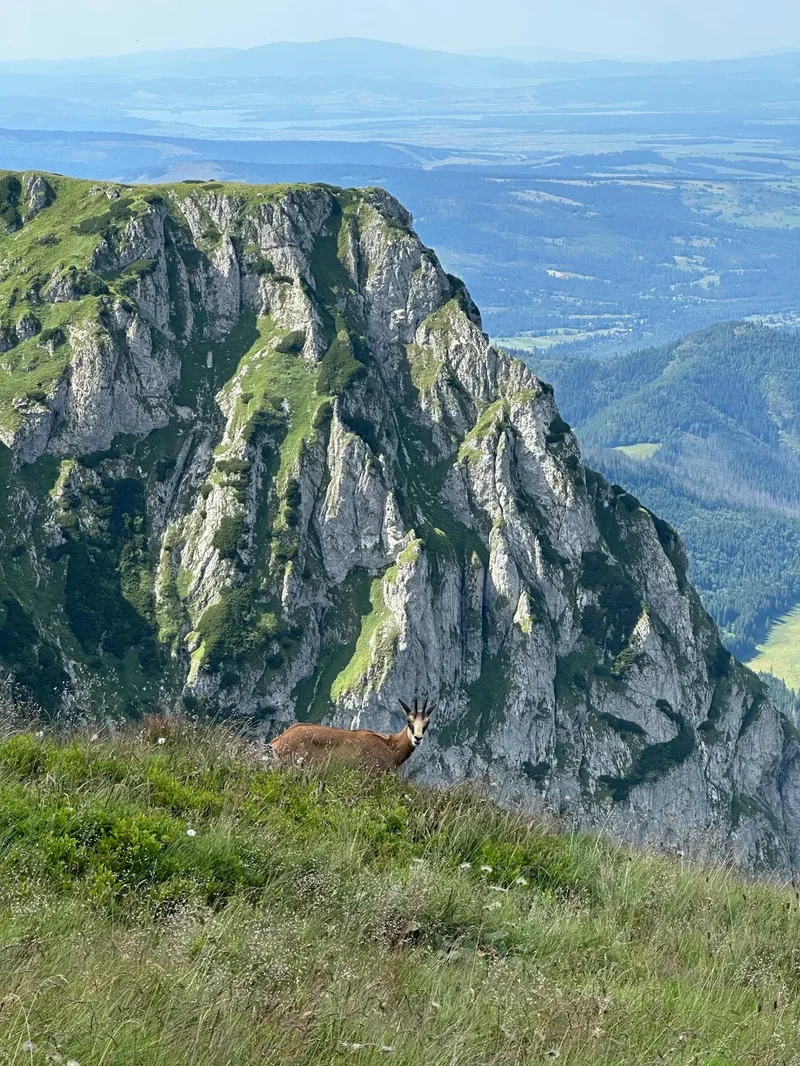
Tatra Mountains Five Lakes Trail - The High Alpine Heart of Poland
The Tatra Mountains Five Lakes Trail, known locally as the Dolina Pięciu Stawów Polskich, is arguably the most spectacular high-altitude valley walk in the Polish Tatras. This 10.5-kilometre journey takes hikers into a pristine post-glacial landscape where five (technically six) crystalline lakes are cradled by jagged granite peaks that form the border between Poland and Slovakia. Unlike the more commercialised route to Morskie Oko, the Five Lakes Trail offers a more rugged, authentic alpine experience, requiring a steady ascent through the lush Roztoka Valley and past the thundering Wielka Siklawa—Poland's highest and most powerful waterfall. The trail is a masterclass in glacial geography, showcasing hanging valleys, moraine ridges, and the raw, unyielding beauty of the High Tatras. It is a place where the air is thin and crisp, the water is a deep sapphire blue, and the silence of the high mountains is only broken by the whistle of a marmot or the distant roar of falling water.
- Distance: 10.5 km (loop or return depending on variation)
- Duration: 5–7 hours
- Elevation Gain: 600 m
- Difficulty: Moderate (requires steady fitness and sure-footedness)
- Highest Point: Five Lakes Hut (1,671 m)
- Best Time: June to September
- Closest City: Zakopane, Poland
Overview
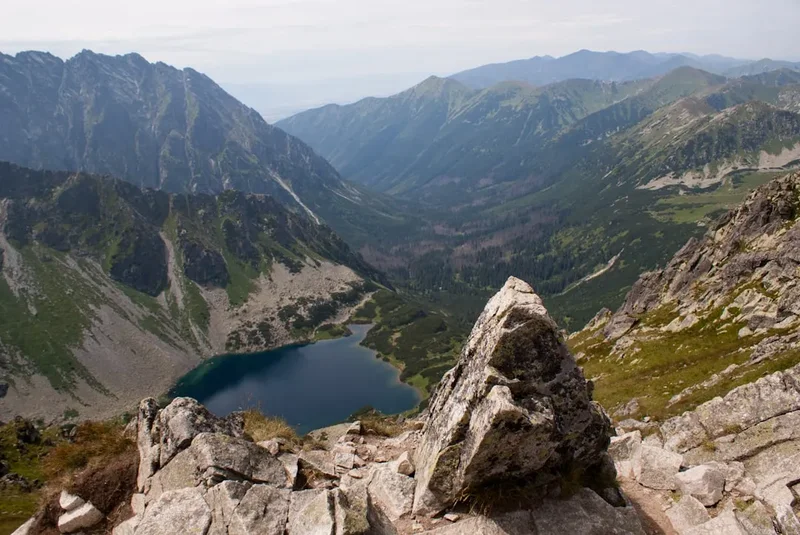
The Valley of the Five Polish Lakes is a high-mountain hanging valley located in the High Tatras, situated at an altitude of approximately 1,625 to 1,900 metres above sea level. It is a landscape defined by the immense power of Pleistocene glaciers, which carved deep basins into the hard granite, now filled with some of the clearest water in Europe. The valley is surrounded by some of the most iconic peaks in the range, including the formidable Świnica, the jagged Orla Perć ridge, and the massive Miedziane. The trail itself is a transition through several distinct ecological zones, beginning in the dense spruce and fir forests of the lower valleys, ascending through the sub-alpine zone of dwarf mountain pine (kosodrzewina), and finally emerging into the high alpine meadows and rocky barrens of the valley floor.
What sets this trail apart is the sheer density of natural wonders packed into a relatively short distance. The ascent through the Roztoka Valley follows the Roztoka Stream, a lively mountain torrent that drains the lakes above. The highlight of the climb is the Wielka Siklawa waterfall, where the water plunges over a 70-metre granite threshold in a spectacular display of hydraulic force. Once inside the valley, the scale of the landscape becomes humbling. The five main lakes—Przedni Staw (Front Lake), Mały Staw (Small Lake), Wielki Staw (Great Lake), Czarny Staw (Black Lake), and Zadni Staw (Rear Lake)—each possess a unique character and colour, ranging from turquoise to deep navy. There is also a sixth, smaller lake called Wole Oko, which is often ephemeral depending on the season's snowmelt.
The trail is well-marked and maintained by the Tatra National Park (TPN), but it retains a sense of wildness. The granite stones that form the path can be slippery when wet, and the weather in the High Tatras is notoriously fickle. Even in mid-summer, a sudden thunderstorm can drop temperatures by ten degrees in minutes, turning a pleasant stroll into a serious mountain undertaking. However, for those who reach the valley, the reward is a sense of isolation and grandeur that is hard to find elsewhere in Central Europe. The presence of the Schronisko Pięciu Stawów—the highest mountain hut in Poland—provides a sanctuary for weary hikers, offering traditional Polish mountain fare and a place to watch the light change over the granite spires.
History and Cultural Context
The Tatra Mountains have long held a sacred place in the Polish national consciousness. During the 19th century, when Poland was partitioned between neighbouring empires, the Tatras became a symbol of freedom and national identity. Explorers, poets, and scientists from Kraków and Warsaw flocked to Zakopane, the "winter capital," to rediscover the wild heart of their country. The Valley of the Five Lakes was one of the earliest destinations for these pioneers. The first recorded summer visit to the valley dates back to the early 1800s, but it was the establishment of the Tatra Society (Towarzystwo Tatrzańskie) in 1873 that truly opened the region to tourism. The society began marking trails and building the first primitive shelters to allow for multi-day exploration of the high peaks.
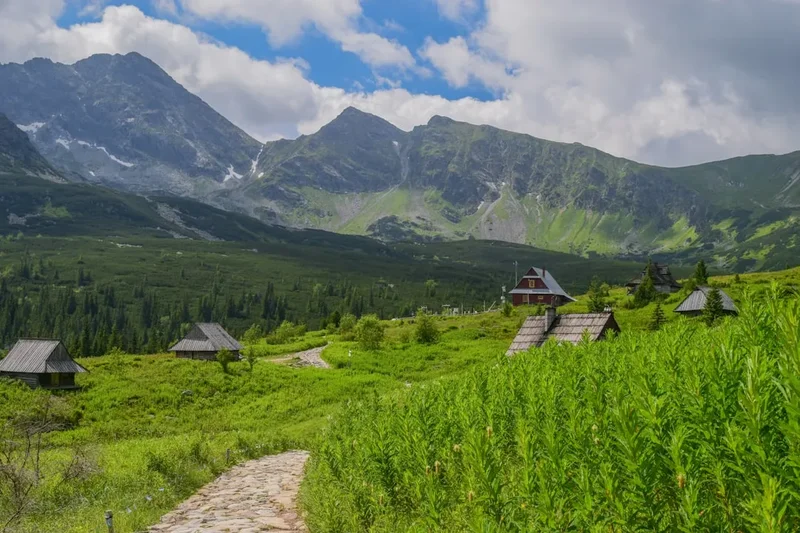
The cultural heart of the region is the Górale—the highlanders of Podhale. These resilient people have lived in the shadow of the Tatras for centuries, developing a unique dialect, architecture, and musical tradition that is still very much alive today. Their folklore is filled with tales of "zbójnicy" (highland brigands) who supposedly hid their treasures in the caves and secret valleys of the High Tatras. The architecture of the mountain huts, including the one in the Five Lakes Valley, reflects the Zakopane Style—a blend of traditional highlander timber construction and Art Nouveau influences pioneered by Stanisław Witkiewicz.
The Tatra National Park (Tatrzański Park Narodowy) was officially established in 1954, though efforts to protect the area began much earlier. The park is part of a trans-border biosphere reserve with the Slovakian Tatranský národný park (TANAP). This protection has been vital in preserving the region's biodiversity, including the Tatra chamois and the Tatra marmot, both of which were once hunted to the brink of extinction. Today, the Five Lakes Trail is not just a recreational route; it is a journey through a protected sanctuary where human impact is carefully managed to ensure that the "Polish Alps" remain as pristine as they were when the first explorers arrived two centuries ago.
Want more background? Read extended notes on history and cultural context → Learn more
Seasonal Highlights and Weather Reality
The window for hiking the Five Lakes Trail is relatively narrow compared to lower-elevation routes. Because the valley sits above 1,600 metres, snow can linger well into June, and the first autumn dustings often arrive in late September. Understanding the seasonal nuances is essential for a safe and enjoyable trek.
Summer (July to August): This is the peak season. The trails are completely clear of snow, the alpine flowers—including the rare edelweiss and various gentians—are in full bloom, and the days are long. However, this is also the season of afternoon thunderstorms. These storms can be violent, with frequent lightning strikes on the exposed granite ridges. Hikers are advised to start their journey as early as 6:00 AM or 7:00 AM to ensure they are off the higher sections of the trail before the typical mid-afternoon weather shift. This is also the busiest time, so expect company on the trails and at the hut.
Autumn (September to October): Many experienced hikers consider September the best month for the Tatras. The air is exceptionally clear, providing the best visibility for panoramas, and the crowds of the summer holidays have dissipated. The dwarf pines and mountain grasses turn shades of gold and copper, creating a stunning contrast against the blue lakes. However, days are shorter, and night-time temperatures frequently drop below freezing. By October, the risk of ice on the "Black Trail" (the steep shortcut to the valley) increases significantly.
Spring (May to June): This is a transitional and often dangerous period. While Zakopane may feel like spring, the Five Lakes Valley is often still under a thick blanket of snow. The Wielka Siklawa waterfall is at its most powerful during the spring melt, but the trails leading to it can be obscured by snow patches or prone to wet-snow avalanches. Crampons and an ice axe may be required well into June, and the lakes often remain frozen or partially covered in ice until early summer.
Winter (November to April): The Five Lakes Trail becomes a serious winter mountaineering route. The Roztoka Valley is a major avalanche path, and the steep slopes surrounding the lakes are highly prone to slides. Only those with significant winter experience, avalanche rescue equipment (transceiver, probe, shovel), and proper technical gear should attempt the valley in winter. The hut remains open, but reaching it requires navigating complex, high-consequence terrain.
Recommended Itinerary
Tatra Mountains Five Lakes Day Hike
Early Morning: Palenica Białczańska to Roztoka Valley
- Distance: 3 km
- Elevation gain: 100 m
- Time: 45–60 minutes
- Start at the Palenica Białczańska trailhead (accessible by bus from Zakopane)
- Follow the wide, paved road towards Morskie Oko for approximately 40 minutes
- Reach the Mickiewicz Waterfalls (Wodogrzmoty Mickiewicza), a series of dramatic cascades near the bridge
- Turn right onto the Green Trail, leaving the asphalt behind for a proper mountain path
- Enter the Roztoka Valley, walking through ancient spruce forest alongside the rushing Roztoka stream
- The gradient is gentle here, allowing for a steady warm-up as you move deeper into the wilderness
Morning: The Ascent via Wielka Siklawa
- Distance: 2.5 km
- Elevation gain: 400 m
- Time: 1.5–2 hours
- The trail begins to steepen as you leave the dense forest and enter the zone of dwarf mountain pine
- Continue following the Green Trail as it climbs towards the head of the valley
- Reach the base of the Wielka Siklawa waterfall, the largest in Poland at 70 metres high
- The path climbs steeply alongside the waterfall over large granite slabs (can be very slippery in mist or rain)
- Take time to appreciate the spray and the rainbow effects often visible in the morning sun
- As you crest the top of the waterfall, the hanging valley suddenly opens up, revealing the first of the lakes
Midday: Exploring the Five Lakes Valley
- Distance: 2 km (exploration)
- Elevation gain: 50 m
- Time: 1.5–2 hours
- Arrive at Wielki Staw Polski (Great Polish Lake), the deepest and largest in the valley (79 metres deep)
- Follow the Blue Trail along the northern shore of the lakes
- Pass Mały Staw (Small Lake) and Przedni Staw (Front Lake)
- Reach the Schronisko Pięciu Stawów (Five Lakes Hut), perched on the edge of Przedni Staw
- Lunch break at the hut—try the famous "szarlotka" (apple pie) or a hearty bowl of "kwaśnica" (highlander sauerkraut soup)
- Optional: Continue further into the valley to see Czarny Staw (Black Lake) and the remote Zadni Staw (Rear Lake) under the shadow of Świnica
- The valley floor is relatively flat, allowing for easy wandering between the different water bodies
Afternoon: Descent to Palenica Białczańska
- Distance: 5 km
- Elevation loss: 550 m
- Time: 2–2.5 hours
- Option A (Easier): Retrace your steps down the Green Trail past the waterfall
- Option B (Steeper): Take the Black Trail shortcut which drops steeply from the valley threshold back to the Roztoka Valley floor
- Option C (Longer/Scenic): Take the Blue Trail over the Świstówka Roztocka ridge to Morskie Oko (adds 2 hours and 200 m elevation gain, but offers incredible views)
- Rejoin the main asphalt road at Wodogrzmoty Mickiewicza
- Final easy walk back to the car park or bus stop at Palenica Białczańska
- Return to Zakopane for a well-earned dinner
Important Notes:
- The "Black Trail" shortcut is very steep and can be treacherous in wet conditions; the Green Trail via the waterfall is generally safer for descent
- The weather can change in the valley within 15 minutes; always have your waterproofs accessible
- The granite stones on the path are polished by thousands of boots and become like ice when wet
- There are no bins on the trail; you must carry all rubbish back to the trailhead
- The hut can be extremely crowded during lunch hours; consider an early or late meal
Planning and Bookings
Book Your Trip
Everything you need to plan your journey
Accommodation
Find places to stay near Zakopane
Flights
Search flights to Zakopane
Essential Preparation
The Five Lakes Trail is a high-altitude hike that requires a moderate level of physical fitness. While the distance is not extreme, the 600-metre elevation gain occurs mostly in a concentrated section, and the terrain is rocky and uneven. Hikers should be comfortable with steep ascents and descents on granite stairs and slabs. Preparation begins in Zakopane, the primary base for all Tatra adventures. It is highly recommended to spend at least one night in Zakopane (800 m) to begin acclimatising before heading into the high mountains.
Logistics are straightforward but require timing. The trailhead at Palenica Białczańska is roughly 25 kilometres from the centre of Zakopane. Local minibuses (marked "Morskie Oko") depart from the main bus station (Dworzec Autobusowy) every few minutes during the summer season. If you plan to drive, you must book your parking space at Palenica Białczańska online in advance via the Tatra National Park website. The car park frequently sells out days in advance during July and August, and there is no alternative parking nearby.
Trail Accommodation
For those wishing to extend their stay, the Schronisko w Dolinie Pięciu Stawów Polskich (Five Lakes Hut) is the only accommodation in the valley. It is the highest mountain hut in Poland (1,671 m) and offers a unique, rustic atmosphere. Because of its popularity and limited capacity, booking months in advance is essential for a bed.
Hut Facilities:
- Dormitory-style rooms (ranging from 2 to 10 beds)
- Common dining room with a large fireplace
- Kitchen serving hot meals from 8:00 AM to 8:00 PM
- Shared bathrooms with hot showers (usually coin-operated or timed)
- Small shop selling maps, chocolate, and basic supplies
- Boiling water available for hikers (sometimes for a small fee)
- "Gleba" (floor) sleeping: In accordance with Polish mountain tradition, the hut will never turn a hiker away in an emergency or if they arrive late; you may be allowed to sleep on the floor of the dining room for a reduced fee if all beds are full
What is NOT Provided:
- Towels and toiletries
- Private rooms with en-suite bathrooms
- WiFi or reliable mobile signal (it is very patchy in the valley)
- Quiet: The hut is a social hub and can be noisy until lights out
Required Gear
- Footwear: Sturdy trekking boots with a high-grip sole (Vibram or similar). Trail running shoes are acceptable for experienced hikers in dry weather, but boots provide necessary ankle support on the rocky descent.
- Clothing: A layering system is vital. Include a moisture-wicking base layer (merino wool or synthetic), an insulating mid-layer (fleece or light down), and a high-quality waterproof shell jacket.
- Rain Gear: Waterproof overtrousers are highly recommended, as rain in the Tatras is often accompanied by wind that renders umbrellas useless.
- Navigation: A physical map of the Tatra National Park (1:25,000 scale) and a compass. While trails are well-marked, fog can reduce visibility to a few metres.
- Backpack: A 20–30 litre daypack with a rain cover.
- Safety: A fully charged mobile phone with the "Na Ratunek" emergency app installed.
What to Bring
- Water: At least 2 litres per person. While there are streams, it is safer to treat the water or refill at the hut.
- Food: High-energy snacks (nuts, dried fruit, chocolate) and a packed lunch. While the hut serves food, having your own supplies is essential in case of delays.
- Sun Protection: High-factor sunscreen, sunglasses, and a hat. The UV radiation is significantly stronger at 1,700 metres, and the granite reflects the sun.
- First Aid: A basic kit including blister plasters (Compeed), antiseptic wipes, and any personal medications.
- Cash: Polish Złoty (PLN) for the national park entry fee, bus fare, and hut purchases. While the hut increasingly accepts cards, the connection often fails in bad weather.
- Head Torch: Even on a day hike, always carry a light in case you are delayed and have to finish the walk in the dark.
Permits
There is no "permit" system for the Five Lakes Trail in the sense of limited hiker numbers or lottery systems. However, the entire route lies within the Tatra National Park (TPN), and an entry fee is mandatory for all visitors. This fee contributes to trail maintenance, nature conservation, and the operation of the mountain rescue service.
Entry Fees (2024 rates):
- Standard Ticket: 9.00 PLN per day
- Reduced Ticket (Students/Seniors): 4.50 PLN per day
- 7-Day Pass: 45.00 PLN
Tickets can be purchased at the entry booth at Palenica Białczańska. During the peak summer season, the queues for tickets can be long. To save time, it is highly recommended to purchase your ticket online via the tpn.pl website or through mobile apps like SkyCash or mPay. You can simply show the digital ticket on your phone to the park ranger at the gate.
Parking Reservations: As mentioned in the planning section, if you are arriving by private vehicle, the parking reservation is the most critical "permit" you need. This must be booked and paid for in advance on the TPN website. Without a pre-booked voucher, you will be turned away from the Palenica Białczańska car park and forced to return to Zakopane or find a private lot several kilometres away.
Rules and Regulations: Your entry ticket is an agreement to follow park rules. These include staying strictly on marked trails, not entering the water in the lakes (swimming is strictly prohibited to protect the fragile alpine ecosystem), and not picking any plants or disturbing wildlife. Fines for violations are significant and strictly enforced by park rangers.
Other Activities in the Area
The region surrounding the Five Lakes Valley is the heart of Polish mountain culture and offers numerous ways to extend your adventure:
- Morskie Oko: Visit Poland's most famous lake. You can reach it by a separate 9-kilometre paved walk from Palenica Białczańska or by crossing the Świstówka Roztocka ridge from the Five Lakes Valley. The lake is overlooked by Mięguszowiecki Peaks and the famous Monk (Mnich) spire.
- Kasprowy Wierch Cable Car: For those who want high-alpine views without the 600-metre climb, the cable car from Kuźnice takes you to the summit of Kasprowy Wierch (1,987 m). From there, you can walk along the ridge that forms the border with Slovakia.
- Gubałówka Hill: Located on the opposite side of the Zakopane valley, this is accessible by funicular and offers the classic "postcard" panorama of the entire Tatra range.
- Thermal Baths: After a strenuous hike, visit one of the many thermal complexes in the area, such as Termy Chochołowskie or Termy Bukovina. These use natural geothermal water and are a staple of the Podhale region.
- Krupówki Street: Explore the main pedestrian street of Zakopane, famous for its wooden architecture, highlander restaurants serving "oscypek" (smoked sheep's cheese), and local handicrafts.
- Dolina Kościeliska: A beautiful, flat valley walk on the western side of the park, famous for its accessible caves (Mroźna, Mylna) and dramatic limestone cliffs.
Safety and Conditions
Mountain Rescue (TOPR): The Tatras are patrolled by the Tatrzańskie Ochotnicze Pogotowie Ratunkowe (TOPR), one of the oldest and most professional mountain rescue organisations in the world. In case of an emergency, the international mountain rescue number is 985 or +48 601 100 300. It is highly recommended to download the "Na Ratunek" app, which sends your exact GPS coordinates to the rescuers with a single touch.
Weather Hazards: The most significant danger on the Five Lakes Trail is the rapid change in weather. Lightning is a major risk in the summer months. If you hear thunder, immediately descend from the valley threshold or ridges. Do not seek shelter under isolated trees or near the lakes' edge. Hypothermia is a risk even in summer if you are caught in a cold rainstorm without proper layers.
Terrain Hazards: The section of the trail near the Wielka Siklawa waterfall consists of large, smooth granite slabs. When wet, these become incredibly slippery. Take extreme care and use trekking poles for extra stability. The "Black Trail" shortcut is very steep and can be hard on the knees; if you have any joint issues, the longer Green Trail is a much safer choice for the descent.
Wildlife: You are in bear country. While sightings are rare on the busy Five Lakes Trail, brown bears do inhabit the Roztoka Valley. Never leave food scraps behind, and if you do encounter a bear, do not run. Back away slowly and give the animal plenty of space. Marmots and chamois are common in the valley; enjoy them from a distance and never attempt to feed them.
Insurance: While mountain rescue in Poland is currently free of charge, this is not the case across the border in Slovakia. If you plan to hike any of the ridge trails that cross into Slovakia, you must have mountain rescue insurance, as a helicopter evacuation in Slovakia can cost thousands of Euros.
Side Trips and Points of Interest
Wielka Siklawa Waterfall: This is not just a waypoint but a destination in itself. As the highest waterfall in Poland, it drops approximately 70 metres. The best time to see it is in June during the peak snowmelt, when the roar is deafening and the spray can be felt from hundreds of metres away. The trail passes so close to the top of the falls that you can look directly over the edge into the Roztoka Valley below.
Czarny Staw Polski: Not to be confused with the Czarny Staw under Rysy, this "Black Lake" is the second largest in the valley. It is often much quieter than the lakes near the hut. The water appears almost black due to its depth and the shadows cast by the surrounding walls of Kozi Wierch. It is a place of profound stillness and a great spot for photography.
The "Sixth" Lake (Wole Oko): Located between Wielki Staw and Zadni Staw, this small pond is often omitted from the "Five Lakes" count because it is significantly smaller and can dry up in late autumn. Finding it feels like discovering a secret hidden within the valley's complex topography.
Świstówka Roztocka: If you have the energy and the weather is clear, the Blue Trail leading towards Morskie Oko offers a spectacular vantage point over the Five Lakes Valley. From the ridge, you can see all the lakes laid out like jewels in a granite setting. This is widely considered one of the best views in the entire Tatra National Park.
The Five Lakes Hut (Schronisko): Even if you aren't staying the night, the hut is a point of interest. It is the only hut in the Polish Tatras that is supplied entirely by a small freight cable car or by "tragarze" (porters) in the past. The atmosphere inside, especially on a rainy day, is the epitome of Polish mountain culture.
Leave No Trace
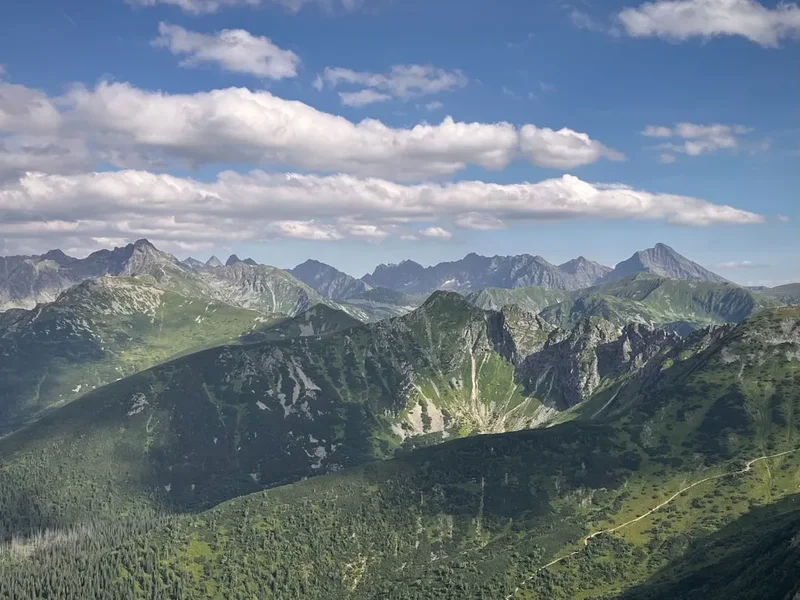
The Tatra National Park is a fragile island of high-alpine biodiversity in a densely populated part of Europe. With millions of visitors each year, the "Leave No Trace" principles are not just suggestions; they are essential for the park's survival. The Five Lakes Valley is particularly sensitive due to its high altitude and slow recovery times for vegetation.
Specific Guidelines for the Five Lakes Trail:
- Stay on the Stones: The trails are constructed from granite blocks. Stepping off the trail to avoid a puddle or to take a shortcut crushes the delicate alpine mosses and lichens that take decades to grow.
- No Swimming: It is tempting to dip your feet in the crystal-clear lakes, but this is strictly forbidden. The lakes are ultra-oligotrophic (low in nutrients), and the introduction of sunscreens, skin oils, or bacteria can disrupt the entire aquatic food chain.
- Pack it Out: There are no rubbish bins in the valley or at the hut for day visitors. Everything you bring in—including orange peels, apple cores, and tissues—must be carried back to Zakopane.
- Respect the Silence: The Tatras are a sanctuary for wildlife. Avoid shouting or playing music. The sound of a human voice carries a long way in the granite amphitheatres of the valley and can stress animals like the Tatra chamois.
- Toilet Etiquette: Use the facilities at the trailhead or at the hut. If you are caught short on the trail, move at least 50 metres from any water source and bury waste deeply, taking all paper back out with you in a sealed bag.
 France
 Iceland