
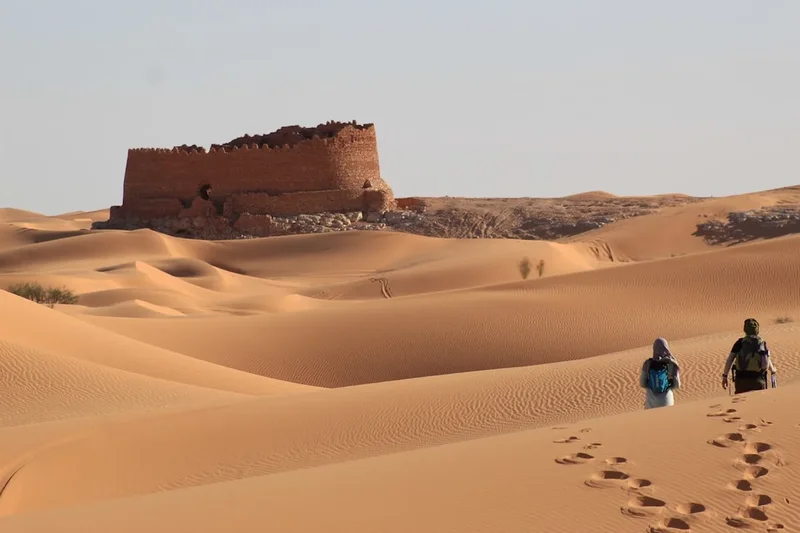
Tassili Plateau Circuit - The Louvre of the Desert
The Tassili Plateau Circuit is a journey into the prehistoric soul of the Sahara. Located within the Tassili n'Ajjer National Park in southeast Algeria, this 70-kilometre trek traverses a vast sandstone plateau that rises like a fortress from the desert floor. Known as the "Plateau of the Rivers" in the Tamasheq language, this UNESCO World Heritage site is home to one of the most important groupings of prehistoric cave art in the world, with more than 15,000 drawings and engravings documenting the climatic changes, wildlife migrations, and human evolution of the Saharan region over 10,000 years. The trek is not merely a physical challenge; it is a profound immersion into a "forest of stone"—a labyrinth of eroded sandstone pillars, deep canyons, and natural arches that feel like an alien landscape. Access is strictly regulated, requiring a local Tuareg guide and 4x4 support to reach the trailhead from the oasis town of Djanet. This is a remote, high-altitude desert experience where the silence is absolute and the history is etched into every cliff face.
- Distance: 70.0 km loop (approximate, varies by route)
- Duration: 5–7 days
- Season: October to April (cooler winter months)
- Accommodation: Wild camping (bivouacs) under the stars
- Highest point: Approximately 1,800 metres (plateau elevation varies)
- Difficulty: Challenging (steep ascents, sandy terrain, and extreme isolation)
- Requirement: Mandatory local guide and national park permits
Overview
The Tassili n'Ajjer is a vast mountain range in the Algerian section of the Sahara Desert, extending over 72,000 square kilometres. The Tassili Plateau Circuit focuses on the most spectacular section of this lunar landscape, beginning near the oasis of Djanet. The trek is defined by its unique geology; the sandstone has been eroded by water and wind over millennia into "stone forests" (known as ksours) that resemble ruined cities. Walking through these formations, you encounter narrow corridors, massive natural amphitheatres, and towering arches that defy gravity.
The physical experience of the Tassili is one of contrast. The ascent to the plateau involves navigating the "Akbas"—steep, rocky passes that require significant effort and steady footing. Once atop the plateau, the terrain levels out into a series of sandy basins and rocky pavements. The environment is hyper-arid, yet it holds secrets of a greener past. You will encounter the rare Saharan Cypress (Cupressus dupreziana), ancient trees that are thousands of years old and serve as living relics of a time when the Sahara was a Mediterranean-style savannah. The scale of the landscape is humbling; the horizon is a jagged line of black rock against a deep blue sky, and the nights offer a celestial display unpolluted by any artificial light for hundreds of kilometres.
What sets this trek apart from any other desert walk is the archaeological wealth. Every day of the circuit reveals new galleries of rock art. These are not small, hidden fragments but massive, vibrant murals depicting elephants, giraffes, hippopotamuses, and complex human ceremonies. To walk the Tassili is to walk through a living museum where the transition from the hunter-gatherer "Round Head" period to the pastoral "Bovidian" period is laid bare on the canyon walls. It is a demanding trek that requires physical stamina and a willingness to embrace the simplicity of desert life, but the reward is a connection to human history that few other places on Earth can provide.
History and Cultural Context
The history of the Tassili n'Ajjer is the history of the Sahara itself. Ten thousand years ago, this region was not a desert but a fertile land of rivers, lakes, and lush vegetation. The rock art found along the circuit provides a chronological record of this transformation. The earliest works, belonging to the "Round Head" period (c. 8,000–6,000 BC), feature mysterious, ethereal human figures that suggest a complex spiritual life. As the climate changed, the "Bovidian" period (c. 5,000–2,500 BC) emerged, showing the domestication of cattle and a society focused on pastoralism. Later periods depict the introduction of horses and eventually camels as the region succumbed to desertification.
The Western world "discovered" these treasures in the 1930s through the reports of French officer Charles Brenans, but it was the ethnographer Henri Lhote who brought the Tassili to global prominence in the 1950s. While Lhote's methods were later criticised for their impact on the art, his expeditions mapped the primary galleries that trekkers visit today, such as Sefar and Jabbaren. In 1982, the area was inscribed as a UNESCO World Heritage site, recognised for both its exceptional geological formations and its unparalleled archaeological record.
The cultural heart of the Tassili remains the Tuareg people, the "Blue Men of the Sahara." For centuries, the Tuareg have navigated these plateaus, their lives intertwined with the harsh environment and the ancient trade routes. Today, they serve as the essential guardians and guides of the Tassili. Their knowledge of the "Akbas," the hidden water sources (gueltas), and the stories behind the rock art is what makes the trek possible. Travelling with Tuareg guides offers an insight into a culture that values hospitality, tea ceremonies, and a deep, rhythmic connection to the desert. The land is not just a park to them; it is a sacred ancestral home that they share with visitors with immense pride and care.
Want more background? Read extended notes on history and cultural context → Learn more
Seasonal Highlights and Weather Reality
The Tassili Plateau is a land of climatic extremes, and timing your visit is critical for safety and enjoyment. The trekking season is strictly limited to the cooler months, as summer temperatures in the Sahara can easily exceed 45 degrees Celsius, making physical exertion on the plateau life-threatening.
Autumn (October to November): This is the start of the trekking season. Days are warm (25–30 degrees Celsius) and nights are comfortable. The air is often very clear, providing excellent visibility for photography. This is a popular time for those who prefer not to experience the biting cold of the Saharan winter nights.
Winter (December to February): This is the peak season for trekking. Daytime temperatures are near-perfect for walking, ranging from 15 to 22 degrees Celsius. However, trekkers must be prepared for the "thermal shock" of the desert night. Once the sun sets, temperatures plummet rapidly, often dropping to 0 degrees Celsius or even slightly below. Frost on the sleeping bags in the morning is common. The advantage of winter is the stability of the weather and the lack of heat haze.
Spring (March to April): Temperatures begin to rise again, and the landscape remains beautiful. However, this is also the season of the Sirocco or Ghibli—strong, hot sandstorms that can last for several days. These storms can reduce visibility to a few metres and make trekking difficult and unpleasant. If you choose to trek in spring, flexibility in your itinerary is essential.
Summer (May to September): Trekking is not recommended and most local operators cease operations on the plateau. The heat is relentless, water sources dry up, and the physical risk of heatstroke is extreme. The plateau acts as a heat sink, radiating warmth long into the night.
Recommended Itinerary
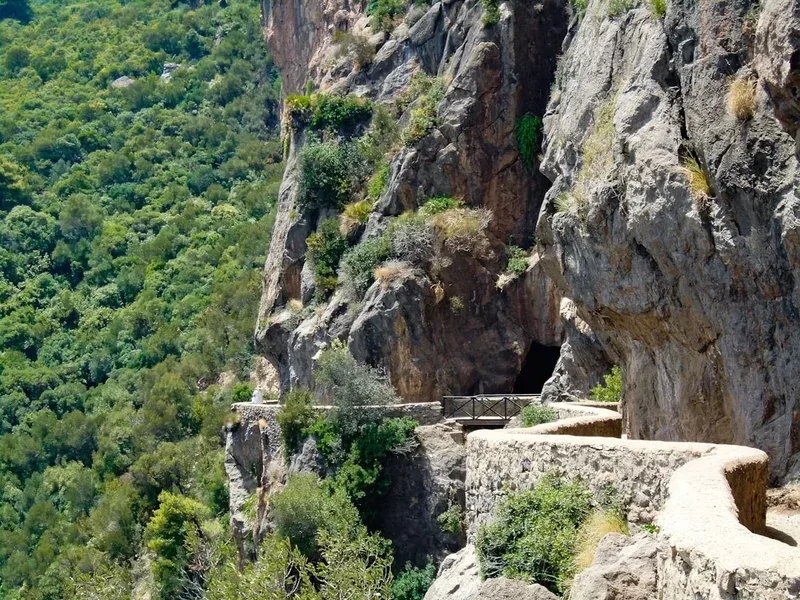
6-Day Tassili Plateau Circuit Itinerary
Day 1: Djanet to the Foot of the Plateau
- Distance: 10 km (trekking) + 4x4 transfer
- Elevation gain: 100 m
- Time: 3–4 hours
- Morning 4x4 transfer from Djanet to the base of the Tassili escarpment
- Meet the donkey caravan that will carry the water, food, and equipment
- Begin a gentle walk across the reg (stony desert) towards the base of the cliffs
- Set up the first bivouac at the foot of the Akba (pass)
- Evening briefing by the Tuareg guides on the ascent ahead
Day 2: The Ascent of Akba Tafalelet
- Distance: 12 km
- Elevation gain: 600 m
- Time: 6–7 hours
- A challenging day focused on the steep ascent of the plateau
- Navigate the winding, rocky path of Akba Tafalelet, used for centuries by Tuareg caravans
- Spectacular views back towards the Erg Admer sand dunes as you gain height
- Reach the plateau rim by midday for a well-earned lunch in the shade of a rock overhang
- Afternoon walk across the plateau surface to the first rock art sites
- Bivouac near the ancient cypresses of Tamrit
Day 3: Tamrit to Sefar (The Stone City)
- Distance: 15 km
- Elevation: Minimal gain, undulating terrain
- Time: 7–8 hours
- Explore the "Valley of the Cypresses," home to the rare Saharan Cypress
- Enter the "Stone City" of Sefar, a massive labyrinth of sandstone pillars
- Visit the "Great God of Sefar" mural, one of the most famous Round Head paintings
- Spend the afternoon navigating the narrow "streets" of this natural stone city
- The scale of the erosion here is breathtaking, with pillars rising 30 metres high
- Bivouac in the heart of Sefar, surrounded by prehistoric galleries
Day 4: Sefar to Tin Tazarift
- Distance: 12 km
- Elevation: Minimal
- Time: 6 hours
- Continue through the stone forests towards Tin Tazarift
- This section features some of the most intricate "Bovidian" art, showing daily life and cattle
- Pass through natural arches and tunnels carved by the wind
- The terrain is a mix of soft sand and hard sandstone pavement
- Evening tea ceremony with the guides, learning about Tuareg desert lore
- Bivouac at Tin Tazarift under a vast canopy of stars
Day 5: Tin Tazarift to Jabbaren
- Distance: 14 km
- Elevation: 100 m descent
- Time: 7 hours
- Trek towards the edge of the plateau at Jabbaren
- Jabbaren means "The Giants" in Tamasheq, named for the massive figures in the rock art
- Explore the numerous shelters containing thousands of years of history
- The views from the edge of the plateau here are some of the best on the circuit
- Final night on the plateau, reflecting on the journey through time
- Bivouac near the rim of the escarpment
Day 6: Descent of Akba Aroum and Return to Djanet
- Distance: 7 km (trekking) + 4x4 transfer
- Elevation: 600 m descent
- Time: 4 hours
- Early morning descent of the steep Akba Aroum pass
- The descent is taxing on the knees; trekking poles are highly recommended
- Reach the desert floor where the 4x4 vehicles are waiting
- Transfer back to Djanet for a hot shower and a traditional celebratory meal
- Afternoon visit to the Djanet market to see local crafts and jewellery
Important Notes:
- The itinerary is flexible and depends on the pace of the group and the condition of the donkeys
- Water is the most precious resource; the route is planned around known gueltas (water holes)
- Donkeys carry the bulk of the weight, but trekkers must carry a daypack with essentials
- The sun is intense even in winter; long sleeves and wide-brimmed hats are mandatory
- There is no mobile signal or electricity for the duration of the trek
Planning and Bookings
Book Your Trip
Everything you need to plan your journey
Accommodation
Find places to stay near Djanet
Flights
Search flights to Djanet
Essential Preparation
Planning a trek in the Tassili n'Ajjer requires significant lead time and coordination with local experts. You cannot simply show up and start walking; Algerian law requires all foreign visitors to be accompanied by a licensed local guide and to have pre-arranged permits. The logistical hub is the town of Djanet. Most trekkers fly from Algiers to Djanet (a 2.5-hour flight). It is essential to book your trek through a reputable agency that handles the invitation letter for your visa, the national park permits, and the 4x4 transfers.
Physical preparation is key. While the daily distances are moderate, the terrain is challenging. You will be walking on soft sand, uneven rock, and navigating steep, loose scree on the Akbas. Cardiovascular fitness and leg strength are important, but so is "heat hardening." Even in winter, the dry air and sun can be draining. Ensure you have broken in your boots thoroughly before arrival, as a blister in the middle of the plateau can be a trip-ending injury.
Trail Accommodation
There are no huts, lodges, or permanent structures on the Tassili Plateau. This is a pure wilderness experience involving wild camping, known locally as bivouacking.
Bivouac Facilities:
- Sleeping is typically done in small expedition tents or, for the more adventurous, directly on a mattress under the stars (the "million-star hotel")
- The Tuareg crew sets up a central "kitchen" area near a rock overhang for wind protection
- Thin foam mattresses are usually provided by the trekking agency
- Toilets are "cat-holes" in the sand; you must follow strict Leave No Trace principles
- Washing is done with a small basin of water (water is for drinking first, washing second)
What is NOT Provided:
- Sleeping bags (you must bring your own, rated for 0 degrees Celsius)
- Pillows or luxury bedding
- Enclosed bathroom facilities
- Charging stations for electronics (bring solar panels or power banks)
Booking Requirements:
- Bookings should be made 3–6 months in advance to secure visas and permits
- Costs vary by group size but typically range from €800 to €1,500 for a 7-day all-inclusive trip (excluding international flights)
- The price usually includes the guide, cook, donkey handlers, all food, and 4x4 transfers
Required Gear
- Trekking boots - High-cut with good ankle support for the rocky Akbas. Ensure they are breathable
- Daypack - 25–35L for water, camera, lunch, and layers
- Sleeping bag - 3-season or winter rated (comfort level 0°C to -5°C)
- Trekking poles - Essential for the steep descents to protect knees
- Solar charger - The only way to keep cameras and GPS units powered
- Head torch - With extra batteries; desert nights are pitch black
- Sand gaiters - To keep fine Saharan sand out of your boots
- First aid kit - Focus on blister care, rehydration salts, and broad-spectrum antibiotics
What to Bring
- Water treatment - While the crew provides water, a personal filter (like a Sawyer Squeeze) or purification tablets are good for emergencies
- Sun protection - SPF 50+ sunscreen, lip balm with SPF, and high-quality Category 4 sunglasses
- Clothing - Lightweight, long-sleeved linen or merino shirts; zip-off trekking trousers; a heavy down jacket for the evenings; and a "Cheche" (Tuareg headscarf) which is the best protection against sun and wind
- Personal hygiene - Biodegradable wet wipes (the "desert shower"), hand sanitiser, and a small trowel
- High-energy snacks - Nuts, dried fruit, and energy bars to supplement the provided meals
- Personal medications - Bring a full supply as there are no pharmacies on the plateau
- Cash - Algerian Dinars for tips for the crew and for souvenirs in Djanet
Permits
The Tassili n'Ajjer is a highly protected National Park and a sensitive border region. Consequently, the permit process is rigorous and must be handled by your local operator. You cannot obtain these permits independently at the park entrance.
The Process:
- Visa: Most nationalities require a visa for Algeria. To get a tourist visa, you need an "Attestation d'Accueil" (invitation letter) from a licensed Algerian travel agency. This process can take 4–8 weeks.
- National Park Permit: Your agency will submit your passport details to the Office National du Parc Culturel du Tassili (ONPCT) in Djanet. This permit covers your entry and the mandatory presence of a park-approved guide.
- Police Registration: Upon arrival in Djanet and before heading to the plateau, your guide will register your group with the local gendarmerie. This is a standard safety procedure for all foreigners in the region.
Costs:
- The park entry fees are usually included in your trekking package. If paid separately, they are approximately 500–1,000 DZD per day.
- The cost of the mandatory guide and donkey caravan is the primary expense, which is shared among the trekking group.
Important: Always carry a few photocopies of your passport and visa. Your guide will need these for the various checkpoints (barrages) encountered during the 4x4 transfers.
Other Activities in the Area
Djanet is the gateway to some of the Sahara's most spectacular landscapes. Consider adding these to your itinerary:
- The "Crying Cow" (La Vache qui Pleure): A world-famous rock engraving located just outside Djanet. It depicts cattle with tears falling from their eyes, a poignant Neolithic commentary on the drying of the Sahara.
- Tadrat Rouge: A 4x4 expedition further south into a landscape of deep red sand dunes and towering rock arches. It is often considered the most beautiful part of the entire Sahara.
- Essendilene: A stunning canyon with a hidden emerald-green guelta (water hole) surrounded by oleanders and palm trees. It is a much easier walk than the Tassili Plateau.
- Erg Admer: A massive sea of dunes that stretches to the horizon. Watching the sunset from the top of a 100-metre dune is a quintessential Saharan experience.
- Djanet Market: Visit the local market to buy traditional Tuareg silver jewellery (the Southern Cross), hand-woven baskets, and dates from the local groves.
Safety and Conditions
Environmental Hazards: The primary risks on the Tassili Plateau are dehydration and heat exhaustion. The air is incredibly dry, and you may not realise how much fluid you are losing through perspiration. It is mandatory to drink at least 4–5 litres of water per day. The sun is also a significant hazard; even on cool days, the UV radiation at 1,500 metres is intense.
Terrain and Navigation: The plateau is a labyrinth. It is exceptionally easy to become disoriented among the stone forests. Never leave the sight of your guide or the donkey caravan. The Akbas are steep and can be slippery; a fall here could result in a serious injury in a location where medical evacuation is extremely difficult and would likely involve a helicopter from the Algerian military.
Wildlife: While the Sahara appears empty, it is home to scorpions and the horned viper. These are rarely seen during the day but can be active at night. Always shake out your boots in the morning and use a head torch when walking around the bivouac after dark. Do not put your hands into dark rock crevices.
Political and Security Situation: The border regions of Algeria can be volatile. However, the Djanet region and the Tassili n'Ajjer are heavily monitored by the Algerian military and are generally considered safe for organised tourism. Always check your government's travel advice (e.g., UK FCDO) before booking. Travelling with a reputable local agency is the best way to ensure your security.
Emergency Communication: There is no mobile coverage on the plateau. Your guide should carry a satellite phone for emergencies. Ensure your travel insurance specifically covers "search and rescue" and "medical evacuation" in remote desert regions.
Side Trips and Points of Interest
The Great God of Sefar: This is the most iconic image of the Tassili. Located in a large rock shelter in the "Stone City," this massive Round Head figure is surrounded by smaller, floating figures. The sense of mystery and ancient spirituality at this site is palpable. It is best viewed in the soft light of early morning or late afternoon.
The Ancient Cypresses of Tamrit: These trees (Cupressus dupreziana) are some of the oldest living things on the planet. There are only about 230 individuals left in the wild, all located on the Tassili Plateau. They are a biological miracle, surviving in a region that receives almost no rain. Seeing these "living fossils" against the backdrop of the sandstone pillars is a highlight of the trek.
The Labyrinth of Tin Tazarift: A section of the plateau where the erosion has created narrow, high-walled corridors. Walking through here feels like being in a gothic cathedral made of stone. The walls are covered in Bovidian-era art, showing hunters with bows and detailed scenes of camp life.
The Jabbaren "Giants": The rock shelters at Jabbaren contain some of the largest prehistoric paintings in the world, with figures reaching several metres in height. The "Great Martian God" (as Henri Lhote famously and controversially named it) is a must-see, though modern archaeologists interpret it as a shamanic figure in ceremonial dress.
Leave No Trace
The Tassili n'Ajjer is a fragile ecosystem and an irreplaceable archaeological site. The dry desert air has preserved the rock art for millennia, but increased tourism poses a threat. As a trekker, you have a moral obligation to protect this heritage.
Protecting the Rock Art:
- NEVER touch the rock art. The oils from your skin cause the pigments to degrade.
- NEVER splash water or any other liquid on the paintings to make them "pop" for photos. This causes mineral crusts to form, eventually destroying the art.
- Do not lean your backpacks or trekking poles against painted walls.
- Stay on the paths indicated by your guide to avoid kicking up dust, which can settle on the paintings.
Desert Ethics:
- Pack out all trash, including micro-trash like cigarette butts and fruit peels.
- Dispose of human waste properly. Dig a hole at least 15 cm deep and at least 100 metres from any guelta or rock art site. Burn your toilet paper or pack it out in a sealed bag.
- Use water sparingly. The gueltas are vital for the local wildlife and the Tuareg donkeys.
- Do not collect "souvenirs" like stone tools, pottery shards, or fossils. These are part of the archaeological record and must remain in situ.
- Respect the Tuareg culture. Ask permission before taking photos of your guides or local people in Djanet.
 Chile
Chile