
Tadrart Rouge Traverse - The Crimson Heart of the Sahara
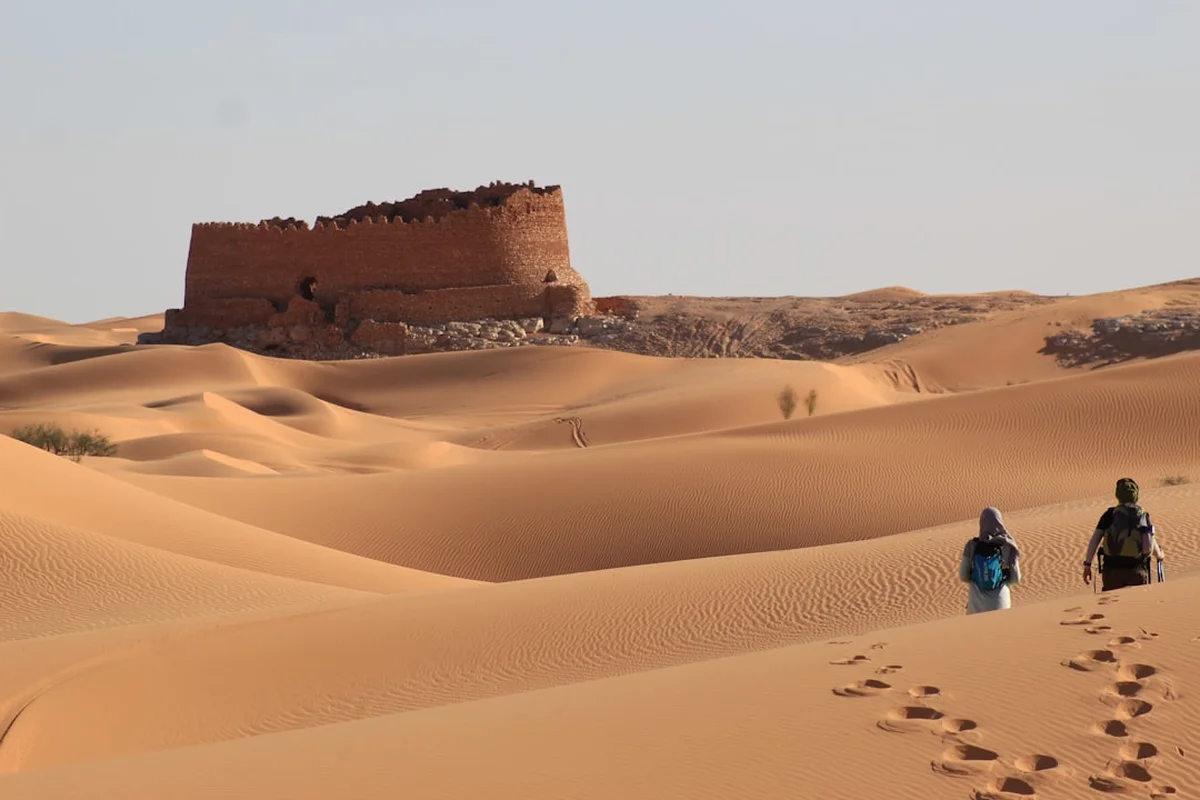
The Tadrart Rouge Traverse is a profound journey into the deepest reaches of the Algerian Sahara, a landscape where the earth itself seems to glow with an internal fire. Located within the Tassili n'Ajjer National Park—a UNESCO World Heritage site—this 70-kilometre trek navigates a surreal world of towering orange and deep-red sand dunes, gravity-defying sandstone arches, and narrow canyons etched with Neolithic history. Starting from the desert outpost of Djanet, the traverse leads hikers through the Oued In Djerane and into the heart of the "Red Tadrart," culminating in the massive dunes of Tin Merzouga. This is not merely a hike; it is an immersion into a prehistoric "forest of stone" where the silence is absolute and the scale of the landscape is humbling. Guided by local Tuareg experts, travellers traverse ancient riverbeds and climb shifting sands to witness one of the most visually spectacular desert environments on the planet.
- Distance: 70.0 km (approximate, depending on dune navigation)
- Duration: 5–7 days
- Season: October to April (avoiding extreme summer heat)
- Accommodation: Wild camping under the stars (tents and mattresses provided by local crews)
- Highest point: Various dune crests reaching approximately 1,200 m above sea level
- Difficulty: Challenging (due to soft sand, heat, and extreme remoteness)
- Access: 4x4 expedition from Djanet is mandatory for trailhead logistics
Overview
The Tadrart Rouge, or "Red Tadrart," is a mountain range in the extreme southeast of Algeria, forming part of the Tassili n'Ajjer massif. While the Tassili is famous for its "forests of stone," the Tadrart is distinguished by its extraordinary colour palette. As you travel south from Djanet, the landscape undergoes a dramatic metamorphosis: the pale yellow sands of the northern desert gradually deepen into a rich, burnt orange, and finally into the blood-red hues that give the region its name. This colouration is the result of iron oxide coating the quartz grains, creating a visual spectacle that shifts in intensity from the soft pastels of dawn to the fiery brilliance of sunset.
The traverse is a masterclass in geological erosion. Over millions of years, wind and water have carved the sandstone into a labyrinth of canyons, spires, and natural bridges. Hikers move between these monolithic structures, often finding themselves in vast amphitheatres of sand where the dunes of the Erg Admer spill over the black rock of the Tassili. The terrain is varied, ranging from the flat, gravelly beds of ancient oueds (dry rivers) to the steep, exhausting slopes of some of the highest dunes in the Sahara. Walking here requires a rhythmic pace, as the soft sand demands more energy than traditional mountain trails.
Beyond the geology, the Tadrart Rouge Traverse offers a rare opportunity to disconnect from the modern world. There is no mobile signal, no light pollution, and no permanent human habitation. The experience is defined by the Tuareg culture—the "Blue People of the Sahara"—who lead the expeditions. Their knowledge of the terrain, their skill in navigating the trackless dunes, and their evening rituals of tea and bread-making over open fires provide a cultural depth that elevates the trek from a physical challenge to a spiritual journey. To walk the Tadrart is to realise the true meaning of wilderness.
History and Cultural Context
The Tadrart Rouge is a living museum of human history, containing some of the most significant concentrations of rock art in the world. Long before the Sahara became the arid desert we see today, it was a lush, green savannah teeming with wildlife and home to thriving hunter-gatherer societies. The Tassili n'Ajjer National Park, which encompasses the Tadrart, holds over 15,000 drawings and engravings that date back as far as 10,000 BC. These artworks provide a visual record of the "Green Sahara" period, depicting giraffes, elephants, rhinoceroses, and even hippopotamuses—animals that have not inhabited this region for millennia.
The rock art is categorised into several distinct periods, reflecting the changing climate and culture of the inhabitants. The "Round Head" period features mysterious, ethereal figures that suggest complex spiritual beliefs, while the later "Bovidian" period shows the transition to pastoralism, with detailed scenes of cattle herding and domestic life. One of the most famous engravings in the region is "La Vache qui Pleure" (The Crying Cow), a masterfully carved Neolithic petroglyph that depicts a cow with a tear falling from its eye, symbolising the onset of the great drought that transformed the region into desert. Walking the traverse allows hikers to see these masterpieces in their original context, tucked away in shallow caves or on the walls of hidden canyons.
The contemporary guardians of this land are the Tuareg, a Berber ethnic group with a nomadic history spanning centuries. Historically, the Tuareg controlled the trans-Saharan trade routes, navigating the vast "ocean of sand" with camel caravans. Their social structure, language (Tamasheq), and unique indigo-dyed clothing are integral to the identity of the Tadrart. Today, many Tuareg in the Djanet region work as guides, sharing their ancestral knowledge of the desert's flora, fauna, and hidden water sources. Their presence on the traverse is not just a logistical necessity but a vital link to the enduring spirit of the Sahara.
Want more background? Read extended notes on history and cultural context → Learn more
Seasonal Highlights and Weather Reality
The window for trekking the Tadrart Rouge is strictly dictated by the Saharan climate. Between May and September, temperatures can soar above 45°C, making physical exertion dangerous and logistics nearly impossible. Consequently, the trekking season runs from October to April, when the weather is more manageable but still requires careful preparation.
Autumn (October to November): This is a popular time for the traverse. Daytime temperatures typically range from 25°C to 30°C, providing comfortable walking conditions. The nights are cool but rarely freezing. The air is generally clear, offering excellent visibility for photography and stargazing.
Winter (December to February): This is the peak season for many hikers. While daytime temperatures are a pleasant 18°C to 22°C, the desert nights can be bitterly cold, often dropping to 0°C or even slightly below. A high-quality sleeping bag is essential during these months. Winter also brings the clearest skies, though the occasional sandstorm can occur if the winds pick up.
Spring (March to April): Temperatures begin to rise again, often reaching the low 30s by mid-afternoon. This period is beautiful but carries a higher risk of the "Sirocco" or "Ghibli"—strong, hot winds that can whip up sand and reduce visibility to a few metres. These storms can last for several hours or even days, requiring hikers to seek shelter and cover their faces with the traditional Tuareg cheche (turban).
Regardless of the month, the Sahara is a land of extremes. The lack of humidity means that heat is felt more intensely during the day, while the absence of cloud cover allows heat to escape rapidly at night. Sun protection is a constant requirement, and hydration is the single most important factor in maintaining health on the trail.
Recommended Itinerary
7-Day Tadrart Rouge Traverse Itinerary
Day 1: Djanet to El Berid
- Distance: 10 km (walking) + 4x4 transfer
- Elevation gain: 150 m
- Time: 4 hours walking
- Morning departure from Djanet by 4x4, heading south into the Tassili n'Ajjer
- Initial walk through the Oued In Djerane, a wide canyon flanked by high sandstone walls
- First encounters with Neolithic rock art, including engravings of giraffes and elephants
- Set up camp at El Berid, where the first orange dunes begin to meet the rock
- Evening introduction to the Tuareg tea ceremony around the campfire
Day 2: El Berid to Moul n'Aga
- Distance: 14 km
- Elevation gain: 200 m
- Time: 6 hours
- The landscape begins to redden as you move deeper into the Tadrart
- Navigate through a labyrinth of rock spires and narrow passages
- Ascend the first major dunes for a panoramic view of the "stone forest"
- Arrive at Moul n'Aga, a spectacular site where massive dunes are framed by natural rock arches
- Camp nestled between the dunes and the protective rock walls
Day 3: Moul n'Aga to Tin Merzouga
- Distance: 16 km
- Elevation gain: 250 m
- Time: 7 hours
- A demanding day of walking through soft sand and over undulating dune crests
- The sand colour transitions to a deep, saturated red
- Pass through the "Cathedral" rock formations, towering monoliths that resemble gothic architecture
- Reach the base of the Tin Merzouga dunes, some of the highest in the region
- Sunset climb to the summit of the highest dune for a 360-degree view of the red desert stretching toward the Libyan border
Day 4: Exploration of the Tin Merzouga Cirque
- Distance: 12 km (loop)
- Elevation gain: 300 m
- Time: 5–6 hours
- A day dedicated to exploring the vast amphitheatre of Tin Merzouga
- Visit hidden rock art sites tucked away in the surrounding cliffs
- Observe the "singing sands" phenomenon, where the movement of sand grains creates a low-frequency hum
- Photography focus: capturing the shifting shadows and intense colours of the red dunes
- Second night at the Tin Merzouga base camp
Day 5: Tin Merzouga to Oued In Djerane (Upper Section)
- Distance: 15 km
- Elevation gain: 100 m
- Time: 6 hours
- Begin the return journey, taking a different route through the northern canyons
- Walk through wide oueds where desert flora like the Calotropis procera (Apple of Sodom) can be found
- Search for "desert roses"—crystalline formations of gypsum and sand
- Camp in a sheltered canyon section of the Oued In Djerane
Day 6: Oued In Djerane to Tehe n'Akli
- Distance: 13 km
- Elevation gain: 150 m
- Time: 5 hours
- Visit the most famous rock art sites of the traverse, including the "Crying Cow" engraving
- Explore the "Black Tadrart" sections where volcanic rock contrasts sharply with the red sand
- Final night in the desert at Tehe n'Akli, a site known for its bizarrely eroded rock "mushrooms"
- Farewell dinner prepared by the Tuareg crew
Day 7: Tehe n'Akli to Djanet
- Distance: 5 km (walking) + 4x4 transfer
- Elevation: Minimal
- Time: 2 hours walking
- Short morning walk to the 4x4 pickup point
- Drive back to Djanet, stopping at the "La Vache qui Pleure" site if not visited previously
- Afternoon arrival in Djanet for a well-earned shower and exploration of the local market
- Transfer to Djanet Inedbirene Airport for evening flights
Important Notes:
- The itinerary is flexible and may be adjusted by the guides based on weather conditions or group fitness
- Water is a precious resource; while the support vehicles carry supplies, conservation is essential
- Walking is mostly done in the early morning and late afternoon to avoid the midday sun
- The 4x4 vehicles carry all heavy gear, water, and food; hikers only carry a daypack
Planning and Bookings
Book Your Trip
Everything you need to plan your journey
Accommodation
Find places to stay near Djanet
Flights
Search flights to Djanet
Essential Preparation
Planning a trek in the Algerian Sahara requires significant lead time, primarily due to visa requirements and the necessity of booking through a licensed local agency. Independent trekking is not permitted in the Tassili n'Ajjer National Park for safety and security reasons. You must coordinate with a tour operator based in Djanet who will provide the mandatory guides, 4x4 support, and camping equipment.
Fitness is a key consideration. While the elevation gain is modest compared to alpine treks, walking 12–16 kilometres a day in soft sand is physically taxing. It engages different muscle groups, particularly the calves and stabilisers. It is recommended to train on sand or uneven terrain before arrival. Additionally, ensure your passport is valid for at least six months beyond your travel dates and check the current Algerian visa process, which often requires an official invitation letter from your local trekking agency.
Trail Accommodation
Accommodation on the Tadrart Rouge Traverse is exclusively wild camping. There are no permanent huts, lodges, or established campsites with facilities. The experience is one of total immersion in the desert environment.
Camping Facilities:
- Individual or shared tents provided by the trekking agency
- Thick foam mattresses (surprisingly comfortable) provided for each hiker
- A large communal "mess tent" or windbreak for evening meals
- Basic washing facilities: usually a basin of warm water provided in the morning and evening
- "Bush toilets": a designated area away from camp; all waste must be buried or packed out according to LNT principles
What is NOT Provided:
- Sleeping bags (you must bring your own, rated to at least 0°C for winter treks)
- Pillows (an inflatable travel pillow is recommended)
- Showers (wet wipes and limited basin water are the norm for 6–7 days)
- Electricity (there are no charging points; bring solar chargers or high-capacity power banks)
Required Gear
- Trekking boots or shoes: Lightweight, breathable, and well-broken in. Some prefer high-top boots to keep sand out, while others prefer trail runners with gaiters.
- Sand gaiters: Essential for preventing fine Saharan sand from filling your shoes.
- Daypack: 20–30L for carrying water, sunblock, camera, and lunch.
- Sleeping bag: 3-season (comfort rating 0°C to 5°C) for autumn/spring; 4-season for winter.
- Headlamp: With spare batteries; the desert is pitch black once the fire goes out.
- Cheche (Tuareg turban): Can be purchased in Djanet. It is the most effective way to protect your head, neck, and face from sun and wind.
- Polarised sunglasses: The glare from the sand can be intense.
- Personal first aid kit: Include blister pads (Compeed), rehydration salts, and any personal medications.
What to Bring
- Water treatment: While guides provide water from Djanet, bringing a filter or purification tablets provides an extra layer of safety.
- Sun protection: SPF 50+ sunscreen, lip balm with SPF, and a wide-brimmed hat if not using a cheche.
- Clothing: Lightweight, long-sleeved shirts and trousers to protect against the sun. A warm fleece or down jacket is mandatory for the cold evenings.
- Toiletries: Biodegradable wet wipes, hand sanitiser, and biodegradable soap.
- Power banks: Solar-compatible banks are ideal for the high-exposure environment.
- Snacks: High-energy bars, nuts, or dried fruit to supplement the provided meals.
- Cash: Algerian Dinars (DZD) for tips for the crew and souvenirs in Djanet. Credit cards are rarely accepted in the region.
Permits
Access to the Tadrart Rouge is strictly regulated by the Office National du Parc Culturel du Tassili n'Ajjer (ONPCTA). You cannot simply show up and start walking. The permit process is handled entirely by your authorised local trekking agency, and the cost is typically included in your tour package.
Permit Requirements:
- Mandatory Guide: You must be accompanied by a licensed local guide at all times.
- 4x4 Support: A support vehicle is required for safety, water transport, and emergency evacuation.
- National Park Fees: A daily fee is paid to the ONPCTA for every visitor. This contributes to the conservation of the rock art and the maintenance of the park.
- Police Registration: Your agency will register your itinerary and passport details with the local authorities in Djanet before departure.
Visa Information: For many nationalities, obtaining an Algerian visa is the most complex part of the planning process. You will need an "Attestation d'Hébergement" or an invitation letter from your Djanet-based agency. It is recommended to start the visa application at least 6–8 weeks before your planned departure. Some travellers may be eligible for a "Visa on Arrival" if booked through specific government-approved agencies, but this must be confirmed well in advance.
Other Activities in the Area
Djanet and the surrounding Tassili n'Ajjer offer several other experiences that complement the Tadrart Rouge Traverse:
- Djanet Market: Explore the local souq to buy traditional Tuareg jewellery, leatherwork, and the essential indigo cheche. It is a vibrant place to experience the local culture before or after your trek.
- Essendilene Canyon: A shorter excursion north of Djanet, featuring a lush guelta (desert pool) hidden at the end of a dramatic, oleander-filled canyon.
- The Plateau of Tassili n'Ajjer: For those with more time, a multi-day trek up the "Akba" (steep passes) to the high plateau offers a different landscape of cypress trees and even more extensive rock art sites like Sefar and Jabbaren.
- The "Crying Cow" (La Vache qui Pleure): Located just outside Djanet, this is one of the world's most famous examples of Neolithic engraving. Even if you see it during your traverse, a dedicated visit allows for better lighting and more time for contemplation.
- Erg Admer: Spend an evening on the edge of this massive dune field near Djanet for a final Saharan sunset and a traditional "sand bread" (taguella) demonstration.
Safety and Conditions
Environmental Hazards: The primary risks on the Tadrart Rouge Traverse are dehydration, heat exhaustion, and hyponatremia. The dry air means you lose moisture through respiration and perspiration without even realising it. You must drink water constantly, even if you do not feel thirsty. Electrolyte replacements are highly recommended to maintain salt balance.
Remote Location: You will be several hours' drive from the nearest medical facility in Djanet. There is no cellular coverage. Your guide will typically carry a satellite phone or a long-range radio for emergencies. It is essential to have comprehensive travel insurance that includes emergency medical evacuation by air.
Wildlife: While the Sahara is not teeming with dangerous animals, scorpions and vipers do exist. They are generally nocturnal and shy. To stay safe, never put your hands into rock crevices without looking, always shake out your boots in the morning, and use a headlamp when walking around camp at night. Most "encounters" are harmless if you maintain a respectful distance.
Navigation: The desert is a featureless landscape to the untrained eye. Never wander away from the group or the camp without informing your guide. Sandstorms can erase tracks in minutes and reduce visibility to near zero. If caught in a storm, stay put, cover your face, and wait for your guide to locate you.
Political Stability: While the Djanet region is generally considered safe for tourism, it is located near the borders of Libya and Niger. The Algerian military maintains a strong presence in the area to ensure security. Always follow the advice of your local agency and check your government's travel advisories before booking.
Side Trips and Points of Interest
The Arch of Tikobaouine: Often visited on the way to or from the Tadrart, this massive natural sandstone arch is a photographer's dream. The surrounding area is a labyrinth of rock pillars that look like a ruined city. It is an excellent spot for a midday break and some light scrambling.
The Guelta of Touia: Depending on the season and recent rainfall, your guide may take you to a guelta—a natural water tank in the rock. These are vital lifelines for the local nomadic Tuareg and their livestock. Seeing water in such an arid environment is a powerful reminder of the desert's hidden complexity.
Neolithic "Workshops": In certain areas of the oueds, the ground is littered with prehistoric tools—arrowheads, scrapers, and grinding stones made of flint or basalt. While it is tempting to take a souvenir, it is strictly forbidden to remove any archaeological artefacts from the National Park. Take photos, but leave the history where it lies.
The Singing Dunes of Tin Merzouga: If the wind conditions are right, the dunes of Tin Merzouga "sing." This acoustic phenomenon occurs when sand avalanches create a low-frequency hum that can be heard for kilometres. It is an eerie, unforgettable sound that the Tuareg often attribute to desert spirits.
Leave No Trace
The Tassili n'Ajjer is a fragile ecosystem and a priceless archaeological site. With increasing tourism, the "Leave No Trace" principles are more important than ever to preserve the Tadrart Rouge for future generations.
Your responsibility as a hiker:
- Waste Management: Pack out all non-biodegradable waste, including wet wipes, cigarette butts, and plastic. For human waste, follow the "cat hole" method, digging a hole 15–20 cm deep at least 50 metres from any oued or rock art site. Burn or pack out your toilet paper.
- Protect the Art: Never touch the rock paintings or engravings. The oils from human skin can cause the pigments to degrade. Never apply water or any other liquid to the art to make it "pop" for a photo—this causes irreparable damage.
- Respect the Flora: Desert plants grow incredibly slowly. Do not pick flowers or break branches for firewood. Your crew will bring wood or use dead, fallen scrub for the campfire.
- Water Conservation: Do not use soap or detergent in gueltas or natural water sources. Even biodegradable soap can disrupt the delicate balance of these tiny ecosystems.
- Archaeological Integrity: Leave all stone tools and pottery shards exactly where you find them. Their scientific value lies in their specific location.
The Sahara is a landscape of silence and space. Respect the quietude by avoiding loud music and keeping your impact on the physical environment to an absolute minimum.
 Australia