
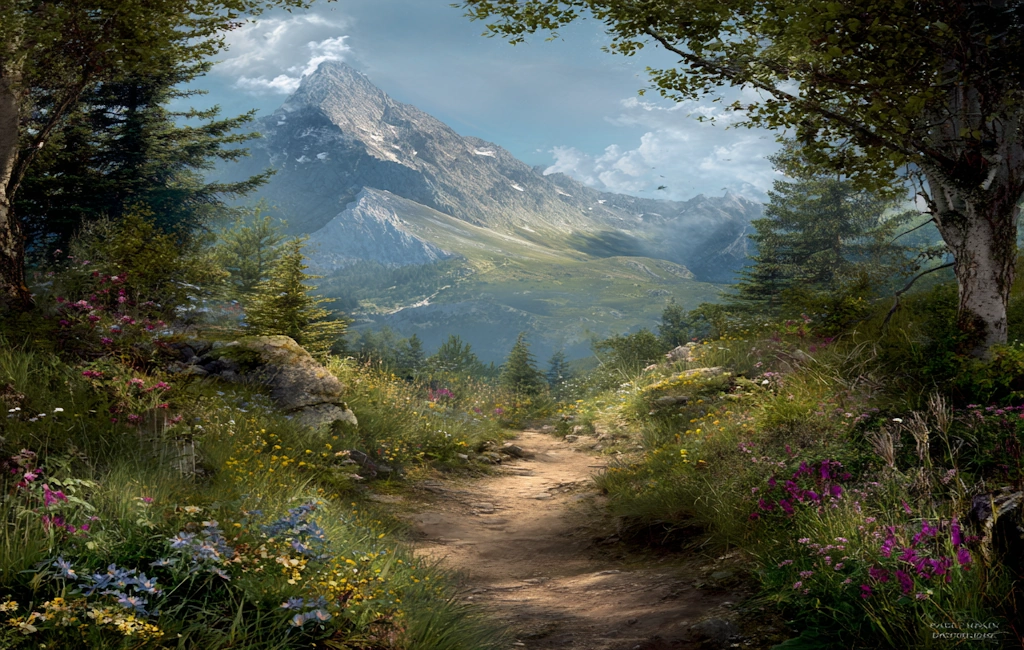
Scafell Pike via Corridor Route
The Corridor Route to Scafell Pike offers a dramatic and rewarding ascent of England's highest mountain. This path is renowned for its rugged beauty, challenging terrain, and the sense of wildness it provides, even within the popular Lake District National Park. Unlike the more direct routes from Wasdale Head or Borrowdale, the Corridor Route approaches Scafell Pike from the west, traversing a series of rocky ridges, scree slopes, and narrow mountain paths. It’s a route that demands good navigation skills, a reasonable level of fitness, and a respect for mountain weather, which can change with alarming speed.
- Distance: 14.0 km (return)
- Elevation Gain: 950 m
- Duration: 5–6 hours
- Difficulty: Challenging
- Best Time: April–October
- Closest Village: Seathwaite (near Borrowdale)
- Trailhead Access: Limited; requires careful planning
- Permits: Not required
Overview
The Corridor Route to Scafell Pike is a journey through a landscape sculpted by ice and time. Starting from the remote valley of Seathwaite, the path gradually ascends, weaving through ancient oak woodlands before emerging onto the open fellside. The route is characterised by its varied terrain: from well-trodden paths in the lower sections to boulder fields and exposed ridges higher up. The "Corridor" itself is a section of narrow, rocky path that winds between steep, imposing crags, offering a thrilling and memorable passage. This route provides a more adventurous and less crowded experience compared to the main ascents, making it a favourite among experienced hikers seeking a true mountain challenge.
As you climb, the views open up, revealing the vast expanse of the Lake District fells. The summit of Scafell Pike, at 978 metres, is a cairn-strewn plateau offering panoramic vistas across England's highest peaks, including Great Gable, Bowfell, and the Langdale Pikes. On a clear day, you can see as far as the Isle of Man and the Scottish coast. However, the weather on Scafell Pike is notoriously fickle. Mist can descend rapidly, reducing visibility to mere metres and transforming the familiar landscape into a disorienting maze. Therefore, preparation and navigation are paramount for a safe and enjoyable ascent.
The Corridor Route is not for the faint-hearted. It involves significant elevation gain over a relatively short distance, with sections of steep scree and rocky scrambling. However, for those who are well-prepared and equipped, the reward is an unforgettable experience of conquering England's highest peak via one of its most spectacular approaches.
History and Cultural Context
The landscape surrounding Scafell Pike has a rich history, shaped by millennia of human activity and natural forces. For centuries, these mountains were the domain of shepherds and farmers, who carved out a living from the harsh terrain. The valleys, such as Borrowdale and Wasdale, have been inhabited for thousands of years, with evidence of Bronze Age settlements and ancient trackways still visible.
The ascent of Scafell Pike itself became popularised in the 19th century with the rise of mountaineering and tourism in the Lake District. Early climbers and walkers were drawn to the challenge of reaching the highest point in England. The development of paths, including the Corridor Route, was often a gradual process, evolving from sheep tracks and ancient packhorse routes. The name "Scafell" is believed to derive from Old Norse, meaning "rocky peak" or "skate's peak," reflecting the mountain's rugged nature.
The National Trust acquired much of the land around Scafell Pike in the early 20th century, recognising its national importance and the need for its preservation. This stewardship has helped to maintain the wild character of the fells and protect the fragile ecosystems. The Corridor Route, in particular, has a history of being a more challenging and less trodden path, favoured by those seeking a more authentic mountain experience away from the busiest routes. Its development likely involved local guides and fell walkers adapting existing routes to create a more direct and exciting ascent from the western side.
Seasonal Highlights and Weather Reality
The Lake District experiences distinct seasons, each offering a different perspective on Scafell Pike and the Corridor Route.
Spring (April–May): This is a beautiful time to ascend. The fells begin to turn green, wildflowers start to bloom, and the days become longer. However, snow can linger on the higher slopes and the summit plateau well into May, especially in colder years. Weather can be highly variable, with sunshine, rain, and even snow possible within the same day. Navigation can be tricky if snow obscures the path.
Summer (June–August): This is the most popular season, with the longest daylight hours and generally the warmest weather. The fells are at their most vibrant, and the views from the summit can be spectacular. However, summer also brings the highest number of visitors, meaning the Corridor Route, while less busy than some others, will still see considerable footfall. Sandflies can be a nuisance in sheltered, damp areas, particularly in the early morning and late evening. The risk of thunderstorms increases during the summer months, so always check the forecast.
Autumn (September–October): Autumn offers a stunning display of colours as the bracken and heather turn shades of gold, russet, and purple. The air is often crisp and clear, providing excellent visibility. The crowds thin out after the summer holidays, offering a more peaceful experience. However, daylight hours shorten, and the weather can become more unpredictable, with increased chances of strong winds, heavy rain, and early snowfalls on the higher ground.
Winter (November–March): Winter ascents of Scafell Pike via the Corridor Route are for experienced mountaineers only. The mountain is often covered in snow and ice, requiring the use of ice axe, crampons, and advanced navigation skills. The days are short, and the weather can be extreme, with blizzards and severe gales posing significant risks. The Corridor Route can become impassable or extremely dangerous in winter conditions. For most walkers, winter is best avoided unless they have specific winter mountaineering experience and equipment.
Recommended Itinerary
Scafell Pike via Corridor Route - Day Hike Itinerary
Early Morning (Approx. 8:00 AM): Arrival at Seathwaite
- Park at the limited pay and display car park at Seathwaite Farm (GPS: 54.524744, -3.215003). Arrive early, especially on weekends and during peak season, as spaces are limited.
- The road to Seathwaite is narrow and single-track in places; drive with caution.
- Briefly check weather conditions and ensure you have all necessary gear.
Morning (Approx. 8:30 AM - 12:30 PM): Ascent through Woodland and onto the Fells
- Begin the walk from Seathwaite, heading west towards Styhead Tarn.
- Follow the well-defined path through the picturesque Borrowdale valley, initially passing through ancient oak woodlands.
- The path gradually steepens as you leave the valley floor and begin to gain altitude.
- You will pass by several small waterfalls and streams, offering opportunities for water replenishment (treatment recommended).
- The terrain becomes more rugged as you approach Styhead Tarn, a beautiful mountain lake situated at a significant elevation.
- From Styhead Tarn, the route begins to ascend more steeply towards the start of the Corridor.
Midday (Approx. 12:30 PM - 2:30 PM): The Corridor and Summit Ascent
- Reach the start of the "Corridor" section. This is a narrow, rocky path that winds between steep crags and scree slopes.
- Navigate carefully through this section, paying close attention to your footing. The path can be exposed in places.
- Continue the steady climb, with the summit of Scafell Pike becoming increasingly visible.
- The final approach to the summit involves navigating a large boulder field and scree slopes.
- Reach the summit plateau of Scafell Pike (978 m). Take time to enjoy the panoramic views (weather permitting) and celebrate your achievement.
Afternoon (Approx. 2:30 PM - 5:30 PM): Descent and Return to Seathwaite
- Begin your descent, retracing your steps carefully down the scree and boulder fields.
- Navigate the Corridor section once more, maintaining focus on your footing.
- Continue descending towards Styhead Tarn.
- From Styhead Tarn, follow the path back down towards Seathwaite. This section can be steep and potentially slippery, especially after rain.
- Return to the Seathwaite car park.
Important Notes:
- This is a challenging mountain walk. Ensure you are fit enough and have appropriate gear.
- Weather can change rapidly. Always check the forecast before you set off and be prepared for all conditions.
- Navigation skills are essential, especially in poor visibility. Carry a map and compass and know how to use them.
- The Corridor Route is not recommended for beginners or those with a fear of heights.
- Carry sufficient food and water for the duration of the walk.
- Inform someone of your route and expected return time.
Planning and Bookings
Book Your Trip
Everything you need to plan your journey
Accommodation
Find places to stay near Seathwaite
Flights
Search flights to Seathwaite
Essential Preparation
The Corridor Route to Scafell Pike is a serious mountain undertaking that requires thorough preparation. Unlike some more popular trails, access to the trailhead at Seathwaite is somewhat limited, and the route itself is challenging. Your preparation should focus on physical fitness, navigational competence, and understanding the specific demands of this ascent.
Fitness: The route involves a significant elevation gain of 950 metres over a distance of 14 km. This requires a good level of cardiovascular fitness and strong leg muscles. Regular hiking, hill walking, or running in the weeks leading up to your trip is highly recommended. Be prepared for steep ascents and descents, and the physical exertion of navigating rocky terrain.
Logistics: Seathwaite is a small hamlet accessible via narrow, winding roads. The nearest major town is Keswick, which offers a wider range of accommodation, shops, and services. If travelling by public transport, reaching Seathwaite is challenging. The nearest bus stop is in Grange, from where it's a considerable walk or a pre-booked taxi to Seathwaite. Therefore, travelling by car is the most practical option for most visitors. Ensure your vehicle is suitable for narrow country lanes.
Base Town/City Information: Keswick is the primary hub for exploring the northern Lake District, including Borrowdale and the routes to Scafell Pike. It offers a range of accommodation from budget hostels and B&Bs to hotels. Keswick has numerous outdoor gear shops, supermarkets for supplies, and a wealth of pubs and restaurants. It's an ideal base for acclimatising and making final preparations.
Trail Accommodation
This is a day hike requiring no overnight accommodation on the trail itself. Walkers typically base themselves in nearby towns or villages such as Keswick or Borrowdale for accommodation before and after their ascent.
Accommodation Options:
- Hostels and Bunkhouses: Available in Keswick and surrounding areas, offering budget-friendly shared dormitory-style rooms.
- Bed & Breakfasts (B&Bs) and Guesthouses: Numerous options in Keswick and smaller villages, providing comfortable private rooms with breakfast.
- Hotels: A range of hotels in Keswick cater to various budgets.
- Self-Catering Cottages: Ideal for groups or families seeking more independence.
Booking accommodation in advance is highly recommended, especially during peak season (summer holidays, bank holiday weekends) and for popular locations like Keswick.
Required Gear
- Sturdy Hiking Boots: Waterproof, with good ankle support and a well-worn sole. Essential for navigating rocky and uneven terrain.
- Waterproof Jacket: Breathable and fully waterproof (e.g., Gore-Tex). The weather can change rapidly, and staying dry is crucial for warmth and safety.
- Waterproof Overtrousers: Full-length zips are beneficial for ease of use.
- Warm Layers: Multiple thin layers are better than one thick one. Include a fleece or insulated jacket, and a base layer made of merino wool or synthetic material (avoid cotton).
- Hat and Gloves: Even in summer, the summit can be cold and windy. A warm hat and gloves are essential.
- Backpack: A comfortable daypack (25-35 litres) to carry your gear.
- Navigation Tools: A detailed Ordnance Survey (OS) map of the area (Explorer OL6 or OL7), a compass, and a GPS device or smartphone with offline mapping capabilities. Know how to use them.
- Head Torch: With fresh batteries. Essential in case of unexpected delays or if starting/finishing in low light.
- First-Aid Kit: Including blister plasters, bandages, antiseptic wipes, pain relievers, and any personal medication.
- Sun Protection: Sunscreen, sunglasses, and a sun hat, even on cloudy days, as UV rays are stronger at altitude.
What to Bring
- Food: High-energy snacks such as energy bars, nuts, dried fruit, and sandwiches. Pack more than you think you'll need in case of delays.
- Water: At least 2 litres of water per person. There are opportunities to refill from streams, but water treatment (filter or purification tablets) is strongly advised.
- Mobile Phone: Fully charged, with a power bank if possible. Signal can be intermittent, but it's vital for emergencies.
- Emergency Shelter: A lightweight emergency bivvy bag or survival blanket.
- Whistle: For signalling in an emergency.
- Trekking Poles: Optional, but can significantly aid stability and reduce strain on knees during descents.
- Small Towel: Useful for drying off after rain or for use at the car park.
- Cash: For parking fees and any potential purchases in local villages.
- Insect Repellent: Particularly useful during warmer months for sandflies and midges.
Permits
No specific permits are required to hike the Corridor Route to Scafell Pike. The land is largely managed by the National Trust and is accessible to the public for recreational purposes. However, parking at Seathwaite Farm is subject to a pay and display fee.
Parking Fees:
- Seathwaite Farm car park operates on a pay and display system. Fees are typically modest but can vary. It is advisable to carry change or check for contactless payment options if available.
- Spaces are limited, especially during peak times. Arriving early is crucial to secure a parking spot. If the car park is full, you may need to find alternative parking further away or consider a different route or day.
National Trust Access: While no permit is needed, walkers are expected to adhere to the principles of responsible access and to respect the environment. The National Trust works to conserve the landscape and its wildlife, and visitors are encouraged to follow the Countryside Code.
Car Park Etiquette:
- Do not park on verges or block gates, as this can impede access for farmers and emergency services.
- Be mindful of the limited capacity and consider car-sharing or alternative transport if possible.
Other Activities in the Area
The Lake District offers a wealth of activities beyond climbing Scafell Pike:
- Hiking and Fell Walking: Numerous other trails exist, from gentle valley walks to challenging mountain ascents. Explore nearby peaks like Great Gable, Bowfell, or the Langdale Pikes.
- Watersports on Derwentwater: Located near Keswick, Derwentwater offers opportunities for kayaking, canoeing, paddleboarding, and boat trips.
- Visiting Villages: Explore charming villages like Grasmere, Ambleside, and Coniston, each with its own unique character, shops, and tearooms.
- Literary Connections: Visit Dove Cottage in Grasmere, the former home of William Wordsworth, or explore Beatrix Potter's connections to the region.
- Honister Slate Mine: Experience the thrill of the Via Ferrata or take a mine tour at this working slate mine, located on the Honister Pass.
- Lake Cruises: Enjoy scenic boat trips on Windermere, Ullswater, or Coniston Water for a different perspective of the landscape.
- Cycling: Numerous cycle routes cater to all abilities, from gentle lakeside paths to challenging mountain biking trails.
Safety and Conditions
Weather: The weather on Scafell Pike is notoriously unpredictable and can change rapidly. Always check the mountain forecast (e.g., Met Office Mountain Forecast for the Lake District) before you set off and be prepared for all conditions, including strong winds, heavy rain, mist, and even snow, regardless of the season. Hypothermia is a real risk, even in summer.
Navigation: The Corridor Route is not always clearly marked, especially in poor visibility. You must carry a map and compass and know how to use them. GPS devices or smartphone apps with offline maps are useful backups but should not be relied upon solely. If you are not confident in your navigation skills, consider hiring a qualified mountain leader.
Terrain: The route involves steep ascents and descents, rocky paths, scree slopes, and potentially slippery sections. Good quality hiking boots with ankle support are essential. Be mindful of loose rocks and take care with your footing, especially on the descent.
Emergencies: In case of an emergency, dial 999 or 112 and ask for Mountain Rescue. Provide your location as accurately as possible. It is advisable to have a fully charged mobile phone and consider carrying a personal locator beacon (PLB) for remote areas.
Sandflies and Midges: During warmer months, sandflies and midges can be prevalent, particularly in sheltered, damp areas. They can be a significant nuisance. Carrying effective insect repellent is recommended.
Car Park Safety: Ensure your vehicle is locked and any valuables are out of sight. Be aware of your surroundings, especially when arriving or leaving in the dark.
Respect the Environment: Stick to marked paths to avoid damaging fragile vegetation and to prevent erosion. Take all litter home with you.
Side Trips and Points of Interest
Styhead Tarn: A picturesque mountain tarn situated at a significant elevation, offering a brief respite and a chance to admire the surrounding fells. It's a key waypoint on the route and a popular spot for a break.
The Corridor: The namesake section of the route. This narrow, rocky path winds between imposing crags and scree. It's a thrilling and memorable part of the ascent, offering a sense of adventure and a dramatic change in scenery. The path requires careful navigation and sure-footedness.
Scafell Pike Summit Plateau: The summit itself is a broad, cairn-strewn plateau. While the views can be spectacular on a clear day, it's also a place where mist can descend rapidly, making navigation challenging. Take time to appreciate the vastness of the landscape and the achievement of reaching England's highest point.
Views of Great Gable: As you ascend and navigate the Corridor, you will be treated to impressive views of the iconic Great Gable mountain, a prominent landmark in the Western Fells.
Seathwaite Valley: The starting point of the walk offers its own charm, with its ancient woodlands, waterfalls, and the River Derwent. It provides a beautiful introduction to the Lake District's wild beauty.
Leave No Trace
The Lake District is a cherished natural environment, and it's vital that all visitors practice Leave No Trace principles to help preserve its beauty and ecological integrity for future generations. The Corridor Route, while less frequented than some others, still experiences visitor impact.
Plan Ahead and Prepare: Understand the route, weather conditions, and potential hazards. Pack appropriately and be prepared for self-sufficiency.
Travel and Camp on Durable Surfaces: Stick to the established paths. Avoid walking on fragile vegetation, especially mosses and lichens, which can take years to recover. The Corridor Route has a defined path, and straying can lead to erosion.
Dispose of Waste Properly: Pack out everything you pack in. This includes all litter, food scraps, and anything else you bring onto the mountain. Use the designated bins at the Seathwaite car park or take your waste home with you. Use toilet facilities where available, or if not, dig a cathole at least 60 metres away from water sources, trails, and campsites, and bury human waste.
Leave What You Find: Do not disturb or remove any natural or cultural objects. Leave rocks, plants, and other natural objects as you find them.
Minimise Campfire Impacts: Campfires are generally not permitted on Scafell Pike or its approaches. If you are camping elsewhere in the Lake District, use a stove and follow local regulations.
Respect Wildlife: Observe wildlife from a distance and never feed wild animals. They have specific diets and needs, and human food can be harmful.
Be Considerate of Other Visitors: Keep noise levels down, yield to other walkers on narrow paths, and be courteous. The aim is to enjoy the outdoors without impacting the experience of others or the environment.