
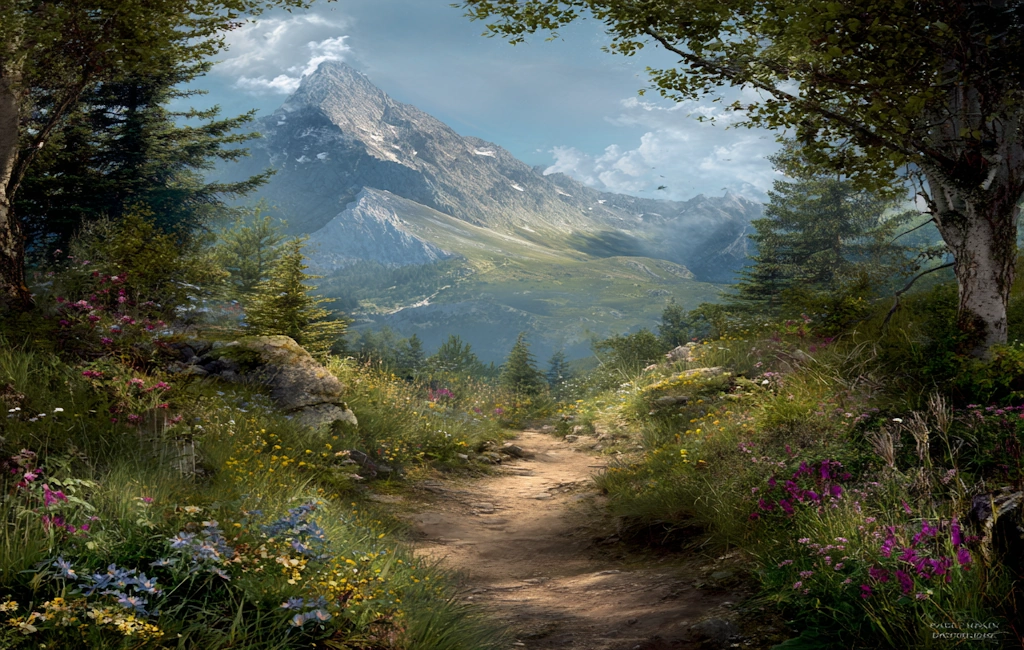
Mount Rwenzori Central Circuit - The Mountains of the Moon
The Mount Rwenzori Central Circuit is Africa’s most technically demanding and visually surreal trekking experience. Located in the Rwenzori Mountains National Park along the border of Uganda and the Democratic Republic of the Congo, this 56-kilometre loop traverses a landscape so otherworldly it was once believed by ancient geographers to be the source of the Nile. Unlike the volcanic peaks of Kilimanjaro or Mount Kenya, the Rwenzori range is a block of ancient crystalline rock uplifted from the Earth's crust, resulting in a jagged, multi-peaked massif that remains permanently glaciated despite sitting just north of the Equator. The Central Circuit is a journey through five distinct vegetation zones, from lush tropical rainforests and dense bamboo thickets to the hauntingly beautiful Afro-alpine moorlands dominated by prehistoric giant lobelias and groundsels. This is not merely a hike; it is an expedition into a vertical wilderness where mud, mist, and moss create an environment found nowhere else on the planet.
- Distance: 56.0 km loop
- Duration: 6–7 days (8 days recommended for Margherita Peak summit)
- Season: June to August and December to February (dry seasons)
- Huts: Nyabitaba, John Matte, Bujuku, Elena (summit), Kitandara, Guy Yeoman
- Highest point: Margherita Peak (5,109 m) on Mount Stanley
- Difficulty: Very Challenging (requires high fitness and resilience to wet conditions)
- Starting Point: Nyakalengija Trailhead (1,615 m)
- Permits: Mandatory through Uganda Wildlife Authority (UWA) and organised via licensed operators
Overview
The Rwenzori Mountains, famously identified as the "Mountains of the Moon" by the Alexandrian geographer Ptolemy in 150 AD, represent a world of extremes. While Kilimanjaro offers a steady climb through predictable zones, the Rwenzori Central Circuit is a rugged, undulating odyssey through some of the wettest terrain in Africa. The range receives over 2,500 mm of rainfall annually, creating a landscape defined by vast "bogs"—high-altitude wetlands filled with deep mud and tussock grass that test the physical and mental fortitude of even the most seasoned trekkers. However, the reward for navigating this challenging terrain is an encounter with a botanical wonderland. The "bigo bogs" are home to giant heathers draped in "old man’s beard" lichens, and forests of giant groundsels (Senecio) and lobelias that grow to heights of five metres or more, looking like something from a prehistoric era.
The Central Circuit itself is a high-altitude loop that circles the heart of the massif, providing views of the range’s major peaks: Mount Stanley, Mount Speke, and Mount Baker. For those with the ambition and technical preparation, the circuit serves as the base for an ascent of Margherita Peak (5,109 m), the third-highest point in Africa. Unlike the walk-up summits of other African peaks, Margherita requires basic mountaineering skills, including the use of crampons, ice axes, and ropes to navigate the permanent glaciers. Even for those staying on the main circuit, the elevation gain of over 4,200 metres and the constant "up and down" nature of the trail make this one of the most strenuous treks in the world.
The experience is defined by its isolation. While thousands flock to Kilimanjaro every year, the Rwenzori Mountains see only a fraction of that traffic. This ensures a sense of genuine exploration and solitude. The infrastructure consists of basic wooden huts and boardwalks—many of which were recently upgraded to help trekkers navigate the most treacherous bog sections—but the environment remains raw and unforgiving. To walk the Central Circuit is to accept the inevitability of being wet and muddy, but in exchange, you are granted access to a cathedral of ice and stone that feels entirely disconnected from the modern world.
History and Cultural Context
The Rwenzori Mountains hold deep spiritual and cultural significance for the local Bakonzo people who live on the lower slopes. For generations, the Bakonzo have revered the mountains as the home of their primary deity, Kitasamba, who resides in the high snows. The mountains were traditionally seen as a source of life, providing the water that feeds the valleys below. Local hunters and gatherers have long navigated the lower forests, but the high, glaciated peaks remained largely untouched by humans until the late 19th century.
European interest in the range was sparked by the search for the source of the Nile. In 1888, the explorer Henry Morton Stanley became the first European to confirm the existence of the snow-capped range, which had been hidden by clouds during previous expeditions. Stanley adopted the local name "Ruwenzori," which translates roughly to "Rain-Maker" or "Cloud-King." However, it was not until 1906 that a scientific expedition led by the Duke of Abruzzi, Luigi Amedeo, successfully mapped the range and summited all the major peaks. The Duke’s expedition was a masterpiece of early 20th-century mountaineering, involving over 150 porters and producing photographs and maps that remained the standard for decades. The highest peak was named Margherita after the Queen of Italy.
In 1991, the Rwenzori Mountains National Park was established to protect this unique ecosystem, and in 1994, it was designated a UNESCO World Heritage Site. The Central Circuit was developed as the primary route for tourism, managed largely by the Rwenzori Mountaineering Services (RMS), a community-based organisation that ensures the benefits of tourism reach the local Bakonzo communities. Today, the history of the mountain is a blend of ancient indigenous belief and the legacy of golden-age exploration, all set against the modern challenge of climate change, as the glaciers that the Duke of Abruzzi once mapped are rapidly receding.
Want more background? Read extended notes on history and cultural context → Learn more
Seasonal Highlights and Weather Reality
The Rwenzori Mountains are notorious for their unpredictable and often severe weather. Being located near the Equator, there is little temperature variation throughout the year, but the rainfall patterns are distinct. The "dry" seasons are the only recommended times for the Central Circuit, though "dry" is a relative term in a rainforest; rain can and does occur at any time.
June to August (Primary Dry Season): This is generally considered the best time to trek. The weather is more stable, and the views of the peaks are more frequent. The bogs, while never truly dry, are at their most manageable. This period coincides with the northern hemisphere summer holidays, making it the most popular time for international visitors.
December to February (Secondary Dry Season): This is another excellent window for trekking. The skies are often clear in the mornings, providing spectacular sunrise views over the glaciers. It is typically slightly colder than the June–August window, with a higher chance of frost at the higher huts.
March to May and September to November (Wet Seasons): Trekking during these months is not recommended for the average hiker. Rainfall is heavy and persistent, often lasting for days. The bogs become waist-deep in places, and the trails turn into slippery rivers of mud. Visibility is often zero as the mountains are shrouded in thick mist. Furthermore, the risk of hypothermia increases significantly as it is nearly impossible to stay dry.
Regardless of the season, temperatures vary wildly with altitude. At the trailhead (1,615 m), it is often humid and 25°C. At the higher huts like Elena (4,541 m), temperatures frequently drop below freezing at night. Trekkers must be prepared for four seasons in a single day, every day of the journey.
Recommended Itinerary
7-Day Central Circuit Itinerary
Day 1: Nyakalengija to Nyabitaba Hut
- Distance: 8 km
- Elevation gain: 1,035 m
- Time: 4–5 hours
- Start at the UWA headquarters in Nyakalengija (1,615 m) for briefing and equipment check
- The trail follows the Mubuku River, passing through local farmland and then into the montane forest
- Cross the Mahoma River via a sturdy bridge
- Steady climb through the forest zone where blue monkeys and Rwenzori turacos are often spotted
- Arrive at Nyabitaba Hut (2,650 m) situated on a ridge with views of the Portal Peaks
Day 2: Nyabitaba Hut to John Matte Hut
- Distance: 11 km
- Elevation gain: 765 m
- Time: 6–7 hours
- Descend from the ridge to cross the Kurt Shafer Bridge at the confluence of the Mubuku and Bujuku rivers
- Enter the bamboo forest zone, which can be very slippery and steep
- Transition into the heather zone, where trees are covered in thick moss and lichens
- Navigate the first major bog sections at Nyamileju rock shelter
- Arrive at John Matte Hut (3,415 m) located near the banks of the Bujuku River
Day 3: John Matte Hut to Bujuku Hut
- Distance: 5 km
- Elevation gain: 545 m
- Time: 5–6 hours
- Cross the Bujuku River and enter the Lower Bigo Bog
- Walk on boardwalks (where available) or jump between tussocks to avoid deep mud
- Climb a steep section to the Upper Bigo Bog, offering the first clear views of Mount Stanley and Mount Baker
- Pass Lake Bujuku, a stunning high-altitude lake surrounded by giant lobelias
- Arrive at Bujuku Hut (3,960 m), situated in a valley between Mount Speke and Mount Stanley
Day 4: Bujuku Hut to Elena Hut (Summit Base)
- Distance: 4 km
- Elevation gain: 581 m
- Time: 3–4 hours
- The trail climbs steeply out of the Bujuku Valley through the "Groundsel Gully"
- Reach a junction where the circuit continues to Scott-Elliot Pass, but summiters turn right toward Elena
- The terrain becomes increasingly rocky and barren as you leave the vegetation behind
- Arrive at Elena Hut (4,541 m), perched on a cold, windswept rocky ridge
- Afternoon spent practicing with crampons and ropes on the nearby ice
Day 5: Elena Hut to Margherita Peak and Kitandara Hut
- Distance: 10 km (including summit)
- Elevation: 568 m gain to summit, 1,082 m descent to Kitandara
- Time: 8–10 hours
- Pre-dawn start (approx. 2:00 AM) to reach the summit by sunrise
- Navigate the Stanley Plateau glacier using crampons and ropes
- Final steep scramble to Margherita Peak (5,109 m), the highest point in the range
- Descend back to Elena Hut for a quick rest, then continue down to Scott-Elliot Pass (4,372 m)
- Steep descent to the beautiful Twin Lakes of Kitandara
- Arrive at Kitandara Hut (4,027 m), arguably the most scenic hut on the circuit
Day 6: Kitandara Hut to Guy Yeoman Hut
- Distance: 8 km
- Elevation: 423 m gain to Freshfield Pass, 1,000 m descent
- Time: 6–7 hours
- Climb steeply from Kitandara to Freshfield Pass (4,282 m)
- On clear days, views extend west into the jungles of the DR Congo
- Long, demanding descent through the Kabamba rock shelters and waterfalls
- Navigate more boggy sections in the Mubuku Valley
- Arrive at Guy Yeoman Hut (3,505 m), situated in a wide, grassy valley
Day 7: Guy Yeoman Hut to Nyakalengija
- Distance: 10 km
- Elevation loss: 1,890 m
- Time: 6–7 hours
- Final descent through the heather and bamboo zones
- The trail passes the Kichuchu rock shelter and involves some tricky "ladder" sections over steep cliffs
- Re-enter the montane forest and complete the loop back at Nyabitaba Hut
- Continue the final descent to the trailhead at Nyakalengija
- Receive certificates and celebrate with the porters and guides
Planning and Bookings
Book Your Trip
Everything you need to plan your journey
Accommodation
Find places to stay near Kasese
Flights
Search flights to Kasese
Essential Preparation
The Rwenzori Central Circuit is not a trek for beginners. It requires a high level of cardiovascular fitness and, more importantly, mental resilience. You will be wet, you will be muddy, and you will be at high altitude. Preparation should include multi-day hiking with a weighted pack and, if possible, experience in cold, wet environments. Because the trail is managed by the Uganda Wildlife Authority (UWA) and the Rwenzori Mountaineering Services (RMS), you cannot hike this trail independently. You must book through a licensed tour operator who will coordinate your guides, porters, and food.
Kasese is the nearest major town and serves as the base for most trekkers. It has several hotels ranging from basic guesthouses to mid-range options. Most operators will arrange transport from Entebbe International Airport to Kasese (a 6–8 hour drive) or to the trailhead at Nyakalengija. It is highly recommended to arrive in Kasese at least one day before your trek to finalise gear rentals and meet your guide team.
Trail Accommodation
Accommodation on the Central Circuit consists of basic wooden or stone huts. These are managed by RMS and are strategically placed a day's walk apart. While they provide essential shelter from the elements, they are far from luxurious.
Hut Facilities:
- Wooden bunk beds with thin foam mattresses (sleeping bags are essential)
- Small common areas for eating
- Basic pit latrines located outside the huts
- No electricity or charging points (bring solar chargers or power banks)
- No running water inside huts; water is collected from nearby streams by porters
- No heating; the higher huts (Elena, Kitandara) can be extremely cold
What Huts Don't Provide:
- Bedding, pillows, or blankets
- Lighting (huts are dark; head torches are mandatory)
- Cooking facilities for independent use (your cook will handle all meals)
- Showers or washing facilities (most trekkers use wet wipes or basins of heated water provided by porters)
Booking Requirements:
- Bookings must be made through a tour operator or directly with RMS
- It is advisable to book at least 3–4 months in advance, especially for the peak dry seasons
- The cost is usually bundled into a "trekking package" which includes hut fees, UWA park entrance fees, guides, porters, and food
- A standard 7-day Central Circuit package typically costs between US$1,200 and US$1,800 depending on the level of service and group size
Required Gear
- Rubber boots (Wellington boots) - Absolutely essential. You will spend days walking through deep mud. Hiking boots are used for the rocky sections, but rubber boots are the primary footwear for the bogs.
- Mountaineering boots - Stiff-soled boots compatible with crampons if you intend to summit Margherita Peak.
- Crampons and Ice Axe - Required for the glaciers on Mount Stanley.
- Climbing Harness and Carabiners - For roped travel on the glaciers.
- Waterproof Jacket and Trousers - High-quality Gore-Tex or equivalent. It will rain, and the wind at the passes is biting.
- 4-Season Sleeping Bag - Rated to at least -10°C.
- Large Duffel Bag - For porters to carry your gear (max 25 kg). Ensure it is waterproof or use heavy-duty liners.
- Daypack (25-35L) - For your daily essentials (water, snacks, waterproofs).
- Trekking Poles - Essential for balancing on tussocks in the bogs and saving knees on the steep descents.
What to Bring
- Food and Snacks - While your operator provides meals, bring high-energy snacks like nuts, chocolate, and energy gels for the summit push.
- Water Treatment - Purification tablets or a high-quality filter. Stream water is plentiful but must be treated.
- Head Torch - With extra batteries. Essential for the huts and the pre-dawn summit climb.
- Personal First Aid Kit - Include blister pads, rehydration salts, and a broad-spectrum antibiotic.
- Altitude Medication - Consult your doctor about Diamox (Acetazolamide).
- Sun Protection - High SPF sunscreen, lip balm, and Category 4 sunglasses for glacier travel.
- Thermal Layers - Merino wool or synthetic base layers (avoid cotton). Bring multiple pairs of thick wool socks.
- Wet Wipes and Hand Sanitiser - Your primary means of hygiene.
- Power Bank - To keep cameras and phones charged in the cold.
Permits
Access to the Rwenzori Mountains National Park is strictly regulated by the Uganda Wildlife Authority (UWA). Every trekker must have a valid permit and be accompanied by licensed guides. The permit system is designed to fund conservation efforts and support the local communities through the Rwenzori Mountaineering Services (RMS).
Permit Costs and Fees:
- Park Entrance Fees: Approximately US$35 per day for foreign non-residents.
- Trekking Fees: These are usually paid as part of a package to the operator. The fees cover the maintenance of the huts, trails, and boardwalks.
- Rescue Fee: A mandatory fee (approx. US$25) is often charged to contribute to the mountain rescue fund.
Booking Process:
- Most trekkers book a "full board" package through an authorised Ugandan tour operator. The operator handles all UWA permits and RMS hut bookings on your behalf.
- You will need to provide a copy of your passport and potentially a medical certificate stating you are fit for high-altitude trekking.
- Payment is typically made via bank transfer or credit card to the operator in advance.
Important Considerations:
- Visa Requirements: Most visitors will need a Ugandan e-Visa or an East African Tourist Visa (which covers Uganda, Rwanda, and Kenya). This must be applied for online in advance.
- Yellow Fever Vaccination: A valid Yellow Fever vaccination certificate is a mandatory requirement for entry into Uganda.
- Insurance: Ensure your travel insurance specifically covers "high-altitude trekking up to 5,200 metres" and includes emergency helicopter evacuation. Standard policies often exclude these activities.
Other Activities in the Area
Uganda’s "Western Circuit" is rich with biodiversity and adventure. Consider these additions to your itinerary:
- Queen Elizabeth National Park: Located just an hour from Kasese, this is Uganda’s most popular savannah park. Take a boat cruise on the Kazinga Channel to see hippos and crocodiles, or go on a game drive to spot elephants, buffalo, and the famous tree-climbing lions of Ishasha.
- Chimpanzee Trekking in Kibale Forest: A few hours north of Kasese lies Kibale, the primate capital of the world. Trekking to see habituated chimpanzees in the wild is a world-class wildlife experience.
- Gorilla Trekking in Bwindi Impenetrable Forest: While further south (approx. 6 hours drive), many trekkers combine the Rwenzoris with a visit to the mountain gorillas. This requires booking permits many months in advance.
- Ruboni Community Walk: For those who want to learn more about the Bakonzo culture without the high-altitude strain, local community walks offer insights into traditional farming, medicine, and storytelling.
- Crater Lakes of Fort Portal: Explore the stunning volcanic landscape of the Ndali-Kasenda crater field, perfect for hiking and photography.
Safety and Conditions
Altitude Sickness (AMS): The Central Circuit involves rapid ascent. AMS is a genuine risk. Symptoms include headache, nausea, and dizziness. The best prevention is "pole pole" (slowly, slowly), staying hydrated, and considering Diamox. If symptoms persist or worsen into HAPE (High Altitude Pulmonary Edema) or HACE (High Altitude Cerebral Edema), immediate descent is the only cure. Guides are trained to monitor trekkers, but you must be honest about how you feel.
Hypothermia: The combination of being wet and the cold temperatures at high altitude is a recipe for hypothermia. Always keep a set of dry clothes in a waterproof bag inside your pack. Change into dry clothes as soon as you reach the hut. Never underestimate the wind chill on the passes.
The Bogs and Terrain: The mud in the Rwenzoris is legendary. It can be knee-deep or deeper. Walking on the "tussocks" (clumps of grass) requires balance; falling off can result in twisted ankles or being submerged in mud. The boardwalks have improved safety significantly, but they can be extremely slippery when wet or icy. Use trekking poles at all times.
Technical Safety: If you are climbing Margherita Peak, you will be on a glacier. Crevasses exist, and the final scramble is steep. You must be comfortable being roped to your guide and using crampons. Do not attempt the summit if you are feeling unwell or if the weather is deteriorating.
Rescue: There is no helicopter rescue service that can land at the higher huts due to the frequent mist and narrow valleys. In an emergency, you will be carried down by a team of porters on a "stretcher" (often a modified wheelbarrow or litter). This is a slow and arduous process. Prevention is always better than cure.
Side Trips and Points of Interest
Margherita Peak (5,109 m): While technically an "add-on" to the standard circuit, it is the primary goal for many. It requires an extra day at Elena Hut. Standing on the summit provides a view across the vast glaciers of Mount Stanley and into the Congo—a truly peak African experience.
Mount Speke and Mount Baker: For those with more time and technical skill, these peaks offer alternative climbing objectives. Mount Speke (Vittorio Emanuele Peak, 4,890 m) provides the best views of the Stanley Plateau glaciers.
Lake Bujuku: This lake is one of the most iconic sights in the range. Surrounded by the "Big Three" peaks (Stanley, Baker, and Speke), its dark waters reflect the giant lobelias and groundsels. It is a place of profound silence and prehistoric beauty.
The Bigo Bogs: While often cursed by trekkers, the Lower and Upper Bigo Bogs are botanical marvels. They represent one of the most unique ecosystems on Earth. The giant heathers (Erica arborea) draped in lichens create a "ghost forest" atmosphere that is particularly striking in the morning mist.
Freshfield Pass: At 4,282 m, this pass offers a dramatic transition from the Kitandara Lakes to the Mubuku Valley. On a clear day, the views of Mount Baker’s cliffs and the distant Congolese forests are breathtaking.
Leave No Trace
The Rwenzori Mountains National Park is a fragile UNESCO World Heritage Site. The slow growth rates of Afro-alpine vegetation mean that damage can take decades to heal. As a trekker, you have a responsibility to minimise your impact on this pristine environment.
Your responsibility as a walker:
- Pack out all non-biodegradable waste. Do not leave any plastic, tins, or wrappers in the huts or on the trail.
- Use the provided pit latrines at the huts. If you must go on the trail, ensure you are at least 60 metres from any water source and bury waste deeply.
- Stay on the boardwalks and established trails. Stepping off the trail to avoid mud only widens the path and destroys more vegetation.
- Do not collect any plants or rocks. The giant lobelias and groundsels are protected species.
- Respect the water. Do not use soap or detergents directly in the streams or lakes. Use a basin and dispose of greywater well away from the water's edge.
- Respect the local culture. Ask permission before taking photos of porters or local people, and follow your guide's advice on local customs.
The Rwenzoris are one of the last truly wild places in Africa. By following Leave No Trace principles, you ensure that the "Mountains of the Moon" remain as mysterious and beautiful for the next generation as they were for the Duke of Abruzzi over a century ago.