
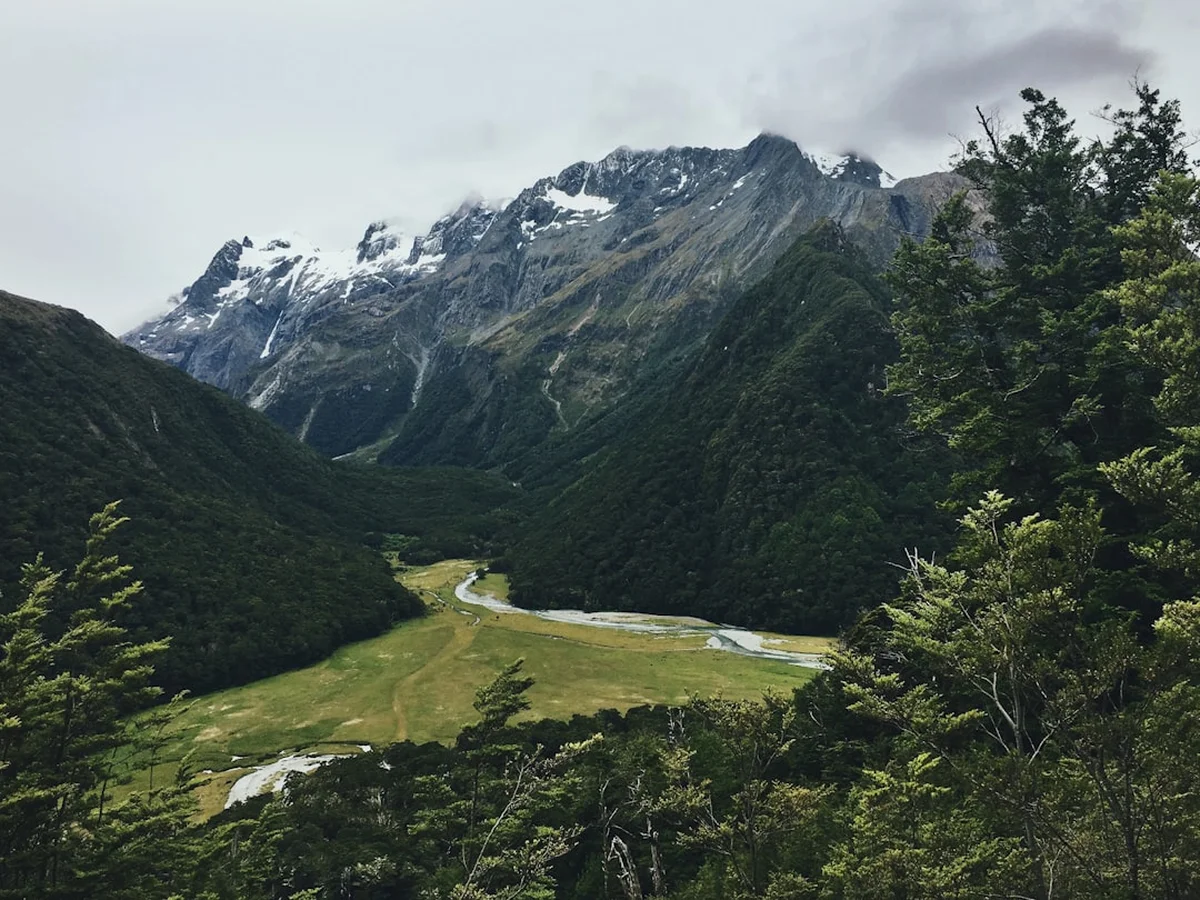
Routeburn Track - The Ultimate Alpine Adventure
The Routeburn Track is a world-renowned 33-kilometre journey that traverses the majestic Southern Alps of New Zealand, linking Mount Aspiring National Park with Fiordland National Park. Often cited as one of the most spectacular multi-day hikes on the planet, this Great Walk offers a concentrated dose of New Zealand’s finest alpine scenery. Over three days and two nights, walkers transition from the lush, ancient beech forests of the Routeburn Valley, through high-altitude meadows filled with alpine herbs and daisies, to the dramatic, ice-carved heights of the Harris Saddle. The track provides a unique vantage point over the Hollyford Valley and the Darren Mountains, showcasing a landscape defined by massive geological forces, glacial action, and the relentless power of the elements.
Unlike many other Great Walks that follow valley floors, the Routeburn Track spends a significant portion of its length above the bushline. This exposure provides constant, sweeping panoramas that change with every turn of the path. From the thundering cascades of the Routeburn Falls to the serene, reflective waters of Lake Mackenzie, the track is a masterclass in landscape diversity. It is a journey that demands a moderate level of fitness and a deep respect for the volatile mountain weather, but the rewards are unparalleled: a sense of profound isolation, the clarity of alpine air, and the opportunity to walk through a UNESCO World Heritage Area that remains largely untouched by modern development.
- Distance: 33.0 km one-way
- Duration: 3 days / 2 nights (recommended)
- Total Elevation Gain: 1,250 m
- Highest Point: Harris Saddle (1,255 m) / Conical Hill (1,515 m side trip)
- Season: Late October to April (Great Walks season)
- Difficulty: Moderate - well-graded but involves significant alpine ascent
- Closest Towns: Glenorchy (near Queenstown) and Te Anau
- Direction: Can be walked in either direction (Routeburn Shelter to The Divide or vice versa)
Overview
The Routeburn Track is a traverse of the Main Divide, the mountain range that forms the backbone of New Zealand's South Island. This geographical positioning creates a fascinating ecological transition. On the eastern side (Mount Aspiring National Park), the climate is slightly drier, supporting vast stands of red and silver beech forest. As you cross the Harris Saddle into the western side (Fiordland National Park), the rainfall increases dramatically, resulting in a more temperate rainforest environment characterised by moss-draped trees, ferns, and the spectacular Earland Falls. This shift in environment over just 33 kilometres is one of the track's most compelling features.
The experience is defined by its verticality. The first day involves a steady climb from the valley floor to the Routeburn Falls Hut, perched on the edge of a hanging valley. The second day is the "alpine day," where walkers traverse the high ridges above the Hollyford Valley. Here, the vegetation shrinks to hardy alpine plants, and the views extend to the Tasman Sea on clear days. The final day is a long, winding descent through the lush forests of the Arthur Valley, concluding at The Divide on the Milford Road. The track is exceptionally well-maintained by the Department of Conservation (DOC), with wide, gravelled paths and sturdy bridges, making the technical difficulty low, though the physical exertion remains significant due to the elevation changes.
Geologically, the Routeburn is a window into the deep past. The mountains here are composed of schist and greywacke, carved by successive ice ages into the sharp peaks and deep U-shaped valleys visible today. The presence of pounamu (greenstone) in the surrounding rivers added a layer of cultural significance to the area long before the first European explorers arrived. Today, the track is managed to balance high visitor numbers with environmental preservation, ensuring that the "wilderness" feel remains intact despite its popularity. Whether you are standing amidst the spray of a waterfall or looking out from the Harris Saddle at the jagged peaks of the Darren Mountains, the Routeburn Track offers a sense of scale that is both humbling and exhilarating.
History and Cultural Context
The history of the Routeburn Track is a tapestry of Māori exploration, European surveying, and the birth of New Zealand’s tourism industry. For centuries, the Waitaha, Kāti Māmoe, and Ngāi Tahu iwi (tribes) used the mountain passes of this region to access the precious pounamu (greenstone) found in the rivers of the West Coast. These routes were not merely paths but vital arteries for trade and cultural exchange. The Harris Saddle, known to Māori as a key transit point, was part of a network of trails that connected the interior of the South Island with the coastal resources of the west. The land is considered "wāhi tapu" (sacred) in many parts, reflecting the deep spiritual connection between the people and the mountains.
European interest in the area began in the mid-19th century. In 1861, David McKellar and George Barber climbed to the top of the Livingstone Range and looked down into the Hollyford Valley, marking the first recorded European exploration of the area. However, it was the search for pastoral land and gold that initially drove explorers deeper into the valleys. By the 1880s, the focus shifted toward tourism. The New Zealand government realised the potential of the Southern Alps as a "scenic playground," and work began on a track to link the head of Lake Wakatipu with the Hollyford Valley. The original intention was to build a road, but the challenging terrain and the onset of the 1890s depression meant that only a bridle path was completed.
Early tourists were hardy souls, often travelling by horse or on foot, staying in basic canvas tents or primitive huts. The Routeburn Track was one of the first "guided" walks in New Zealand, with local families from Glenorchy providing horses and provisions for adventurous Victorian travellers. In the 1960s and 70s, the Department of Conservation (and its predecessors) formalised the route, building the modern hut system and upgrading the track to the high standard seen today. In 1990, the area was included in the Te Wāhipounamu South West New Zealand World Heritage Area, recognising its outstanding natural values. Today, walking the Routeburn is as much a journey through history as it is through nature, following in the footsteps of pounamu traders and pioneering explorers.
Want more background? Read extended notes on history and cultural context → Learn more
Seasonal Highlights and Weather Reality
The Routeburn Track is strictly seasonal for recreational hikers. The "Great Walks Season" runs from late October to the end of April. During this time, the track is managed for safety: wardens are present at huts, gas is provided for cooking, and bridges are in place. Outside of this window, the track becomes a serious alpine undertaking. Winter (May to October) brings heavy snow, sub-zero temperatures, and significant avalanche risk, particularly on the exposed sections between Routeburn Falls and Lake Mackenzie. Only those with advanced alpine skills, ice axes, and crampons should attempt the track in winter.
In the height of summer (December to February), the days are long and can be surprisingly warm, with temperatures reaching 20–25°C. This is the best time for seeing the alpine flowers in bloom, including the iconic Mount Cook Lily (the world's largest buttercup) and various species of celmisia (mountain daisies). However, summer also brings the highest number of visitors and the most persistent sandflies in the lower forest sections. Rainfall is a constant possibility; Fiordland and Mount Aspiring National Parks are among the wettest places on Earth. A "clear" forecast can change in minutes, and heavy rain can turn small streams into impassable torrents.
The shoulder seasons (October/November and April) offer a different charm. In spring, the waterfalls are at their most powerful as the winter snow melts, and the peaks are still dusted with white. In autumn, the beech forest takes on a golden hue, and the air is often crisper and clearer, providing the best visibility for photography. However, these periods also carry a higher risk of early or late season snowstorms. Regardless of when you walk, the "Weather Reality" of the Routeburn is that you must be prepared for four seasons in a single day. Hypothermia is a genuine risk even in mid-summer if you are caught in a cold southerly storm without adequate waterproof gear.
Recommended Itinerary
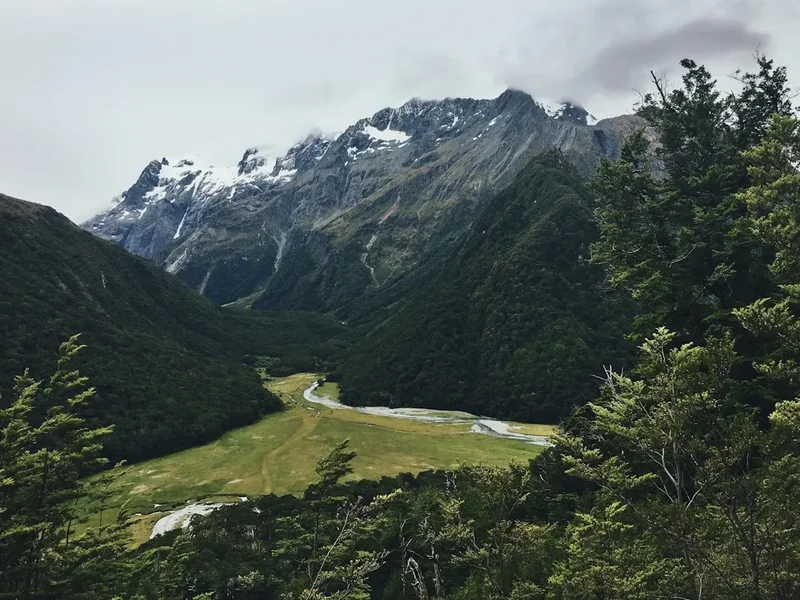
3-Day Routeburn Track Itinerary (East to West)
Day 1: Routeburn Shelter to Routeburn Falls Hut
- Distance: 9.8 km
- Elevation Gain: 550 m
- Time: 3–4 hours
- Start at the Routeburn Shelter (near Glenorchy).
- Cross the spectacular swing bridge over the Routeburn River.
- Gentle climb through red and silver beech forest alongside the crystal-clear river.
- Pass through Routeburn Flats, a wide grassy meadow with views of the surrounding peaks.
- Steady climb from the Flats to Routeburn Falls Hut (48 bunks).
- The hut is situated on the edge of the bushline, offering incredible views back down the valley.
- Explore the cascading Routeburn Falls located just behind the hut.
Day 2: Routeburn Falls Hut to Lake Mackenzie Hut
- Distance: 11.3 km
- Elevation Gain: 300 m (to Harris Saddle), then 400 m descent
- Time: 4.5–6 hours
- The "Alpine Day" – most of the walk is above the bushline.
- Climb through alpine meadows and wetlands to Lake Harris.
- Ascend to the Harris Saddle (1,255 m), the highest point on the main track.
- OPTIONAL: Side trip to Conical Hill (1,515 m) for 360-degree views (1–1.5 hours return).
- Traverse the "Hollyford Face," a high-altitude path with sweeping views of the Hollyford Valley and the Darren Mountains.
- Descend via a series of zig-zags into the forest to Lake Mackenzie Hut (50 bunks).
- The hut is nestled beside the turquoise waters of Lake Mackenzie, surrounded by ancient, mossy forest.
Day 3: Lake Mackenzie Hut to The Divide
- Distance: 12 km
- Elevation Gain: 150 m, then 500 m descent
- Time: 4–5.5 hours
- Walk through the "Fairyland" – a section of forest with incredible moss and lichen growth.
- Cross the Orchard, a natural clearing with ribbonwood trees.
- Pass the impressive Earland Falls (174 m high) – be prepared for spray!
- Gradual descent through beech forest to Lake Howden (shelter only).
- OPTIONAL: Side trip to Key Summit (918 m) for views of the Hollyford, Greenstone, and Eglinton Valleys (1 hour return).
- Final descent to The Divide on the Milford Road.
- Transport pickup for return to Te Anau or Queenstown.
Important Notes:
- The track can be walked in reverse (The Divide to Routeburn Shelter), which involves a steeper initial climb but a more gradual finish.
- Routeburn Flats Hut is an alternative for Day 1 if Routeburn Falls is full, but it makes Day 2 significantly longer.
- Always check the weather at the Harris Saddle before leaving the hut; it is the most exposed part of the track.
Planning and Bookings
Book Your Trip
Everything you need to plan your journey
Accommodation
Find places to stay near Queenstown
Flights
Search flights to Queenstown
Essential Preparation
The Routeburn Track requires significant forward planning, primarily due to its popularity and the logistics of its "point-to-point" nature. Unlike a loop track, you start and finish in different locations, which are approximately 325 kilometres apart by road. You must arrange transport (shuttle buses or car relocation services) in advance. Most walkers base themselves in Queenstown or Te Anau. Queenstown is closer to the Routeburn Shelter (Glenorchy side), while Te Anau is closer to The Divide (Milford Road side).
Fitness is a key consideration. While the track is well-graded, you will be carrying a multi-day pack (typically 10–15 kg) over significant elevation. Training with a weighted pack on hilly terrain in the weeks leading up to your hike is highly recommended. Additionally, you must be comfortable with alpine environments; the section over the Harris Saddle is very exposed to wind and rain. Ensure you have booked your huts well in advance, as they sell out almost immediately upon release.
Trail Accommodation
There are four Department of Conservation (DOC) huts on the Routeburn Track: Routeburn Flats, Routeburn Falls, Lake Mackenzie, and Lake Howden (Note: Lake Howden Hut was destroyed by a landslide in 2020 and currently only serves as a day shelter; overnight stays are not possible there). There are also two designated campsites at Routeburn Flats and Lake Mackenzie.
Hut Facilities:
- Bunk beds with mattresses in communal sleeping areas.
- Gas cooktops and lighting (Great Walks season only).
- Cold running water (must be treated or boiled).
- Wood burners for heating in the common areas.
- Flush toilets (Great Walks season) or pit toilets (off-season).
- Resident DOC wardens who provide weather updates and safety briefings.
- NOT PROVIDED: Food, cooking utensils (pots/pans), sleeping bags, pillows, or showers.
Campsite Facilities:
- Designated tent sites.
- Sinks with cold running water.
- Toilet facilities.
- Use of hut common areas is generally not permitted for campers.
Costs: During the Great Walks season, hut fees are approximately NZ$78 per night for NZ residents and NZ$110 for international visitors. Campsites are significantly cheaper (approx. NZ$20–$30). Bookings are mandatory and must be made through the DOC website.
Required Gear
- Footwear: Sturdy, waterproof tramping boots with good ankle support. Ensure they are well broken-in to avoid blisters.
- Clothing Layers: A moisture-wicking base layer (merino or synthetic), a warm insulating mid-layer (fleece or down), and a high-quality waterproof and windproof outer shell (Gore-Tex or similar). Avoid cotton, as it stays cold and heavy when wet.
- Pack: A 40–60 litre tramping pack with a waterproof liner or rain cover.
- Sleeping Bag: A 3-season sleeping bag rated to at least 0°C.
- Navigation & Safety: A physical map and compass (and the knowledge to use them), a personal locator beacon (PLB), and a basic first aid kit including blister wool and antiseptic.
- Lighting: A reliable headlamp with spare batteries.
What to Bring
- Food: Lightweight, high-energy meals (dehydrated meals are popular). Bring plenty of snacks (nuts, chocolate, muesli bars) for energy on the trail. You must carry out all your rubbish.
- Water: At least 2 litres of water carrying capacity. While water is available at huts, it should be treated (boiled, filtered, or chemically treated).
- Cooking Gear: A lightweight pot, bowl, mug, and cutlery. Matches or a lighter.
- Toiletries: Toothbrush, biodegradable soap, a small towel, and sun protection (sunscreen, hat, sunglasses). The alpine sun is exceptionally strong.
- Insect Repellent: Essential for managing sandflies, especially at Lake Mackenzie and the lower forest sections.
- Personal Items: Earplugs (for communal bunkrooms), a small repair kit (duct tape, cable ties), and a camera.
Permits

The "permit" for the Routeburn Track is effectively your hut or campsite booking confirmation. There is no separate entry permit required to walk the track, but you must have a valid booking for every night you spend on the trail. During the Great Walks season, the track is strictly regulated to prevent overcrowding and environmental damage. You cannot "freedom camp" anywhere within 500 metres of the track.
Booking Process:
- Bookings typically open in May or June for the following summer season (October–April).
- You must create an account on the DOC booking website prior to the opening date.
- Due to extreme demand, it is recommended to be online the moment bookings open. Popular dates (Christmas, New Year, and Easter) often sell out within minutes.
- You must specify the exact huts or campsites you will be staying in for each night.
Cancellations and Changes: DOC has a strict cancellation policy. Refunds are usually available if you cancel well in advance, but a percentage of the fee is retained as a processing charge. If you need to change your dates, you must do so through the online system, provided there is availability. It is highly recommended to have travel insurance that covers "hiking and outdoor activities" in case of injury or weather-related closures.
Off-Season: Outside the Great Walks season, no bookings are required, and a "first-come, first-served" system applies using Backcountry Hut Passes or tickets. However, as noted, the track is extremely dangerous in winter and should only be attempted by those with specific alpine training.
Other Activities in the Area
The regions surrounding the Routeburn Track trailheads are world-class destinations in their own right. Many walkers choose to spend extra time in Queenstown, Glenorchy, or Te Anau to experience the full breadth of the Southern Alps.
- Glenorchy & Paradise: Located at the northern end of Lake Wakatipu, Glenorchy is the gateway to the Routeburn Shelter. It is a hub for horse trekking, jet boating on the Dart River, and visiting filming locations for *The Lord of the Rings*. The drive from Queenstown to Glenorchy is considered one of the most scenic in the world.
- Milford Sound / Piopiotahi: Since the Routeburn ends at The Divide (on the road to Milford Sound), many hikers arrange for a shuttle to take them the rest of the way to the fiord. A boat cruise on Milford Sound is the perfect way to rest tired legs while viewing Mitre Peak and massive waterfalls.
- Te Anau Glowworm Caves: A short boat trip across Lake Te Anau takes you to a subterranean world of limestone passages and thousands of bioluminescent glowworms.
- Day Hikes: If you have extra energy, the Greenstone and Caples Tracks offer beautiful valley walks that can be linked with the Routeburn. The Hollyford Track is another nearby option for those seeking a lower-elevation, multi-day experience.
- Queenstown Adventure: For the adrenaline seekers, Queenstown offers bungy jumping, skydiving, and mountain biking. For a more relaxed pace, the TSS Earnslaw steamship cruise or a visit to the local vineyards in Gibbston Valley are excellent options.
Safety and Conditions
Safety on the Routeburn Track is primarily a matter of weather management and preparation. While the track is not technically difficult, the environment is unforgiving. The Department of Conservation wardens are your best resource; always attend the evening hut talk for the latest weather forecast and track conditions.
Alpine Exposure: The section between Routeburn Falls and Lake Mackenzie is entirely above the bushline. In high winds or heavy rain, this area can become extremely dangerous. Wind gusts on the Harris Saddle can exceed 100 km/h, making it difficult to stand. If the warden advises against crossing the saddle, follow their instructions without question. Visibility can drop to a few metres in cloud, making it essential to stay on the marked poles.
Hypothermia: This is the leading cause of incidents on the track. Even in summer, temperatures can drop to near freezing. If you get wet and the wind picks up, your body temperature can drop rapidly. Always carry your waterproof layers in an accessible part of your pack and put them on *before* you get cold and wet.
River Crossings: While most major streams are bridged, heavy rain can cause "side streams" to flood across the track. Never attempt to cross a flooded stream if the water is above your knees or moving rapidly. Wait for the water to recede, which often happens quickly once the rain stops.
Avalanche Risk: During the shoulder seasons (October and May), there may still be snow on the track. DOC monitors avalanche paths and may close sections of the track or require walkers to use "emergency bypasses." Check the New Zealand Avalanche Advisory (NZAA) before heading out if there is snow on the peaks.
Communication: There is no mobile phone coverage on the vast majority of the track. Huts have emergency radios, but for personal safety, you should carry a Personal Locator Beacon (PLB). These can be hired in Queenstown or Te Anau for a small fee.
Side Trips and Points of Interest
The Routeburn Track features several side trips that, while optional, provide some of the most memorable moments of the journey. If the weather is clear, these are highly recommended.
Conical Hill: Located at the Harris Saddle, this is the premier side trip of the Routeburn. A steep, rocky path leads from the saddle shelter up to the summit of Conical Hill (1,515 m). From the top, you are rewarded with a 360-degree panorama that includes the Hollyford Valley stretching out to the Tasman Sea, the Darren Mountains, and the peaks of Mount Aspiring National Park. Allow 1 to 1.5 hours for the return trip. Do not attempt this in high winds or low visibility.
Key Summit: Near the end of the track (The Divide end), a well-graded side path leads to Key Summit. This area is a "nature walk" through a unique alpine wetland (bog) ecosystem. The summit provides spectacular views of the Humboldt and Darren Mountains and the point where three major valleys meet. It is a great way to finish the hike and is also a popular day walk for those not doing the full track. Allow 1 hour return from the main track junction.
Earland Falls: While not a side trip (the track passes directly by it), these 174-metre falls are a major point of interest. In heavy rain, the falls become a thundering wall of water, and the track can be covered in spray. There is an "emergency flood route" that bypasses the base of the falls if the water volume becomes too dangerous to walk through.
Lake Harris: This deep, alpine lake sits just below the Harris Saddle. Its dark, cold waters are often partially frozen early in the season. The track skirts the edge of the lake, providing numerous spots for photography and reflection on the glacial forces that carved this basin.
Leave No Trace
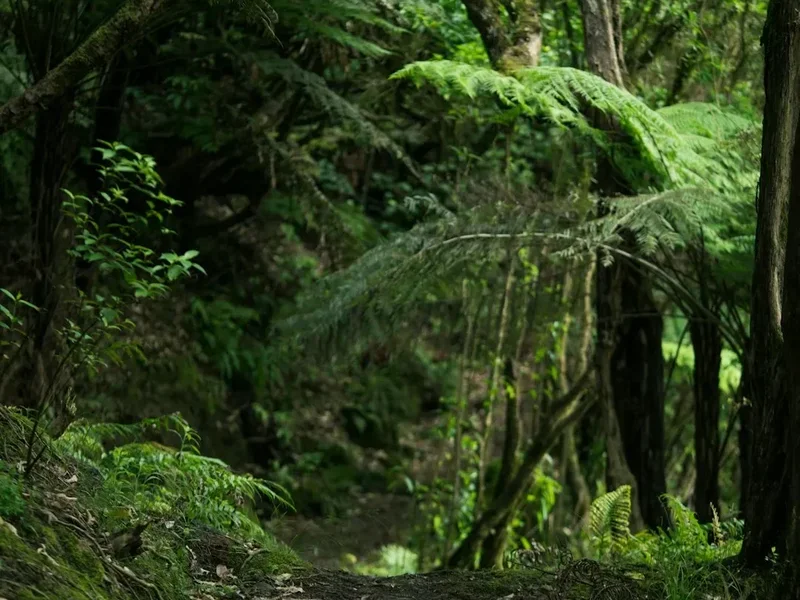
The Routeburn Track passes through a fragile alpine environment and ancient forests that are home to many endangered species, including the Kea (mountain parrot) and the Whio (blue duck). To preserve this UNESCO World Heritage site, all walkers must adhere to the Leave No Trace principles.
- Plan Ahead and Prepare: Ensure you have the right gear and skills to avoid needing rescue, which puts a strain on resources and the environment.
- Travel and Camp on Durable Surfaces: Stay on the formed track at all times. Alpine plants are extremely slow-growing; a single footstep can destroy decades of growth. Only camp in designated campsites.
- Dispose of Waste Properly: "Pack it in, pack it out." Carry all your rubbish, including food scraps and tissues, back to the trailhead. Use the toilets provided at huts and shelters.
- Leave What You Find: Do not take plants, rocks, or historical artefacts. Leave the pounamu in the rivers where it belongs.
- Minimise Campfire Impacts: Fires are strictly prohibited on the Routeburn Track. Use the gas cookers provided in the huts or your own portable stove.
- Respect Wildlife: Never feed the Kea. Feeding them makes them dependent on humans and can lead to them eating harmful materials like lead flashing or plastic. Observe wildlife from a distance.
- Be Considerate of Others: Keep noise levels down in the huts and on the trail. Let the sounds of nature prevail.
 New Zealand