
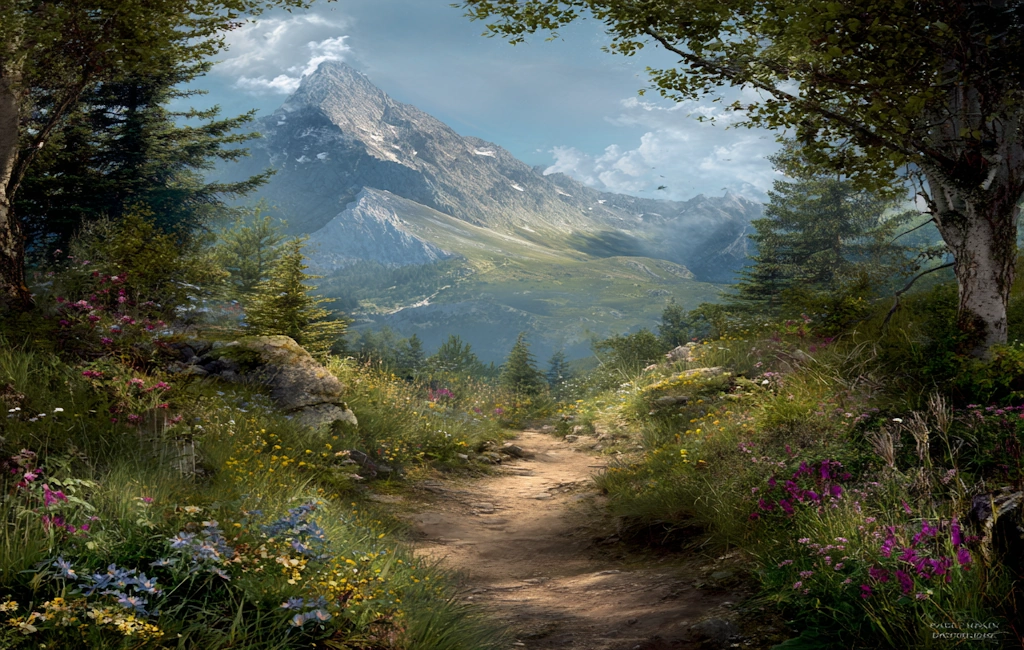
Rob Roy Glacier Track - An Alpine Masterpiece in Mount Aspiring National Park
The Rob Roy Glacier Track is widely considered one of the finest half-day walks in New Zealand, offering an unparalleled ratio of effort to reward. Located within the heart of the Mount Aspiring National Park—a cornerstone of the Te Wāhipounamu South West New Zealand World Heritage Area—this 10-kilometre return journey transports walkers from the emerald river flats of the Matukituki Valley into a dramatic alpine world of hanging glaciers, sheer rock walls, and thundering waterfalls. Unlike many alpine routes that require days of arduous climbing to reach the snowline, the Rob Roy Glacier Track provides a graded, accessible path that allows reasonably fit walkers to stand face-to-face with ancient blue ice in just a few hours. It is a journey through distinct ecological zones, beginning in the open, windswept valley floor, ascending through lush, moss-draped beech forests, and culminating at a natural amphitheatre where the Rob Roy Glacier clings precariously to the schist cliffs of the Rob Roy Peak.
- Distance: 10.0 km return
- Duration: 3–4 hours
- Elevation Gain: 400 m
- Difficulty: Moderate
- Best Time: Late spring to early autumn (October–April)
- Closest City: Wanaka (1 hour 15 minutes drive)
- Trailhead: Raspberry Flat car park, West Matukituki Valley
- Highest Point: Upper Lookout (approx. 840 m)
Overview
The Rob Roy Glacier Track is a masterclass in New Zealand’s geological and botanical diversity. The walk begins at Raspberry Flat, the terminus of the Matukituki Road, where the landscape is dominated by the wide, braided Matukituki River and the towering peaks of the Southern Alps. The first section of the trail is a gentle stroll across private farmland, where walkers share the path with grazing cattle and sheep, framed by the immense scale of the glaciated valley. This pastoral beginning serves as a stark contrast to the wild, untamed wilderness that lies ahead. Upon crossing the West Matukituki River via a spectacular swing bridge, the trail enters a dense forest of silver beech (Nothofagus menziesii). Here, the air cools, and the sound of the Rob Roy Stream—a glacial torrent of milky turquoise water—becomes a constant companion.
The ascent is steady but well-graded, winding through a forest floor carpeted in ferns, crown ferns, and vibrant green mosses. As the elevation increases, the forest begins to thin, offering tantalising glimpses of the peaks above. The transition from the sheltered forest to the exposed alpine zone is sudden and breathtaking. The Lower Lookout provides the first comprehensive view of the Rob Roy Glacier, a massive remnant of the last ice age that continues to shape the landscape. However, it is the Upper Lookout that provides the true climax of the trek. Here, walkers enter a vast alpine cirque. The glacier sits high above on the hanging valleys of Rob Roy Peak (2,644 m), with dozens of waterfalls cascading hundreds of metres down the vertical rock faces. On a warm summer day, the silence of the mountains is frequently broken by the thunderous roar of "ice avalanches"—large chunks of the glacier calving and crashing onto the rocks below. This is a landscape of raw power and constant change, offering a profound sense of the scale of the natural world.
History and Cultural Context
The Matukituki Valley and the surrounding peaks of Mount Aspiring National Park hold deep significance for Ngāi Tahu, the Māori iwi (tribe) of the South Island. For centuries, Māori utilised the Matukituki Valley as a seasonal route for gathering resources and as a passage toward the West Coast in search of pounamu (greenstone). The mountains were seen as the domain of the atua (gods), and the glaciers were revered as the frozen tears of ancestors or as physical manifestations of the divine. The name "Matukituki" itself refers to the sound of the river or the act of pounding, reflecting the rhythmic nature of the water that flows from the glaciers. To Ngāi Tahu, the land is not merely a scenic backdrop but a living entity with its own whakapapa (genealogy) and spiritual presence.
European history in the valley began in the mid-19th century with the arrival of explorers and surveyors seeking pastoral land and gold. The valley was eventually settled for high-country sheep farming, a tradition that continues today at the Matukituki Station. The Rob Roy Glacier itself was named after the Scottish folk hero Rob Roy MacGregor, reflecting the Scottish heritage of many of the early European settlers in the Otago region. In the early 20th century, the area became a magnet for pioneering mountaineers who used the Matukituki Valley as a base for attempting the first ascents of Mount Aspiring (Tititea), the "Matterhorn of the South." The track as it exists today was developed by the Department of Conservation to allow public access to this spectacular alpine environment while protecting the fragile ecosystems from the impact of increasing visitor numbers. In 1990, the area was included in the Te Wāhipounamu World Heritage site, recognising its outstanding natural values and its importance to the global heritage of humanity.
Want more background? Read extended notes on history and cultural context → Learn more
Seasonal Highlights and Weather Reality
The Rob Roy Glacier Track is a seasonal experience, with conditions varying dramatically between the summer months and the depths of winter. The primary walking season runs from late October to April, when the track is generally clear of snow and the weather is most stable. During this period, the alpine flowers—including the iconic Mount Aspiring buttercup and various species of celmisia (mountain daisies)—bloom in the upper meadows, and the waterfalls are at their most voluminous due to the spring melt.
Summer (December to February) offers the longest daylight hours and the warmest temperatures, often reaching 20–25°C in the valley. However, the alpine environment is unpredictable; even in mid-summer, temperatures at the Upper Lookout can drop rapidly if a front moves through, and sleet or snow is possible at any time of year. Autumn (March to April) is many locals' favourite time to visit, as the air becomes crisp and clear, the sandflies begin to diminish, and the beech forest takes on a golden hue. The stability of the weather in autumn often provides the best visibility for photographing the glacier against a deep blue sky.
Winter (May to September) transforms the Rob Roy Glacier Track into a serious alpine undertaking. The upper sections of the track, particularly beyond the Lower Lookout, are subject to significant avalanche danger. Large avalanches frequently sweep down from the Rob Roy Peak, crossing the track and depositing metres of snow and debris in the valley floor. During this time, the Department of Conservation often advises against proceeding past the Lower Lookout, and in years of high snowfall, the track may be closed entirely. Only those with specific alpine training, avalanche awareness, and appropriate equipment (ice axes, crampons, and beacons) should consider the upper track in winter. Additionally, the unsealed road to Raspberry Flat can become impassable due to snow or ice, and the numerous fords may flood during winter rain events.
Recommended Itinerary
Rob Roy Glacier Route Progression
Section 1: Raspberry Flat to the West Matukituki Swing Bridge
- Distance: 1.5 km
- Time: 20–30 minutes
- Terrain: Flat, open farm track
- Begin at the Raspberry Flat car park, ensuring all gear is secured and vehicles are locked.
- Follow the wide, gravelled farm track heading up the valley. This section is part of the Matukituki Station, so expect to see cattle and sheep.
- Enjoy the panoramic views of the Matukituki River and the surrounding peaks, including the distant pyramid of Mount Aspiring on clear days.
- Reach the junction where the Rob Roy Track branches off to the right, leading toward the West Matukituki River.
- Cross the impressive swing bridge. The bridge offers a fantastic vantage point over the turquoise, glacier-fed waters of the river.
Section 2: The Forest Ascent to Lower Lookout
- Distance: 2.5 km
- Elevation Gain: 250 m
- Time: 1–1.5 hours
- Terrain: Graded forest path with some rocky sections and roots
- After crossing the bridge, the trail enters the silver beech forest. The gradient increases immediately as the track begins to climb the side of the Rob Roy Valley.
- The path follows the Rob Roy Stream, which can be heard roaring in the gorge below. There are several spots where the forest opens up to provide views of the cascading water.
- Observe the transition in vegetation; the forest is rich in bryophytes (mosses and liverworts) and various species of native ferns.
- The track is well-maintained but can be slippery after rain. Take care on the sections where the schist bedrock is exposed.
- Arrive at the Lower Lookout (approx. 600 m elevation). This is a natural clearing that provides the first full view of the Rob Roy Glacier hanging above the valley.
Section 3: The Alpine Climb to Upper Lookout
- Distance: 1.0 km
- Elevation Gain: 150 m
- Time: 30–45 minutes
- Terrain: Steeper, more exposed alpine track
- From the Lower Lookout, the track continues to climb, leaving the tall forest behind and entering sub-alpine scrub and tussock land.
- This section is more exposed to the elements. In summer, the sun can be intense; in winter, this is where the avalanche risk begins.
- The track winds through large boulders and across small alpine rills. Keep an eye out for the Kea, New Zealand’s inquisitive mountain parrot, which is often found in this area.
- The final approach to the Upper Lookout opens into a massive alpine cirque.
- Arrive at the Upper Lookout (approx. 840 m elevation). This is the end of the maintained track.
- Spend time at the lookout observing the glacier, the waterfalls, and the sheer scale of the rock walls. This is the ideal spot for lunch, provided the weather is favourable.
Section 4: The Return Descent to Raspberry Flat
- Distance: 5.0 km
- Elevation Loss: 400 m
- Time: 1.5 hours
- The return journey follows the same path back down to the valley floor.
- Descent can be harder on the knees than the ascent; trekking poles are highly recommended for this section.
- Take the time to notice details in the forest that may have been missed on the way up, such as the delicate orchids or the various bird species (fantails, tomtits, and bellbirds).
- Once back at the swing bridge, the final 1.5 km walk across the flats provides a gentle warm-down for the legs.
- Ensure you check out the DOC information board at the car park for any interesting sightings or updates before departing.
Important Notes:
- The track is a "there and back" route; there are no loop options.
- Total walking time is typically 3 to 4 hours, but allow extra time for photography and lunch at the top.
- The Upper Lookout is the safety limit; do not attempt to climb higher toward the glacier due to extreme rockfall and avalanche risk.
- The road to the trailhead involves several fords; check weather conditions as these can become impassable after heavy rain.
Planning and Bookings
Book Your Trip
Everything you need to plan your journey
Accommodation
Find places to stay near Wanaka
Flights
Search flights to Wanaka
Essential Preparation
The Rob Roy Glacier Track is a day walk, meaning no overnight bookings or permits are required. However, successful completion of the track requires careful logistical planning, particularly regarding transport and timing. The trailhead is located at Raspberry Flat, which is 54 kilometres from Wanaka. The final 30 kilometres of the Mount Aspiring Road are unsealed and can be rough, with several fords (stream crossings) that must be navigated. While most standard cars can manage the road in dry conditions, a high-clearance vehicle or 4WD is recommended, especially after rain when the fords can deepen significantly.
Wanaka serves as the primary base for this hike. It is a vibrant town with a wide range of accommodation, from luxury lodges to backpacker hostels. It is essential to check the weather forecast and the Department of Conservation (DOC) website for any track alerts before leaving Wanaka. There is no mobile phone reception once you enter the Matukituki Valley, so all planning must be finalised before departure. Ensure your vehicle has a full tank of fuel, as there are no services beyond Wanaka.
Trail Accommodation
This is a day hike requiring no overnight accommodation on the trail itself. Camping is not permitted along the Rob Roy Glacier Track or at the Upper Lookout to protect the fragile alpine environment. For those wishing to spend more time in the Matukituki Valley, there are several options nearby:
- Aspiring Hut (DOC): Located further up the West Matukituki Valley (approx. 2–2.5 hours walk from Raspberry Flat). This is a popular base for climbers and multi-day hikers. It requires pre-booking during the peak season.
- Raspberry Flat: There is no formal campsite at the trailhead, but basic toilet facilities are provided. Overnight parking is permitted for those heading to Aspiring Hut.
- Wanaka Accommodation: Most walkers stay in Wanaka and drive to the trailhead for a day trip. Options include the Wanaka Top 10 Holiday Park, various boutique hotels, and numerous Airbnbs.
Required Gear
- Footwear: Sturdy tramping boots with good grip are essential. The track can be rocky, muddy, and slippery, especially in the forest and alpine sections.
- Clothing Layers: New Zealand’s mountain weather changes rapidly. Bring a moisture-wicking base layer (merino or synthetic), an insulating mid-layer (fleece or down), and a high-quality waterproof shell jacket.
- Sun Protection: The alpine sun is exceptionally strong. Bring a hat, high-SPF sunscreen, and sunglasses.
- Navigation: While the track is well-marked, a topographical map or a reliable GPS app with offline maps is recommended.
- First Aid: A basic kit including blister plasters, antiseptic wipes, and any personal medications.
- Trekking Poles: Highly recommended for the descent to reduce impact on the knees.
What to Bring
- Water: Carry at least 1.5–2 litres of water per person. While there are streams, it is recommended to treat the water or carry enough for the duration of the walk.
- Food: Bring high-energy snacks (nuts, chocolate, dried fruit) and a substantial lunch to enjoy at the Upper Lookout. There are no food outlets at the trailhead or on the track.
- Waste Bags: This is a "Pack In, Pack Out" area. Bring a small bag to carry out all your rubbish, including organic waste like apple cores or orange peels.
- Camera/Binoculars: The views of the glacier and the potential for bird sightings (especially Kea) make these essential for many.
- Personal Locator Beacon (PLB): Given the lack of mobile coverage and the remote nature of the valley, carrying a PLB is a wise safety precaution for any group.
Permits
No permits or fees are required to walk the Rob Roy Glacier Track. It is free for all members of the public to access. However, because the first section of the track crosses private land (Matukituki Station), it is vital to respect the property. Walkers must stay on the marked track, leave gates as they find them, and strictly follow the "no dogs" policy to avoid disturbing livestock.
While no permit is needed, walkers are encouraged to check in at the Tititea / Mount Aspiring National Park Visitor Centre in Wanaka before heading out. The staff can provide the latest information on road conditions, ford depths, and avalanche risks. If you are part of a large commercial group or an organised event, you may require a concession from the Department of Conservation, but for independent walkers, the track is open and free.
Other Activities in the Area
The Matukituki Valley and the wider Wanaka region offer a wealth of outdoor experiences that can be combined with a trip to the Rob Roy Glacier:
- Aspiring Hut Walk: For those with more time, continuing past the Rob Roy junction to Aspiring Hut offers a beautiful, flat walk further into the heart of the mountains.
- Roy’s Peak Track: Located closer to Wanaka, this is one of New Zealand’s most famous day hikes, offering iconic views over Lake Wanaka and the Southern Alps.
- Blue Pools Track: A short, easy walk near Makarora (about an hour from Wanaka) leading to stunningly clear, glacial-fed swimming holes.
- Wine Tasting: After a day of hiking, visit one of the world-class wineries in the Wanaka or Central Otago region, famous for their Pinot Noir.
- Lake Wanaka Water Sports: Kayaking, paddleboarding, or taking a boat cruise to Mou Waho Island are excellent ways to experience the lake.
- Diamond Lake and Rocky Mountain: A shorter alternative to Roy's Peak, providing spectacular views of the lake and the Matukituki River delta.
Safety and Conditions
Weather Awareness: The Southern Alps are notorious for rapid weather changes. A clear morning can transform into a freezing storm within an hour. Always check the MetService mountain forecast for Mount Aspiring National Park. If the weather looks marginal, it is better to postpone the hike. Hypothermia is a genuine risk in the alpine zone, even in summer, if you are caught in the rain without adequate layers.
Avalanche Danger: This is the most significant hazard on the Rob Roy Glacier Track. The upper section of the track is in an active avalanche zone. From May to November, the risk is high. Avalanches can occur even on sunny days as the sun warms the snowpack. Never proceed past the Lower Lookout if DOC has issued an avalanche warning or if you see significant snow accumulation on the cliffs above. Listen for the sound of falling ice and snow; if you hear a loud roar, it is likely an avalanche or a glacier calving event.
River Fords: The road to Raspberry Flat crosses several fords. These are usually shallow but can become impassable torrents after heavy rain. Never attempt to drive through a flooded ford if you cannot see the bottom or if the water is moving swiftly. If you are already at the trailhead and heavy rain begins, it is often safer to wait for the water levels to drop before attempting to drive out.
Alpine Terrain: The track is well-maintained but remains a mountain trail. Watch your footing on rocky sections, especially when wet. The schist rock in this region can be extremely slippery. Stay on the marked track at all times; the terrain off-track is steep, unstable, and dangerous.
Communication: There is no mobile phone coverage in the Matukituki Valley. Tell someone your plans and your expected return time. Carrying a Personal Locator Beacon (PLB) is highly recommended for emergency situations.
Side Trips and Points of Interest
The Matukituki Swing Bridge: This is more than just a river crossing; it is a highlight of the walk. Suspended high above the West Matukituki River, it provides a thrilling perspective on the power of glacial meltwater. The water below is often a striking milky blue, a result of "rock flour"—fine particles of silt ground down by the movement of the glaciers upstream.
Kea Encounters: The Rob Roy Glacier Track is one of the best places in the region to see the Kea, the world’s only alpine parrot. These birds are highly intelligent and notoriously cheeky. They are often found around the Upper Lookout, investigating walkers' packs. While they are a joy to watch, it is vital that you do not feed them, as human food is harmful to their health and encourages aggressive behaviour.
Glacial Calving: From the Upper Lookout, keep a close eye on the hanging glaciers. On warm days, you may witness the spectacular sight of ice breaking off the glacier and falling down the cliffs. The sound usually reaches you a few seconds after the visual, sounding like a crack of thunder or a distant explosion.
Alpine Flora: For those interested in botany, the area between the Lower and Upper Lookouts is a treasure trove of alpine plants. Look for the large-leaved Mount Cook Lily (actually a buttercup) in early summer, and the various cushion plants that cling to the rocky outcrops.
Leave No Trace
The Rob Roy Glacier Track passes through a pristine and fragile environment. With thousands of visitors each year, the cumulative impact can be significant. Following the Leave No Trace principles is essential to ensure this landscape remains beautiful for future generations.
Plan Ahead and Prepare: Ensure you have the right gear and knowledge to avoid emergencies that could put rescuers at risk and damage the environment.
Travel on Durable Surfaces: Stay on the formed track. Taking shortcuts on the zig-zags causes erosion and destroys delicate alpine vegetation that can take decades to regrow.
Dispose of Waste Properly: There are no bins on the track. Pack out all your rubbish. Use the toilets at the car park before you start. If you must go on the trail, move at least 50 metres from water sources and bury waste deeply.
Leave What You Find: Do not pick flowers or take rocks. The schist stones and alpine plants are part of the ecosystem.
Respect Wildlife: Observe Kea and other birds from a distance. Never feed them. Feeding Kea makes them dependent on humans and leads to them becoming pests that damage gear and vehicles.
Be Considerate of Others: Keep noise levels down so everyone can enjoy the sounds of the mountains and the waterfalls. Yield to uphill walkers on narrow sections of the track.
 New Zealand