
Rio Celeste Waterfall Trail
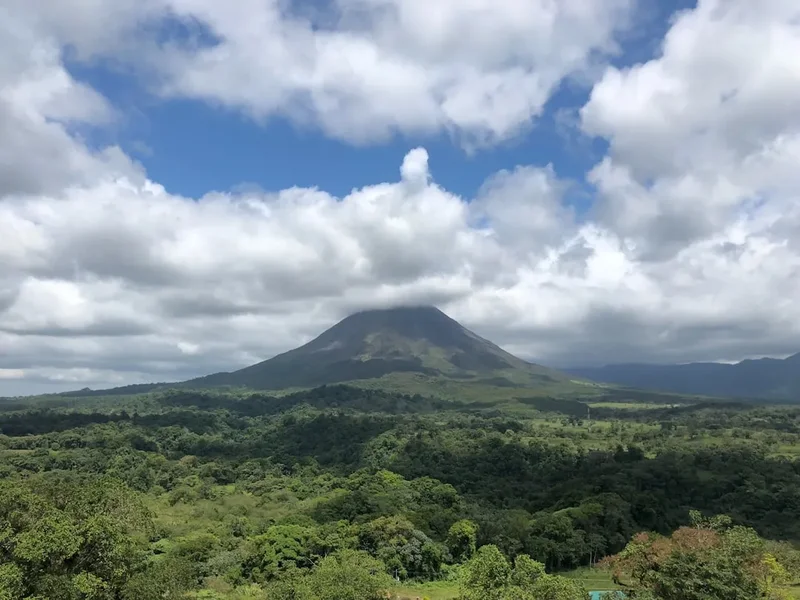
The Rio Celeste Waterfall Trail is a relatively short but incredibly rewarding day walk located within the Tenorio Volcano National Park in Costa Rica. Famous for its vibrant turquoise waters, the trail leads to the stunning waterfall that gives the river its name, a natural wonder formed by a unique geological phenomenon. This walk offers a fantastic opportunity to experience the lush biodiversity of the Costa Rican rainforest, observe unique geological features, and marvel at one of the country's most iconic natural attractions. It's an accessible adventure suitable for most fitness levels, making it a popular choice for visitors to the Guanacaste region.
- Category: Day Walk
- Distance: 6.0 km return
- Elevation Gain: 300 m
- Duration: 3-4 hours
- Difficulty: Moderate
- Best Time: December to April (dry season)
- Closest City: Liberia
- Trailhead Access: Nearest airport: Liberia (LIR). Drive approx. 1.5 hrs via Hwy 6 to Bijagua, then local roads to Tenorio Volcano National Park entrance. 4x4 recommended during rainy season. Parking available at the park entrance. Pay entrance fee at the ranger station. Coordinates: 10.6825, -84.9833.
Overview
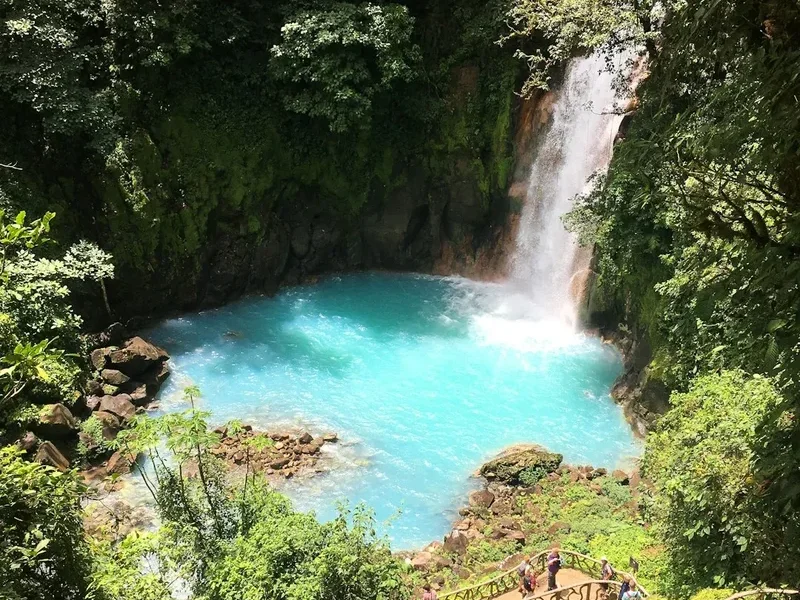
The Rio Celeste Waterfall Trail is a journey into a landscape painted with extraordinary colour. The star attraction, the Rio Celeste waterfall, plunges 30 metres into a vivid turquoise pool, a spectacle that draws visitors from around the globe. The trail itself winds through dense tropical rainforest, offering glimpses of diverse flora and fauna. The path is well-maintained but can be steep and muddy in sections, especially after rain, contributing to its moderate difficulty rating. Along the way, hikers will encounter other fascinating geological features, including the "Teñideros" (the dyeing pools) where the river's unique colour is created, and the "Borbollones" (bubbling mud pots), showcasing the volcanic activity beneath the surface.
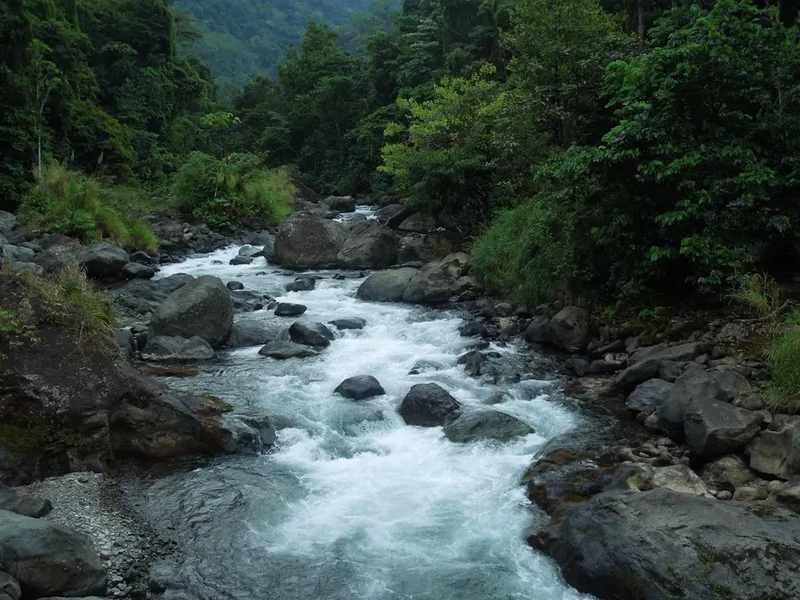
The vibrant blue hue of the Rio Celeste is not due to pollution or mineral dyes, but rather a natural optical phenomenon. It's caused by the chemical reaction between two rivers: the Quebrada Agria, which is acidic, and the Río Burío, which is alkaline. When these two rivers meet, the high concentration of aluminium and silicon in the water causes a chemical reaction that precipitates silica particles. These particles reflect sunlight in such a way that the water appears an intense, almost unbelievable shade of turquoise blue. This process is most pronounced downstream from the confluence, creating the iconic colour that defines the park.
The rainforest environment is rich with life. Keep an eye out for howler monkeys, white-faced capuchin monkeys, sloths, and a dazzling array of bird species, including toucans and hummingbirds. The air is thick with the scent of damp earth and tropical blossoms, and the sounds of the jungle provide a constant, immersive soundtrack to your walk. The trail is a loop or an out-and-back depending on the specific route taken within the park, but the main path to the waterfall is a clearly marked out-and-back section.
History and Cultural Context
The area surrounding Tenorio Volcano National Park has a rich history tied to indigenous cultures and early Costa Rican settlers. For centuries, the indigenous Maleku people have inhabited the region, holding a deep spiritual connection to the land, its forests, and its rivers. The vibrant blue of the Rio Celeste is a source of wonder and legend, often interpreted as a divine gift or a manifestation of the gods' presence.
The establishment of Tenorio Volcano National Park in 1976 was a crucial step in preserving this unique ecosystem and its geological marvels. The park was created to protect the volcano, its surrounding rainforest, and the extraordinary phenomenon of the Rio Celeste. The development of the trail system, including the path to the waterfall, has been a gradual process, balancing the need for visitor access with the imperative of conservation. Early visitors would have navigated the area with much less infrastructure, relying on local guides and rudimentary paths.
The name "Rio Celeste" translates to "Sky River" or "Celestial River," a fitting description for its otherworldly colour. The recognition of the park's natural beauty and geological significance has led to its increasing popularity as a tourist destination, contributing to the local economy through ecotourism. Efforts are continuously made to manage visitor impact and ensure the long-term protection of the delicate environment that creates this natural wonder.
Seasonal Highlights and Weather Reality
The best time to visit the Rio Celeste Waterfall Trail is during the dry season, which typically runs from December to April. During these months, the weather is generally sunny and warm, with less rainfall. This makes the trails drier and easier to navigate, and the vibrant blue of the river is often at its most intense due to lower sediment levels.
The rainy season, from May to November, brings more frequent and heavier downpours. While the rainforest is at its lushest and greenest during this period, the trails can become very muddy and slippery, increasing the difficulty of the hike. More significantly, heavy rainfall can temporarily alter the river's colour. The increased acidity from the Quebrada Agria can overwhelm the chemical reaction, causing the river to appear more grey or milky, especially after intense storms. However, even during the rainy season, there are often periods of sunshine, and the waterfall itself remains a spectacular sight.
Temperatures in the region are generally warm year-round, with average highs around 28-32° Celsius (80-90° Fahrenheit) and lows around 20-24° Celsius (68-75° Fahrenheit). Humidity is high, especially during the rainy season. It is advisable to wear light, breathable clothing and be prepared for both sunshine and rain, regardless of the season.
Recommended Itinerary
Rio Celeste Waterfall Trail - Day Walk
Early Morning (Approx. 7:00 AM - 8:00 AM): Travel to Tenorio Volcano National Park
- Depart from your accommodation in Liberia or nearby towns.
- The drive to the park entrance takes approximately 1.5 hours.
- Ensure you have sufficient fuel and water for the journey.
- Consider a 4x4 vehicle if travelling during the rainy season, as some local roads can be challenging.
Morning (Approx. 8:30 AM - 9:00 AM): Park Arrival and Entry
- Arrive at the Tenorio Volcano National Park entrance.
- Pay the park entrance fee at the ranger station.
- Use the restroom facilities available at the entrance.
- Prepare your gear: apply sunscreen, insect repellent, and ensure you have water and snacks.
Late Morning (Approx. 9:00 AM - 11:00 AM): Hike to the Teñideros (Dyeing Pools)
- Begin your hike on the main trail towards the Rio Celeste waterfall.
- The initial section of the trail is relatively flat and passes through dense rainforest.
- Listen for the sounds of wildlife, such as howler monkeys.
- Reach the "Teñideros," where the two rivers (Quebrada Agria and Río Burío) meet, creating the magical blue colour. Observe the distinct colour change as the rivers merge.
- This section offers excellent opportunities for photography and understanding the geological process.
Midday (Approx. 11:00 AM - 12:30 PM): Hike to the Waterfall and Borbollones
- Continue along the trail, which becomes steeper and more rugged as you approach the waterfall.
- Pass by the "Borbollones," where you can see bubbling mud pots and steam vents, indicating the volcanic activity beneath the park.
- The final approach to the waterfall involves a series of stairs descending to the viewing platform.
- Arrive at the spectacular Rio Celeste waterfall. Take time to admire the 30-metre cascade and the vibrant turquoise pool below.
- Note: Swimming is prohibited at the waterfall for safety and conservation reasons.
Afternoon (Approx. 12:30 PM - 2:00 PM): Return Hike and Lunch
- Ascend the stairs from the waterfall and retrace your steps along the trail back towards the park entrance.
- The return journey offers a different perspective of the rainforest.
- Enjoy a packed lunch at a designated picnic area near the park entrance or at a local soda (small restaurant) outside the park.
Late Afternoon (Approx. 2:00 PM onwards): Departure
- Depart from Tenorio Volcano National Park.
- Begin your drive back to your accommodation.
Important Notes:
- Wear sturdy, closed-toe hiking shoes with good grip, as the trails can be slippery and muddy.
- Bring plenty of water and high-energy snacks.
- Apply insect repellent liberally, especially during the rainy season.
- Carry a lightweight rain jacket, as weather can change quickly.
- Do not feed any wildlife.
- Stay on marked trails at all times.
Planning and Bookings
Book Your Trip
Everything you need to plan your journey
Accommodation
Find places to stay near Liberia
Flights
Search flights to Liberia
Essential Preparation
The Rio Celeste Waterfall Trail is located within Tenorio Volcano National Park, which is managed by the Costa Rican Ministry of Environment and Energy (MINAE) through the National System of Conservation Areas (SINAC). Planning your visit involves understanding park hours, entrance fees, and the best time to go to maximise your experience. The closest major city with significant accommodation and services is Liberia, approximately 1.5 hours away by car. Bijagua is a smaller town closer to the park entrance and offers more basic lodging and dining options. It is highly recommended to have your own transportation, such as a rental car, to reach the park, as public transport options are limited and time-consuming. If visiting during the rainy season (May to November), a 4x4 vehicle is advisable due to the condition of some local access roads.
Trail Accommodation
This is a day hike requiring no overnight accommodation. Visitors typically stay in the nearby towns of Bijagua or Liberia, or in other tourist hubs in the Guanacaste province, and make a day trip to the park. Liberia offers a wide range of hotels, from budget-friendly hostels to luxury resorts. Bijagua provides more rustic and eco-lodge style accommodations, offering a closer connection to nature.
Required Gear
- Hiking Boots: Sturdy, waterproof hiking boots with good ankle support and excellent grip are essential. The trails can be steep, uneven, and very muddy, especially during the rainy season.
- Rain Gear: A lightweight, waterproof and breathable rain jacket is crucial. Even during the dry season, tropical showers can occur unexpectedly.
- Insect Repellent: High-quality insect repellent with DEET or Picaridin is a must to protect against mosquitoes and other biting insects, particularly in the humid rainforest environment.
- Sun Protection: A wide-brimmed hat, sunglasses, and high SPF sunscreen are necessary, as the sun can be intense, even on cloudy days.
- Backpack: A comfortable daypack (20-30 litres) to carry water, snacks, rain gear, and personal items.
- First-Aid Kit: A basic first-aid kit including blister treatment, antiseptic wipes, pain relievers, and any personal medications.
What to Bring
- Water: Carry at least 2-3 litres of water per person. Hydration is key in the tropical climate.
- Food: Pack high-energy snacks such as trail mix, energy bars, fruit, and sandwiches. There are no food facilities inside the park, though small sodas (local restaurants) are available outside the entrance.
- Camera: Essential for capturing the stunning scenery and wildlife. Ensure it's protected from rain.
- Binoculars: Useful for spotting birds and other wildlife in the dense forest canopy.
- Trekking Poles: Highly recommended, especially for the steep and slippery sections of the trail, to aid balance and reduce strain on knees.
- Plastic Bags: For packing out all trash and keeping electronics dry.
- Cash: For park entrance fees and any purchases at local sodas or souvenir shops. Credit card facilities may be limited.
- Change of Clothes: Consider bringing a dry change of clothes for the journey back, as you may get wet from rain or sweat.
Permits
No specific permits are required to hike the Rio Celeste Waterfall Trail beyond the standard park entrance fee. Tenorio Volcano National Park is managed by SINAC (Sistema Nacional de Áreas de Conservación), and visitors must pay an entrance fee upon arrival at the ranger station. The fee is subject to change but is typically around $12 USD per person for international visitors and a lower rate for Costa Rican residents.
Park Entrance Fees (subject to change):
- International Visitors: Approximately $12 USD
- Costa Rican Residents: Approximately ₡6,000 CRC
Park Hours:
- The park is generally open daily from 8:00 AM to 4:00 PM.
- It is advisable to arrive early, especially during peak season, to avoid crowds and allow ample time for the hike and exploration.
- Last entry is typically around 2:00 PM to ensure visitors have enough time to complete the trail before closing.
Booking: While advance booking is not mandatory for the park entrance fee, it is always a good idea to check the official SINAC website or contact the park directly for the most up-to-date information on fees, operating hours, and any potential restrictions, especially during holidays or special events.
Other Activities in the Area
The region surrounding Tenorio Volcano National Park offers several other attractions and activities for visitors:
- Bijagua Town: Explore the charming local town of Bijagua, known for its rural Costa Rican atmosphere. You can find local crafts, enjoy traditional cuisine at small sodas, and experience authentic local life.
- Sloth Watching Tours: The area around Bijagua is known for its sloth population. Guided tours can take you to areas where sloths are commonly found, offering a great opportunity to see these slow-moving creatures in their natural habitat.
- Birdwatching: The diverse ecosystems of the park and surrounding areas are a haven for birdwatchers. Look for toucans, hummingbirds, quetzals (though less common here than in higher altitudes), and various other tropical species.
- Horseback Riding: Several local operators offer horseback riding tours through the countryside, providing a different perspective of the landscape and a relaxed way to explore the area.
- Local Coffee Plantations: Learn about the process of coffee cultivation and production by visiting a local coffee farm. Many offer tours and tastings.
- Other Waterfalls: While Rio Celeste is the most famous, the region may have other smaller, less-visited waterfalls that can be explored with local guides.
- Tenorio Volcano Hike: For the more adventurous, there are trails that lead closer to the dormant Tenorio Volcano itself, offering different views and a more challenging hiking experience.
Safety and Conditions
Trail Conditions: The Rio Celeste Waterfall Trail is generally well-maintained but can be challenging due to its steep sections and the potential for mud, especially during the rainy season (May to November). The stairs leading down to the waterfall can be slippery. Always wear appropriate footwear with good grip.
Weather: Tropical weather can be unpredictable. Be prepared for sudden rain showers, even during the dry season. Temperatures are warm and humidity is high. The intense sun can also be a factor, so sun protection is essential.
Wildlife: The park is home to various wildlife, including monkeys, sloths, coatis, and numerous bird species. While most animals are harmless, it's important to maintain a safe distance and never feed them. Be aware of your surroundings, especially when walking through dense vegetation.
Insects: Mosquitoes and other biting insects are prevalent, particularly in humid areas and near water. Use effective insect repellent and consider wearing long sleeves and trousers, especially during dawn and dusk.
Hydration and Nutrition: Carry ample water and high-energy snacks. The hike can be strenuous, and staying hydrated and fuelled is crucial. There are no food or water facilities within the park itself.
Navigation: The main trail to the waterfall is well-marked. However, it's always wise to have a map or use a reliable navigation app on your phone (download offline maps beforehand as mobile signal can be unreliable). Stick to marked paths to avoid getting lost and to protect the fragile environment.
Swimming: Swimming is strictly prohibited at the Rio Celeste waterfall and in the river upstream of the waterfall due to strong currents, slippery rocks, and the risk of chemical imbalances in the water. The "Borbollones" area is also dangerous due to bubbling mud and steam.
Emergency: In case of an emergency, contact park rangers. It is advisable to have a fully charged mobile phone, though signal coverage can be spotty. Consider purchasing travel insurance that covers medical emergencies and evacuation.
Side Trips and Points of Interest
The Teñideros (Dyeing Pools): This is a crucial stop on the trail, located before the main waterfall. Here, you can witness the exact point where the two rivers, the acidic Quebrada Agria and the alkaline Río Burío, converge. The chemical reaction between the minerals in the water causes the silica particles to precipitate, creating the spectacular turquoise colour of the Rio Celeste downstream. Observing the distinct colour difference between the two rivers before they merge is a fascinating geological experience.
Borbollones (Bubbling Mud Pots): Further along the trail, you will encounter the Borbollones. These are areas where volcanic activity beneath the surface causes the ground to bubble with hot mud and steam. It's a vivid reminder of the volcanic forces that shape this region and contribute to the unique environment of the park. Be cautious and stay on the designated paths, as the ground can be unstable and hot.
Laguna Azul (Blue Lagoon): While not always explicitly marked as a separate "side trip," there are sections of the river that form beautiful blue pools before reaching the main waterfall. These offer picturesque spots for photos and a chance to appreciate the river's colour in different settings. However, remember that swimming is not permitted in these areas either.
Wildlife Viewing Points: The trail passes through dense rainforest, offering numerous opportunities for wildlife spotting. Keep an eye out for howler monkeys in the trees, white-faced capuchin monkeys, coatis, and a variety of colourful birds. The sounds of the rainforest are as much a part of the experience as the sights.
Leave No Trace
The Rio Celeste Waterfall Trail and Tenorio Volcano National Park are precious natural resources that require careful stewardship. Adhering to Leave No Trace principles ensures that this unique environment remains pristine for future generations and minimises the impact of tourism.
Plan Ahead and Prepare: Research the park's conditions, weather, and any specific regulations before your visit. Pack appropriately for the conditions, including rain gear and sturdy footwear.
Travel and Camp on Durable Surfaces: Stay on the marked trails at all times. The rainforest ecosystem is fragile, and venturing off-trail can damage vegetation, disturb wildlife, and lead to erosion.
Dispose of Waste Properly: Pack out everything you pack in. This includes all food scraps, wrappers, and any other litter. Use the designated bins at the park entrance if available, but it's best practice to carry your trash with you until you can dispose of it responsibly.
Leave What You Find: Do not take any natural souvenirs, such as rocks, plants, or flowers. Admire the natural beauty and leave it for others to enjoy.
Minimise Campfire Impacts: Not applicable for this day hike, as camping is not permitted within the park.
Respect Wildlife: Observe wildlife from a distance. Never feed animals, as this can disrupt their natural behaviours, diet, and health. Keep noise levels down to avoid disturbing them.
Be Considerate of Other Visitors: Keep noise to a minimum, especially near wildlife viewing areas. Allow faster hikers to pass. Be patient and courteous.
By following these principles, you contribute to the preservation of the Rio Celeste's magic and the health of the surrounding rainforest.