
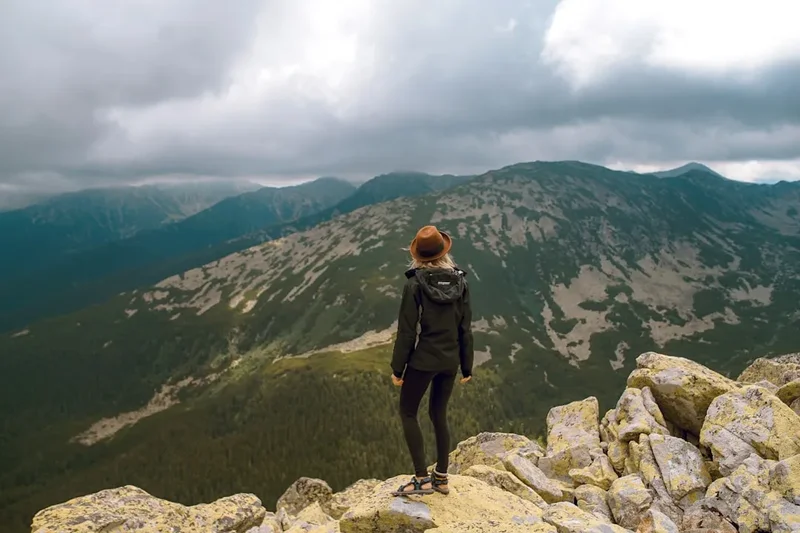
Retezat National Park Trail - The Land of Blue Eyes
The Retezat National Park Trail is the crown jewel of the Romanian Carpathians—a 50 km high-altitude odyssey through a landscape so densely packed with glacial lakes it is affectionately known as the "Land of Blue Eyes". Located in the Retezat Mountains, part of the Southern Carpathians, this trail traverses Romania's oldest national park, established in 1935. The route is a masterclass in glacial geography, featuring over 80 clear alpine lakes, jagged granite peaks exceeding 2,500 metres, and some of the last remaining primary forests in Europe. Unlike the more linear ridges of the Făgăraș Mountains, the Retezat offers a complex, labyrinthine network of valleys and ridges that demand sharp navigation and physical resilience. This is a wilderness where chamois skip across vertical rock faces, marmots whistle from the scree slopes, and the silence is broken only by the wind whipping across the surface of Lake Bucura, the largest glacial lake in the country. For the serious trekker, the Retezat National Park Trail represents the pinnacle of Balkan hiking, offering a raw, uncommercialised experience that feels like stepping back into a prehistoric European wilderness.
- Distance: 50.0 km (loop or point-to-point variations)
- Duration: 2–3 days (recommended 3 days for full immersion)
- Season: June to September (summer months; snow persists until late June)
- Accommodation: Mountain huts (Cabana Pietrele, Cabana Gentiana) and designated camping zones (Bucura Lake)
- Highest point: Peleaga Peak (2,509 m)
- Difficulty: Challenging (requires high fitness and experience with steep, rocky terrain)
- Direction: Generally hiked as a loop from Cârnic or a traverse from North to South
Overview
The Retezat National Park is a geological marvel, defined by its massive granite batholiths and the profound impact of the last ice age. The park is divided into two distinct sections: Retezatul Mare (the Big Retezat), composed primarily of crystalline rocks and granite, and Retezatul Mic (the Small Retezat), a limestone massif characterized by deep caves, dry valleys, and vertical walls. The primary trail focuses on the Big Retezat, where the dramatic topography creates a playground for experienced hikers. The name "Retezat" translates literally to "cut off" or "severed," referring to the flat-topped appearance of the Retezat Peak (2,482 m), which, according to local legend, had its summit sliced off by a giant in a fit of rage.
The trail's character is defined by "lespezi"—massive, unstable granite blocks that cover the high ridges and slopes. Navigating these boulder fields requires constant focus and strong ankles. However, the reward for this physical exertion is unparalleled. The park contains nearly 40% of Romania's glacial lakes, including Lake Zănoaga, the deepest in the country (29 metres), and Lake Bucura, which serves as the spiritual and logistical heart of the massif. Standing at the edge of Bucura at sunset, surrounded by a cirque of peaks including Peleaga, Păpușa, and Judele, is an experience that rivals any alpine vista in the Alps or the Pyrenees.
Biodiversity here is exceptional. The park is a sanctuary for the "Big Three" European predators: the brown bear, the grey wolf, and the Eurasian lynx. While sightings are rare due to the rugged terrain, their presence adds a layer of primal excitement to the trek. The flora is equally impressive, with over 1,190 plant species recorded, including the rare endemic Hieracium transylvanicum and the iconic Edelweiss. The transition from ancient beech and spruce forests to sub-alpine dwarf pine (Pinus mugo) and finally to the stark, lichen-covered rocks of the high peaks provides a vertical journey through multiple ecological zones in a single day.
History and Cultural Context
The history of Retezat National Park is inextricably linked to the birth of Romanian conservationism. In the early 20th century, visionary scientists Alexandru Borza and Emil Racoviță recognised the unique ecological value of the massif. Their tireless advocacy led to the creation of the park in 1935, making it the first national park in Romania. In 1979, the park's importance was further recognised internationally when it was designated a UNESCO Biosphere Reserve, highlighting its role in preserving the genetic diversity of the Carpathian flora and fauna.
Culturally, the Retezat Mountains are steeped in the folklore of the Transylvanian people. For centuries, these peaks were the summer grazing grounds for shepherds from the Hațeg and Petroșani depressions. The "transhumance"—the seasonal movement of livestock—shaped the local culture, language, and gastronomy. Even today, hikers may encounter traditional sheepfolds (stâne) on the lower slopes, where shepherds live in simple wooden huts, guarding their flocks from wolves and bears with the help of large, fierce Carpathian Shepherd dogs. The relationship between the people and the mountains is one of deep respect and survival, reflected in the many legends of giants (uriași) and outlaws (haiduci) who supposedly found refuge in the hidden valleys and caves of the massif.
During the communist era, the Retezat became a popular destination for "turism montan," a state-sponsored movement to encourage physical fitness and appreciation for the national landscape. Many of the existing mountain huts (cabane) and the extensive trail marking system date back to this period. Today, the park is managed with a focus on conservation, balancing the increasing interest from international trekkers with the need to protect its fragile alpine ecosystems. The land remains a symbol of Romanian national pride, representing the wild, untamed spirit of the Carpathian arc.
Want more background? Read extended notes on history and cultural context → Learn more
Seasonal Highlights and Weather Reality
The hiking season in the Retezat is relatively short due to its high altitude and southern continental climate. While the park is technically open year-round, the high-altitude trails are only safely accessible to recreational hikers during the summer and early autumn.
Summer (June to August): This is the peak season. June often sees the blooming of rhododendrons, which carpet the slopes in vibrant pink, though snow patches frequently remain on the northern slopes and high passes (like Curmătura Bucurei) until late June or early July. July and August offer the most stable weather, with temperatures in the valleys reaching 25°C, while the high ridges remain a cool 10–15°C. However, afternoon thunderstorms are common and can be violent, bringing lightning and sudden temperature drops.
Autumn (September to October): Many experienced hikers consider September the best month to visit. The air is crisper, the visibility is often superior to summer, and the dwarf pines and blueberries turn shades of deep red and gold. The crowds (which are never large by European standards) thin out even further. By October, the first snowfalls usually arrive, and the mountain huts begin to scale back their operations.
Winter and Spring (November to May): During these months, the Retezat transforms into a serious mountaineering environment. The "lespezi" (boulder fields) become treacherous traps hidden under snow, and the risk of avalanches in the glacial cirques is high. Only those with advanced winter navigation skills, ice axes, crampons, and avalanche safety gear should attempt the high trails. Many of the access roads to Cârnic or Râușor may become impassable for standard vehicles.
Recommended Itinerary
3-Day Retezat High Peaks Loop
Day 1: Cârnic to Cabana Gentiana or Pietrele
- Distance: 6 km
- Elevation gain: 600 m
- Time: 2.5–3 hours
- Start at the Cârnic trailhead (parking available)
- Follow the blue stripe marker along the Lolaia Valley
- Pass the Lolaia Waterfall, a spectacular 15-metre drop near the trail
- Ascend through ancient spruce forest on a well-maintained forest road and then a rocky path
- Arrive at Cabana Pietrele (1,480 m) or continue to Cabana Gentiana (1,670 m)
- Gentiana is higher and closer to the alpine zone, making for a shorter second day
- Evening spent at the hut, acclimatising to the mountain air and preparing for the ridge
Day 2: The Great Cirque - Gentiana to Bucura Lake via Peleaga Peak
- Distance: 12 km
- Elevation gain: 950 m
- Time: 7–9 hours
- Depart Gentiana following the blue triangle markers towards Pietrele Lake
- Ascend the steep glacial valley to the Pietrele Pass (Curmătura Bucurei)
- From the pass, take the yellow stripe trail to summit Peleaga Peak (2,509 m), the highest point in the Retezat
- Enjoy 360-degree views of the entire massif and the Hațeg Depression
- Descend to the Peleaga Saddle and optionally summit Păpușa Peak (2,508 m) for a "double-header"
- Descend to Bucura Lake (2,040 m), the largest glacial lake in Romania
- Set up camp at the designated camping zone near the Salvamont (Mountain Rescue) post
- This is the most demanding day, involving significant rock hopping and steep gradients
Day 3: The Retezat Ridge and Descent to Cârnic
- Distance: 18 km
- Elevation gain: 400 m (descent of 1,300 m)
- Time: 8–10 hours
- From Bucura Lake, ascend to the Judele Pass (2,370 m) for views of the "hidden" lakes of the western cirque
- Follow the red stripe ridge trail towards Retezat Peak (2,482 m)
- The climb to Retezat Peak is steep and involves some light scrambling
- From the summit, descend via the Lolaia Ridge (North Ridge)
- This ridge is notoriously rocky and requires careful footwork on the granite blocks
- Re-enter the forest zone and follow the trail back down to Cabana Pietrele and finally Cârnic
- Finish the trek at the trailhead for transport back to Petroșani
Important Notes:
- Water is plentiful in the valleys but scarce on the high ridges; fill up at the huts or Bucura Lake
- The "lespezi" (boulder fields) are much slower to traverse than standard dirt trails; allow extra time
- Weather can change in minutes; always have a "bail-out" route to the lower valleys
- Camping is only permitted in designated areas (Bucura, Zănoaga, Pietrele)
- The Salvamont post at Bucura is staffed during summer and is an excellent source of local condition updates
Planning and Bookings
Book Your Trip
Everything you need to plan your journey
Accommodation
Find places to stay near Petroșani
Flights
Search flights to Petroșani
Essential Preparation
The Retezat National Park Trail is a serious mountain undertaking that requires thorough physical and logistical preparation. Hikers should be in good cardiovascular shape and comfortable with sustained ascents of 1,000 metres per day. Experience with rocky, uneven terrain is essential, as much of the trail involves navigating boulder fields. Logistics begin in the town of Petroșani or Hațeg. Petroșani is the most common gateway, accessible by train from Bucharest (approx. 6 hours) or Cluj-Napoca. From Petroșani, you must arrange a taxi or find a local minibus (microbuz) to the village of Ohaba de sub Piatră, and then onwards to Cârnic. The road to Cârnic is partially unpaved and can be rough on low-clearance vehicles.
Booking coordination is relatively simple compared to Western European trails, but still requires attention. There is no central booking system for the huts (cabane). You must contact them individually via phone (often requiring basic Romanian or a very patient English speaker). During July and August, huts can fill up on weekends, so booking 2–3 weeks in advance is advised. If you plan to camp, no booking is required for the designated sites, but you must pay the park entry fee.
Trail Accommodation
Accommodation in the Retezat ranges from rustic mountain huts to wild alpine camping. There are no luxury options within the park boundaries; the focus is on utility and mountain community.
Cabana Pietrele (1,480 m): The largest hub in the park. It consists of a main lodge and several small wooden cabins. Facilities are basic: shared bunk rooms, a common dining area serving simple hot meals (soups, polenta, sausages), and outdoor toilets. Electricity is limited and usually provided by a generator for a few hours in the evening. There are no hot showers.
Cabana Gentiana (1,670 m): A smaller, more intimate hut located higher up the valley. It is preferred by many hikers for its quieter atmosphere and proximity to the high peaks. It offers bunk beds in a large shared room. You must bring your own sleeping bag. The hut provides basic meals and tea, but facilities are even more primitive than Pietrele (outhouse toilets, no running water inside). It is open year-round.
Bucura Lake Camping (2,040 m): This is a designated camping zone near the Salvamont post. There are no facilities other than a stone-walled windbreak for tents and the lake itself for water (must be treated). It is free to use once you have paid the park entry fee. This is one of the most spectacular places to sleep in the Carpathians, but it is exposed to high winds and cold temperatures.
Costs: Hut beds typically cost between 40 and 70 RON (approx. €8–€14) per night. Meals are similarly affordable, with a hearty dinner costing around 30–50 RON.
Required Gear
- Hiking boots: High-cut boots with stiff soles and excellent grip (Vibram or similar) are non-negotiable for the granite boulders.
- Waterproof jacket and trousers: High-quality hardshell (Gore-Tex or equivalent) to withstand sudden Carpathian storms.
- Backpack: 40–50L for hut-to-hut; 60–70L if carrying camping gear.
- Navigation: Physical topographic map (Munții Retezat) and a GPS/offline map app (e.g., Mapy.cz or Gaia GPS).
- Headlamp: Essential for huts and early starts, with spare batteries.
- First aid kit: Include blister plasters (Compeed), antiseptic, and any personal medications.
- Warm layers: Merino wool base layers, a fleece mid-layer, and a lightweight down or synthetic insulated jacket for evenings.
- Sun protection: High SPF sunscreen, sunglasses (Category 3 or 4), and a wide-brimmed hat.
What to Bring
- Food: While huts provide meals, bring high-energy snacks (nuts, dried fruit, chocolate) and lightweight lunches (salami, hard cheese, crackers). If camping, bring a lightweight stove and dehydrated meals.
- Water treatment: A filter (Sawyer Squeeze/LifeStraw) or purification tablets. While stream water is generally clean, the presence of sheep makes treatment necessary.
- Cash: Romanian Leu (RON) is essential. Huts do not accept credit cards, and there are no ATMs in the park.
- Sleeping bag: A 3-season bag (comfort rating 0°C) is required for Gentiana and camping; a lightweight liner is sufficient for Pietrele.
- Toiletries: Biodegradable soap, toothbrush, and a small quick-dry towel.
- Power bank: To keep your phone/GPS charged, as hut outlets are rare and often oversubscribed.
- Trekking poles: Highly recommended to save your knees on the long, rocky descents.
Permits
Access to Retezat National Park requires a small entry fee, which goes towards the maintenance of trails, waste management, and conservation efforts. Unlike some North American or New Zealand parks, there is no "quota" system for hikers, meaning you do not need to book your entry months in advance.
Permit Details:
- Cost: 10 RON (approx. €2) per person.
- Validity: The permit is valid for 7 days.
- Where to buy: You can purchase the permit at the park entrance points (Cârnic, Râușor, Gura Apei) or at the visitor centres. During the high season, a park ranger is often stationed at the Cârnic trailhead to collect fees.
- Online: An online payment system is occasionally available through the official Retezat National Park website, but it can be unreliable; carrying cash for on-site payment is the safest option.
Regulations:
- The permit must be kept on your person at all times, as rangers do conduct spot checks on the trails and at camping areas.
- Camping is strictly limited to the designated zones (Bucura, Zănoaga, Pietrele, Poiana Pelegii). Wild camping outside these areas is prohibited and can result in significant fines.
- Fishing in the glacial lakes is strictly prohibited to protect the endemic trout populations.
- Picking plants or disturbing wildlife is illegal within the park boundaries.
Other Activities in the Area
The region surrounding the Retezat Mountains, known as the Hațeg Country (Țara Hațegului), is one of the most historically and geologically rich areas in Romania. Consider these additions to your trip:
- Corvin Castle (Hunedoara): Located about an hour from the trailhead, this is one of the largest and most impressive Gothic-Renaissance castles in Europe. It is often cited as one of the "Seven Wonders of Romania."
- Sarmizegetusa Regia: The ancient capital of the Dacians, located in the Orăștie Mountains. This UNESCO World Heritage site features impressive stone sanctuaries and fortifications that pre-date the Roman conquest.
- Ulpia Traiana Sarmizegetusa: The ruins of the Roman capital of the Dacia province, located near the town of Hațeg. You can walk through the remains of the amphitheatre, forum, and temples.
- Dinosaur Geopark (Hațeg): A UNESCO Global Geopark famous for the discovery of "dwarf dinosaurs" that lived on the Transylvanian Island during the Late Cretaceous period. The visitor centre in Hațeg is excellent for families.
- Densuș Church: One of the oldest Romanian churches, built in the 13th century using stones taken from the Roman ruins of Ulpia Traiana. Its bizarre, eclectic architecture is unique in the world.
- Prislop Monastery: A significant spiritual site for Romanians, known for its beautiful gardens and the grave of Father Arsenie Boca, a revered figure in the Romanian Orthodox Church.
Safety and Conditions
Mountain Rescue (Salvamont): Romania has a highly professional mountain rescue service called Salvamont. They have permanent bases in the Retezat at Bucura Lake and Pietrele. In case of emergency, the national emergency number is 112, or you can call the Salvamont dispatch directly at 0-SALVAMONT (0725 826 668). It is highly recommended to download the "Salvamont" app, which allows you to send your GPS coordinates to rescuers.
Weather Hazards: The most significant danger in the Retezat is the weather. Afternoon thunderstorms are frequent in July and August. If you see dark clouds building, descend from the ridges immediately. Lightning strikes on the exposed granite peaks are a genuine risk. Additionally, fog can roll in rapidly, reducing visibility to a few metres and making navigation through the boulder fields extremely difficult.
Wildlife:
- Bears: While brown bears are present, they generally avoid the high-altitude rocky zones where the main trail goes. However, they are common in the forest zones around Cârnic and Pietrele. Practice "bear-aware" hiking: make noise, don't hike alone at dawn or dusk, and never keep food inside your tent. Use a bear-proof container or hang your food at least 4 metres high and 2 metres from a tree trunk.
- Vipers: The Common European Adder (Vipera berus) and the Horned Viper (Vipera ammodytes) are found in the Retezat, particularly on sunny, rocky slopes. They are shy and will usually flee, but watch where you step and where you place your hands when scrambling. Wear high-cut boots and long trousers.
- Shepherd Dogs: These dogs are bred to protect sheep from wolves and can be aggressive towards hikers. If you encounter a flock, stay on the trail, keep your distance, and wait for the shepherd. Do not run or throw stones; speak calmly and keep your trekking poles between you and the dogs.
Terrain: The "lespezi" (granite blocks) can be unstable. Even large boulders can shift under your weight. Take your time, test your footing, and be especially careful in wet conditions when the lichen-covered rocks become incredibly slippery.
Side Trips and Points of Interest
Retezat Peak (2,482 m): While the main loop passes near it, the actual summit of Retezat Peak is a worthy detour. The final ascent is a steep scramble, but the view from the "severed" top is iconic. You can see the entire northern part of the massif and the deep valleys carved by ancient glaciers.
Lake Zănoaga: For those with an extra day, a trip to Lake Zănoaga is highly recommended. It is the deepest glacial lake in Romania (29 m) and sits in a much more secluded, wilder cirque than Bucura. The trail from Bucura to Zănoaga via the Judele Pass offers some of the most dramatic scenery in the park.
The "Small Retezat" (Retezatul Mic): If you prefer limestone scenery, the southern part of the park offers a completely different experience. The Piule-Iorgovanu ridge features sharp limestone crests, deep sinkholes, and a different variety of flora, including many rare calciphile plants. It is generally less crowded than the main granite peaks.
Galeș Lake: A quieter alternative to Bucura, Lake Galeș is tucked away in a beautiful glacial cirque. The trail from Gentiana to Galeș is less travelled and passes through stunning dwarf pine forests and past the "Tăul dintre Brazi" (The Lake Among the Firs), a hidden gem of the park.
Leave No Trace
The Retezat National Park is a fragile ecosystem that faces increasing pressure from tourism. As a hiker, you have a responsibility to minimise your impact to ensure this wilderness remains pristine for future generations.
Core Principles in the Retezat:
- Pack it in, pack it out: There are no trash cans in the park, including at the huts. You must carry all your waste (including organic waste like orange peels and eggshells) back to the trailhead at Cârnic.
- Respect the water: The glacial lakes are closed ecosystems. Do not use soap (even biodegradable) in the lakes or streams. Wash yourself and your dishes at least 50 metres away from water sources using a small basin.
- Stay on the trail: The alpine tundra is extremely slow to recover. Stepping off-trail to avoid mud or rocks destroys fragile mosses and endemic plants.
- Human waste: Use the toilets at the huts whenever possible. If you are caught between huts, dig a "cathole" at least 15–20 cm deep and at least 60 metres from water, trails, and campsites. Pack out your toilet paper in a sealed plastic bag.
- No fires: Campfires are strictly prohibited within the national park. Use a lightweight camping stove for cooking.
- Wildlife: Observe animals from a distance. Never feed marmots or birds, as this habituates them to humans and can lead to their death during the harsh winter months.