
Pouakai Circuit - Taranaki's Volcanic Crown
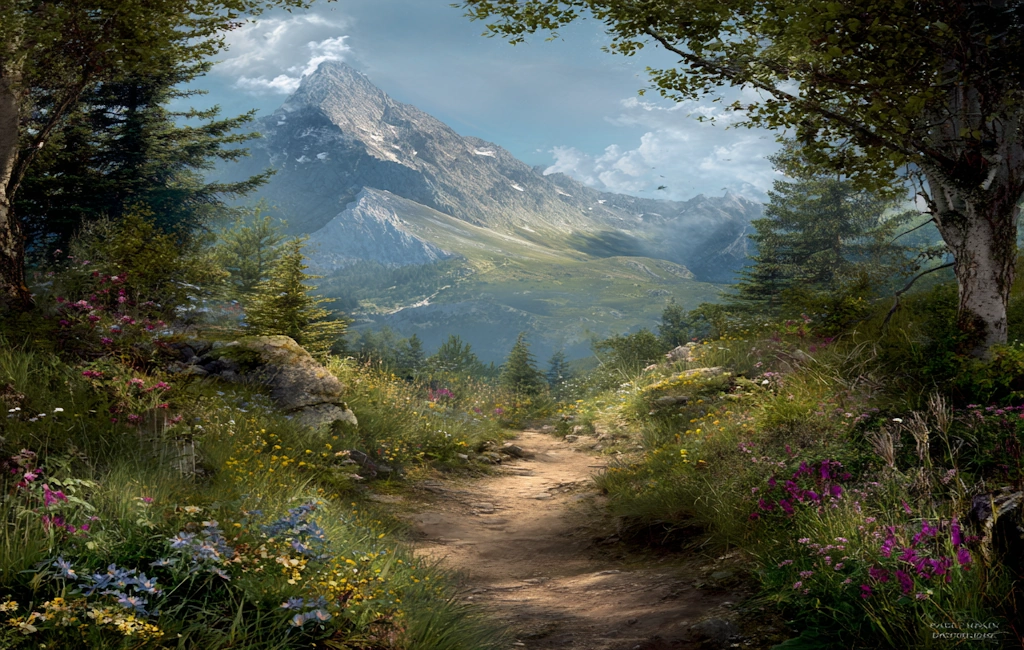
The Pouakai Circuit is a spectacular multi-day walk encircling the majestic Mount Taranaki/Egmont, a dormant volcano that dominates the North Island's landscape. This 25 km loop offers a diverse and immersive experience, taking walkers through ancient podocarp forests, across alpine tussock lands, and past unique volcanic features, all while providing breathtaking panoramic views of the surrounding countryside and the Tasman Sea. The circuit is renowned for its accessibility, varied terrain, and the iconic Pouakai Tarns, which famously reflect the perfect cone of Mount Taranaki on calm days.
- Distance: 25.0 km loop
- Duration: 2–3 days
- Season: November to April (best weather, but accessible year-round with appropriate gear)
- Huts: Pouakai Hut, Kahui Hut, Holly Hut (bookings essential during peak season)
- Highest point: Around 1,400 metres
- Difficulty: Moderate (requires good fitness due to elevation changes)
- Trailhead Access: North Egmont Visitor Centre (approx. 30 mins drive from New Plymouth)
Overview
The Pouakai Circuit is a journey through a landscape shaped by volcanic forces and ancient forests. It offers a compelling alternative to the more remote Great Walks, providing a rich wilderness experience within relatively easy reach of New Plymouth. The circuit is typically walked in a clockwise direction, starting from the North Egmont Visitor Centre, though counter-clockwise is also popular. The trail ascends through dense, moss-laden rainforest, where sunlight filters through the canopy, creating an ethereal atmosphere. As the elevation increases, the forest gives way to subalpine shrubland and then open tussock fields, offering expansive views.
A highlight for many is the Pouakai Tarns, a series of small alpine lakes that, under still conditions, provide mirror-like reflections of Mount Taranaki's iconic cone. This is a photographer's dream and a moment of profound natural beauty. The circuit also traverses the dramatic Pouakai Range, a rugged ridgeline that offers sweeping vistas towards the west coast and the Tasman Sea. The descent often leads through different forest types, showcasing the ecological diversity of the mountain's slopes.
The trail is well-maintained but can be challenging, particularly the sections involving steep ascents and descents. Weather on Mount Taranaki can change rapidly, with mist, rain, and wind being common, even in summer. Therefore, preparedness is key to enjoying this magnificent circuit. The combination of volcanic grandeur, ancient forests, and stunning coastal views makes the Pouakai Circuit a truly memorable New Zealand hiking experience.
History and Cultural Context
Mount Taranaki/Egmont holds deep cultural significance for Māori, particularly for the iwi of Taranaki. According to Māori tradition, Taranaki was once a mountain that stood with his brothers, Tongariro, Ruapehu, and Ngauruhoe, in the central North Island. Taranaki fell in love with Pihanga, the wife of Tongariro, leading to a great battle. Defeated, Taranaki fled west, carving out the deep valleys and gorges of the land as he went, eventually settling in his current location. The mountain is considered tapu (sacred) and is a significant ancestral landmark, a source of identity and spiritual connection for the local iwi.
The mountain was named Mount Egmont by Captain James Cook in 1770, after John Perceval, 2nd Earl of Egmont, who was First Lord of the Admiralty. However, the Māori name, Taranaki, meaning "smoking mountain" or "cliff with a shining summit," is now officially recognised and used alongside Egmont.
The area surrounding Mount Taranaki was designated Egmont National Park in 1900, making it one of New Zealand's earliest national parks. This designation aimed to protect the unique ecological and geological features of the mountain and its surrounding forests. The park has since been renamed Egmont National Park / Te Papakura o Taranaki, reflecting the dual heritage. The Pouakai Circuit itself follows established tracks that have been used for recreation and access for many decades, evolving from early exploration routes to the well-formed trails of today.
Seasonal Highlights and Weather Reality
The Pouakai Circuit is accessible year-round, but the experience varies significantly with the seasons. The best time for most walkers is during the warmer months, from November to April, when the weather is generally more stable, and the days are longer.
Spring (September–November): The mountain awakens after winter. Snow may still linger at higher elevations, especially in shaded gullies. Native flora begins to bloom, and birdlife becomes more active. Weather can be unpredictable, with a mix of sunshine, rain, and wind. Track conditions can be muddy.
Summer (December–February): This is the most popular season. Days are long and generally warmer, offering the best chance for clear views and calm conditions at the Pouakai Tarns. However, summer can also bring periods of heavy rain and strong winds. Sandflies can be present, especially in damper areas.
Autumn (March–May): The colours of the forest change, offering beautiful autumnal hues. The weather can be crisp and clear, with fewer sandflies. However, the risk of snow at higher altitudes increases as winter approaches, and daylight hours shorten.
Winter (June–August): The Pouakai Circuit transforms into a winter alpine environment. Snow and ice are common, particularly on the higher sections of the Pouakai Range and around the summit. This season requires advanced winter mountaineering skills, appropriate equipment (ice axe, crampons), and a high level of fitness and navigation ability. Huts may be snow-covered, and access can be challenging. Only experienced winter hikers should attempt the circuit during this period.
Weather: Mount Taranaki is notorious for its rapidly changing weather. Mist can descend quickly, reducing visibility to near zero. Rain is frequent, and strong winds can make exposed ridgelines hazardous. Always check the forecast before you go and be prepared for all conditions.
Recommended Itinerary
2-Day Pouakai Circuit Itinerary (Clockwise)
Day 1: North Egmont Visitor Centre to Pouakai Hut
- Distance: Approximately 10.5 km
- Elevation gain: ~800 m
- Time: 4–5 hours
- Start at North Egmont Visitor Centre.
- Follow the well-formed track through the lower rainforest.
- Ascend through the Enchanted Forest, a section of ancient trees draped in moss.
- Pass the Tahurangi Lodge turn-off.
- Continue climbing towards the Pouakai Range.
- Reach the Pouakai Hut, situated in an alpine tussock landscape with stunning views.
- The hut offers a prime location for sunset and stargazing.
Day 2: Pouakai Hut to North Egmont Visitor Centre via Pouakai Tarns
- Distance: Approximately 14.5 km
- Elevation gain: ~650 m, Elevation loss: ~1,450 m
- Time: 5–7 hours
- Depart Pouakai Hut early for the best chance of calm conditions at Pouakai Tarns.
- Walk to the Pouakai Tarns for iconic reflections of Mount Taranaki.
- Continue along the Pouakai Range, enjoying expansive views.
- Descend towards Kahui Hut (optional stop).
- The track then leads down through varied forest types.
- Pass Holly Hut (optional stop).
- The final section follows the Taranaki Falls track, leading back to the North Egmont Visitor Centre.
Alternative 3-Day Itinerary
A 3-day itinerary allows for a more relaxed pace, more time for photography, and the inclusion of side trips. This could involve splitting Day 2 into two shorter days, perhaps staying at Kahui Hut or Holly Hut for the second night.
Day 1: North Egmont Visitor Centre to Kahui Hut
- Distance: ~7 km
- Elevation gain: ~500 m
- Time: 3–4 hours
- A gentler start, allowing more time to explore the lower forest.
Day 2: Kahui Hut to Pouakai Hut
- Distance: ~7 km
- Elevation gain: ~500 m
- Time: 3–4 hours
- Ascend to the Pouakai Range, with ample time to enjoy the tarns and views.
Day 3: Pouakai Hut to North Egmont Visitor Centre
- Distance: ~14.5 km
- Elevation loss: ~1,450 m
- Time: 5–7 hours
- Similar to Day 2 of the 2-day itinerary, but with a more leisurely start.
Important Notes:
- Bookings for huts are essential, especially during peak season (summer and school holidays).
- Weather can change rapidly; always be prepared for rain, wind, and cold, even in summer.
- Carry sufficient water or a purification method, as water sources can be seasonal.
- Navigation can be challenging in mist; a map, compass, and GPS device are recommended.
Planning and Bookings
Book Your Trip
Everything you need to plan your journey
Accommodation
Find places to stay near New Plymouth
Flights
Search flights to New Plymouth
Essential Preparation
The Pouakai Circuit is a moderate-to-challenging multi-day walk that requires careful planning. Given its popularity, especially during the summer months, booking accommodation well in advance is crucial. The closest major town and logistical hub is New Plymouth, which offers a full range of services including accommodation, gear hire, supermarkets, and transport options. From New Plymouth, it's approximately a 30-minute drive to the North Egmont Visitor Centre, the primary trailhead for the circuit. Ensure you have a reliable vehicle or have arranged transport, as public transport to the trailhead is limited.
Fitness is a key consideration. While the distance is manageable over 2-3 days, the significant elevation gain and loss, particularly on the second day of a 2-day itinerary, requires a good level of cardiovascular fitness and leg strength. Practice hiking with a loaded pack on varied terrain before your trip.
Trail Accommodation
The Pouakai Circuit features three Department of Conservation (DOC) huts: Pouakai Hut, Kahui Hut, and Holly Hut. These huts provide basic shelter and are essential for overnight stays on the circuit. Bookings are mandatory and can be made through the DOC website.
Pouakai Hut:
- Location: Situated on the Pouakai Range, offering spectacular views.
- Capacity: 16 bunks.
- Facilities: Bunk beds with mattresses, wood burner (fuel provided), water supply (stream, treatment recommended), composting toilets, cooking bench.
- What's NOT provided: Bedding, cooking utensils, pots, pans, fuel for stoves (use wood burner).
- Seasonal Availability: Open year-round, but booking is essential.
- Cost: NZ$20 per person per night.
Kahui Hut:
- Location: Lower down on the southern side of the circuit, in a forested area.
- Capacity: 12 bunks.
- Facilities: Bunk beds with mattresses, water supply (stream, treatment recommended), composting toilets, cooking bench.
- What's NOT provided: Bedding, cooking utensils, pots, pans, fuel for stoves.
- Seasonal Availability: Open year-round, booking essential.
- Cost: NZ$20 per person per night.
Holly Hut:
- Location: Located on the western side of the circuit, in a forested area.
- Capacity: 8 bunks.
- Facilities: Bunk beds with mattresses, water supply (stream, treatment recommended), composting toilets, cooking bench.
- What's NOT provided: Bedding, cooking utensils, pots, pans, fuel for stoves.
- Seasonal Availability: Open year-round, booking essential.
- Cost: NZ$20 per person per night.
Camping: Camping is permitted at designated sites near Kahui Hut and Holly Hut for those who prefer to camp. These sites also require booking.
Required Gear
- Sturdy, waterproof hiking boots: Essential for varied terrain and potential wet conditions. Ensure they are well broken-in.
- Waterproof and windproof jacket and overtrousers: Weather can change rapidly; these are critical for staying dry and warm.
- Warm layers: Thermal base layers (merino wool or synthetic), fleece or down mid-layer.
- Hat and gloves: Even in summer, higher elevations can be cold.
- Backpack: 40-60 litre capacity, with a rain cover.
- Sleeping bag: A 3-season bag is recommended for hut stays.
- Head torch or flashlight: With spare batteries, for use in huts and during early morning/late evening travel.
- Navigation tools: Map of the Pouakai Circuit, compass, and a GPS device or smartphone with offline maps.
- First-aid kit: Including blister treatment, pain relievers, bandages, antiseptic wipes, and any personal medications.
- Sun protection: Sunscreen, sunglasses, and a wide-brimmed hat.
- Insect repellent: Especially for sandflies, which can be prevalent.
What to Bring
- Food: Sufficient for the duration of your trip, including snacks. Lightweight, high-energy meals are ideal.
- Water bottles or hydration reservoir: Carry at least 2 litres per person.
- Water treatment method: Filter, purification tablets, or UV steriliser, as stream water should be treated.
- Cooking equipment (if camping or for use in huts): Lightweight stove, fuel, pot, utensils, mug, plate/bowl.
- Toiletries: Biodegradable soap, toothbrush, toothpaste, toilet paper, hand sanitiser.
- Trowel: For burying human waste if camping away from designated sites (though huts have toilets).
- Trekking poles: Highly recommended for steep ascents and descents, reducing strain on knees.
- Camera: To capture the stunning scenery.
- Book or journal: For downtime in the huts.
- Small towel: Quick-drying is best.
Permits
For overnight stays in the DOC huts (Pouakai Hut, Kahui Hut, Holly Hut) or at designated campsites, booking is mandatory. These bookings can be made online through the Department of Conservation (DOC) website. It is advisable to book well in advance, particularly for the peak summer season (December to February) and during school holidays, as the limited capacity means huts can fill up quickly.
Booking Process:
- Visit the official DOC website for Egmont National Park.
- Navigate to the "Tracks and Great Walks" section and find the Pouakai Circuit.
- Select your desired dates and hut/campsite.
- Complete the online booking form and payment.
Costs:
- Hut fees: NZ$20 per person per night.
- Campsite fees: NZ$10 per person per night.
Day Use: No permits are required for day walks on the Pouakai Circuit. However, it is still essential to check track conditions and weather forecasts before heading out.
Park Entry: Entry into Egmont National Park is free. There are no specific park entry permits required for general access.
Other Activities in the Area
The region around Mount Taranaki offers a wealth of activities beyond the Pouakai Circuit:
- Summiting Mount Taranaki: For experienced and fit hikers, the summit track offers a challenging but rewarding climb to the peak (10-12 hours return). This requires excellent fitness, navigation skills, and appropriate alpine gear, especially outside of summer.
- Taranaki Falls Walk: A shorter, accessible walk from North Egmont Visitor Centre leading to a beautiful waterfall.
- Dawson Falls Visitor Centre: Explore the southern side of the mountain, visit the impressive Dawson Falls, and learn about the area's history.
- Coastal Walks: Explore the rugged coastline of the Taranaki region, with numerous beaches and scenic walks.
- New Plymouth City: Visit the Puke Ariki museum, explore the Govett-Brewster Art Gallery, and enjoy the city's vibrant café scene.
- Pukekura Park: A stunning botanical garden in New Plymouth, famous for its illuminated "Festival of Lights" during summer.
- Surf and Beach Activities: Taranaki is a renowned surf destination with numerous beaches suitable for surfing, swimming, and other water sports.
Safety and Conditions
Weather: Mount Taranaki is known for its unpredictable and rapidly changing weather. Mist can descend quickly, reducing visibility to near zero. Be prepared for rain, strong winds, and cold temperatures, even in summer. Always check the MetService mountain forecast for Taranaki before and during your trip.
Navigation: While the Pouakai Circuit is generally well-marked, navigation can become difficult in poor visibility. Carry a map, compass, and GPS device, and know how to use them. Inform someone of your plans and expected return time.
Fitness: The circuit involves significant elevation changes. Ensure you have a good level of fitness and are prepared for steep ascents and descents. Trekking poles can be very helpful.
Water: Water sources are available along the track, but it is essential to treat all water before drinking to prevent illness. Carry a water filter or purification tablets.
Sandflies: Sandflies can be present, particularly in damper areas and during warmer months. Carry effective insect repellent.
Emergency: Mobile phone coverage is unreliable on the track. Consider carrying a personal locator beacon (PLB) for emergencies. The nearest emergency services are based in New Plymouth.
Track Conditions: The track can be muddy and slippery, especially after rain. Wear appropriate footwear and take care on steep sections. In winter, snow and ice can make the track hazardous, requiring mountaineering experience and equipment.
Side Trips and Points of Interest
Pouakai Tarns: The absolute highlight of the circuit. These small alpine lakes offer world-famous reflections of Mount Taranaki's perfect cone on calm, clear days. Visiting early in the morning or late in the afternoon often provides the best light and the highest chance of still water.
Taranaki Falls: Located near the North Egmont Visitor Centre, this is an easy and rewarding side trip. The waterfall cascades over a lava flow, and the surrounding area is rich in native flora.
Holly Hut and Kahui Hut Areas: While the huts themselves are basic accommodation, the surrounding forest and terrain offer opportunities for exploration. The lower sections of the track pass through beautiful, old-growth forest.
Summit Views: Even if not attempting the summit, the views from the Pouakai Range are spectacular. On a clear day, you can see across the Tasman Sea to the West Coast and the Southern Alps on a very clear day.
Egmont National Park Visitor Centre: Located at North Egmont, this centre provides valuable information on track conditions, weather, and local flora and fauna. It's a good starting point for understanding the mountain's environment.
Leave No Trace
The Pouakai Circuit traverses a sensitive volcanic and forest ecosystem within Egmont National Park. Adhering to Leave No Trace principles is vital to preserve this environment for future visitors and to protect the unique biodiversity of Mount Taranaki.
- Plan Ahead and Prepare: Know the regulations, check weather forecasts, and be prepared for all conditions. Book accommodation in advance.
- Travel and Camp on Durable Surfaces: Stick to the marked tracks and use designated campsites or huts. Avoid walking on fragile vegetation, especially around the Pouakai Tarns.
- Dispose of Waste Properly: Pack out everything you pack in, including all food scraps, wrappers, and toilet paper. Use the composting toilets provided in huts. If camping away from huts, bury human waste at least 10 cm deep and 60 m (60 metres) away from water sources, camp, and trails.
- Leave What You Find: Do not remove or disturb natural objects such as rocks, plants, or cultural artefacts.
- Minimize Campfire Impacts: Campfires are generally not permitted on the Pouakai Circuit. Use a lightweight stove for cooking.
- Respect Wildlife: Observe wildlife from a distance and do not feed any animals.
- Be Considerate of Other Visitors: Keep noise levels down, especially in huts and at popular viewpoints like the Pouakai Tarns. Yield to uphill walkers.
By following these principles, you help ensure that the natural beauty and cultural heritage of Mount Taranaki are protected.
 New Zealand