
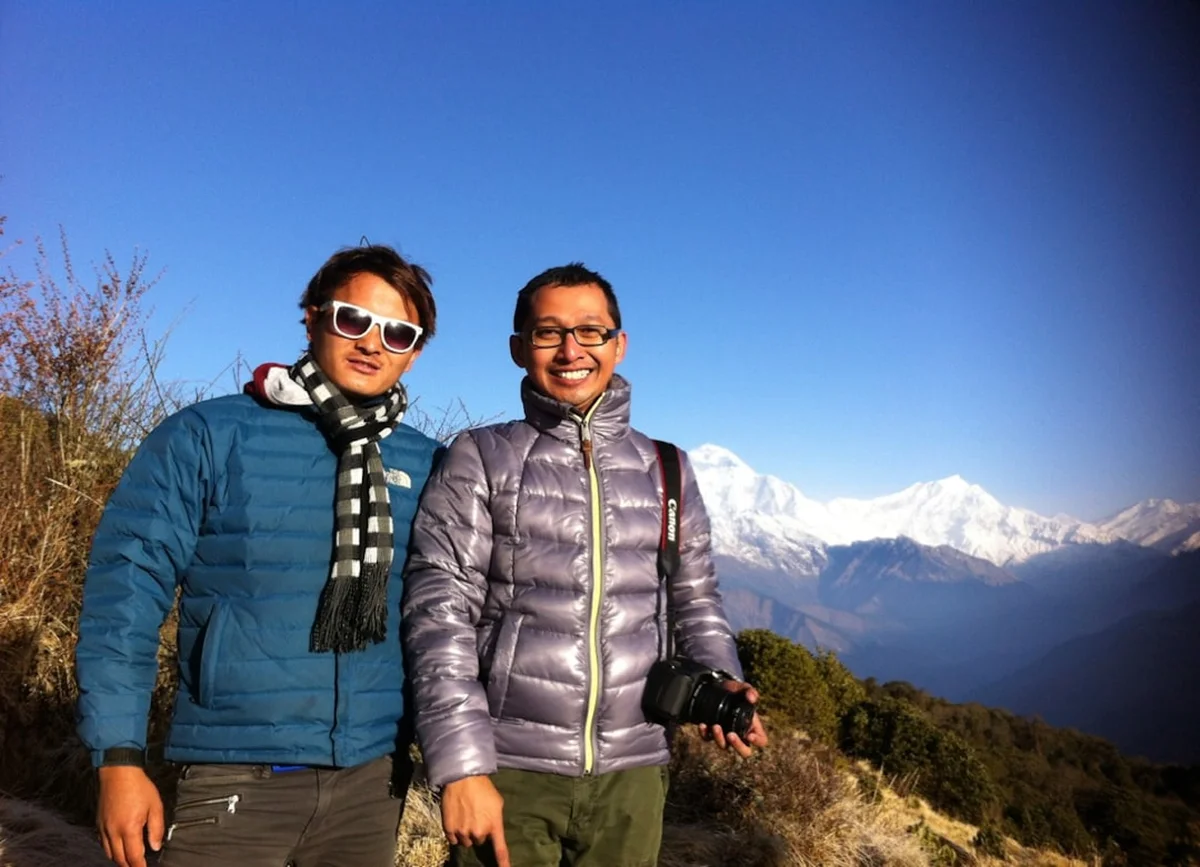
Poon Hill Trek - The Himalayan Sunrise Gateway
The Poon Hill Trek, often referred to as the Ghorepani Poon Hill Trek, is Nepal’s most celebrated short-duration mountain journey. Located within the sprawling Annapurna Conservation Area, this 40.0 km circuit offers a profound introduction to the grandeur of the Himalayas without the extreme altitude or technical demands of longer expeditions. Rising to a maximum elevation of 3,210 metres at the Poon Hill viewpoint, the trail serves as a natural amphitheatre, providing a front-row seat to some of the highest peaks on Earth, including the formidable Dhaulagiri (8,167 m) and the iconic Annapurna I (8,091 m). This is a journey through the cultural heartland of the Gurung and Magar peoples, where ancient rhododendron forests meet terraced farmlands, and where the hospitality of mountain teahouses provides a warm sanctuary against the crisp alpine air. For many, this trek is not merely a physical challenge but a spiritual awakening, punctuated by the sight of the first morning light igniting the snow-capped summits in hues of molten gold and soft violet.
- Distance: 40.0 km (loop or semi-circuit)
- Duration: 4–5 days
- Season: October–November and March–May (peak clarity and flora)
- Accommodation: Teahouses (local mountain lodges)
- Highest point: Poon Hill Summit (3,210 m)
- Difficulty: Moderate (significant stair climbs involved)
- Closest City: Pokhara (gateway to the Annapurna region)
- Permits: ACAP (Annapurna Conservation Area Permit) and TIMS (Trekkers' Information Management System) card required
Overview
The Poon Hill Trek is a masterclass in ecological and cultural diversity, condensed into a manageable four-to-five-day itinerary. Starting from the subtropical lowlands near Nayapul, the trail ascends through a vertical landscape that transitions rapidly from lush, humid river valleys to temperate forests of oak and giant rhododendron. The route is famous for its "Ulleri Stairs"—a relentless ascent of over 3,000 stone steps that tests the resolve of even fit walkers, yet rewards them with increasingly dramatic vistas of the "Fishtail" peak, Machhapuchhre (6,993 m). Unlike the high-altitude deserts of the Mustang region or the stark moraines of Everest Base Camp, the Poon Hill circuit remains vibrantly green for much of the year, offering a softer, more pastoral beauty that contrasts sharply with the jagged, ice-clad giants looming on the horizon.
The primary draw of this trek is the summit of Poon Hill itself. While the trek is physically demanding due to the constant elevation changes, it does not reach the "death zone" altitudes, making it an ideal choice for families, first-time trekkers, or those with limited time in Nepal. The infrastructure along the route is among the best in the country; the villages of Ghorepani and Ghandruk are well-established trekking hubs with comfortable teahouses, diverse menus, and a sense of community that is rare in more remote regions. Here, the rhythm of the day is dictated by the sun: early starts to catch the mountain views before the afternoon clouds roll in, and long, social evenings gathered around a central wood-burning stove in a communal dining hall.
Beyond the physical landscape, the trek offers an intimate look at the agrarian lifestyle of the middle hills. You will share the trail with mule trains carrying supplies, pass through schoolyards where children play against a backdrop of 8,000-metre peaks, and witness the intricate system of terraced farming that has sustained these communities for centuries. The Poon Hill Trek is a sensory experience—the scent of pine needles and woodsmoke, the sound of prayer flags snapping in the wind, and the sight of the Annapurna Massif reflected in the morning dew. It is a journey that proves you do not need to climb the highest peaks to experience the true soul of the Himalayas.
History and Cultural Context
The history of the Poon Hill region is inextricably linked to the ancient trade routes that connected the Tibetan plateau with the fertile plains of India. The village of Ghorepani, which translates literally to "Horse Water" (Ghore meaning horse, Pani meaning water), served for centuries as a vital resting point for traders and their pack animals. Before the advent of modern trekking in the 1970s, these trails were the lifelines of the Gurung and Magar ethnic groups, who moved salt, grain, and wool across the rugged terrain. The stone-paved paths you walk today are the result of generations of communal labour, designed to withstand the torrential rains of the monsoon and the heavy traffic of livestock.
The cultural fabric of the region is dominated by the Gurung people, renowned globally for their bravery and service as Gurkha soldiers in the British and Indian armies. Many of the teahouses and lodges along the trail are owned and operated by retired soldiers or their families, and it is common to see framed photographs of ancestors in military uniform adorning the walls. This military heritage has brought a unique level of organisation and cleanliness to the villages, particularly in Ghandruk, which is often cited as one of the most beautiful and well-maintained traditional villages in Nepal. The Gurung culture is also rich in shamanistic traditions and Tibetan Buddhism, evidenced by the numerous chortens (stupas), mani walls (engraved prayer stones), and colourful prayer flags that mark the high points and entrances of the villages.
The development of the Poon Hill Trek as a tourist destination began in earnest following the opening of Nepal to foreigners in the mid-20th century. It gained significant popularity in the 1980s as the "Annapurna View Trek," offering a safer and more accessible alternative to the full Annapurna Circuit. Today, the region is a cornerstone of Nepal’s trekking economy, but it remains deeply rooted in its heritage. The preservation of the rhododendron forests—the largest of their kind in the world—is a point of local pride, and the community-led conservation efforts under the Annapurna Conservation Area Project (ACAP) serve as a global model for sustainable mountain tourism.
Want more background? Read extended notes on history and cultural context → Learn more
Seasonal Highlights and Weather Reality
The Poon Hill Trek is a seasonal experience, with the character of the landscape changing dramatically throughout the year. The most popular times to visit are the post-monsoon autumn (October to November) and the pre-monsoon spring (March to May). During these windows, the weather is generally stable, and the views are at their most reliable.
Autumn (October–November): This is widely considered the "gold standard" for trekking in Nepal. After the monsoon rains have washed the atmosphere clean of dust, the air is exceptionally clear, providing the sharpest possible views of the Annapurna and Dhaulagiri ranges. The temperatures are moderate—warm during the day for walking in light layers, and crisp but manageable at night. This is also the time of major Nepalese festivals like Dashain and Tihar, adding a vibrant cultural layer to the journey.
Spring (March–May): For nature lovers, spring is the most spectacular season. This is when the world’s largest rhododendron forests burst into bloom. The hillsides are transformed into a sea of crimson, pink, and white flowers, particularly between Ulleri and Ghorepani. While the mornings are usually clear, afternoon clouds are more common than in autumn, and the temperatures are slightly warmer. This is also the best time for birdwatching, as migratory species return to the temperate forests.
Winter (December–February): Winter offers the advantage of quiet trails and crystal-clear skies, but it comes with significant cold. Temperatures at Ghorepani can drop well below -10° Celsius at night, and snow can occasionally block the trail to the Poon Hill summit. Many teahouses remain open, but you will need a high-quality down jacket and a four-season sleeping bag. The sunrise from Poon Hill in winter is particularly stark and beautiful, with the snow-covered peaks reflecting a cold, brilliant light.
Monsoon (June–September): Trekking during the monsoon is generally discouraged. The region receives heavy rainfall, which leads to muddy trails, frequent landslides, and an abundance of leeches in the forest sections. Most importantly, the mountains are frequently obscured by thick cloud cover, meaning you may complete the entire trek without seeing a single peak. However, for those interested in botany, the flora is at its most lush, and the waterfalls are in full, thunderous force.
Recommended Itinerary
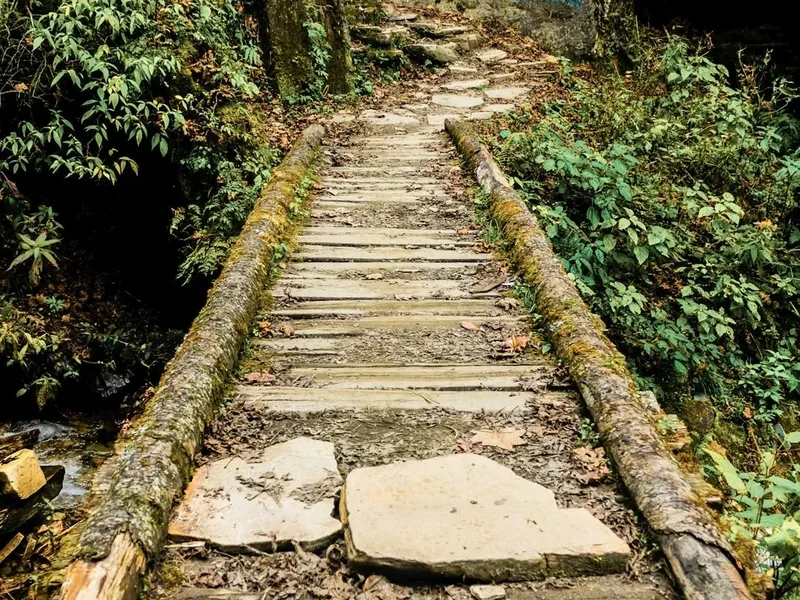
4-Day Poon Hill Circuit Itinerary
Day 1: Nayapul to Ulleri
- Distance: 12 km
- Elevation gain: 1,000 m
- Time: 5–6 hours
- Drive from Pokhara to Nayapul (approx. 1.5–2 hours) to begin the trek
- Initial easy walk along the Modi Khola river to Birethanti (permit checkpoint)
- Follow the Bhurungdi Khola through terraced fields and small hamlets
- The real challenge begins at Tikhedhunga: the ascent of the "Ulleri Stairs"
- Climb over 3,000 stone steps to reach the village of Ulleri (2,020 m)
- Arrive in Ulleri for spectacular evening views of Annapurna South and Hiunchuli
- This is a physically demanding first day designed to gain significant elevation early
Day 2: Ulleri to Ghorepani
- Distance: 8 km
- Elevation gain: 850 m
- Time: 4–5 hours
- A more gradual ascent compared to Day 1, entering deep forest territory
- Walk through ancient oak and giant rhododendron forests (blooming in March/April)
- Pass through Banthanti and Nangethanti, ideal spots for a tea break
- The sound of waterfalls and birdsong dominates this section of the trail
- Arrive at Ghorepani (2,870 m), a large village situated on a ridge
- Ghorepani offers the first panoramic views of the Dhaulagiri massif to the west
- Early night recommended in preparation for the pre-dawn summit climb
Day 3: Ghorepani to Poon Hill and Tadapani
- Distance: 11 km (including Poon Hill return)
- Elevation: 340 m gain to Poon Hill, then significant descent and undulating ridges
- Time: 6–7 hours
- 4:30 AM start for the 45-minute climb to Poon Hill summit (3,210 m)
- Witness the sunrise over Dhaulagiri I, Annapurna I, Machhapuchhre, and Manaslu
- Return to Ghorepani for breakfast before continuing the trek
- Ascend a scenic ridge towards Deurali, offering constant mountain views
- Descend through a dramatic river canyon and moss-covered "fairy forests"
- Arrive in Tadapani (2,630 m), famous for its close-up views of Machhapuchhre
- This is the most visually rewarding day of the trek, combining the summit with diverse forest landscapes
Day 4: Tadapani to Ghandruk and Nayapul
- Distance: 14 km
- Elevation: 1,600 m descent
- Time: 6–7 hours
- Steep descent through thick forest to the beautiful Gurung village of Ghandruk
- Explore Ghandruk (1,940 m), visit the local cultural museum and the old stone houses
- Enjoy a final lunch with views of the Annapurna range
- Continue the descent on well-maintained stone paths through terraced farmlands
- Reach Syauli Bazar and follow the river back to Birethanti and Nayapul
- Transfer by private jeep or bus back to the comforts of Pokhara
- A long day of descending that can be tough on the knees, but culturally very rich
Important Notes:
- The itinerary can be extended to 5 days by staying overnight in Ghandruk to explore the village further
- Always carry a headlamp for the early morning Poon Hill ascent
- Water is available at teahouses; use purification tablets or filters rather than buying plastic bottles
- The "Ulleri Stairs" are easier to ascend than descend; this counter-clockwise route is recommended for knee health
- Permits must be stamped at Birethanti on both entry and exit
Planning and Bookings
Book Your Trip
Everything you need to plan your journey
Accommodation
Find places to stay near Pokhara
Flights
Search flights to Pokhara
Essential Preparation
The Poon Hill Trek requires a moderate level of physical fitness. While you do not need mountaineering experience, you should be comfortable walking 5–7 hours a day on uneven, steep terrain. Training should focus on cardiovascular endurance and leg strength; climbing stairs with a weighted pack is the best way to prepare for the Ulleri ascent. Unlike the more remote treks in Nepal, the Poon Hill route does not require advanced booking of accommodation, as there are numerous teahouses in every village. However, during the peak months of October and April, the best lodges can fill up by mid-afternoon, so an early start each day is beneficial.
Pokhara is the essential base for this trek. It is a vibrant lakeside city where you can purchase or rent any necessary gear, arrange for guides and porters, and obtain your permits. Most trekkers leave their main luggage at their Pokhara hotel and carry only what they need for the 4–5 days on the trail. It is highly recommended to hire a local guide or porter; not only does this support the local economy, but a guide provides invaluable cultural insight and ensures you find the best paths and lodges during busy periods.
Trail Accommodation
Accommodation on the Poon Hill Trek consists of "teahouses"—locally owned guesthouses that provide a bed and hot meals. These vary from basic wooden huts to more modern concrete buildings with improved facilities.
Hut Facilities:
- Twin-sharing rooms with two single beds and foam mattresses
- Communal dining hall, usually heated by a central wood or dung-burning stove in the evening
- Extensive menus featuring Dal Bhat (lentils and rice), pasta, pancakes, and Tibetan bread
- Hot showers are usually available for an extra charge (NZ$3–$5), often solar-powered or gas-heated
- Charging facilities for electronics are available in common areas (often for a small fee)
- WiFi is increasingly common but can be slow and unreliable during bad weather
What Teahouses Don't Provide:
- Bedding beyond a basic sheet and pillow (a sleeping bag is essential for warmth and hygiene)
- Toiletries, towels, or toilet paper
- Heating in individual bedrooms (rooms can be very cold at night)
- Free drinking water (bottled water is sold, but filtered/treated water is better for the environment)
Booking Requirements:
- No pre-booking system exists for independent trekkers; it is first-come, first-served
- If trekking with an agency, they will handle all lodge arrangements
- Costs: A room typically costs NZ$10–$15 per night, provided you eat breakfast and dinner at the same lodge
- Expect to spend NZ$30–$45 per day on food and accommodation in total
Required Gear
- Trekking boots - well broken-in, waterproof, with good ankle support for stone stairs
- Down jacket - essential for the pre-dawn Poon Hill climb and cold evenings in Ghorepani
- Waterproof shell jacket - lightweight and breathable for wind protection and sudden showers
- Trekking trousers - quick-dry, preferably zip-off for temperature regulation
- Sleeping bag - 3-season (rated to -5°C or -10°C) to ensure warmth in unheated rooms
- Backpack - 30–40L if using a porter, 50–60L if carrying your own gear
- Trekking poles - highly recommended to save your knees during the 1,600 m descent from Tadapani
- Headlamp - essential for the sunrise climb and navigating teahouses at night
- First aid kit - including blister pads, rehydration salts, and basic pain relief
What to Bring
- Water purification - tablets (Chlorine/Iodine) or a UV filter (SteriPen) to avoid plastic waste
- Cash (Nepalese Rupees) - essential, as there are no ATMs on the trail and cards are not accepted
- Power bank - to keep phones and cameras charged when teahouse outlets are full
- Sun protection - SPF 50+ sunscreen, lip balm with SPF, and a wide-brimmed hat
- Personal snacks - energy bars, nuts, and chocolate (available on trail but more expensive)
- Toiletries - biodegradable soap, wet wipes, hand sanitiser, and several rolls of toilet paper
- Microfibre towel - quick-drying and compact for teahouse showers
- Flip-flops or light shoes - for wearing inside the teahouses after a day of trekking
- Thermal base layers - merino wool is best for moisture-wicking and odour control
Permits
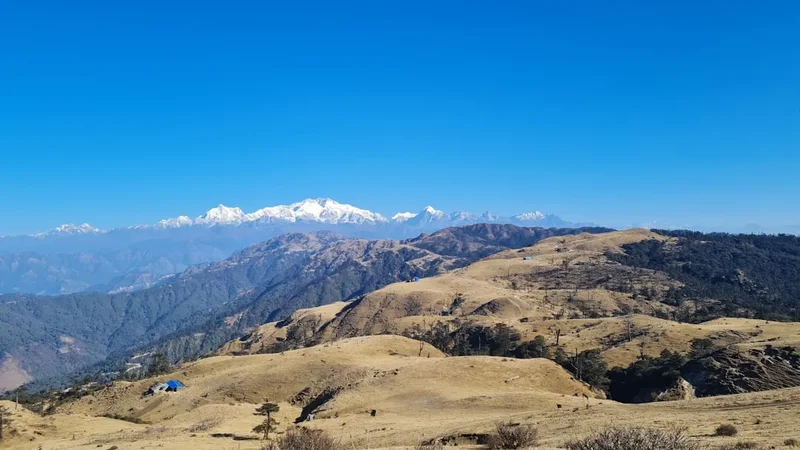
To trek in the Annapurna region, two specific documents are mandatory. These must be obtained before you leave Pokhara or Kathmandu, as they cannot be purchased at the trail checkpoints. Failure to produce these permits can result in being turned back or paying a double-fee fine at the park gates.
1. Annapurna Conservation Area Permit (ACAP): This permit funds the conservation and infrastructure projects within the park. It is a single-entry permit valid for the duration of your trek.
- Cost: 3,000 NPR (approx. NZ$38) for foreigners; 1,000 NPR for SAARC nationals
- Where to get it: Nepal Tourism Board offices in Pokhara (Damside) or Kathmandu (Bhrikutimandap)
- Requirements: Two passport-sized photos and your passport details
2. Trekkers' Information Management System (TIMS) Card: This card is used to track trekkers for safety and security purposes. As of 2023, the Nepal government has mandated that all trekkers must have a TIMS card, and in many regions, trekking with a licensed guide is now officially required.
- Cost: 2,000 NPR (approx. NZ$25)
- Where to get it: Same locations as the ACAP permit
- Requirements: Two passport-sized photos and insurance details
Important Permit Tips:
- Keep your permits in a waterproof bag; you will need to present them at the Birethanti checkpoint on Day 1 and Day 4
- The offices are generally open from 10:00 AM to 5:00 PM, but they close on Saturdays and public holidays—plan accordingly
- If you are trekking through an agency, they will usually handle the entire permit process for you, but you will still need to provide the photos
- Always carry a few extra passport photos, as they are occasionally needed for local SIM cards or other administrative tasks
Other Activities in the Area
The Annapurna region and the city of Pokhara offer a wealth of experiences to complement your trek:
- Paragliding in Pokhara: Often cited as one of the best paragliding spots in the world. Launch from Sarangkot and soar over Phewa Lake with the Annapurna range as your backdrop.
- Phewa Lake Boating: Rent a colourful "doonga" (wooden boat) and paddle to the Tal Barahi Temple, situated on a small island in the centre of the lake.
- World Peace Pagoda: A short hike or boat trip from Pokhara, this massive white stupa offers one of the best sunset views over the city and the mountains.
- Ghandruk Cultural Museum: Spend an extra few hours in Ghandruk to visit the traditional Gurung museum, which showcases ancient tools, clothing, and the history of the Gurkha soldiers.
- Jhinu Danda Hot Springs: If you have an extra day, detour from Ghandruk to Jhinu Danda to soak in natural riverside hot springs—the perfect remedy for sore trekking muscles.
- International Mountain Museum: Located in Pokhara, this museum provides a deep dive into the history of Himalayan mountaineering, the geology of the peaks, and the cultures of the mountain people.
- Tibetan Refugee Settlements: Visit the Tashiling or Tashi Palkhel settlements near Pokhara to see traditional carpet weaving and learn about the Tibetan diaspora in Nepal.
Safety and Conditions
Altitude Awareness: While Poon Hill (3,210 m) is not considered "high altitude" in Himalayan terms, it is high enough for some individuals to feel the effects of Acute Mountain Sickness (AMS). Symptoms include headache, nausea, and dizziness. The best prevention is to ascend slowly, stay hydrated (drink 3–4 litres of water daily), and avoid alcohol. If symptoms persist or worsen, the only cure is to descend immediately. Fortunately, the trek's profile allows for a quick descent from almost any point.
Trail Conditions: The paths are generally well-maintained stone steps or dirt tracks. However, they can become extremely slippery when wet. The "Ulleri Stairs" are notorious for causing knee strain; using trekking poles and taking frequent breaks is essential. During the spring, be mindful of mule trains; always stand on the "mountain side" of the trail (away from the cliff edge) to let them pass, as they can inadvertently nudge you off the path.
Weather Hazards: Mountain weather is notoriously unpredictable. Even in peak season, a clear morning can turn into a thunderous afternoon. Hypothermia is a risk if you get wet and the temperature drops, so always keep your waterproof layers and a warm hat in your daypack. If you encounter heavy snow in winter, do not attempt the Poon Hill summit without a guide who knows the terrain.
Water and Food Safety: To avoid "Delhi Belly" or waterborne illnesses, never drink untreated tap or stream water. Use purification tablets or a filter. Stick to cooked foods and avoid raw salads or unpeeled fruit. The local staple, Dal Bhat, is the safest and most nutritious option, as it is always freshly prepared and provides the high-calorie intake needed for trekking.
Emergency Contacts: Ensure you have travel insurance that specifically covers "trekking up to 4,000 metres" and includes emergency helicopter evacuation. While rare on this route, evacuations do happen for serious injuries or illness. Keep your insurance policy number and the emergency contact line saved on your phone and written in your notebook.
Side Trips and Points of Interest
The Gurung Museum in Ghandruk: This small, community-run museum is a treasure trove of local heritage. For a small fee, you can see traditional Gurung costumes, ancient agricultural implements, and household items that have been used for centuries. It provides a vital context to the villages you are walking through, transforming them from mere "stops" into living cultural landscapes. You can even dress up in traditional Gurung attire for a photograph against the mountains.
The "Fairy Forest" of Tadapani: The section of trail between Deurali and Tadapani passes through a dense, old-growth forest that feels like something out of a storybook. The trees are draped in thick, emerald-green moss and long strands of lichen known as "old man's beard." In the morning mist, this forest is incredibly atmospheric and offers some of the best opportunities for photography on the entire trek.
Birethanti Waterfalls: Near the start and end of the trek, the Modi Khola and Bhurungdi Khola rivers create several spectacular waterfalls. These are particularly impressive at the end of the monsoon season. The bridge at Birethanti offers a great vantage point to watch the powerful turquoise waters carving through the limestone boulders.
Sarangkot Extension: For those who want to end their trek with a final flourish, instead of driving from Nayapul to Pokhara, you can trek an additional day to Sarangkot. This ridge-top village offers a different perspective of the Annapurna range and allows you to walk all the way down to Phewa Lake, completing the journey entirely on foot.
Leave No Trace
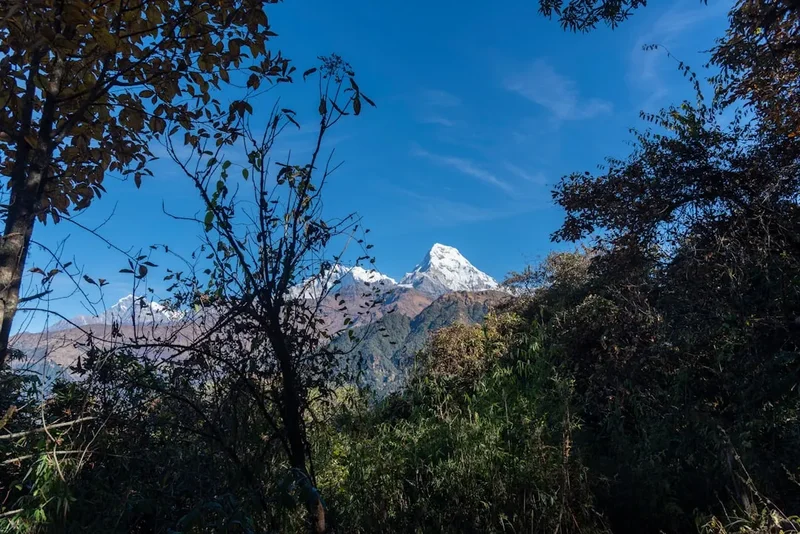
The Annapurna Conservation Area is a delicate ecosystem under significant pressure from tourism. As a visitor, it is your responsibility to minimise your impact and help preserve this landscape for the local communities and future trekkers. The "Leave No Trace" principles are particularly critical in Nepal, where waste management infrastructure is limited.
Your responsibility as a walker:
- Say No to Plastic: Plastic bottle pollution is a major issue in the Himalayas. Carry a reusable bottle and use purification tablets or a UV filter. Many villages now have "Safe Water Stations" where you can refill for a small fee.
- Manage Your Waste: Pack out all non-biodegradable waste, including snack wrappers, cigarette butts, and feminine hygiene products. Do not rely on teahouse bins for plastic waste, as it is often burned, releasing toxic fumes.
- Stay on the Path: The stone steps are there for a reason. Taking shortcuts between switchbacks causes soil erosion and destroys the fragile alpine flora.
- Respect the Wildlife: Do not feed or disturb animals, including the langur monkeys often seen in the forests. Feeding them alters their natural behaviour and can make them aggressive toward humans.
- Cultural Sensitivity: Always ask for permission before taking photos of local people. Dress modestly (shoulders and knees covered), especially when entering villages or temples. Never touch religious objects or mani stones with your feet.
- Conserve Energy: Hot water and electricity are precious commodities in the mountains. Keep your showers short and turn off lights when leaving your room.
Tread lightly and with respect. The Himalayas are not just a playground; they are a sacred home to millions. By following these principles, you ensure that the "Horse Water" of Ghorepani remains pure for generations to come.
 Nepal
Nepal