
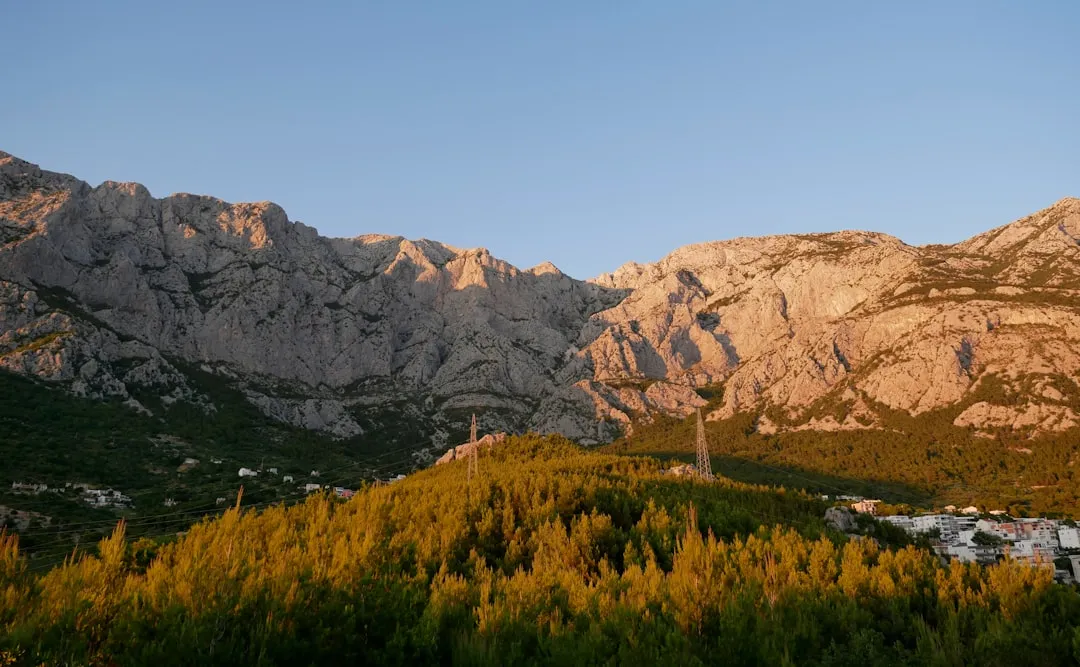
Plitvice Lakes Trail - Croatia's Liquid Emerald Labyrinth
The Plitvice Lakes Trail, specifically the comprehensive "Route K" loop, represents the pinnacle of Balkan natural beauty. Situated within Croatia's oldest and largest national park, this 18.3-kilometre journey traverses a surreal landscape of 16 crystalline lakes interconnected by a series of over 90 cascading waterfalls. This is not merely a walk; it is an immersion into a living geological process where water, air, and rock collaborate to create travertine barriers that shift and grow over centuries. The trail winds through deep limestone canyons in the Lower Lakes and lush, ancient forests surrounding the Upper Lakes, offering a diverse ecological experience that has earned the park a place on the UNESCO World Heritage list since 1979. Walking the full circuit allows visitors to escape the concentrated crowds of the shorter boardwalks and experience the profound serenity of the Croatian karst wilderness.
- Distance: 18.3 km (Full Loop - Route K)
- Duration: 6–8 hours
- Elevation Gain: 500 m
- Difficulty: Moderate
- Best Time: May to September (Park open year-round)
- Location: Lika-Senj County, Central Croatia
- Terrain: Wooden boardwalks, gravel paths, and forest trails
Overview
Plitvice Lakes National Park is a world-renowned natural wonder, but most visitors only see a fraction of its majesty. The full Plitvice Lakes Trail (Route K) is designed for those who wish to see every corner of this aquatic masterpiece. The park is geographically divided into the Upper Lakes (Gornja Jezera) and the Lower Lakes (Donja Jezera), each possessing a distinct character. The Upper Lakes consist of 12 lakes formed on impermeable dolomite rock, characterised by gentle shores, thick surrounding forests, and sprawling, multi-tiered waterfalls. In contrast, the 4 Lower Lakes are situated within a steep limestone canyon, where the water is a more brilliant, translucent turquoise and the waterfalls, including the mighty Veliki Slap, are more dramatic and vertical.
The magic of Plitvice lies in its "tufa" or travertine formation. This is a biogeochemical process where calcium carbonate precipitates out of the water, encrusting mosses, algae, and bacteria to create living stone barriers. These barriers grow at a rate of about 1 to 3 centimetres per year, meaning the landscape you walk through today is physically different from the one seen by travellers a century ago. The water itself changes colour constantly, shifting from emerald green to deep sapphire or pale grey depending on the mineral content, the angle of the sun, and the microscopic organisms present in the depths.
While the park can become exceptionally busy during the peak summer months, the 18.3-kilometre Route K offers a reprieve. While the boardwalks near the main entrances remain crowded, the sections of the trail that skirt the outer edges of Lake Kozjak and climb into the hills above the canyon provide moments of genuine solitude. Here, the sound of rushing water is replaced by the rustle of beech and fir leaves, and the scale of the park's 295 square kilometres becomes truly apparent. This trail is a masterclass in natural orchestration, leading the walker from the thunderous base of the Great Fall to the silent, mist-covered reaches of Prošćansko Lake.
History and Cultural Context
The area now known as Plitvice Lakes has been inhabited for millennia, with evidence of Japodes, Romans, Goths, and Slavs all leaving their mark on the Lika region. Historically, the lakes were known as "The Devil's Garden" (Vražji vrt) due to the dense, impenetrable forests and the treacherous nature of the karst terrain. For centuries, this was a borderland between the Ottoman Empire and the Habsburg Monarchy, a "Military Frontier" where life was hard and the landscape was respected as much for its defensive utility as its beauty.
The scientific and aesthetic value of the lakes began to be recognised in the late 19th century. The first "Society for the Conservation and Enrichment of the Plitvice Lakes" was founded in 1893, and the first hotels were built shortly thereafter. However, it wasn't until 1949 that the area was officially declared Croatia's first national park. The global significance of the site was cemented in 1979 when it became one of the first natural sites worldwide to be inscribed on the UNESCO World Heritage list. This protection was vital, as the delicate travertine barriers are highly susceptible to human interference and pollution.
The park also holds a somber place in modern Croatian history. On Easter Sunday in 1991, the "Plitvice Lakes incident" occurred here—the first armed confrontation of the Croatian War of Independence, resulting in the first fatality of the conflict. The park was occupied for several years during the war, but fortunately, the natural features remained largely intact. Today, the park stands as a symbol of Croatian national pride and a testament to successful long-term conservation. The management of the park now focuses heavily on sustainable tourism, balancing the needs of millions of annual visitors with the preservation of a fragile ecosystem that has been millions of years in the making.
Want more background? Read extended notes on history and cultural context → Learn more
Seasonal Highlights and Weather Reality
Plitvice Lakes is a four-season destination, with each period offering a radically different visual palette. However, for the full 18.3-kilometre trail, timing is essential to ensure all sections are accessible and the walking conditions are safe.
Spring (April to June): This is arguably the best time for waterfall enthusiasts. As the snow melts in the surrounding Mala Kapela and Plješivica mountains, the water volume reaches its peak. The falls are thunderous, and the lush greenery of the emerging beech leaves provides a vibrant contrast to the turquoise water. Be aware that heavy spring rains can occasionally flood the lower boardwalks, leading to temporary closures of certain sections.
Summer (July to August): The most popular time to visit. The weather is generally warm and stable (20–30°C), and the forest provides welcome shade. However, the park is at its most crowded, and the water levels in the falls can decrease significantly during dry spells. To enjoy the full trail during summer, an early start (7:00 AM) is mandatory to stay ahead of the tour bus crowds.
Autumn (September to October): A photographer's dream. The beech and maple forests turn brilliant shades of gold, orange, and red, reflecting in the still waters of the lakes. The crowds begin to thin, and the air becomes crisp and ideal for long-distance walking. September often retains the warmth of summer but with much lower humidity.
Winter (November to March): The park transforms into a frozen wonderland. If temperatures drop low enough, the waterfalls freeze into massive ice curtains. However, the full 18.3-kilometre trail is rarely fully accessible in winter. The Upper Lakes are often closed due to ice and snow, and the boat and shuttle services operate on a restricted schedule. Winter walking requires specialised footwear and a high degree of caution on slippery boardwalks.
Recommended Itinerary
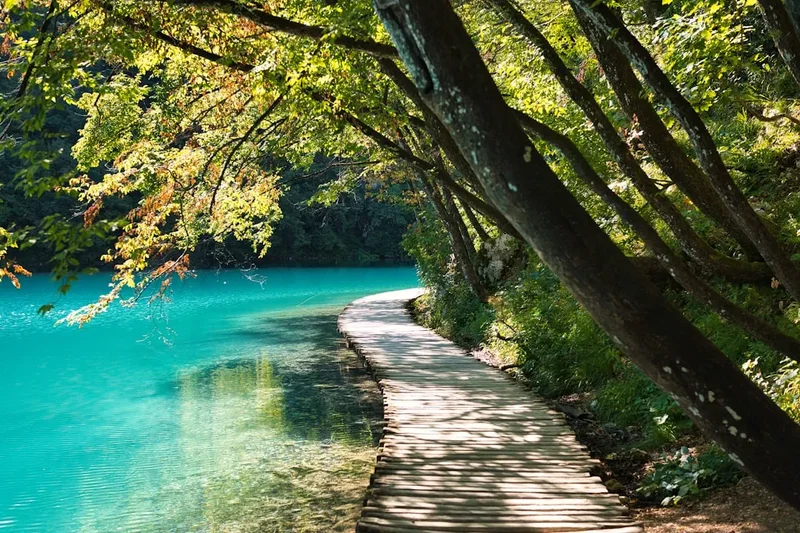
The Full Plitvice Circuit (Route K)
Early Morning: Entrance 1 and the Great Fall
- Start: Entrance 1 (North Entrance)
- Distance: 0–3 km
- Key Waypoint: Veliki Slap (Great Fall)
- Begin at the spectacular viewpoint overlooking the Lower Lakes canyon.
- Descend the zig-zag path to the canyon floor.
- Visit Veliki Slap, the tallest waterfall in Croatia (78 metres), before the crowds arrive.
- Walk along the boardwalks of the Lower Lakes (Milanovac, Gavanovac, Kaluđerovac).
- The morning light is perfect for capturing the clarity of the water in the limestone canyon.
Mid-Morning: The Shores of Lake Kozjak
- Distance: 3–8 km
- Key Waypoint: P3 Rest Area
- Instead of taking the boat across Lake Kozjak, Route K follows the western shore.
- This is a quiet, forested section of the trail with frequent views of the park's largest lake.
- The path is mostly flat and shaded by ancient trees.
- Pass the P3 rest area, which offers toilets and a large meadow for a quick snack.
- Continue along the shore until you reach the transition point to the Upper Lakes.
Midday: The Upper Lakes Ascent
- Distance: 8–13 km
- Key Waypoint: Galovački Buk
- The trail begins to climb gently through the Upper Lakes system.
- Pass through a labyrinth of boardwalks over lakes like Gradinsko and Galovac.
- Experience the "Prštavci" waterfalls, where water seems to explode from the forest floor.
- The Upper Lakes are more intimate, with water flowing through dense vegetation.
- Reach the highest lake, Prošćansko Jezero, which sits at an elevation of 636 metres.
- This section involves the most elevation gain but is rewarded with the most diverse waterfall views.
Afternoon: The High Ridge and Return
- Distance: 13–18.3 km
- Key Waypoint: Canyon Viewpoints
- From the top of the Upper Lakes, Route K follows the eastern ridge back toward Entrance 1.
- This section provides bird's-eye views of the lakes you walked past earlier.
- The trail is a wide forest path, offering a different perspective on the park's topography.
- Pass the "ST3" shuttle station (you can opt to take the panoramic train back if exhausted).
- The final stretch offers the iconic "postcard" views of the Lower Lakes canyon from above.
- Finish back at Entrance 1.
Important Notes:
- Route K is the only trail that covers the entire park on foot without relying heavily on boats or shuttles.
- The trail is well-marked with "K" signs, but a digital map is recommended.
- Swimming is strictly prohibited in all lakes to protect the travertine barriers.
- Boardwalks can be very slippery when wet; walk with caution.
- The total time of 6–8 hours includes stops for photography and rest.
Planning and Bookings
Book Your Trip
Everything you need to plan your journey
Accommodation
Find places to stay near Zagreb
Flights
Search flights to Zagreb
Essential Preparation
The most critical aspect of planning a trip to Plitvice Lakes is the ticket booking system. Due to its UNESCO status and extreme popularity, the park operates a strict daily visitor cap. Tickets must be purchased online at least 48 hours in advance, especially during the peak season (June–September). When booking, you must select a specific entrance (Entrance 1 or Entrance 2) and a specific arrival time slot. If you miss your time slot, entry is not guaranteed.
Physical fitness for the 18.3-kilometre Route K is moderate. While the elevation gain is not extreme (500 metres), the distance and the nature of the terrain—often uneven wooden boardwalks—can be taxing on the knees and ankles. Most visitors stay in Zagreb or Zadar and take a day trip, but for the full trail, staying near the park is highly recommended. This allows you to enter at 7:00 AM, giving you a two-hour head start on the tour groups that arrive from the coast or the capital around 9:30 AM.
Trail Accommodation
Plitvice Lakes is primarily a day-hiking destination, and camping within the national park boundaries is strictly prohibited. However, there are several options for staying nearby to facilitate an early start.
In-Park Hotels:
- Hotel Jezero: Located near Entrance 2, offering mid-range accommodation and easy access to the trail.
- Hotel Plitvice: A classic hotel with a 1950s aesthetic, situated very close to the lakes.
- Hotel Bellevue: A smaller, more basic option near Entrance 2.
- Note: Staying at these hotels often allows you to have your park ticket extended for a second day at no extra cost (check current park policy upon arrival).
Nearby Campsites and Lodges:
- Camp Korana: Located about 6 kilometres north of Entrance 1, offering bungalows and spacious camping pitches.
- Camp Borje: Located about 15 kilometres south of the park, suitable for campervans and tents.
- Sobes (Private Rooms): The villages of Rastovača, Grabovac, and Jezerce are filled with private guesthouses offering high-quality, affordable rooms and local hospitality.
Required Gear
- Walking shoes or boots: While you don't need heavy mountaineering boots, sturdy footwear with good grip is essential. The wooden boardwalks become incredibly slick when wet or even just damp from the mist.
- Rain protection: The Lika region is known for sudden mountain showers. A lightweight, breathable waterproof jacket is a must.
- Sun protection: Even in the shade of the forest, the sun at altitude can be strong. Bring a hat, sunglasses, and SPF 30+ sunscreen.
- Daypack: A 15–25 litre pack is sufficient for carrying water, food, and extra layers.
- Navigation: The park provides maps, but downloading an offline map (like Maps.me or AllTrails) is helpful for staying on Route K.
What to Bring
- Water: Bring at least 2 litres per person. While there are cafes at the main rest areas (P3 and Labudovac), there are long stretches of Route K with no water access.
- Food and Snacks: Pack a substantial lunch. The food options inside the park are limited to basic sandwiches, burgers, and strudels at the main hubs, which can have long queues.
- Power Bank: You will likely take hundreds of photos; ensure your phone or camera has enough charge for the full 8-hour day.
- Cash and Card: Most park facilities accept cards, but smaller stalls or local transport outside the park may require Croatian Euros.
- Personal First Aid: Include blister plasters (moleskin), antiseptic wipes, and any personal medications.
Permits
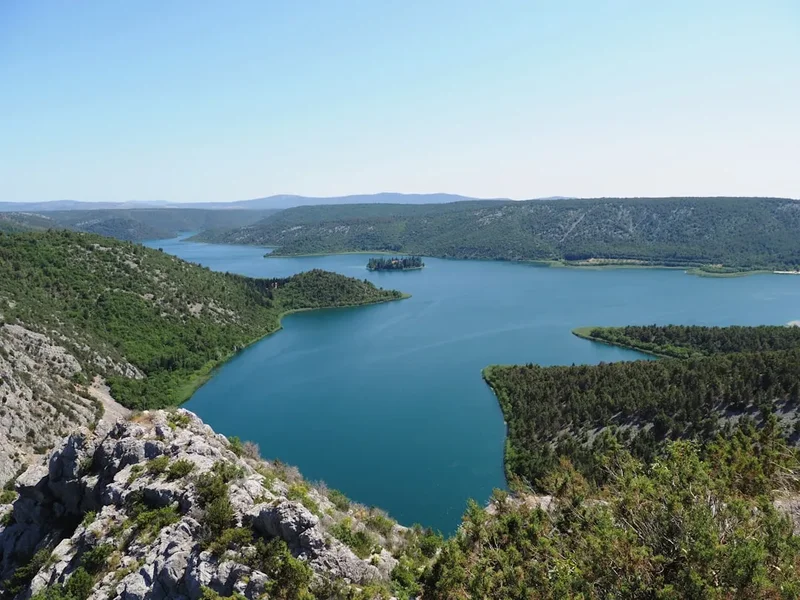
Technically, no "wilderness permit" is required for Plitvice Lakes, but your entry ticket serves as your legal authorisation to be in the park. The ticket price varies significantly depending on the season, reflecting the park's effort to encourage off-peak visitation.
Ticket Pricing (Approximate):
- High Season (June–September): €40 per adult
- Shoulder Season (April, May, October): €25 per adult
- Winter Season (November–March): €10 per adult
- Discounts are available for students, children (7–18), and groups. Children under 7 enter for free.
The Booking Process:
- Visit the official Plitvice Lakes National Park e-ticket website.
- Select your date and entrance. For Route K, Entrance 1 is the traditional starting point, though it can be started from Entrance 2.
- Choose your arrival hour. You must enter within the hour specified on your ticket.
- Print your ticket or have the PDF ready on your smartphone. The QR code will be scanned at the entrance and occasionally at the boat or shuttle boarding points.
Logistics: Your ticket includes the use of the electric boats on Lake Kozjak and the panoramic trains (shuttles) that run between the various stations. Even if you intend to walk the full Route K, these services are useful as a backup if weather conditions change or if you encounter physical difficulties during the hike.
Other Activities in the Area
The Lika region offers more than just the lakes. If you have extra time, consider these nearby attractions:
- Rastoke Village: Located in the town of Slunj, about 25 minutes north of the park. Often called "Little Plitvice," this historic village features traditional watermills built over a series of waterfalls where the Slunjčica river meets the Korana.
- Barać Caves: Located near Rakovica, these caves offer a fascinating look at the subterranean karst landscape, with impressive stalactites and stalagmites.
- Zip-lining: For adrenaline seekers, the "Beware of the Bear" zip-line in Rudopolje is one of the longest in Europe, offering views of the Lika wilderness.
- Nikola Tesla Memorial Centre: Located in Smiljan, the birthplace of the famous inventor is about an hour's drive from the park and provides a deep dive into his life and work.
- Kayaking on the Mrežnica River: A more active way to experience Croatia's "green" rivers, with crystal clear water and numerous small waterfalls.
Safety and Conditions
Boardwalk Safety: The most common injuries in Plitvice Lakes are slips and falls. The boardwalks are often narrow, have no handrails, and can be crowded. Always yield to those coming uphill, and be particularly careful when taking photographs near the edge. If a section of the boardwalk is submerged in water, do not attempt to cross it; turn back and find an alternative route.
Wildlife: Plitvice is home to the European brown bear, grey wolves, and lynx. While these animals are elusive and rarely seen by hikers on the main trails, they are present in the deeper forest sections of Route K. If you encounter a bear, do not run. Speak in a calm, loud voice and back away slowly. Never leave food scraps behind, as this habituates animals to human presence.
Weather: The park is located in a mountainous region where weather can change in minutes. Thunderstorms are common in the afternoon during summer. If you hear thunder, move away from the water and high ridges. Hypothermia can be a risk even in summer if you get wet and the temperature drops, so always carry a dry layer.
Emergency Services: The Croatian Mountain Rescue Service (HGSS) operates in the area. In case of a serious emergency, dial 112. However, be aware that mobile signal can be spotty in the deeper canyons and remote forest sections of the trail.
Side Trips and Points of Interest
Veliki Slap (The Great Fall): At 78 metres, this is the tallest waterfall in the park and the entire country. Unlike the other falls which are formed by the overflow of the lakes, Veliki Slap is formed by the Plitvica stream dropping over the limestone cliffs into the canyon. It is most impressive after heavy rain.
Šupljara Cave: Located in the Lower Lakes canyon, this "hole" cave allows you to climb from the boardwalks up to the canyon rim via a series of stone stairs inside the rock. It offers a unique perspective on the karst geology and a great view of the lakes below.
Galovački Buk: One of the most beautiful waterfalls in the Upper Lakes, where water cascades 16 metres over a wide, moss-covered travertine barrier. It is a perfect example of the "curtain" style waterfalls that define the Gornja Jezera.
The Virgin Forest of Čorkova Uvala: While not directly on Route K, this nearby old-growth forest is one of the most beautiful in Europe. It contains beech and fir trees that are over 700 years old. Access is restricted and usually requires a guided tour, but it is a must for serious naturalists.
Kozjačka Draga: The main meadow and rest area at the end of Lake Kozjak. It is a great place to observe the electric boats and enjoy the scale of the surrounding cliffs. In the late afternoon, the light here is particularly soft and beautiful.
Leave No Trace
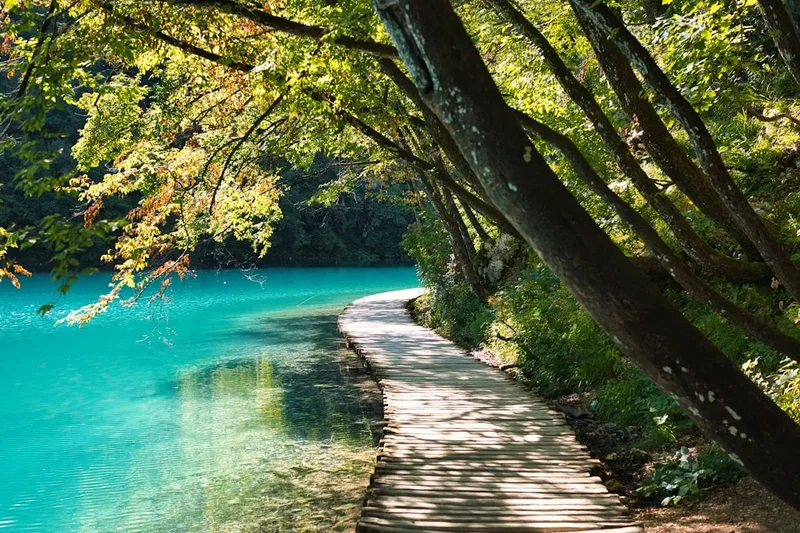
Plitvice Lakes is an incredibly fragile ecosystem. The travertine barriers that create the lakes are held together by delicate biological crusts that can be destroyed by a single footstep. Adhering to Leave No Trace principles is not just a suggestion; it is a requirement for the park's survival.
Specific Rules for Plitvice:
- No Swimming: This is the most important rule. Human skin oils, sunscreens, and detergents disrupt the chemical balance required for tufa formation. Swimming has been banned since 2006.
- Stay on the Path: Do not step off the boardwalks or marked trails. The soil in the park is thin and easily eroded, and many rare orchid species grow just inches from the path.
- No Feeding Wildlife: Feeding the fish or ducks in the lakes disrupts their natural diet and makes them dependent on humans.
- Waste Management: There are bins at the main rest areas, but it is always better to pack out your own trash. This includes organic waste like orange peels or apple cores, which do not belong in this specific ecosystem.
- Noise Control: Keep voices low. The acoustic quality of the canyons means sound travels far, and loud noises disturb both the wildlife and the experience of other hikers.