
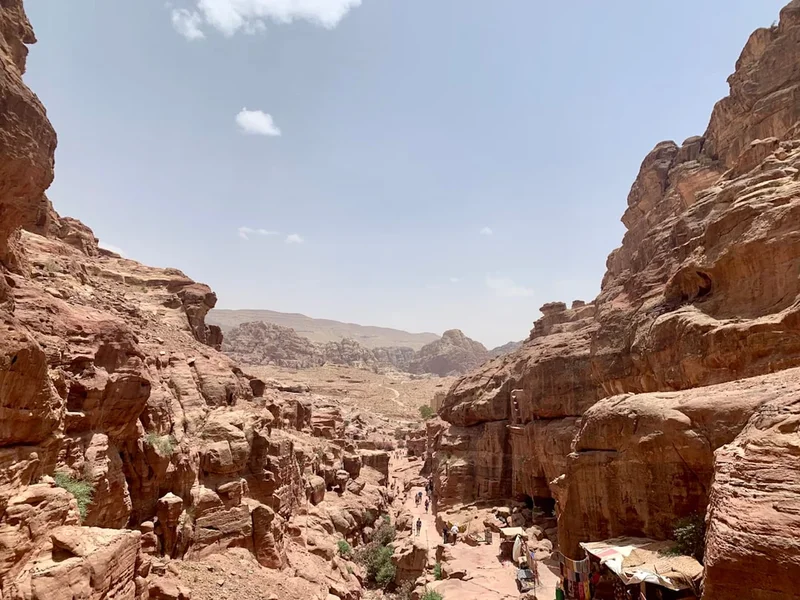
Petra to Wadi Rum Trek - A Journey Through the Biblical Wilderness
The Petra to Wadi Rum Trek is arguably the most iconic segment of the Jordan Trail, a 650-kilometre national hiking route that spans the length of the Hashemite Kingdom. This specific 80-kilometre journey is a profound immersion into the high-altitude deserts and sandstone canyons of southern Jordan, connecting the "Rose-Red City" of Petra—a UNESCO World Heritage site and one of the New Seven Wonders of the World—with the ethereal, Martian landscapes of Wadi Rum. This is not merely a hike; it is a traverse through the ancestral lands of the Nabateans and the Bedouin, where the silence of the desert is broken only by the crunch of sand underfoot and the occasional call of a desert lark. The route transitions from the intricate, hand-carved facades of ancient civilizations to the raw, unbridled majesty of granite and sandstone monoliths that rise hundreds of metres from the desert floor. It is a challenging, multi-day expedition that demands physical resilience, navigational awareness, and a deep respect for the arid environment.
- Distance: 80.0 km point-to-point
- Duration: 6–8 days
- Season: October to April (avoiding the extreme heat of summer)
- Accommodation: Wild camping and traditional Bedouin camps
- Highest point: Jabal Haroun (1,270 m)
- Difficulty: Challenging (requires high fitness and desert navigation skills)
- Direction: North to South (Petra to Wadi Rum)
Overview
The Petra to Wadi Rum Trek offers a landscape of staggering contrast and historical depth. Beginning in the ancient Nabatean capital, walkers exit the city not through the tourist-heavy Siq, but via the "back door" or southern routes that lead into the rugged mountains of the Sharah range. The first half of the trek is defined by high-altitude plateaus, deep limestone wadis (valleys), and the sacred peak of Jabal Haroun, where the tomb of Aaron, brother of Moses, is said to be located. As the trail progresses south, the geology shifts dramatically. The white and yellow limestones give way to the deep ochres and burnt oranges of the Rumman sandstone, signaling the approach to the "Valley of the Moon."
This is a landscape defined by its scarcity and its scale. In the desert, distances are deceptive; a massif that appears an hour away may take half a day to reach. The trek traverses vast, open plains where the horizon seems infinite, followed by narrow, winding canyons where the walls press close and provide precious shade. The vegetation is sparse but resilient—gnarled juniper trees, desert broom, and aromatic herbs like white wormwood cling to the rocky slopes. For the modern trekker, the experience is one of profound solitude. Unlike the bustling streets of Petra, the trail between the two landmarks is sparsely populated, offering a rare opportunity to experience the desert as the caravans of the Incense Route did two millennia ago.
The physical challenge is significant. Walkers must contend with loose scree, soft sand, and significant elevation changes under a relentless sun. However, the rewards are unparalleled: waking up to a desert sunrise that turns the mountains into glowing embers, sharing sweet sage tea with Bedouin shepherds, and sleeping under a canopy of stars so bright they cast shadows on the sand. This trek is a masterclass in desert travel, requiring a shift in mindset from the fast-paced modern world to the rhythmic, patient pace of the desert.
History and Cultural Context
The history of this trail is the history of human survival and trade in one of the world's most inhospitable environments. The route roughly follows the ancient King's Highway and the Incense Route, which saw caravans of thousands of camels carrying frankincense, myrrh, and spices from Southern Arabia to the Mediterranean. The Nabateans, a nomadic Arab people who settled in Petra around the 4th century BC, were the masters of this landscape. They were not only skilled traders but also ingenious hydraulic engineers, creating vast networks of cisterns and channels to harvest every drop of desert rain—remnants of which can still be seen along the trail today.
In the early 20th century, this region became the stage for the Arab Revolt against the Ottoman Empire. T.E. Lawrence, famously known as Lawrence of Arabia, travelled these very valleys alongside the forces of Emir Faisal. Wadi Rum, in particular, served as a strategic base for their guerrilla operations. The landscapes described in Lawrence's "Seven Pillars of Wisdom" are the same ones trekkers traverse today, from the towering rock bridges to the hidden springs. The cultural heart of the trek, however, lies with the Bedouin. For centuries, tribes such as the Bdoul and the Zalabia have called these deserts home. Their culture is built on the pillars of hospitality (diyafa) and resilience. Encountering a Bedouin camp is a highlight of the journey; the offer of tea is not just a refreshment but a sacred social contract, a gesture of welcome that has remained unchanged for generations.
Today, the Petra to Wadi Rum Trek is a vital part of Jordan's efforts to promote sustainable, community-based tourism. By walking this route, trekkers contribute directly to the local economies of remote desert communities, ensuring that the traditional way of life remains viable in a rapidly changing world.
Want more background? Read extended notes on history and cultural context → Learn more
Seasonal Highlights and Weather Reality
Timing is the most critical factor when planning the Petra to Wadi Rum Trek. The desert is a land of extremes, where temperatures can swing 30 degrees Celsius within a single day. The primary trekking season runs from October to April, when the daytime heat is manageable and the nights are crisp.
Spring (March to April): This is arguably the most beautiful time to trek. After the winter rains, the desert undergoes a brief but spectacular transformation. Wildflowers, including the rare Black Iris (Jordan's national flower), bloom in the wadis, and the landscape is tinged with a surprising green. Daytime temperatures typically range from 20°C to 28°C, though the sun remains intense.
Autumn (October to November): The heat of summer begins to fade, and the air becomes exceptionally clear, offering the best visibility for photography. The temperatures are similar to spring, but the landscape is much drier and more "classic" desert in appearance. This is a popular time for trekking as the weather is highly predictable.
Winter (December to February): While trekking is possible, it requires serious preparation for the cold. Daytime temperatures can be pleasant (15°C), but once the sun sets, the mercury can drop below freezing. Snow is not uncommon on the high plateaus around Petra. This season also carries the highest risk of flash floods—a major safety concern in the narrow wadis.
Summer (May to September): Trekking is strongly discouraged during these months. Temperatures regularly exceed 40°C, and there is virtually no shade on the open plains. The risk of heatstroke and severe dehydration is extreme, and most professional guiding companies suspend operations during this period.
Recommended Itinerary
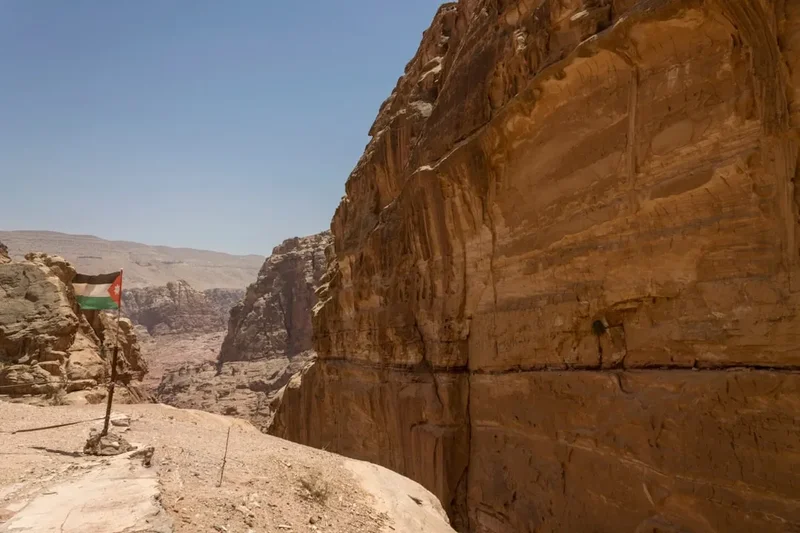
6-Day Petra to Wadi Rum Itinerary
Day 1: Petra to Jabal Haroun
- Distance: 12 km
- Elevation gain: 450 m
- Time: 5–6 hours
- Start at the Petra Visitor Centre, passing through the main archaeological site
- Ascend the "back route" towards the High Place of Sacrifice
- Continue south towards Jabal Haroun (Mount Aaron)
- Camp near the base of the mountain with views of the white-domed mosque on the summit
- The first day introduces the transition from Nabatean architecture to the rugged Sharah Mountains
Day 2: Jabal Haroun to Gaa' Mreitib
- Distance: 16 km
- Elevation gain: 300 m
- Time: 6–7 hours
- Traverse high-altitude plateaus with panoramic views of the Wadi Araba desert to the west
- Pass ancient Nabatean terrace walls and cisterns
- The terrain is rocky and exposed, requiring good sun protection
- Camp at Gaa' Mreitib, a wide, sandy basin surrounded by sandstone hills
- This is one of the most remote sections of the trail, offering profound silence
Day 3: Gaa' Mreitib to Wadi Al-Saif
- Distance: 14 km
- Elevation gain: 200 m
- Time: 5–6 hours
- Descend from the high plateaus into the winding canyons of Wadi Al-Saif
- The geology begins to change, with more colourful sandstone formations appearing
- Look for Bedouin inscriptions and petroglyphs on the canyon walls
- Camp in the sheltered sandy reaches of the wadi
- The descent involves some loose scree and requires careful footwork
Day 4: Wadi Al-Saif to Wadi Ghuweir
- Distance: 15 km
- Elevation gain: 350 m
- Time: 6–7 hours
- A day of dramatic canyon walking and ridge traverses
- Cross several small passes that offer the first glimpses of the distant Wadi Rum massifs
- The trail passes through areas used by Bedouin goat herders
- Camp near the entrance to Wadi Ghuweir, a lush canyon with occasional water seeps
- This day features significant elevation changes and varied terrain
Day 5: Wadi Ghuweir to Shakriya
- Distance: 14 km
- Elevation gain: 150 m
- Time: 5–6 hours
- The final approach to the Wadi Rum protected area
- The sand becomes deeper and more vibrant in colour (reds and oranges)
- Pass the village of Shakriya, a small Bedouin settlement
- Camp on the outskirts of the Wadi Rum desert, under the shadow of massive sandstone monoliths
- The walking becomes flatter but more strenuous due to the soft sand
Day 6: Shakriya to Wadi Rum Village
- Distance: 9 km
- Elevation gain: 50 m
- Time: 3–4 hours
- A shorter final day to allow for exploration of Wadi Rum
- Walk through the iconic "Seven Pillars of Wisdom" rock formation
- Arrive at Wadi Rum Village, the gateway to the protected area
- Optional afternoon 4x4 tour to deeper parts of the desert or a sunset camel ride
- Celebrate the completion of the trek with a traditional Zarb (Bedouin underground BBQ)
Important Notes:
- Water sources are extremely limited; most trekkers rely on pre-arranged water drops or support vehicles
- A local guide is highly recommended for navigation and cultural mediation
- The trail is not always clearly marked; GPS and offline maps are essential
- Respect local customs, especially when passing through Bedouin areas
- Carry a minimum of 4–6 litres of water per person per day
Planning and Bookings
Book Your Trip
Everything you need to plan your journey
Accommodation
Find places to stay near Aqaba
Flights
Search flights to Aqaba
Essential Preparation
The Petra to Wadi Rum Trek is a serious undertaking that requires meticulous planning. Unlike European or North American trails, there is no infrastructure like huts or reliable water taps along the route. Most trekkers choose to go with a local trekking company that provides a guide, a support vehicle for water and luggage, and camp logistics. If attempting this independently, you must be an expert navigator and have a robust plan for water resupply, which usually involves hiring a 4x4 driver to meet you at specific coordinates.
Physical fitness is paramount. You will be walking 15–20 kilometres a day on varied terrain, including soft sand and steep rocky slopes, often in high temperatures. Training should include long hikes with a weighted pack. Aqaba is the best base for pre- and post-trek logistics, offering a wide range of hotels, gear shops, and transport links. Ensure you have a comprehensive travel insurance policy that specifically covers trekking in remote areas.
Trail Accommodation
There are no permanent hotels or hostels on the trail between Petra and Wadi Rum. Accommodation is a mix of wild camping and established Bedouin camps.
Wild Camping:
- Most nights are spent in "wild" spots chosen for their shelter and views
- You must bring your own tent, sleeping mat, and high-quality sleeping bag (nights are cold)
- No facilities (toilets, showers, or kitchens) are available
- Strict adherence to Leave No Trace principles is required for waste management
Bedouin Camps:
- Near Petra and within Wadi Rum, you may stay in fixed Bedouin camps
- Facilities usually include shared bathrooms, communal dining tents, and basic beds
- Traditional meals (Mansaf or Zarb) are often provided
- Costs range from 25 to 60 JOD per night depending on the level of luxury
What's NOT Provided:
- Electricity for charging devices (bring solar chargers or power banks)
- Reliable mobile signal or WiFi
- Running water for washing (water is for drinking and cooking only)
Required Gear
- Trekking boots - high-cut with good ankle support to handle loose scree and sand
- Lightweight gaiters - essential for keeping sand out of your boots
- Trekking poles - crucial for stability on steep descents and reducing knee strain
- Backpack - 50–65L if carrying your own gear; 20–30L daypack if using a support vehicle
- Sun hat - wide-brimmed to protect the face, ears, and neck
- Sunglasses - high UV protection (Category 3 or 4) to combat desert glare
- Navigation - GPS device with spare batteries and paper maps as backup
- Head torch - with extra batteries for camp life and early starts
- Sleeping bag - rated to at least 0°C, even in spring/autumn
What to Bring
- Water treatment - while most water is provided by support, a filter or tablets are vital for emergencies
- Electrolyte powder - to prevent dehydration and salt depletion in the heat
- High-calorie snacks - nuts, dried fruit, and energy bars (desert trekking burns significant calories)
- Sunscreen and lip balm - SPF 50+ and zinc-based, applied frequently
- Personal first aid kit - including blister pads (Compeed), rehydration salts, and broad-spectrum antibiotics
- Biodegradable wet wipes - for "desert showers" as water is scarce
- Power bank - high capacity (20,000mAh+) to keep phones and GPS charged
- Lightweight scarf (Shemagh) - versatile for sun protection, warmth, or filtering dust
Permits
Navigating the permit and entry requirements for Jordan is relatively straightforward but requires advance coordination. The most important document for any trekker is the Jordan Pass. This is an official package from the Ministry of Tourism that waives the visa entry fee (40 JOD) and includes entry to over 40 attractions, including Petra and Wadi Rum.
Permit Details:
- Jordan Pass: Must be purchased online before arrival. The "Jordan Wanderer" (70 JOD) includes a one-day visit to Petra, while the "Jordan Expert" (80 JOD) includes three days, which is recommended for trekkers starting in Petra.
- Petra Entry: If you do not have a Jordan Pass, a one-day ticket costs 50 JOD. You must present your passport at the ticket office.
- Wadi Rum Entry: The entry fee for the Wadi Rum Protected Area is 5 JOD (included in the Jordan Pass). This is paid at the Visitor Centre upon arrival.
- Trekking Permits: Currently, there is no specific "trekking permit" required for the route between Petra and Wadi Rum, but you must register your itinerary with your guide or the local tourism police for safety reasons.
Logistics and Transfers:
- Arrival: Most international trekkers fly into Queen Alia International Airport (AMM) in Amman or King Hussein International Airport (AQJ) in Aqaba.
- Transport to Petra: JETT buses run daily from Amman and Aqaba to Wadi Musa (the town next to Petra). A private taxi from Aqaba to Petra costs approximately 40–50 JOD.
- Return from Wadi Rum: From Wadi Rum Village, you can take a morning bus to Aqaba or Petra, or arrange a private transfer. A taxi to Aqaba takes about an hour and costs 25–30 JOD.
Other Activities in the Area
Southern Jordan is a treasure trove of adventure and relaxation. Consider these additions to your itinerary:
- Scuba Diving in Aqaba: After the dust of the desert, the Red Sea offers world-class diving and snorkelling. Explore coral reefs and wrecks, including a submerged tank and a C-130 Hercules plane.
- Canyoning in Wadi Mujib: Known as the "Grand Canyon of Jordan," this spectacular river canyon offers wet hiking and abseiling through towering sandstone walls (seasonal).
- Little Petra (Siq al-Barid): A smaller, less crowded version of Petra located just a few kilometres north. It features incredible frescoes and a more intimate atmosphere.
- Stargazing in Wadi Rum: Several camps offer professional stargazing experiences with high-powered telescopes, taking advantage of the desert's zero light pollution.
- The Dead Sea: A few hours' drive north, float in the hyper-saline waters and indulge in a therapeutic mud bath at the lowest point on Earth.
- Cooking Classes in Wadi Musa: Learn to make traditional Jordanian dishes like Maqluba or Galayet Bandora at a local community kitchen.
Safety and Conditions
Environmental Hazards: The desert is a beautiful but unforgiving environment. The primary risks are heat exhaustion and dehydration. It is vital to drink water even when you don't feel thirsty and to rest during the hottest part of the day. Flash floods are a genuine danger in wadis during the winter months; even if it is not raining where you are, a storm kilometres away can send a wall of water down a canyon. Never camp in the bottom of a narrow wadi if rain is forecast.
Navigation: The trail is not a manicured path. It involves crossing vast plains where landmarks are few and far between. GPS is essential, but you must also be able to read a topographic map. If you lose the trail, do not wander aimlessly; return to your last known point. Hiring a local Bedouin guide is the best safety measure, as they have an innate knowledge of the terrain and water sources.
Wildlife: While generally shy, the desert is home to scorpions and vipers. Always shake out your boots and sleeping bag before use and avoid sticking your hands into dark crevices. The most common "wildlife" encounter is with semi-nomadic guard dogs; usually, a firm shout or the motion of picking up a stone is enough to keep them at a distance.
Communication: Mobile signal is non-existent for large portions of the trek. A satellite messenger (like a Garmin inReach) is highly recommended for emergency communication. Always leave your detailed itinerary and expected return time with a reliable contact or your hotel in Aqaba.
Side Trips and Points of Interest
Jabal Haroun (Mount Aaron): A significant detour on Day 1 or 2. At 1,270 metres, it is the highest peak in the Petra area. The summit is home to a 14th-century mosque built over the purported tomb of Aaron. The climb is steep but the 360-degree views of the Petra basin and the Wadi Araba are the best in the region. It is a site of deep religious significance for Muslims, Jews, and Christians alike.
Burdah Rock Bridge: Located as you enter the Wadi Rum area, this is one of the highest natural rock arches in the world. The climb to the top involves some basic scrambling and a good head for heights, but standing on the bridge offers a breathtaking perspective of the desert's scale.
Nabatean Cisterns: Throughout the trek, keep an eye out for ancient water catchment systems. Some are simple holes in the rock, while others are sophisticated underground chambers with arched ceilings. These are a testament to the incredible ingenuity of the people who once thrived here.
Lawrence’s Spring: Located near Wadi Rum Village, this natural spring was used by T.E. Lawrence and his troops. While the "spring" itself is often just a trickle, the surrounding rock inscriptions and the view from the hillside are well worth the short scramble.
Leave No Trace
The desert ecosystem is extremely fragile. Footprints and tyre tracks can remain visible for years, and the lack of moisture means that organic waste decomposes very slowly. As a trekker, you have a responsibility to preserve this ancient landscape.
Core Principles for the Desert:
- Waste Management: Pack out everything. This includes fruit peels, nut shells, and especially toilet paper. Use a "poop tube" or a dedicated waste bag for human waste if you are in a sensitive area, or bury it at least 20 cm deep in a "cathole" far from any dry wadi beds.
- Water Conservation: Never contaminate desert springs or "bir" (cisterns). These are vital lifelines for local Bedouin and wildlife. Wash yourself and your dishes at least 50 metres away from any water source using biodegradable soap.
- Fire: Wood is extremely scarce in the desert. Avoid making campfires; use a lightweight gas stove for cooking. If a fire is necessary for warmth, use only dead and downed wood and keep it small.
- Respect Heritage: Do not touch or deface petroglyphs or ancient ruins. Do not collect "souvenirs" like pottery shards or flint tools; leave them for the next trekker to discover.
- Social Impact: Be mindful of local culture. Ask permission before taking photos of people, especially women, and dress modestly when passing through villages or Bedouin camps.