
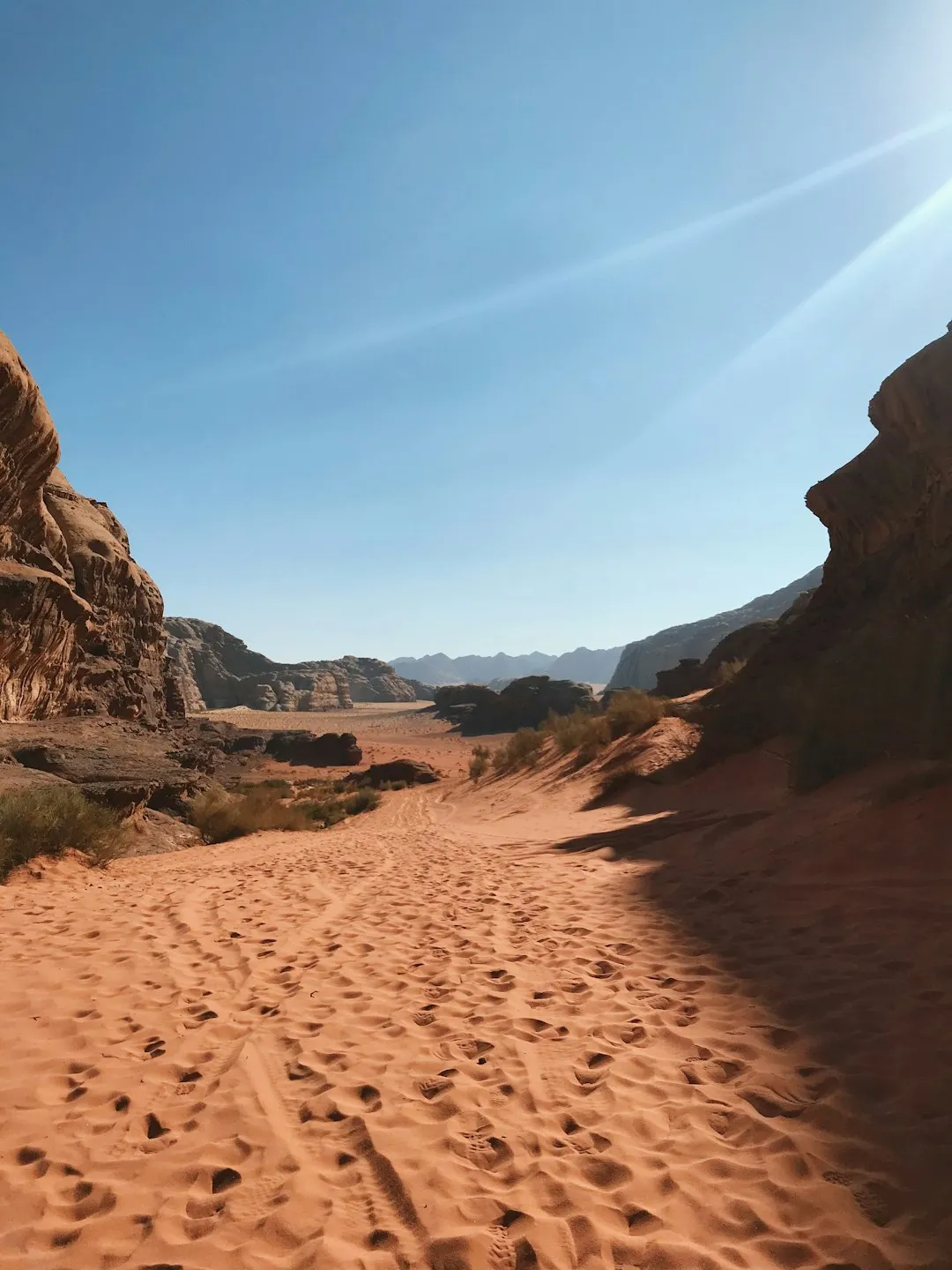
Petra Monastery Trail
The Petra Monastery Trail, also known as Ad-Deir, is a spectacular and rewarding day hike within the ancient Nabataean city of Petra, Jordan. This trail leads to the magnificent Monastery, a monumental structure carved directly into a sandstone cliff face, rivaling the famous Treasury in its grandeur and scale. While the main city of Petra is a UNESCO World Heritage site and one of the New Seven Wonders of the World, the Monastery offers a more secluded and breathtaking experience, requiring a dedicated trek to reach its awe-inspiring presence. The path winds through dramatic desert landscapes, offering panoramic views of the surrounding mountains and valleys, making it a highlight for any visitor to this historic archaeological park.
- Distance: 8.5 km (round trip)
- Elevation gain: Approximately 500 m
- Duration: 4-5 hours (including time at the Monastery)
- Difficulty: Moderate to strenuous (due to elevation gain and steps)
- Best Time: Spring (March-May) or Autumn (September-November)
- Closest City: Wadi Musa
- Trailhead Access: Petra Visitor centre
- Entry Ticket: Required for Petra Archaeological Park
Overview
The journey to the Monastery is an adventure in itself, beginning from the heart of Petra and gradually ascending through rugged terrain. Unlike the relatively flat walk through the Siq to the Treasury, the Monastery trail involves a significant climb, primarily via a series of carved steps. This ascent, while challenging, is punctuated by stunning vistas and opportunities to appreciate the unique desert geology of the region. Along the way, small Bedouin stalls offer refreshments and souvenirs, providing a glimpse into the local culture that has inhabited this area for centuries.
The trail is well-trodden but can be uneven, with sections of loose gravel and rock. The final approach to the Monastery involves a steep climb, often referred to as the "1000 steps" (though the actual number is closer to 800), which tests the endurance of hikers. However, the effort is handsomely rewarded upon arrival. The Monastery (Ad-Deir) is an immense facade, larger than the Treasury, and its sheer scale and intricate carvings are a testament to the architectural prowess of the Nabataeans. The open plaza in front of the Monastery provides a perfect spot to rest, marvel at the structure, and soak in the panoramic views of the surrounding Wadi Araba desert.
The trail is best experienced in the cooler months of spring and autumn. During summer, temperatures can soar, making the hike considerably more arduous. The moderate difficulty rating reflects the sustained uphill climb and the need for reasonable fitness. The Monastery trail offers a profound sense of discovery, moving beyond the most famous landmarks of Petra to a more remote and equally magnificent monument, set against a backdrop of dramatic desert scenery.
History and Cultural Context
The ancient city of Petra, carved into the rose-red sandstone cliffs of southern Jordan, was the capital of the Nabataean Kingdom from around the 4th century BCE. The Nabataeans were skilled traders and engineers who controlled lucrative incense and spice routes, amassing considerable wealth and influence. Their architectural genius is most famously displayed in the rock-cut monuments that define Petra, blending Hellenistic, Roman, and indigenous styles.
The Monastery, known in Arabic as Ad-Deir, is believed to have been constructed in the 1st century CE. Its name is a misnomer, derived from crosses carved into its interior walls during the Byzantine era, suggesting it was later used as a church. However, its original purpose was likely a temple or a tomb, possibly dedicated to the Nabataean king Obodas I. The sheer scale and elaborate facade indicate it was a monument of immense importance, intended to impress and awe visitors.
The trail leading to the Monastery has likely been used for centuries, serving as a route for pilgrims, traders, and inhabitants accessing this significant site. The Bedouin people, who have a long history in the region, have maintained a presence around Petra, often acting as guides and offering services to visitors. Their connection to the land and its history is an integral part of the Petra experience.
The discovery of Petra by the Western world in the early 19th century by Swiss explorer Johann Ludwig Burckhardt brought this hidden city to global attention. Since then, extensive archaeological work has uncovered more about the Nabataeans and their remarkable civilization. The Monastery, though less visited than the Treasury due to its more remote location, stands as a powerful symbol of Nabataean artistry and engineering, a testament to a civilization that thrived in this challenging desert environment.
Seasonal Highlights and Weather Reality
The Petra Monastery Trail is a desert hike, and its conditions are heavily influenced by the season and the desert climate. Understanding these variations is crucial for planning a safe and enjoyable trek.
Spring (March-May): This is widely considered the best time to visit Petra and hike to the Monastery. Temperatures are pleasantly warm, typically ranging from 15°C to 25°C. Wildflowers may bloom in the wadis, adding a splash of colour to the arid landscape. Days are long enough to allow for a leisurely hike and exploration of the Monastery and its surroundings. The weather is generally stable, with minimal rainfall.
Autumn (September-November): Similar to spring, autumn offers ideal hiking conditions. Temperatures are mild, usually between 20°C and 30°C, with cooler evenings. The landscape is still dry, but the intense heat of summer has subsided. This period is also excellent for photography, with soft light and comfortable hiking temperatures.
Summer (June-August): Summer in Petra is extremely hot, with daytime temperatures frequently exceeding 35°C and often reaching 40°C or higher. Hiking to the Monastery during midday in summer is strongly discouraged due to the risk of heatstroke and dehydration. If visiting in summer, it is essential to start the hike very early in the morning (shortly after sunrise) or late in the afternoon, and to carry an abundance of water. The sun is intense, and shade is scarce on much of the trail.
Winter (December-February): Winter in Petra can be cool to cold, with daytime temperatures averaging between 10°C and 18°C. Nights can drop to near freezing. While generally pleasant for hiking, there is a higher chance of rain, which can make the sandstone trails slippery and potentially lead to flash floods in the lower-lying areas of Petra. However, rain is infrequent, and snow is very rare. The cooler temperatures can make the hike more comfortable, but warm layers are recommended.
Weather Reality: Regardless of the season, desert weather can be unpredictable. Always check the local forecast before your hike. Flash floods can occur with little warning after heavy rainfall, especially in the lower parts of Petra. While the Monastery trail is at a higher elevation, awareness of potential weather changes is always prudent.
Recommended Itinerary
Day Hike: Petra Monastery Trail
Early Morning (Approx. 7:00 AM - 8:00 AM): Arrival and Start
- Arrive at the Petra Visitor centre in Wadi Musa.
- Purchase your Petra entry ticket (if not already acquired).
- Begin the walk from the Visitor centre towards the Siq.
- Walk through the Siq, the narrow gorge leading to the Treasury. This is a relatively flat and shaded section, offering a dramatic introduction to Petra.
- Approximate time to reach the Treasury: 30-45 minutes.
Morning (Approx. 8:00 AM - 10:00 AM): Beyond the Treasury and Ascent Begins
- Explore the area around the Treasury and the Street of Facades.
- Continue past the Royal Tombs and the Roman Theater.
- The trail to the Monastery diverges from the main city path. Look for signs indicating the "Monastery" or "Ad-Deir" route.
- The ascent begins here, initially on a wider path that gradually narrows and becomes steeper.
- You will pass small Bedouin stalls offering drinks and souvenirs.
Midday (Approx. 10:00 AM - 1:00 PM): The Climb and Arrival at the Monastery
- The main climb to the Monastery begins, characterized by a long series of carved steps.
- Take your time, pace yourself, and utilize the shaded spots and resting areas provided by Bedouin tents.
- Enjoy the increasingly spectacular views of the surrounding desert landscape as you gain elevation.
- The final approach involves a steeper section of steps leading directly to the Monastery facade.
- Arrive at the Monastery (Ad-Deir). Spend ample time exploring the monument, taking photographs, and enjoying the panoramic views from the viewpoints opposite the facade.
- Consider purchasing a refreshing drink from one of the Bedouin cafes located nearby.
Afternoon (Approx. 1:00 PM - 3:00 PM): Descent and Return
- Begin the descent back down the steps. Be cautious as the steps can be slippery.
- Retrace your steps through Petra, perhaps stopping at sites you missed on the way up or revisiting favourites.
- Walk back through the Siq to the Visitor centre.
- Approximate time to reach the Visitor centre from the Monastery: 1.5 - 2 hours (depending on pace and stops).
Important Notes:
- Wear comfortable, sturdy walking shoes.
- Carry plenty of water (at least 2-3 litres per person).
- Sun protection is essential: hat, sunglasses, sunscreen.
- Start early to avoid the midday heat, especially during warmer months.
- Consider hiring a donkey or mule for the ascent if you have mobility issues, but be aware of animal welfare concerns.
- The trail is well-marked, but a map or GPS can be helpful.
Planning and Bookings
Book Your Trip
Everything you need to plan your journey
Accommodation
Find places to stay near Wadi Musa
Flights
Search flights to Wadi Musa
Essential Preparation
The Petra Monastery Trail is a day hike within the Petra Archaeological Park. The primary requirement is obtaining an entry ticket to Petra itself. This can be purchased at the Petra Visitor centre in Wadi Musa. It is highly recommended to stay in Wadi Musa, the town adjacent to Petra, which offers a wide range of accommodation options from budget hostels to luxury hotels. Wadi Musa is easily accessible by road from Amman (approximately a 3-hour drive) and Aqaba (approximately a 1.5-hour drive). Public transport options are available, including JETT buses from major cities. Ensure you have comfortable, broken-in walking shoes, as the trail involves significant elevation gain and uneven terrain. Carry sufficient water and snacks, as options are limited and can be expensive along the trail. The best times to visit are spring and autumn to avoid extreme temperatures.
Trail Accommodation
This is a day hike requiring no overnight accommodation. All hiking is completed within the Petra Archaeological Park, and visitors return to their accommodation in Wadi Musa at the end of the day.
Required Gear
- Sturdy walking shoes or hiking boots with good ankle support and grip.
- Lightweight, breathable clothing suitable for warm weather (long sleeves and trousers are recommended for sun protection).
- A wide-brimmed hat or cap for sun protection.
- Sunglasses to protect your eyes from the strong desert sun.
- Sunscreen with a high SPF (30+).
- A small backpack to carry essentials.
- A basic first-aid kit for minor injuries (band-aids, antiseptic wipes).
- A fully charged mobile phone for emergencies.
What to Bring
- Water: At least 2-3 litres per person. Refill stations are scarce, and purchasing water along the trail can be costly.
- Snacks: Energy bars, nuts, dried fruit, or sandwiches to keep you fuelled.
- Camera: To capture the stunning scenery and the Monastery.
- Cash: For purchasing drinks or souvenirs from Bedouin stalls along the trail, and for potential donkey/mule rides (though walking is recommended).
- Toilet paper and hand sanitizer: Public restrooms are available at the Visitor centre and near the Treasury, but carrying your own is advisable.
- A lightweight rain jacket: In case of unexpected showers, particularly during winter months.
Permits
To hike the Petra Monastery Trail, you must have a valid entry ticket to the Petra Archaeological Park. Tickets can be purchased at the Petra Visitor centre located in Wadi Musa. There are various ticket options available, including single-day passes and multi-day passes. For those planning to explore Petra extensively, a multi-day pass is often more economical and allows for a more relaxed experience.
Ticket Prices (subject to change):
- Jordan Pass: This is the most cost-effective option for most tourists visiting Jordan. It includes the visa fee (for eligible nationalities) and entry to over 40 sites across Jordan, including Petra. For Petra, the Jordan Pass typically includes one, two, or three days of access. If you plan to visit Petra for one day and hike to the Monastery, the Jordan Pass is highly recommended.
- Petra Day Ticket: If you do not have the Jordan Pass, a single-day ticket for Petra can be purchased at the Visitor centre. Prices vary for locals and foreign tourists. Foreign tourist prices are generally around 50 Jordanian Dinars (JOD) for a one-day pass.
Important Considerations:
- Tickets are checked at the entrance to the Petra Archaeological Park.
- The trail to the Monastery is within the park boundaries, so your Petra entry ticket is sufficient.
- No additional permits are required specifically for the Monastery trail itself.
- It is advisable to check the official Petra Development and Tourism Region Authority (PDTRA) website or the Jordan Tourism Board for the most up-to-date ticket prices and information before your visit.
Other Activities in the Area
Beyond the Monastery trail, Petra offers a wealth of other attractions and activities:
- The Siq: The dramatic, narrow gorge that serves as the main entrance to Petra, leading to the Treasury.
- The Treasury (Al-Khazneh): Petra's most iconic monument, a magnificent facade carved into the sandstone.
- The Street of Facades: A row of impressive Nabataean tombs carved into the cliff face.
- The Roman Theater: A large theater carved into the hillside, capable of seating thousands.
- The Royal Tombs: A series of grand tombs, including the Urn Tomb, Silk Tomb, Corinthian Tomb, and Palace Tomb, offering stunning architectural detail and panoramic views.
- High Place of Sacrifice: A challenging but rewarding hike to an ancient altar with spectacular views over the main Petra basin.
- Little Petra (Siq al-Barid): A smaller, less crowded archaeological site north of Petra, featuring carved dwellings and a unique fresco.
- Petra by Night: A magical experience where the Siq and the Treasury are illuminated by thousands of candles, accompanied by traditional Bedouin music.
- Wadi Musa Town: Explore the local markets, enjoy traditional Jordanian cuisine at local restaurants, and learn about Bedouin culture.
- Hiking in the surrounding desert: Guided hikes can be arranged to explore other less-visited areas and canyons around Petra.
Safety and Conditions
Pre-Hike Checks:
- Weather: Check the local weather forecast for Wadi Musa and Petra. Be aware of extreme heat in summer and potential for rain and flash floods in winter.
- Trail Conditions: The trail is generally well-maintained but can be uneven, with loose gravel and sand. Steps can be slippery, especially after rain.
- Hydration: This is paramount. Carry significantly more water than you think you will need, especially during warmer months. Dehydration is a serious risk.
- Sun Protection: The sun is intense. Wear a hat, sunglasses, and apply sunscreen liberally. Seek shade whenever possible.
- Footwear: Sturdy, closed-toe walking shoes or hiking boots are essential for grip and protection.
On the Trail:
- Pacing: The climb to the Monastery is strenuous. Pace yourself, take frequent breaks, and listen to your body.
- Navigation: The trail is well-marked with signs pointing towards "Ad-Deir" or "Monastery." However, it's wise to have a map or GPS device as a backup.
- Bedouin Assistance: You will encounter Bedouin vendors along the trail offering drinks, snacks, and optional donkey or mule rides. While they can be helpful, be prepared to negotiate prices and be aware of animal welfare concerns if considering a ride.
- Emergency Contacts: Have the local emergency number readily available. The Petra Visitor centre can provide assistance.
- Respect Local Customs: Dress modestly, especially when interacting with local communities.
Specific Hazards:
- Heatstroke and Dehydration: The most significant risk, particularly from May to September.
- Slippery Surfaces: Steps and rocky sections can become hazardous when wet.
- Uneven Terrain: Risk of trips and falls.
- Flash Floods: While less common on the higher Monastery trail, heavy rainfall can cause flash floods in lower areas of Petra. Be aware of weather warnings.
Travel insurance is strongly recommended to cover any unforeseen medical emergencies or trip disruptions.
Side Trips and Points of Interest
The Monastery (Ad-Deir): The primary destination, this colossal facade is larger than the Treasury and offers a breathtaking spectacle. Its intricate carvings and sheer scale are awe-inspiring. Take time to explore the area around the Monastery, including the viewpoints opposite it, which offer stunning panoramas of the surrounding desert landscape and the vastness of the Wadi Araba.
Viewpoints Opposite the Monastery: Just a short walk from the main Monastery plaza, several Bedouin-run cafes offer elevated viewpoints looking directly at the Monastery facade. These spots provide excellent photographic opportunities and a chance to rest while admiring the monument from a different perspective. The views extend far into the desert beyond.
The "1000 Steps" Ascent: While the actual number is closer to 800, the climb itself is a significant feature. The steps are carved directly into the sandstone and vary in height and width. The process of ascending these ancient steps, imagining the countless people who have made this journey over millennia, is a unique experience.
Bedouin Stalls: Along the trail, you'll encounter numerous Bedouin stalls selling refreshments, souvenirs, and offering donkey rides. These stalls are often set up in shaded areas and provide a welcome opportunity to rest and hydrate. Engaging with the local Bedouin people offers a cultural insight into their long-standing connection with Petra.
Panoramic Desert Vistas: As you ascend, the landscape opens up, revealing sweeping views of the rugged desert mountains, deep canyons, and the vast Wadi Araba. These vistas are a significant part of the trail's appeal, showcasing the dramatic natural beauty of the region surrounding Petra.
Leave No Trace
The Petra Monastery Trail, like all of Petra, is a precious archaeological and natural heritage site. Practicing Leave No Trace principles is essential to preserve its integrity for future generations.
Your responsibility as a hiker:
- Pack it in, Pack it out: Carry out all litter, including food wrappers, plastic bottles, and any other waste. Do not leave anything behind.
- Stay on the Trail: Stick to the designated paths and steps. Venturing off-trail can damage fragile vegetation, erode the sandstone, and disturb archaeological features.
- Respect the Monuments: Do not touch, climb on, or deface the ancient structures. The sandstone is delicate and can be easily damaged.
- Dispose of Waste Properly: Use designated bins where available. If not, carry all waste back to the Visitor centre.
- Minimize Impact on Wildlife: Do not feed any animals you may encounter.
- Be Considerate of Others: Keep noise levels down and respect the experience of other visitors.
- Use Restrooms: Utilize the available restroom facilities at the Visitor centre and near the Treasury. If caught short, ensure you are well away from water sources and any sensitive areas, and pack out all toilet paper.
By following these principles, you help ensure that the awe-inspiring beauty and historical significance of the Petra Monastery Trail and the entire Petra site are protected.