
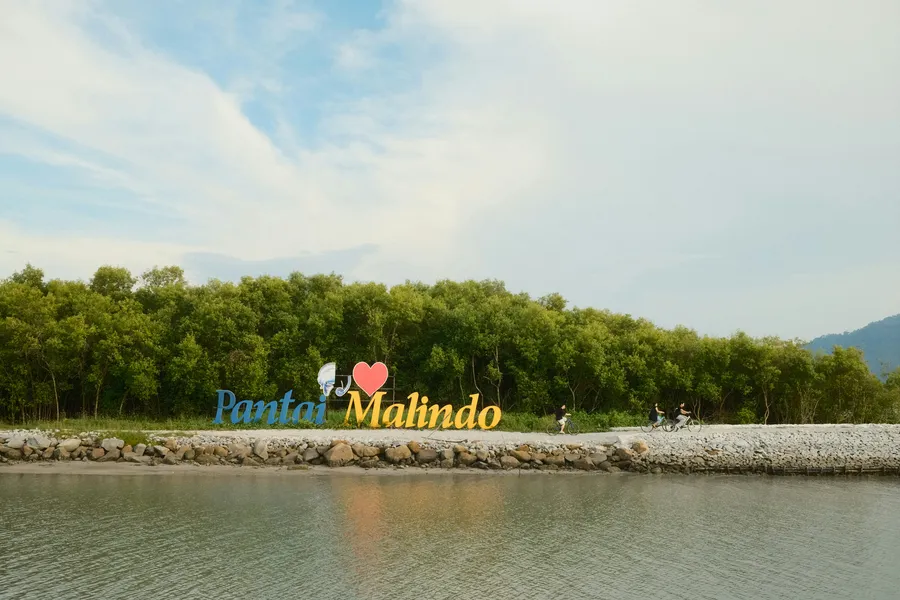
Penang National Park Trails - A Coastal Jungle Odyssey
Penang National Park (Taman Negara Pulau Pinang) holds the distinction of being the smallest national park in the world, yet its 1,213 hectares pack an extraordinary ecological punch. Located on the northwestern tip of Penang Island in Malaysia, this sanctuary offers a rare convergence of eight different habitat types, including a seasonal meromictic lake, lush mangroves, coastal dipterocarp forest, and pristine sandy beaches. Unlike many inland tropical parks, the trails here provide a unique "jungle-to-ocean" experience, where the dense, humid canopy of the rainforest abruptly gives way to the turquoise waters of the Andaman Sea. The trail network is a labyrinth of ancient tree roots, steep granite inclines, and coastal boardwalks that challenge the physical endurance of hikers while rewarding them with sightings of dusky leaf monkeys, white-bellied sea eagles, and nesting green sea turtles. This is not merely a walk in the woods; it is a journey through a highly concentrated biodiversity hotspot where the sounds of the cicadas compete with the rhythmic crashing of waves against the shoreline.
- Distance: 22.0 km (total network)
- Duration: 2–8 hours (depending on chosen route)
- Season: Year-round (Best from November to February)
- Difficulty: Moderate (High humidity and steep root sections)
- Highest point: Approximately 250 metres (near Muka Head)
- Daily walkers: No strict limit, but registration is mandatory
- Direction: Multiple out-and-back or loop configurations available
Overview
The Penang National Park trail system is defined by its rugged coastal topography. While the elevation gain of 700 metres across the entire network might seem modest on paper, the reality of hiking in a tropical rainforest environment adds a significant layer of difficulty. The trails are characterised by high humidity levels—often exceeding 80%—and temperatures that rarely dip below 28 degrees Celsius. The terrain is a complex matrix of exposed tree roots that act as natural (and often slippery) stairs, narrow ridgelines, and sandy beach crossings. The park serves as a vital green lung for the highly urbanised Penang Island, offering a stark contrast to the colonial architecture and bustling street food culture of nearby George Town.
The park is divided into two primary arterial routes that branch out from the main entrance at Teluk Bahang. The first route hugs the coastline, leading hikers toward the popular Monkey Beach (Teluk Duyung) and the historic Muka Head Lighthouse. This path is a favourite for those seeking a blend of forest trekking and seaside relaxation. The second route strikes inland, climbing over a central ridge before descending to the more secluded Pantai Kerachut (Turtle Beach) and the mysterious meromictic lake—one of only a handful in Asia where layers of fresh and salt water coexist without mixing. For the truly adventurous, the trail continues further south to Teluk Kampi, the longest and most remote beach in the park, offering a level of solitude that is increasingly rare in Southeast Asia.
Ecologically, the park is a treasure trove. The forest is dominated by Shorea and Dipterocarpus species, their massive buttress roots anchoring them to the thin tropical soil. The canopy is alive with avian activity; over 150 species of birds have been recorded here, including the majestic brahminy kite and the rare ginger-clothed kingfisher. On the ground, hikers frequently encounter long-tailed macaques and the more docile dusky leaf monkeys (spectacled langurs), whose distinctive white eye-rings make them a favourite for photographers. The transition from the dark, cool interior of the forest to the blinding white sands of the beaches provides a sensory experience that defines the Penang National Park adventure. It is a landscape that demands respect for its heat and its hidden complexities, but offers a profound connection to the wilder side of Malaysia.
History and Cultural Context
Before its official gazettement as a national park in April 2003, the area was known as the Pantai Acheh Forest Reserve. For decades, it served as a protected catchment area and a site for scientific research, largely escaping the rapid development that transformed much of Penang’s coastline into a wall of high-rise hotels and condominiums. The establishment of the park was the result of a long-standing campaign by local environmentalists and scientists who recognised the unique value of the meromictic lake and the turtle nesting sites at Pantai Kerachut. It was the first protected area in Malaysia to be gazetted under the National Parks Act of 1980, representing a significant milestone in the country's conservation history.
The cultural history of the park is inextricably linked to the local fishing communities of Teluk Bahang. For generations, these fishermen have navigated the treacherous waters around Muka Head, using the natural harbours of Monkey Beach and Pantai Kerachut as shelters during storms. The Muka Head Lighthouse, perched 242 metres above sea level on the park’s northwestern cape, stands as a testament to the region's colonial maritime history. Built by the British in 1883 at a cost of £37,129, the lighthouse remains operational today, guiding ships through the northern entrance of the Malacca Strait. The granite used in its construction was quarried locally, and the climb to its summit offers a historical perspective on the strategic importance of Penang as a "Pearl of the Orient."
For the indigenous and local Malay populations, the forest has always been a source of traditional medicine and sustenance. While foraging is now strictly prohibited, the knowledge of the forest's "pharmacy"—from the antiseptic properties of certain resins to the edible fruits of the jungle—remains part of the local lore. Today, the park represents a delicate balance between preserving this natural and historical heritage and managing the pressures of modern tourism. It is a place where the ghosts of colonial mariners, the traditions of Malay fishermen, and the urgent needs of 21st-century conservation meet under the shade of the dipterocarp canopy.
Want more background? Read extended notes on history and cultural context → Learn more
Seasonal Highlights and Weather Reality
Penang National Park experiences a tropical rainforest climate, meaning it is hot and humid year-round. However, there are distinct seasonal variations that can significantly impact the hiking experience. The "dry" season typically runs from November to February. During these months, rainfall is less frequent, and the trails are generally firmer and less muddy. This is the most popular time for hiking, as the lower humidity (though still high by temperate standards) makes the steep climbs more manageable. The skies are often clear, providing spectacular views from the Muka Head Lighthouse and vibrant sunsets at Pantai Kerachut.
The "wet" season occurs in two peaks: April to May and September to October. During these periods, heavy afternoon thunderstorms are common. These tropical deluges can transform the trails into slippery mud chutes within minutes. The "staircase" sections of the trails, formed by tree roots, become particularly hazardous when wet. Furthermore, the meromictic lake at Pantai Kerachut is a seasonal phenomenon; it is typically full during the latter half of the year following the heavy rains, while it may appear as a dry mud flat during the peak of the dry season. For those interested in seeing this rare geological feature in its dual-layered glory, visiting between October and December is ideal.
Wildlife sightings also vary by season. Green sea turtles (Chelonia mydas) and Olive Ridley turtles (Lepidochelys olivacea) typically come ashore to nest at Pantai Kerachut between April and August, though sightings can occur outside this window. The park's birdlife is most active during the migratory season from September to March, when northern species join the resident population. Regardless of the season, hikers must be prepared for sudden changes in weather. A clear morning can quickly transition into a torrential downpour, and the heat remains a constant factor. The "real feel" temperature in the jungle often exceeds 35 degrees Celsius due to the lack of wind and high moisture content in the air.
Recommended Itinerary
Route A: The Coastal Classic (Monkey Beach & Muka Head)
Early Morning: Entrance to Monkey Beach (Teluk Duyung)
- Distance: 3.5 km
- Time: 1.5–2 hours
- Start at the Teluk Bahang park office (registration required)
- Follow the coastal path heading west
- Cross the initial concrete bridge and enter the forest canopy
- Navigate several sections of narrow trail with steep drops to the sea on the right
- Pass through the USM (Universiti Sains Malaysia) Research Centre area
- Arrive at Monkey Beach, a long stretch of sand lined with casuarina trees
- Observe long-tailed macaques (keep bags secure)
Mid-Morning: Monkey Beach to Muka Head Lighthouse
- Distance: 1.5 km (steep ascent)
- Elevation gain: 240 m
- Time: 45–60 minutes
- The trailhead is located at the far end of Monkey Beach
- A sustained, steep climb on a well-defined but rugged path
- The trail consists of stone steps and dirt paths through dense forest
- Arrive at the historic 1883 lighthouse
- Climb the lighthouse tower for 360-degree views of the Andaman Sea and Penang Island
Midday: Return to Entrance
- Option 1: Hike back the same way (2–2.5 hours)
- Option 2: Arrange a boat transfer from Monkey Beach back to the park entrance (15 minutes)
- Note: Boat transfers should be negotiated at the park entrance before starting
Route B: The Wilderness Loop (Pantai Kerachut & Meromictic Lake)
Morning: Entrance to Pantai Kerachut
- Distance: 3.4 km
- Elevation gain: 150 m (crossing the central ridge)
- Time: 1.5–2 hours
- From the entrance, take the left fork at the first major junction (follow signs for Pantai Kerachut)
- A steady climb up a series of concrete and root steps to the ridge crest
- Descend through primary forest, listening for the calls of the dusky leaf monkeys
- Cross the suspension bridge over the lagoon entrance
- Arrive at the Meromictic Lake (check seasonal water levels)
- Reach Pantai Kerachut, home to the Turtle Sanctuary
Afternoon: Exploration and Return
- Visit the Turtle Hatchery and Sanctuary (free entry, educational displays)
- Explore the beach, but avoid swimming due to strong currents and jellyfish
- Return via the same trail or continue to Teluk Kampi (additional 5 km return)
- Final return to Teluk Bahang entrance by 4:30 PM for registration sign-out
Important Notes:
- The Canopy Walkway is frequently closed for maintenance; check status at the entrance
- Swimming is generally discouraged at all beaches due to seasonal box jellyfish and strong undertows
- Always carry at least 2 litres of water per person for any of these routes
- The park gates officially close at 5:00 PM; ensure you are back at the entrance by this time
Planning and Bookings
Book Your Trip
Everything you need to plan your journey
Accommodation
Find places to stay near George Town
Flights
Search flights to George Town
Essential Preparation
Planning for Penang National Park requires a focus on heat management and timing. Unlike alpine trails, the primary physical challenge here is thermoregulation. Hikers should be in moderate physical condition; while the distances are short, the combination of steep gradients and high humidity can be taxing on the cardiovascular system. It is highly recommended to start as early as possible—ideally when the park opens at 8:00 AM—to complete the most strenuous climbing before the midday sun reaches its zenith.
The logistical hub for the park is George Town, located approximately 20 kilometres away. Most visitors base themselves in the city or the nearby beach suburb of Batu Ferringhi. Access to the trailhead at Teluk Bahang is straightforward via the Rapid Penang Bus 101, which runs frequently from the Weld Quay terminal and Komtar. The journey takes approximately 45–60 minutes from George Town. If driving, limited parking is available near the park entrance, but it fills up quickly on weekends and public holidays. There are no fees for entry to the park itself, but mandatory registration at the Department of Wildlife and National Parks (PERHILITAN) office at the entrance is required for safety monitoring.
Trail Accommodation
Penang National Park is primarily a day-hiking destination, and most visitors return to George Town or Batu Ferringhi for the night. However, for those seeking a more immersive wilderness experience, limited camping options exist.
Campsites:
- Pantai Kerachut: A designated camping area with basic facilities. It is popular for its proximity to the turtle sanctuary and the meromictic lake.
- Teluk Kampi: The most remote campsite, offering the greatest degree of solitude. Facilities are extremely minimal.
Facilities Provided:
- Basic cleared ground for tents
- Public toilets and basic cold-water showers (often non-functional or very basic)
- Concrete picnic tables in some areas
What is NOT Provided:
- No potable water (all water must be carried in or treated)
- No food outlets or shops within the park (the last shops are at the Teluk Bahang entrance)
- No electricity or lighting
- No bedding or tent rentals (you must bring your own gear)
Booking Requirements:
- Camping permits must be obtained at the park entrance during registration.
- There is currently no online booking system for campsites; it is first-come, first-served.
- Large groups (more than 10 people) should contact the park office in advance to ensure space.
- Costs: Camping is generally free, but a small administrative fee may be charged during registration.
Required Gear
- Footwear: Sturdy hiking shoes or boots with excellent grip. The trails are dominated by smooth tree roots and granite rocks that become incredibly slick when damp. "Kampung Adidas" (local rubber trekking shoes) are a popular and effective cheap alternative.
- Clothing: Lightweight, moisture-wicking synthetic fabrics. Avoid cotton, which stays heavy and wet in the humidity. Long trousers are recommended to protect against leeches (rare but present) and thorny vegetation.
- Navigation: A physical or offline digital map (such as Maps.me or Gaia GPS). While main trails are marked, secondary paths can be confusing.
- Backpack: A 15–25L daypack with a rain cover. Tropical downpours can occur without warning.
- Illumination: A head torch with spare batteries, especially if you are planning to be on the trail near dusk. The jungle canopy makes the trails dark well before the official sunset.
- Emergency: A basic whistle and a small personal first aid kit including antiseptic wipes and waterproof plasters.
What to Bring
- Water: Minimum 2–3 litres per person. There are no water sources on the trails, and dehydration is the most common cause of medical issues in the park.
- Electrolytes: Rehydration salts or isotonic drinks to replace minerals lost through heavy sweating.
- Food: High-energy snacks (nuts, dried fruit, energy bars) and a packed lunch. Ensure all food is stored in airtight containers to avoid attracting macaques.
- Insect Repellent: High-strength DEET or Picaridin-based repellent. Mosquitoes are prevalent, especially in the mangrove and inland forest sections.
- Sun Protection: SPF 50+ sunscreen, a wide-brimmed hat, and UV-rated sunglasses for the exposed beach sections.
- Dry Bag: To protect electronics and cameras from humidity and sudden rain.
- Personal Items: Toilet paper and hand sanitiser (toilets at beaches are basic).
- Cash: Small denominations (RM10–RM50) for potential boat transfers or snacks at the park entrance.
Permits
As of the current regulations, there is no entry fee for Penang National Park, making it one of the most accessible natural wonders in Malaysia. However, the permit and registration process is mandatory for all visitors to ensure safety and to monitor the environmental impact on the park's fragile ecosystems.
Registration Process:
- Upon arrival at the Teluk Bahang entrance, every visitor must proceed to the PERHILITAN (Department of Wildlife and National Parks) registration counter.
- You will be required to provide your name, passport or IC number, and your intended destination within the park (e.g., Monkey Beach, Pantai Kerachut).
- You will be issued a permit/registration slip. This must be kept on your person at all times while in the park.
- Upon exiting the park, you must return to the counter to "sign out." This allows rangers to ensure that no hikers are lost or injured on the trails after the park closes.
Special Permits:
- Camping: If you intend to stay overnight at Pantai Kerachut or Teluk Kampi, you must declare this during registration. Camping is restricted to designated areas.
- Research and Filming: Professional photography, drone usage, and scientific research require prior written approval from the Department of Wildlife and National Parks in Putrajaya. This process can take several weeks.
- Canopy Walk: When operational, a separate ticket must be purchased at the entrance. Note that the canopy walk has been closed for extended periods for structural maintenance; verify its status before planning your day around it.
Boat Transfers: While not a permit per se, boat transfers are a regulated commercial activity. If you do not wish to hike both ways, you can hire a boat from the local operators at the park entrance. Prices are generally fixed per boat (not per person), typically ranging from RM60 to RM120 depending on the destination. It is essential to agree on a pickup time and location before you begin your hike.
Other Activities in the Area
The area surrounding Penang National Park offers a wealth of cultural and natural attractions that can be combined with a hiking trip:
- Entopia by Penang Butterfly Farm: Located just minutes from the park entrance, this is one of the largest butterfly gardens in Malaysia, featuring over 15,000 free-flying butterflies and a massive indoor discovery centre.
- Tropical Spice Garden: A beautifully landscaped garden set in a secondary jungle, showcasing over 500 species of flora and fauna with a focus on the spices that made Penang a global trading hub.
- Teluk Bahang Fishing Village: Explore the local jetty and enjoy fresh seafood at the various "makan" spots. It provides a glimpse into the traditional coastal life of Penang.
- Batu Ferringhi Night Market: A short bus ride away, this famous market offers everything from local handicrafts to "designer" knock-offs, alongside a vibrant street food scene.
- Escape Theme Park: For those with remaining energy, this adventure park features zip-lining, rope courses, and the world's longest water slide, all integrated into the natural forest environment.
- George Town UNESCO World Heritage Site: A 45-minute journey takes you to the heart of Penang’s history, famous for its street art, clan jetties, and world-class culinary heritage.
Safety and Conditions
Pre-Departure Checks:
- Check the local weather forecast for Penang Island. Avoid hiking if heavy rain or thunderstorms are predicted, as trails become dangerously slippery.
- Ensure your mobile phone is fully charged. While signal is intermittent in the deep valleys, it is generally available on the ridges and beaches.
- Inform someone of your intended route and expected return time, even though you are registering at the gate.
Heat and Humidity: The greatest danger in Penang National Park is heat exhaustion. The tropical humidity prevents sweat from evaporating effectively, leading to rapid core temperature increases. Symptoms include dizziness, nausea, and extreme fatigue. If you feel these symptoms, stop immediately in a shaded area, drink water with electrolytes, and do not continue the ascent. Rest until your heart rate returns to normal.
Wildlife Encounters:
- Macaques: The long-tailed macaques at Monkey Beach are habituated to humans and can be aggressive. Never feed them, and keep all food and shiny objects (like cameras or sunglasses) inside your bag. Do not engage in "tug-of-war" if a monkey grabs your bag; they can bite.
- Snakes: Reticulated pythons and pit vipers are present in the park. They generally avoid humans, but be careful where you place your hands and feet, especially when climbing over logs or rocks.
- Jellyfish: The waters around Penang are home to box jellyfish and other stinging species, particularly during the warmer months. Swimming is not recommended at any of the park's beaches.
Trail Hazards: The trails are not manicured. Expect fallen trees, narrow ledges, and sections where you must use your hands for balance. The "staircases" of roots are natural trip hazards. During the rainy season, leeches may be present in the damp leaf litter; while harmless, they can be a nuisance. Wear long socks and use repellent to deter them.
Emergency Contacts: In the event of a serious injury, contact the park office via the number provided on your registration slip or call the national emergency number (999). Note that evacuation from remote areas like Teluk Kampi can be difficult and may require boat assistance.
Side Trips and Points of Interest
The Meromictic Lake: This is the park's most significant geological feature. Located at Pantai Kerachut, it is one of only a few such lakes in the world. During the rainy season, the lake fills with fresh water from the forest streams, which sits on top of a denser layer of salt water pushed in from the sea. This creates two distinct thermal and chemical layers. In the dry season, the lake often disappears, leaving a cracked mud bed that is equally fascinating to observe. A boardwalk allows visitors to cross the lake area without disturbing the delicate sediment.
Pantai Kerachut Turtle Sanctuary: Operated by the Department of Fisheries, this small sanctuary is dedicated to the conservation of green and Olive Ridley turtles. Visitors can see hatchlings in the nursery tanks and learn about the nesting habits of these ancient mariners. The sanctuary is a quiet, educational space that highlights the fragility of the coastal ecosystem. Entry is free, but donations are welcomed to support conservation efforts.
Muka Head Lighthouse: Beyond its historical value, the lighthouse serves as the ultimate viewpoint for the park. The climb is strenuous, but the reward is a panoramic view that stretches across the Malacca Strait toward Sumatra on a clear day. The lighthouse grounds are well-maintained, and the colonial architecture provides a sharp contrast to the surrounding wild jungle.
Teluk Kampi: For those who find Monkey Beach too crowded, Teluk Kampi is the answer. It requires a significant extra effort to reach, involving a steep climb over the ridge from Pantai Kerachut. The reward is a massive, crescent-shaped beach that you will often have entirely to yourself. It is the best place in the park to experience true tropical isolation.
Leave No Trace
Penang National Park is a small, high-traffic environment. Its survival as a pristine wilderness depends entirely on the behaviour of its visitors. The "Leave No Trace" principles are not just guidelines here; they are essential for the continued existence of the park's unique habitats.
Your responsibility as a walker:
- Pack it in, pack it out: There are no rubbish bins on the trails or at the remote beaches. Every piece of plastic, food wrapper, and fruit peel must be carried back to the park entrance.
- Respect the monkeys: Feeding wildlife disrupts their natural foraging behaviour and leads to increased aggression toward humans. It also makes them vulnerable to human diseases.
- Stay on the trail: Cutting switchbacks or creating new paths causes soil erosion, which is particularly damaging in the steep, rain-heavy environment of Penang. It also destroys the micro-habitats of ground-dwelling insects and amphibians.
- No fires: The forest floor is covered in dry leaf litter that can ignite easily. Use only designated camping stoves if staying overnight.
- Protect the water: Do not use soaps or detergents in the meromictic lake or the forest streams. These chemicals are toxic to the unique aquatic life found here.
- Leave what you find: Do not collect shells, coral, or plants. The "Pearl of the Orient" should remain in the park for others to enjoy.
By following these principles, you ensure that the smallest national park in the world remains a giant in terms of biodiversity and natural beauty.