
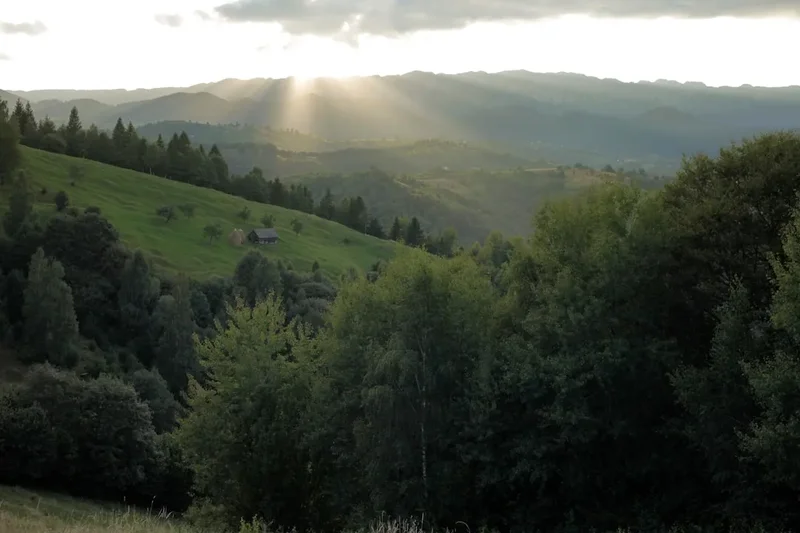
Omu Peak Trail - Carpathian Majesty
The Omu Peak Trail is a challenging yet immensely rewarding mountain track located in the Bucegi Mountains of Romania, offering a spectacular ascent to the highest peak in the range. This one-day trek is a true test of endurance and spirit, taking hikers from the lower alpine meadows and forests to the rugged, windswept summit of Omu Peak (2,505 metres). The trail winds through diverse landscapes, from dense pine forests and open alpine pastures dotted with wildflowers in summer, to dramatic rocky outcrops and scree slopes as you gain altitude. The panoramic views from the summit are simply breathtaking, encompassing vast swathes of the Carpathian Mountains, including neighbouring peaks and distant valleys, making the arduous climb a profoundly memorable experience. This trail is for seasoned hikers seeking a significant mountain challenge and unparalleled natural beauty.
- Distance: 12.0 km (round trip)
- Elevation Gain: 1,200 m
- Duration: 12–14 hours (round trip)
- Difficulty: Challenging
- Best Time: Late spring to early autumn (June–October, when snow-free)
- Closest City: Bușteni
- Trailhead Access: Via Bușteni, accessible by train or bus from Bucharest. Taxi or local bus to Poiana Costilei or similar access point. Paved but narrow road to trailhead. Limited parking.
- Coordinates: 45.4460, 25.4560 (approximate trailhead)
Overview
The Omu Peak Trail is a quintessential Romanian mountain experience, a demanding but ultimately triumphant journey to the roof of the Bucegi Mountains. This is not a casual stroll; it is a full-day expedition that requires a high level of fitness, mental fortitude, and preparedness for alpine conditions. The trail begins its ascent from the lower slopes near Bușteni, often starting from the Poiana Costilei area, which is accessible by road. Initially, the path meanders through dense, fragrant pine forests, where the air is cool and the sounds of civilisation quickly fade, replaced by the rustling of leaves and the calls of birds. As the elevation increases, the forest canopy begins to thin, giving way to open alpine meadows that burst with colour during the warmer months. These meadows are a haven for diverse flora, including numerous species of wildflowers, and are often grazed by sheep, adding a pastoral charm to the wild landscape.
The character of the trail shifts dramatically as you approach the higher altitudes. The terrain becomes more rugged, with rocky sections and scree slopes demanding careful foot placement and concentration. The views, however, become increasingly expansive and awe-inspiring. You will find yourself surrounded by a sea of peaks, with the dramatic, often jagged, formations of the Bucegi Mountains dominating the horizon. The final push to Omu Peak is a true alpine challenge, often involving steep ascents over rocky terrain. Reaching the summit at 2,505 metres is a significant achievement. From this vantage point, the world unfolds beneath you. On a clear day, the panorama is immense, stretching across the Carpathian range, offering views of distant peaks, deep valleys, and the vast expanse of the Romanian countryside. The summit area itself is a starkly beautiful, rocky plateau, often exposed to strong winds, and home to the iconic Omu Hut, a welcome sight for weary hikers.
The Omu Peak Trail is a journey that tests your physical limits while rewarding you with unparalleled natural beauty and a profound sense of accomplishment. It embodies the wild spirit of the Carpathians, offering a genuine wilderness experience that is both challenging and deeply satisfying.
History and Cultural Context
The Bucegi Mountains, and specifically Omu Peak, have a long and rich history intertwined with human settlement, folklore, and scientific exploration. For centuries, these mountains have served as a natural barrier and a source of resources for the communities living in the valleys below, such as Bușteni and Sinaia. Local shepherds have traversed these high pastures for generations, their traditional way of life shaping the landscape and leaving behind a cultural heritage that is still visible today in the form of grazing practices and small, rustic shelters.
The area is also steeped in Romanian mythology and folklore. The Bucegi Mountains are often associated with ancient Dacian legends and are said to be a place of mystical power. Omu Peak itself, being the highest point, has naturally attracted tales of spirits, ancient deities, and hidden treasures. The distinctive rock formations in the Bucegi, such as the Sphinx and the Babele (The Old Women), have fuelled these legends, with many believing them to be natural sculptures imbued with supernatural significance.
In more recent history, the Bucegi Mountains became a focus for scientific study and mountaineering. The establishment of the Omu Hut in the early 20th century marked a significant step in making the high-altitude areas more accessible for exploration and research. The hut, perched precariously on the summit plateau, has served as a base for meteorologists, geologists, and mountaineers studying the unique alpine environment. The development of cable cars and ski resorts in the surrounding areas, while changing the accessibility, has also brought more people into contact with the grandeur of Omu Peak, though the trail itself retains its wild, challenging character.
The Omu Peak Trail, therefore, is not just a physical journey but a passage through a landscape rich in natural history, cultural traditions, and enduring legends.
Seasonal Highlights and Weather Reality
The Omu Peak Trail is a high-altitude mountain trek, and its accessibility and character are heavily influenced by the seasons. The optimal period for hiking this challenging route is from late spring to early autumn, typically from June through October. During these months, the snow cover on the higher reaches of the trail generally recedes, making the path navigable and safer for hikers.
Late Spring (June): This is a time of transition. While the lower forests will be lush and green, and wildflowers will begin to bloom in the alpine meadows, higher elevations may still hold patches of snow, especially in shaded gullies. The weather can be unpredictable, with a higher chance of rain and cooler temperatures. However, the landscape is vibrant, and the fewer crowds offer a more solitary experience.
Summer (July–August): This is the most popular season for hiking Omu Peak. The weather is generally more stable, with longer daylight hours and warmer temperatures. The alpine meadows are at their most spectacular, carpeted with a riot of colourful wildflowers. This is also the peak season for sandflies in some lower, damper areas, though they are less of an issue at higher altitudes. However, summer thunderstorms can develop rapidly in the mountains, bringing heavy rain, lightning, and a sudden drop in temperature. Hikers must be prepared for these sudden changes.
Early Autumn (September–October): This period offers crisp, clear air and stunning autumnal colours in the forests. The crowds thin out considerably, providing a more peaceful hiking experience. The weather can be excellent, with stable conditions and breathtaking views. However, as October progresses, the risk of early snowfall increases significantly, and temperatures will drop considerably, especially at night and on the summit. Hikers venturing out in late autumn must be prepared for winter-like conditions.
Winter (November–May): The Omu Peak Trail is generally considered impassable and extremely dangerous during winter months due to heavy snow, ice, and avalanche risk. The Omu Hut may be open in a basic form, but the trail itself requires advanced mountaineering skills, ice axe, crampons, and extensive winter navigation experience. It is strictly for experienced winter alpinists.
Recommended Itinerary
Omu Peak Trail - Challenging Day Hike Itinerary
Early Morning (06:00 - 07:00): Departure from Bușteni
- Begin your journey from Bușteni. Ensure you have had a hearty breakfast and are well-hydrated.
- Travel to the trailhead at Poiana Costilei or a designated starting point accessible by taxi or local transport. Confirm your exact starting point based on road conditions and parking availability.
- Final gear check: ensure all essentials are packed, water bottles are full, and you have adequate food supplies.
Morning (07:00 - 12:00): Ascent through Forests and Meadows
- Distance: Approximately 6.0 km
- Elevation Gain: Approximately 700 m
- Time: 5–6 hours
- The trail begins with a steady climb through dense pine forests. The path is often well-defined but can be steep in places.
- As you gain altitude, the forest begins to open up into alpine meadows. Look for wildflowers (seasonal) and enjoy the changing vegetation.
- The terrain becomes more exposed, offering glimpses of the surrounding peaks.
- Take short breaks to rehydrate and refuel with snacks.
Midday (12:00 - 14:00): Rocky Ascent and Summit Approach
- Distance: Approximately 3.0 km
- Elevation Gain: Approximately 400 m
- Time: 2–3 hours
- The trail transitions to a more rugged, rocky terrain. You will encounter scree slopes and steeper ascents.
- Careful foot placement is crucial. Use trekking poles for stability and to reduce strain on your knees.
- The views become increasingly dramatic and panoramic as you approach the summit plateau.
- You may see the Omu Hut in the distance, a beacon of your destination.
Afternoon (14:00 - 16:00): Summit and Omu Hut
- Distance: Approximately 1.0 km
- Elevation Gain: Approximately 100 m
- Time: 1–2 hours (including time at summit)
- Reach the summit plateau and Omu Peak (2,505 m).
- Spend time at the summit, taking in the 360-degree views of the Carpathian Mountains.
- Visit the Omu Hut for a well-deserved rest, refreshments (if available), and to experience the unique atmosphere of this high-altitude refuge.
- Allow ample time for photos and to simply absorb the magnificent scenery.
Late Afternoon (16:00 - 20:00): Descent and Return to Bușteni
- Distance: Approximately 12.0 km
- Elevation Loss: Approximately 1,200 m
- Time: 4–5 hours
- Begin your descent, retracing your steps or following alternative marked paths if available and you are familiar with them.
- The descent can be as challenging as the ascent, especially on your knees. Take your time and maintain focus.
- Continue through the alpine meadows and forests.
- Aim to reach the trailhead before dusk.
- Return to Bușteni for a well-earned rest and meal.
Important Considerations:
- This is a strenuous, full-day hike. Start early to allow ample time and avoid hiking in the dark.
- Weather can change rapidly in the mountains. Be prepared for sun, rain, wind, and potentially cold temperatures, even in summer.
- Carry sufficient water and high-energy food.
- Inform someone of your hiking plans and expected return time.
- Mobile phone signal may be intermittent or non-existent in certain sections.
Planning and Bookings
Book Your Trip
Everything you need to plan your journey
Accommodation
Find places to stay near Bușteni
Flights
Search flights to Bușteni
Essential Preparation
The Omu Peak Trail is a significant undertaking that requires thorough preparation. Given its challenging nature and the potential for rapidly changing mountain weather, meticulous planning is paramount. Your primary base for this hike will be Bușteni, a well-connected town in the Prahova Valley. Bușteni offers a range of accommodation options, from budget guesthouses to more comfortable hotels, and has essential amenities like supermarkets for stocking up on supplies, pharmacies, and outdoor gear shops for any last-minute purchases.
Logistics for reaching the trailhead typically involve a taxi or a local bus service from Bușteni to the starting point, often near Poiana Costilei. The road to these access points is paved but can be narrow and winding, so factor in travel time and potential delays. Parking at the trailhead can be limited, especially during peak season, so arriving early is advisable. It is crucial to check the condition of the access road before your trip, as it can be affected by weather or maintenance.
Fitness is a critical component of essential preparation. This hike involves a substantial elevation gain of 1,200 metres over a relatively short distance, demanding excellent cardiovascular fitness and leg strength. Regular hiking, running, or cycling in the weeks leading up to your trek will significantly enhance your ability to complete the trail comfortably and safely. Mental preparation is also key; understanding the challenges ahead and being prepared to push through fatigue will contribute to a successful hike.
Trail Accommodation
This is a day hike requiring no overnight accommodation. The Omu Peak Trail is designed to be completed within a single day, with hikers returning to their base in Bușteni or a nearby town. However, there is a mountain hut located at the summit, the Omu Hut (Cabana Omu). This hut provides basic shelter and refreshments for hikers and mountaineers. While it is possible to stay overnight at the Omu Hut, it is not a mandatory part of the standard Omu Peak Trail experience and requires separate booking, which can be done through various Romanian mountaineering associations or directly with the hut management if contact details are available. For the purpose of this day hike description, no overnight accommodation on the trail is assumed.
Omu Hut (Cabana Omu):
- Booking Requirements: While not essential for a day hike, overnight stays require advance booking. Contact details and booking procedures can vary; it's advisable to research current arrangements through Romanian mountaineering clubs or online forums.
- Facilities Provided: Basic dormitory-style accommodation (bunks), a communal dining area, and typically a simple menu of hot meals and drinks.
- What's NOT Provided: Bedding (sleeping bags are usually required), cooking equipment, electricity for charging devices, or extensive amenities.
- Seasonal Availability: The hut is generally open year-round, but access and services can be limited during winter due to heavy snow and harsh weather. It is most reliably accessible and fully operational during the summer hiking season (June–October).
- Costs: Costs for overnight stays are generally modest but vary. Day visitors can purchase food and drinks.
Required Gear
- Sturdy Hiking Boots: Waterproof, with good ankle support and a well-worn sole for grip on rocky and uneven terrain.
- Waterproof and Windproof Jacket: Essential for protection against sudden mountain weather changes, including rain and strong winds. Gore-Tex or similar breathable material is recommended.
- Waterproof Overtrousers: To complement the jacket and keep legs dry during downpours.
- Warm Layers: Including a fleece or insulated jacket, and thermal base layers (merino wool or synthetic). Temperatures can drop significantly at higher altitudes, even in summer.
- Hat and Gloves: A warm hat (beanie) and gloves are crucial, especially for the summit, where conditions can be cold and windy.
- Backpack: A comfortable daypack (25-35 litres) with a rain cover to carry all your gear.
- Navigation Tools: A detailed map of the Bucegi Mountains, a compass, and a GPS device or smartphone with offline maps downloaded. Familiarity with map reading is essential.
- Head Torch: With spare batteries, in case of unexpected delays or if you start before dawn/finish after dusk.
- First-Aid Kit: Comprehensive kit including blister treatment, bandages, antiseptic wipes, pain relievers, and any personal medications.
- Sun Protection: High SPF sunscreen, sunglasses, and a wide-brimmed hat or cap, as the sun can be intense at altitude.
What to Bring
- Food: High-energy snacks (nuts, dried fruit, energy bars), sandwiches, and a packed lunch. Ensure you have enough for the entire day, plus a little extra in case of delays.
- Water: At least 2-3 litres of water per person. Water sources may be available on the trail, but it is highly recommended to treat all water (using a filter or purification tablets) before drinking.
- Water Treatment: A reliable water filter or purification tablets.
- Trekking Poles: Highly recommended for stability on ascents and descents, and to reduce impact on joints.
- Mobile Phone: Fully charged, with emergency numbers saved. Be aware that signal coverage is unreliable in mountainous areas.
- Personal Locator Beacon (PLB) or Satellite Messenger: Recommended for remote areas where mobile signal is absent.
- Toilet Paper and Hand Sanitiser: For personal hygiene.
- Small Bin Bag: To pack out all your rubbish.
- Camera: To capture the stunning scenery.
- Cash: For potential purchases at Omu Hut or for local transport.
Permits
For the Omu Peak Trail, typically no specific permits are required for day hikers accessing the trails within the Bucegi Mountains National Park. The park is generally open to the public for recreational activities like hiking. However, it is always advisable to check for any local regulations or temporary restrictions that may be in place, especially concerning access roads or specific areas, which can change due to weather conditions or conservation efforts.
While formal permits are not usually needed for this specific day hike, adherence to the park's rules and regulations is expected. These generally include:
- Staying on marked trails to protect the fragile alpine environment.
- Not disturbing wildlife or removing plants.
- Carrying out all rubbish.
- Respecting any signage or closures.
If you plan to stay overnight at the Omu Hut, advance booking is highly recommended and may be subject to specific booking procedures and fees managed by the hut operators or relevant mountaineering associations. It is best to research the current booking policy for Cabana Omu well in advance of your planned visit.
Important Note: Regulations can change. Always verify the latest requirements with local authorities or national park services before your trip. For the most up-to-date information, consult resources related to the Bucegi Mountains National Park or Romanian national park authorities.
Other Activities in the Area
The Bucegi Mountains and the surrounding Prahova Valley offer a wealth of activities beyond the Omu Peak Trail, catering to various interests:
- Cable Car to Omu Peak: For those seeking a less strenuous way to experience the summit views, a cable car system operates from Bușteni (or nearby Sinaia) that can take you to high-altitude areas, often close to Omu Peak. This allows access to the summit plateau and the Omu Hut without the strenuous climb.
- Sinaia Monastery and Peleș Castle: Located in the nearby town of Sinaia, these are major historical and architectural attractions. Peleș Castle is a stunning 19th-century royal residence, and the Sinaia Monastery is a significant religious site.
- Skiing and Winter Sports: During winter, the Prahova Valley is a popular destination for skiing and snowboarding, with resorts like Sinaia and Bușteni offering numerous slopes and facilities.
- Hiking and Trekking in the Bucegi: Numerous other marked trails exist within the Bucegi Mountains, offering varying levels of difficulty and exploring different natural attractions like the Babele and Sphinx rock formations, Ialomița Cave, and other scenic valleys.
- Paragliding and Hang Gliding: The mountainous terrain and thermal updrafts make the Bucegi Mountains a popular spot for paragliding enthusiasts.
- Exploring Bușteni: The town itself has a pleasant atmosphere, with parks, restaurants, and local markets to explore. The Bușteni Cable Car also offers scenic rides.
Safety and Conditions
Pre-Trip Checks:
- Weather Forecast: Always check the mountain weather forecast for the Bucegi Mountains immediately before your hike and on the morning of your departure. Websites like MetRomania or other reputable meteorological services provide specific mountain forecasts. Be prepared for rapid changes.
- Trail Conditions: While this is a popular trail, conditions can vary. Check with local sources (e.g., mountain rescue services, local guides, or the Omu Hut if accessible by phone) for any recent reports on snow, ice, or trail damage, especially outside the peak summer season.
- Road Access: Verify the condition of the road leading to the trailhead. Inquire about any closures or necessary vehicle types.
Mountain Hazards:
- Altitude Sickness: While Omu Peak is not extremely high, rapid ascent can still affect some individuals. Be aware of symptoms like headache, nausea, and dizziness. Descend if symptoms worsen.
- Weather Changes: The most significant hazard. Mountain weather can shift from clear and sunny to stormy with rain, hail, fog, and strong winds in a matter of minutes. Hypothermia is a real risk even in summer. Always carry adequate warm and waterproof clothing.
- Navigation: Visibility can drop to near zero in fog or heavy rain. Ensure you have reliable navigation tools (map, compass, GPS) and know how to use them. Stick to marked trails.
- Terrain: The trail includes steep ascents, rocky sections, and scree slopes. Loose rocks can be a hazard, and a fall can result in serious injury. Wear appropriate footwear and use trekking poles for stability.
- Wildlife: While large predators are rare in this specific area, be aware of your surroundings. Respect any wildlife you encounter and do not feed them.
- Omu Hut: If you encounter severe weather or an emergency, the Omu Hut can provide shelter. However, do not rely on it as a guaranteed safe haven without prior booking for overnight stays.
Emergency Procedures:
- Carry a fully charged mobile phone. Note that signal coverage is unreliable.
- Know the emergency number for Romania (112).
- If possible, carry a Personal Locator Beacon (PLB) or satellite messenger for reliable communication in remote areas.
- Inform someone of your hiking plans, including your intended route and expected return time.
Travel insurance is strongly recommended to cover potential medical emergencies, evacuation, and trip cancellations.
Side Trips and Points of Interest
Omu Hut (Cabana Omu): Perched at 2,505 metres, this is the highest mountain hut in Romania and a significant landmark. Even if you are not staying overnight, it's worth visiting for the unique atmosphere, the chance to warm up, and to purchase refreshments. The hut itself is a testament to the resilience of those who operate it in such a remote and challenging environment.
Bucegi Sphinx and Babele: While not directly on the main Omu Peak Trail from Poiana Costilei, these famous rock formations are easily accessible from the Omu Hut via short, marked paths. The Sphinx, a rock formation resembling a human face, and the Babele, a series of mushroom-shaped rock formations, are iconic natural monuments of the Bucegi Mountains and are steeped in local legend. They are a must-see if you have the time and energy after reaching the summit.
Panoramic Viewpoints: The entire ascent and the summit area offer numerous viewpoints. As you climb, take time to turn around and appreciate the expanding vistas of the Prahova Valley and the surrounding mountain ranges. The summit plateau provides a 360-degree panorama that is truly spectacular on a clear day, offering views stretching for many kilometres.
Alpine Flora and Fauna: Depending on the season, the meadows and slopes along the trail can be rich with alpine flowers. Keep an eye out for various species of gentians, edelweiss (though rare), and other mountain wildflowers. You might also spot marmots or various bird species adapted to the high-altitude environment.
Leave No Trace
The Bucegi Mountains National Park is a precious natural environment, and it is crucial for all visitors to practice Leave No Trace principles to preserve its beauty and ecological integrity for future generations. The Omu Peak Trail, while popular, traverses sensitive alpine ecosystems that can be easily damaged.
Your responsibility as a hiker:
- Plan Ahead and Prepare: Understand the trail, weather, and your own capabilities. Pack appropriately and be prepared for all conditions.
- Travel and Camp on Durable Surfaces: Stick to marked trails. Avoid cutting switchbacks or walking on fragile vegetation, especially in the alpine meadows where plants are slow to recover. If camping were permitted (which it is not for this day hike), you would camp on established sites.
- Dispose of Waste Properly: Pack out everything you pack in. This includes all food scraps, wrappers, and any other litter. Use designated toilet facilities where available, or if caught short in the wilderness, dig a cathole at least 60 metres away from water sources, trails, and campsites, and bury human waste. Pack out used toilet paper.
- Leave What You Find: Do not pick wildflowers, collect rocks, or disturb natural or historical objects. Let nature remain as it is.
- Minimise Campfire Impacts: Campfires are generally prohibited in national parks and are not relevant for this day hike.
- Respect Wildlife: Observe wildlife from a distance. Never feed animals, as it can harm their health, alter their natural behaviours, and expose them to predators.
- Be Considerate of Other Visitors: Keep noise levels down, yield to uphill hikers, and be courteous to fellow trekkers. The mountain experience is enhanced when shared respectfully.
By following these principles, you help ensure that the Omu Peak Trail and the Bucegi Mountains remain a wild and beautiful place for everyone to enjoy.