
Mount Sinai Trek - A Journey to the Sacred Summit
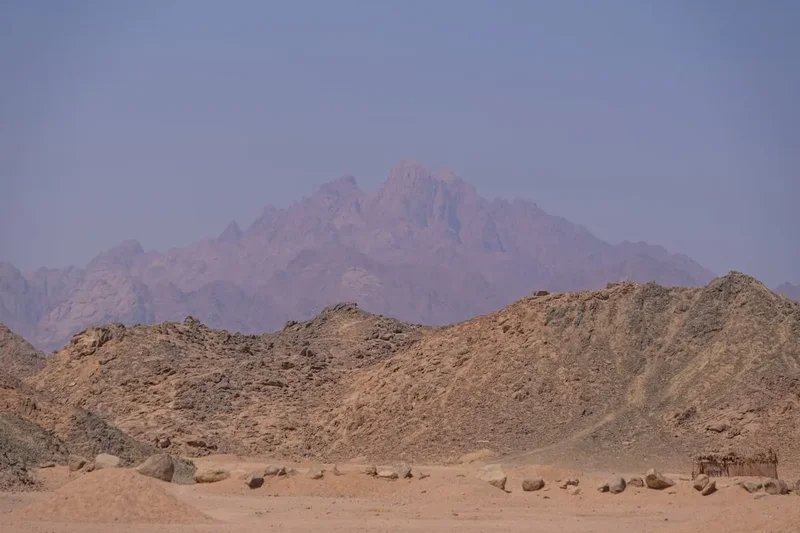
The Mount Sinai Trek, known locally as Jabal Musa (the Mountain of Moses), is one of the most spiritually significant and geologically striking mountain tracks in the world. Located in the heart of Egypt's South Sinai Peninsula, this 15-kilometre journey ascends to a height of 2,285 metres above sea level, offering a profound connection to both ancient history and the raw, unyielding beauty of the high desert. Unlike the lush, temperate rainforests of other world-class tracks, Mount Sinai is a landscape of jagged red granite, deep shadows, and vast, silent horizons. It is a place where the earth’s crust seems stripped bare, revealing the skeletal beauty of the Sinai massif. For millennia, pilgrims, explorers, and hikers have traversed these paths, drawn by the biblical tradition that this is the site where Moses received the Ten Commandments. Whether approached as a religious pilgrimage or a physical challenge, the trek provides an unparalleled perspective on the intersection of human faith and natural grandeur.
- Distance: 15.0 km (round trip via Camel Path and Steps of Penitence)
- Duration: 6–8 hours
- Elevation Gain: 750 m
- Highest Point: 2,285 m (Summit of Jabal Musa)
- Difficulty: Moderate (requires steady cardio and sure-footedness on rocky terrain)
- Best Time: October to April (avoiding the extreme heat of the Egyptian summer)
- Mandatory Requirement: All hikers must be accompanied by a local Bedouin guide
- Closest Settlement: Saint Catherine (village and monastery)
Overview
The Mount Sinai Trek is a masterclass in desert topography and cultural immersion. The journey typically begins in the shadow of Saint Catherine’s Monastery, a UNESCO World Heritage site that has stood at the base of the mountain since the 6th century. From here, the landscape opens into a dramatic amphitheatre of weathered granite peaks that glow with a deep ochre hue in the afternoon sun and turn a ghostly silver under the moonlight. The trek is defined by two primary routes: the Siket El Bashait (the Camel Path) and the Siket Sayidna Musa (the Steps of Penitence). Most hikers choose to ascend via the Camel Path for its steady, manageable gradient and descend via the Steps of Penitence to experience the architectural marvel of the 3,750 hand-cut stone stairs.
The experience is most famously undertaken as a "Sunrise Hike." This involves a midnight departure, where hikers navigate the winding paths by torchlight, accompanied by the rhythmic crunch of gravel and the occasional grunt of a passing camel. As you ascend, the air thins and the temperature drops significantly, often reaching freezing point at the summit even when the coastal resorts of Sharm el-Sheikh remain warm. The silence of the Sinai desert at night is profound, broken only by the wind whistling through narrow granite gullies. Reaching the summit just before dawn, hikers are rewarded with a 360-degree panorama of the Sinai Peninsula. As the sun breaks over the horizon, the surrounding peaks—including Mount Catherine, Egypt’s highest point—are illuminated in a spectacular display of purple, orange, and gold. It is a moment of quiet reflection that transcends religious boundaries, highlighting the sheer scale and isolation of this ancient wilderness.
While the physical challenge is moderate, the environmental conditions require careful preparation. The terrain is almost entirely composed of loose scree and solid rock, demanding sturdy footwear and a respect for the altitude. The lack of natural shade and the aridity of the environment mean that hydration and sun protection are paramount. However, the presence of Bedouin-run "cafeterias"—small stone huts offering hot tea, snacks, and heavy woollen blankets—provides a unique cultural touchpoint and essential respite along the way. This trek is not merely a walk; it is an immersion into a landscape that has remained largely unchanged for thousands of years, managed and protected by the Jebeliya Bedouin tribe who have called these mountains home for centuries.
History and Cultural Context
The history of Mount Sinai is inextricably linked to the Abrahamic faiths—Judaism, Christianity, and Islam. For over 1,500 years, it has been identified as the biblical Mount Horeb, the site of the Burning Bush and the delivery of the Law to Moses. This spiritual heritage has made the mountain a focal point for monasticism and pilgrimage since the early centuries of the Common Era. The cultural landscape is dominated by the presence of the Jebeliya (Mountain) Bedouin, a tribe with a unique history. Tradition holds that they are descendants of soldiers sent by the Byzantine Emperor Justinian in the 6th century to protect Saint Catherine’s Monastery. Over the centuries, they converted to Islam and integrated into the Bedouin fabric of the Sinai, yet they remain the hereditary guardians of the monastery and the mountain, providing the guides and camel transport that make the trek possible today.
At the base of the mountain lies the Monastery of Saint Catherine, the oldest continuously inhabited Christian monastery in the world. Built between 548 and 565 AD, its massive granite walls were designed to protect the monks and the site of the Burning Bush from raiders. The monastery houses a library of ancient manuscripts second only to the Vatican, as well as a collection of unique icons that survived the Byzantine Iconoclasm. The trek itself passes several historical landmarks, including the "Gate of Forgiveness" and the "Gate of Saint Stephen," where in medieval times, monks would hear the confessions of pilgrims before allowing them to proceed to the holy summit. The 3,750 Steps of Penitence were reportedly carved by a single monk as an act of devotion and penance, a staggering feat of manual labour that remains one of the track's most impressive features.
The summit is crowned by a small chapel dedicated to the Holy Trinity, rebuilt in 1934 on the ruins of a 4th-century church, and a small mosque. This co-existence of sacred spaces reflects the mountain's universal significance. The entire area is part of the Saint Catherine Protectorate, established to preserve both the rich biodiversity of the high-altitude desert and the incomparable cultural heritage of the region. Walking this track is to follow in the footsteps of countless historical figures, from Empress Helena to modern-day seekers, all drawn by the enduring mystery of the Sinai.
Want more background? Read extended notes on history and cultural context → Learn more
Seasonal Highlights and Weather Reality
The climate of the South Sinai mountains is vastly different from the coastal plains of Egypt. Due to the high altitude, temperatures are significantly cooler, and the region experiences four distinct seasons. Choosing the right time to trek is essential for both safety and enjoyment.
Autumn (October to November) and Spring (March to April): These are the peak trekking seasons. Daytime temperatures are pleasant, ranging from 15°C to 25°C, making the ascent comfortable. The nights are cold but rarely reach the extreme sub-zero temperatures of mid-winter. In spring, the desert may see a brief flush of green and the blooming of hardy alpine herbs after rare rain events. Visibility is typically excellent during these months, providing the clearest views of the Gulf of Aqaba in the distance.
Winter (December to February): Winter brings a harsh beauty to the Sinai. Daytime temperatures can hover around 10°C, but the summit frequently drops to -5°C or lower at night. Snow is not uncommon on the higher peaks, including Jabal Musa and Mount Catherine. While a snow-capped Sinai is a breathtaking sight, it requires specialised gear (thermal layers, windproof shells) and carries the risk of icy patches on the Steps of Penitence. The "Khamsin" winds—hot, dusty sandstorms—can occasionally occur in late winter, reducing visibility and making breathing difficult.
Summer (May to September): Trekking in summer is a test of endurance. Daytime temperatures in the valleys can exceed 35°C, and the intense solar radiation reflected off the granite can lead to heat exhaustion. However, because most treks occur at night for the sunrise, the heat is somewhat mitigated. Even in summer, the summit can be surprisingly chilly before dawn, but the descent after sunrise will be very hot. High summer is generally discouraged for those not accustomed to extreme desert conditions.
Recommended Itinerary
Standard Sunrise Trek Itinerary
Phase 1: The Midnight Departure
- Time: 01:00 – 02:00
- Starting Point: Saint Catherine Monastery car park (1,500 m)
- Meet your mandatory Bedouin guide and clear the security checkpoint
- Begin the ascent via the Siket El Bashait (Camel Path)
- The path is wide and composed of packed gravel and stones, winding gradually up the mountain
- Use head torches to navigate; the path is well-defined but unlit
Phase 2: The Camel Path Ascent
- Distance: ~6 km
- Time: 2.5 – 3 hours
- Pass through several Bedouin "cafeterias" spaced approximately 30–45 minutes apart
- These huts offer a chance to rest, drink hot sage tea, and purchase snacks
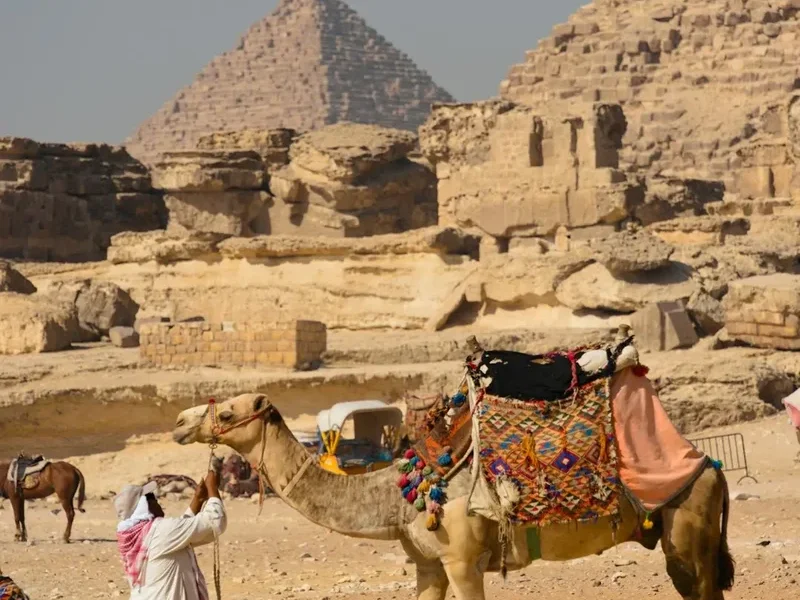
- The gradient is steady but persistent; camels are available for hire for this section if needed
- The air becomes noticeably cooler and thinner as you pass the 2,000 m mark
Phase 3: Elijah’s Basin to the Summit
- Time: 04:00 – 05:00
- Reach Elijah’s Basin (the "Seven Elders" plateau), a flat area with an ancient cypress tree
- Leave the Camel Path and begin the final 750 stone steps to the summit
- This section is steeper and requires more physical effort; camels cannot go beyond this point
- Arrive at the summit (2,285 m) well before the first light
- Rent a heavy woollen blanket from the summit hut and find a sheltered spot to wait for the sun
Phase 4: Sunrise and the Descent
- Time: 05:30 – 08:30
- Witness the sunrise over the jagged peaks of the Sinai massif
- Explore the summit chapel and mosque once there is enough light
- Begin the descent via the Siket Sayidna Musa (Steps of Penitence)
- This route offers spectacular views of the monastery from above and passes through narrow granite canyons
- The 3,750 steps are uneven and can be hard on the knees; take your time
- Pass the Gate of Saint Stephen and the Gate of Forgiveness
- Arrive back at the Monastery of Saint Catherine as it opens for visitors (usually 09:00)
Important Notes:
- The monastery is closed on Fridays, Sundays, and Greek Orthodox holidays; plan your visit accordingly
- The descent via the steps is much more scenic but physically more demanding than the Camel Path
- Always stay with your guide; the granite terrain can be disorienting in the dark
- Carry at least 2 litres of water, even for a night hike
Planning and Bookings
Book Your Trip
Everything you need to plan your journey
Accommodation
Find places to stay near Saint Catherine
Flights
Search flights to Saint Catherine
Essential Preparation
Planning a trek to Mount Sinai requires coordinating transport from the coastal hubs of Sharm el-Sheikh (3 hours) or Dahab (2 hours). Most visitors join an organised tour which includes transport, the mandatory Bedouin guide, and sometimes a basic meal. If travelling independently, you must arrange a taxi or private car to the village of Saint Catherine. It is highly recommended to arrive in the village the evening before and stay in local accommodation to acclimatise to the 1,500 m base altitude.
Physical fitness should be moderate. While the Camel Path is not technically difficult, the sustained uphill walk for three hours at altitude can be taxing. Ensure you have rested well before the midnight start. Security in the Sinai is managed through numerous checkpoints; always carry your original passport and any visa documents required by Egyptian authorities.
Trail Accommodation
There is no overnight accommodation on the trail itself, as it is typically completed as a continuous night hike. However, there are several options at the base and unique "rest" facilities on the mountain.
Base Accommodation:
- Saint Catherine’s Monastery Guesthouse: Located within the monastery precinct. Offers basic, clean rooms. Must be booked well in advance as it is popular with pilgrims.
- Wadi Raha Hotel / Morgenland Village: Mid-range hotels in the Saint Catherine village offering standard amenities, hot showers, and breakfast.
- Bedouin Camps: Several eco-camps in the surrounding wadis offer traditional tent accommodation or basic stone huts for a more authentic experience.
On-Trail Facilities:
- Bedouin Cafeterias: These are simple stone structures along the Camel Path. They provide benches, blankets for rent (approx. 50-100 EGP), and basic refreshments. They do not offer beds for sleeping.
- Summit Huts: Small shelters at the top provide protection from the wind while waiting for sunrise.
- Toilets: Very basic pit toilets are available at some cafeterias and near Elijah’s Basin. Carry your own toilet paper and hand sanitiser.
Required Gear
- Footwear: Sturdy hiking boots or high-quality trail shoes with good grip. The granite is abrasive and the steps are uneven.
- Clothing Layers: The "onion" principle is vital. A moisture-wicking base layer, a warm fleece or down mid-layer, and a windproof outer shell. Even in summer, the summit wind chill is significant.
- Head Torch: Essential for the night ascent. Carry spare batteries. Handheld torches are less ideal as you may need your hands for balance on the steps.
- Backpack: A 15–25L daypack is sufficient for water, snacks, and extra layers.
- Sun Protection: High SPF sunscreen, sunglasses, and a wide-brimmed hat for the descent after sunrise.
What to Bring
- Water: Minimum 2 litres per person. While tea is available at huts, bottled water is more expensive on the mountain.
- Snacks: High-energy foods like nuts, dried fruit, chocolate, or energy bars. A light breakfast to eat at the summit is recommended.
- Personal First Aid: Blister plasters (moleskin), ibuprofen/paracetamol, and any personal medications.
- Cash: Egyptian Pounds (EGP) in small denominations for the guide tip, cafeteria snacks, blanket rental, or a camel ride if needed.
- Toiletries: Hand sanitiser, tissues/toilet paper, and lip balm (the desert air is very drying).
- Passport: Mandatory for passing through security checkpoints on the road to Saint Catherine.
Permits
There is no formal "permit" system in the sense of a lottery or pre-booked ticket for the Mount Sinai Trek. However, access is strictly controlled by the Egyptian Ministry of Interior and the Saint Catherine Protectorate. All hikers are required to clear a security checkpoint at the entrance to the monastery area.
Mandatory Guide Policy:
- It is a legal requirement for all foreign trekkers to be accompanied by a licensed Bedouin guide from the Jebeliya tribe.
- Guides are typically assigned at the checkpoint or arranged through your tour operator.
- The fixed rate for a guide is regulated by the local Bedouin association (approx. 400–600 EGP per group, though this is subject to change).
- This policy ensures hiker safety and provides essential income for the local community.
Monastery Access:
- While the mountain is open 24/7, Saint Catherine’s Monastery has very specific opening hours (usually 09:00 to 11:30, closed Fridays, Sundays, and religious holidays).
- There is no entry fee for the monastery or the mountain, but donations for the monastery’s upkeep are welcomed.
- Modest dress is required to enter the monastery (shoulders and knees covered).
Security Considerations:
- The Sinai Peninsula has specific travel regulations. Ensure your Egyptian visa (or the Sinai-only entry stamp) is valid for the duration of your stay.
- Check current travel advisories from your home country before departure, as the security situation in the North Sinai can occasionally impact travel regulations in the South.
Other Activities in the Area
The Saint Catherine region offers more than just the ascent of Jabal Musa. Consider these activities to round out your visit:
- Saint Catherine’s Monastery: Visit the Burning Bush, the Well of Moses, and the incredible Icon Gallery. The Transfiguration Basilica is a masterpiece of Byzantine architecture.
- Mount Catherine (Jabal Katrine): At 2,642 m, this is Egypt’s highest peak. It is a more strenuous, 5–6 hour trek than Mount Sinai and offers even more expansive views. It requires a separate guide and a full day.
- The Blue Desert: Located near the village, this is an area where Belgian artist Jean Verame painted several large boulders blue in 1980 to commemorate the 1979 Peace Treaty between Egypt and Israel. It is a surreal and photogenic landscape.
- Wadi El Arbain: A beautiful valley walk that passes the Monastery of the Forty Martyrs and several Bedouin gardens, offering a glimpse into traditional mountain agriculture.
- Dahab or Sharm el-Sheikh: After the dry heat of the mountains, head to the coast for world-class scuba diving and snorkelling in the Red Sea.
Safety and Conditions
Physical Health and Altitude:
- The trek reaches nearly 2,300 m. While not high enough for severe altitude sickness for most, you may experience shortness of breath or a mild headache. Stay hydrated and maintain a steady pace.
- If you have heart or respiratory conditions, consult a doctor before attempting the trek.
- The descent via the Steps of Penitence is jarring on the knees; trekking poles can be very helpful.
Environmental Hazards:
- Hypothermia: This is the most common safety issue. Hikers often sweat during the ascent and then sit still in freezing winds at the summit. Bring dry layers to change into or rent a blanket immediately upon arrival at the top.
- Dehydration: The desert air saps moisture rapidly. Drink water regularly, even if you do not feel thirsty in the cold night air.
- Flash Floods: Though rare, heavy rain in the mountains can cause dangerous flash floods in the wadis. If rain is forecast, follow your guide’s instructions implicitly.
Navigation:
- Never wander off the main paths. The granite terrain is full of false leads and steep drop-offs that are invisible in the dark.
- Your Bedouin guide is an expert in this terrain; respect their advice regarding pace and weather conditions.
Emergency Services:
- There is a small hospital in Saint Catherine village, but for serious injuries, evacuation to Sharm el-Sheikh or Cairo would be necessary. Ensure your travel insurance covers mountain trekking and emergency medical evacuation.
Side Trips and Points of Interest
Elijah’s Basin: This high-altitude plateau sits in the saddle between the main peaks. It is named after the prophet Elijah, who is said to have sheltered in a nearby cave. The basin contains an ancient cypress tree, estimated to be over 500 years old, and several small chapels. It is a peaceful spot for meditation away from the summit crowds.
The 3,750 Steps of Penitence: While often used as a descent route, these steps are a point of interest in their own right. Each stone was laid by hand, creating a staircase that clings to the side of the mountain. The route passes through the "Confessional Gate," where pilgrims once sought absolution before reaching the summit.
The Burning Bush: Located within the monastery walls, the "Rubus Sanctus" is a rare species of bramble (Rubus collinus). It is the only one of its kind in the entire Sinai Peninsula, and attempts to transplant it elsewhere have reportedly failed. For many, this is the spiritual heart of the entire trek.
The Charnel House: For those with a strong stomach, the monastery’s charnel house contains the neatly stacked bones of monks who have lived and died there over the centuries, including the skeleton of Saint Stephanos, still dressed in his monastic robes.
Leave No Trace
The Saint Catherine Protectorate is a fragile ecosystem home to rare plants and the world’s smallest butterfly, the Sinai Baton Blue. With thousands of visitors each year, the impact on the mountain is significant. It is the responsibility of every hiker to minimise their footprint.
Guidelines for Responsible Trekking:
- Waste Management: Carry out all rubbish, including fruit peels and cigarette butts. The arid environment means organic waste does not decompose quickly.
- Water Protection: Do not use soaps or detergents in the rare mountain springs or wells. These are vital water sources for the Bedouin and local wildlife.
- Respect the Silence: Mount Sinai is a place of prayer and reflection for many. Avoid loud music or shouting.
- No Graffiti: Do not carve names or symbols into the granite rocks or the walls of the summit buildings. This is both illegal and disrespectful to the site’s heritage.
- Stay on the Path: Straying from the established tracks causes soil erosion and destroys the delicate crust of the desert floor.
- Support the Local Economy: Buy snacks from the Bedouin cafeterias and tip your guide fairly. This ensures that the local community remains the primary stakeholders in the mountain’s protection.