
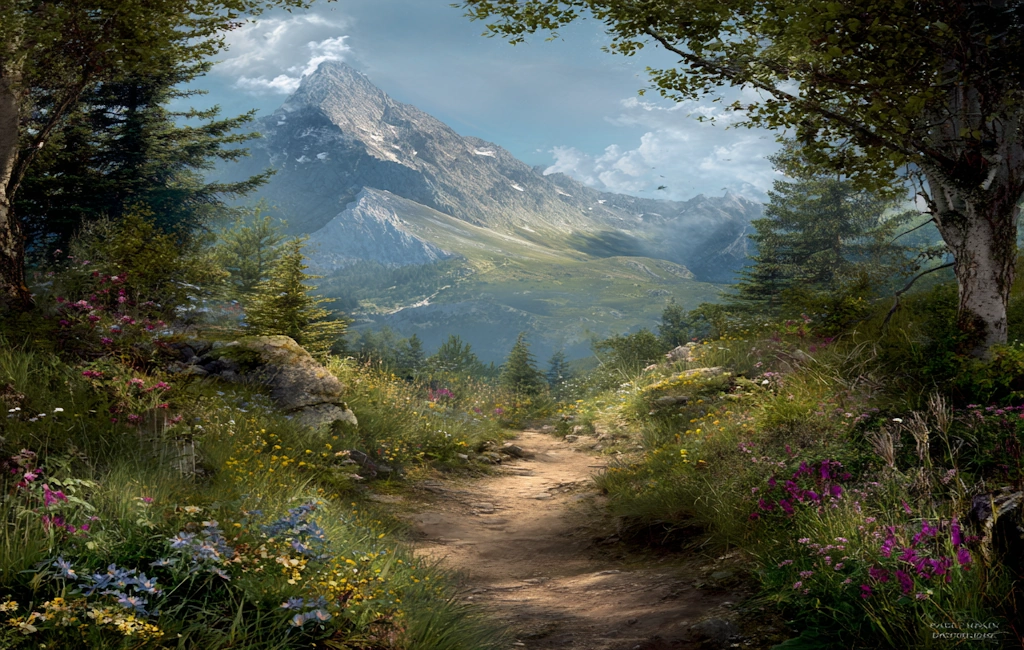
Mount Olympus via Prionia - Ascending the Throne of Zeus
Mount Olympus is not merely a mountain; it is a global icon of mythology, a sanctuary of biodiversity, and the ultimate pilgrimage for hikers in the Mediterranean. Rising abruptly from the shores of the Aegean Sea to a staggering 2,918 metres, it is the highest point in Greece and the second highest in the Balkans. The route via Prionia is the most celebrated and direct path to the summit, offering a profound transition from lush, shaded beech and fir forests to the stark, wind-swept limestone spires of the gods. This 18-kilometre journey is a test of endurance, requiring an ascent of 2,700 metres of cumulative elevation gain through a landscape that has inspired poets, theologians, and explorers for millennia. As a UNESCO Biosphere Reserve and Greece's first National Park, the mountain provides a pristine wilderness experience where the echoes of ancient myths meet the raw challenge of high-alpine mountaineering.
- Distance: 18.0 km return
- Duration: 2–3 days
- Season: June–September (optimal conditions; snow persists into July)
- Refuges: Spilios Agapitos (Refuge A), Giosos Apostolidis, Christos Kakkalos
- Highest point: Mytikas (2,918 m)
- Difficulty: Challenging (requires Class 3 scrambling for the final summit push)
- Direction: Out-and-back or semi-loop via the Plateau of the Muses
Overview
The ascent of Mount Olympus via the Prionia trailhead is a masterclass in vertical ecology. Starting at 1,100 metres at the Prionia springs, the trail follows the E4 European Long Distance Path, winding through a dense canopy of Bosnian pines (Pinus heldreichii) and Greek firs. This lower section is characterised by the sound of rushing water and the cool, damp air of the Enipeas Gorge. However, as the trail climbs toward the Spilios Agapitos refuge at 2,100 metres, the forest thins, revealing the massive limestone amphitheatres and jagged ridges that define the upper mountain. The scale of Olympus is deceptive; the peaks often remain hidden behind the "Zonaria" (the belts of rock) until the final stages of the climb, creating a sense of mounting anticipation as you rise above the clouds.
The mountain is famous for its "Throne of Zeus" (Stefani) and its highest peak, Mytikas, which translates to "nose" in Greek. The final approach to Mytikas involves the "Louki" couloir or the "Kakiskala" (Evil Staircase), both of which require steady nerves, a lack of vertigo, and basic scrambling skills. For those who prefer a less technical but equally rewarding experience, the secondary peak of Skolio (2,911 m) offers panoramic views of the entire range and the Thermaic Gulf without the exposed rock climbing. The weather on Olympus is notoriously fickle; the mountain creates its own microclimate, where morning sunshine can transform into violent afternoon thunderstorms within minutes, a phenomenon the ancients attributed to the wrath of Zeus.
Beyond the physical challenge, the Olympus experience is defined by the camaraderie of the mountain refuges. These stone-built sanctuaries serve as the social hubs of the mountain, where hikers from across the globe share stories over bowls of traditional bean soup (fasolada) and local herbal tea. Whether you are a seasoned mountaineer aiming for the technical spires or a dedicated hiker seeking the spiritual energy of the "Home of the Gods," Olympus delivers a sense of accomplishment that few other peaks can match. It is a journey that demands respect for the elements and rewards the persistent with a perspective that spans from the mythical past to the shimmering horizon of the modern Aegean.
History and Cultural Context
The history of Mount Olympus is inextricably linked to the dawn of Western civilisation. In Greek mythology, the mountain was the residence of the Twelve Olympian Gods, who lived in the deep folds of the peaks, hidden from mortal eyes by a permanent veil of clouds. Mytikas was considered the meeting place of the gods, while Stefani was the throne of Zeus himself. For centuries, the mountain was regarded as sacred and remained unclimbed, though ancient Greeks did ascend to the lower plateaus to leave offerings and perform sacrifices, as evidenced by archaeological finds of burnt bones and pottery at the peak of Agios Antonios.
The modern era of exploration began in the early 20th century. Despite numerous attempts by European climbers, the summit of Mytikas remained elusive until 2 August 1913. The historic first ascent was achieved by a local wild goat hunter from Litochoro, Christos Kakkalos, alongside Swiss climbers Frédéric Boissonnas and Daniel Baud-Bovy. Kakkalos, climbing barefoot and carrying the Swiss photographers' heavy equipment, led the way up the treacherous limestone crags, cementing his place in mountaineering history. He continued to guide climbers up the mountain well into his 80s, and today, one of the primary refuges on the Plateau of the Muses bears his name.
In 1938, Mount Olympus was declared Greece's first National Park, recognising its extraordinary biological, geological, and historical value. During World War II and the subsequent Greek Civil War, the mountain's rugged terrain provided a strategic stronghold for resistance fighters. Today, the mountain is a symbol of Greek national pride and a UNESCO Biosphere Reserve, protecting over 1,700 species of plants, many of which are endemic to the range. The cultural footprint of the mountain extends to the nearby town of Litochoro and the ancient site of Dion, where kings of Macedon once held Olympic Games in honour of Zeus at the foot of his mountain.
Want more background? Read extended notes on history and cultural context → Learn more
Seasonal Highlights and Weather Reality
The hiking season on Mount Olympus is relatively short, typically spanning from early June to late September. During this window, the refuges are fully staffed and the primary trails are clear of snow. However, even in mid-summer, the mountain demands caution. Snow patches can linger in the Louki couloir and on the northern slopes of the Plateau of the Muses until July, requiring an ice axe or micro-spikes for safe passage.
Summer (July and August) offers the most stable temperatures, with daytime highs at the refuges ranging from 15°C to 25°C. However, this is also the season of the "Olympus Storms." Almost daily, convective clouds build up over the peaks in the early afternoon, often resulting in intense lightning and heavy rain. Hikers are strongly advised to reach their destination or the summit by midday to avoid being caught on exposed ridges during a storm. The heat in the lower sections near Prionia can be intense, making an early morning start essential.
Autumn (September to early October) is arguably the most beautiful time to visit. The air is crisper, the visibility is often superior, and the crowds of mid-summer have thinned. The beech forests in the Enipeas Gorge turn vibrant shades of gold and orange. However, the first snowfalls can occur as early as late September, and temperatures at night frequently drop below freezing at the higher elevations.
Winter (November to May) transforms Mount Olympus into a serious mountaineering objective. The mountain receives heavy snowfall, and the risk of avalanches is significant, particularly on the steep slopes above Refuge A and the Plateau of the Muses. Winter ascents should only be attempted by experienced alpinists with full winter gear, including crampons, ice axes, and avalanche safety equipment. Most refuges are closed during this period, though some maintain emergency winter rooms that require advance coordination for access.
Recommended Itinerary
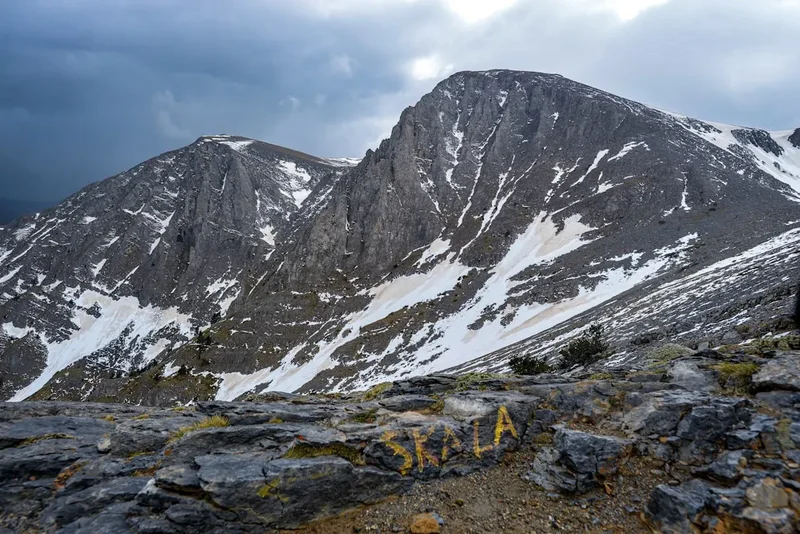
3-Day Mount Olympus Summit Itinerary
Day 1: Prionia to Spilios Agapitos (Refuge A)
- Distance: 6 km
- Elevation gain: 1,000 m
- Time: 3–4 hours
- Start at the Prionia trailhead (1,100 m), the highest point accessible by car
- Follow the well-marked E4 trail through dense forests of beech and Bosnian pine
- The trail is a steady, uphill grind on a well-maintained path with many wooden steps
- Pass several viewpoints looking back toward the Enipeas Gorge and the sea
- Arrive at Spilios Agapitos (Refuge A) at 2,100 m
- Enjoy the sunset from the refuge terrace, which offers spectacular views of the peaks above and the Aegean below
- Early dinner and rest are essential for the summit push the following morning
Day 2: Refuge A to Summit (Mytikas/Skolio) and Plateau of the Muses
- Distance: 7 km
- Elevation: 818 m gain to Mytikas, various descents
- Time: 6–8 hours
- Early start (6:00 AM) to beat the afternoon clouds and heat
- Climb the steep "Chondro Mesorrachi" ridge above the refuge
- Reach the junction at Skala (2,866 m), the gateway to the high peaks
- OPTION 1: Scramble the "Kakiskala" or "Louki" to the summit of Mytikas (2,918 m). This is exposed and requires a helmet
- OPTION 2: Take the easier path to Skolio (2,911 m) for incredible views without the technical scramble
- Traverse the "Zonaria" path—a spectacular horizontal trail beneath the massive cliffs of Stefani
- Arrive at the Plateau of the Muses (2,700 m) and stay at Giosos Apostolidis or Christos Kakkalos refuge
- The plateau offers a surreal, high-alpine atmosphere and the best views of the "Throne of Zeus"
Day 3: Plateau of the Muses to Prionia via Gortsia or Refuge A
- Distance: 10–12 km (depending on route)
- Elevation: 1,600 m descent
- Time: 5–6 hours
- Watch the sunrise over the Aegean from the edge of the plateau
- Descend via the "Koitoma" path back toward Refuge A, or take the longer, scenic route via the Gortsia ridge
- The Gortsia route passes through the "Petrostrouga" refuge and offers different perspectives of the mountain's northern face
- Rejoin the main trail or take a taxi/shuttle back to Prionia if you exited via Gortsia
- Alternatively, descend directly from Refuge A to Prionia for a faster exit
- Finish with a refreshing dip in the cold pools of the Enipeas River near the trailhead
Important Notes:
- Refuge bookings are mandatory and should be made months in advance for summer weekends
- Helmets are strongly recommended for the Mytikas scramble due to loose rock from other climbers
- Water is not available between Prionia and Refuge A; carry at least 2 litres
- The final 300 metres to Mytikas is a YDS Class 3 scramble; if you are uncomfortable with heights, stick to Skolio
- Check the weather forecast at the refuge before attempting the summit
- Mules are used to supply the refuges; always give them the right of way on the trail
Planning and Bookings
Book Your Trip
Everything you need to plan your journey
Accommodation
Find places to stay near Litochoro
Flights
Search flights to Litochoro
Essential Preparation
Ascending Mount Olympus is a significant physical undertaking that requires a high level of cardiovascular fitness. The 2,700 metres of cumulative elevation gain over two or three days is demanding on the lungs and the knees. Hikers should be comfortable with long days of uphill walking on rocky, uneven terrain. If you plan to summit Mytikas, you should also have a basic comfort level with exposure and scrambling.
Litochoro is the essential base for any Olympus expedition. This charming town sits at the foot of the mountain and provides all necessary amenities. It is well-connected to Thessaloniki by bus and train. Most hikers stay in Litochoro the night before their climb to organise transport to Prionia and store excess luggage. There are several outdoor shops in town where you can rent helmets or buy last-minute supplies like gas canisters or trekking poles.
Trail Accommodation
The refuge system on Mount Olympus is well-organised and essential for a multi-day trek. There are several refuges, but the most critical for the Prionia route are Spilios Agapitos, Giosos Apostolidis, and Christos Kakkalos.
Spilios Agapitos (Refuge A): Located at 2,100 m, this is the most popular refuge. It has 110 beds, a large restaurant, and a terrace with incredible views. It is the primary base for summit attempts. Giosos Apostolidis & Christos Kakkalos: Located on the Plateau of the Muses at 2,700 m. These are smaller, more intimate refuges that provide access to the northern faces and the "Throne of Zeus."
Hut Facilities:
- Dormitory-style bunk beds (blankets provided, but a silk liner or light sleeping bag is required)
- Shared bathrooms with cold water only (showers are rare and usually cold)
- Full-service kitchens serving breakfast, lunch, and dinner (famous for bean soup and spaghetti)
- Bottled water, snacks, and beer available for purchase
- Limited electricity (usually solar-powered, charging phones may be restricted to certain hours)
- No WiFi and very limited mobile signal
Booking Requirements:
- Bookings must be made directly with each refuge via their respective websites or email
- During July and August, weekends sell out months in advance
- A deposit is usually required to secure your bed
- Costs: Approximately €15–€20 per night for a bed; meals are extra (budget €30–€40 per day for food and water)
Required Gear
- Trekking boots - Sturdy, with good grip and ankle support for rocky limestone
- Climbing helmet - Essential for Mytikas to protect against rockfall in the couloirs
- Waterproof jacket - High-quality shell for sudden afternoon thunderstorms
- Insulating layers - Fleece or down jacket; temperatures at 2,900 m can be near freezing even in summer
- Trekking poles - Highly recommended to save your knees during the 2,700 m descent
- Backpack - 30–40L is sufficient for a refuge-based trip
- Headlamp - Essential for early morning starts and navigating the refuge at night
- Sun protection - High SPF sunscreen, sunglasses, and a hat (the limestone reflects intense UV)
- Sleeping bag liner - Mandatory for hygiene in refuge bunks
What to Bring
- Water - Start with 2–3 litres; you can refill (buy) at the refuges
- Cash - Most refuges do not accept credit cards; bring enough for all meals, water, and accommodation
- Personal First Aid - Blister plasters (moleskin), ibuprofen, and any personal medications
- High-energy snacks - Nuts, dried fruit, and energy bars for the summit push
- Toiletries - Biodegradable soap, toothbrush, and a small travel towel
- Earplugs - Essential for sleeping in crowded dormitories
- Offline Maps - Download GPS maps (e.g., Gaia, AllTrails) as signal is unreliable
- Power bank - To keep your phone/camera charged as refuge outlets are limited
Permits
Currently, there is no formal permit fee required to enter Mount Olympus National Park or to hike the trail from Prionia. Access is free to the public. However, this does not mean the mountain is unregulated. The National Park authorities and the Hellenic Mountaineering and Climbing Federation (EOOA) manage the trails and refuges to ensure safety and conservation.
Registration and Regulations:
- While no permit is needed, it is highly recommended to leave your itinerary with your accommodation in Litochoro or sign the guest book at the refuges
- Camping is officially prohibited within the National Park boundaries, except in designated areas near some refuges. This is strictly enforced to protect the fragile ecosystem and prevent forest fires
- The use of drones is restricted and requires prior authorisation from the Civil Aviation Authority and the National Park management
- If you are part of an organised group or commercial tour, different regulations may apply, and your guide will handle the necessary paperwork
Refuge Bookings as "De Facto" Permits: Because camping is restricted, your refuge booking serves as your permission to stay on the mountain overnight. Without a confirmed booking, you may be turned away if the refuge is full, forcing a dangerous descent in the dark. Always carry a digital or printed copy of your booking confirmation.
Future Changes: There have been ongoing discussions within the Greek government regarding the introduction of an entrance fee for the National Park to fund trail maintenance and conservation efforts. Hikers should check the official National Park website or local tourist offices in Litochoro for the most up-to-date information before their trip.
Other Activities in the Area
The region surrounding Mount Olympus offers a wealth of cultural and natural attractions that complement the hiking experience:
- Ancient Dion: Located at the foot of the mountain, this was the sacred city of the Macedonians. Explore the archaeological park with its ancient theatres, baths, and the Sanctuary of Zeus, where Alexander the Great offered sacrifices before his Asian campaign.
- Enipeas Gorge Hike: If you have an extra day, hike the full Enipeas Gorge from Litochoro to Prionia (or vice versa). It features beautiful wooden bridges, the Monastery of Agios Dionysios, and the "Bat Cave."
- Plaka Litochorou: After the heat of the mountain, head to the nearby beaches of Plaka for a swim in the Aegean Sea. The contrast of looking up at the snow-capped peaks while swimming in turquoise water is unforgettable.
- Old Panteleimonas: A beautifully restored stone village on the slopes of Lower Olympus, offering traditional architecture, artisan shops, and incredible views of the Thermaic Gulf and the Platamonas Castle.
- Canyoning in Orlias: For adrenaline seekers, the Orlias stream on the eastern slopes offers world-class canyoning with natural slides and deep emerald pools.
- Vergina (Aigai): A 1.5-hour drive away, this UNESCO site contains the Royal Tombs of the Macedonian kings, including the tomb of Philip II, father of Alexander the Great. It is one of the most significant archaeological sites in Greece.
Safety and Conditions
The Mytikas Scramble: The final ascent to Mytikas via the Louki couloir or Kakiskala is the most dangerous part of the trek. It is a Class 3 scramble with significant exposure. Loose rock is a major hazard; even a small stone dislodged by a climber above can cause serious injury. Helmets are non-negotiable. If the rock is wet or if there is high wind, do not attempt the summit. Many accidents occur when hikers push beyond their technical abilities or ignore deteriorating weather.
Weather and Lightning: Mount Olympus is notorious for sudden, violent thunderstorms. Lightning is a lethal threat on the exposed ridges and peaks. If you see clouds building or hear distant thunder, descend immediately. The "Zonaria" path and the summits are the worst places to be during a storm. Aim to be off the high peaks by 1:00 PM.
Hydration and Heat: The lower sections of the trail can be extremely hot in summer. There is no water between Prionia and Refuge A. Dehydration and heat exhaustion are common issues. Carry more water than you think you need and use electrolyte replacements. The water at the refuges is safe to drink but must be purchased as it is often flown in or piped from limited springs.
Navigation: The main trails (E4) are well-marked with red and yellow signs. However, in thick fog—which can roll in rapidly—it is easy to lose the trail on the Plateau of the Muses or the rocky summit ridges. Always carry a GPS device or a reliable offline map app. Do not attempt to shortcut the switchbacks, as this causes erosion and can lead you into impassable terrain.
Emergency Contacts: The international emergency number is 112. The Hellenic Rescue Team (HRT) has a base in Litochoro and is highly experienced in Olympus rescues. However, helicopter evacuations are difficult and weather-dependent. Ensure you have travel insurance that specifically covers mountain rescue and high-altitude hiking.
Side Trips and Points of Interest
The Throne of Zeus (Stefani): While Mytikas is the highest, Stefani (2,909 m) is the most visually striking. Its sheer, curved face resembles a giant throne. The climb to the top of Stefani is more technical than Mytikas (Class 4/5) and should only be attempted by experienced climbers with ropes. However, walking beneath its massive walls on the Zonaria path is a highlight for every hiker.
Plateau of the Muses: This high-alpine plateau at 2,700 m is one of the most atmospheric places in Greece. It is a flat, grassy expanse surrounded by the mountain's highest peaks. It is the perfect place to spend a night, offering a sense of isolation and grandeur that is hard to find elsewhere. The sunrise from the "Portes" (the gates) of the plateau is legendary.
Agios Antonios Peak: A short detour from the main path to the summits leads to Agios Antonios (2,817 m). This peak houses a weather station and was the site of an ancient sanctuary. It offers the best perspective of the "Megala Kazania" (Great Cauldrons)—the massive glacial cirques that drop precipitously from the high ridges.
The Cave of Ithakisios: Located near the Plateau of the Muses, this small cave was used as a summer studio by the famous Greek painter Vasileios Ithakisios, who spent decades living on the mountain and painting its peaks. It is a testament to the enduring artistic inspiration provided by Olympus.
Monastery of Agios Dionysios: Located in the Enipeas Gorge, the old monastery was destroyed by the Nazis in 1943 but has been partially restored. It is a peaceful, spiritual site that provides a glimpse into the monastic history of the mountain. The nearby "Holy Cave" where the saint lived as a hermit is also worth a visit.
Leave No Trace
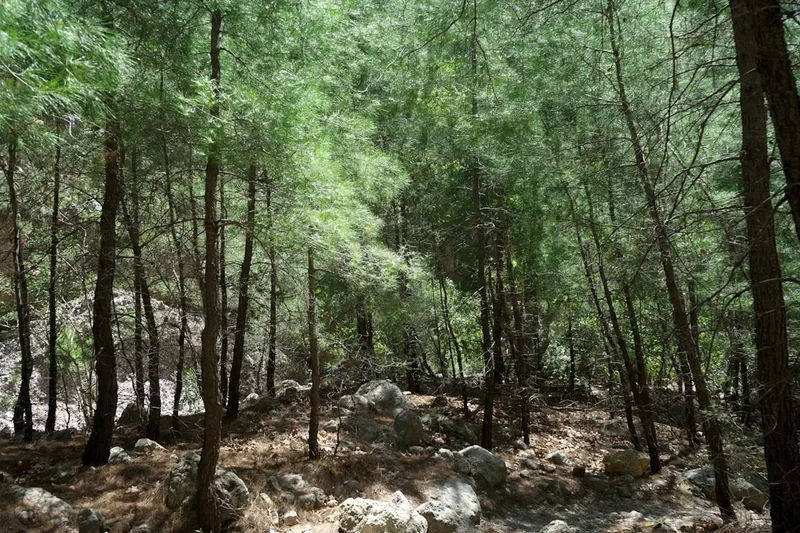
Mount Olympus is a fragile ecosystem under significant pressure from its popularity. As a UNESCO Biosphere Reserve, it requires the highest level of care from every visitor. The endemic flora, such as the Jankaea heldreichii (a glacial relict plant), exists nowhere else on Earth and can be destroyed by a single misplaced footstep.
Principles for Olympus:
- Pack it in, pack it out: There is no waste collection on the mountain. Every piece of litter, including fruit peels and cigarette butts, must be carried back down to Litochoro.
- Respect the wildlife: You may encounter Balkan chamois (wild goats) on the higher slopes. Observe them from a distance and never attempt to feed them.
- Stay on the trail: Shortcutting switchbacks causes severe soil erosion and destroys rare alpine plants. Stick to the established E4 and marked paths.
- No fires: The risk of forest fire is extreme in the Mediterranean summer. Fires are strictly prohibited. Use only established gas stoves at the refuges.
- Water conservation: Water is a precious resource on the limestone heights. Use it sparingly at the refuges and never use soap in the natural pools of the Enipeas River.
- Quiet please: The mountain is a sanctuary. Avoid loud music or shouting, allowing others to enjoy the natural sounds of the wind and the birds.
By following these principles, you ensure that the "Home of the Gods" remains as pristine for future generations as it was for the ancient pilgrims. Walk with humility and leave no trace of your passage.