
Mount Kilimanjaro Uhuru Peak (Marangu Route) - The Roof of Africa
Mount Kilimanjaro is not merely a mountain; it is a colossal stratovolcano that stands as the highest free-standing mountain in the world and the highest point on the African continent. Rising 5,895 metres above the Tanzanian plains, the "Roof of Africa" offers one of the most accessible high-altitude mountaineering experiences on Earth. The Marangu Route, affectionately known as the "Coca-Cola Route," is the oldest and most established path to the summit. It holds a unique distinction as the only route on the mountain that provides permanent hut accommodation, offering a degree of comfort and shelter from the elements that other camping-based routes cannot match. This 72-kilometre journey is a profound traverse through five distinct ecological zones, from lush tropical rainforests to the stark, frozen beauty of the arctic summit.
- Distance: 72.0 km (round trip)
- Duration: 5–6 days (6 days strongly recommended for acclimatisation)
- Season: December–March and June–October (dry seasons)
- Huts: Mandara, Horombo, and Kibo Huts (mandatory accommodation)
- Highest point: Uhuru Peak (5,895 m)
- Difficulty: Challenging (high altitude is the primary obstacle)
- Direction: Out-and-back (same path for ascent and descent)
Overview
The Marangu Route is often perceived as the "easiest" path to Uhuru Peak due to its gradual slope and the presence of sleeping huts. However, this reputation can be deceptive. While the gradient is indeed more manageable than the steep scrambles of the Umbwe or Machame routes, the Marangu Route has a lower success rate statistically, primarily because many trekkers attempt to complete it in just five days, failing to allow their bodies sufficient time to acclimatise to the thinning air. When approached with a six-day itinerary, including a vital acclimatisation day at Horombo Hut, the Marangu Route becomes a majestic and rewarding pilgrimage to the sky.
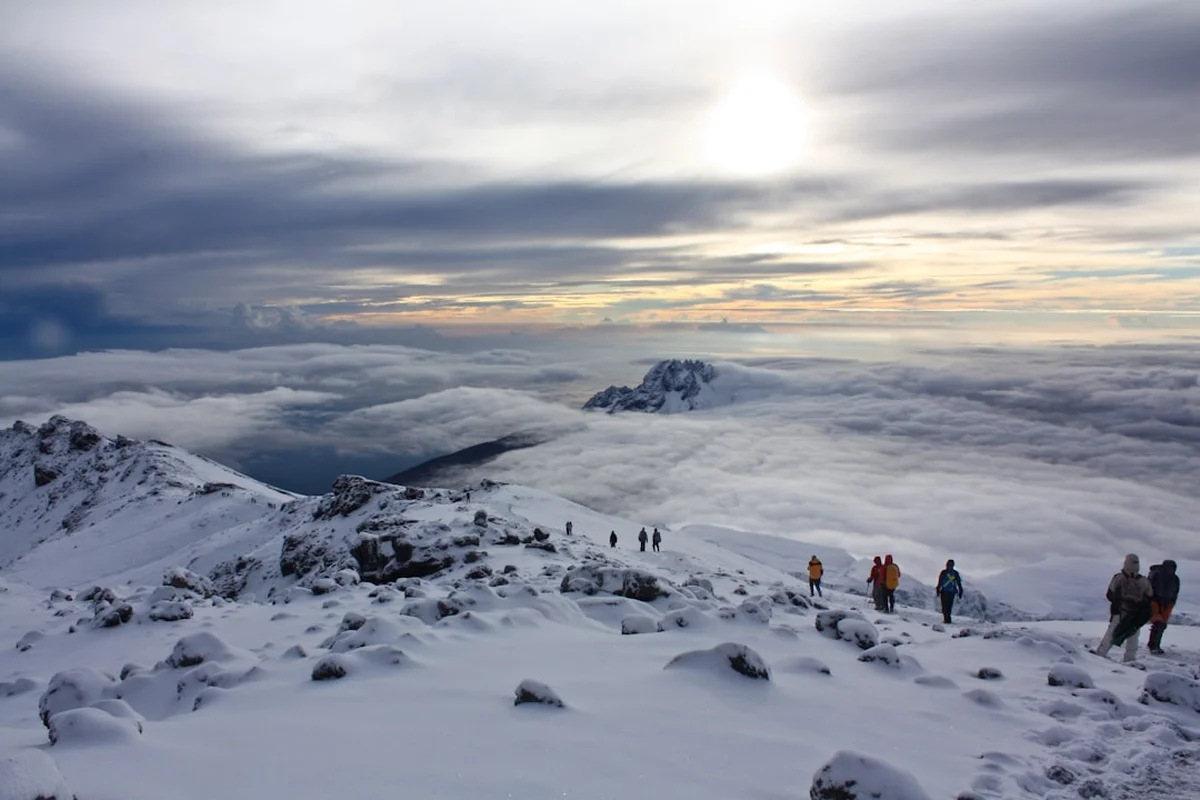
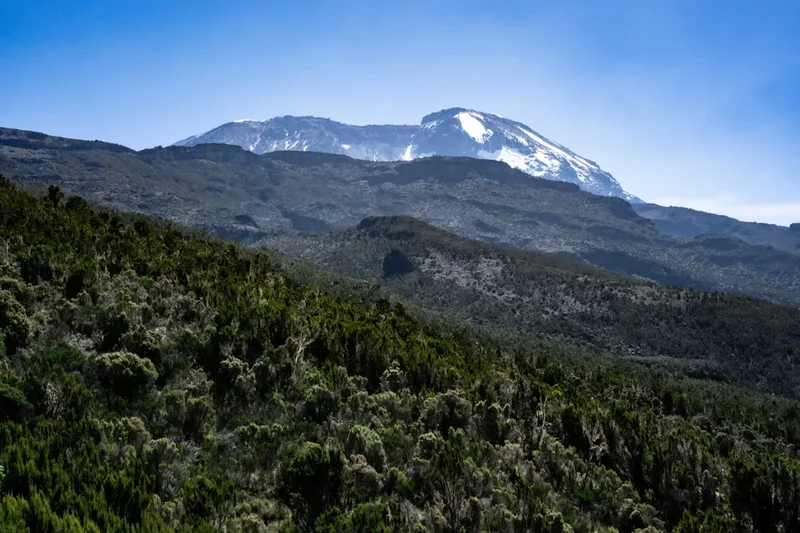
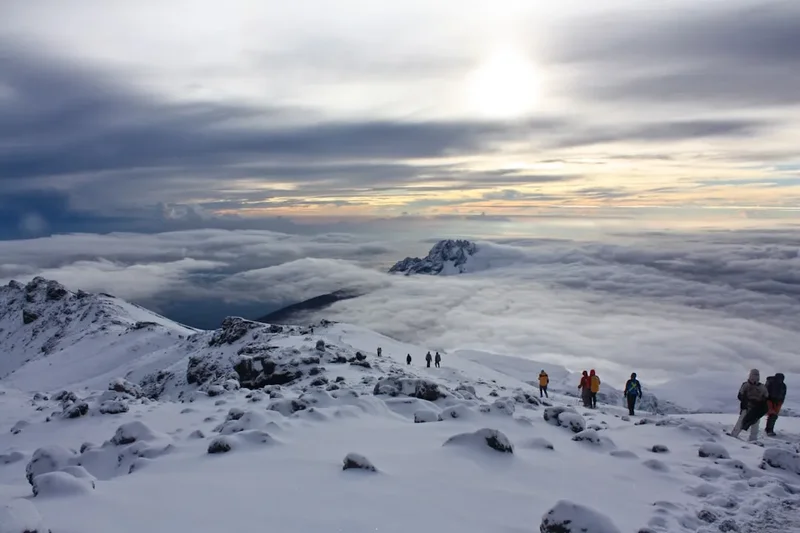
The journey begins at the Marangu Gate (1,860 m), where the air is thick with the humidity of the montane rainforest. As you ascend, the landscape undergoes a dramatic transformation. The dense canopy of the forest gives way to the giant lobelias and groundsels of the moorland zone. Higher still, the vegetation thins into the alpine desert—a vast, lunar-like landscape of volcanic scree and silence. Finally, the trek culminates in the arctic zone, where glaciers cling to the crater rim and the oxygen levels are half of those at sea level. The final push to the summit is a test of mental fortitude and physical endurance, typically undertaken in the dark of night to reach Gilman’s Point or Uhuru Peak as the sun rises over the vast expanse of East Africa.
Unlike other routes that require a full camping crew to pitch tents each evening, the Marangu Route’s hut system provides a communal atmosphere. Trekkers from around the world gather in the dining halls of Mandara, Horombo, and Kibo, sharing stories and encouragement. This social aspect, combined with the relative luxury of a mattress and a roof, makes the Marangu Route a classic choice for those seeking the Kilimanjaro experience without the rigours of wilderness camping. However, the challenge remains immense; the mountain demands respect, careful preparation, and a "pole pole" (slowly, slowly) approach to ensure a safe and successful summit.
History and Cultural Context
The name "Kilimanjaro" itself is shrouded in mystery, with various interpretations from local languages. In Swahili, it is often thought to mean "Mountain of Greatness" or "Mountain of Whiteness," referring to its iconic snow-capped peak. For the local Chagga people who inhabit the lower slopes, the mountain is a sacred entity, a source of water, and a central pillar of their cultural identity. Their ancestors have lived in the shadow of the volcano for centuries, developing sophisticated irrigation systems and coffee plantations that still thrive today.
The history of Kilimanjaro’s exploration is a tale of colonial ambition and local expertise. The first recorded attempt by a European was in 1861 by Baron Carl Claus von der Decken, but it wasn't until 1889 that the summit was finally reached. Hans Meyer, a German geographer, and Ludwig Purtscheller, an Austrian mountaineer, achieved the first ascent of Uhuru Peak. Crucially, they were guided by Yohani Kinyala Lauwo, a local man from Marangu who reportedly lived to be 125 years old. Lauwo’s contribution is a testament to the indispensable role that local guides have played since the very beginning of Kilimanjaro trekking.
The Marangu Route was the original commercial path, used by early explorers and the first waves of tourists in the mid-20th century. It was the route that established the infrastructure of the mountain, including the construction of the huts that still stand today (though they have been modernised over the decades). In 1973, Kilimanjaro National Park was established, and in 1987, it was designated a UNESCO World Heritage site, recognising its outstanding natural beauty and its role as a critical habitat for numerous endangered species. Today, the mountain stands as a symbol of Tanzanian national pride and a global icon of adventure.
Want more background? Read extended notes on history and cultural context → Learn more
Seasonal Highlights and Weather Reality
Kilimanjaro’s proximity to the equator means it does not experience traditional four-season weather. Instead, the climate is dictated by wet and dry seasons. Choosing the right window is critical for both safety and the likelihood of reaching the summit.
The Dry Seasons (Best Time to Trek):
- January to March: This is the warmest period on the mountain. The skies are generally clear, though occasional afternoon clouds are common. The visibility is excellent, and the temperatures at the summit, while still well below freezing, are slightly more bearable. This is a popular time for trekking.
- June to October: This is the longest dry season. The weather is stable, and the chances of rain are minimal. However, it is also the "winter" period, meaning temperatures are colder, especially at night. July and August are the busiest months on the Marangu Route.
The Wet Seasons (Challenging Conditions):
- April to May (The "Long Rains"): This is the peak of the monsoon season. Heavy rain is frequent on the lower slopes, and snow can be deep on the summit. The Marangu Route becomes very muddy, and visibility is often poor. Trekking during this time is only recommended for very experienced hikers who don't mind getting wet.
- November to early December (The "Short Rains"): These rains are less predictable and usually manifest as afternoon thunderstorms. While trekking is possible, you should be prepared for daily rain and obscured views.
Regardless of the season, weather on Kilimanjaro is notoriously unpredictable. You can experience four seasons in a single day. In the rainforest, temperatures can be a humid 25°C, while at Kibo Hut and the summit, they can plummet to -15°C or -20°C with wind chill. Proper layering is the only way to manage these extremes.
Recommended Itinerary
6-Day Marangu Route Itinerary
Day 1: Marangu Gate to Mandara Hut
- Distance: 8 km
- Elevation gain: 840 m
- Time: 4–5 hours
- Start at Marangu Gate (1,860 m) for registration and briefing
- Ascend through a dense, vibrant montane rainforest
- Look for blue monkeys and black-and-white colobus monkeys in the canopy
- Arrive at Mandara Hut (2,700 m), a collection of A-frame wooden huts
- Optional short walk to Maundi Crater for views of the Kenyan border
- The first day is a gentle introduction, designed to get the legs moving and the lungs adjusted to the humidity
Day 2: Mandara Hut to Horombo Hut
- Distance: 12 km
- Elevation gain: 1,020 m
- Time: 6–8 hours
- Leave the forest behind as the trail enters the heath and moorland zone
- Pass through the "Giant Heather" zone, where shrubs can reach 5 metres in height
- First clear views of the twin peaks: Kibo (the summit) and the jagged Mawenzi
- Arrive at Horombo Hut (3,720 m), the largest hut complex on the mountain
- The air begins to feel noticeably thinner; maintaining a slow pace is essential
Day 3: Horombo Hut (Acclimatisation Day)
- Distance: 5 km (round trip)
- Elevation gain: 400 m (ascent and descent)
- Time: 3–4 hours
- A critical day for physiological adjustment to high altitude
- Hike towards Mawenzi Hut, passing the striking "Zebra Rocks" (volcanic rocks with mineral stripes)
- Reach an altitude of approximately 4,100 m before descending back to Horombo for lunch
- "Walk high, sleep low" is the golden rule of mountaineering
- Spend the afternoon resting, hydrating, and allowing the body to produce more red blood cells
Day 4: Horombo Hut to Kibo Hut
- Distance: 10 km
- Elevation gain: 980 m
- Time: 6–7 hours
- The trail crosses the "Saddle," a vast, high-altitude desert between Mawenzi and Kibo
- The landscape is stark, windy, and devoid of significant vegetation
- The summit of Kibo looms ahead, appearing deceptively close
- Arrive at Kibo Hut (4,700 m), a stone structure at the base of the summit cone
- Early dinner and sleep (around 6:00 PM) in preparation for the midnight summit push
Day 5: Kibo Hut to Uhuru Peak, then descent to Horombo Hut
- Distance: 16 km (6 km up, 10 km down)
- Elevation: 1,195 m gain to summit, 2,175 m descent
- Time: 10–15 hours
- Wake up at 11:00 PM; start the ascent at midnight by headlamp
- Steep, zig-zagging climb up heavy volcanic scree to Gilman’s Point (5,685 m) on the crater rim
- Continue along the rim, passing Stella Point, to reach Uhuru Peak (5,895 m) at sunrise
- Celebrate at the highest point in Africa before beginning the long descent
- Return to Kibo Hut for a short rest and brunch, then continue down to Horombo Hut (3,720 m)
- This is the most physically and mentally demanding day of the trek
Day 6: Horombo Hut to Marangu Gate
- Distance: 20 km
- Elevation loss: 1,860 m
- Time: 5–7 hours
- A long but steady descent back through the moorland and rainforest
- The air becomes richer and warmer with every kilometre
- Arrive at Marangu Gate to sign out and receive summit certificates (Gold for Uhuru, Green for Gilman’s)
- Transfer back to Moshi for a well-deserved shower and celebration
Important Notes:
- The 6-day itinerary is highly recommended over the 5-day version to increase summit success rates
- Huts provide mattresses and pillows, but a high-quality sleeping bag is still required
- All meals are prepared by the mountain crew; you only carry a daypack
- Water is collected from mountain streams and should be treated or filtered
- The "Saddle" section can be extremely windy and cold; have windproof layers ready
Planning and Bookings
Book Your Trip
Everything you need to plan your journey
Accommodation
Find places to stay near Moshi
Flights
Search flights to Moshi
Essential Preparation
Climbing Kilimanjaro requires significant logistical coordination. Unlike many independent treks, Tanzanian law mandates that all climbers must be accompanied by a licensed guide. This means you must book your trek through a registered tour operator. When choosing an operator, prioritise those who are members of the Kilimanjaro Porters Assistance Project (KPAP), which ensures fair wages and ethical treatment of the mountain crew.
Physical preparation should begin at least three to four months in advance. Focus on cardiovascular endurance (hiking, running, cycling) and leg strength. Most importantly, spend time hiking in the boots you intend to wear on the mountain to avoid blisters. Mental preparation is equally important; the summit night is a test of grit, and being prepared for discomfort is part of the process.
Moshi is the primary base for Kilimanjaro treks. It is a vibrant town with a range of accommodation from hostels to luxury hotels. Most operators include airport transfers from Kilimanjaro International Airport (JRO) and pre-trek briefings in Moshi as part of their package.
Trail Accommodation
The Marangu Route is unique for its hut system, which provides a more structured and sheltered environment than the tents used on other routes. These huts are managed by the Kilimanjaro National Park (KINAPA).
Hut Facilities:
- Mandara and Horombo Huts consist of several small A-frame wooden huts, each sleeping 4 to 8 people on bunk beds with foam mattresses.
- Kibo Hut is a larger stone dormitory-style building with bunk beds.
- Communal dining halls where meals are served by your crew.
- Basic solar lighting is usually available in the dining halls, but not always in the sleeping huts.
- Toilets are separate blocks; they range from long-drops to basic flush toilets (though flush toilets often fail in freezing temperatures).
- Water is piped in from streams at Mandara and Horombo; at Kibo, water must be carried up by porters.
What Huts Don't Provide:
- Bedding (you must bring your own sleeping bag).
- Heating (the huts can be very cold, especially Kibo Hut).
- Electricity for charging devices (bring power banks).
- Showers (porters provide a small bowl of warm water for washing each morning).
- Privacy (you will be sharing sleeping quarters with other trekkers).
Booking Requirements:
- Hut fees are included in the overall price of your trek package.
- Your tour operator handles the reservations with the National Park.
- Because hut capacity is limited, it is advisable to book your trek 4–6 months in advance, especially for the peak seasons of July–August and January–February.
Required Gear
- Mountaineering Boots: Waterproof, well-insulated, and broken in. Ankle support is vital for the scree slopes.
- Layered Clothing System: Moisture-wicking base layers (merino wool), insulating mid-layers (fleece or down), and a waterproof/windproof outer shell (Gore-Tex).
- Down Jacket: A heavy-duty, high-loft down jacket is essential for summit night when temperatures are extreme.
- Sleeping Bag: A four-season bag rated to at least -15°C or -20°C.
- Daypack: 25–35 litres to carry your water, snacks, extra layers, and camera. Your main duffel bag (up to 15 kg) will be carried by a porter.
- Headlamp: Essential for summit night and navigating the huts at night. Bring extra batteries.
- Trekking Poles: Highly recommended to reduce impact on knees during the long descent.
- Gloves and Headwear: Lightweight liners, heavy waterproof mittens, a warm beanie, and a sun hat.
What to Bring
- Water Storage: A 2–3 litre hydration bladder (Camelbak) plus a 1-litre Nalgene bottle. Note: Bladder tubes can freeze on summit night; bring an insulated sleeve.
- Water Treatment: Purification tablets (e.g., Aquatabs) or a portable filter.
- High-Energy Snacks: Energy bars, nuts, dried fruit, and hard sweets for the summit push when appetite often decreases.
- Personal First Aid Kit: Blister pads (Compeed), ibuprofen, paracetamol, antacids, and any personal prescriptions.
- Sun Protection: High SPF sunscreen, lip balm with SPF, and Category 4 sunglasses to prevent snow blindness.
- Toiletries: Wet wipes (your "mountain shower"), hand sanitiser, biodegradable soap, and a quick-dry towel.
- Medication for Altitude: Consult your doctor about Acetazolamide (Diamox).
- Power Bank: To keep your phone and camera charged in the cold.
Permits
Access to Kilimanjaro is strictly regulated by Kilimanjaro National Park (KINAPA). You cannot simply show up and hike; you must be part of an organised group with a licensed guide. The "permit" is essentially the payment of various park fees, which are almost always handled by your tour operator and included in your total trip cost.
Breakdown of Fees (Subject to change by KINAPA):
- Conservation Fees: Approximately US$70 per person per day.
- Hut Fees: Approximately US$60 per person per night.
- Rescue Fees: A mandatory US$20 per person per trip.
- Guide and Porter Fees: Set daily rates for the crew.
- Value Added Tax (VAT): 18% tax applied to all park fees.
Important Considerations:
- Tipping: While not a "permit" fee, tipping the guides, porters, and cooks is a standard and expected part of the Kilimanjaro culture. Budget approximately US$250–US$350 per trekker for the total tip pool.
- Passport: You must provide your passport details to your operator for the registration process at the Marangu Gate.
- Insurance: You must have travel insurance that specifically covers high-altitude trekking up to 6,000 metres and emergency helicopter evacuation.
Other Activities in the Area
Tanzania offers some of the world's most iconic travel experiences. Many trekkers choose to combine their climb with other adventures:
- Serengeti and Ngorongoro Safari: After the cold of the mountain, a 3-to-5-day safari is the perfect reward. Witness the Great Migration or the dense wildlife of the Ngorongoro Crater, a UNESCO-listed volcanic caldera.
- Zanzibar Archipelago: Fly from Arusha or Kilimanjaro Airport to the "Spice Island." Relax on white-sand beaches, explore the historic Stone Town, and enjoy the warm waters of the Indian Ocean.
- Moshi Coffee Tours: Visit a local Chagga village on the lower slopes of Kilimanjaro to learn about the coffee-making process, from bean to cup, and enjoy a traditional lunch.
- Materuni Waterfalls: A beautiful day trip from Moshi involving a hike through coffee and banana plantations to a spectacular 80-metre waterfall.
- Chemka Hot Springs: Located between Moshi and Arusha, these geothermal turquoise pools are surrounded by lush trees and are perfect for a post-climb soak.
Safety and Conditions
Altitude Sickness (AMS): The greatest risk on Kilimanjaro is Acute Mountain Sickness. Because the Marangu Route ascends relatively quickly, AMS is common. Symptoms include headache, nausea, dizziness, and loss of appetite. The key to prevention is "pole pole" (walking slowly), drinking 3–4 litres of water daily, and choosing the 6-day itinerary for better acclimatisation. If symptoms become severe, the only cure is immediate descent.
HAPE and HACE: High Altitude Pulmonary Oedema (fluid in the lungs) and High Altitude Cerebral Oedema (swelling of the brain) are life-threatening conditions. Your guides are trained to monitor your oxygen saturation levels and heart rate daily using a pulse oximeter. They will look for signs of confusion, extreme breathlessness at rest, or loss of coordination. If these occur, emergency evacuation is mandatory.
Hypothermia: On summit night, temperatures can be lethal if you are not properly dressed. Wet clothing (from sweat or rain) increases the risk. Ensure you have high-quality moisture-wicking base layers and a windproof outer shell. If you feel yourself becoming excessively cold or shivering uncontrollably, inform your guide immediately.
The "Scree" Descent: The descent from the summit to Kibo Hut is on loose volcanic scree. It is very easy to slip or twist an ankle. Use trekking poles and follow your guide’s instructions on "scree skiing" (sliding down on your heels) to protect your joints.
Emergency Evacuation: In the event of a serious medical issue, porters will use a "Kilimanjaro stretcher" (a one-wheeled metal gurney) to transport you down to a point where a vehicle or helicopter can reach you. Ensure your insurance covers these costs.
Side Trips and Points of Interest
Maundi Crater: Located just a 15-minute walk from Mandara Hut, this small volcanic vent offers the first real panoramic views of the trek. On a clear day, you can see across the border into Kenya and view Lake Jipe and Lake Chala. It is a perfect short excursion on the afternoon of Day 1 to help with acclimatisation.
Zebra Rocks: These striking geological formations are found at approximately 4,000 metres, usually visited during the acclimatisation hike from Horombo Hut. The rocks feature distinct black and white vertical stripes, caused by mineral-rich water (containing calcium and carbon) flowing over the volcanic rock and reacting with the air. They are a favourite spot for photography.
The Saddle: This is the high-altitude plateau that connects the peaks of Mawenzi and Kibo. It is a vast, eerie landscape that feels like walking on the moon. The lack of vegetation and the sheer scale of the surrounding peaks make it one of the most atmospheric parts of the Marangu Route. It is also a prime location to see the "High Altitude Desert" ecological zone in its purest form.
Gilman’s Point: Located at 5,685 metres, this is the point where the Marangu Route reaches the crater rim. For many, reaching Gilman’s Point is a significant achievement in itself, and it is the point at which you are officially recognised as having "climbed Kilimanjaro" with a green certificate, even if you do not continue to the true summit at Uhuru Peak.
Leave No Trace
Kilimanjaro is a fragile ecosystem under pressure from high volumes of trekkers. It is our collective responsibility to ensure the mountain remains pristine for future generations. The "Leave No Trace" principles are strictly enforced by the National Park authorities.
Your responsibility as a trekker:
- Waste Management: Pack out everything you pack in. This includes micro-trash like sweet wrappers and cigarette butts. Your tour operator is responsible for carrying down all group waste, but you should ensure your personal trash ends up in the designated bags.
- Stay on the Trail: The moorland and alpine desert zones have very fragile soils. Walking off-trail causes erosion and destroys slow-growing plants like the giant lobelias.
- Respect Wildlife: Do not feed the monkeys or birds. Human food disrupts their natural diet and can make them aggressive or dependent on trekkers.
- Water Protection: Do not use soap or detergents directly in the mountain streams. If you need to wash, do so at least 30 metres away from any water source using biodegradable soap.
- No Fires: Fire is a major threat to the mountain’s vegetation. Smoking is discouraged and should only be done in designated areas at the huts, with all butts carefully extinguished and carried out.
- Human Waste: Use the toilets provided at the huts. If you are caught short on the trail, move well away from the path and water sources, dig a small hole, and pack out your toilet paper in a "poop bag."
By following these guidelines, you help preserve the unique biodiversity of Kilimanjaro and respect the sacred nature of the mountain for the local people.