
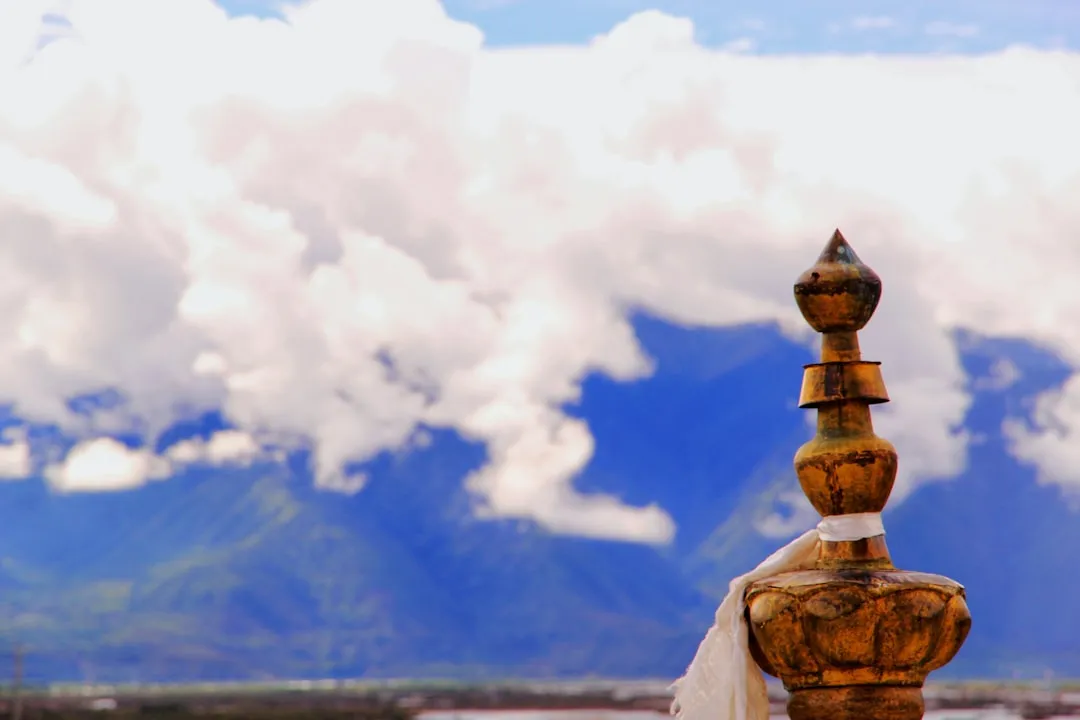
Mount Kailash Kora - The Sacred Circuit of Tibet
The Mount Kailash Kora is not merely a trek; it is one of the most profound spiritual journeys on Earth. Located in the remote Ngari Prefecture of western Tibet, this 52-kilometre circuit circles Mount Kailash (6,638 metres), a peak so sacred that it has never been climbed. For Hindus, Buddhists, Jains, and followers of Bon, this "Precious Jewel of Snows" represents the centre of the universe, the axis mundi where heaven meets earth. The journey takes pilgrims and adventurers through a high-altitude landscape of stark, lunar beauty, crossing the formidable Dolma La Pass at 5,630 metres. This is a path of physical endurance and spiritual purification, where the air is thin, the silence is absolute, and the devotion of the pilgrims is palpable in every step.
- Distance: 52.0 km loop
- Duration: 3 days
- Season: May to October (Saga Dawa Festival in June is a peak cultural event)
- Accommodation: Basic guesthouses and monastery hostels
- Highest point: Dolma La Pass (5,630 m)
- Difficulty: Challenging (primarily due to extreme altitude and remote conditions)
- Direction: Clockwise for Hindus, Buddhists, and Jains; Anti-clockwise for Bon followers
Overview
The Mount Kailash Kora is a masterclass in high-altitude trekking, set against the backdrop of the Transhimalaya. The route begins and ends in the dusty outpost of Darchen (4,670 metres), a town that serves as the gateway to the sacred mountain. Unlike many Himalayan treks that follow lush valleys, the Kailash Kora is a journey through a high-desert environment. The landscape is defined by vast, open plains, turquoise glacial lakes, and the towering, symmetrical pyramid of Kailash itself, which dominates the horizon with its four distinct faces of granite and ice.
The trek is traditionally completed in three days, though some devout pilgrims perform the entire circuit in a single, grueling 15-hour day. Others, seeking the highest form of merit, complete the Kora by performing full-body prostrations, a process that can take up to four weeks. For the average trekker, the challenge lies not in the technicality of the path—which is a well-worn pilgrim trail—but in the physiological demands of the altitude. Every kilometre walked above 5,000 metres requires significantly more effort than at sea level, making the ascent to the Dolma La Pass a test of mental fortitude as much as physical strength.
The cultural immersion is as significant as the physical feat. Along the way, you will share the path with Tibetan nomads in sheepskin robes, Indian pilgrims in light cotton, and monks from distant monasteries. The air is thick with the scent of juniper incense and the rhythmic chanting of "Om Mani Padme Hum." The Kora is a living museum of faith, where every rock, stream, and peak has a name and a story rooted in ancient mythology. To walk the Kailash Kora is to step out of the modern world and into a realm where the spiritual and the physical are inextricably linked.
Weather in this region is notoriously unpredictable. Even in the height of summer, temperatures can plummet below freezing at night, and sudden snowstorms can obscure the pass. However, when the clouds part, the visibility is staggering, revealing the deep blue of the Tibetan sky and the brilliant white of the mountain's southern face, marked by a vertical cleft that resembles a giant ladder—the "stairway to heaven."
History and Cultural Context
The history of Mount Kailash is woven into the very fabric of Asian spirituality. For Hindus, the mountain is the eternal abode of Lord Shiva and his consort Parvati. It is believed that Shiva sits in perpetual meditation at the summit, and the mountain's four faces—composed of gold, crystal, ruby, and lapis lazuli—face the four cardinal directions. For Buddhists, Kailash is Demchok (Chakrasamvara), the deity of supreme bliss. The mountain is also central to the Bon religion, Tibet's indigenous faith, which predates Buddhism and considers the region the seat of all spiritual power.
One of the most famous historical accounts of Kailash involves the 11th-century Tibetan saint and poet Milarepa. Legend tells of a magical contest between Milarepa and the Bon shaman Naro Bon-chung to determine who would control the sacred mountain. After several feats of magic, they agreed that whoever reached the summit first on the morning of the full moon would be the victor. Naro Bon-chung rode a drum toward the peak, but Milarepa sat in meditation until the first ray of sunlight hit the summit, at which point he rode the light to the top instantly. This victory established the dominance of Buddhism in the region, though the mountain remains sacred to all.
The modern history of the Kora has been shaped by the geopolitical shifts in Tibet. For decades, the region was closed to outsiders, and even today, access is strictly regulated by the Chinese government. Despite these restrictions, the flow of pilgrims has never truly ceased. The resilience of the local culture is evident in the rebuilt monasteries of Chuku and Drirapuk, which were damaged during the Cultural Revolution but have since been restored as vital centres of worship. Walking the Kora today is an act of witnessing this enduring faith, a tradition that has remained largely unchanged for over a thousand years.
Want more background? Read extended notes on history and cultural context → Learn more
Seasonal Highlights and Weather Reality
The window for completing the Mount Kailash Kora is relatively narrow, dictated by the extreme climate of the Tibetan Plateau. The trekking season typically runs from May to October, with each month offering a different experience of the landscape and culture.
Spring (May to June): This is arguably the best time for the Kora. The weather is generally stable, and the skies are at their clearest. June is particularly significant as it hosts the Saga Dawa Festival, which celebrates the birth, enlightenment, and death of the Buddha. During this time, thousands of pilgrims gather at Tarboche to witness the raising of a giant flagpole, an event of immense spiritual energy. However, be prepared for cold winds and the possibility of lingering snow on the Dolma La Pass.
Summer (July to August): While this is the "monsoon" season in the Himalayas, the Tibetan Plateau sits in a rain shadow, meaning it receives far less precipitation than Nepal or India. However, clouds are more frequent, which can sometimes obscure the view of the peak. The temperatures are at their warmest, making the nights more comfortable, but this is also the busiest time for Indian pilgrims, and the trail can feel crowded.
Autumn (September to October): As the monsoon recedes, the air becomes incredibly crisp and clear again. The landscape turns a deep golden hue, and the visibility is excellent for photography. By mid-October, the temperatures begin to drop significantly, and the risk of heavy snowfall increases, eventually closing the pass for the winter.
Winter (November to April): The Kora is effectively closed during these months. Temperatures regularly drop to -30 Celsius, and the Dolma La Pass is buried under deep snow. Only the most hardened local pilgrims attempt the circuit during this time, and it is not recommended for international visitors due to the lack of support services and extreme survival risks.
Recommended Itinerary
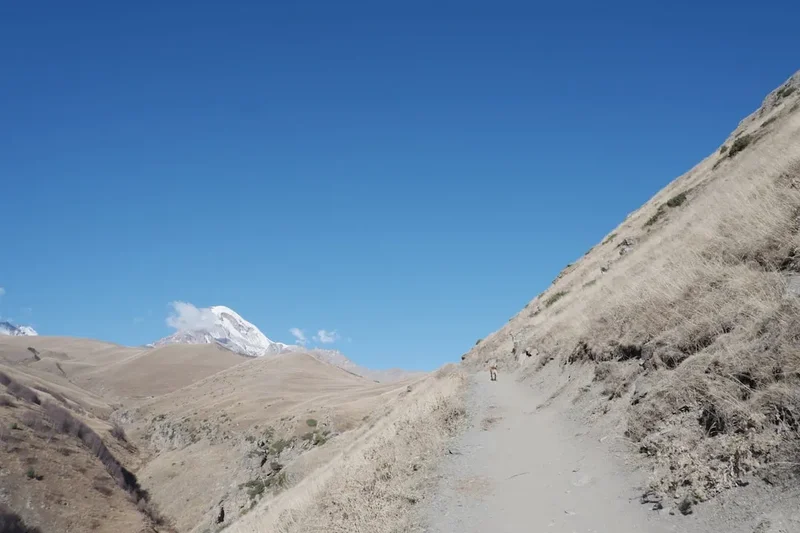
3-Day Mount Kailash Kora Itinerary
Day 1: Darchen to Drirapuk Monastery
- Distance: 20 km
- Elevation gain: 200 m
- Time: 6–7 hours
- The trek begins at the western edge of Darchen, heading across the barkha plain.
- Pass the Tarboche Flagpole, the site of the annual Saga Dawa Festival.
- Enter the Lha-chu Valley, a dramatic canyon with towering red granite walls.
- Visit Chuku Monastery (4,820 m), perched high on the cliffside, which houses a sacred marble statue.
- The trail follows the river with a gentle gradient, offering the first spectacular views of the West Face of Kailash.
- Arrive at Drirapuk Monastery (5,080 m) for the night. The guesthouses here offer the most iconic view of the North Face of the mountain.
- The North Face is a sheer wall of ice and rock, often glowing gold at sunset.
Day 2: Drirapuk Monastery to Dzultripuk Monastery via Dolma La Pass
- Distance: 18 km
- Elevation: 550 m gain to pass, 600 m descent
- Time: 8–10 hours
- This is the most challenging day of the Kora, requiring an early start (usually before dawn).
- The ascent to Dolma La Pass (5,630 m) is steep and demanding, passing through the "Sky Burial" site of Shiva-tsal, where pilgrims leave items of clothing to symbolise their death and rebirth.
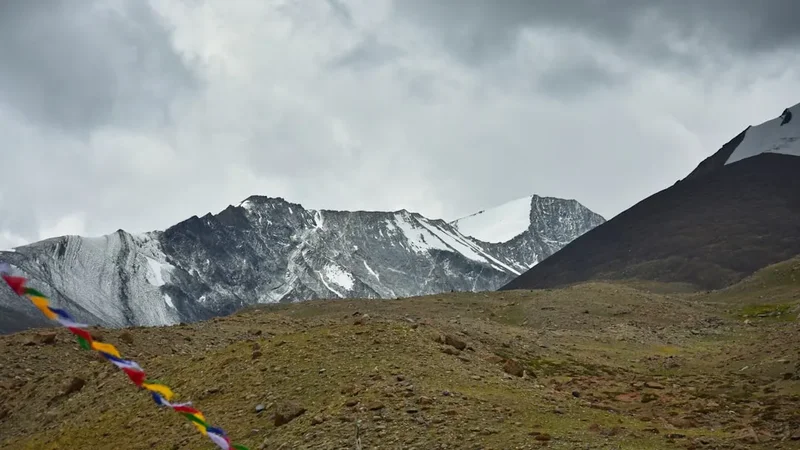
- The pass itself is a sea of colourful prayer flags fluttering in the thin, cold air.
- Immediately after the pass, view the emerald-green Gauri Kund (Lake of Compassion) below.
- The descent is steep and rocky, requiring careful footwork, eventually levelling out into the Zhong-chu Valley.
- Arrive at Dzultripuk Monastery (4,820 m), named after the "Miracle Cave" where Milarepa meditated.
- This day is physically exhausting but spiritually the most significant part of the journey.
Day 3: Dzultripuk Monastery to Darchen
- Distance: 14 km
- Elevation: 150 m descent
- Time: 3–4 hours
- The final day is a relatively easy walk along the river as the valley opens up.
- The trail passes through several "mani walls" (stones carved with prayers) and offers views of the East Face of Kailash.
- The path eventually emerges back onto the Barkha plain, with Lake Manasarovar visible in the distance on a clear day.
- The trek concludes back in Darchen, where pilgrims often perform a final circumambulation of the town's local shrines.
- Afternoon is usually spent resting or beginning the drive back toward Shigatse or Lhasa.
Important Notes:
- Acclimatisation is non-negotiable; you should spend at least 3-5 days at high altitude (Lhasa/Shigatse) before starting the Kora.
- Hiring a yak or porter in Darchen is highly recommended to carry heavy packs.
- The trail is well-marked by the flow of pilgrims, but a guide is mandatory for all international visitors.
- Water must be treated; do not drink directly from the glacial streams.
- The Dolma La Pass can be closed by snow at any time of year; always check with local guides before departing Drirapuk.
Planning and Bookings
Book Your Trip
Everything you need to plan your journey
Accommodation
Find places to stay near Darchen
Flights
Search flights to Darchen
Essential Preparation
Planning a trip to Mount Kailash is a complex logistical undertaking that requires months of lead time. Because the mountain is located in the Tibet Autonomous Region (TAR), international travellers cannot visit independently. You must book through a licensed Tibetan travel agency that will arrange your Tibet Travel Permit (TTP), a private vehicle, a driver, and a mandatory licensed guide. This process typically takes 4-6 weeks, so early booking is essential.
Physical preparation is equally critical. While the distances are not extreme, the altitude is. You should be in good cardiovascular health, but more importantly, you must have a proven ability to handle high altitudes. It is highly recommended to have completed treks at 4,000+ metres previously. Your itinerary should include a slow ascent from Lhasa (3,650 m) to Shigatse (3,840 m) and Saga (4,450 m) before reaching Darchen (4,670 m). Base yourself in Darchen for at least 24 hours before starting the Kora to ensure your body is ready for the 5,000+ metre sections.
Trail Accommodation
Accommodation on the Kailash Kora is extremely basic and should be approached with a "pilgrim mindset." There are no luxury lodges or hotels once you leave Darchen.
Hut and Monastery Facilities:
- Dormitory-style rooms with 4-8 beds per room.
- Basic mattresses and heavy blankets are provided, but hygiene standards vary.
- Toilets are almost exclusively "squat" style pits located in separate outhouses.
- No running water or showers are available on the trail.
- Electricity is limited and often provided by solar or generators for only a few hours in the evening.
- Small "teahouses" or kitchens attached to the guesthouses serve basic Tibetan fare (thukpa, tsampa, butter tea).
What Accommodation Doesn't Provide:
- Heating (rooms are extremely cold at night).
- Private bathrooms or hot water.
- WiFi or reliable mobile signal.
- Bed linens (using your own sleeping bag is essential).
- Charging ports for electronics (bring power banks).
Booking Requirements:
- Your tour operator will handle monastery guesthouse bookings, though they are often on a first-come, first-served basis during peak season.
- Costs are generally included in your overall tour package, but if paying locally, expect to pay 100-200 RMB per bed.
- During the Saga Dawa festival, accommodation is at a premium, and many people sleep in tents.
Required Gear
- High-altitude mountaineering boots - waterproof, well-insulated, and thoroughly broken in.
- Down jacket - rated for -15°C or lower; even in summer, the pass is freezing.
- Hard-shell waterproof jacket and trousers - to protect against the biting Tibetan winds and sudden snow.
- 4-season sleeping bag - comfort rating of -10°C is recommended for the cold guesthouses.
- Trekking poles - essential for the steep, rocky descent from Dolma La Pass.
- UV-rated sunglasses - the sun's glare on the snow and high-altitude atmosphere is intense.
- Head torch - with extra batteries for the pre-dawn start on Day 2.
- Large capacity power bank - to keep phones and cameras charged in the absence of electricity.
- Personal Locator Beacon (PLB) - while your guide will have communication, a personal device adds a layer of safety in this remote region.
What to Bring
- High-calorie snacks - nuts, chocolate, energy bars, and dried fruit (local food is basic and may not provide enough calories).
- Water purification - Steripen or purification tablets (bottled water is available but creates a massive plastic waste problem).
- Thermos - for carrying hot water or tea, which is vital for maintaining body temperature.
- Sunscreen and lip balm - SPF 50+ is mandatory; the Tibetan sun will burn skin in minutes.
- Personal medical kit - including Diamox (for altitude), Ibuprofen, blister kits, and broad-spectrum antibiotics.
- Wet wipes and hand sanitiser - your primary means of "showering" for three days.
- Toilet paper - none is provided on the trail or in the guesthouses.
- Merino wool base layers - for moisture-wicking and warmth without the bulk.
- Cash (RMB) - for small purchases, snacks, or hiring yaks/porters in Darchen.
Permits
Navigating the permit requirements for Mount Kailash is the most difficult part of the planning process. You cannot apply for these permits yourself; they must be processed by a registered travel agency in Tibet. The regulations change frequently, so it is vital to work with an experienced operator.
Required Documents:
- Tibet Travel Permit (TTP): Issued by the Tibet Tourism Bureau. This is required to enter Tibet and board flights or trains to Lhasa.
- Alien's Travel Permit (ATP): Issued by the Public Security Bureau. This is required for travel to "unopened" areas like Ngari Prefecture (where Kailash is located).
- Military Permit: Because Mount Kailash is located near the sensitive border with India and Nepal, a special military clearance is required.
- Group Visa: If entering from Nepal, you will need a special Group Tourist Visa issued by the Chinese Embassy in Kathmandu. This is different from a standard Chinese tourist visa.
Permit Strategy:
- Send a high-quality scan of your passport and Chinese visa (if entering from mainland China) to your agency at least 45 days in advance.
- Ensure your passport has at least six months of validity remaining.
- Be aware that the TAR is occasionally closed to international visitors during sensitive political anniversaries (usually in March). Check with your operator before booking flights.
- The permits are checked multiple times at checkpoints along the road from Lhasa to Darchen. Your guide will handle all interactions with officials.
Costs: Permit fees are usually bundled into the total cost of your tour package. A 15-day Kailash and Manasarovar tour typically ranges from US$2,000 to US$3,500 per person, depending on the group size and level of service.
Other Activities in the Area
The journey to Mount Kailash is long, and there are several other significant sites in the Ngari region that should not be missed:
- Lake Manasarovar: Located just 30 kilometres south of Kailash, this is one of the highest freshwater lakes in the world. It is equally sacred, and many pilgrims perform a Kora around the lake or take a ritual dip in its icy waters.
- Chiu Monastery: Perched on a rocky outcrop overlooking Lake Manasarovar, this monastery offers stunning views and contains a cave where Guru Rinpoche is said to have meditated.
- Guge Kingdom Ruins: Located a few hours' drive from Darchen, the ruins of the ancient Guge Kingdom in Tsaparang and Tholing offer a fascinating look at Tibet's medieval history and incredible Buddhist murals.
- Tirthapuri Hot Springs: A sacred site associated with Padmasambhava, located northwest of Kailash. It is a traditional place for pilgrims to bathe and recuperate after completing the Kora.
- Lake Rakshastal: The "Ghost Lake" located next to Manasarovar. While considered inauspicious by some, its deep blue waters and the backdrop of the Himalayas are visually stunning.
- Mount Gurla Mandhata: The highest peak of the Nalakankar Himal, visible across the plains from Kailash and Manasarovar, offering a magnificent contrast to the sacred peak.
Safety and Conditions
Altitude Sickness (AMS): This is the primary safety concern. The entire Kora takes place above 4,600 metres, and the Dolma La Pass reaches 5,630 metres. Acute Mountain Sickness can affect anyone, regardless of fitness level. Symptoms include severe headache, nausea, dizziness, and loss of appetite. If symptoms progress to High Altitude Pulmonary Oedema (HAPE) or Cerebral Oedema (HACE), it is life-threatening. The only cure is immediate descent. Your guide is trained to monitor your oxygen levels, but you must be honest about how you feel.
Weather Extremes: The Tibetan Plateau is a land of extremes. Intense solar radiation during the day can lead to heatstroke and severe sunburn, while temperatures at night can drop to -15°C. Wind chill on the Dolma La Pass can make the "real feel" temperature significantly lower. Always carry layers and never trek alone.
Remote Location: Darchen is a two-day drive from the nearest major hospital in Shigatse. While there is a small medical clinic in Darchen, it is only equipped for basic issues. In the event of a serious medical emergency, evacuation is by road, as helicopter rescue is extremely difficult to arrange in Tibet due to military restrictions. Comprehensive travel insurance that covers high-altitude evacuation is mandatory.
Stray Dogs: Large Tibetan Mastiffs and stray dogs are common in Darchen and along the trail. While usually indifferent to pilgrims, they can be territorial. Avoid approaching them, especially at night, and carry trekking poles to keep them at a distance if necessary.
Hydration and Nutrition: Dehydration accelerates altitude sickness. Aim to drink 4-5 litres of water per day. Because your appetite will likely decrease at altitude, focus on eating small, frequent, high-energy snacks even if you don't feel hungry.
Side Trips and Points of Interest
The Inner Kora: For those who have completed 13 outer Koras, the "Inner Kora" becomes accessible. This route leads directly to the base of the South Face of Kailash and involves visiting the Nandi Parvat. It is significantly more dangerous and technical than the outer circuit and is generally reserved for the most devout pilgrims and experienced mountaineers.
Shiva-tsal: Located on the ascent to Dolma La, this is a symbolic cemetery. Pilgrims leave behind a piece of clothing, a drop of blood, or a lock of hair to represent the "death" of their old life and their sins. It is a somber and powerful site, covered in discarded garments and prayer flags.
Gauri Kund: Also known as the Lake of Compassion, this small, high-altitude lake lies just below the Dolma La Pass. Hindu pilgrims believe the goddess Parvati bathed here. While the descent to the water's edge is steep and slippery, many pilgrims make the effort to bring back a bottle of the sacred water.
The Footprints of Buddha: Along the trail, there are several locations where indentations in the rock are said to be the footprints of the Buddha (Sakyamuni). These sites are marked by prayer flags and are places where pilgrims stop to offer prostrations and small offerings of money or food.
Zhong-chu Valley: The walk through this valley on Day 3 is one of the most beautiful sections of the trek. The river meanders through wide meadows where you might see marmots and blue sheep (bharal) grazing on the sparse vegetation. The scale of the surrounding peaks is truly humbling.
Leave No Trace
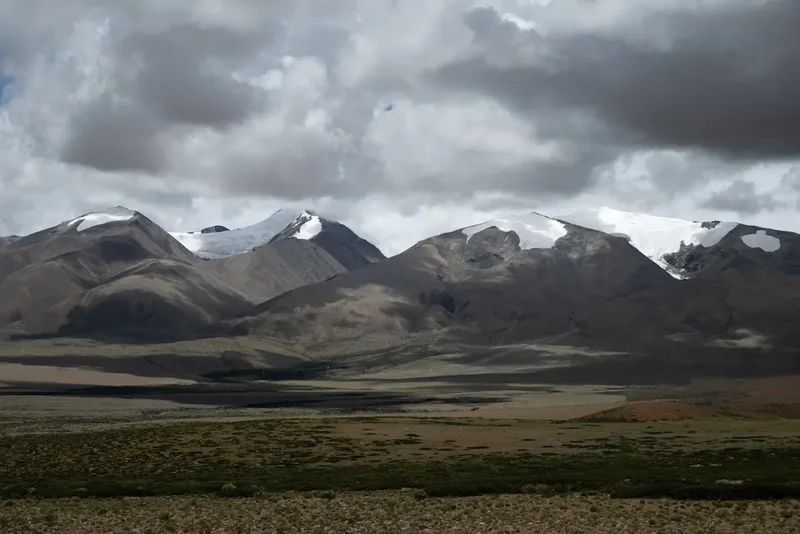
The environmental impact of thousands of pilgrims and tourists on the fragile Tibetan ecosystem is significant. As a visitor, you have a responsibility to minimise your footprint in this sacred landscape.
Your responsibility as a walker:
- Waste Management: Pack out all non-biodegradable waste. The guesthouses on the trail have limited waste disposal capabilities. Carry a small "trash bag" and take your plastic bottles and wrappers back to Darchen or Shigatse.
- Water Protection: Do not use soap or detergents in the rivers or lakes. Even biodegradable soap can harm the delicate high-altitude aquatic life.
- Respect Sacred Sites: Do not remove stones from mani walls or prayer flags from the pass. These are religious offerings and should be left undisturbed.
- Stay on the Path: The high-altitude tundra is extremely slow to recover from trampling. Stick to the established pilgrim trail to prevent soil erosion.
- Cultural Sensitivity: Always walk clockwise around the mountain, monasteries, and mani walls (unless you are a Bon follower). Ask for permission before taking photos of pilgrims or monks.
- Human Waste: Use the provided pit toilets at guesthouses. If you must go on the trail, ensure you are at least 50 metres from any water source and bury your waste deeply.
By following these principles, you help ensure that the Mount Kailash Kora remains a pristine and sacred journey for future generations of pilgrims.