
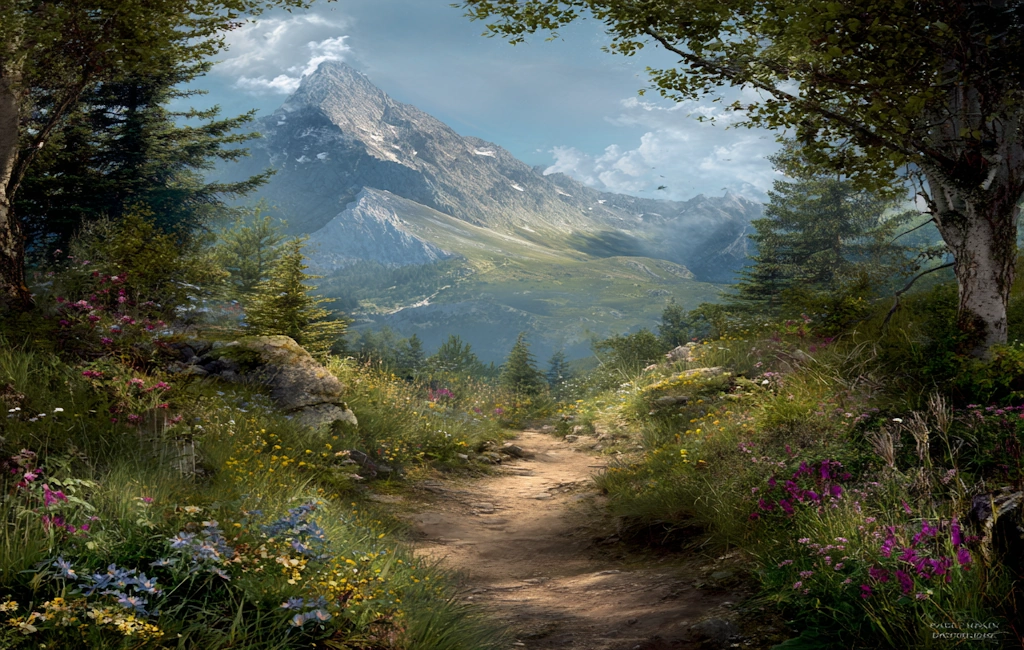
Mount Iwate Trail - A Majestic Ascent in Northern Japan
Mount Iwate, standing sentinel over the northern Japanese landscape, is a stratovolcano of immense beauty and challenging terrain. Its iconic, snow-capped peak dominates the skyline, offering a rewarding pilgrimage for hikers seeking panoramic vistas and a true mountain experience. The Mount Iwate Trail is not a single, continuous track but rather a network of routes leading to the summit, each presenting unique challenges and scenic opportunities. This description focuses on the most popular and direct ascent, offering a comprehensive guide for those looking to conquer this magnificent peak.
- Distance: 14.5 km (one-way to summit)
- Elevation Gain: 1720 m
- Duration: 8-10 hours (round trip)
- Difficulty: Challenging
- Best Time: Late June to early October
- Closest City: Morioka
- Trailhead Access: Nearest airport: Hanamaki Airport (HNA). Take a bus or taxi to Morioka Station, then a local bus to the Umagaeshi trailhead (approx. 1-2 hours). Check bus schedules in advance. Limited parking available at the trailhead. No permits are needed but registration at the trailhead is recommended.
- Coordinates: 39.8544, 141.0097
Overview
Mount Iwate is a majestic, active stratovolcano that forms the highest peak in the Iwate Prefecture of Japan. Its symmetrical cone shape, often dusted with snow even into early summer, makes it a striking landmark visible from miles around. The ascent to the summit is a demanding but incredibly rewarding experience, traversing diverse landscapes from lush forests to rugged volcanic scree. The trail is well-maintained for much of its length, but the significant elevation gain and the final push over loose volcanic rock require good physical fitness and mental fortitude.
The journey begins at the Umagaeshi trailhead, nestled at the base of the mountain. Here, the air is crisp, and the initial stages of the hike wind through dense, verdant forests of beech and fir trees. As you gain altitude, the forest canopy gradually thins, revealing increasingly expansive views of the surrounding countryside. The trail becomes steeper, with sections of rocky steps and switchbacks designed to manage the steep gradient. The higher you climb, the more the landscape transforms into a starkly beautiful alpine environment, characterised by volcanic rock formations and hardy alpine flora.
The final approach to the summit is a true test of endurance. The path often becomes a scramble over loose volcanic scree and gravel, requiring careful foot placement and a steady pace. However, the effort is amply rewarded. Reaching the summit crater rim offers breathtaking 360-degree panoramas. On a clear day, you can see the Pacific Ocean to the east, the city of Morioka spread out below, and a vast expanse of rolling mountains stretching towards the horizon. The summit itself is a caldera, and the views into its depths, often filled with mist or snow, add to the dramatic atmosphere. Mount Iwate is a popular destination for both local hikers and international visitors, particularly during the summer months when the weather is most favourable for an ascent.
History and Cultural Significance
Mount Iwate has held deep cultural and spiritual significance for centuries. As the highest peak in the region, it has long been revered as a sacred mountain, a dwelling place for deities and a focal point for religious practices. For the indigenous Ainu people, who inhabited northern Japan for millennia, mountains were often considered sacred sites, and Iwate would have been a prominent feature in their spiritual landscape.
During the Edo period (1603-1868) and into the Meiji era (1868-1912), Mount Iwate became a popular destination for mountain ascetics (Shugendō practitioners) and pilgrims. These individuals would undertake arduous journeys to the summit as a form of spiritual discipline and devotion. The challenging nature of the ascent, combined with the perceived spiritual power of the mountain, made it an ideal location for such practices. Early accounts from travellers and scholars often describe the awe-inspiring presence of Mount Iwate and the dedication of those who sought to reach its peak.
The development of modern hiking trails began in the late 19th and early 20th centuries, as Japan opened up to the West and interest in mountaineering grew. Local communities and government bodies began to formalise routes, making the mountain more accessible to a wider range of visitors. The establishment of the Umagaeshi trailhead and the development of the main ascent routes were part of this broader effort to promote outdoor recreation and tourism. Today, Mount Iwate is a popular destination for hikers, climbers, and nature enthusiasts, continuing its legacy as a place of natural beauty and spiritual resonance.
Seasonal Highlights and Weather Considerations
Mount Iwate's character changes dramatically with the seasons, offering distinct experiences for those who venture to its slopes.
Spring (April to May): While the lower slopes may begin to show signs of life, the upper reaches of Mount Iwate remain snow-covered and inaccessible for hiking. This is the time for experienced mountaineers with appropriate winter gear and skills to consider an ascent, but for most, it is still too early. The snowmelt can also lead to swollen streams and muddy conditions on lower trails.
Summer (Late June to Early October): This is the prime hiking season for Mount Iwate. The snow has largely receded from the main trails by late June, revealing the full extent of the volcanic landscape. The weather is generally more stable, with longer daylight hours allowing for ample time to complete the ascent. Wildflowers bloom in abundance on the alpine meadows, adding vibrant splashes of colour to the rugged terrain. However, summer can also bring sudden thunderstorms, so hikers must always be prepared for rapidly changing weather conditions. Sandflies can be present, though generally less of a nuisance than in some coastal areas.
Autumn (October to November): The autumn months offer a spectacular display of fall foliage. The forests at the lower and mid-altitudes transform into a riot of reds, oranges, and yellows, creating a breathtaking backdrop for the hike. The air is crisp and clear, often providing excellent visibility. However, as the season progresses, temperatures drop significantly, and early snowfalls can occur, making the upper sections of the trail hazardous. Hikers should be prepared for colder conditions and potential wintery weather, especially in late October and November.
Winter (December to March): Mount Iwate becomes a formidable winter wonderland during these months. The entire mountain is typically covered in deep snow, and the trails are obliterated. This period is strictly for experienced winter mountaineers equipped with ice axes, crampons, and avalanche safety gear. The conditions are extreme, with high winds, sub-zero temperatures, and the constant threat of avalanches. For the vast majority of hikers, winter is a time to admire Mount Iwate from afar.
Recommended Itinerary
Mount Iwate Summit Ascent (Day Hike)
Early Morning (Approx. 6:00 AM - 7:00 AM): Arrival and Preparation
- Arrive at the Umagaeshi trailhead (approx. 1-2 hours from Morioka).
- Register your hike at the trailhead information board (recommended for safety).
- Final gear check: ensure you have water, food, layers, and rain protection.
- Use restroom facilities if available.
Morning (Approx. 7:00 AM - 12:00 PM): Forest and Lower Slopes Ascent
- Start hiking from Umagaeshi trailhead.
- Follow the well-marked trail through dense beech and fir forests.
- The initial section involves a steady, moderate climb.
- Pass through areas with natural springs and small streams.
- As you gain altitude, the forest begins to thin, and views start to open up.
- Reach the mid-mountain area, where the terrain becomes rockier.
Midday (Approx. 12:00 PM - 2:00 PM): Lunch and Upper Slopes
- Find a suitable spot for a break and lunch.
- The trail becomes steeper, with switchbacks becoming more pronounced.
- You will encounter more exposed sections with volcanic rock and scree.
- The vegetation becomes sparser, dominated by alpine grasses and hardy shrubs.
- The summit crater rim becomes visible, providing a clear target.
Afternoon (Approx. 2:00 PM - 4:00 PM): Summit Push and Exploration
- The final ascent to the summit crater rim is the most challenging part.
- Navigate loose volcanic scree and gravel, requiring careful footing.
- Reach the summit crater rim (approx. 2000 m).
- Explore the rim, taking in the panoramic views of the caldera and surrounding landscape.
- Spend time at the summit, enjoying the accomplishment and the vistas.
Late Afternoon (Approx. 4:00 PM - 7:00 PM): Descent and Return
- Begin the descent back to Umagaeshi trailhead.
- The descent can be hard on the knees; take your time and use trekking poles if you have them.
- Be cautious on the scree sections, as loose rocks can shift.
- Continue through the thinning forests as you descend.
- Arrive back at Umagaeshi trailhead.
- If time permits and bus schedules allow, head back to Morioka.
Important Notes:
- This is a strenuous day hike; ensure you are physically prepared.
- Weather can change rapidly; always carry appropriate gear for all conditions.
- Carry sufficient water and food, as there are no facilities on the trail.
- Check bus schedules for Morioka to Umagaeshi and back in advance, as they can be infrequent.
- Registration at the trailhead is recommended for safety.
Planning and Bookings
Book Your Trip
Everything you need to plan your journey
Accommodation
Find places to stay near Morioka
Flights
Search flights to Morioka
Essential Preparation
Mount Iwate is a significant mountain, and preparation is key to a safe and enjoyable ascent. The closest major city is Morioka, which serves as the primary gateway for accessing the mountain. Morioka offers a range of accommodation options, from budget-friendly hostels to comfortable hotels, and has excellent transport links, including a Shinkansen (bullet train) station. Hanamaki Airport (HNA) is the nearest airport, with connections to major Japanese cities. From Morioka Station, local buses run to the Umagaeshi trailhead, the most common starting point for the summit ascent. It is crucial to check the bus schedules in advance, as services can be infrequent, especially on weekends and holidays. Parking is available at the trailhead, but it is limited. While no specific permits are required to hike Mount Iwate, registering your hike at the trailhead is highly recommended for safety purposes. This allows authorities to know who is on the mountain in case of an emergency. Ensure you have a good level of physical fitness, as the 1720 metres of elevation gain over 14.5 km is a substantial challenge.
Trail Accommodation
This is a day hike requiring no overnight accommodation. Hikers typically start from the Umagaeshi trailhead and complete the ascent and descent within a single day. There are no huts, lodges, or campsites directly on the Mount Iwate summit trail. Accommodation should be sought in the city of Morioka or in smaller towns closer to the mountain base if an early start is desired. Morioka offers a wide range of hotels, ryokans (traditional Japanese inns), and guesthouses to suit various budgets and preferences.
Required Gear
- Sturdy hiking boots: Waterproof and with good ankle support are essential for navigating the varied terrain, especially the rocky and scree sections.
- Waterproof and windproof jacket: The weather at higher altitudes can change rapidly, with strong winds and rain being common, even in summer.
- Waterproof overtrousers: Crucial for staying dry and comfortable during rain showers or in windy conditions.
- Warm layers: Including a fleece or down jacket, and thermal base layers. Temperatures at the summit can be significantly colder than at the trailhead.
- Hat and gloves: Even in summer, the summit can be chilly, and a warm hat and gloves are recommended.
- Backpack: A comfortable daypack (30-40 litres) to carry essentials.
- Navigation tools: A map of the trail, a compass, and a GPS device or smartphone with offline maps are highly recommended. While the main trail is generally well-marked, visibility can be poor in fog or cloud.
- Head torch: With spare batteries, in case of an unexpectedly long descent or early start.
- First-aid kit: Including blister treatment, pain relievers, antiseptic wipes, and any personal medications.
- Sun protection: Sunscreen, sunglasses, and a wide-brimmed hat, as the sun can be intense at higher altitudes.
- Trekking poles: Highly recommended for stability and to reduce strain on knees during the steep ascent and descent.
What to Bring
- Food: Sufficient high-energy food for the entire day, including snacks, lunch, and extra provisions in case of delays. There are no food services on the mountain.
- Water: Carry at least 2-3 litres of water per person. Water sources may be available lower down the mountain, but it is advisable to treat or filter any water collected from natural sources.
- Water treatment: A water filter or purification tablets are recommended if you plan to refill from natural sources.
- Toiletries: Biodegradable toilet paper, hand sanitiser, and any personal hygiene items. Pack out all waste.
- Mobile phone: Fully charged, with a portable power bank if possible. Signal can be intermittent.
- Camera: To capture the stunning scenery.
- Small towel: Useful for wiping sweat or drying off.
- Cash: For bus fares, potential small purchases in Morioka, or emergency use.
Permits
No specific permits are required to hike Mount Iwate. However, it is strongly recommended that all hikers register their ascent at the trailhead information board located at Umagaeshi. This registration process typically involves noting your name, contact details, intended route, and estimated return time. This information is invaluable for rescue services in the unlikely event of an emergency. While there are no fees associated with hiking or registering, it is a crucial safety measure that contributes to the well-being of all visitors to the mountain.
Other Activities in the Area
The region surrounding Mount Iwate offers a variety of activities for visitors looking to extend their stay or explore beyond the mountain itself:
- Explore Morioka: The prefectural capital, Morioka, boasts a rich history and culture. Visit Morioka Castle Site Park, wander through the traditional Nanbu craft district, and sample the city's famous reimen (cold noodles).
- Hanamaki Onsen: Located a short distance from Morioka, Hanamaki is renowned for its numerous hot spring resorts (onsen). Relax and rejuvenate in the therapeutic waters after your hike.
- Tazawako Lake: A stunning caldera lake known for its crystal-clear, deep blue waters. It's a popular spot for scenic drives, boat tours, and enjoying the natural beauty of the Akita Prefecture.
- Geibikei Gorge: Take a traditional boat ride down the Geibikei Gorge, where boatmen sing folk songs as they navigate the serene river, surrounded by dramatic cliffs and lush vegetation.
- Sanriku Coast: For those interested in coastal scenery, the Sanriku Coast offers dramatic cliffs, fishing villages, and a ruggedly beautiful coastline.
- Local Festivals: Depending on the time of year, you might be able to experience local festivals, offering a glimpse into Japanese traditions and community life.
Safety and Conditions
Weather: Mount Iwate's weather is notoriously unpredictable. Conditions can change from clear and sunny to foggy, rainy, and windy within minutes, especially at higher altitudes. Always check the mountain forecast (available from local weather services or tourist information centres) before you set out and be prepared for all conditions. Hypothermia is a risk even in summer due to wind chill and rain.
Trail Conditions: The main trail from Umagaeshi is generally well-maintained, but the upper sections consist of loose volcanic scree and gravel. This can be challenging and requires careful footing. In wet conditions, the scree can become slippery. Snow can linger on the upper slopes well into July, and early snowfalls can occur in September and October, making the trail hazardous. Always wear appropriate footwear.
Navigation: While the main trail is usually clear, visibility can drop significantly in fog or cloud. It is essential to carry a map, compass, and ideally a GPS device or smartphone with offline maps. Do not rely solely on mobile phone signal, as it can be unreliable in mountainous areas.
Physical Fitness: The 1720-metre elevation gain is substantial. Ensure you have a good level of cardiovascular fitness and leg strength. The descent can be particularly hard on the knees, so trekking poles are highly recommended.
Water and Food: Carry more water and food than you think you will need. There are no facilities on the mountain, and water sources lower down may be unreliable or require treatment.
Emergency: Register your hike at the trailhead. In case of an emergency, contact local authorities or mountain rescue services. Having a fully charged mobile phone is crucial, but be aware that signal coverage is not guaranteed.
Wildlife: While large dangerous animals are not a significant concern on Mount Iwate, be aware of smaller wildlife. Respect their habitat and do not feed any animals.
Side Trips and Points of Interest
Umagaeshi Trailhead Area: Before beginning your ascent, take a moment to appreciate the natural beauty surrounding the Umagaeshi trailhead. The area is often lush with vegetation, and the initial part of the trail offers pleasant forest walking.
Forest Sections: The lower and mid-sections of the trail wind through beautiful temperate forests, primarily composed of beech and fir trees. These sections offer shade and a sense of immersion in nature, with opportunities to observe local flora and fauna.
Panoramic Viewpoints: As the trail ascends and the tree line recedes, numerous points along the route offer increasingly spectacular views of the surrounding landscape. These viewpoints are ideal for short breaks and for appreciating the scale of the Iwate Prefecture.
Volcanic Formations: The upper reaches of Mount Iwate showcase its volcanic origins. You will encounter interesting rock formations, lava flows, and the characteristic scree slopes that define the mountain's upper reaches. These geological features are a testament to the mountain's powerful past.
Summit Crater Rim: The ultimate point of interest is the rim of the volcanic crater. Standing here provides an unparalleled perspective of the caldera, often filled with mist or snow, and the vast expanse of the surrounding Japanese Alps and plains. The 360-degree panorama from the summit is the primary reward for the challenging climb.
Leave No Trace
Mount Iwate is a precious natural resource, and it is the responsibility of every hiker to help preserve its beauty and ecological integrity. Adhering to Leave No Trace principles ensures that this magnificent mountain remains a pristine environment for future generations.
- Plan Ahead and Prepare: Understand the trail conditions, weather forecasts, and any regulations before your hike. Pack appropriately for the conditions.
- Travel and Camp on Durable Surfaces: Stick to the marked trails to avoid damaging fragile vegetation and soil. The scree slopes are a natural surface, but avoid creating new paths.
- Dispose of Waste Properly: Pack out everything you pack in, including all food scraps, wrappers, and any other litter. Use designated toilet facilities at the trailhead if available, and carry out all human waste if necessary.
- Leave What You Find: Do not take any natural souvenirs such as rocks, plants, or flowers. Leave the mountain as you found it.
- Minimise Campfire Impacts: Campfires are not permitted on Mount Iwate as it is a day hike.
- Respect Wildlife: Observe wildlife from a distance and never feed animals. Feeding them can disrupt their natural behaviours and diets.
- Be Considerate of Other Visitors: Keep noise levels down, yield to uphill hikers, and be courteous to fellow trekkers.
By following these principles, you contribute to the conservation of Mount Iwate's natural environment and ensure a positive experience for everyone.
 Japan
Japan