
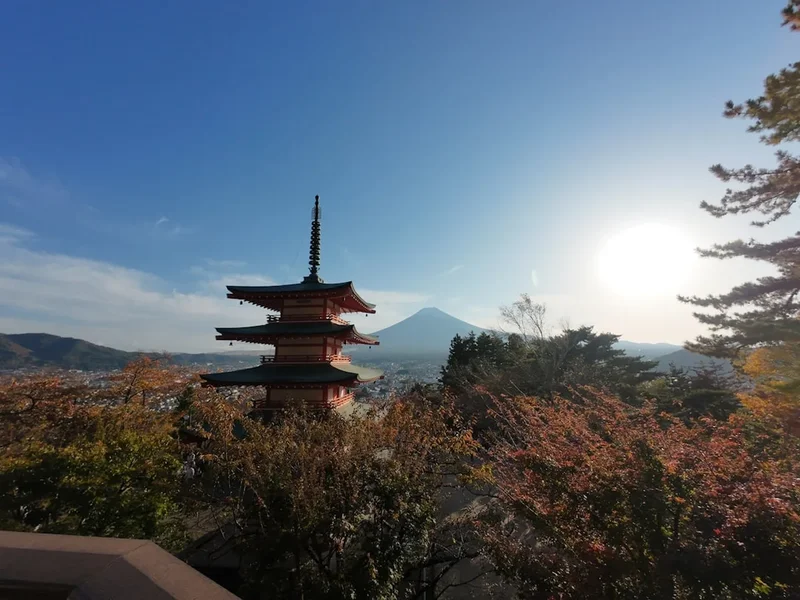
Mount Hiei Pilgrimage - The Spiritual Ascent of the Guardian Mountain
The Mount Hiei Pilgrimage is one of Japan's most profound spiritual and physical journeys, tracing the ancient paths of the Tendai Buddhist monks above the historic city of Kyoto. Rising to an elevation of 848 metres, Mount Hiei (Hieizan) has served as the "Guardian of the Northeast" for the imperial capital for over 1,200 years. This 30.0 km trail network connects the bustling streets of Kyoto to the serene, moss-covered temple complex of Enryaku-ji, a UNESCO World Heritage site that once housed thousands of temples and warrior monks. The pilgrimage is not merely a hike; it is a transition from the secular world into a realm of towering Japanese cedars, hidden stone deities, and the rhythmic chanting of monks. Whether undertaken as a challenging two-day trek or a contemplative three-day journey, the route offers a unique blend of rugged mountain terrain and deep cultural immersion, providing panoramic views of both the Kyoto basin and the vast expanse of Lake Biwa, Japan's largest freshwater lake.
- Distance: 30.0 km (total network)
- Duration: 2–3 days
- Season: Spring (April–May) or Autumn (October–November)
- Accommodation: Temple lodgings (shukubo) and Kyoto-based hotels
- Highest point: Mount Hiei Summit (848 m)
- Difficulty: Moderate (steep ascents and uneven stone paths)
- Direction: Typically West to East (Kyoto to Sakamoto)
Overview
Mount Hiei stands as a sentinel between Kyoto Prefecture and Shiga Prefecture, a geographical and spiritual boundary that has shaped Japanese history. The pilgrimage route is defined by its verticality and its silence. Unlike the more famous Kumano Kodo, which traverses long distances across peninsulas, the Mount Hiei Pilgrimage is a concentrated ascent into the clouds. The trail begins at the Kirara-zaka trailhead in Shugakuin, a path historically used by monks and imperial messengers. From here, the trail climbs steeply through dense forests of cypress and cedar, where the air cools and the sounds of the city fade into the rustle of bamboo and the distant tolling of temple bells.
The heart of the experience is Enryaku-ji, the headquarters of the Tendai sect. The complex is divided into three main areas: the Todo (Eastern Section), the Saito (Western Section), and the Yokawa (Northern Section). Walking between these areas requires navigating ancient "ridge paths" that offer glimpses of Lake Biwa to the east and the Kitayama mountains to the north. The terrain is a mix of well-maintained gravel paths, ancient stone staircases (which can be slippery when damp), and narrow forest tracks. While the total elevation gain of 800 metres might seem modest to seasoned alpine hikers, the constant undulation and the technical nature of the stone paths provide a significant physical challenge.
What sets Mount Hiei apart is the presence of the "Marathon Monks" (Kaihogyo). These practitioners undertake a 1,000-day circumambulation of the mountain over seven years, a feat of endurance that is considered one of the most rigorous spiritual disciplines in the world. While recreational hikers follow only a fraction of their path, the knowledge of this living tradition adds a layer of solemnity to every step. The trail is a masterclass in "Satoyama" landscape—the traditional Japanese borderland between mountain and flatland—where nature and human spirituality have coexisted and co-evolved for over a millennium.
History and Cultural Context
The history of Mount Hiei is inextricably linked to the founding of Enryaku-ji in 788 AD by the monk Saicho, posthumously known as Dengyo Daishi. Saicho sought to establish a centre for Buddhist study that was removed from the political intrigues of the then-capital, Nara. When the capital moved to Kyoto (Heian-kyo) in 794 AD, Mount Hiei was positioned to the northeast—the "Demon Gate" (Kimon) direction from which evil spirits were believed to enter. Thus, the mountain and its monks became the spiritual protectors of the Emperor and the city.
At its peak in the medieval period, Enryaku-ji was a massive city-state with over 3,000 buildings and a private army of "sohei" (warrior monks). These monks were a formidable political and military force, often descending the mountain to pressure the government in Kyoto. This power eventually led to the mountain's greatest tragedy: in 1571, the warlord Oda Nobunaga, seeking to unify Japan and eliminate rivals, laid siege to Mount Hiei. He burned the entire complex to the ground and slaughtered thousands of monks, women, and children. The current structures, while ancient, largely date from the subsequent reconstruction in the late 16th and early 17th centuries under the Tokugawa Shogunate.
Today, the mountain is a place of peace and rigorous scholarship. It was designated a UNESCO World Heritage site in 1994 as part of the "Historic Monuments of Ancient Kyoto." For the pilgrim, the history is visible in the moss-covered foundations of destroyed sub-temples, the massive bronze bells that have survived centuries, and the "Eternal Lantern" inside the Konpon Chudo, which is said to have remained lit for over 1,200 years. Walking these paths is an act of traversing layers of Japanese time, from the ancient spiritual foundations to the scars of civil war and the modern era of conservation.
Want more background? Read extended notes on history and cultural context → Learn more
Seasonal Highlights and Weather Reality
Mount Hiei experiences a distinct mountain climate that is significantly cooler and wetter than the Kyoto valley below. Choosing the right season is essential for both safety and the aesthetic experience of the pilgrimage.
Spring (April to May): This is arguably the most popular time for the pilgrimage. The cherry blossoms (sakura) on Mount Hiei bloom approximately two weeks later than those in Kyoto city due to the higher altitude. The "Yae-zakura" (double-layered blossoms) are particularly famous around the Enryaku-ji complex. The weather is generally mild, with temperatures ranging from 10°C to 20°C, though spring rains can make the stone paths treacherous.
Autumn (October to November): The "Momiji" (maple leaf) season transforms the mountain into a tapestry of brilliant reds, oranges, and golds. The maple trees lining the paths between the Todo and Saito areas are world-renowned. Daytime temperatures are crisp and ideal for hiking, usually between 8°C and 15°C. However, daylight hours shorten rapidly, and hikers must ensure they reach their destination before the 4:30 PM sunset in late November.
Summer (June to August): While the mountain offers a 5°C to 7°C reprieve from the sweltering humidity of Kyoto, summer is also the season of the "Tsuyu" (plum rain). Heavy downpours and high humidity can make the steep Kirara-zaka ascent exhausting. Leeches can also be active in the damp forest sections during this time. If hiking in summer, early starts are mandatory to avoid the midday heat.
Winter (December to March): Mount Hiei frequently receives snow, and the upper trails can become icy. While the sight of temples dusted in white is spectacular, the pilgrimage becomes a technical undertaking requiring micro-spikes or crampons. Many temple facilities and the cable cars have reduced hours or seasonal closures during the coldest months. This season is recommended only for experienced hikers prepared for sub-zero temperatures and slippery conditions.
Recommended Itinerary
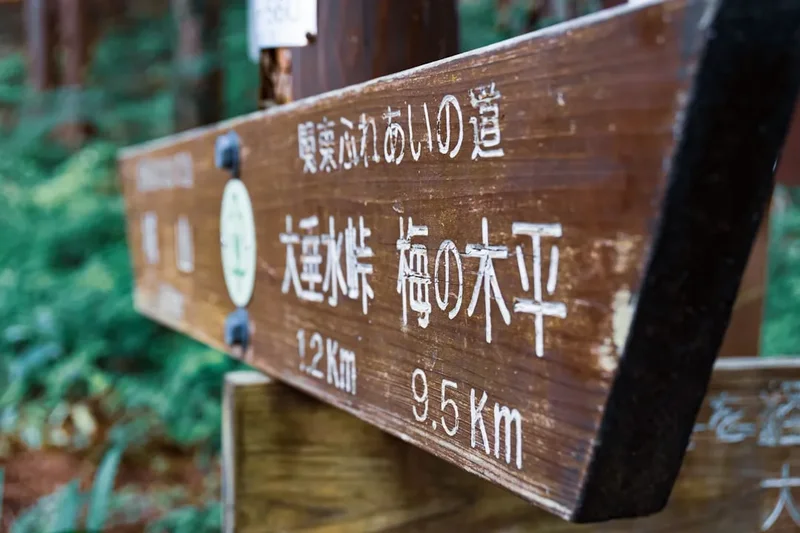
3-Day Mount Hiei Pilgrimage Itinerary
Day 1: Shugakuin to Enryaku-ji (Todo Area)
- Distance: 7.5 km
- Elevation gain: 720 m
- Time: 4–5 hours
- Start at the Kirara-zaka trailhead near Shugakuin Station
- Ascent through the "Kirara-zaka" (Mica Slope), a deeply eroded ancient path
- Pass the "Drinking Water" rest point with views over northern Kyoto
- Reach the summit of Mount Hiei (848 m) for 360-degree views
- Descend slightly to the Todo (Eastern Section) of Enryaku-ji
- Visit the Konpon Chudo (Main Hall) and the Amida-do
- Overnight at Enryaku-ji Kaikan (temple lodging)
- Experience a traditional Buddhist vegetarian dinner (Shojin Ryori)
Day 2: Todo to Yokawa via Saito Area
- Distance: 12.0 km
- Elevation gain: 350 m (undulating ridge)
- Time: 5–6 hours
- Morning prayer service with the monks (optional but recommended)
- Walk the forested ridge path from Todo to the Saito (Western Section)
- Explore the Ninai-do (connected halls) and the Shakka-do (the oldest building on the mountain)
- Continue north on the "Monk's Path" toward the Yokawa area
- Pass through quiet cedar groves and small stone shrines
- Visit the Yokawa Chudo, a striking red hall built on a steep slope
- Return to the Todo area via shuttle bus or hike back the same route
- Second night at Enryaku-ji Kaikan or descend to Sakamoto via cable car for local guesthouse
Day 3: Enryaku-ji to Sakamoto and Lake Biwa
- Distance: 10.5 km
- Elevation: 650 m descent
- Time: 3–4 hours
- Begin the descent from the Todo area toward the town of Sakamoto
- Follow the "Hon-zaka" (Main Slope), the traditional front entrance to the mountain
- Pass through the massive stone walls of the Sakamoto "Sato-bo" (monks' residences)
- Visit Hiyoshi Taisha Shrine at the foot of the mountain, dedicated to the mountain's deity
- Explore the historic town of Sakamoto, famous for its stone masonry (Ano-shu)
- Walk to the shores of Lake Biwa for a celebratory view of the mountain from below
- Finish at Sakamoto-hieizanguchi Station for the train back to Kyoto or Otsu
Important Notes:
- The itinerary can be compressed into 2 days by skipping the Yokawa section
- Temple lodgings must be booked at least 2 weeks in advance
- The Konpon Chudo is currently undergoing major renovation (until 2026), but remains open to visitors
- Carry sufficient cash as many temples and small shops do not accept cards
- Respect the "No Photography" signs inside temple halls
- The descent to Sakamoto is steep and can be hard on the knees; trekking poles are advised
Planning and Bookings
Book Your Trip
Everything you need to plan your journey
Accommodation
Find places to stay near Kyoto
Flights
Search flights to Kyoto
Essential Preparation
The Mount Hiei Pilgrimage requires a moderate level of fitness, particularly for the initial 700-metre ascent from Kyoto. The paths are often uneven, consisting of ancient stones or tree roots, so ankle stability is important. Unlike many European trails, there are no mountain huts in the traditional sense; instead, hikers rely on temple lodgings or return to Kyoto city each evening via the cable car system.
Logistically, Kyoto is the perfect base. Most hikers leave their main luggage at a hotel in Kyoto and carry only a small pack for the overnight stay on the mountain. It is essential to check the operating hours of the Eizan Cable Car and the Sakamoto Cable Car, as these are the primary "escape routes" if weather turns or fatigue sets in. Note that the cable cars often stop running around 5:00 PM or 6:00 PM depending on the season.
Trail Accommodation
Accommodation on Mount Hiei is a highlight of the pilgrimage, offering a rare glimpse into monastic life. The primary option is the Enryaku-ji Kaikan, located in the Todo area.
Hut/Lodging Facilities:
- Japanese-style rooms with tatami mats and futons
- Communal hot baths (Sento style)
- Traditional Shojin Ryori (Buddhist vegetarian) meals included in the stay
- Access to morning prayer ceremonies (O-tsutome) at 6:30 AM
- Basic amenities provided (yukata, towels, toothbrush)
- WiFi available in the lobby area
What Lodgings Don't Provide:
- Western-style beds (most rooms are traditional)
- Late-night check-in (dinner is usually served strictly at 6:00 PM)
- Alcoholic beverages (though some temple lodgings allow modest consumption, it is generally discouraged)
- Private showers in all rooms (most use communal baths)
Booking Requirements:
- Bookings can be made via the official Enryaku-ji website or major Japanese booking engines
- Costs range from 12,000 to 18,000 Japanese Yen per person, per night (including two meals)
- Peak seasons (Autumn and Spring) book out months in advance
- If no space is available, hikers must descend to Sakamoto or Kyoto for accommodation
Required Gear
- Hiking boots or sturdy trail shoes - must have excellent grip for wet stone steps
- Layered clothing - temperatures on the summit are 5-10°C cooler than Kyoto
- Waterproof jacket - essential for the frequent mountain mists and sudden rain
- Daypack (20-30L) - if staying overnight, ensure it fits your change of clothes and toiletries
- Trekking poles - highly recommended for the steep descent to Sakamoto to protect knees
- Head torch - essential if you are delayed, as the forest becomes dark very quickly
- Small towel - for use at the communal baths or for wiping sweat during the ascent
- Offline navigation - Google Maps is generally reliable, but a dedicated hiking app with topo maps is better
What to Bring
- Cash (Yen) - essential for temple entry fees (usually 1,000 Yen for the complex), bus fares, and small snacks
- Water (2 litres) - while there are vending machines at the temple areas, the ascent from Shugakuin has no water sources
- High-energy snacks - nuts, dried fruit, or Japanese "onigiri" (rice balls) from a Kyoto convenience store
- Sun protection - hat and sunscreen, as the ridge paths can be exposed
- Insect repellent - particularly in summer and early autumn for mosquitoes and leeches
- Plastic bag - for carrying out all your own rubbish (there are no bins on the trail)
- Portable power bank - to ensure your phone remains charged for navigation and photos
- Modest clothing - a light scarf or long sleeves to cover shoulders when entering sacred temple halls
Permits
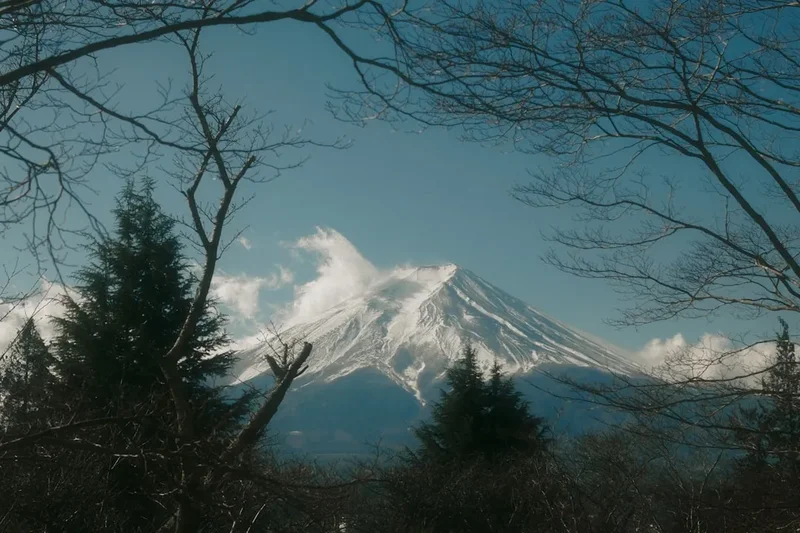
There is no formal "permit" required to hike the trails of Mount Hiei. The mountain is open to the public, and the hiking paths are free to access. However, the Enryaku-ji temple complex itself requires an entry fee to access the various halls and sacred areas.
Temple Entry Fees:
- Adults: 1,000 Japanese Yen
- Junior/Senior High Students: 600 Japanese Yen
- Primary School Students: 300 Japanese Yen
- This single ticket covers entry to the Todo, Saito, and Yokawa areas
- Tickets can be purchased at the entrance gates of each section
Logistical Costs:
- Eizan Cable Car (Kyoto side): ~550 Yen one way
- Sakamoto Cable Car (Shiga side): ~870 Yen one way
- Mount Hiei Shuttle Bus: ~800-1,000 Yen for a day pass (useful for moving between temple sections)
- Train from Kyoto to Shugakuin: ~210 Yen
- Train from Sakamoto back to Kyoto: ~330-470 Yen
Booking Strategy: While no trail permit is needed, the Enryaku-ji Kaikan accommodation is the bottleneck. If you plan to stay on the mountain, book your room as soon as your dates are confirmed. If the Kaikan is full, consider staying in a "Ryokan" (traditional inn) in the town of Sakamoto at the base of the mountain, which allows you to experience the historic atmosphere without the strict monastic schedule.
Other Activities in the Area
The region surrounding Mount Hiei is rich with cultural and natural attractions that can easily extend your trip:
- Shugakuin Imperial Villa: Located near the trailhead, this 17th-century villa features stunning gardens. Note: Advance booking with the Imperial Household Agency is required.
- Lake Biwa Cruises: After descending to Sakamoto, take a boat tour of Japan's largest lake. The views of Mount Hiei from the water provide a great perspective on the distance you've travelled.
- Sakamoto Stone Walls: Wander the streets of Sakamoto to see the "Ano-shu" masonry—massive, mortar-less stone walls built by a legendary guild of stonemasons who also built many of Japan's castle foundations.
- Kyoto Kitayama Hiking: If you have more energy, the mountains to the north of Kyoto offer a vast network of trails connecting Kurama and Kibune, another famous spiritual hiking route.
- Otsu City Temples: Visit Mii-dera (Onjo-ji), a massive temple complex at the foot of the mountain that has a long and often contentious history with Enryaku-ji.
- Garden Museum Hiei: Located near the summit, this open-air museum features French Impressionist paintings reproduced on ceramic panels, set within beautiful flower gardens.
Safety and Conditions
Pre-Departure Checks:
- Check the Kyoto and Shiga weather forecasts; if heavy rain or thunderstorms are predicted, postpone the Kirara-zaka ascent as the mica-rich soil becomes extremely slippery.
- Verify the operation status of the Sakamoto and Eizan cable cars, especially during the winter months or after high winds.
- Ensure you have downloaded offline maps; while the trail is generally well-marked in Japanese, English signage can be sparse in the deeper forest sections.
Terrain Hazards: The "Kirara-zaka" path is a "sunken trail" eroded by centuries of use. In some sections, the path is narrow with high earthen walls on either side. Watch for loose rocks and exposed tree roots. The stone staircases around Enryaku-ji are ancient and often uneven; they become incredibly slick when covered in moss or wet leaves. Use trekking poles to maintain balance.
Wildlife: Mount Hiei is home to Japanese macaques (monkeys) and "Inoshishi" (wild boars). While generally shy, monkeys can be aggressive if they see food. Keep all snacks inside your pack and do not attempt to feed them. Wild boars are most active at dawn and dusk; if you encounter one, back away slowly and do not scream or run. Bear sightings are extremely rare on Mount Hiei compared to the Japanese Alps, but "Kuma-suzu" (bear bells) are still used by some local hikers.
Hypothermia and Exposure: Even in summer, the temperature drop at the summit can be significant if you are wet from sweat or rain. Always carry a windproof/waterproof layer. In autumn, the temperature drops rapidly as soon as the sun dips behind the Kitayama mountains.
Emergency Contacts: The emergency number in Japan is 110 for police and 119 for fire and ambulance. Mobile signal is generally good across most of the mountain, but can be spotty in the deep valleys between the Todo and Yokawa sections.
Side Trips and Points of Interest
The Sennichi Kaihogyo Path: While you cannot walk the entire 1,000-day route, you can walk sections of the path used by the "Marathon Monks." Look for the small stone "Mizunomi" (water drinking) stations and the tiny shrines where monks stop to pray. The atmosphere in these quiet, less-visited sections of the forest is palpably different from the main tourist areas.
Yokawa Chudo: Often skipped by day-trippers, the Yokawa area is the most peaceful part of the mountain. The Chudo (Main Hall) is built on a high stage, reminiscent of the famous Kiyomizu-dera in Kyoto, but surrounded by deep forest rather than city views. It is dedicated to the Kannon Bodhisattva and is a place of profound stillness.
Hiyoshi Taisha Shrine: Located at the base of the mountain in Sakamoto, this shrine is the head of over 3,800 Hiyoshi, Hie, and Sanno shrines across Japan. The shrine's messengers are monkeys (Masaru), and you will see monkey carvings and motifs throughout the complex. The "Sanno Torii" is unique for having a triangular pediment on top, representing the fusion of Shinto and Buddhism (Sanno Shinto) that flourished on the mountain.
The Lapis Abode (Ruriko-in): Located near the base of the Eizan Cable Car in Yase, this temple is famous for its polished black floors that reflect the surrounding maple trees. It is only open during specific periods in spring and autumn and requires a separate entry fee, but it is considered one of the most beautiful photographic spots in all of Japan.
Leave No Trace
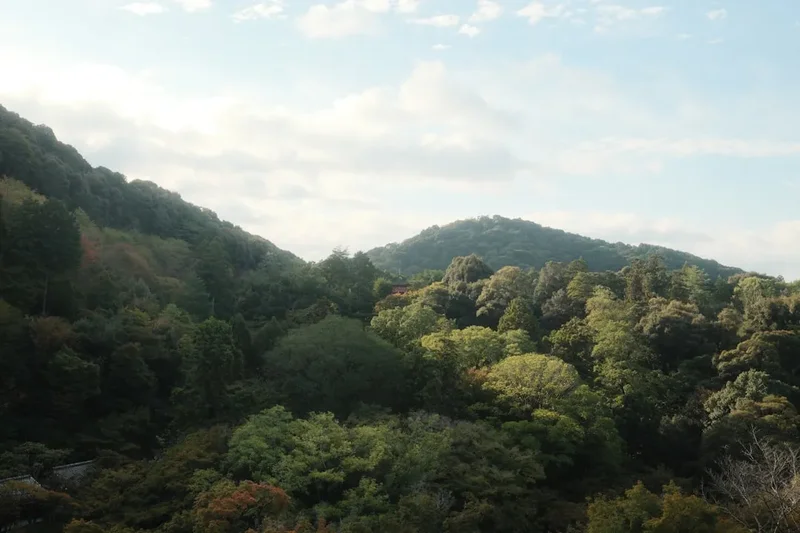
Mount Hiei is not just a natural park; it is a "Sangai" (Mountain World) that is considered sacred in its entirety. Every rock, tree, and stream is believed to be inhabited by spirits or to be an expression of the Buddha-nature. As a pilgrim and hiker, your conduct should reflect this sanctity.
Your responsibility as a walker:
- Carry out all rubbish. There are no public bins on the mountain trails or even in many parts of the temple complex. This includes fruit peels and tissues.
- Stay strictly on the marked paths. The mosses and ferns of Mount Hiei are part of a delicate ecosystem that has been protected for centuries.
- Do not use soap or detergents in the mountain streams. If you need to wash, wait until you reach the facilities at the temple lodgings.
- Keep noise to a minimum. Many monks and lay practitioners are on the mountain for silent retreat and meditation.
- Respect the religious ceremonies. If you encounter a procession or a monk in prayer, stand aside quietly and do not take photos unless explicitly permitted.
- Do not touch or deface the "Cho-ishi" (stone distance markers) or the many small Jizo statues along the trail.
By following these principles, you ensure that the "Guardian Mountain" remains a place of spiritual refuge for the next 1,200 years. Walk with a "Gassho" (prayerful) heart.
 Japan
Japan