
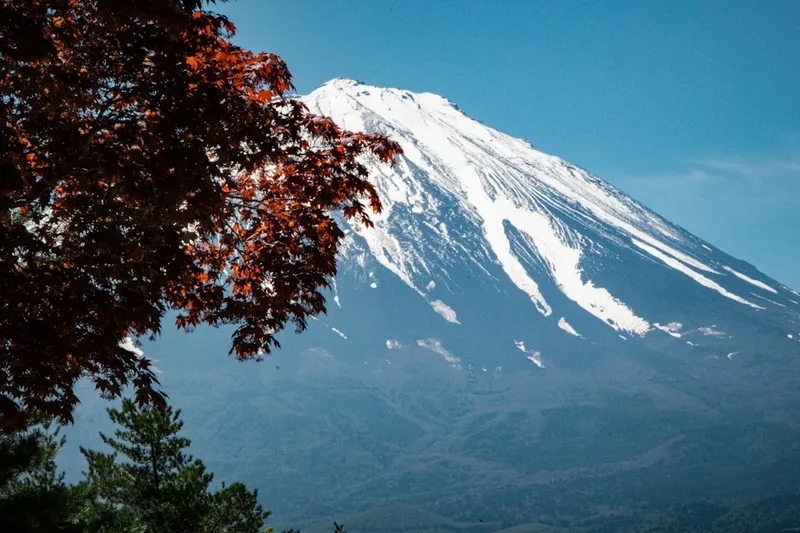
Mount Fuji Yoshida Trail - The Path to the Peak of Japan
Mount Fuji, or Fuji-san, is not merely a mountain; it is the spiritual heart of Japan and a globally recognised icon of symmetry and natural beauty. Standing at 3,776 metres, it is the highest peak in the Japanese archipelago and a UNESCO World Heritage site designated for its cultural and religious significance. The Yoshida Trail, located on the northern side of the mountain in Yamanashi Prefecture, is the most popular and well-equipped of the four major routes to the summit. This 14.2-kilometre round-trip journey takes climbers from the Fuji Subaru Line 5th Station through a dramatic landscape of volcanic scoria, alpine scrub, and eventually, the rarefied air of the summit crater. It is a pilgrimage that combines physical endurance with a deep sense of historical continuity, as millions have trodden these same volcanic paths over centuries in search of the "Goraiko"—the sacred sunrise viewed from the top of the world.
- Distance: 14.2 km (round trip)
- Elevation Gain: 1,450 m
- Duration: 6–9 hours (total walking time; excludes hut stays)
- Difficulty: Challenging (due to altitude and steep volcanic terrain)
- Best Time: Early July to mid-September (official climbing season)
- Highest Point: 3,776 m (Summit of Mount Fuji)
- Trailhead: Fuji Subaru Line 5th Station (2,305 m)
- Route Type: Out-and-back (with a dedicated descent path)
Overview
The Yoshida Trail is the quintessential Mount Fuji experience, favoured by over 60% of all climbers who attempt the peak each year. Its popularity stems from its accessibility and the high density of mountain huts (yamagoya) that line the route, providing essential rest stops, food, and emergency shelter. The trail begins at the Fuji Subaru Line 5th Station, a bustling hub of shops and shrines situated at 2,305 metres. From here, the path ascends through a relatively gentle forested section before emerging onto the exposed, zig-zagging slopes of the mountain's upper reaches. The terrain is dominated by volcanic basalt and loose scoria (lava rock), which can be slippery on the ascent and punishing on the knees during the descent.
What sets the Yoshida Trail apart is its eastern orientation, which allows climbers to witness the sunrise from almost any point on the upper half of the mountain. However, the ultimate goal for most is to reach the summit before dawn. This creates a unique nocturnal atmosphere, where a literal "river of light" is formed by the headlamps of hundreds of climbers snaking their way up the switchbacks in the dark. The climb is a test of pacing; the air thins significantly above 3,000 metres, and the final push from the 8th station to the summit is a slow, rhythmic struggle against gravity and oxygen deprivation. The reward is a 360-degree panorama of the Fuji Five Lakes, the Japanese Alps, and the vast Pacific Ocean, all bathed in the golden light of a new day.
Despite its popularity, the Yoshida Trail remains a serious undertaking. The weather on Mount Fuji is notoriously fickle, with temperatures at the summit often hovering near freezing even in the height of summer. Sudden thunderstorms, high winds, and dense fog can transform a straightforward hike into a dangerous ordeal. Furthermore, the sheer volume of people during peak weekends and the Obon holiday in August requires patience and a communal spirit. The trail is managed with Japanese efficiency, featuring a dedicated descent route that is separate from the ascent path for much of the journey, helping to mitigate congestion and preserve the fragile volcanic environment.
History and Cultural Context
Mount Fuji has been a site of religious pilgrimage for over a millennium. In the Shinto tradition, the mountain is personified as the deity Konohanasakuya-hime, the goddess of cherry blossoms and volcanoes. For centuries, the mountain was considered so sacred that women were forbidden from climbing it—a ban that remained in place until 1872. The Yoshida Trail itself follows the historical "Yoshida-guchi" route, which originally began at the Kitaguchi Hongu Fuji Sengen Shrine in the city of Fujiyoshida. In the Edo period (1603–1868), "Fuji-ko" (devotional climbing societies) became immensely popular, and thousands of white-clad pilgrims would make the journey from Tokyo (then Edo) to the summit as an act of purification and worship.
The transition from a purely religious site to a modern tourist destination began in the late 19th century. The first recorded ascent by a non-Japanese person was by Sir Rutherford Alcock in 1860, followed shortly by Lady Fanny Parkes in 1867, who became the first non-Japanese woman to reach the summit. The construction of the Fuji Subaru Line road in 1964 fundamentally changed the mountain, allowing buses to transport people directly to the 5th station and bypassing the lower, forested sections of the traditional trail. This democratised the climb but also introduced the challenges of over-tourism that the mountain faces today.
In 2013, Mount Fuji was inscribed as a UNESCO World Heritage site, not as a "Natural" site, but as a "Cultural" one. This distinction recognises the mountain's profound influence on Japanese art—most notably the ukiyo-e prints of Katsushika Hokusai and Utagawa Hiroshige—and its role as a "sacred place and source of artistic inspiration." Today, climbers are encouraged to carry a "Kongozue"—a wooden staff—which can be branded with unique stamps at each mountain station. These brands serve as a physical record of the climber's journey and a modern continuation of the ancient pilgrim tradition.
Want more background? Read extended notes on history and cultural context → Learn more
Seasonal Highlights and Weather Reality
The official climbing season for the Yoshida Trail is strictly limited to the summer months, typically from July 1st to September 10th. During this window, the mountain huts are open, public transport to the 5th station is frequent, and emergency services are on standby. Climbing outside this season is strongly discouraged and requires the submission of a formal climbing plan to the Yamanashi Prefectural Police. In the "off-season," Mount Fuji reverts to its true nature as a lethal alpine environment, with extreme winds, sub-zero temperatures, and high avalanche risk. Even in early July, snow patches may remain on the trail, requiring caution.
Weather on the mountain is a study in extremes. At the 5th station (2,305 m), the temperature might be a pleasant 20°C, but at the summit (3,776 m), it can drop to 0°C or lower, even during the day. The wind chill factor is a significant concern; the cone-like shape of the mountain offers no protection from the elements, and gusts can be strong enough to knock a person off their feet. Rain is common, and because there is no tree cover above the 6th station, climbers are completely exposed. Lightning is a genuine hazard during summer afternoon storms, and climbers are advised to seek shelter in huts immediately if thunder is heard.
The "best" time to climb within the season is generally late July to early August, before the peak crowds of the Obon festival arrive. Weekdays are significantly less crowded than weekends. However, this is also the period of highest humidity and potential typhoon activity. Late August and early September offer clearer air and a higher chance of seeing the "Kage-Fuji"—the perfect triangular shadow of the mountain cast onto the clouds or the landscape below at sunrise or sunset. Regardless of the month, climbers must be prepared for "four seasons in one day" and monitor the weather forecasts from the Japan Meteorological Agency closely.
Recommended Itinerary
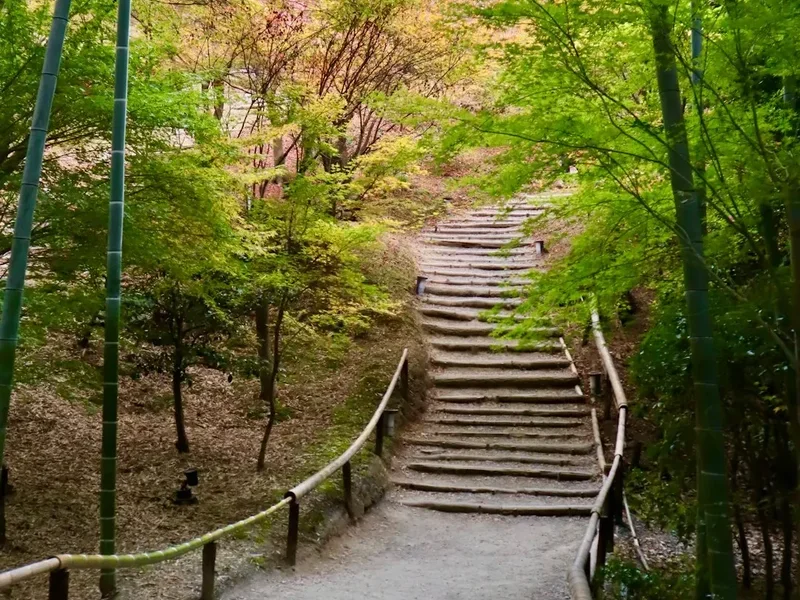
Standard 2-Day Yoshida Trail Itinerary
Day 1: Fuji Subaru Line 5th Station to 8th Station
- Distance: 6 km
- Elevation gain: 800 m – 1,100 m (depending on hut location)
- Time: 3.5–5 hours
- Start at the Fuji Subaru Line 5th Station (2,305 m) around midday to allow for acclimatisation
- Follow the flat, wide path toward the 6th Station (Safety Guidance Centre)
- Begin the zig-zag ascent on volcanic gravel from the 6th to the 7th Station
- Navigate the rocky, steeper sections between the 7th and 8th Stations where some light scrambling may be required
- Arrive at your pre-booked mountain hut (e.g., Taishokan, Gansomuro, or Hakuun-so) by late afternoon
- Eat a simple dinner (usually curry rice) and rest early (around 19:00) to prepare for the midnight start
- This stage is about finding a steady rhythm and staying hydrated to prevent altitude sickness
Day 2: 8th Station to Summit and Descent
- Distance: 8.2 km (2.2 km ascent, 6 km descent)
- Elevation: 400 m – 700 m gain to summit, 1,450 m descent
- Time: 2–3 hours (ascent), 3–5 hours (descent)
- Wake up between 00:00 and 02:00 depending on your hut's elevation and the expected crowds
- Join the queue of climbers for the final push to the summit in the dark using headlamps
- Pass through the 9th Station and the final Torii gate to reach the summit (3,710 m at the Yoshida trailhead)
- Witness the "Goraiko" (sunrise) from the summit rim around 04:30 – 05:00
- OPTIONAL: Complete the "Ohachi-meguri" (crater rim walk) to reach Kengamine, the absolute highest point (3,776 m), adding 90 minutes
- Begin the descent via the dedicated Yoshida/Subashiri descent route (yellow markers)
- The descent is a long series of steep, dusty zig-zags on loose volcanic ash
- Pass the 8th Station branch-off (ensure you follow the Yoshida signs, not Subashiri)
- Return to the 5th Station by late morning or midday for the bus back to Fujiyoshida or Tokyo
Important Notes:
- "Bullet climbing" (ascending and descending in one go without a hut stay) is strongly discouraged and now restricted by new regulations to prevent accidents and altitude sickness
- The descent route is different from the ascent route; it is very dusty and can be hard on the knees
- Ensure you have 100-yen coins for the paid toilets at every station
- The summit can be 20 degrees colder than the 5th station; do not underestimate the cold while waiting for sunrise
- Water and snacks are available at huts but prices increase significantly with altitude
Planning and Bookings
Book Your Trip
Everything you need to plan your journey
Accommodation
Find places to stay near Fujiyoshida
Flights
Search flights to Fujiyoshida
Essential Preparation
Planning for Mount Fuji begins months in advance, primarily due to the necessity of booking mountain huts. The Yoshida Trail is physically demanding, not because of technical difficulty, but because of the rapid elevation gain. Climbers should have a reasonable level of cardiovascular fitness. It is highly recommended to spend at least one to two hours at the 5th station before starting the climb to allow your body to begin adjusting to the altitude (2,305 m).
Logistically, the most common base for the climb is Tokyo. From Shinjuku Station, direct "Fuji Excursion" trains or highway buses run to Kawaguchiko or Fujiyoshida. From there, local buses take you to the Fuji Subaru Line 5th Station. Alternatively, direct buses from Shinjuku to the 5th station operate during the climbing season. If you are driving, be aware that the Fuji Subaru Line is closed to private vehicles during the peak season to reduce congestion; you must park at the designated "Fujisan Parking" lot and take a shuttle bus.
Trail Accommodation
Accommodation on Mount Fuji consists of "Yamagoya" (mountain huts). These are basic, functional shelters designed for short rests rather than a comfortable night's sleep. On the Yoshida Trail, there are approximately 20 huts located between the 7th and 8.5 stations.
Hut Facilities:
- Shared sleeping areas: Usually bunk beds or floor mats in very close proximity to other climbers
- Bedding: Futons and sleeping bags are provided (no need to bring your own)
- Meals: Most bookings include a hot dinner (typically Japanese curry) and a cold breakfast pack (bentos)
- Toilets: Available but usually require a small fee (200–300 yen) for non-guests
- Small shop: Selling water, oxygen canisters, snacks, and branding for walking sticks
What Huts Don't Provide:
- Showers or running water for washing (water is extremely precious on the mountain)
- Private rooms (with very few expensive exceptions)
- Charging ports for electronics (bring a power bank)
- Quiet: Huts are noisy environments with people arriving and departing at all hours
Booking Requirements:
- Reservations are mandatory and usually open in April or May for the summer season
- Popular huts (like those at the 8th or 8.5 station) sell out within days of opening
- Costs: Expect to pay between 10,000 and 18,000 yen per person, depending on the day of the week and meal options
- Many huts now use online booking systems (e.g., Mt. Fuji Hut Booking), though some still require phone calls in Japanese
Required Gear
- Hiking boots: Sturdy, waterproof, and well broken-in. Ankle support is vital for the loose descent
- Headlamp: Essential for the night climb to the summit. Bring spare batteries
- Layered clothing: Moisture-wicking base layer, insulating fleece or down mid-layer, and a breathable outer shell
- Rain gear: High-quality waterproof jacket and trousers (ponchos are dangerous in high winds)
- Gaiters: Highly recommended for the descent to keep volcanic ash and stones out of your boots
- Hiking poles: Extremely helpful for stability on the rocky ascent and reducing knee impact on the descent
- Backpack: 20–30L with a rain cover
- Sun protection: Sunglasses, wide-brimmed hat, and high-SPF sunscreen (UV rays are intense at high altitude)
What to Bring
- Cash: Essential. Most huts and toilets do not accept cards. Bring plenty of 100-yen coins
- Water: At least 2 litres. You can buy more at huts, but it is expensive (up to 500 yen per bottle)
- High-energy snacks: Trail mix, energy bars, chocolate, and electrolyte powder
- Portable oxygen: Small canisters are sold at the 5th station; they can provide temporary relief from altitude symptoms
- Personal first aid: Blister pads (moleskin), ibuprofen/paracetamol, and any personal medications
- Trash bags: There are no bins on the mountain. You must carry all your waste back to the 5th station or your hotel
- Toiletries: Wet wipes (for "washing"), hand sanitiser, and tissues
- Earplugs and eye mask: For attempting to sleep in the crowded mountain huts
Permits
As of 2024, significant changes have been implemented to manage the crowds and safety on the Yoshida Trail. A new mandatory entry fee and booking system are now in place for all climbers starting from the Fuji Subaru Line 5th Station. These measures were introduced by the Yamanashi Prefectural Government to combat "bullet climbing" and over-tourism.
Mandatory Entry Fee and Regulations:
- Entry Fee: A mandatory fee of 2,000 yen per person is required to pass the 5th station gate
- Daily Cap: A limit of 4,000 climbers per day has been established. Once this limit is reached, the trail is closed to new climbers
- Gate Closure: The entry gate at the 5th station closes from 16:00 to 03:00 the following morning. Only those with a confirmed mountain hut reservation are permitted to pass during these hours
- Voluntary Donation: In addition to the mandatory fee, a voluntary 1,000 yen "Fujisan Conservation Donation" is requested to support environmental protection and safety measures
Booking Strategy:
- Online Reservation: It is highly recommended to book your entry slot and pay the fee in advance via the official "Mount Fuji Climbing" website
- Hut Confirmation: If you plan to climb in the evening, ensure you have a digital or printed copy of your hut reservation to show at the 5th station gate
- Same-day Entry: A limited number of walk-in slots may be available if the 4,000-person cap has not been reached, but this is risky during weekends or holidays
Off-Season Permits: Climbing outside the official season (mid-September to June) requires the submission of a "Climbing Plan" (Tozan-todoke) to the local police. This is only for experienced mountaineers with full winter gear, including ice axes and crampons. Most climbers should strictly stick to the official season.
Other Activities in the Area
The region surrounding Mount Fuji, known as the Fuji Five Lakes (Fujigoko), offers a wealth of activities for those looking to recover from their climb or explore the local culture:
- Chureito Pagoda: Located in Arakurayama Sengen Park, this is the site of the famous "postcard view" of Mount Fuji framed by a five-storey pagoda and cherry blossoms (or autumn leaves).
- Onsen (Hot Springs): There is no better way to soothe sore muscles than a soak in a local onsen. Many facilities in Kawaguchiko and Fujiyoshida offer outdoor baths (rotenburo) with views of the mountain.
- Fuji-Q Highland: For those with remaining energy, this world-class amusement park features some of the steepest and fastest roller coasters in the world, all set against the backdrop of the mountain.
- Lake Kawaguchi: Rent a bicycle and cycle around the lake, or take a scenic ropeway up Mount Tenjo for a different perspective of Fuji and the surrounding valley.
- Oshino Hakkai: A set of eight crystal-clear ponds fed by snowmelt from Mount Fuji, located in a traditional village setting. The water is exceptionally pure and filtered through layers of volcanic rock for decades.
- Kitaguchi Hongu Fuji Sengen Shrine: Visit the historical starting point of the Yoshida Trail. This atmospheric shrine is surrounded by ancient cedar trees and marks the beginning of the traditional pilgrimage route.
Safety and Conditions
Altitude Sickness (AMS): This is the most common health issue on Mount Fuji. Because the trail starts at 2,305 m and reaches 3,776 m in a matter of hours, the body often struggles to adapt. Symptoms include headache, nausea, dizziness, and fatigue. The best prevention is to climb slowly, stay hydrated, and spend time at the 5th station before starting. If symptoms become severe, the only cure is to descend immediately. Do not "push through" severe AMS, as it can lead to life-threatening conditions like HAPE or HACE.
Weather Hazards: Mount Fuji is an isolated peak, meaning it creates its own weather. Conditions can change from clear skies to a violent thunderstorm in less than 30 minutes. Hypothermia is a real risk; even in summer, the combination of wet clothes and high winds can drop body temperatures dangerously low. If caught in a storm, seek shelter in the nearest mountain hut. Do not attempt to summit in high winds, as the ridge is extremely exposed.
Falling Rocks: The volcanic terrain is unstable. Be mindful of loose rocks, especially in the steeper sections between the 7th and 9th stations. Helmets are not mandatory but are increasingly seen on the mountain. If you dislodge a rock, shout "Raku!" (Stone!) to warn those below you.
The Descent: More injuries occur on the descent than the ascent. The loose volcanic scoria is slippery, and the repetitive braking motion is punishing on the quadriceps and knees. Use hiking poles and take small, controlled steps. Be aware that the descent route for the Yoshida Trail and the Subashiri Trail are the same until the 8th station; ensure you follow the yellow signs for Yoshida to avoid ending up on the wrong side of the mountain.
Emergency Services: There are first aid centres at the 5th, 7th, and 8th stations during the official season. In a serious emergency, dial 110 (Police) or 119 (Ambulance/Fire). Note that mountain rescues are complex and can be extremely expensive; ensure your travel insurance covers high-altitude trekking.
Side Trips and Points of Interest
Ohachi-meguri (Crater Rim Walk): Once you reach the summit, the journey isn't quite over. A circular trail follows the rim of the 500-metre-wide crater. This 90-minute walk takes you past the various peaks of the summit, including Kengamine, the highest point in Japan. You will also see the silver-domed weather station and several small shrines. The views into the depths of the crater, which is often filled with snow, are spectacular.
Kengamine Peak: This is the absolute highest point of Mount Fuji (3,776 m). It is located on the opposite side of the crater from the Yoshida Trail summit. Reaching the marker stone requires a short, very steep climb up a slippery slope known as "Konoshiro-nagashi." It is a popular spot for a victory photo, though queues can be long.
Kusushi Shrine and Okumiya: These Shinto shrines are located at the summit. Climbers can purchase special charms (omamori) and get the final, most important brand on their walking sticks. There is also a post office at the summit (near the Fujinomiya trail exit) where you can send a postcard with a unique Mount Fuji postmark.
The 6th Station Safety Guidance Centre: While most people rush past it, this station provides excellent real-time weather updates and safety information. It is a good place to do a final gear check and ensure you are feeling well before the real climbing begins.
The "Old" Yoshida Trail: For those seeking a more traditional experience, it is possible to walk from the Kitaguchi Hongu Fuji Sengen Shrine in the city up to the 5th station. This section passes through beautiful, quiet forests and historic tea house ruins, adding about 5–6 hours to the total climb. It is a wonderful way to escape the crowds of the Subaru Line.
Leave No Trace
Mount Fuji is a sacred site and a fragile volcanic ecosystem. With hundreds of thousands of visitors each year, the environmental impact is significant. Adhering to Leave No Trace principles is not just a suggestion; it is a responsibility to the mountain and Japanese culture.
Your responsibility as a climber:
- Carry out all trash: There are no rubbish bins on the mountain. This includes food wrappers, fruit peels, and cigarette butts. Carry a small sealable bag for your waste
- Use the toilets: Do not relieve yourself on the trail. Use the station toilets and pay the required fee, which goes toward the high cost of waste management at altitude
- Stay on the trail: The volcanic soil is easily eroded. Taking shortcuts on the zig-zags causes significant damage and can trigger rockfalls
- Do not collect rocks: It is illegal to remove any volcanic rocks or plants from the mountain, as it is part of a National Park
- Respect the silence: Many people climb Fuji as a spiritual journey. Avoid loud music or shouting, especially near the mountain huts at night
- No graffiti: Do not scratch names into rocks or hut walls. This is considered a serious act of desecration
- Minimise use of walking sticks: While "Kongozue" are traditional, if you use metal-tipped trekking poles, use rubber tips to prevent scarring the rocks and trail
By following these guidelines, you help ensure that Mount Fuji remains a beautiful and sacred destination for future generations of pilgrims and adventurers.
 Japan
Japan