
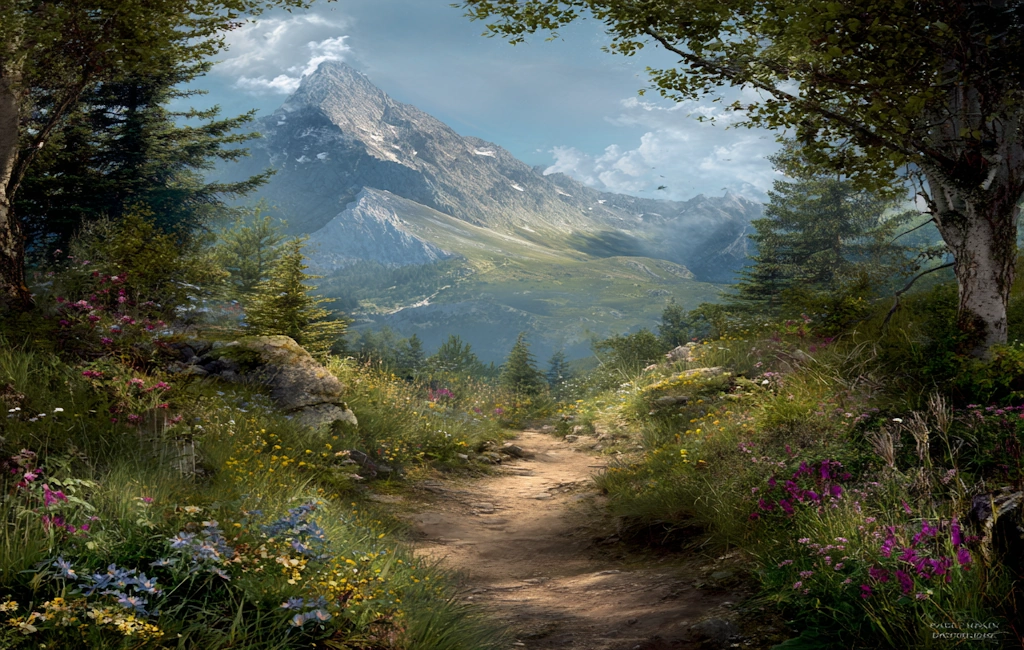
Mount Elgon Summit via Sasa Trail - The Roof of Eastern Uganda
Mount Elgon, an extinct shield volcano straddling the border between Uganda and Kenya, offers one of the most profound wilderness experiences in East Africa. While its highest peak, Wagagai (4,321 metres), sits entirely within Ugandan territory, the mountain’s massive base—measuring some 80 kilometres by 50 kilometres—makes it one of the largest volcanic structures in the world. The Sasa Trail is the most storied and challenging route to the summit, renowned for its directness, its punishing initial ascent, and its spectacular transition through diverse ecological zones. Unlike the more gradual Sipi or Piswa trails, the Sasa Trail demands immediate physical respect, beginning in the lush farmlands of Budadiri and climbing vertically through the infamous "Wall of Death" before opening into the ethereal Afro-alpine moorlands that define the upper reaches of the park.
This four-day journey is not merely a peak-bagging exercise; it is an immersion into a landscape that feels prehistoric. Walkers traverse ancient montane forests, dense bamboo thickets, and high-altitude heath where giant lobelias and groundsels stand like sentinels against the mist. The Sasa Trail provides the quickest access to the magnificent caldera—a collapsed volcanic crater spanning 40 square kilometres—and offers a sense of isolation that is increasingly rare on more commercialised African peaks. For those seeking a raw, authentic mountain adventure away from the crowds of Kilimanjaro or Mount Kenya, the Sasa Trail represents the pinnacle of Ugandan trekking, combining physical endurance with unparalleled botanical beauty and geological wonder.
- Distance: 36.0 km return
- Duration: 4 days / 3 nights
- Season: Dry seasons (June to August and December to February)
- Accommodation: Basic campsites and mountain shelters (Sasa River, Mude Cave)
- Highest point: Wagagai Peak (4,321 m)
- Difficulty: Challenging (steep initial ascent and high altitude)
- Starting Point: Budadiri (1,250 m)
- Permits: Required via Uganda Wildlife Authority (UWA)
Overview
Mount Elgon is a mountain of superlatives. Once thought to be the highest mountain in Africa before erosion reduced its height over millions of years, it remains a formidable giant. The Sasa Trail is the "classic" route, favoured by those who prefer a steep, direct challenge over a long, winding approach. The journey begins at the Budadiri trailhead, situated at approximately 1,250 metres. From here, the trail wastes no time, ascending through local Bagisu smallholdings where Arabica coffee and bananas thrive in the rich volcanic soil. This lower section provides a fascinating glimpse into the agricultural life of the region before the trail enters the National Park boundary and the real work begins.
The defining feature of the Sasa Trail’s first day is the Mudange Cliffs, colloquially known as the "Wall of Death." While the name is more dramatic than the reality, the section involves a series of steep metal ladders and narrow rock staircases bolted into the cliff face. It is a heart-pounding ascent that quickly gains hundreds of metres in elevation, rewarding the effort with expansive views back across the valleys of eastern Uganda. Once above the cliffs, the landscape shifts dramatically into the montane forest zone, where the air cools and the vegetation becomes increasingly lush and moss-draped.
As the trail progresses over the subsequent days, walkers move through the bamboo zone—a surreal, emerald-green corridor that can be notoriously muddy during the rains—and eventually emerge into the heath and moorland. This is the Afro-alpine zone, a high-altitude desert characterised by unique flora found only on the highest peaks of East Africa. The giant groundsels (Senecio elgonensis) and giant lobelias (Lobelia elgonensis) dominate the landscape, creating a scene that feels more like a science fiction film than a terrestrial mountain. The final push to Wagagai Peak takes walkers along the rim of the massive caldera, offering views into the vast, desolate interior of the crater and across the border into Kenya. The summit itself is a broad, rocky plateau, providing a 360-degree panorama of the surrounding peaks and the shimmering plains far below.
The Sasa Trail is physically demanding, particularly on the knees during the long descent, but the logistical simplicity of starting and finishing in Budadiri makes it a highly efficient way to experience the best of Mount Elgon. It is a trail that rewards the fit and the adventurous, offering a deep connection to the geological and biological heritage of the African continent.
History and Cultural Context
Mount Elgon, known locally as "Masaba" by the Bagisu people, holds a sacred place in the cultural identity of eastern Uganda. According to local tradition, Masaba was the founding ancestor of the Bagisu, and the mountain is considered his home. This spiritual connection is most visibly expressed through the "Imbalu" circumcision ceremonies, which take place every even-numbered year. Young men from the region undergo a public rite of passage into manhood, and the mountain serves as a backdrop and a source of traditional medicine and spiritual strength for these ceremonies. For the Bagisu, the mountain is not just a geographical feature; it is a living entity that provides water, fertile soil, and a sense of belonging.
From a geological perspective, Mount Elgon is one of the oldest extinct volcanoes in East Africa, with its last major eruptions occurring over 10 million years ago. Its shield-like shape, created by successive flows of fluid lava, distinguishes it from the more jagged, glaciated peaks of the Rwenzori Mountains. The massive caldera at the summit is a testament to the mountain's violent past, formed when the volcanic cone collapsed inward after the magma chamber emptied. This caldera is one of the largest in the world, and its floor is dotted with hot springs and unique mineral deposits that have attracted both wildlife and humans for millennia.
European exploration of the mountain began in the late 19th century. Joseph Thomson, a Scottish geologist and explorer, was the first European to reach the mountain in 1883, though he did not summit. It wasn't until 1890 that Sir Frederick Jackson and Ernest Gedge reached the caldera rim, and the highest peak, Wagagai, was eventually surveyed and named. During the colonial era, the mountain became a centre for coffee production, with the high altitude and volcanic soil proving perfect for Arabica beans. The Sasa Trail itself follows ancient paths used by local hunters and gatherers who ventured into the high forests for bamboo shoots (malewa) and honey.
Today, Mount Elgon National Park is a UNESCO Man and Biosphere Reserve, recognised for its incredible biodiversity and its role as a vital water tower for millions of people in Uganda and Kenya. The park was formally gazetted in 1992, following years of encroachment and forest degradation. Conservation efforts now focus on balancing the needs of the local communities with the protection of the mountain's unique Afro-alpine ecosystem. Walking the Sasa Trail is, therefore, a journey through both natural and human history, where the echoes of ancient eruptions meet the living traditions of the Bagisu people.
Want more background? Read extended notes on history and cultural context → Learn more
Seasonal Highlights and Weather Reality
The timing of a Mount Elgon trek is critical to both safety and enjoyment. Being located near the equator, the mountain does not experience traditional four-season cycles, but rather distinct wet and dry periods. The weather on the mountain is notoriously unpredictable, and conditions can change from bright sunshine to torrential rain or thick fog within minutes.
Dry Seasons (June to August and December to February): These are the optimal windows for trekking the Sasa Trail. During these months, the skies are generally clearer, providing the best views of the caldera and the surrounding plains. The trail, while still potentially damp in the forest zones, is significantly less muddy and easier to navigate. December and January are particularly popular as they coincide with the clearest weather, though this is also when the mountain is at its busiest. Nighttime temperatures at the higher camps (Mude Cave) can drop to near freezing (0°C to 5°C), so warm gear is essential despite the daytime heat.
Wet Seasons (March to May and September to November): Trekking during the rainy seasons is possible but significantly more challenging. The Sasa Trail becomes extremely slippery, particularly the steep sections through the bamboo forest. The "Wall of Death" ladders can be treacherous when wet, and the high-altitude moorlands are often shrouded in thick mist, obscuring the views. However, the wet season brings its own beauty; the waterfalls are at their most powerful, and the flora is incredibly vibrant. For experienced trekkers who don't mind getting wet and muddy, the shoulder months of May and September can offer a more solitary experience.
Temperature and Altitude: Regardless of the season, walkers must be prepared for a wide range of temperatures. At the trailhead in Budadiri, it can be a humid 25°C to 30°C. As you ascend, the temperature drops by approximately 6.5°C for every 1,000 metres of elevation gain. At the summit of Wagagai, even on a sunny day, the wind chill can make it feel well below freezing. Proper layering is the only way to manage these fluctuations effectively.
Recommended Itinerary
4-Day Mount Elgon Sasa Trail Itinerary
Day 1: Budadiri to Sasa River Camp
- Distance: 8 km
- Elevation gain: 1,650 m
- Time: 5–7 hours
- Start at the UWA office in Budadiri for registration and briefing
- Initial walk through community farmlands and coffee plantations
- Ascend the Mudange Cliffs via the "Wall of Death" ladders and staircases
- Enter the National Park boundary and transition into montane forest
- Arrive at Sasa River Camp (2,900 m)
- This is the most physically demanding day due to the rapid elevation gain
- The camp is situated near the Sasa River, providing a reliable water source and a soothing soundtrack for the night
Day 2: Sasa River Camp to Mude Cave Camp
- Distance: 5 km
- Elevation gain: 600 m
- Time: 4–5 hours
- Steady climb through the dense bamboo forest zone
- Transition into the giant heather and high-altitude moorland
- Pass through the "Jackson’s Pool" area (weather permitting)
- Arrive at Mude Cave Camp (3,500 m)
- A shorter day designed to assist with acclimatisation to the higher altitude
- Mude Cave provides a natural shelter, though most trekkers use the nearby wooden huts or pitch tents
- Afternoon can be spent exploring the immediate area or resting for the summit push
Day 3: Mude Cave Camp to Wagagai Peak and back to Mude Cave
- Distance: 18 km (return)
- Elevation gain: 821 m
- Time: 8–10 hours
- Early morning start (typically 06:00) to catch the sunrise and clear views
- Ascend through the Afro-alpine zone, dominated by giant lobelias and groundsels
- Reach the rim of the massive caldera and follow it towards the summit
- Summit Wagagai Peak (4,321 m) – the highest point on Mount Elgon
- Spend time enjoying the views of the caldera floor and the Kenyan side of the mountain
- Descend back the same way to Mude Cave Camp for the final night
- This is a long, tiring day that tests endurance at altitude
Day 4: Mude Cave Camp to Budadiri
- Distance: 13 km
- Elevation loss: 2,250 m
- Time: 6–8 hours
- Long descent back through the bamboo forest and montane forest
- Careful navigation of the "Wall of Death" ladders on the way down
- Exit the National Park and walk back through the community farmlands
- Return to Budadiri for final sign-out at the UWA office
- Transfer back to Mbale for a well-earned meal and rest
- The descent is notoriously hard on the knees; trekking poles are highly recommended
Important Notes:
- All trekkers must be accompanied by a UWA ranger/guide
- Porters are available and highly recommended to support the local economy and ease the physical burden
- Water should be treated at all camps
- The itinerary can be extended to 5 days to include a trip into the caldera floor or to Jackson's Summit
- Weather can delay the summit push; always have a small buffer in your travel plans
Planning and Bookings
Book Your Trip
Everything you need to plan your journey
Accommodation
Find places to stay near Mbale
Flights
Search flights to Mbale
Essential Preparation
Planning a trek on Mount Elgon requires more logistical coordination than a standard day hike. The primary hub for all Elgon expeditions is the city of Mbale. From Mbale, you must travel to Budadiri, which is the gateway to the Sasa Trail. The journey takes about 1.5 hours by private car or local "matatu" (minibus), though road conditions can be poor, especially after rain. It is essential to arrive in Mbale at least a day before your trek to organise supplies and transport.
Physical fitness is a prerequisite. The first day of the Sasa Trail involves a vertical gain of over 1,600 metres, which is a significant challenge for even seasoned hikers. Cardiovascular training and leg strength exercises (like weighted step-ups) are highly recommended in the months leading up to the trip. Additionally, because the trail reaches over 4,000 metres, an understanding of Acute Mountain Sickness (AMS) is vital. While the Sasa Trail is shorter than many other routes, its rapid ascent increases the risk of altitude-related issues.
Trail Accommodation
Accommodation on the Sasa Trail is basic and rugged. There are no luxury lodges or serviced huts on this route. Trekkers must be prepared for a true wilderness experience.
Campsites and Shelters:
- Sasa River Camp: Features a basic wooden shelter and cleared areas for tents. There is a pit latrine and access to the river for water.
- Mude Cave Camp: Features a larger wooden hut that can accommodate a small number of trekkers on wooden platforms. Most people choose to tent outside the hut for more privacy. The "cave" itself is a large rock overhang that provides additional shelter from the wind.
Facilities Provided:
- Basic pit latrines at both main camps
- Wooden sleeping platforms in the huts (limited space)
- Designated cooking areas (usually used by porters and guides)
What is NOT Provided:
- Bedding, mattresses, or sleeping bags
- Cooking equipment, stoves, or fuel
- Electricity or charging points
- Running water or showers (all water is from streams)
- Food or snacks
Required Gear
- Trekking Boots: High-quality, waterproof boots with excellent ankle support. The trail is rocky, steep, and often muddy.
- Waterproof Jacket and Trousers: Breathable but heavy-duty rain gear. Mount Elgon can experience intense downpours at any time.
- Layered Clothing: Merino wool or synthetic base layers, a warm fleece or down mid-layer, and a windproof outer shell.
- Sleeping Bag: A 4-season bag rated to at least -5°C. Even in the dry season, temperatures at Mude Cave are very cold.
- Trekking Poles: Essential for the 2,250-metre descent on Day 4 to protect your knees.
- Headlamp: With extra batteries for the early morning summit push and evening use in the huts.
- Backpack: A 50-70L pack if carrying your own gear, or a 20-30L daypack if using porters.
- First Aid Kit: Including blister care, rehydration salts, and Diamox (if prescribed for altitude).
What to Bring
- Food: You must bring all your own food for 4 days. High-calorie, lightweight options like pasta, rice, tinned fish, nuts, and dried fruit are best. Most trekkers hire a porter-cook to prepare meals.
- Water Treatment: Purification tablets or a high-quality filter (like a Sawyer Squeeze). Stream water is generally clean but must be treated to avoid stomach issues.
- Cooking Fuel: Small gas canisters or multi-fuel stoves. These can be purchased in Kampala or sometimes Mbale, but check availability beforehand.
- Sun Protection: High-SPF sunscreen, lip balm with SPF, and a wide-brimmed hat. The equatorial sun is extremely strong at high altitudes.
- Toiletries: Biodegradable soap, wet wipes (for "mountain showers"), and sufficient toilet paper.
- Power Bank: To keep phones and cameras charged, as there is no electricity on the mountain.
Permits
All trekking on Mount Elgon is managed by the Uganda Wildlife Authority (UWA). Permits are mandatory and must be organised at the UWA office in Budadiri or the regional office in Mbale. Unlike the gorilla trekking permits in Bwindi, Elgon permits do not usually need to be booked months in advance, but it is wise to contact UWA a few weeks before your trip to confirm current rates and availability.
Permit Costs and Inclusions:
- Daily Conservation Fee: Approximately US$35 for foreign non-residents, US$25 for foreign residents, and UGX 25,000 for East African citizens. (Note: Prices are subject to change; always check the latest UWA tariff).
- Guide Fees: The daily fee usually includes the cost of a mandatory armed UWA ranger/guide. These guides are essential for navigation and safety.
- Porter Fees: Porters are hired separately at the trailhead. The standard rate is approximately UGX 30,000 to 40,000 per day. Porters can carry up to 25 kg. It is customary to tip your porters and guides at the end of the trek.
Booking Process:
- Visit the UWA office in Budadiri on the morning of your trek (or the afternoon before).
- Present your passport or residency ID.
- Pay the fees in Ugandan Shillings (UGX) or US Dollars (USD). Note that USD bills must be newer than 2006 and in pristine condition.
- Complete the registration form and receive your briefing from the head ranger.
Important Logistics: Ensure you have enough cash for your porters and guides before leaving Mbale, as there are no ATMs in Budadiri. The UWA office may accept credit cards, but the system is frequently offline, so cash is the only reliable payment method.
Other Activities in the Area
The region around Mount Elgon and Mbale offers several excellent ways to extend your adventure:
- Sipi Falls: Located on the northern slopes of the mountain, Sipi is famous for its three spectacular waterfalls. It is a great place to relax after your trek, with options for abseiling, coffee tours, and shorter day hikes.
- Coffee Tours: The Bugisu region produces some of the world’s finest Arabica coffee. Local community tours in Budadiri or Sipi allow you to see the process from bean to cup, including picking, de-pulping, roasting, and grinding.
- Rock Climbing: The basalt cliffs around Sipi Falls offer some of the best rock climbing in Uganda, with routes ranging from beginner to advanced.
- Wanale Ridge: A towering escarpment overlooking Mbale town. A day hike to the top offers incredible views and the chance to see several smaller waterfalls.
- Nyero Rock Paintings: Located about 2 hours from Mbale, these ancient geometric rock paintings date back thousands of years and are one of the most important archaeological sites in Uganda.
- Cultural Encounters: If your visit coincides with an "Imbalu" year, witnessing the public processions and traditional dances in the villages around Mbale is an unforgettable cultural experience.
Safety and Conditions
Altitude Sickness: The Sasa Trail ascends very quickly. Acute Mountain Sickness (AMS) is a genuine risk. Symptoms include headache, nausea, dizziness, and fatigue. The best prevention is to stay hydrated, eat well, and "walk pole pole" (slowly). If symptoms persist or worsen, the only cure is descent. Your UWA guide is trained to recognise these symptoms, but you must be honest about how you are feeling.
The "Wall of Death": While the name is an exaggeration, the Mudange Cliffs are steep and require focus. The metal ladders are sturdy, but they can be slippery when wet. Take your time, maintain three points of contact, and ensure your pack is well-balanced. If you have a severe fear of heights, this section may be challenging.
Weather Extremes: Hypothermia is a risk on the higher reaches of the mountain, especially if you get wet. Always keep a set of dry clothes in a waterproof bag inside your pack. Even if it looks sunny, carry your rain gear in your daypack. The weather at 4,000 metres can turn deadly cold very quickly.
Wildlife: While Mount Elgon is home to elephants, buffaloes, and leopards, they are rarely seen on the Sasa Trail as they tend to stay in the denser, less-visited forests. However, your guide is armed for safety. Always follow their instructions and never wander off the trail alone.
Communication: Mobile signal is patchy at best and non-existent in many areas of the trail. Do not rely on your phone for emergency communication. Your UWA guide will have a radio to communicate with the park headquarters.
Travel Insurance: Ensure your insurance policy covers high-altitude trekking (up to 4,500 m) and emergency medical evacuation. Uganda’s medical facilities in rural areas are limited.
Side Trips and Points of Interest
The Caldera: The Sasa Trail brings you to the edge of one of the world's largest intact calderas. If you have an extra day, descending into the caldera floor is highly recommended. You can visit the Suam Gorge and the hot springs (Maji ya Moto) near the Kenyan border. The scale of the crater is difficult to grasp until you are standing in the middle of its vast, silent expanse.
Jackson’s Summit: This is a distinct volcanic plug (4,165 m) located near the Sasa Trail. It offers a more technical scramble than Wagagai and provides a different perspective of the mountain. It is named after Frederick Jackson, the first European to lead an expedition to the caldera.
Jackson’s Pool: A small, high-altitude tarn located in a natural amphitheatre of rocks. It is a serene spot for a break on Day 2 or 3 and is often used as a landmark for navigation in misty conditions.
The Bamboo Forest: While part of the main trail, the bamboo zone is a point of interest in itself. The "Arundinaria alpina" bamboo grows in incredibly dense stands, creating a cathedral-like atmosphere. It is also the primary habitat for the mountain’s endemic bird species and the elusive Blue Monkey.
Mudange Cliffs (The Wall of Death): Beyond the ladders, the cliffs themselves are a geological marvel, showing the layered history of the mountain's volcanic eruptions. The views from the top of the cliffs across the Namatala Valley are some of the best on the entire trek.
Leave No Trace
Mount Elgon is a vital ecosystem and a primary water source for millions. Protecting this environment is the responsibility of every walker. The Afro-alpine zone is particularly fragile; plants like the giant lobelia take decades to reach maturity and can be destroyed by a single careless footstep.
Leave No Trace Principles on Mount Elgon:
- Pack it in, pack it out: Carry all your rubbish back to Budadiri. This includes organic waste like orange peels and banana skins, which decompose slowly at high altitudes and can attract wildlife to campsites.
- Stay on the trail: Do not create new paths, especially in the moorlands where the soil is thin and easily eroded.
- Respect the water: Do not use soap or detergents directly in the Sasa River or other streams. Carry water at least 30 metres away from the source for washing.
- No fires: Use gas or multi-fuel stoves for cooking. Firewood collection is prohibited within the National Park as it destroys habitat and depletes the slow-growing high-altitude timber.
- Proper waste disposal: Use the pit latrines provided at the camps. If you must go between camps, bury human waste in a "cathole" at least 15 cm deep and 50 metres from water sources. Pack out your used toilet paper.
- Observe wildlife from a distance: Never feed animals or birds. Feeding disrupts their natural foraging behaviour and can make them aggressive toward humans.
By following these principles, you ensure that the "Masaba" remains a pristine wilderness for the Bagisu people and future generations of adventurers.