
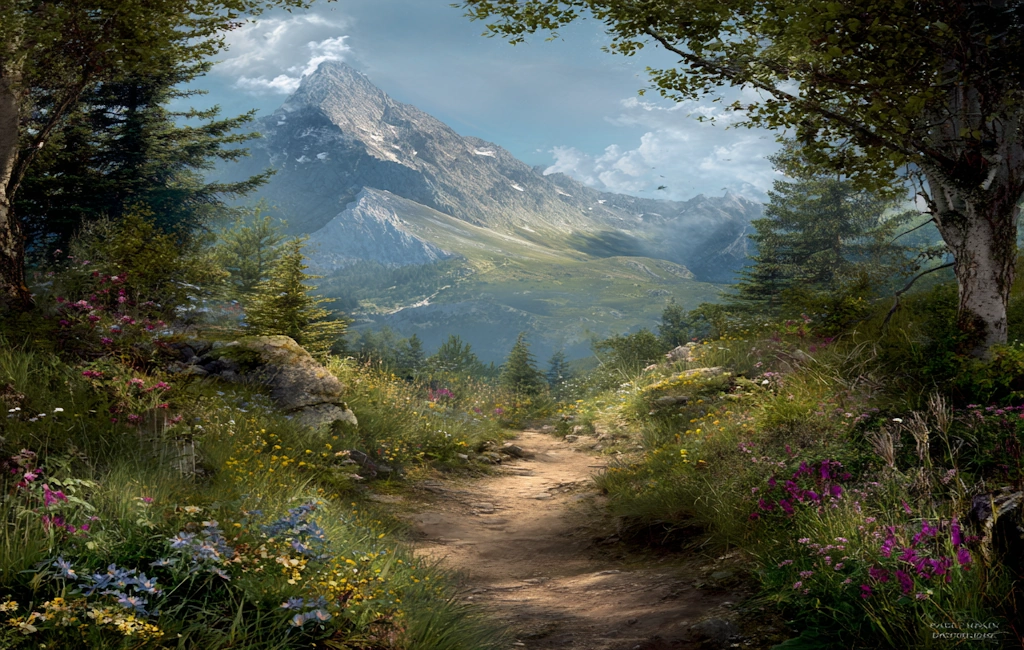
Mount Asgard Trail - The Arctic Throne of Baffin Island
Deep within the Arctic Circle, nestled in the granite heart of Auyuittuq National Park on Baffin Island, lies one of the most visually arresting and physically demanding mountain experiences on Earth: the Mount Asgard Trail. This is not a "trail" in the conventional sense of a manicured path; it is a 15.0 km raw mountaineering odyssey through a landscape defined by verticality, ancient ice, and the sheer scale of the Canadian Shield. Rising like twin cylindrical towers of stone, Mount Asgard stands as a sentinel over the Weasel River Valley and the Penny Highland. The journey to its base and the subsequent ascent involves a gruelling 1675 m of elevation gain, demanding a level of self-sufficiency and technical competence that few other routes require. Located near the Inuit community of Pangnirtung, Nunavut, this route traverses the Akshayuk Pass—a traditional travel corridor that has seen human passage for millennia but remains one of the world’s last truly wild frontiers.
- Distance: 15.0 km (return from valley floor)
- Duration: 2-3 days (typical duration for the Asgard approach and summit)
- Season: July is the optimal window for accessibility and conditions
- Highest point: 2,015 m (Summit of North Peak)
- Elevation Gain: 1675 m
- Difficulty: Very Challenging / Mountaineering Grade
- Closest Settlement: Pangnirtung, Nunavut
Overview
Mount Asgard is the crown jewel of Auyuittuq National Park, a name that translates from Inuktitut as "the land that never melts". The mountain itself is a twin-peaked monolith of Proterozoic granite, featuring flat-topped summits that resemble the truncated columns of a celestial temple. The North Peak and South Peak are separated by a dramatic col, offering some of the most sought-after big-wall climbing and high-altitude trekking in the Arctic. The "trail" described here focuses on the approach from the Akshayuk Pass and the challenging scramble/climb to the upper reaches of this granite giant.
The character of the landscape is dominated by the Penny Ice Cap and the glacial systems that have carved deep, U-shaped valleys through the mountains. Walking here is an exercise in navigating moraines—vast, unstable piles of glacial debris—and crossing icy meltwater rivers that can fluctuate from ankle-deep to waist-high within a matter of hours. The silence of the High Arctic is profound, broken only by the roar of distant waterfalls, the occasional crack of calving ice, or the whistle of wind against the vertical rock faces. This is a high-exposure environment where the sun barely sets in July, providing 24-hour light but also 24-hour demand on the hiker’s resolve.
The scale of Mount Asgard is notoriously difficult to perceive until one is standing at its base. The vertical granite walls rise over 1,000 metres straight from the glaciers. For those attempting the route, the physical toll is significant. The 1675 m elevation gain is achieved through steep, scree-filled gullies and across technical rock sections that require sure-footedness and, in many cases, rope work for safety. There is no infrastructure here; there are no trail markers, no bridges over the Caribou River, and no rescue services within immediate reach. It is a journey for the experienced, the prepared, and those who seek the ultimate communion with the Arctic wilderness.
History and Cultural Context
The human history of the Mount Asgard region is inextricably linked to the Inuit of Pangnirtung and the Cumberland Sound. The Akshayuk Pass, which provides the primary access route to Asgard, has served as a vital travel artery for generations of Inuit hunters and families moving between the northern and southern coasts of Baffin Island. To the Inuit, these mountains are part of a living landscape rich in oral history and traditional knowledge (IQ - Inuit Qaujimajatuqangit). While the peaks themselves were not traditionally "summited" for recreation, the valleys were essential for hunting caribou and accessing inland resources.
The European "discovery" and naming of the mountain occurred during the mid-20th century. It was named after Asgard, the realm of the gods in Norse mythology, by J. Dewey Soper during his explorations of the region. The mountain gained international fame in 1976 when it featured in the opening sequence of the James Bond film The Spy Who Loved Me, where stuntman Rick Sylvester performed a base jump off the North Peak. Since then, it has become a legendary site for world-class climbers, including Doug Scott and Chris Bonington, who established iconic routes on its sheer faces.
In 1972, Auyuittuq National Park was established to protect this unique Arctic ecosystem, ensuring that the cultural heritage of the Inuit and the natural integrity of the granite peaks remained preserved. Today, every visitor to the Mount Asgard trail must undergo a mandatory orientation in Pangnirtung, which emphasises the importance of respecting Inuit land and the delicate balance of the Arctic environment. Walking here is not just a physical feat; it is a passage through a territory that holds deep spiritual and historical significance for the people of Nunavut.
Want more background? Read extended notes on history and cultural context → Learn more
Seasonal Highlights and Weather Reality
The operating window for the Mount Asgard Trail is exceptionally narrow. While the park is technically open year-round, July is widely considered the "best" and often the only feasible month for non-winter trekking and mountaineering. During this period, the "Midnight Sun" provides constant daylight, allowing for flexible travel schedules and removing the danger of being caught in the dark. However, the weather in the High Arctic is notoriously unpredictable and can change from clear blue skies to a life-threatening blizzard in minutes.
Summer temperatures in the valley floors typically range between 5°C and 12°C, but on the slopes of Asgard and near the glaciers, temperatures frequently drop below freezing, even in mid-July. Wind is a constant factor; the Akshayuk Pass acts as a wind tunnel, accelerating gusts that can flatten tents and make movement across exposed ridges dangerous. Rain is common and, when combined with low temperatures, creates a high risk of hypothermia. Furthermore, July is the peak season for glacial melt, meaning river crossings are at their most treacherous.
Shoulder seasons (June and August) are fraught with additional hazards. In June, the snowpack is often too soft for walking but too deep for clear trail identification, and river ice is dangerously unstable. By late August, the "dark season" begins to return, temperatures plummet, and the risk of early autumn snowstorms increases significantly. Winter travel (March to May) is restricted to expert expeditions using skis and sleds (pulks) and requires specialist permits for extreme cold weather survival. For the standard Mount Asgard experience, July remains the only logical choice.
Recommended Itinerary
3-Day Mount Asgard Summit Itinerary
Day 1: Summit Lake Base to High Camp
- Distance: 6 km
- Elevation Gain: 800 m
- Time: 5–7 hours
- Depart from the designated camping area near Summit Lake in the Akshayuk Pass.
- Initial ascent involves navigating complex, unstable moraine fields towards the base of the Asgard massif.
- Crossing of the Caribou River meltwater streams (caution: timing is critical to avoid peak flow).
- Steep scramble up the primary scree gully leading to the upper cirque.
- Establish High Camp on a sheltered rock bench or snow platform at the base of the North Peak.
- This day is physically taxing due to the heavy packs and unstable footing.
Day 2: Summit Push - North Peak
- Distance: 3 km (return)
- Elevation Gain: 875 m
- Time: 8–12 hours
- Lightweight push from High Camp towards the North Peak col.
- Route finding across exposed granite slabs and permanent snow patches.
- Final ascent involves technical scrambling (Grade 3/4) and potential short pitches of roped climbing depending on ice conditions.
- Arrive at the flat-topped summit of the North Peak (2,015 m) for unparalleled views of the Penny Ice Cap.
- Careful descent back to High Camp, maintaining focus on fatigued legs during technical sections.
- Overnight at High Camp to recover.
Day 3: High Camp to Summit Lake / Valley Floor
- Distance: 6 km
- Elevation Loss: 1675 m
- Time: 4–6 hours
- Dismantle High Camp, ensuring "Leave No Trace" principles are strictly followed.
- Long, knee-jarring descent through the scree gullies back towards the Akshayuk Pass.
- Final river crossings back to the main trail corridor.
- Return to Summit Lake to await boat transfer or continue trekking south towards Pangnirtung.
- This day focuses on safe movement through loose terrain while carrying full expedition loads.
Important Notes:
- This itinerary assumes favourable weather; always build in 1–2 "buffer days" for Arctic storms.
- Water sources are plentiful from glacial melt but must be treated for silt and potential pathogens.
- Bear safety (Polar Bears) is a consideration even this far inland; carry deterrents.
- Communication via satellite device (InReach/Zoleo) is mandatory for safety.
Planning and Bookings
Book Your Trip
Everything you need to plan your journey
Accommodation
Find places to stay near Pangnirtung
Flights
Search flights to Pangnirtung
Essential Preparation
Planning for Mount Asgard begins at least six months in advance. The primary logistical hurdle is reaching Pangnirtung, which requires multiple flights from major Canadian hubs like Ottawa or Montreal via Iqaluit. Once in Pangnirtung, hikers must check in at the Auyuittuq National Park office for a mandatory safety orientation and to pay park fees. Fitness requirements are extreme; you must be capable of carrying a 25–30 kg pack over uneven, pathless terrain for 8–10 hours a day. Mountaineering experience, specifically in route-finding on granite and snow, is essential. There are no guided tours for the standard trek; you must be self-sufficient or hire a certified ACMG mountain guide for the technical ascent.
Logistics also involve coordinating boat transfers. To reach the Akshayuk Pass, you must hire a local Inuit outfitter to take you by boat from Pangnirtung through the Pangnirtung Fiord to the park entrance at Ulu (Overlord). These transfers are highly dependent on the tides and sea ice conditions. If the ice hasn't cleared by July, you may face significant delays or be forced to walk the extra distance along the coast. Ensure you have a flexible return date for your flights out of Nunavut.
Trail Accommodation
The Mount Asgard route is a wilderness expedition with no permanent accommodation. All hikers must be prepared for "wild camping" throughout the journey.
Camping Facilities:
- There are no designated campsites with facilities on the Asgard route itself.
- In the main Akshayuk Pass valley, there are several "emergency shelters" (small orange huts). These are NOT for planned accommodation; they are for life-threatening emergencies only.
- Most hikers camp on durable surfaces (rock or snow) to minimise impact.
- There are no toilets, bear lockers, or greywater disposal sites.
What's NOT Provided:
- Fuel, food, and gear must all be flown in. There are very limited supplies available in Pangnirtung.
- There is no wood for fires; fires are strictly prohibited in the park.
- No cell service, WiFi, or electricity.
Costs:
- National Park Daily Entry Fee: Approximately $15.75 CAD per person.
- Outfitter Boat Transfers: Can range from $250 to $500 CAD per person depending on group size and distance.
- Mandatory Registration: Included in the park fee, but must be done in person.
Required Gear
- Mountaineering Boots: Stiff-soled, waterproof, and crampon-compatible.
- Technical Hardware: Lightweight ice axe, crampons, and a 30 m alpine rope for glacier travel or safety.
- Tent: 4-season rated mountaineering tent capable of withstanding 100 km/h winds.
- Sleeping System: Down sleeping bag rated to at least -10°C and a high-R-value insulated mat.
- Clothing: Layering system including merino base layers, heavy fleece, down parka, and Gore-Tex hardshell.
- Navigation: High-resolution topographical maps, compass, and a GPS device with spare batteries.
- Emergency: Personal Locator Beacon (PLB) or satellite messenger (Garmin InReach).
What to Bring
- Food: 3,500–4,000 calories per day of lightweight, dehydrated meals. Include extra "storm rations" for 2 days.
- Stove and Fuel: Liquid fuel stoves (MSR WhisperLite) are preferred for Arctic reliability. Note: Fuel cannot be flown on commercial aircraft; buy it in Pangnirtung or arrange with your outfitter.
- Water Treatment: Gravity filters are effective, but bring backup purification tablets for silty glacial water.
- Waste Management: "WAG bags" for human waste are highly encouraged to protect the fragile Arctic tundra.
- Sun Protection: Category 4 sunglasses (glacier glasses) and high-SPF sunscreen to combat 24-hour Arctic glare.
- Repair Kit: Gear tape, stove spares, and a multi-tool are non-negotiable.
Permits
Auyuittuq National Park requires all visitors to register and attend a mandatory safety orientation before entering the park. This is not just a formality; it is a critical part of the park's management strategy for such a remote and dangerous area. During this session, you will be briefed on current river levels, polar bear sightings, and weather forecasts.
Permit Process:
- Pre-registration via the Parks Canada website is recommended, especially for peak July dates.
- Upon arrival in Pangnirtung, you must visit the Parks Canada office to finalise your permit and pay fees.
- You must provide a detailed itinerary and a "check-out" date. Failure to check back in after your trip will trigger an expensive and potentially unnecessary Search and Rescue (SAR) operation.
- There are currently no quotas for the number of hikers, but the sheer logistical difficulty naturally limits visitor numbers.
Costs and Regulations:
- Daily wilderness use fee: ~$15.75 CAD.
- Northern Park Entry Pass (Annual): ~$110.00 CAD (worthwhile if staying more than 7 days).
- Strict "Pack In, Pack Out" policy is enforced.
- Fishing permits: Required if you intend to catch Arctic Char in the park rivers.
Other Activities in the Area
While Mount Asgard is the primary objective for many, the region around Pangnirtung and Auyuittuq offers other world-class Arctic experiences:
- Akshayuk Pass Trek: The full 97 km trek from North to South (or vice versa) is one of the world's premier long-distance Arctic walks.
- Mount Thor: Located nearby, Mount Thor features the world's greatest vertical drop (1,250 m at an average angle of 105 degrees).
- Uqqurmiut Centre for Arts & Crafts: In Pangnirtung, visit this world-famous centre to see traditional Inuit weaving, printmaking, and the iconic "Pang Hat."
- Whale Watching: Boat tours in Cumberland Sound offer opportunities to see Beluga whales, Narwhals, and Bowhead whales.
- Arctic Char Fishing: Guided fishing trips in the fiords or local rivers provide a chance to catch one of the most delicious fish in the North.
- Inuit Cultural Tours: Engage with local guides to learn about traditional hunting practices and life in a modern Arctic community.
Safety and Conditions
Arctic River Crossings: This is arguably the most significant hazard in Auyuittuq. The Weasel River and its tributaries (like the Caribou) are fed by glacial melt. This means they are highest in the afternoon and lowest in the early morning (3 AM – 6 AM). Always unbuckle your pack hip-belt before crossing, use trekking poles for stability, and never cross alone if possible. If a river looks too fast or deep, wait until the morning or change your route.
Polar Bear Safety: While more common on the coast, Polar Bears have been known to travel through the Akshayuk Pass. Hikers must be "bear aware" at all times. Store food in airtight containers (though bear barrels are not mandatory, they are recommended). Carry bear spray and/or bangers, and know how to use them. Avoid camping near river mouths or areas with low visibility.
Hypothermia and Exposure: Even in summer, the combination of wind and wet can be fatal. Always keep a set of "dry clothes" in a waterproof dry bag inside your pack. Be vigilant for signs of exhaustion and shivering in yourself and your partners. In the Arctic, a small injury can quickly escalate into a crisis due to the time required for external help to arrive.
Glacial Hazards: If your route takes you onto the glaciers surrounding Asgard, be aware of crevasses and snow bridges. Glacier travel requires specific training, harnesses, and crevasse rescue knowledge. Never venture onto blue ice or snow-covered glaciers without the proper technical skills.
Communication: There is absolutely no help coming if you cannot call for it. A satellite device is your only lifeline. Ensure you have the emergency numbers for the Parks Canada Dispatch in Iqaluit pre-programmed into your device.
Side Trips and Points of Interest
The Caribou River Falls: A thunderous waterfall located near the junction of the Caribou and Weasel rivers. It is a powerful display of the sheer volume of water moving off the Penny Ice Cap during the July melt.
Mount Thor Lookout: On the approach to Asgard, take the time to view Mount Thor from the valley floor. The overhanging west face is a geological marvel that defies gravity and provides a hauntingly beautiful backdrop to the trek.
Glacial Moraine Interpretive Walk: Spend an hour exploring the "lateral moraines" near the base of Asgard. You can see distinct layers of rock deposited by the retreating glaciers over centuries, offering a physical timeline of the Arctic's changing climate.
Summit Lake Icebergs: In early July, Summit Lake often contains small "growlers" or icebergs that have calved from the surrounding glaciers. The blue hues of the ancient ice against the stark grey granite of the mountains are a photographer's dream.
Leave No Trace
The Arctic environment is extremely fragile. A footprint on the moss or tundra can remain visible for decades, and waste does not decompose in the permafrost. As a visitor to Auyuittuq, you have a moral and legal obligation to minimise your footprint.
Your responsibility as a walker:
- Waste Management: Pack out ALL trash, including food scraps. "Pack it in, pack it out" applies to everything, including used WAG bags for human waste in high-use areas near Asgard.
- Durable Surfaces: Camp on rock or snow whenever possible. Avoid pitching tents on delicate Arctic heather or moss.
- Water Protection: Do not wash dishes or yourself directly in the rivers. Carry water 50 metres away from the source and use biodegradable soap in small quantities.
- Cultural Integrity: Do not disturb or remove any Inuit stone structures (Inuksuit), archaeological sites, or historical artifacts. These are protected by law and are part of the Inuit heritage.
- No Fires: Use your stove for all cooking. Fires are prohibited as there is no sustainable wood source in the Arctic.
 Canada