
Moray to Maras Salt Pans Trail
The Moray to Maras Salt Pans trail is a captivating day walk in the Sacred Valley of Peru, offering a unique blend of ancient agricultural ingenuity and breathtaking Andean scenery. This relatively short but rewarding hike connects two of the region's most iconic archaeological and cultural sites: the circular agricultural terraces of Moray and the ancient salt pans of Maras. The trail winds through traditional Andean villages, past local farms, and offers panoramic views of the surrounding snow-capped peaks, including Veronica and Chicon. It's an accessible journey that provides a deep insight into the Inca's sophisticated understanding of agriculture and their enduring connection to the land.
- Distance: 8.0 km
- Elevation Gain: 250 m
- Duration: 3-4 hours
- Difficulty: Easy
- Best Time: April to October (dry season)
- Closest City: Cusco
- Trailhead Access: From Cusco, travel to Urubamba, then hire transport to Moray.
- Permits: Entrance fee required for Moray archaeological site; no specific trail permit needed.
Overview
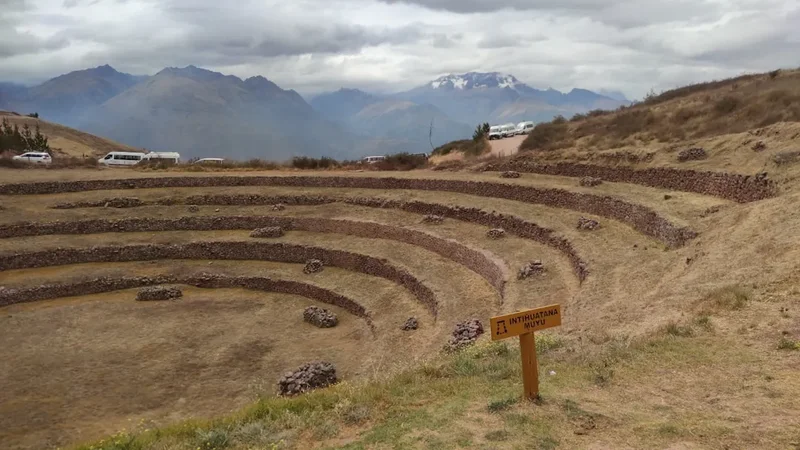
This trail is a gentle introduction to the wonders of the Sacred Valley, perfect for those seeking a cultural and scenic experience without an arduous trek. The journey begins at the enigmatic Moray ruins, where concentric circular terraces descend into the earth, believed to have been an Inca agricultural laboratory for experimenting with crops at different altitudes and microclimates. From Moray, the path leads through rolling hills and agricultural landscapes, offering glimpses of daily life in the Andes. You'll pass small farming communities where traditional methods are still in practice, and the air is filled with the scent of Andean crops. The highlight of the latter half of the walk is the approach to the Maras Salt Pans, a vast expanse of thousands of salt-evaporation pools cascading down a steep mountainside. The stark white of the salt against the vibrant green of the surrounding fields and the deep blue of the sky creates a visually stunning spectacle. The trail concludes at the salt pans, allowing ample time to explore this unique and ancient industry.
The elevation gain is moderate, making it suitable for most fitness levels, and the well-trodden path ensures easy navigation. The dry season, from April to October, offers the most pleasant weather, with sunny days and cool evenings, though temperatures can still drop significantly at higher altitudes. The trail is best experienced in the morning or late afternoon to avoid the midday sun and to capture the best light for photography. The proximity to Cusco makes it an ideal day trip, allowing visitors to immerse themselves in the rich history and natural beauty of the Sacred Valley.
History and Cultural Context
The region surrounding Moray and Maras has a history stretching back to pre-Inca times, but it was during the Inca Empire that these sites reached their zenith. Moray, with its unique terraced amphitheatre, is a testament to the Incas' advanced understanding of agronomy and engineering. The precise purpose of these terraces remains a subject of debate among archaeologists, but the prevailing theory is that they served as a sophisticated agricultural research centre. The varying depths and microclimates created by the concentric circles allowed the Incas to test the viability of different crops at different altitudes, a crucial endeavour in a region with such diverse ecological zones.
The Maras Salt Pans, known locally as Salineras de Maras, have been a source of salt for centuries, predating the Incas and continuing to this day. The natural salt springs, rich in minerals, are channelled into a complex network of small pools on the hillside. As the water evaporates under the Andean sun, the salt crystallises, and local families harvest it using traditional methods passed down through generations. This ancient practice is a living link to the past, showcasing the enduring human relationship with the natural resources of the Andes. The trail connecting these two sites not only traverses beautiful landscapes but also walks through living history, offering a tangible connection to the ingenuity and resilience of the Andean people.
Seasonal Highlights and Weather Reality
The best time to undertake the Moray to Maras Salt Pans trail is during the dry season, which typically runs from April to October. During these months, the skies are generally clear, and rainfall is minimal, providing ideal conditions for hiking and exploring the open-air sites. The temperatures are pleasant during the day, though it can get quite chilly in the mornings and evenings, especially at higher elevations. The dry season also offers excellent visibility for the stunning mountain vistas.
The shoulder months of April, May, September, and October are particularly recommended. The landscapes are lush after the rainy season, and the crowds are generally smaller than in the peak months of June, July, and August. The sun can be intense during midday, so sun protection is crucial year-round. Even in the dry season, brief, unexpected showers can occur, so it's always wise to be prepared.
The rainy season, from November to March, sees significantly more precipitation. While the landscapes are incredibly vibrant and green during this period, the trails can become muddy and slippery, and visibility may be reduced due to cloud cover. The salt pans are still operational, but the experience might be less comfortable due to the weather. However, fewer tourists visit during the rainy season, which can offer a more tranquil experience for those who don't mind the potential for rain.
Recommended Itinerary
Moray to Maras Salt Pans Day Walk
Morning: Arrival at Moray & Exploration
- Travel from Cusco to Urubamba, then hire a taxi or colectivo to the Moray archaeological site.
- Allow 1.5–2 hours for travel from Cusco.
- Spend approximately 1–1.5 hours exploring the Moray terraces.
- Take in the scale and ingenuity of the circular agricultural laboratory.
- Capture photographs of the unique landscape and surrounding mountains.
- Understand the historical significance and agricultural theories behind Moray.
Late Morning/Midday: The Trail Begins
- Begin the hike from the Moray site towards the Maras Salt Pans.
- The trail is generally well-marked and follows a path through agricultural fields and small hamlets.
- Distance: Approximately 4.0 km from Moray to the outskirts of Maras village.
- Elevation gain: Gradual ascent of around 100-150 metres.
- Time: 1–1.5 hours.
- Observe local farming practices and interact with villagers if opportunities arise.
- Enjoy panoramic views of the Sacred Valley and the snow-capped peaks.
Midday: Maras Village & Salt Pans Approach
- Arrive at the village of Maras. You can briefly explore the colonial-era church and main plaza if time permits.
- From Maras village, the trail descends towards the Maras Salt Pans.
- Distance: Approximately 4.0 km from Maras village to the salt pans.
- Elevation loss: Approximately 100 metres.
- Time: 1–1.5 hours.
- The first views of the salt pans are spectacular, with the white pools contrasting sharply with the landscape.
Afternoon: Exploring the Maras Salt Pans
- Spend 1–1.5 hours exploring the Maras Salt Pans.
- Walk along the edges of the salt pools (respecting designated paths).
- Learn about the traditional salt extraction process from local vendors.
- Purchase artisanal salt as a unique souvenir.
- The site is a photographer's paradise, especially in the late afternoon light.
Late Afternoon: Departure
- From the Maras Salt Pans, you can hire a taxi or arrange for transport to take you back to Urubamba or directly to Cusco.
- Allow approximately 1.5–2 hours for the return journey to Cusco.
Important Notes:
- This is a day hike; no overnight accommodation is required.
- Wear comfortable walking shoes or hiking boots.
- Carry plenty of water and snacks.
- Sun protection (hat, sunscreen, sunglasses) is essential.
- A light jacket or fleece is recommended for cooler mornings/evenings.
- The trail can be dusty in the dry season.
Planning and Bookings
Book Your Trip
Everything you need to plan your journey
Accommodation
Find places to stay near Cusco
Flights
Search flights to Cusco
Essential Preparation
This trail is an excellent day trip from Cusco, requiring minimal complex logistical planning. The primary considerations are transportation to and from the sites and ensuring you have adequate supplies. It's advisable to arrange transport in advance, either through your accommodation in Cusco or a reputable tour operator. Many visitors combine Moray and Maras with a visit to the Ollantaytambo ruins, making for a full day of exploration in the Sacred Valley. Ensure you have sufficient Peruvian Soles (PEN) in cash for entrance fees, local purchases, and any impromptu transport needs, as card facilities are not always available in rural areas.
The closest major city and logistical hub is Cusco. From Cusco, you will typically travel to Urubamba, a town in the Sacred Valley, which serves as a convenient staging point. From Urubamba, taxis or colectivos (shared vans) can be hired to reach Moray. The road to Moray is paved and accessible. For the Maras Salt Pans, transport can be arranged from Maras village or directly from the salt pans themselves back to Urubamba or Cusco.
Trail Accommodation
This is a day hike requiring no overnight accommodation.
Required Gear
- Comfortable walking shoes or hiking boots with good grip.
- Lightweight, breathable clothing suitable for layering.
- Sun hat or cap for protection against the strong Andean sun.
- Sunglasses to shield your eyes from glare.
- Sunscreen with a high SPF (30+).
- Small backpack or daypack to carry essentials.
- Camera or smartphone for capturing the stunning scenery.
- Personal first-aid kit with any necessary personal medications.
What to Bring
- Plenty of water (at least 1.5–2 litres per person).
- Snacks such as energy bars, fruit, nuts, or dried fruit.
- Peruvian Soles (PEN) in cash for entrance fees, local purchases, and potential taxi fares.
- Hand sanitiser.
- Insect repellent (though sandflies are not a major issue on this trail, mosquitoes can be present).
- A light jacket or fleece for cooler temperatures, especially in the early morning or late afternoon.
- A reusable water bottle or hydration pack.
Permits
No specific permits are required to walk the trail between Moray and the Maras Salt Pans. However, an entrance fee is required to access the Moray archaeological site. This fee is typically paid at the entrance to the site itself. For the Maras Salt Pans, there is also an entrance fee, which is usually collected at a checkpoint near the salt pans. These fees are generally modest and contribute to the preservation and maintenance of these historical sites.
It is advisable to carry sufficient Peruvian Soles (PEN) in cash to cover these entrance fees, as card payments may not always be accepted, especially at the Maras Salt Pans. The exact cost of entrance fees can vary, so it's wise to check current prices before your visit, though they are generally affordable for tourists.
Other Activities in the Area
The Sacred Valley is rich with cultural and natural attractions, making it an ideal region for extended exploration. Consider incorporating these activities into your visit:
- Ollantaytambo Fortress: A magnificent Inca archaeological site and a living Inca town. Its impressive terraces and stonework are a marvel of Inca engineering.
- Pisac Market and Ruins: Famous for its vibrant artisan market, Pisac also boasts impressive Inca ruins perched high on a mountain overlooking the valley.
- Urubamba Town: A pleasant town in the heart of the Sacred Valley, offering local markets, restaurants, and a more relaxed pace of life. It's a good base for exploring the region.
- Chinchero: Known for its traditional weaving demonstrations and its beautiful colonial church built on Inca foundations.
- Sacred Valley Adventure Sports: The region offers opportunities for zip-lining, mountain biking, and white-water rafting on the Urubamba River.
- Cusco City Exploration: Spend time exploring the historic capital of the Inca Empire, with its colonial architecture, Inca ruins (like Sacsayhuamán), museums, and vibrant atmosphere.
Safety and Conditions
Trail Conditions: The trail between Moray and Maras is generally well-maintained and easy to follow. It consists of dirt paths, agricultural tracks, and some rocky sections. In the dry season (April-October), the path is usually firm and dry. During the rainy season (November-March), sections can become muddy and slippery, so sturdy footwear with good grip is essential.
Altitude: The trail is situated at a high altitude, with Moray at approximately 3,500 metres (3,505 m) and Maras at around 3,300 metres (3,291 m). It is crucial to acclimatise to the altitude in Cusco for at least 2-3 days before undertaking this hike. Symptoms of altitude sickness can include headaches, nausea, dizziness, and fatigue. Stay hydrated, avoid alcohol and heavy meals on your first day at altitude, and consider consulting your doctor about altitude sickness medication.
Weather: While the dry season offers generally pleasant weather, conditions can change. The sun is intense at this altitude, so sun protection is paramount. Evenings and early mornings can be cool, so layering clothing is recommended. Be prepared for occasional brief rain showers, even in the dry season.
Hydration and Nutrition: Carry ample water, as dehydration can exacerbate altitude sickness. High-energy snacks are also recommended to maintain energy levels throughout the hike. There are limited opportunities to purchase food and water along the trail between Moray and Maras, though you may find vendors in Maras village or at the salt pans.
Navigation: The trail is relatively straightforward, but it's always wise to have a map or use a GPS device/app, especially if you are hiking independently. Inform someone of your hiking plans and expected return time.
Local Interaction: Be respectful of local communities and their property. Always ask permission before taking photographs of people. The local people are generally friendly and welcoming.
Side Trips and Points of Interest
Moray Agricultural Terraces: The primary point of interest at the start of the trail. These unique concentric terraces, resembling an amphitheatre, are a marvel of Inca engineering and agricultural science. The varying microclimates created by the different levels are thought to have been used for crop experimentation. Exploring the different levels and imagining the Incas' scientific endeavours is a fascinating experience.
Maras Salt Pans (Salineras de Maras): The main destination of the hike. This ancient salt mine consists of thousands of small, shallow pools fed by a natural underground salt spring. The pools are meticulously maintained by local families who harvest the salt using traditional methods. The stark white of the salt against the earthy tones of the landscape and the vibrant blue sky is a breathtaking sight. You can walk along the edges of the pans (sticking to designated paths) and learn about the centuries-old salt extraction process.
Maras Village: A charming colonial-era village located near the salt pans. The village features a beautiful colonial church with a distinctive facade and a central plaza. It offers a glimpse into traditional Andean life and a chance to see local architecture. You can often find local artisans selling their crafts here.
Andean Farmlands: The trail itself passes through active agricultural lands. You'll see locals working their fields using traditional methods, cultivating crops like potatoes, corn, and quinoa. This offers a valuable insight into the rural life of the Sacred Valley and the enduring connection between the people and the land.
Leave No Trace
The Moray to Maras Salt Pans trail traverses a landscape of significant cultural and natural importance. Practising Leave No Trace principles ensures that these sites remain pristine for future generations and that the local communities are respected.
Your responsibility as a walker:
- Pack it in, pack it out: Carry out all litter, including food scraps, wrappers, and any other waste. Do not leave anything behind.
- Stay on the trail: Stick to marked paths to avoid damaging fragile vegetation and archaeological sites. The terraces at Moray and the edges of the salt pans are sensitive areas.
- Respect wildlife: Observe any local wildlife from a distance and do not feed them.
- Dispose of waste properly: Use designated bins where available. If not, carry all waste with you until you can dispose of it appropriately.
- Leave what you find: Do not take rocks, plants, or any other natural or historical items from the sites.
- Be considerate of others: Keep noise levels down, especially when passing through local villages, to respect the peace and privacy of residents.
- Respect cultural heritage: Moray and Maras are historically significant sites. Treat them with reverence and avoid touching or damaging any structures or artefacts.
By following these principles, you help preserve the beauty and integrity of this unique Andean landscape.